How to Create a Private Patio Area
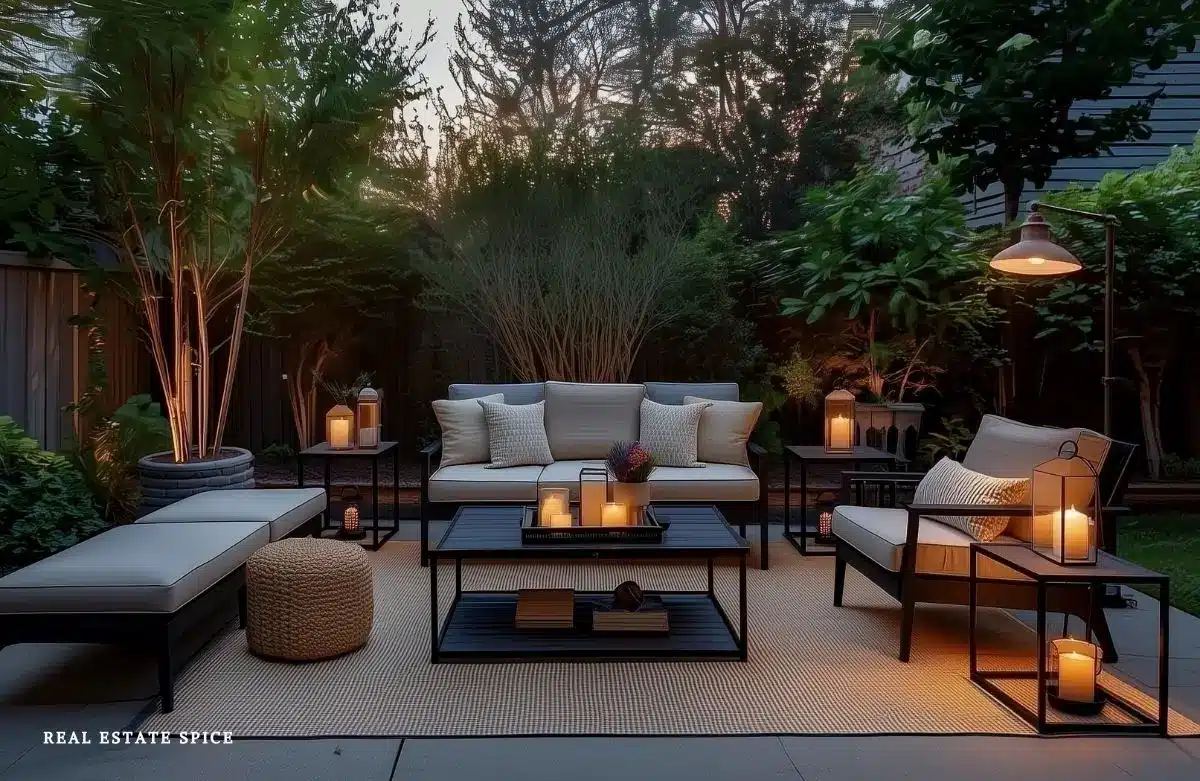
Patio privacy is one of those things you don’t fully appreciate until you sit down outside with your coffee.
Then suddenly you’re making direct eye contact with a neighbor who is also just trying to live their life.
A patio area can have pretty chairs, a fresh outdoor rug, and charming tables.
But if it feels exposed, it never quite settles into that calm, exhale-and-stay-awhile feeling most of us are after.
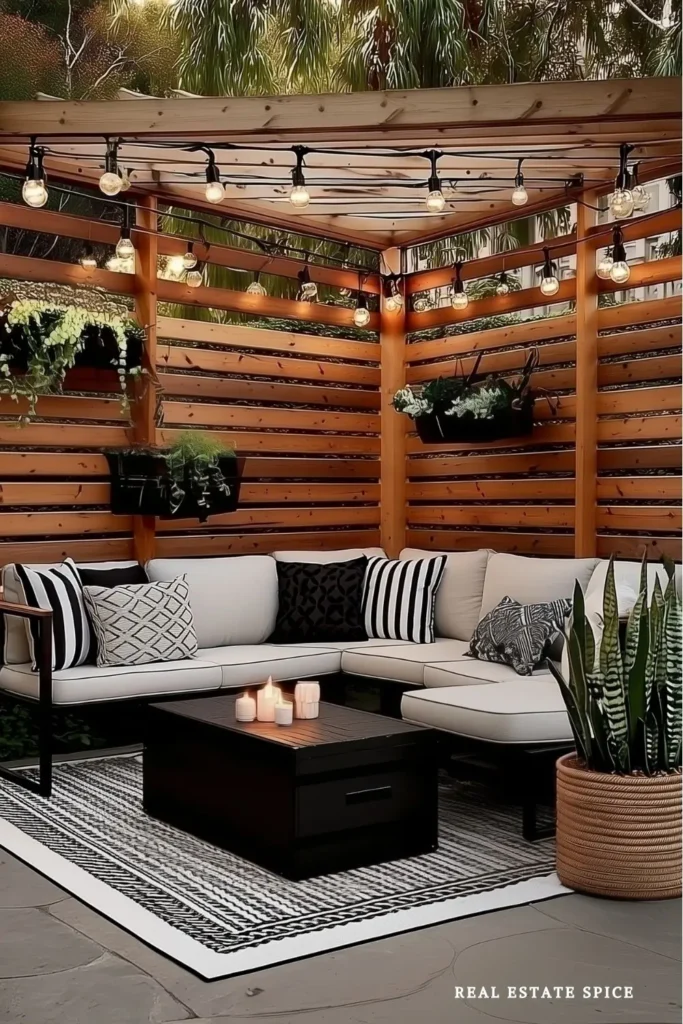
The good news is that learning how to create a private patio area does not require turning your yard into a fortress with suspiciously dramatic landscaping.
A welcoming patio usually comes from a few intentional layers.
Privacy shifts how the space feels from the moment you enter.
Softer layers make it more comfortable.
And the right lighting brings everything together once the sun goes down.
Once those pieces start working together, a regular backyard patio can begin to feel like a true backyard oasis.
Here, I walk you through the smartest ways to build patio privacy without making the space feel closed in or cluttered.
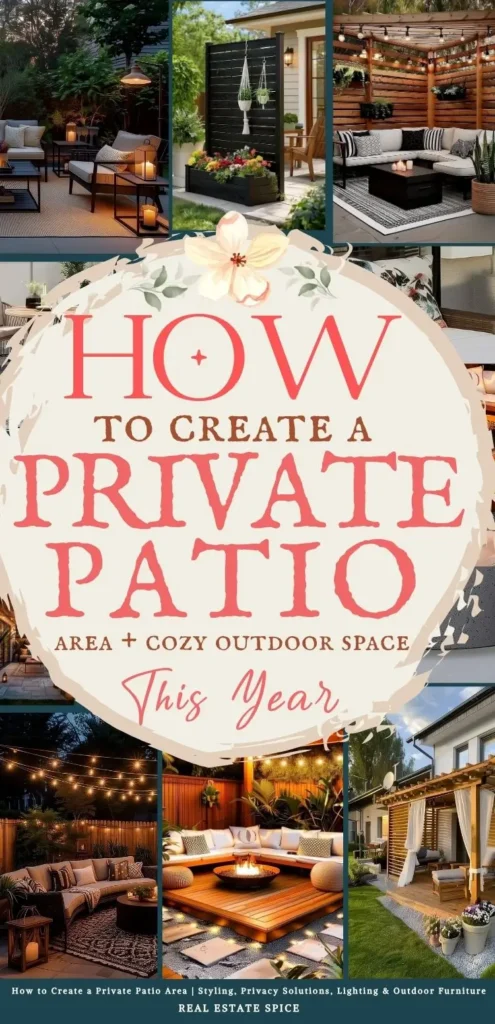
I’m getting into all of it—small patio privacy ideas, fence options, screens, planters that actually do something, plus outdoor curtains, shades, pergolas, and gazebos.
I’m also talking about seating and cozy outdoor tables, because privacy only works if the space is somewhere you actually want to sit.
And then I layer in those little details that make your patio feel like yours, not like it came from a catalog page or computer tab you forgot to close.
Grab your favorite beverage, pen, and paper for notes; take your time to study the images, design tips, and products, and enjoy!
ps…remember to save this and come back anytime for a dose of inspo!
How Patio Privacy Changes Everything
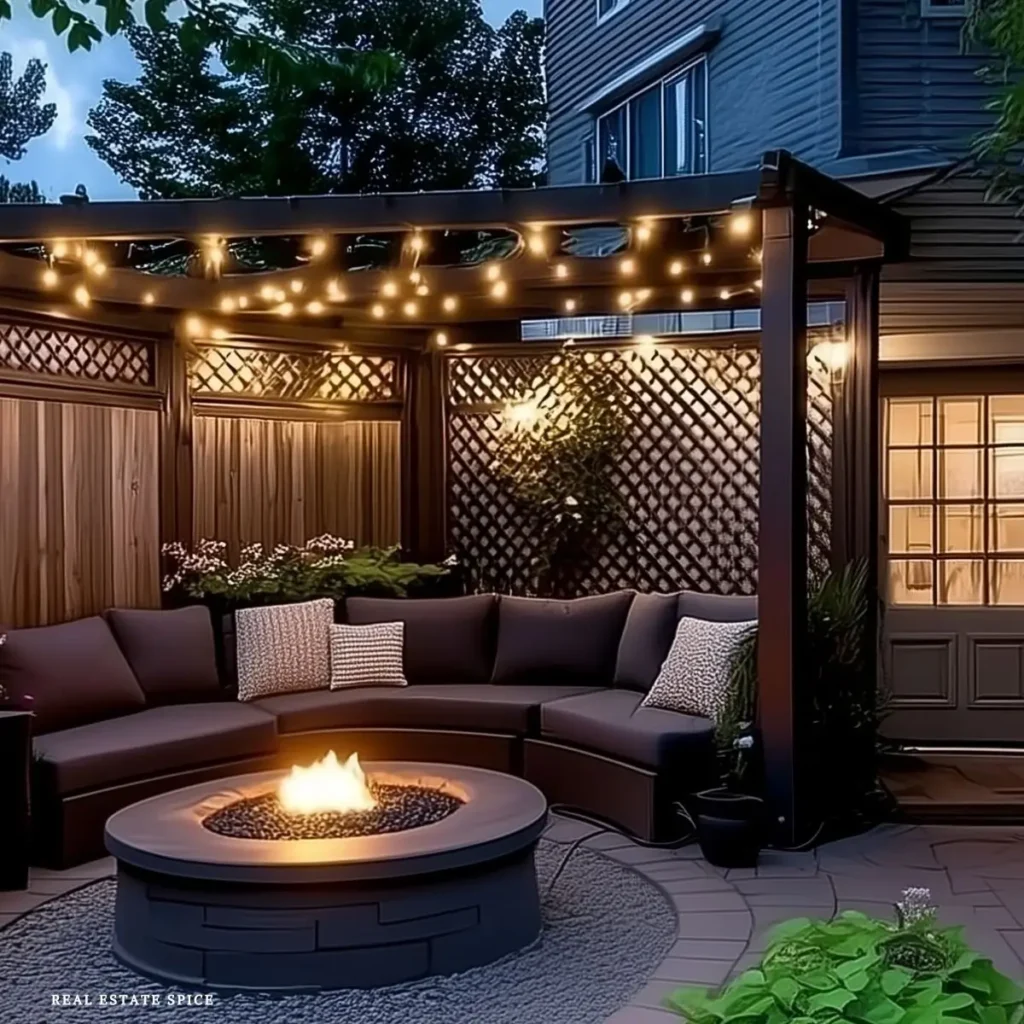
A private patio does more than block a view.
It changes how the whole space feels.
Once a seating area feels a little tucked away, you relax differently.
Dinner outside feels more special.
Even a simple outdoor chair with a side table starts feeling like a tiny retreat instead of a seat parked in the open.
Privacy is really the foundation for comfort.
When the edges of a space feel softer and more protected, every other layer starts working harder for you.
Get My Free eBook
“100 Easy Ways To Refresh Any Room All Year Round”
Start With the Sight Lines That Bother You Most
Take a moment and stand on your patio and look around at the places you’ll actually sit.
Check the view from the main chair.
Look from the dining table.
Notice what feels fine and what instantly makes the patio feel less peaceful.
Maybe it is a neighboring deck.
Perhaps it is a driveway, a side yard, or one awkward angle where everything suddenly feels exposed for no good reason.
Create a quick patio privacy map
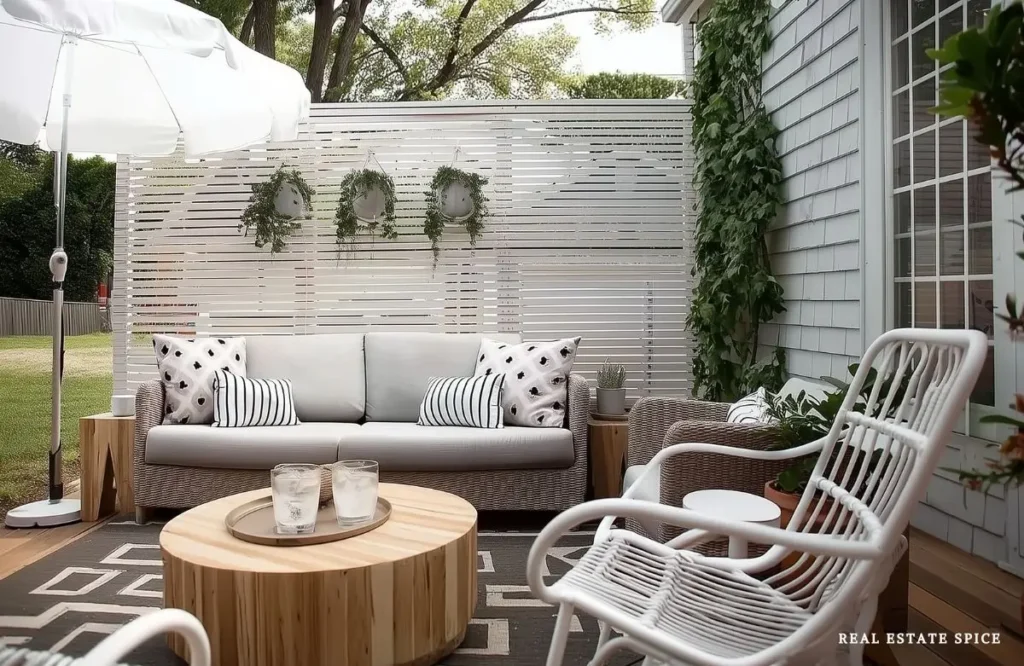
One of the easiest ways to plan a private patio area is to make a tiny mental map of your sight lines.
You don’t need to screen every inch of the patio equally.
Most of the time, one or two exposed angles are doing the bulk of the damage.
Once you know where those trouble spots are, you can focus your privacy effort where it’ll matter most.
This is especially helpful for small patio privacy because compact spaces cannot always handle bulky screening on every side.
A smaller patio usually feels better when one edge gets a stronger privacy layer and the rest stays more open.
Keep one view open on purpose
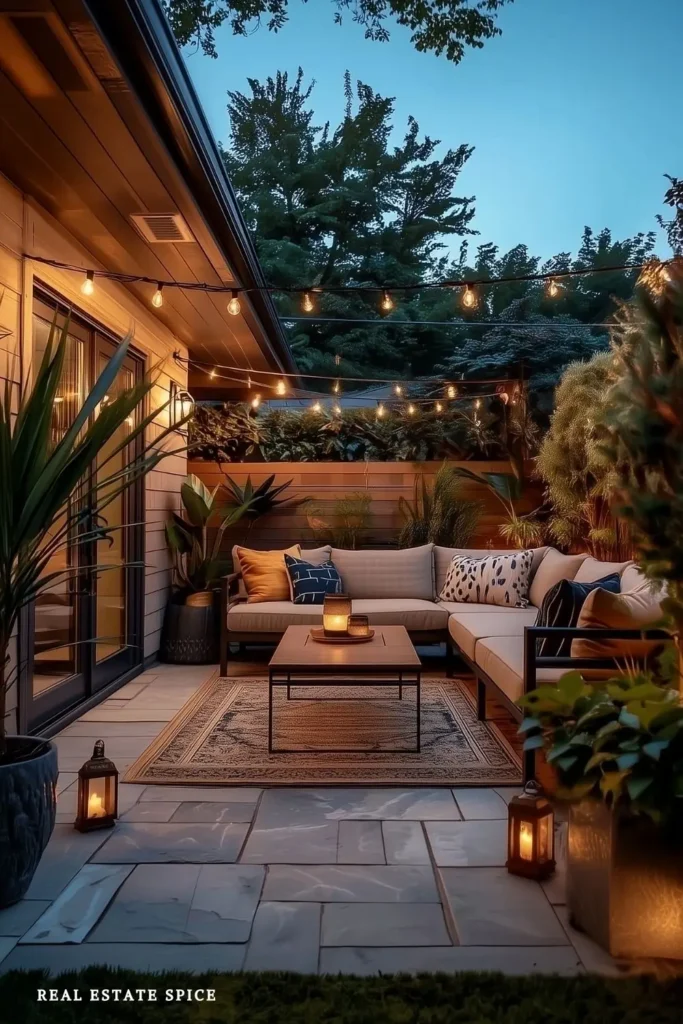
Don’t block every single direction just because you can.
A patio privacy wall or patio privacy fence works best when one side still feels connected to the sky, garden, or prettiest part of the yard.
Leaving one view open gives the patio a sense of depth, and depth keeps privacy from feeling heavy.
Choose the Right Type of Patio Privacy Barrier
There is no single right answer for patio privacy because different patios need different kinds of coverage.
Some spaces benefit from a full privacy fence.
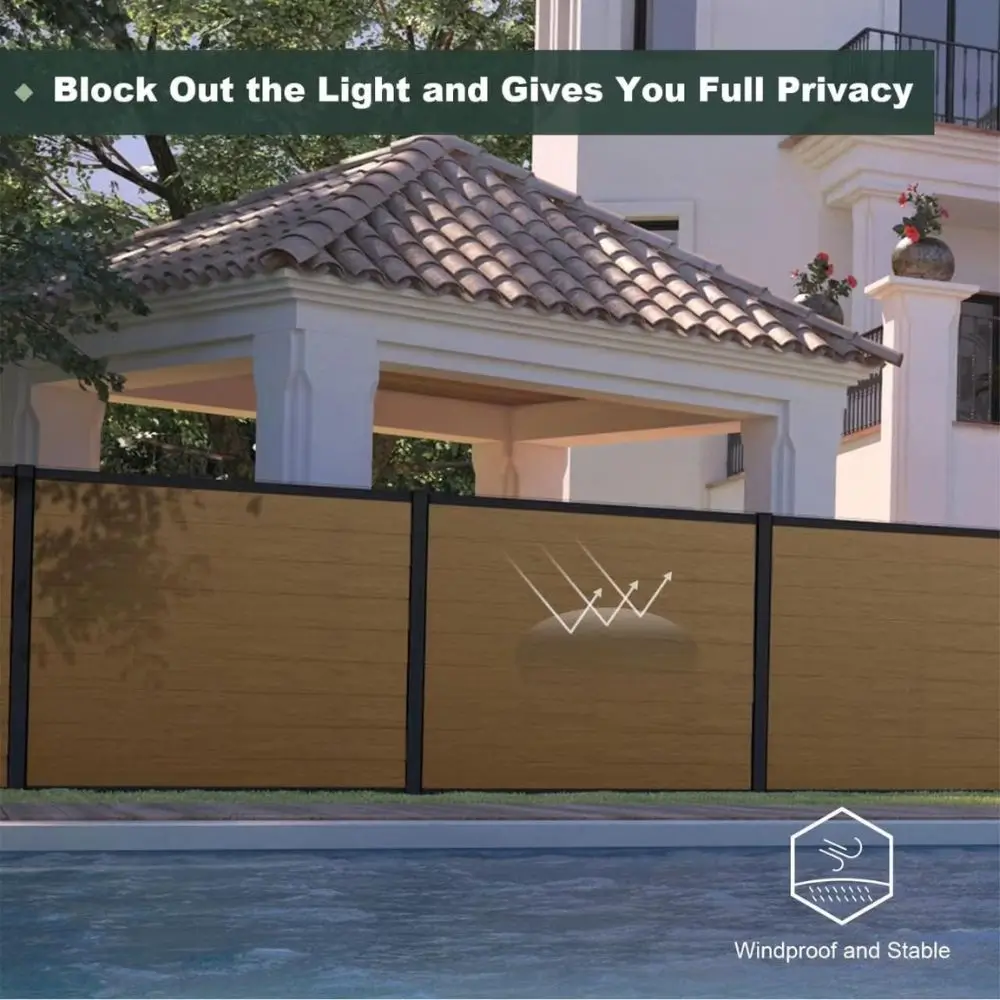
Others do better with lighter screen privacy, greenery, or fabric.
The goal is to match the barrier to the feeling you want as much as the problem you are solving.
Use a privacy fence when you need a strong boundary
A privacy fence is wonderful when the patio faces a busy neighboring space or backs up to a less-than-lovely view.
Wood is a classic choice because it feels warm and timeless.
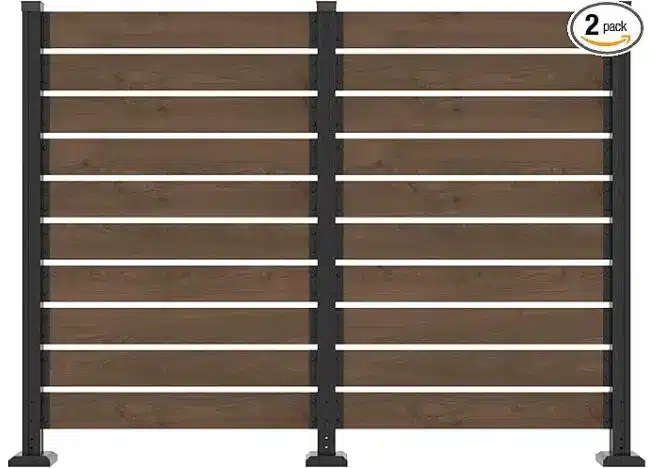
A painted privacy fence can look cleaner in a modern backyard, while stained wood often works beautifully in a cozy backyard.
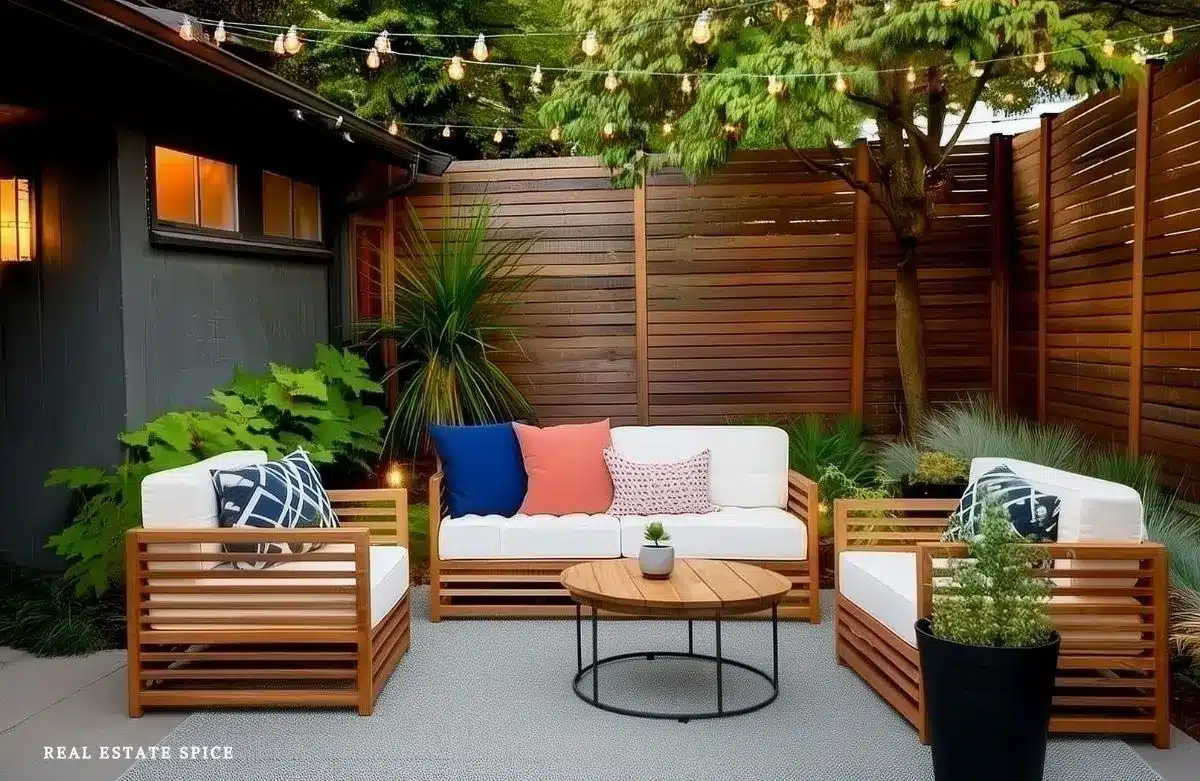
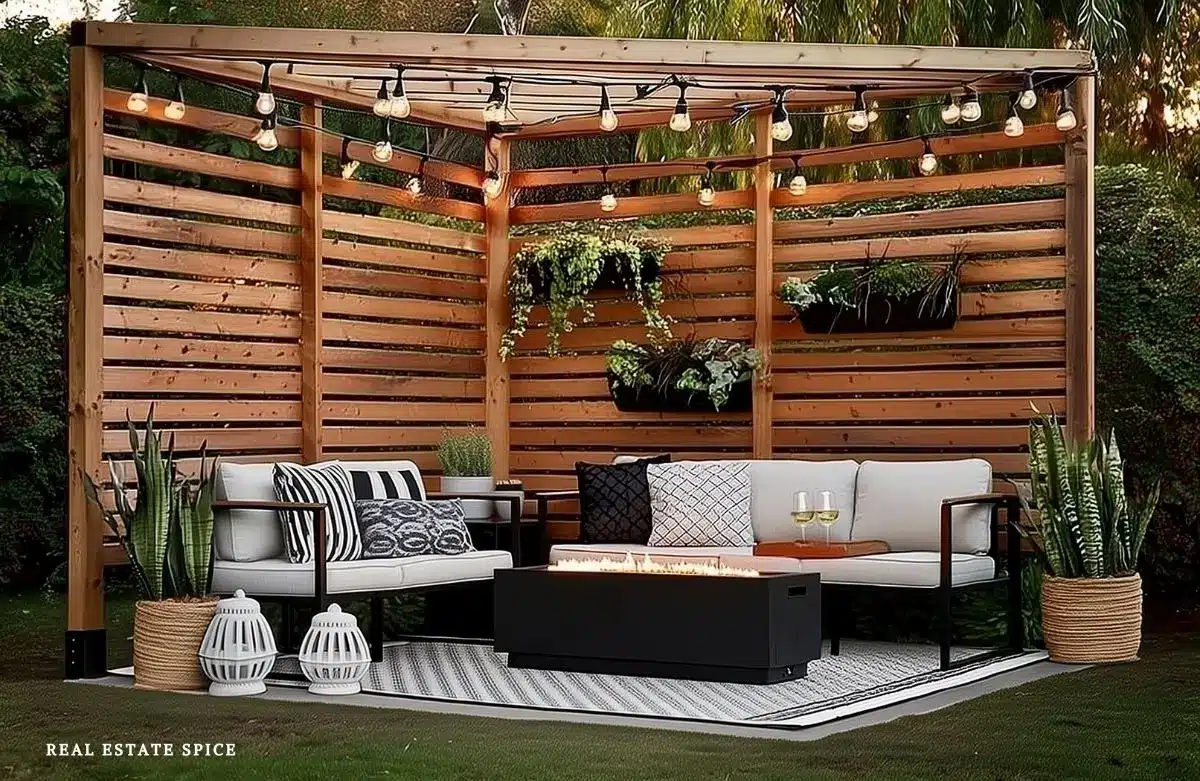
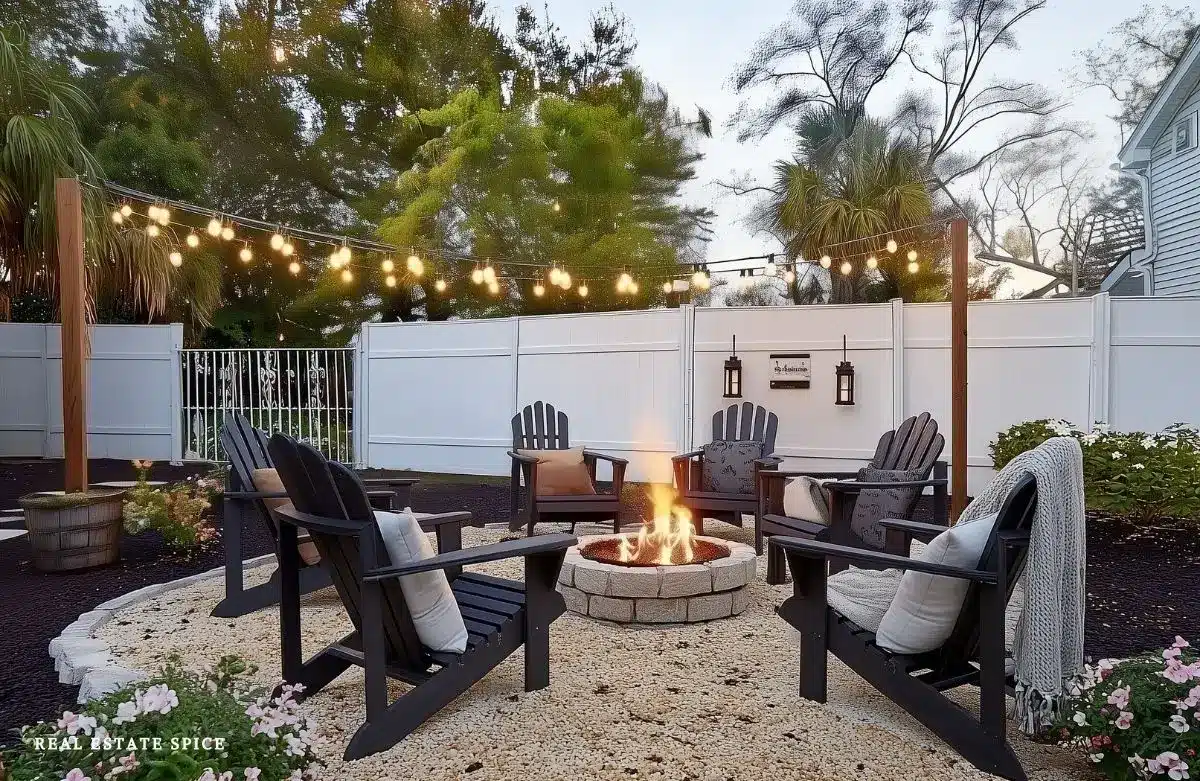
Slatted styles are especially pretty because they give you screen privacy without feeling as solid as a fully closed wall.
Try a patio privacy screen for flexibility
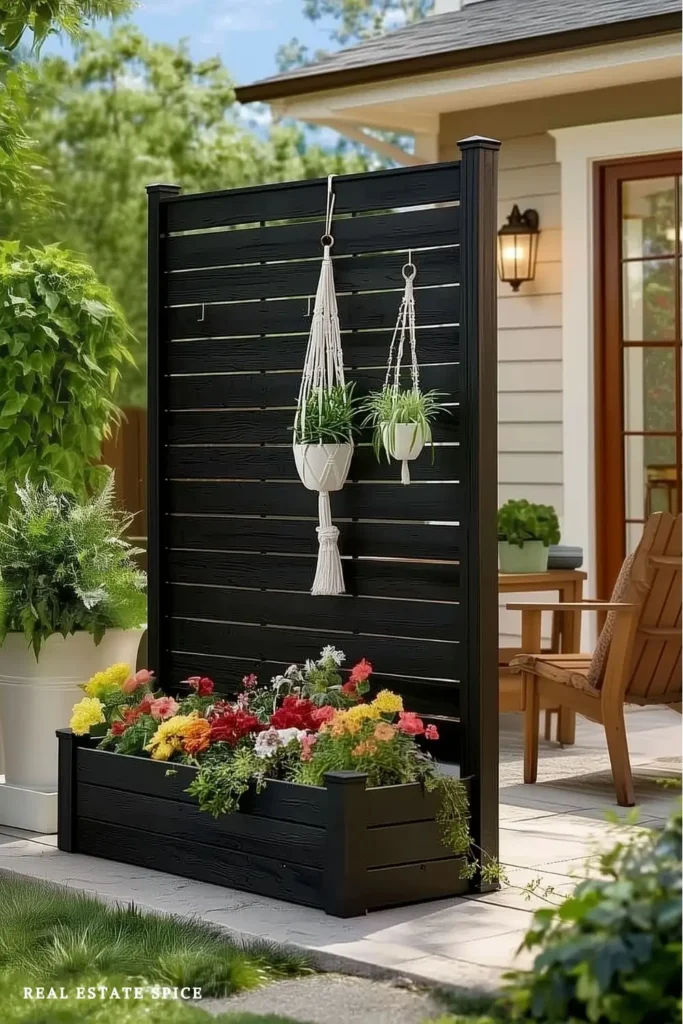
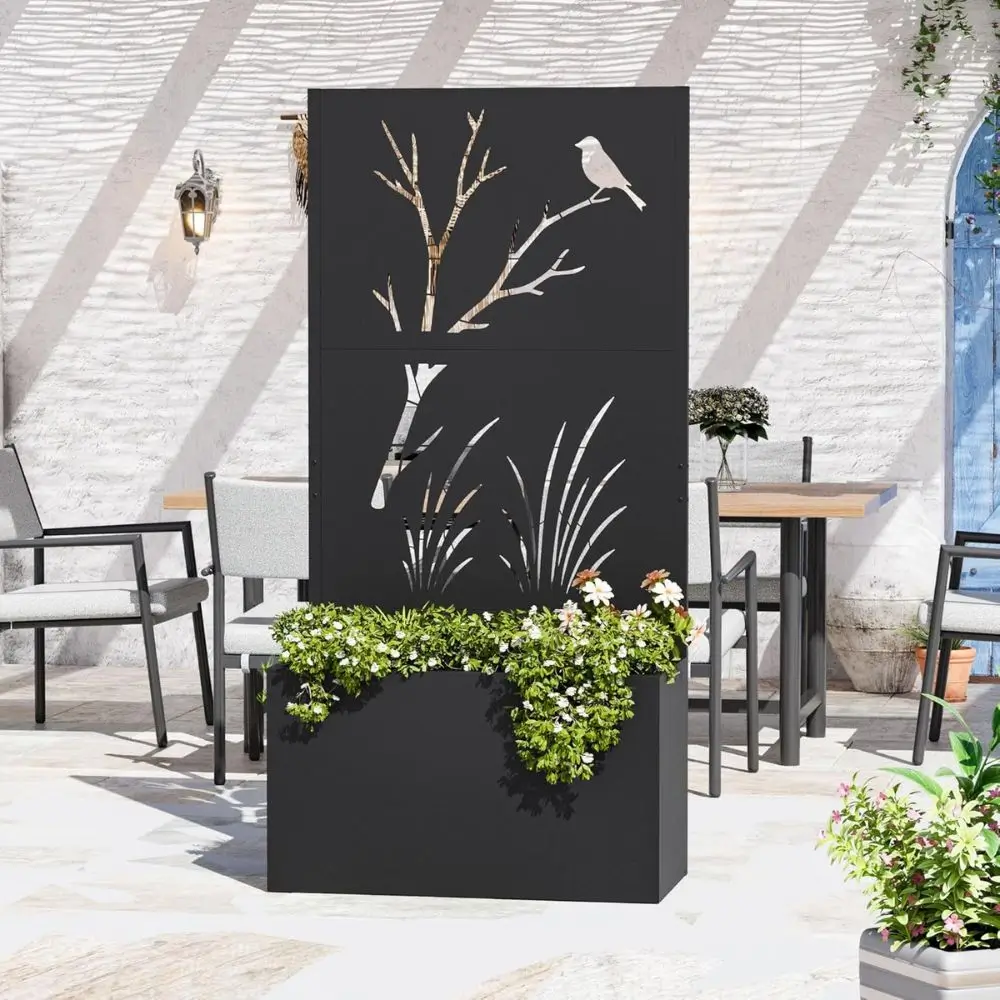
A patio privacy screen is one of the smartest options when you want coverage without committing to a permanent wall.
Screens are useful for renters, smaller patios, or anyone still figuring out the best layout.
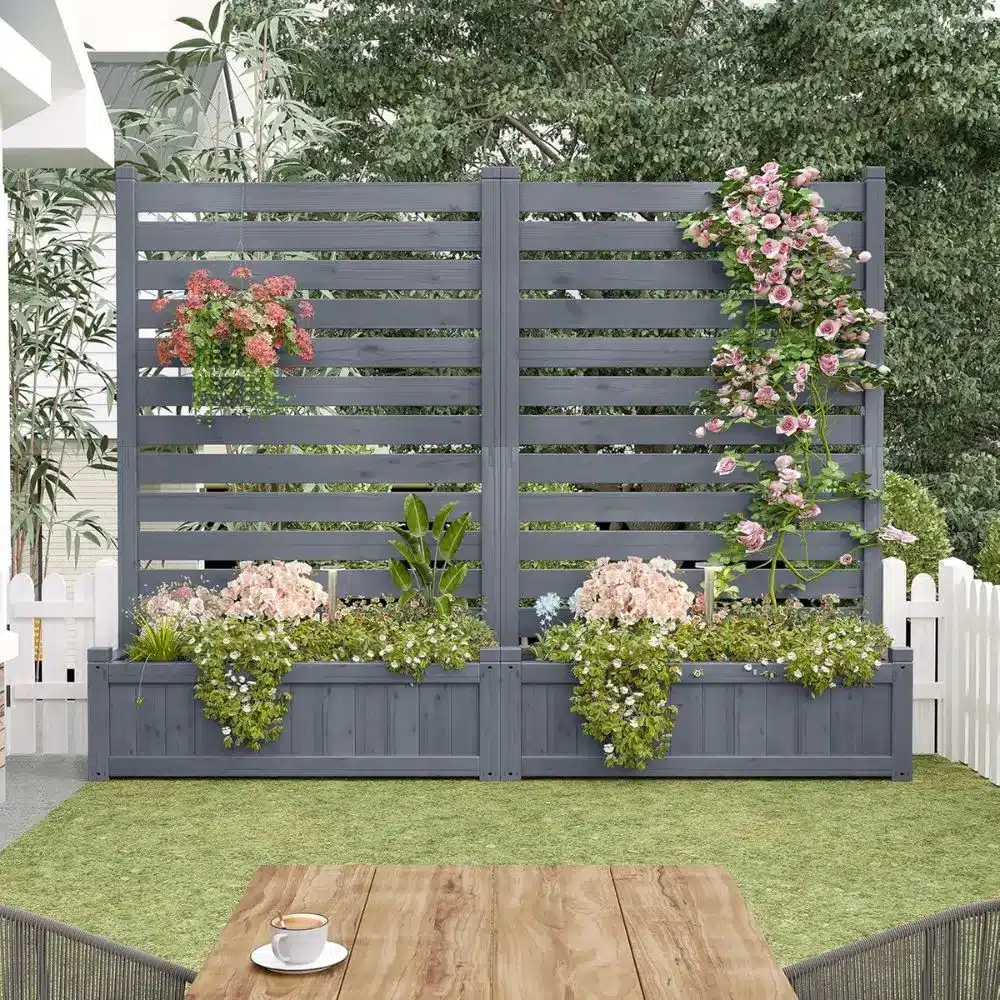
They can sit behind patio chairs, beside an outdoor sofa, or near an outdoor dining table where one exposed angle needs help.
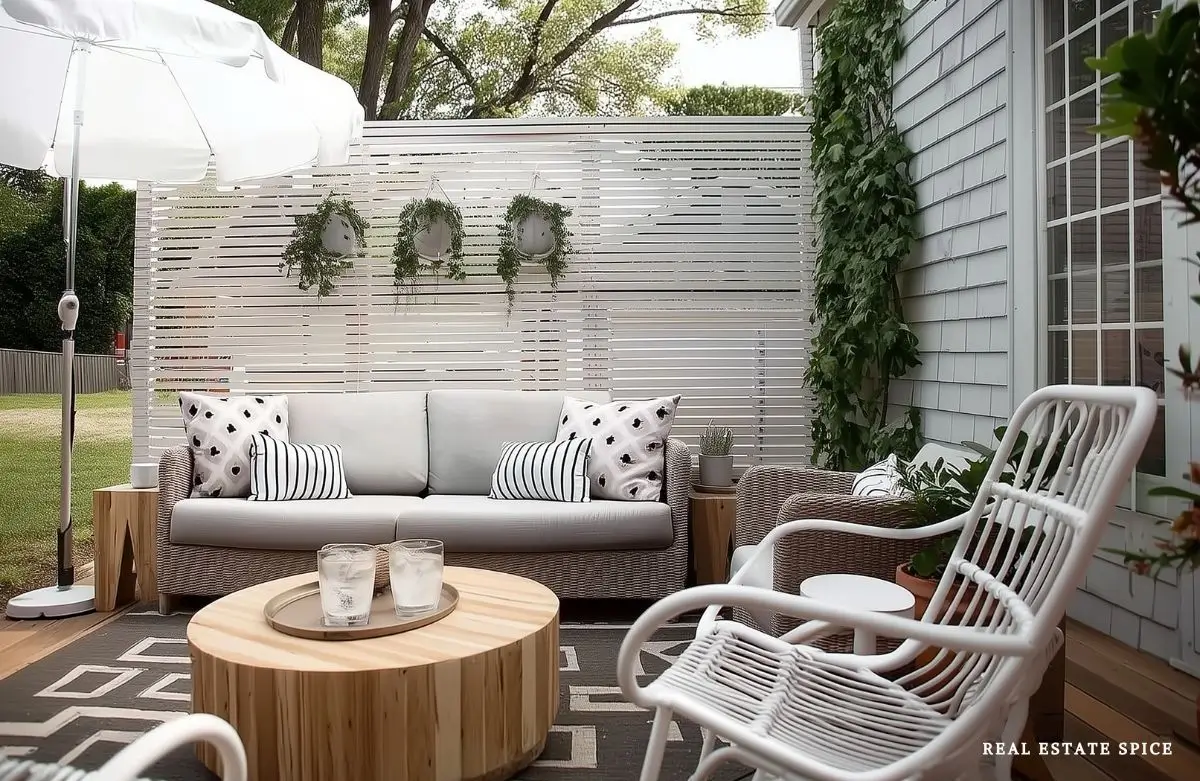
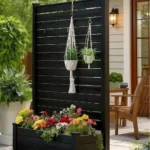
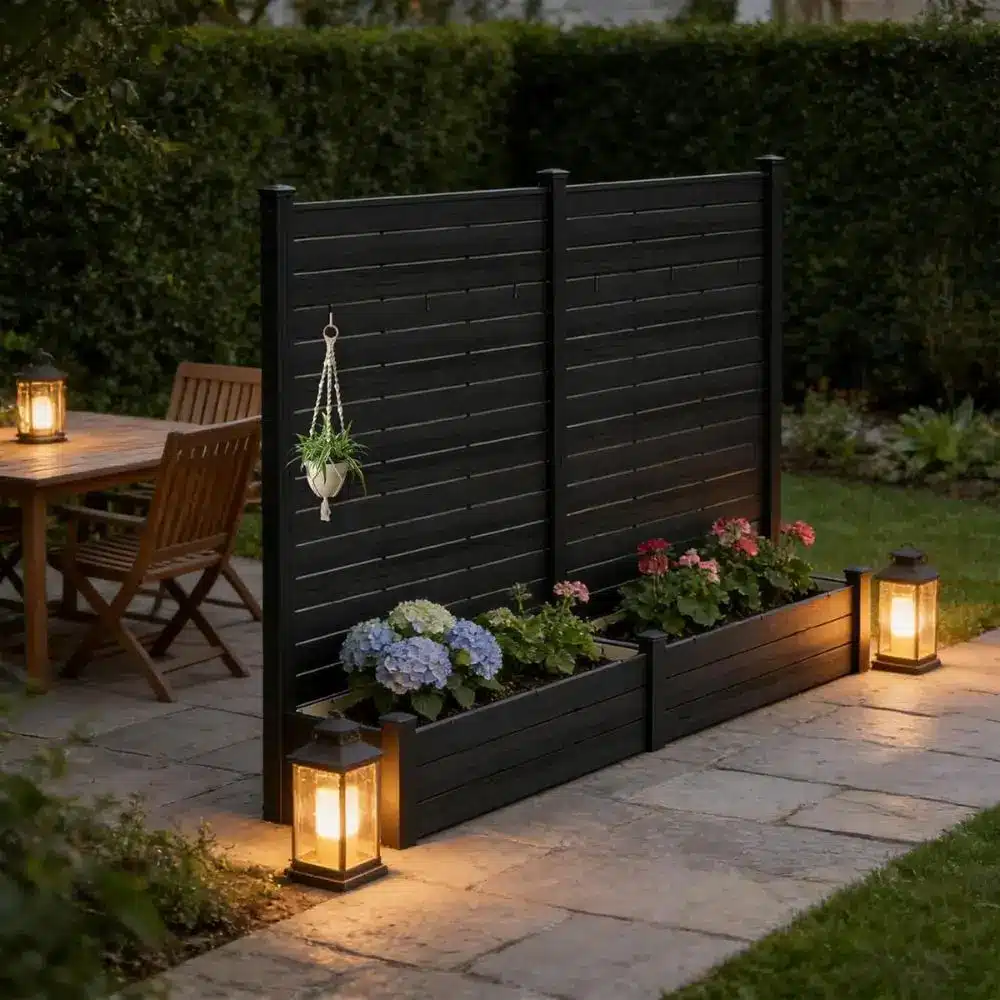
One especially pretty approach is layering a screen with planters in front of it.
The screen does the blocking.
Greenery softens the look.
Together they feel much more natural than a hard barrier standing there alone.
Consider a patio privacy wall for a more built-in feel
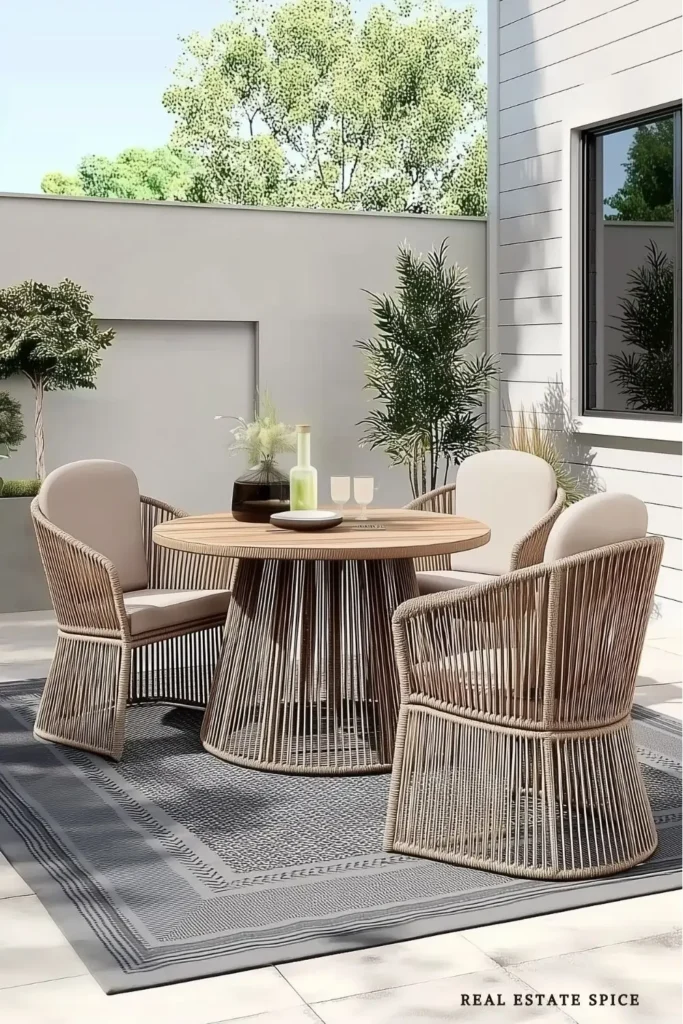
A patio privacy wall can be gorgeous when you want the space to feel truly architectural.
This kind of solution works well in a modern backyard where clean lines matter, or on a patio that already has strong hardscape elements.
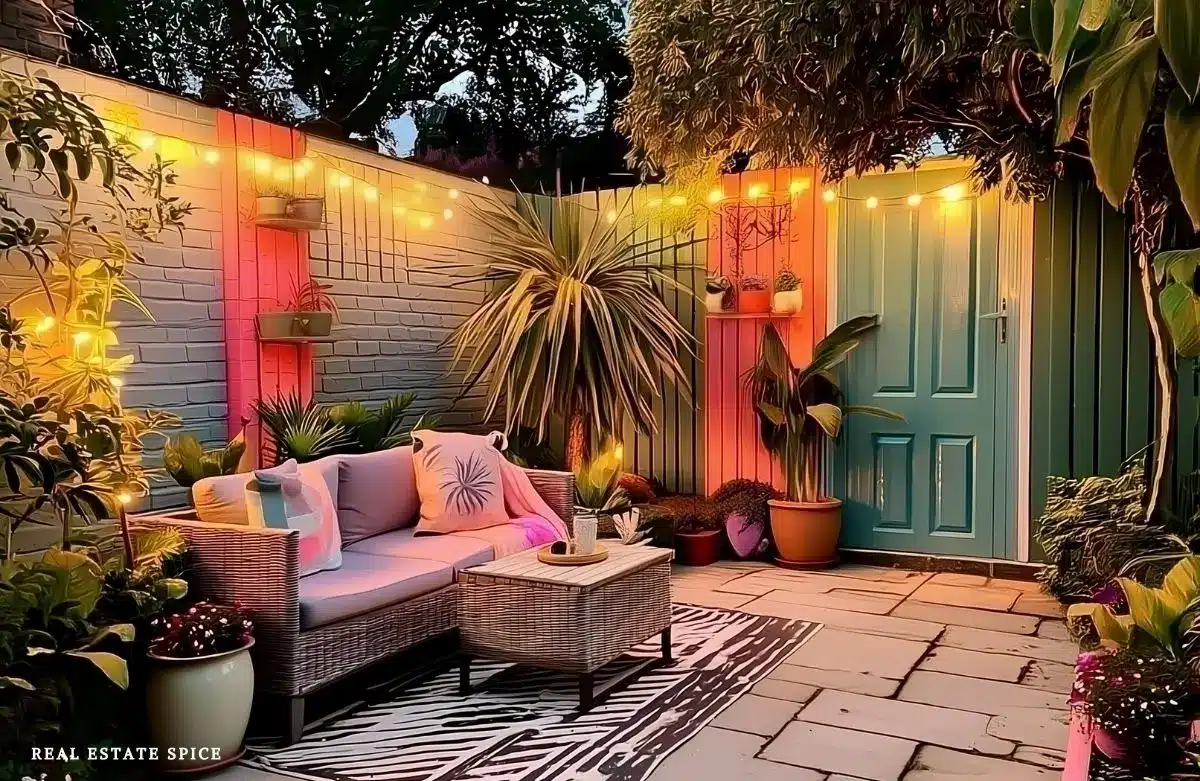
Add vertical planters, mounted lanterns, or a slim shelf for outdoor lamps and the wall suddenly feels useful as well as pretty.
It’s a perfect solution for an intimate dining area or a private lounging area.
Use Plants to Create Softer Privacy
Plants are some of the prettiest privacy tools you can use because they solve a practical problem while making the patio feel more alive.
Privacy planters for patio areas can create coverage, define the edges of the seating zone, and add height without the visual heaviness of a permanent barrier.
Tall planters work well, too, and you can tier them for additional height and depth.
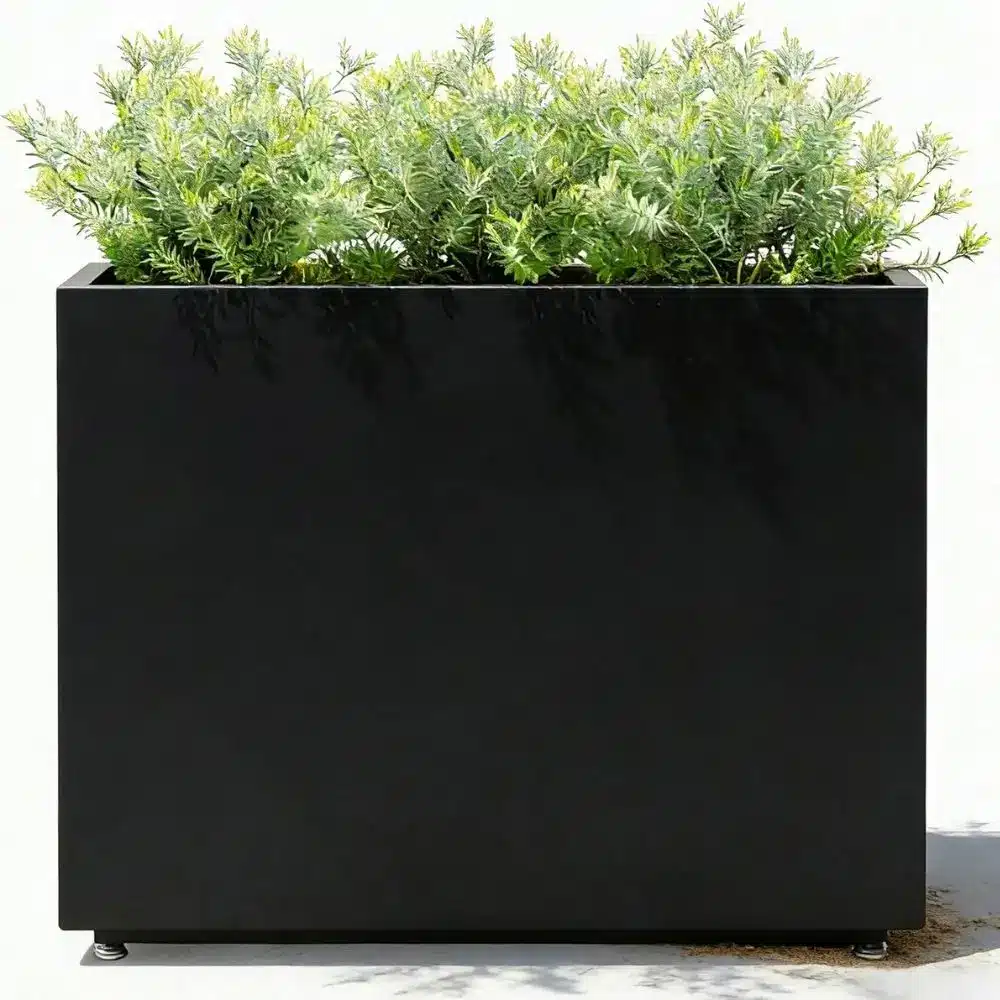
Build privacy planters for patio zones that matter most
A patio usually does not need a plant wall around the entire perimeter.
Most of the time, it needs a stronger planted layer behind the main seating area or beside the dining table.
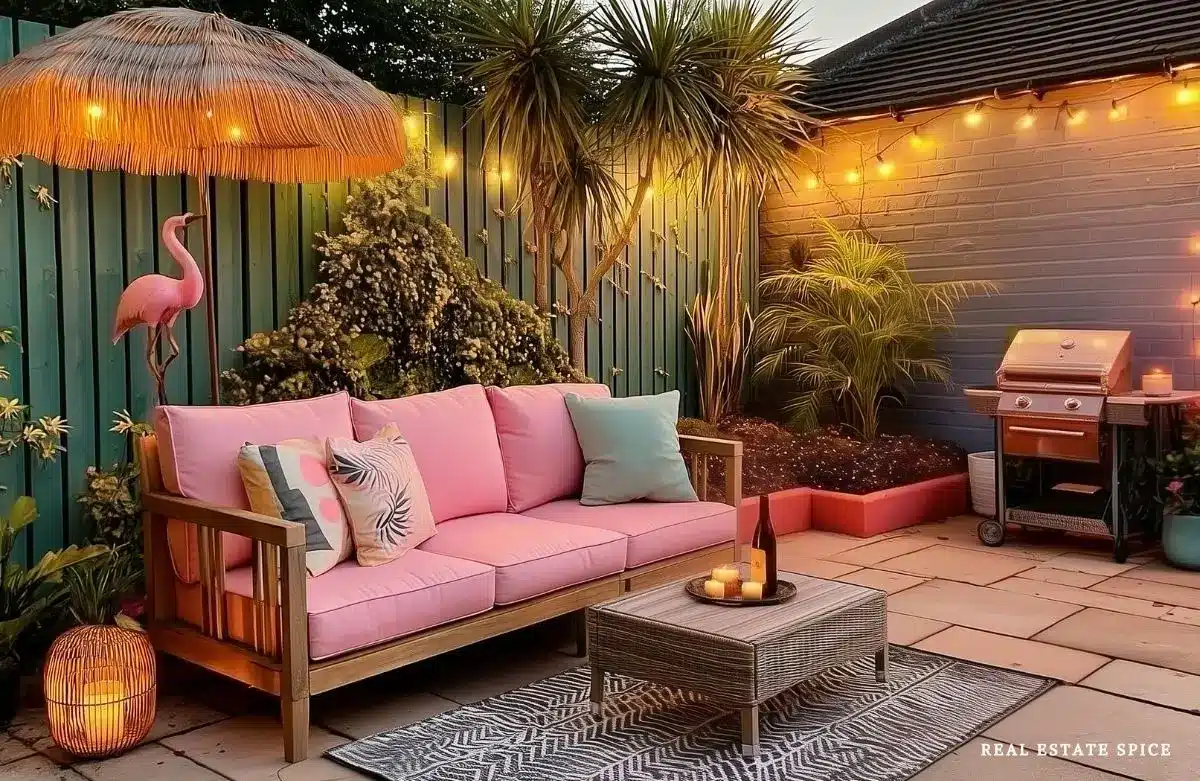
Large planters with ornamental grasses, small evergreens, bamboo, or upright shrubs can create a lovely backdrop behind an outdoor sofa or outdoor bench.
A bamboo privacy fence look is especially appealing when you want something natural look and a little more relaxed.
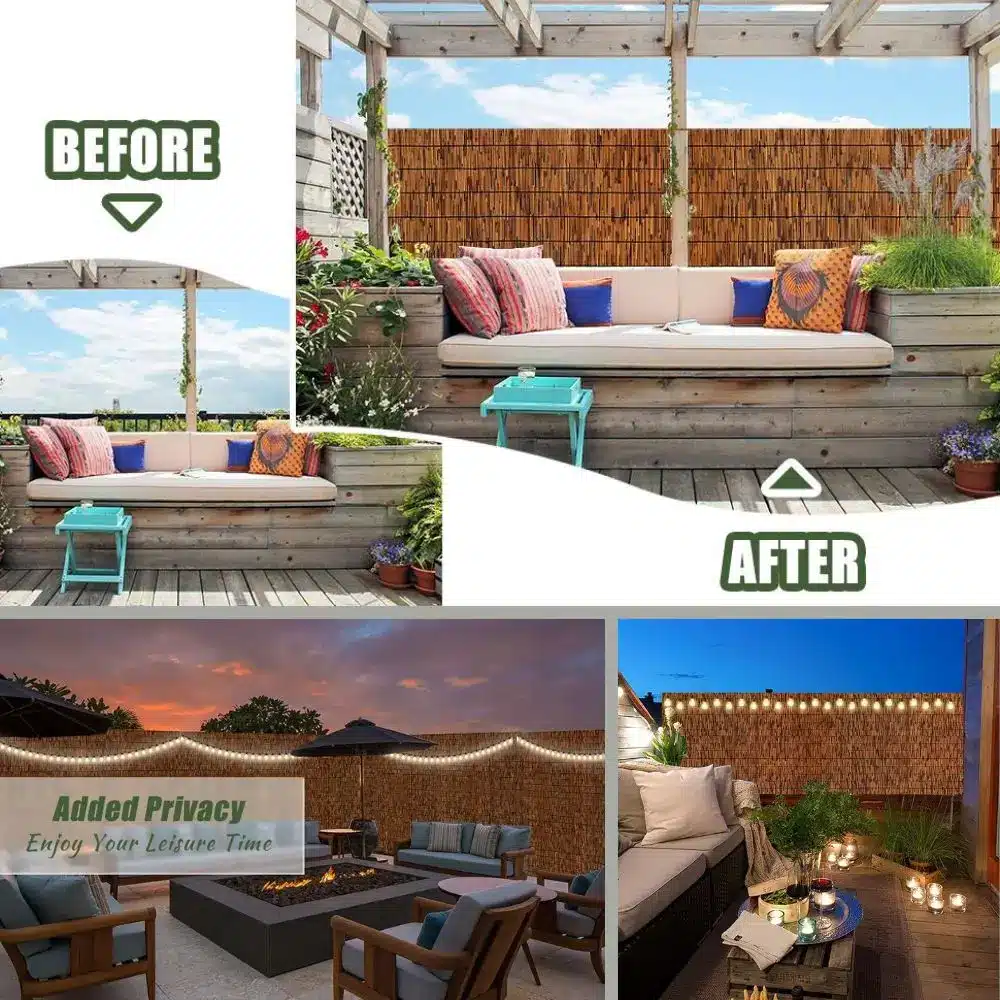
Try the layered planter pocket
One unique idea is creating a layered planter pocket instead of a straight line of matching containers.
Place your tallest planter at the back, a medium planter slightly in front, and a lower one toward the edge of the patio.
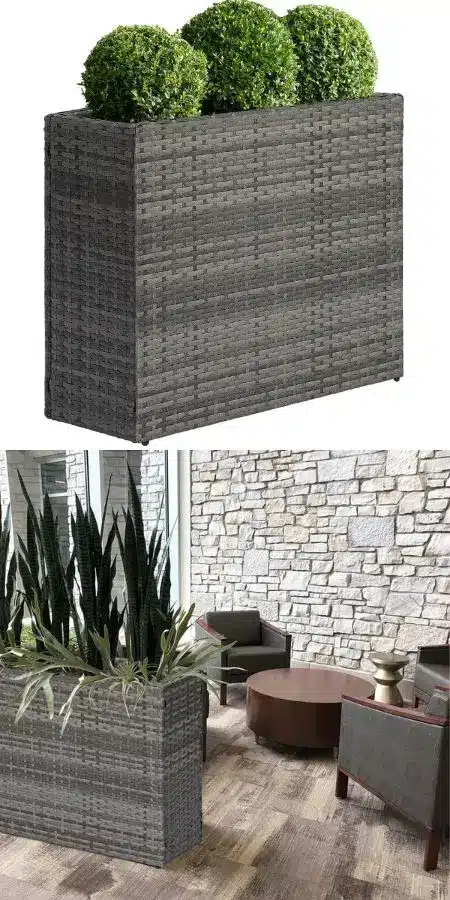
That staggered shape feels more natural, offers better privacy at sitting height, and makes the patio feel designed rather than lined up like a plant parade.
Soften the Patio With Fabric, Shade, and Structure
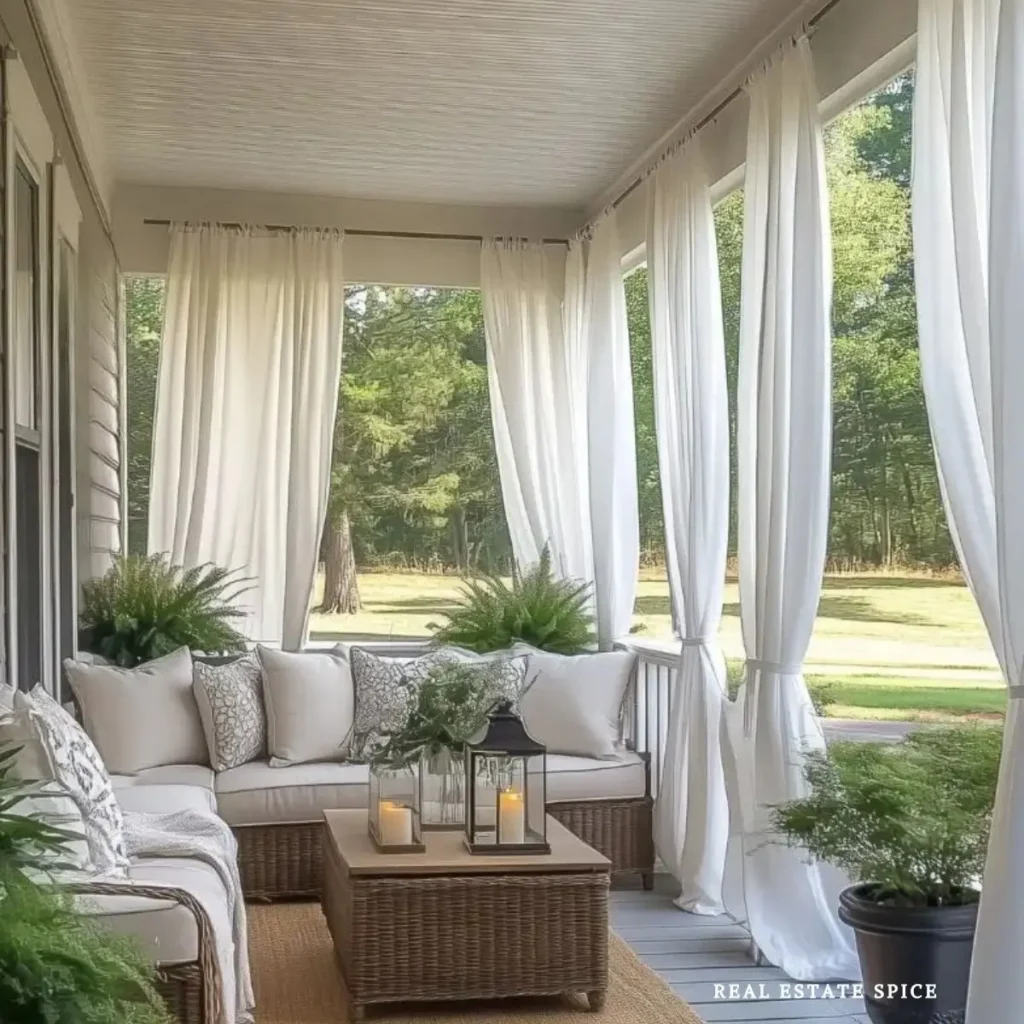
Outdoor curtains make everything feel calmer
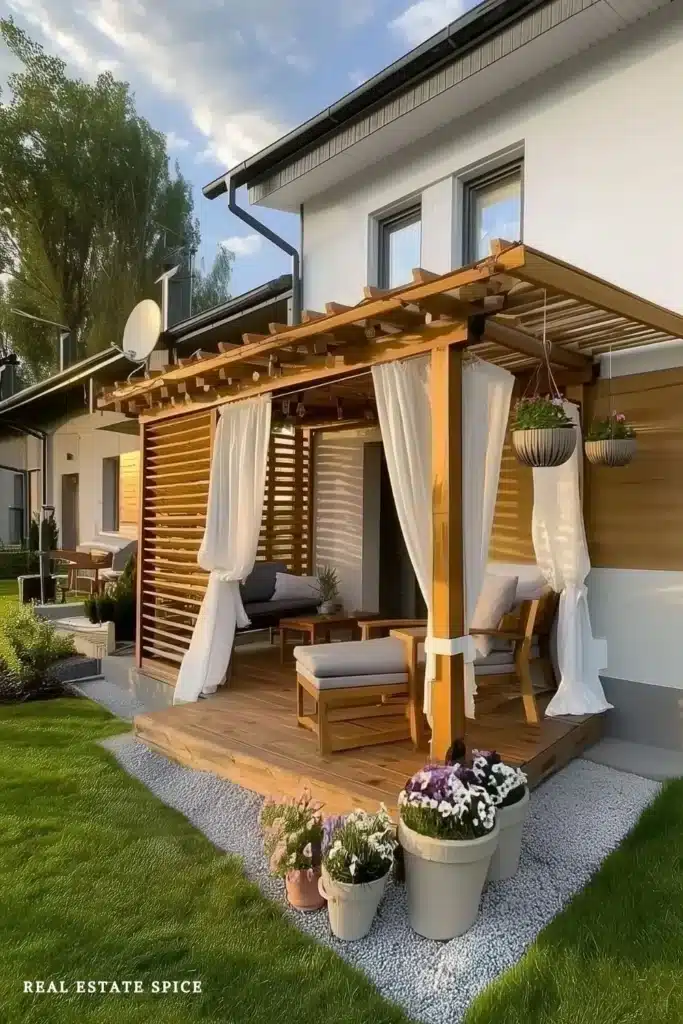
Outdoor curtains are one of the fastest ways to soften a patio.
They move with the breeze, make the seating area feel more tucked in, and add that room-like feeling people love.

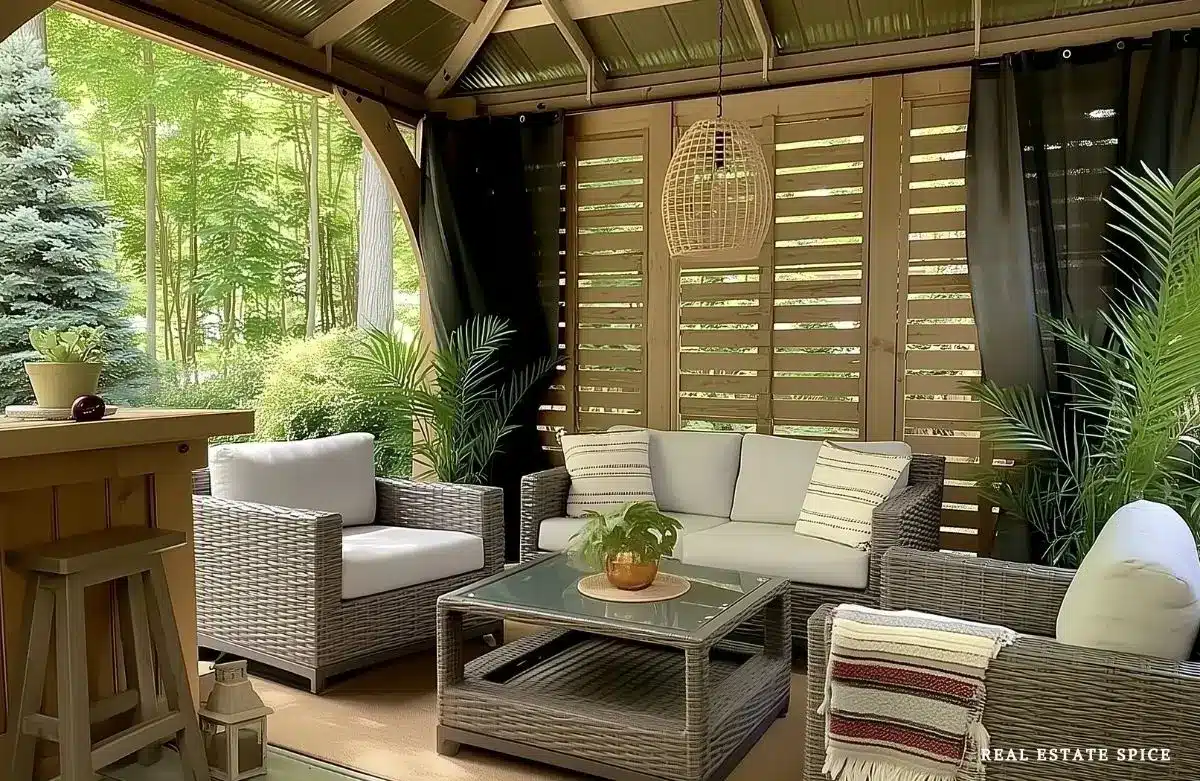
Curtains work beautifully on covered patios, pergolas, gazebos, and even simple tension-rod setups where you need privacy on one side.

Small patio privacy benefits a lot from outdoor curtains because the fabric gives you coverage without looking bulky.
Use shades when you need privacy and sun control
Shades are wonderful when the patio gets strong afternoon sun and exposure at the same time.
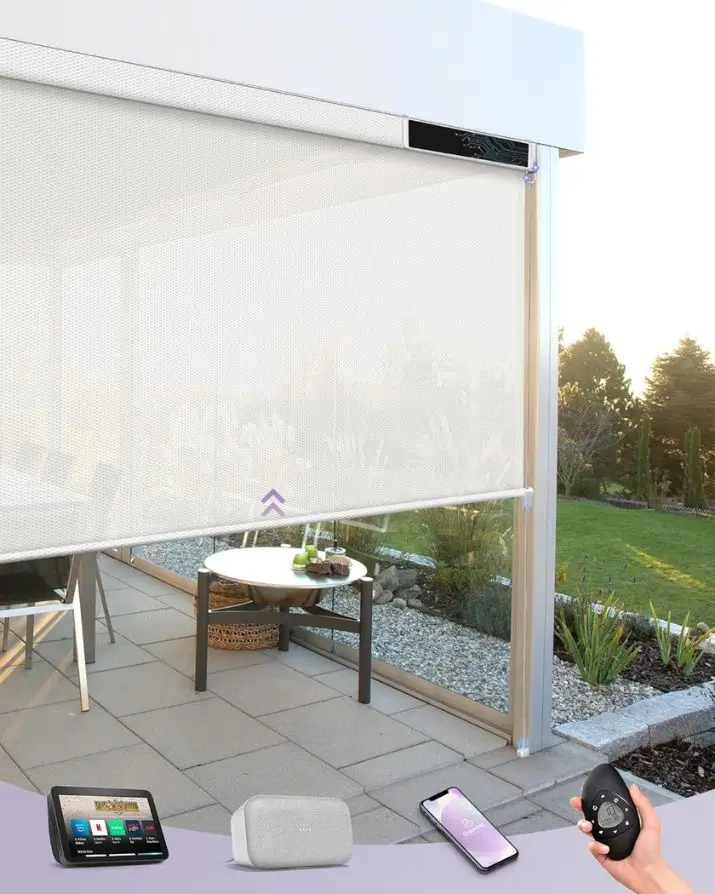
They give you privacy, soften glare, and help the patio feel cooler during the day.
Roll-down shades can look especially good on a modern backyard patio, while woven shades add more texture and warmth.
Pergolas and gazebos add shape as well as shelter
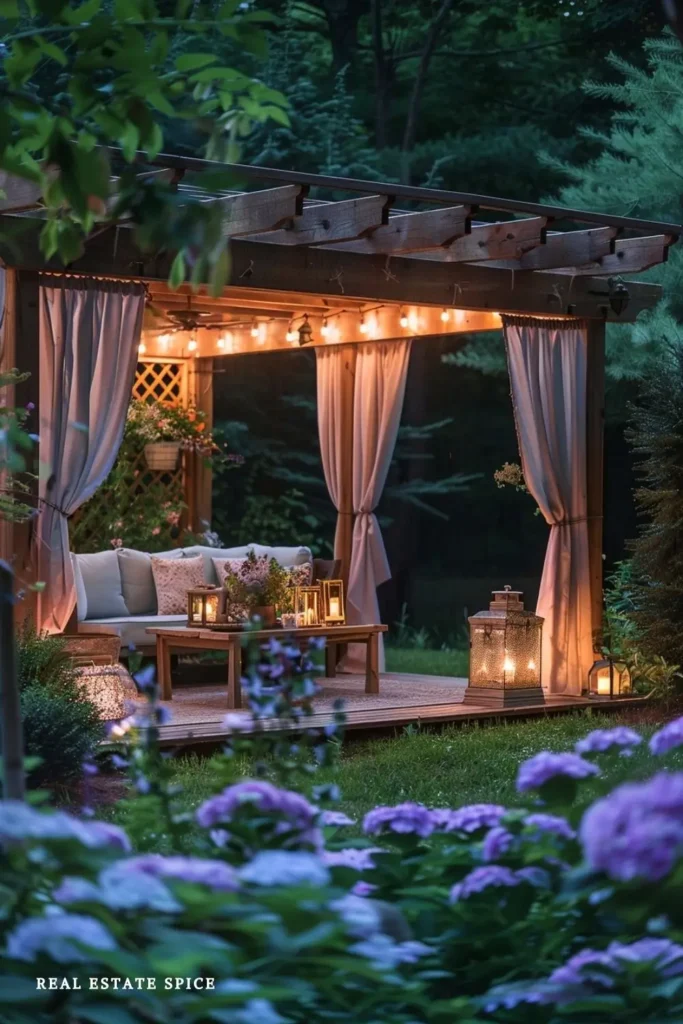
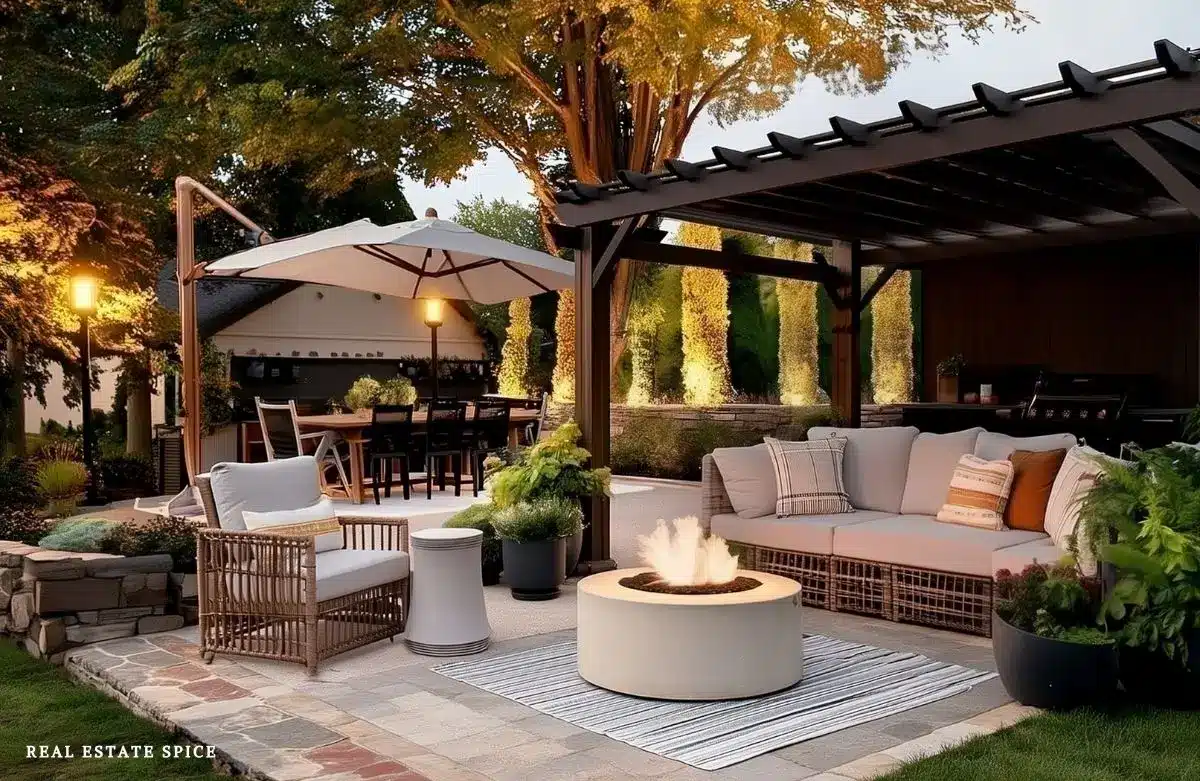
Pergolas and gazebos can completely transform a patio because they create an outdoor room feeling.
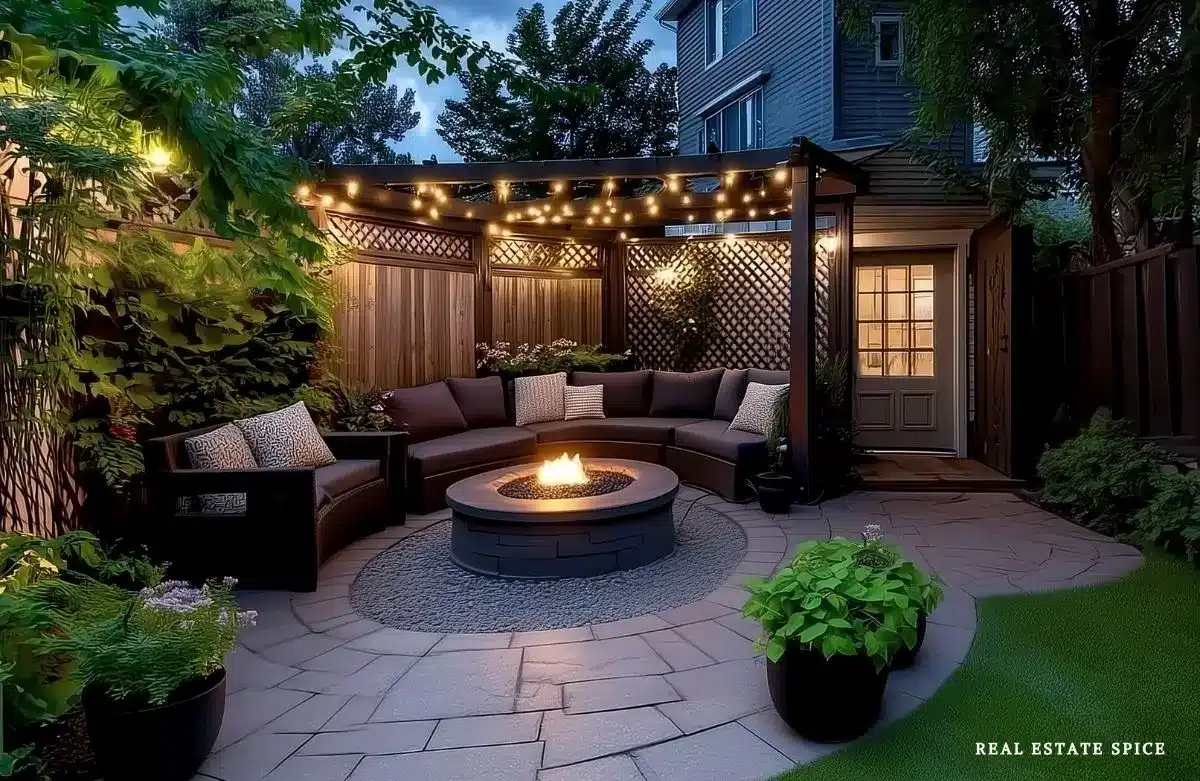
They add structure without fully closing the space in, which makes them great for curtains, lights, or climbing vines.
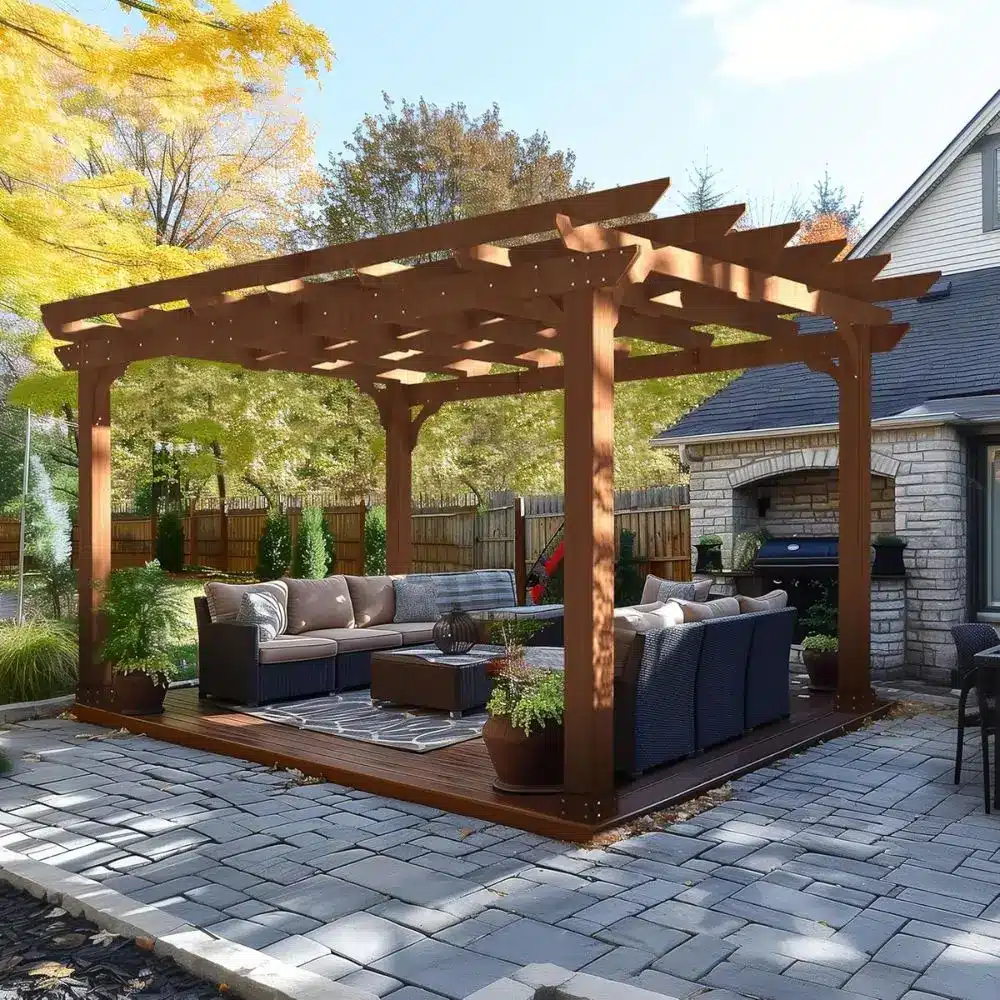
Gazebo ideas for your backyard do not have to be dramatic, either.
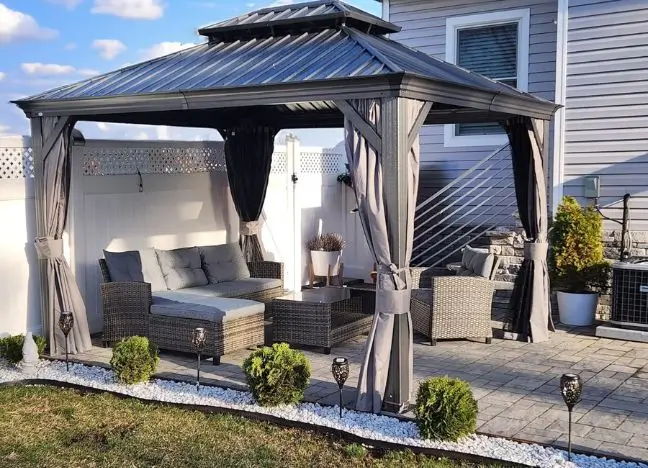
A compact gazebo over an outdoor dining table or seating corner can give the patio privacy, shade, and atmosphere all at once.
Choose Furniture That Makes the Patio Feel Like a Room
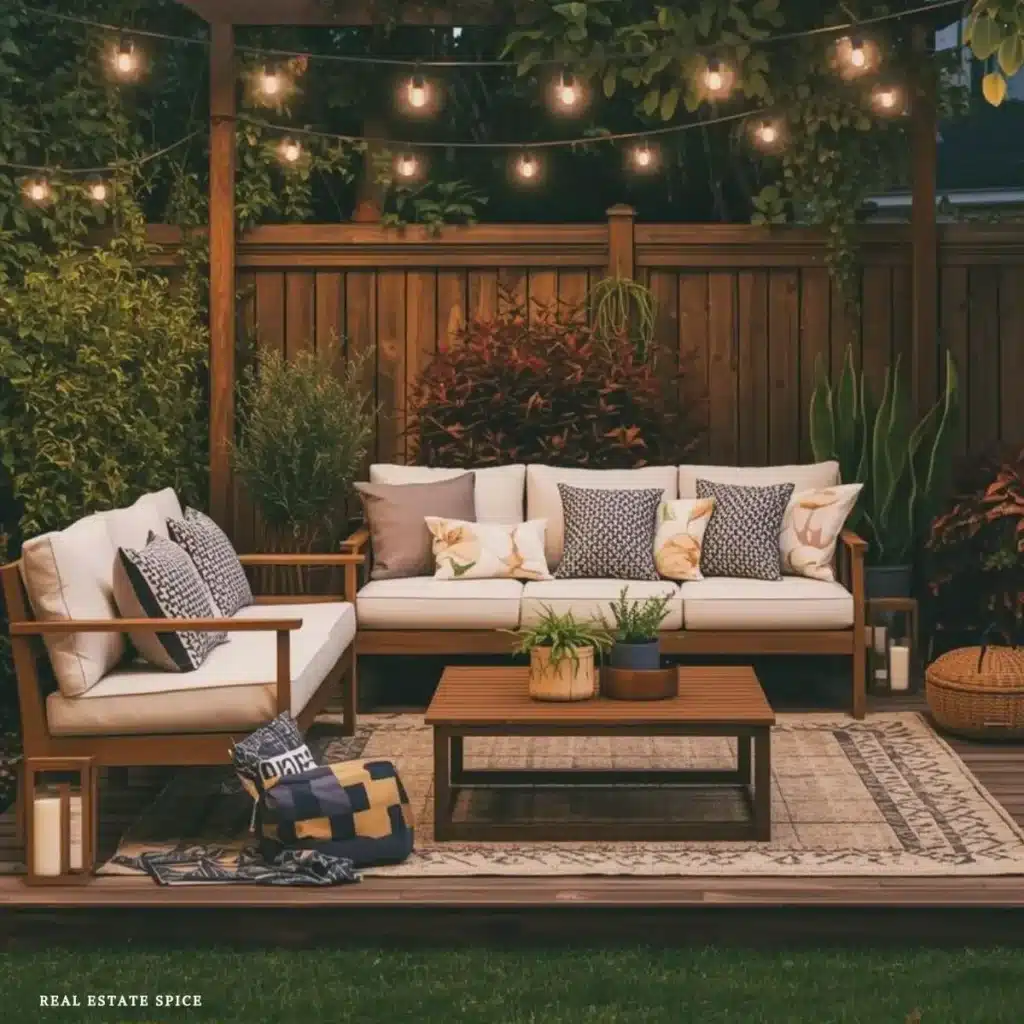
Once the privacy pieces are working, the furniture needs to support that same comfortable mood.
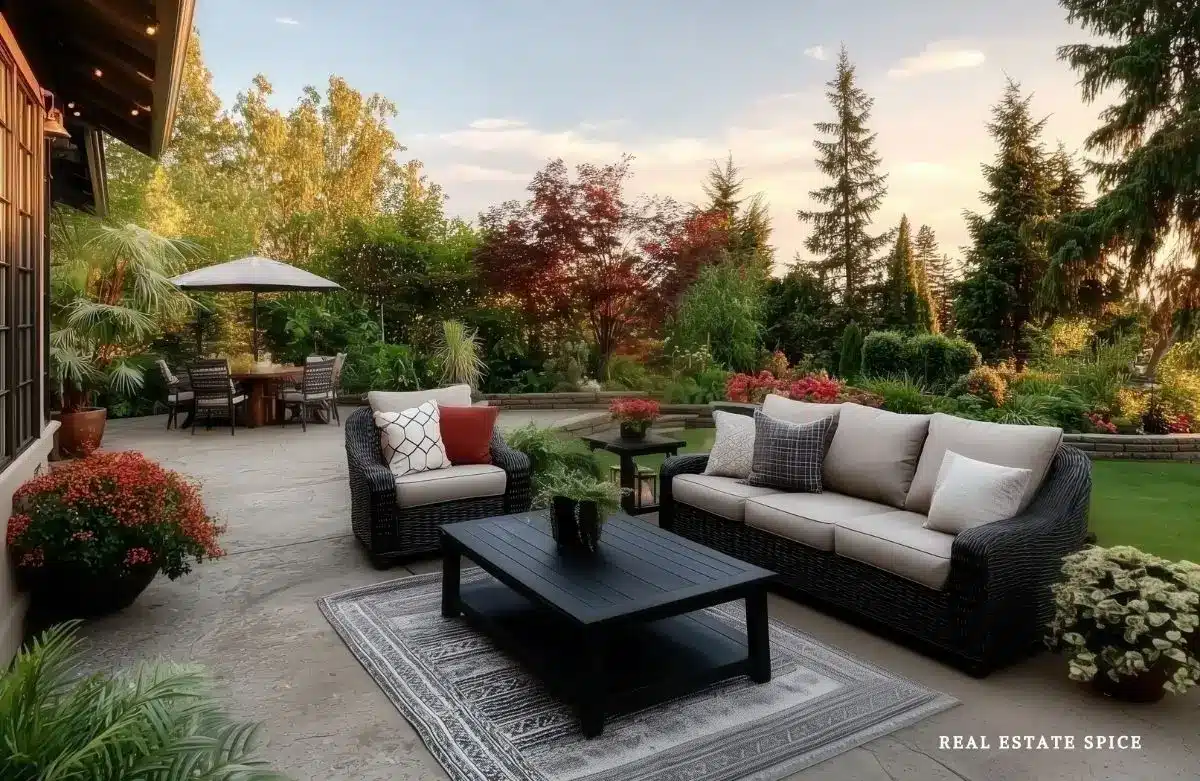
Patio privacy feels far more complete when the backyard seating and furniture arrangement makes sense and the scale matches the space.
Use outdoor seating that fits the patio, not the fantasy
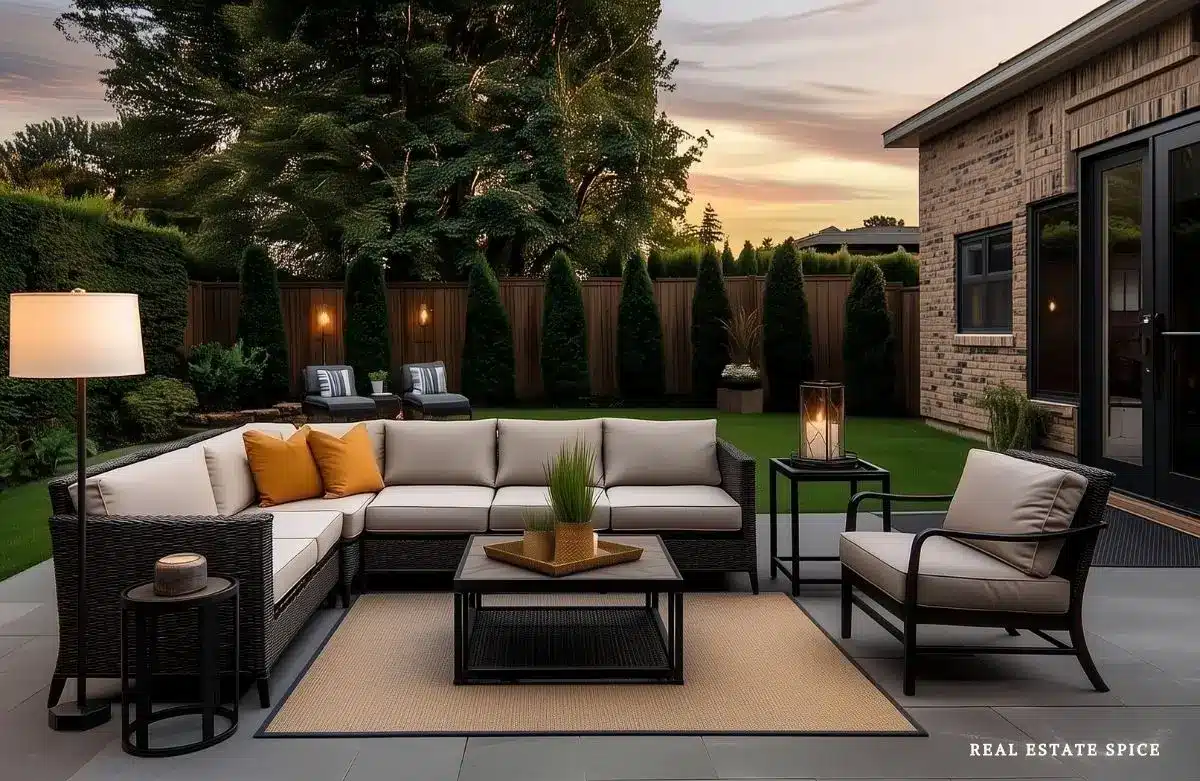
An outdoor sofa can look wonderful on the right patio, but it needs enough space around it to breathe.
Smaller patios may do better with two outdoor chairs, an outdoor bench, or slim patio chairs that can shift around more easily.
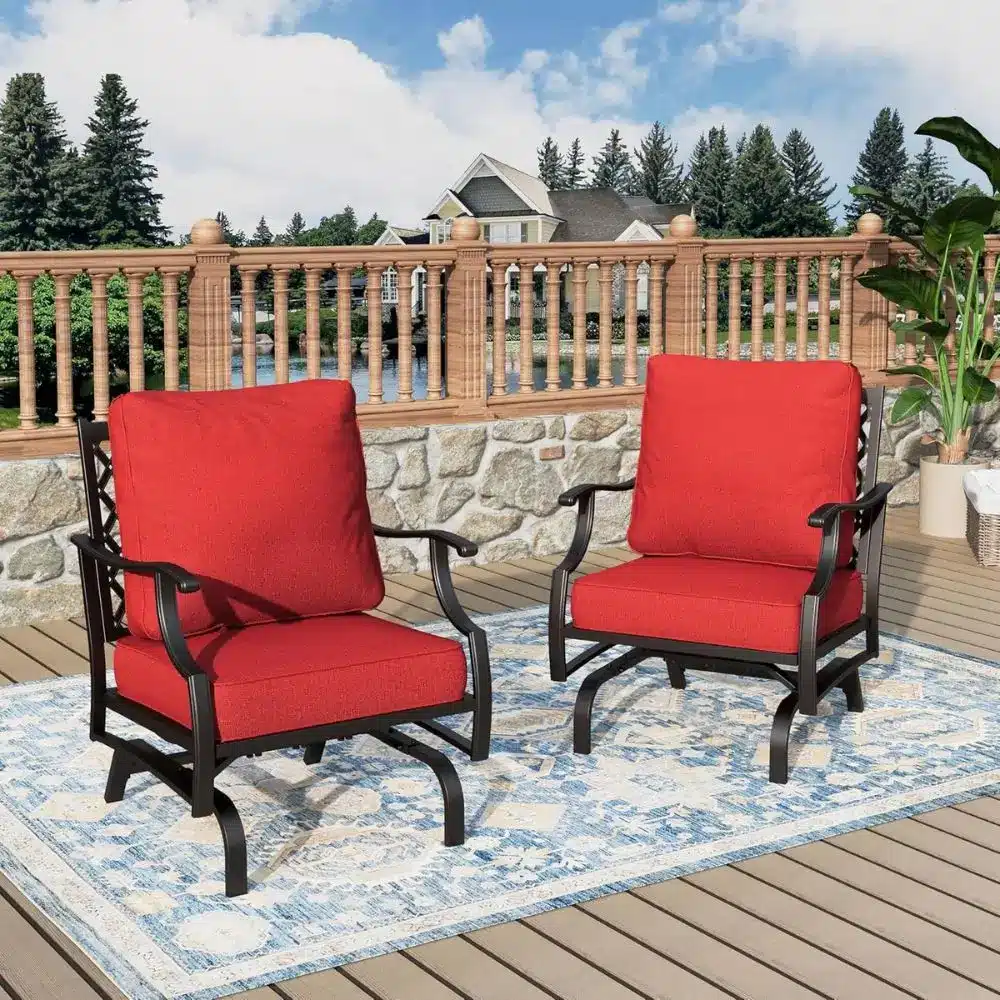
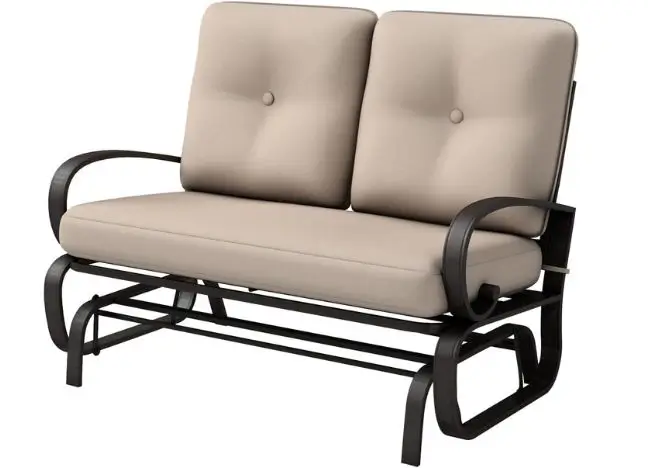
Outdoor furniture sets are helpful when you want a quick coordinated look, but smaller groupings often feel more natural in a compact space.
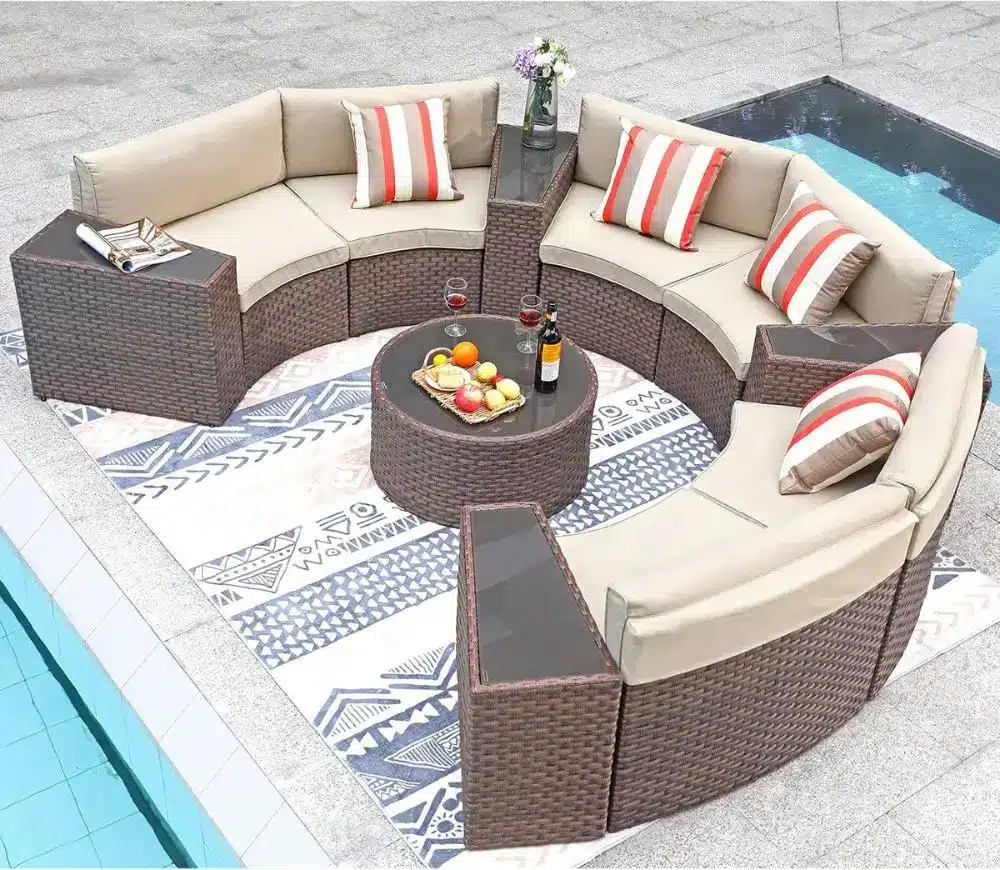
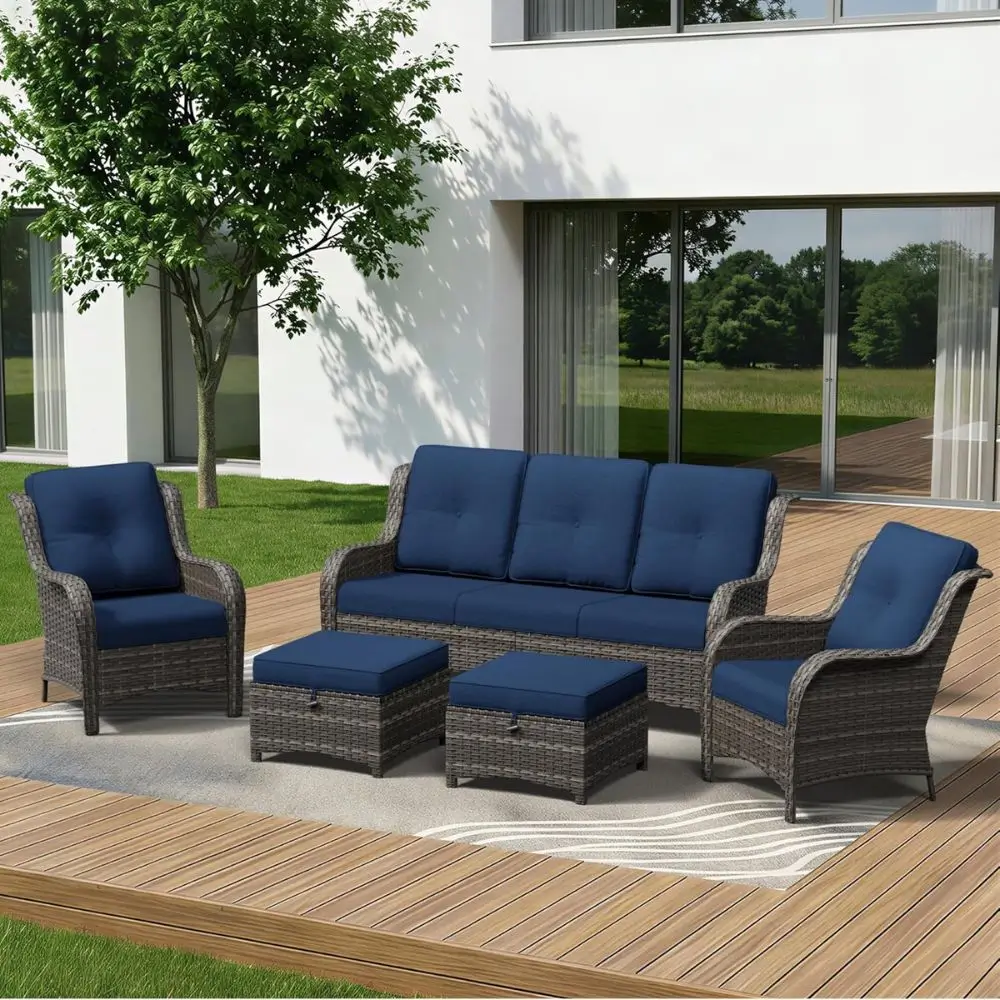
For small patio privacy, try a loveseat or bench against the most sheltered wall, then add one or two outdoor chairs facing inward.
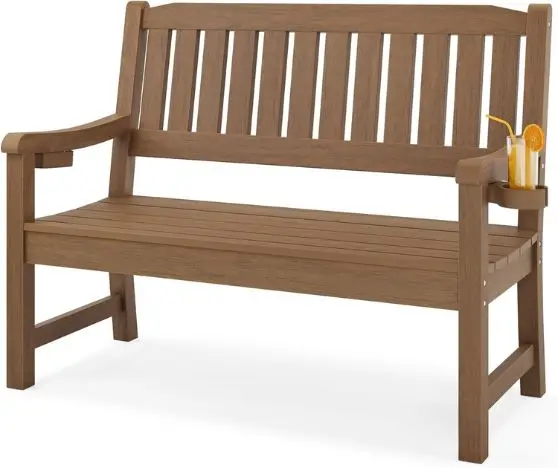
That arrangement feels intimate, uses the patio footprint well, and leaves room for movement.
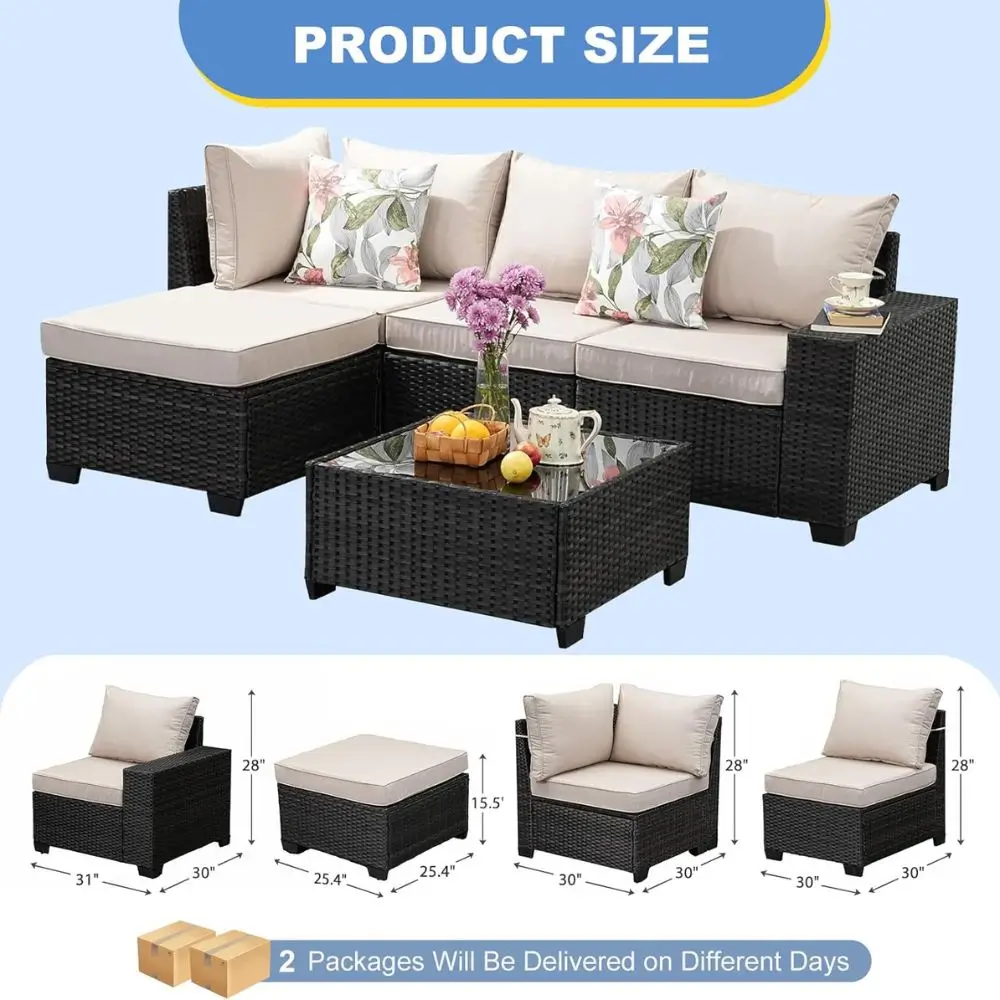
Bring in the right tables for comfort and function
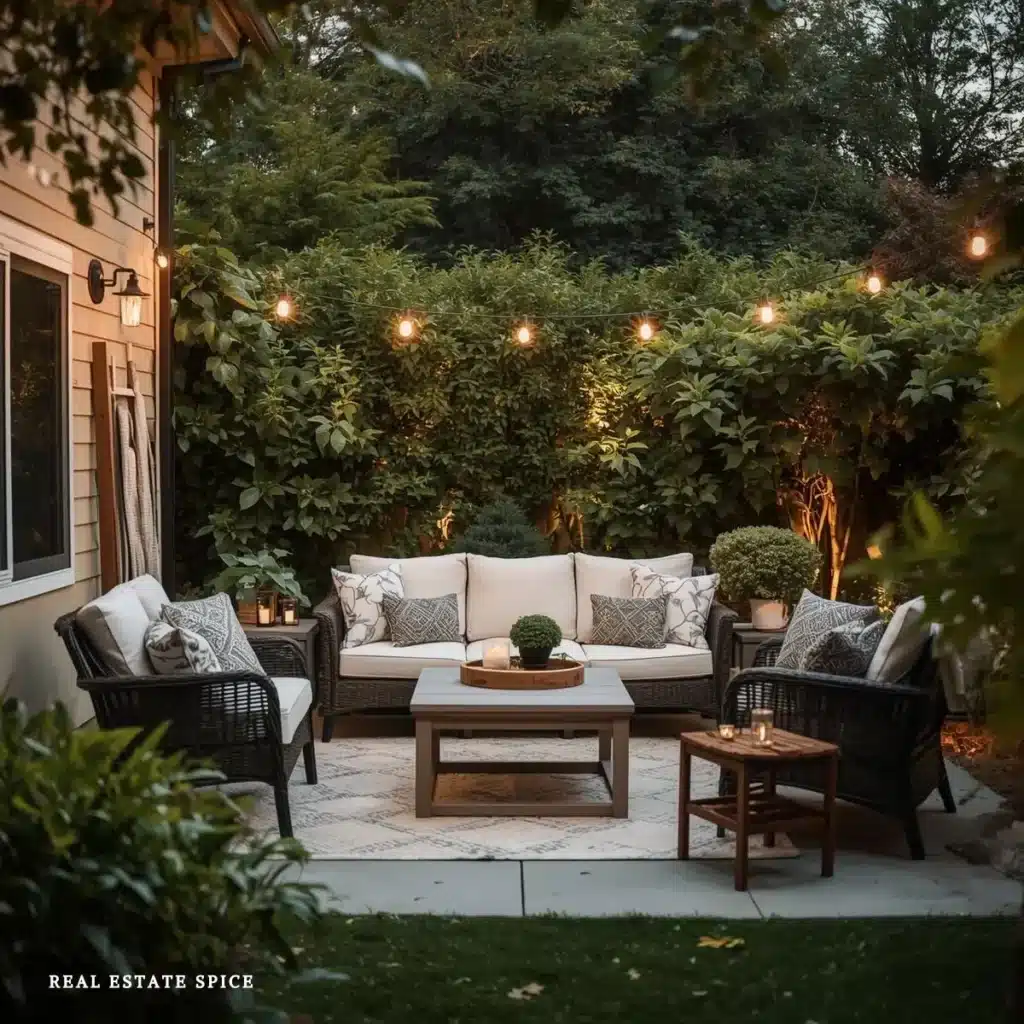
Outdoor backyard tables make the patio feel livable.
A good setup might include an outdoor coffee table in the lounge zone, outdoor side tables beside each chair, or an outdoor dining table if the patio is used for meals.
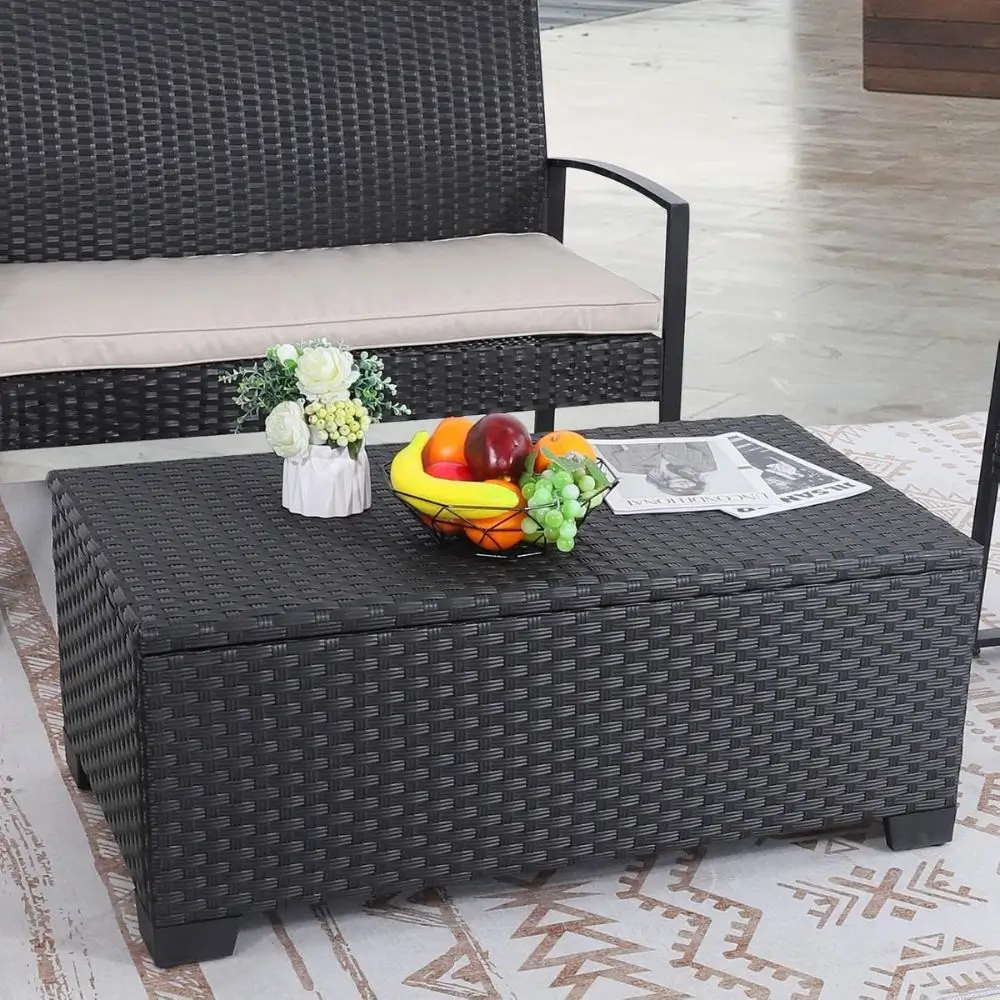
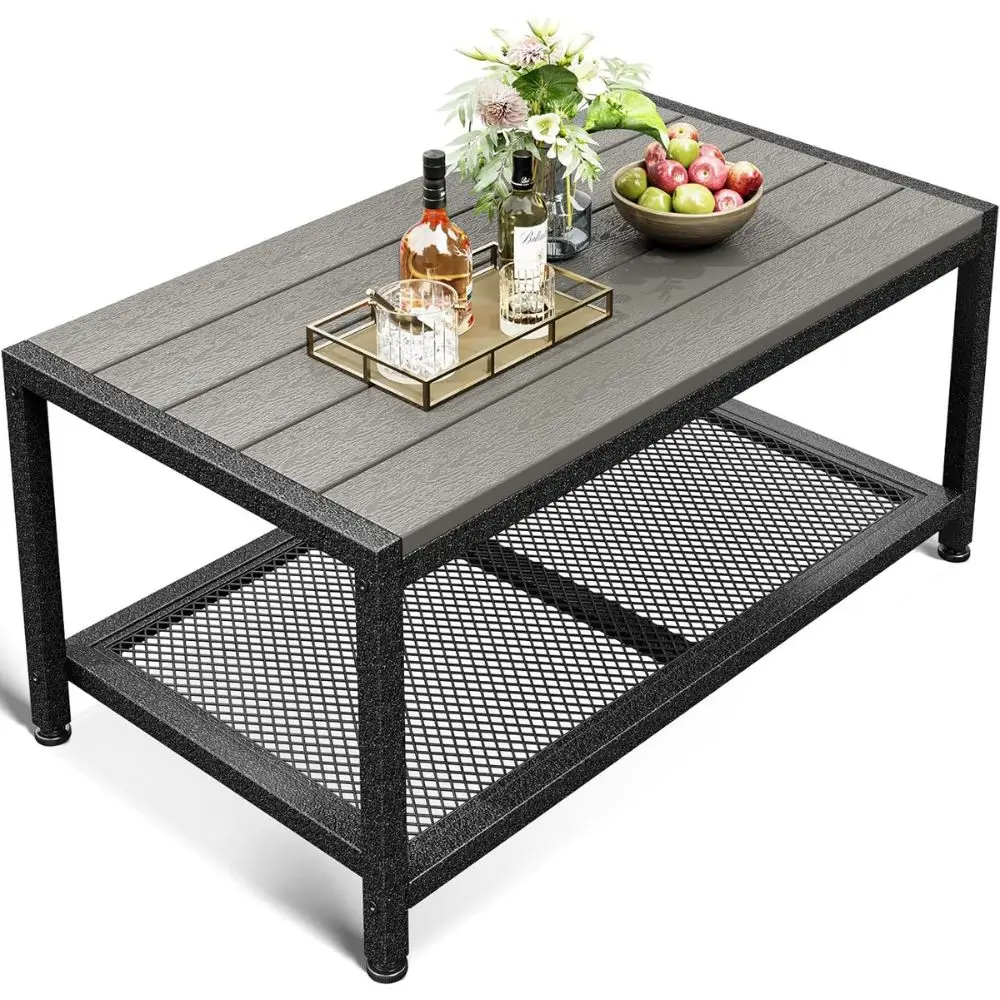
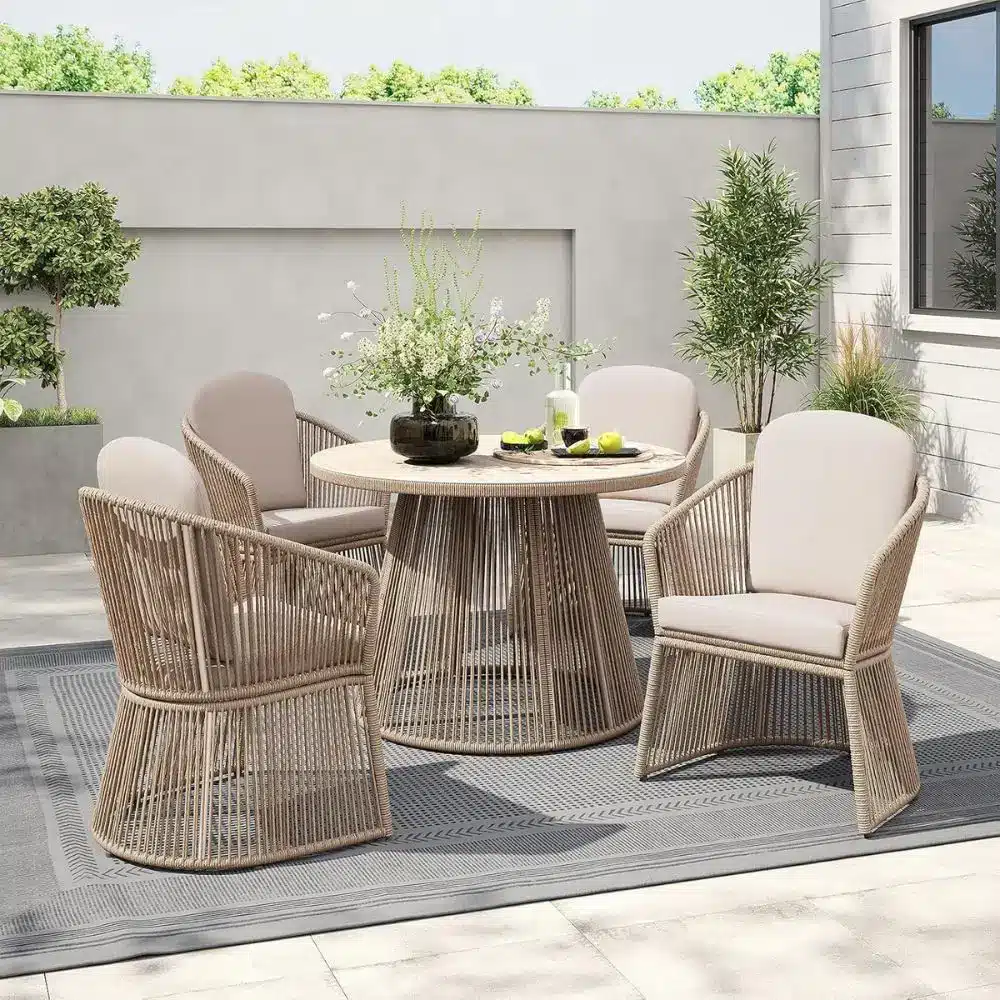
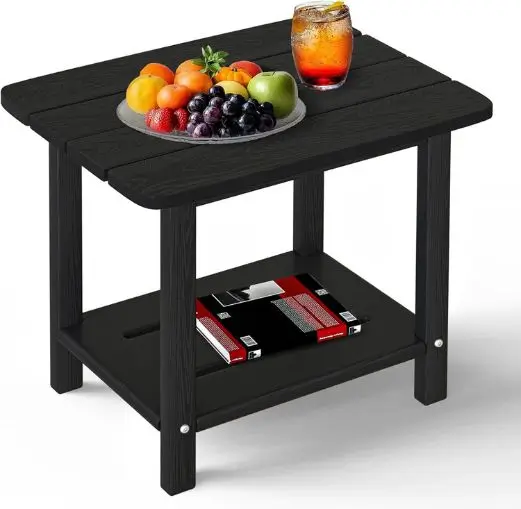
Cozy outdoor tables in warmer materials like wood or woven finishes help soften the space, while sleeker outdoor patio tables can support a more modern backyard look.
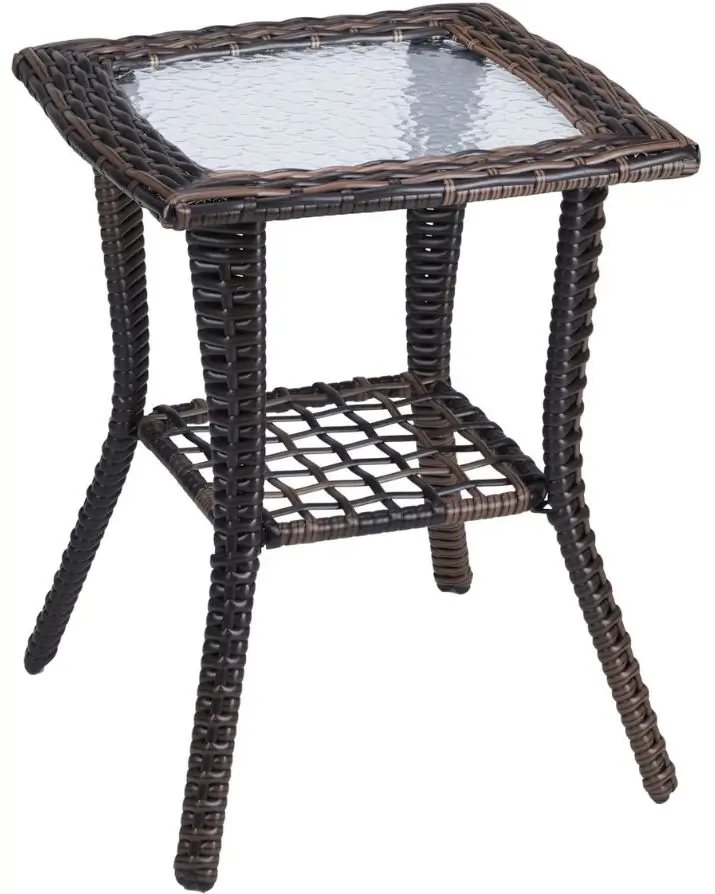
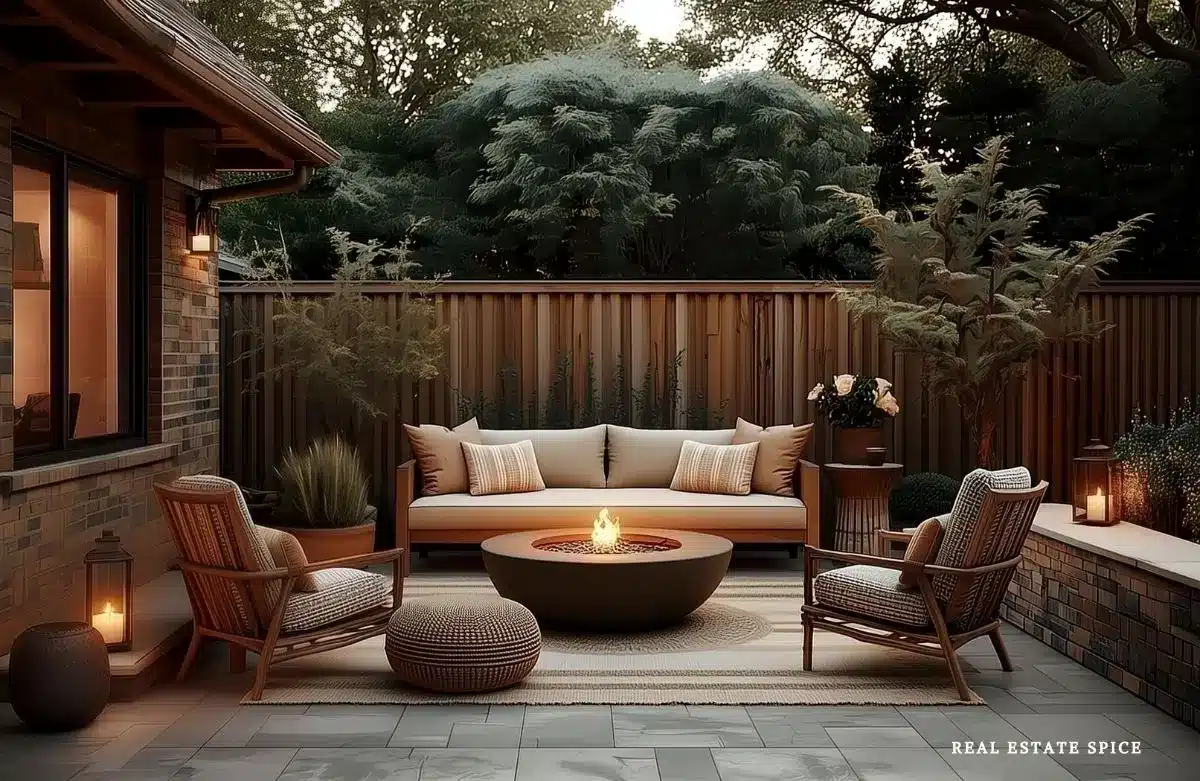
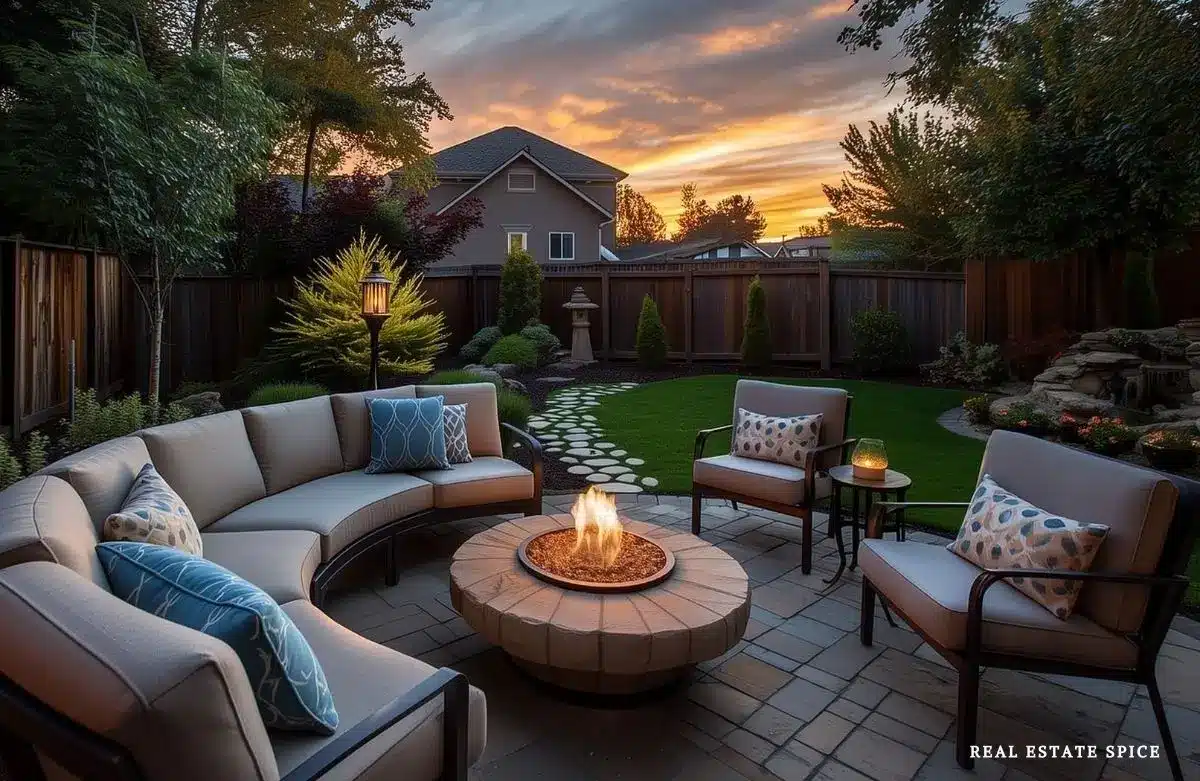
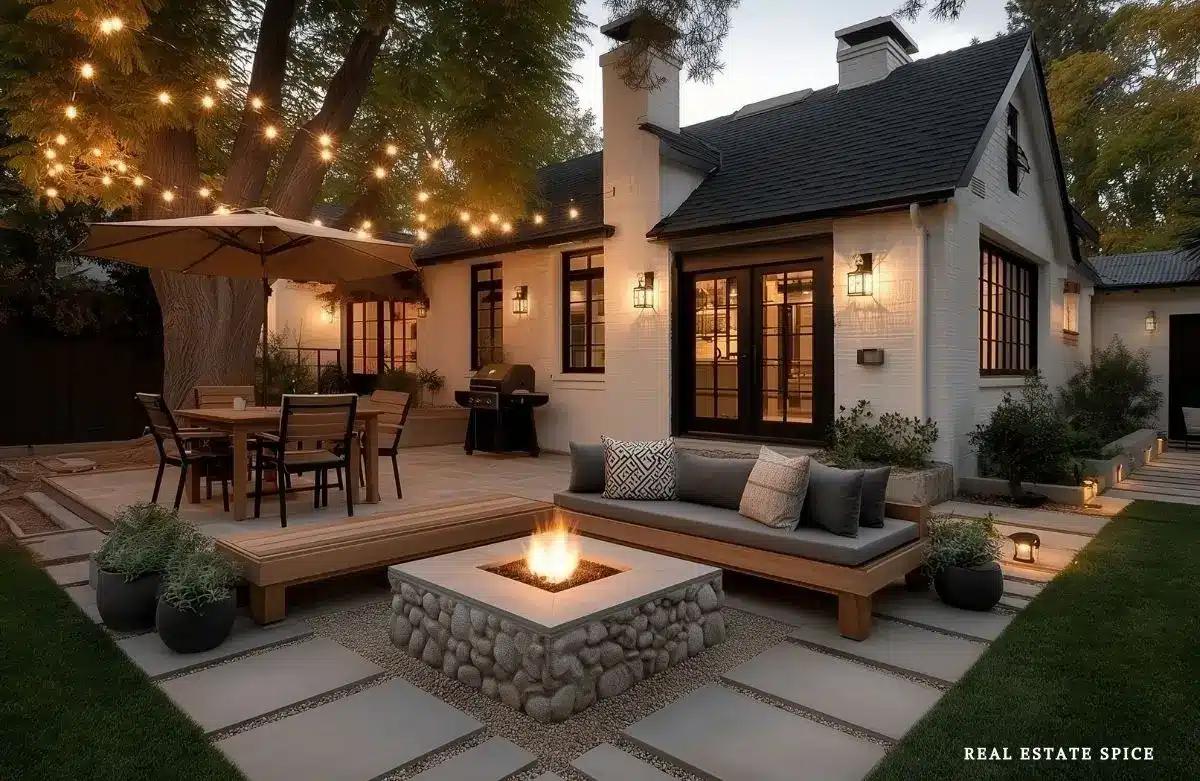
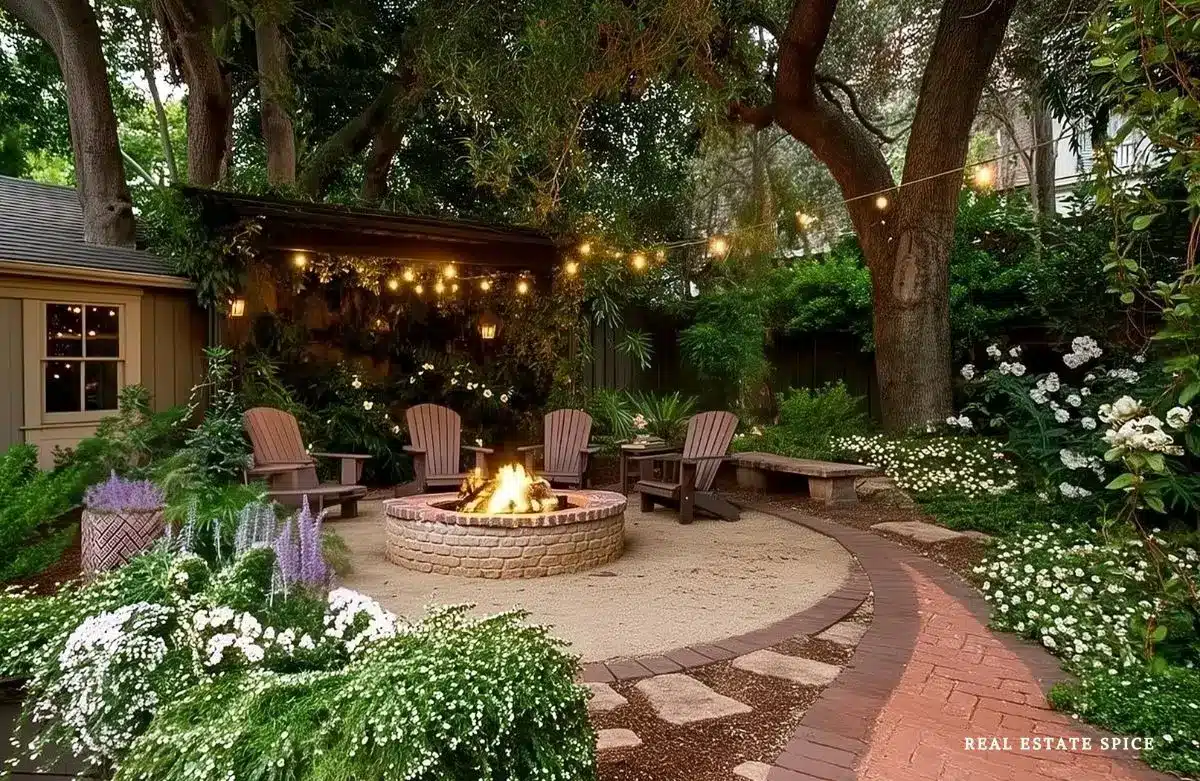
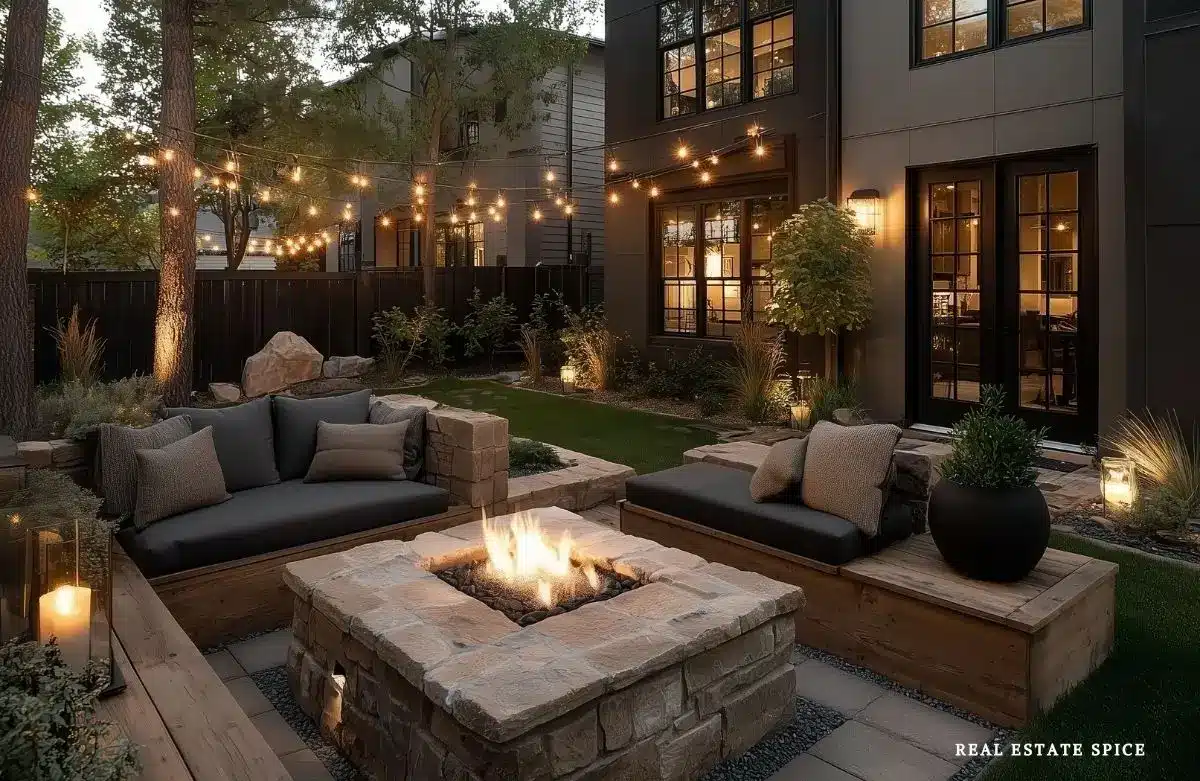
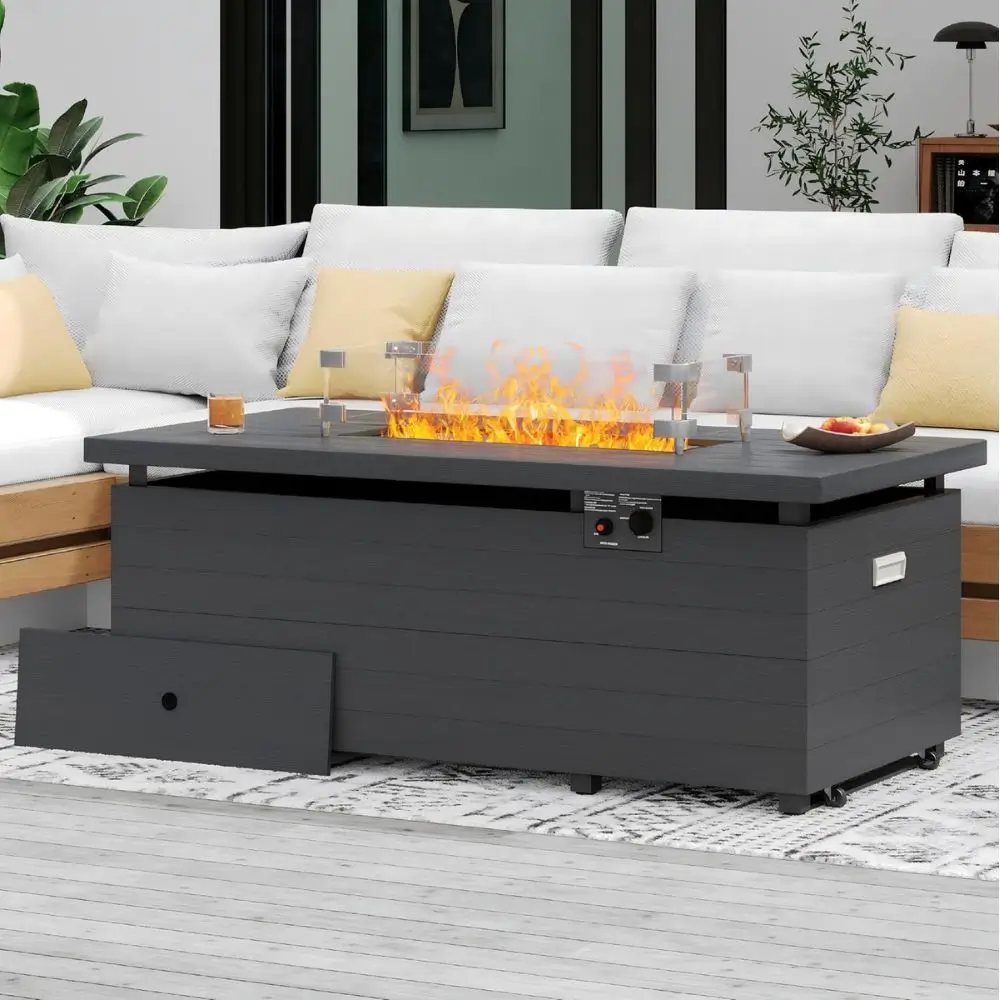
A firepit table can also work beautifully in a private patio area because it adds warmth, ambiance, and a useful surface in one piece.

One unique idea that works especially well is the hospitality rail trick.
Mount a slim shelf to a patio privacy wall, fence, or sturdy screen right beside the seating area.
That narrow ledge can hold drinks, lanterns, or a little potted herb without taking up floor space.
Use Outdoor Rugs to Define and Soften the Space
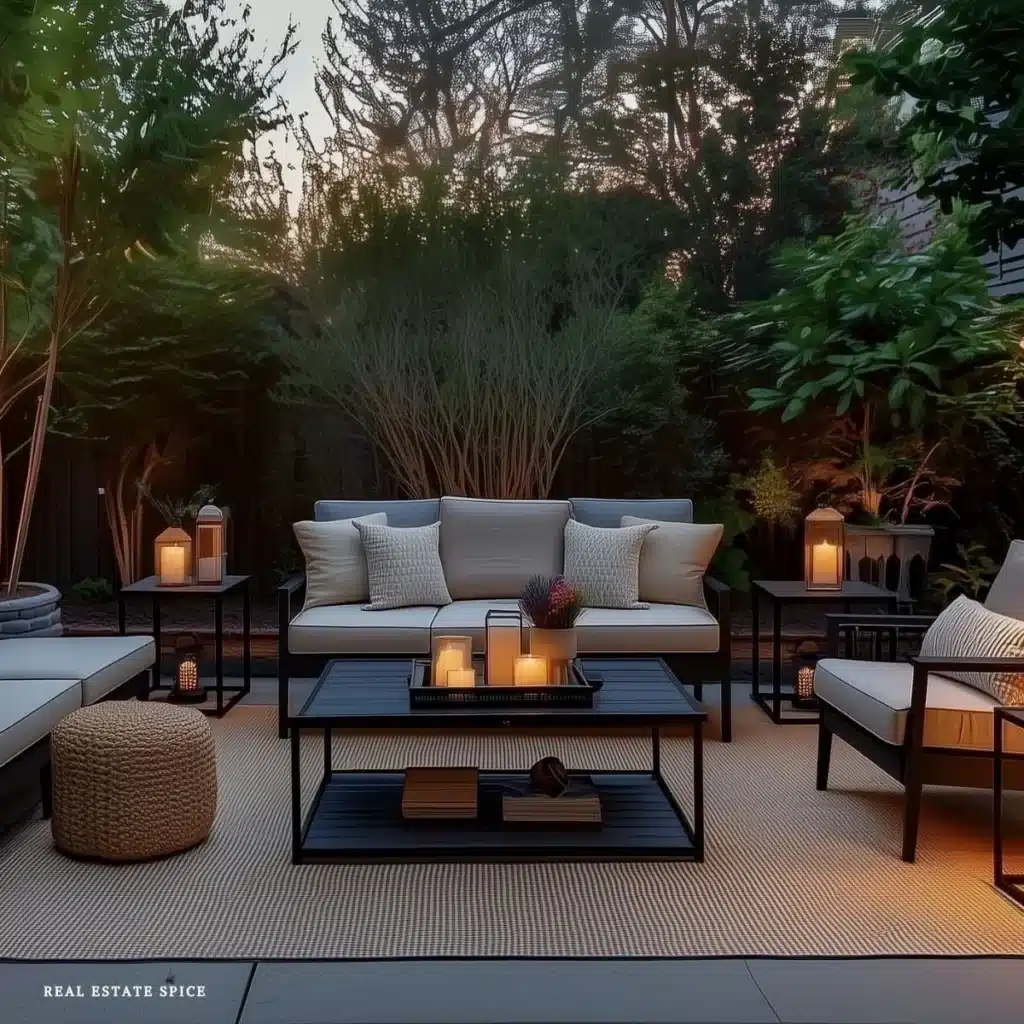
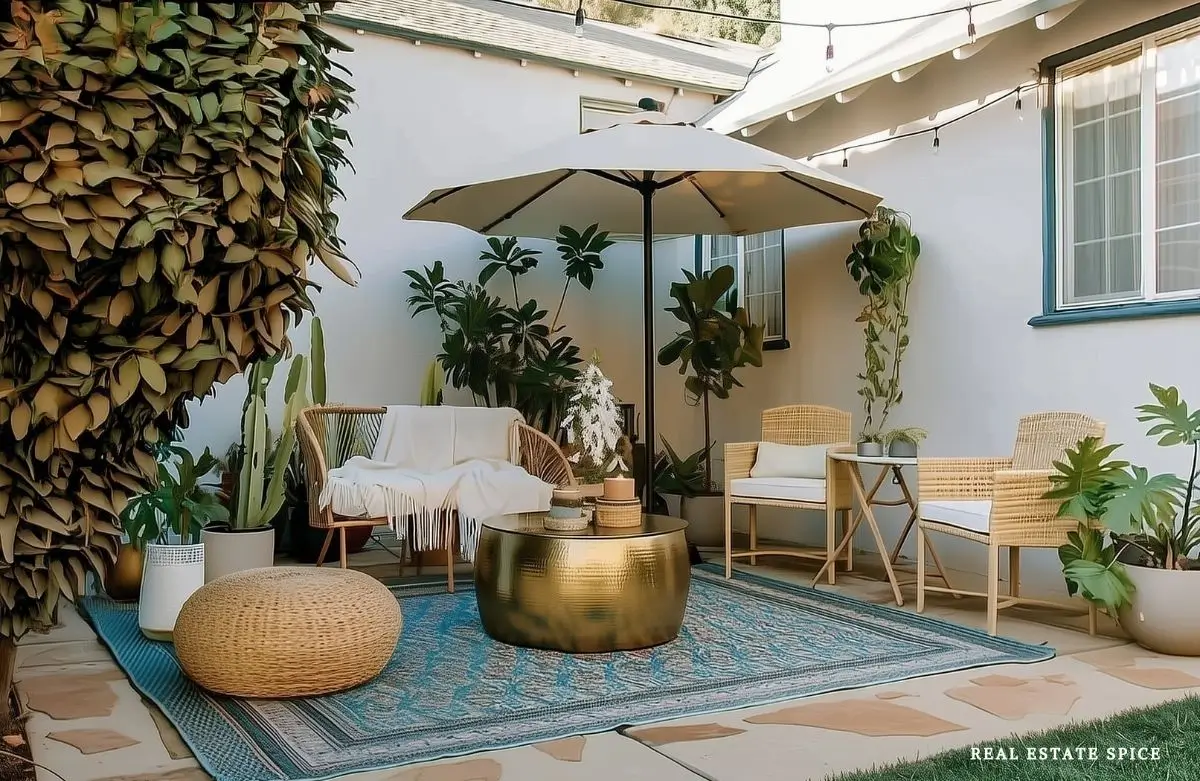
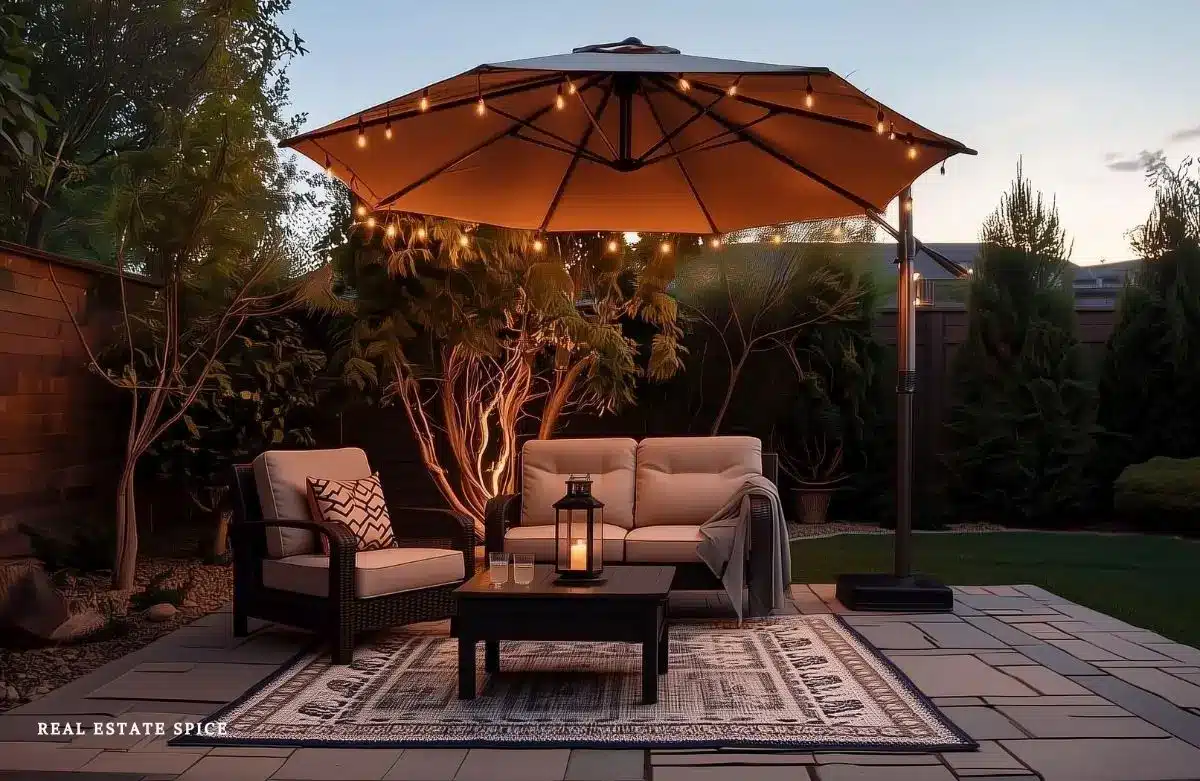
An outdoor rug is one of the easiest ways to make a patio feel more private without building anything at all.
It visually defines your seating area, so the space feels contained instead of open on all sides.
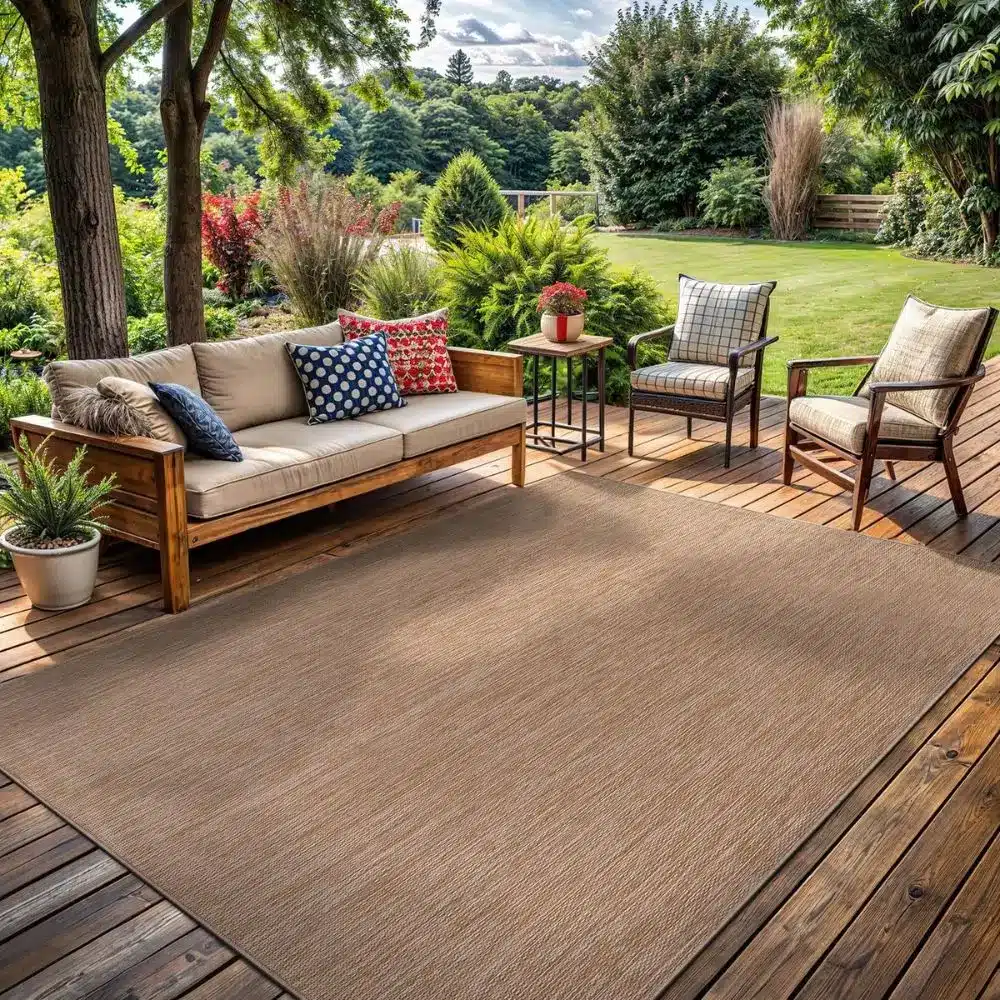
Rugs also soften the look and feel under your feet, which makes the whole area more comfortable and a little more “room-like.”
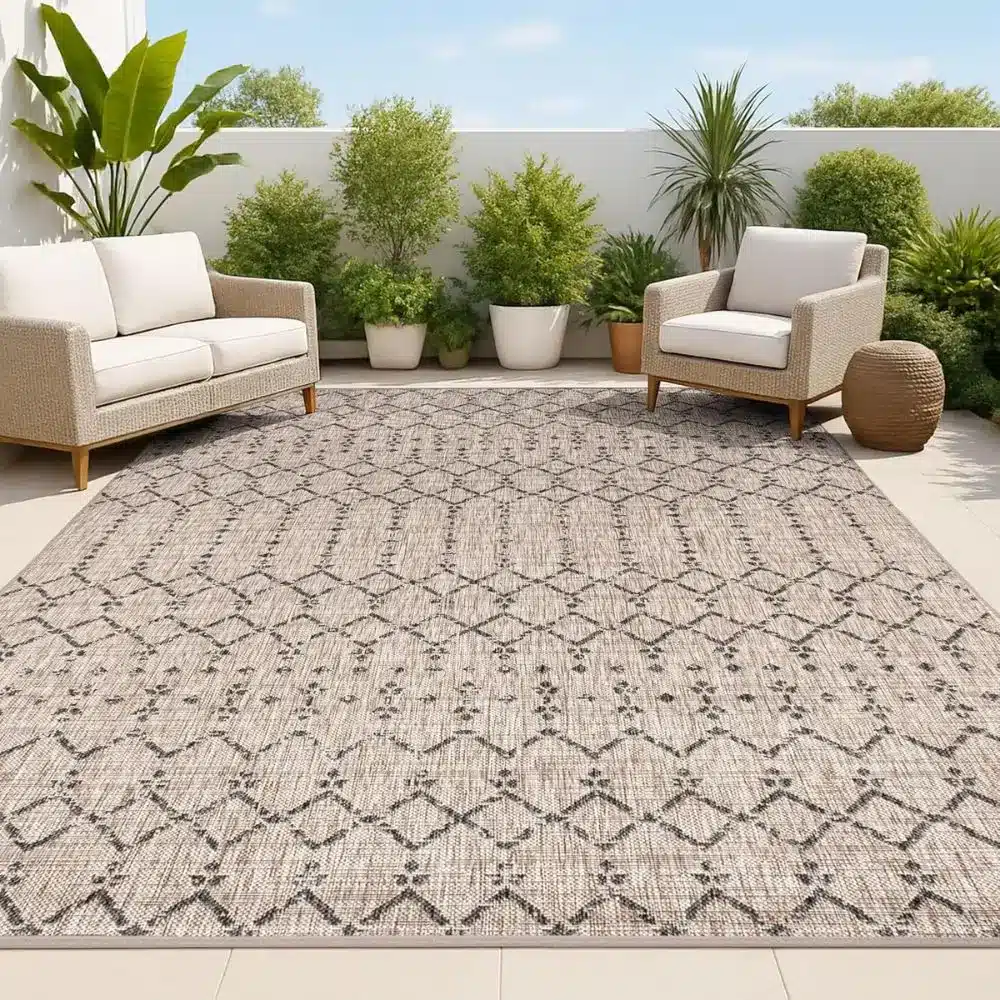
Even a simple rug can help your patio feel calmer, more grounded, and easier to settle into.

Use Lighting to Make Patio Privacy Feel Even Better at Night
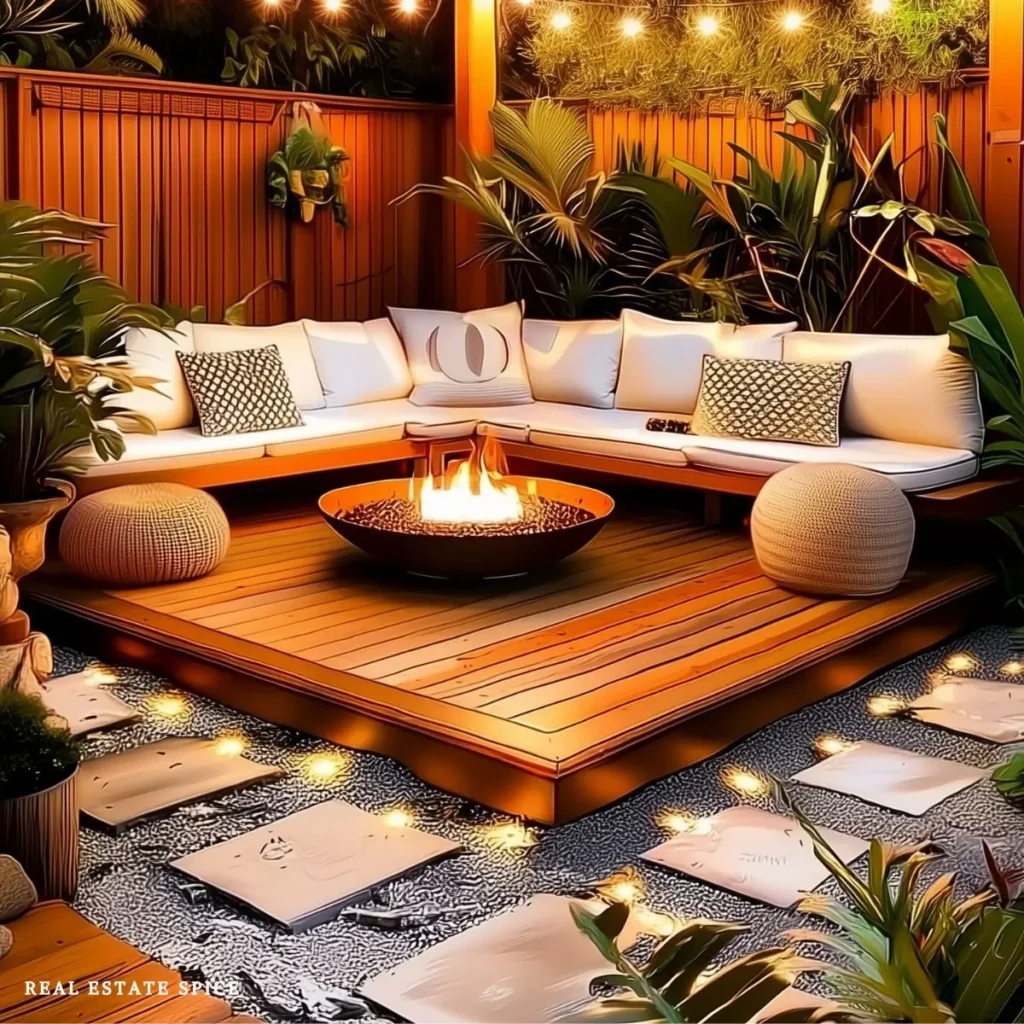
Privacy during the day comes mostly from screening and structure.
At night, outdoor backyard lighting changes everything.
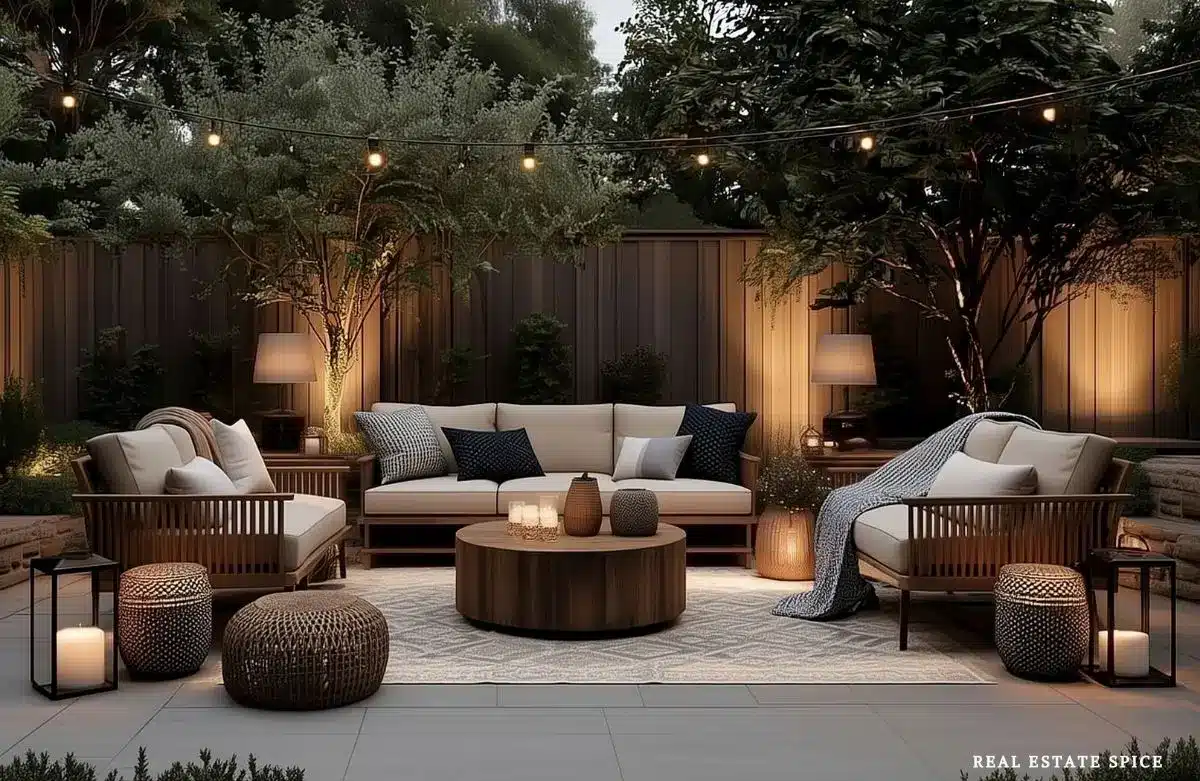
The right glow makes the patio feel softer, more layered, and even more private because the light tells your eye where the room begins and ends.
Choose gentle lighting instead of harsh brightness
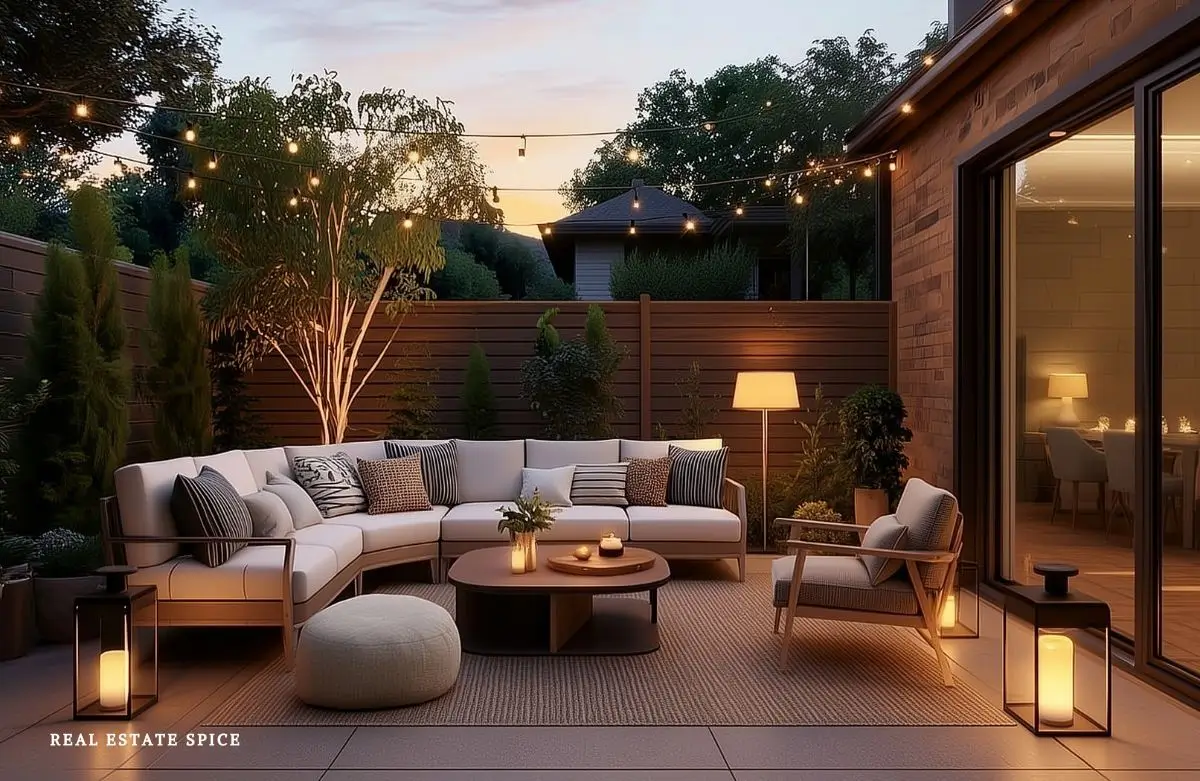
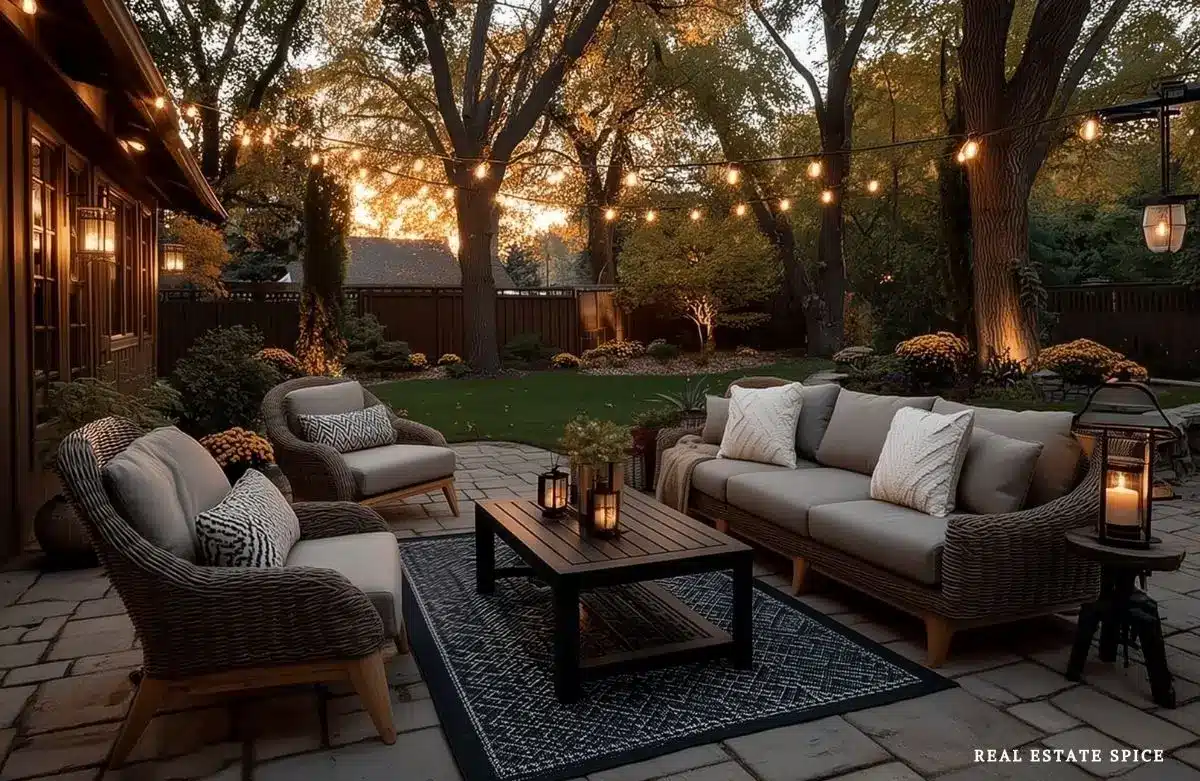
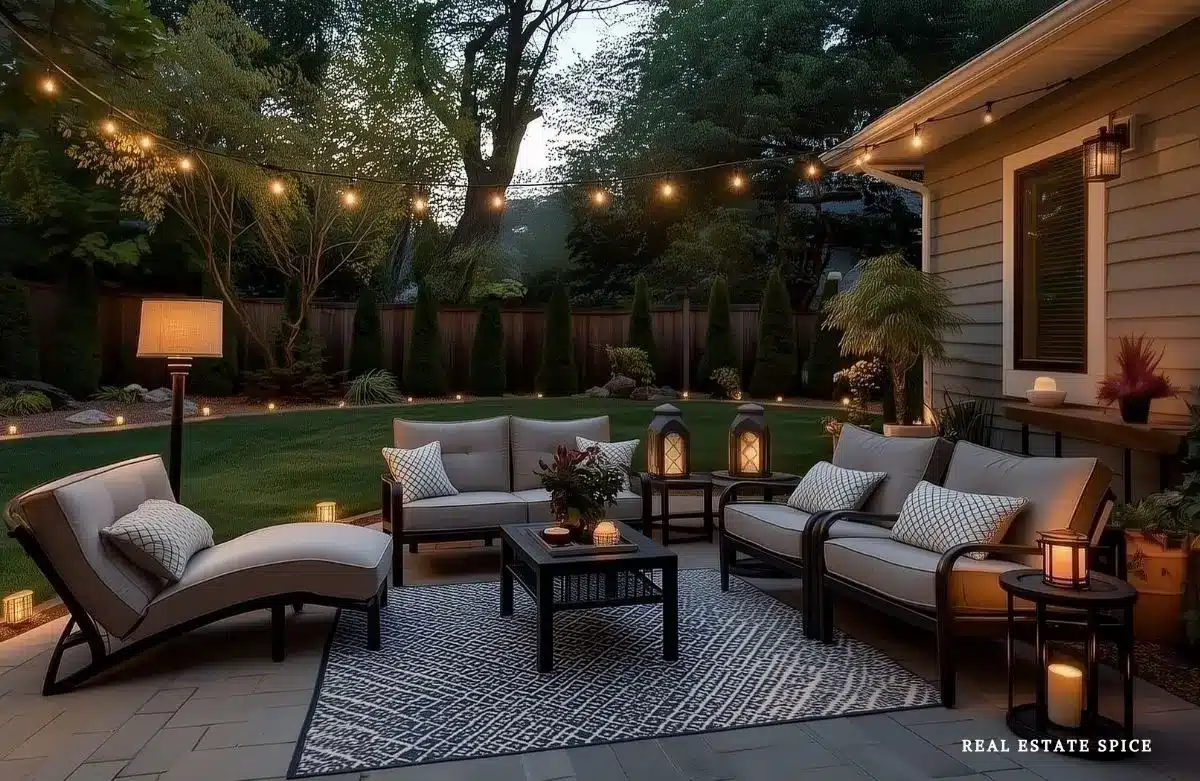
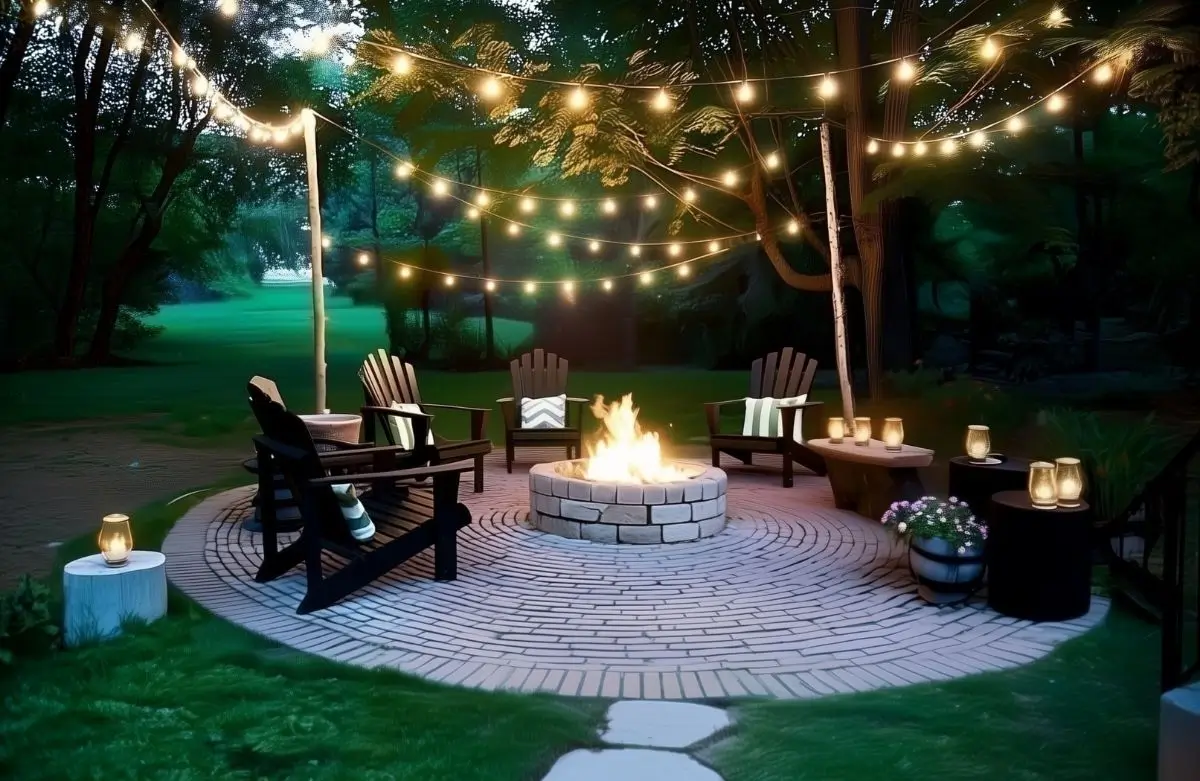
Outdoor lamps, portable lamps, globe lights, and lanterns all help a patio feel warmer after dark.

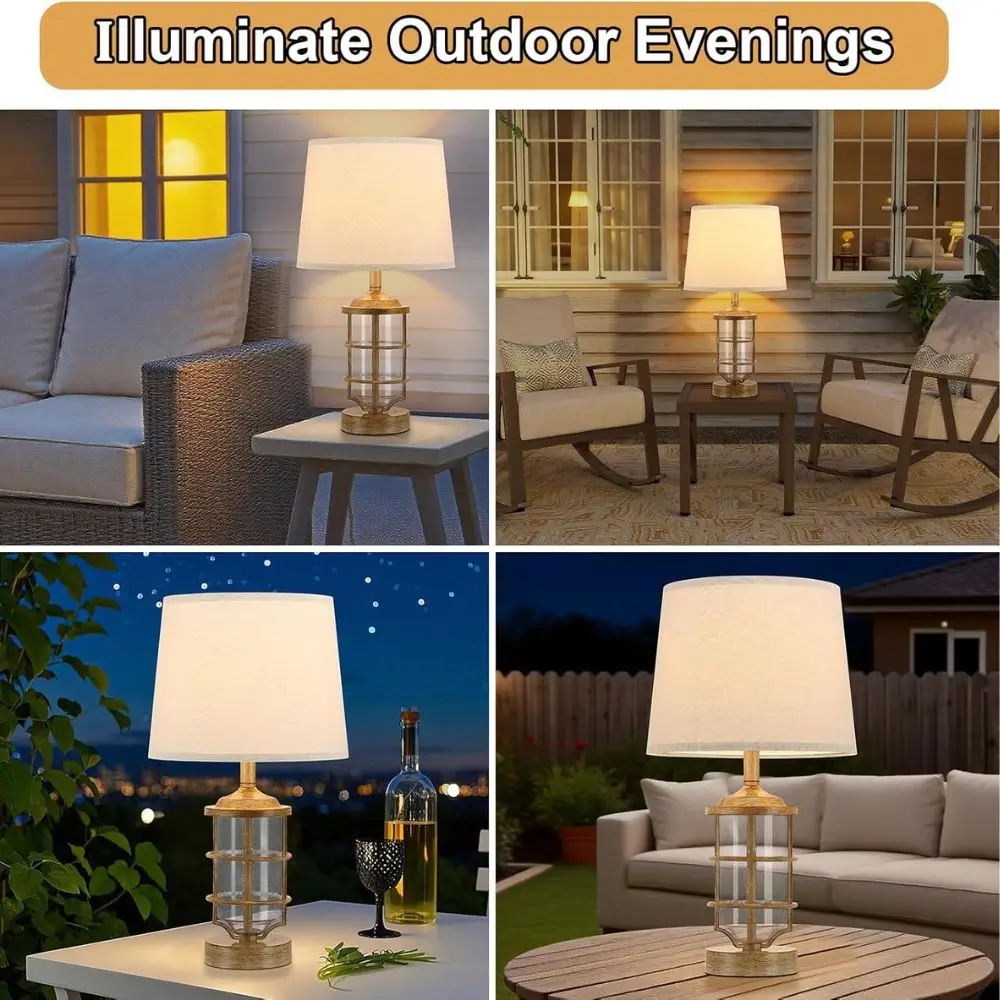
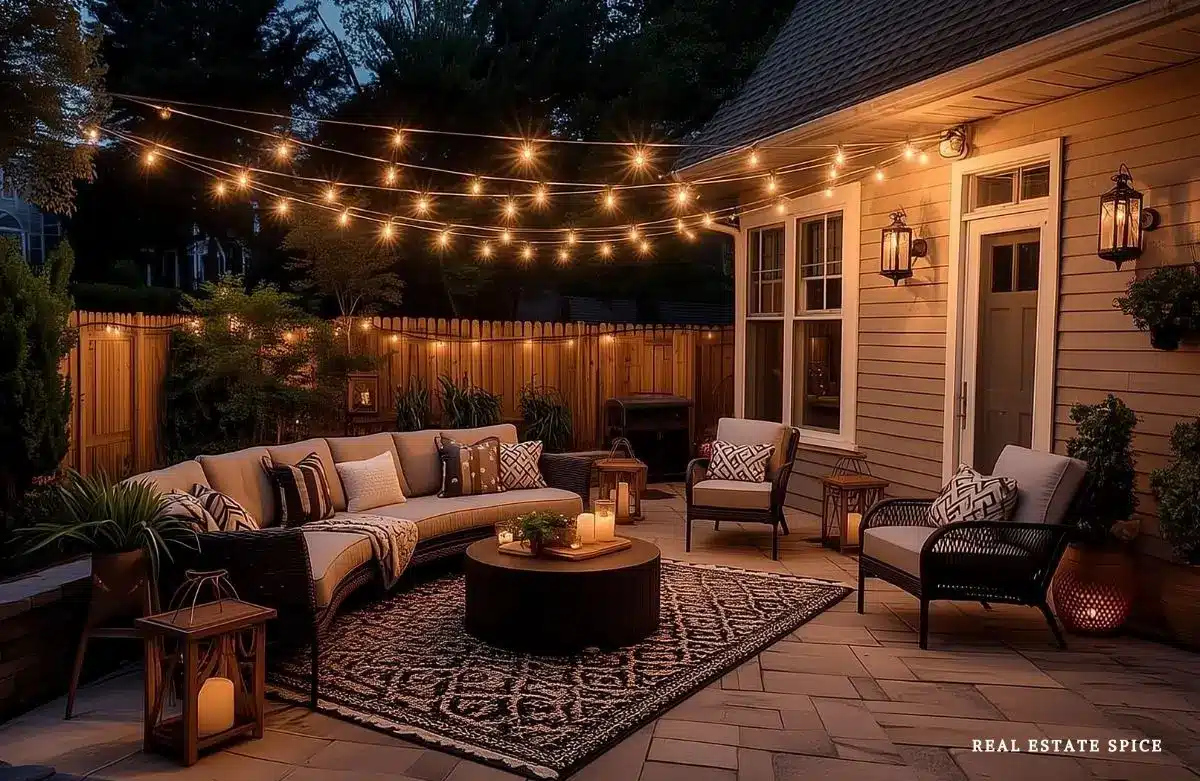
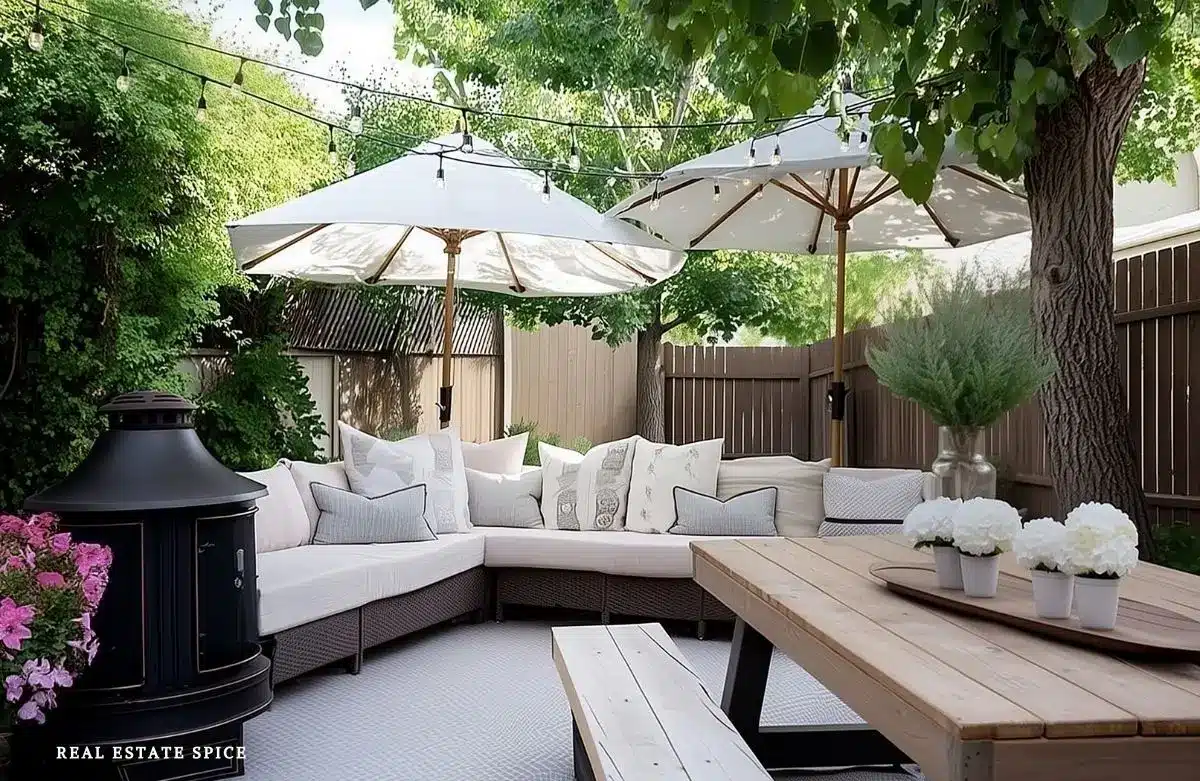
Globe lights are pretty overhead on pergolas or around a covered patio.

Portable lamps are perfect for outdoor tables because they bring the light down to a softer level.
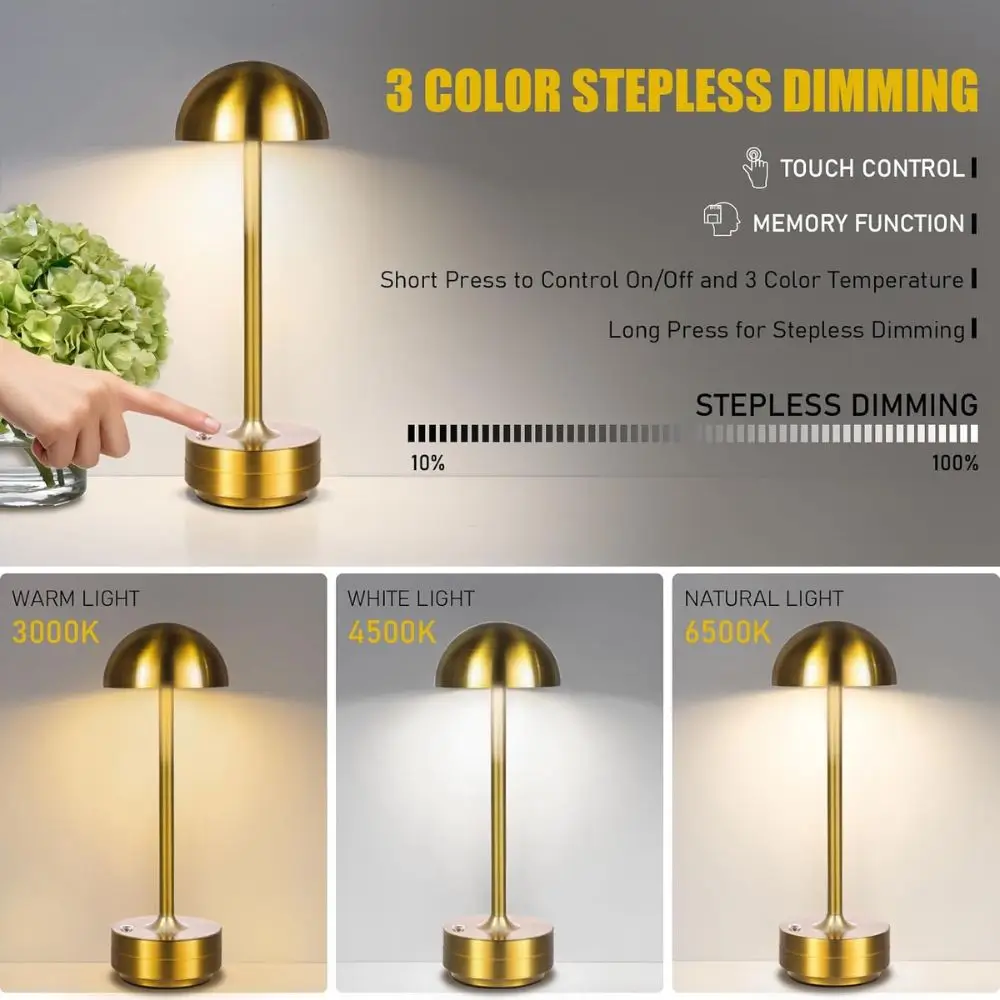
Solar lighting and pathway lights work beautifully at the patio edge or along a short walkway so people can move safely without flooding the whole area in brightness.

Small backyard lighting ideas often work beautifully on patios too, because smaller spaces benefit from layered, low-level light rather than one big overhead source.

A portable lamp on a side table, a lantern by the bench, and a strand of globe lights overhead can be enough to make the patio feel like a little nighttime retreat.
Budget-Friendly Ways to Create Patio Privacy
A private patio does not have to cost a fortune.
Some of the best patio privacy ideas are layered slowly and thoughtfully.
Start with one privacy fix where the patio feels most exposed, then build from there.
A patio privacy screen, a few planters, or one curtain panel can make a bigger difference than you might expect.
Budget-friendly patios usually look best when they do fewer things well.
Instead of trying to buy everything at once, focus on the biggest change first.
That might be a privacy fence, a group of tall planters, or one shaded curtain corner.
Once the structure feels right, add outdoor seating, outdoor tables, and lighting in a way that supports the mood you want.
The Best Private Patio Area Feels Easy to Enjoy
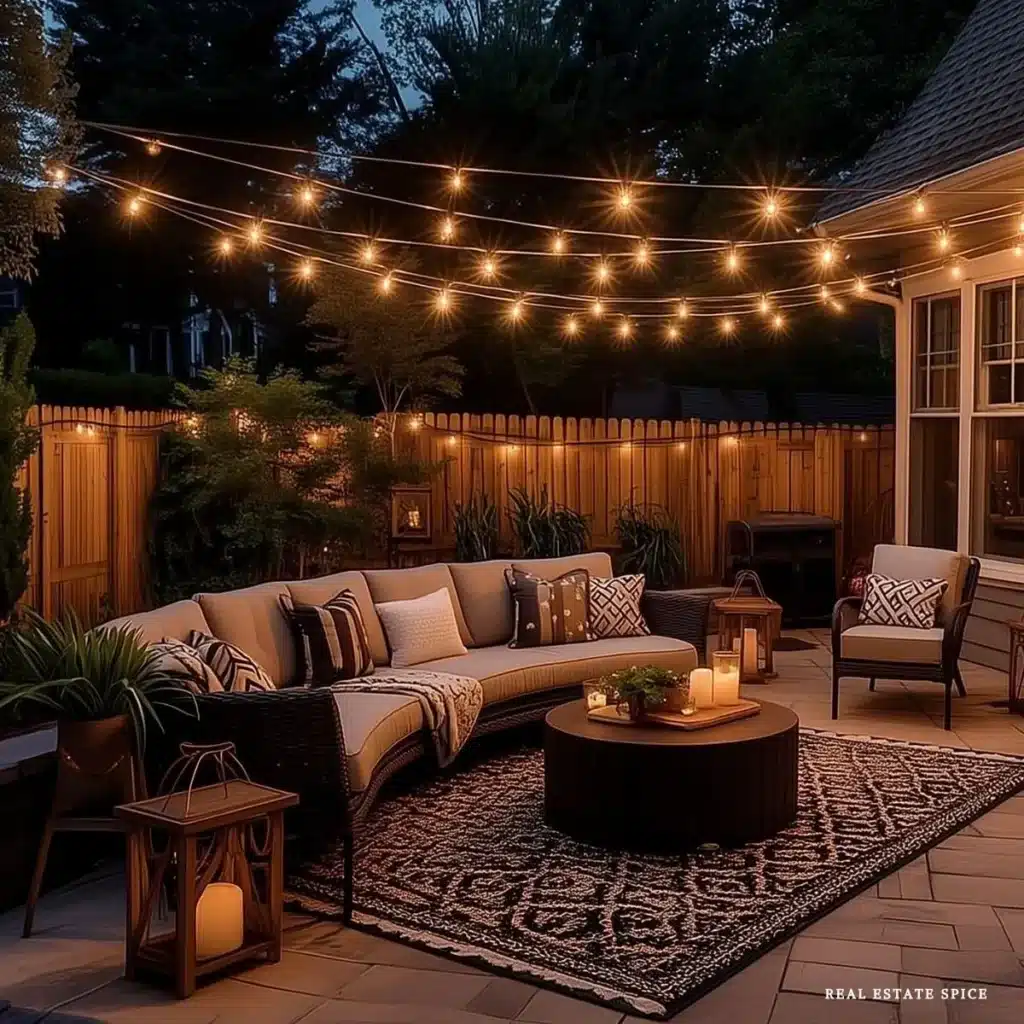
At the end of the day, learning how to create a private patio area is not about making the space perfect.
It’s about making it feel good.
You want to sit down without feeling exposed.
Comfort matters too, so the patio chairs should feel good, the outdoor tables should be close enough to use, and the lighting should glow instead of glare.
Start with the sight lines that bother you most.
Add the right kind of patio privacy, whether that’s a fence, a wall, a screen, or even privacy planters that define the space.
Shades, outdoor curtains, pergolas, and gazebos can also help create that sheltered, more comfortable feel.
Then layer in furniture, light, softness, and a few thoughtful details that make the patio feel welcoming and lived in.
That’s when a regular patio starts to feel like a private backyard oasis.
Not because it’s bigger or fancier, but because it finally feels comfortable and private to sit in and stay awhile.