Patio Rule of 3 For Optimizing a Small Patio
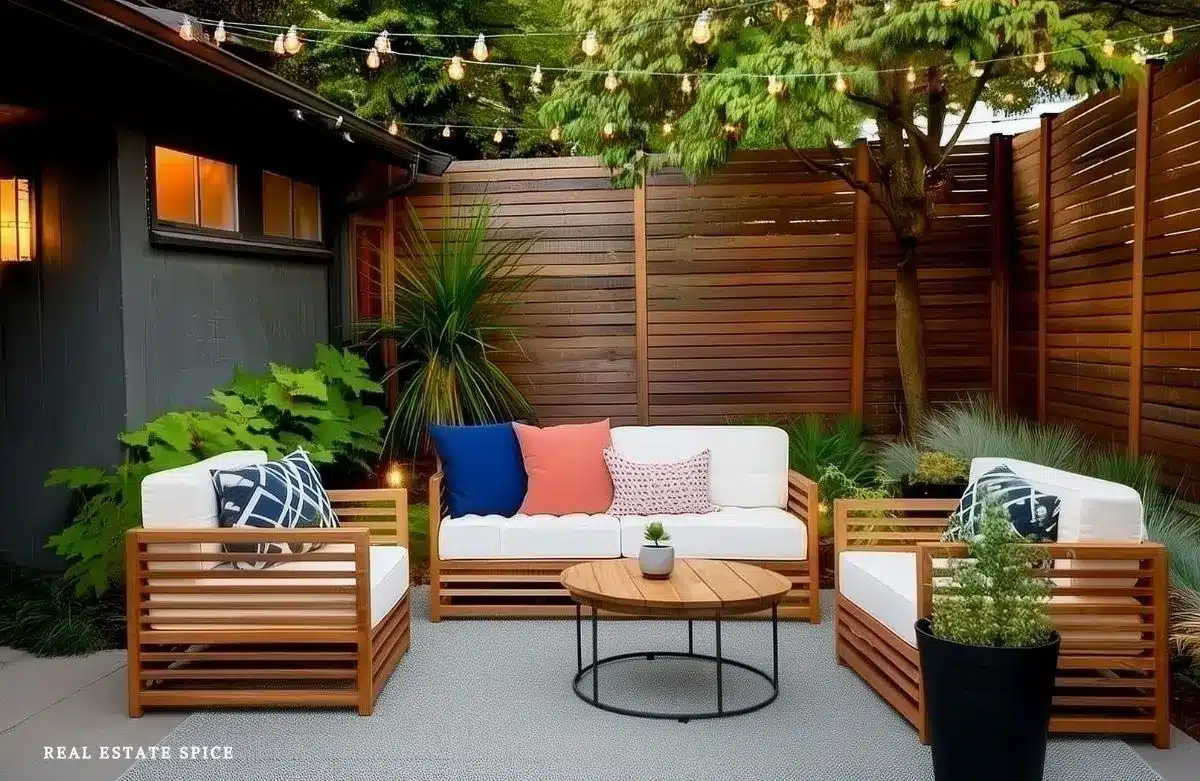
Small patios can be weirdly tricky.
A big patio can often hide a bad decision for a while. By contrast, a tiny outdoor patio absolutely cannot.
One chair that’s too bulky or one table that blocks the path can throw off the whole space.
Be sure to check out The Patio Rule of 3: Creating a Designed Patio and Patio Rule of 3: Create a Private Patio after this…
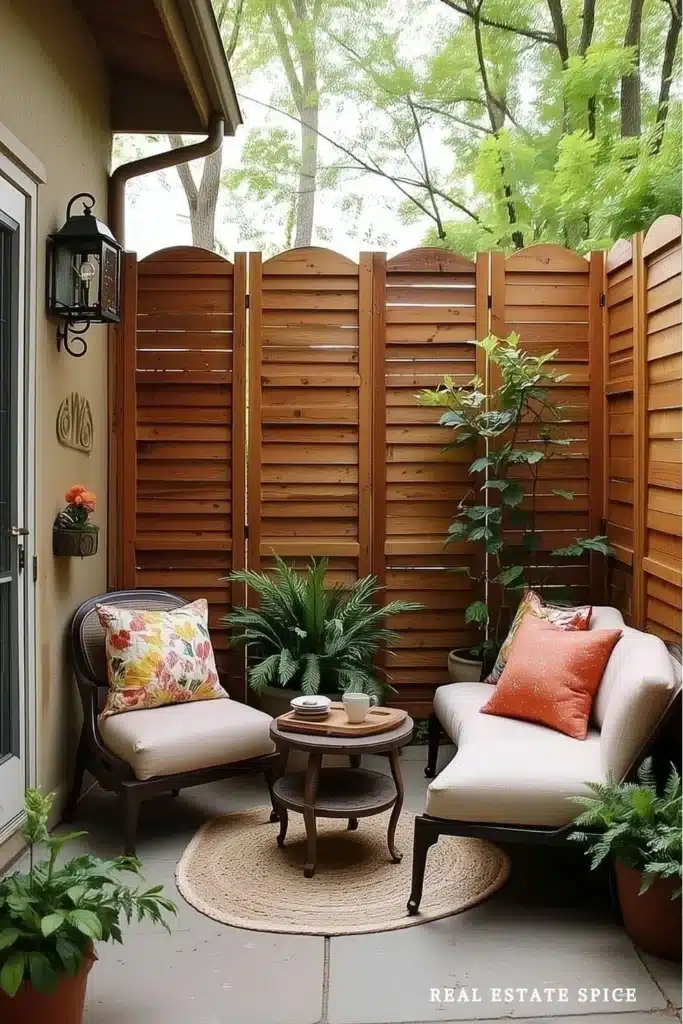
Add one decor moment too many, and suddenly the patio feels cramped, cluttered, and slightly annoyed with you.
That’s because every piece plays a bigger role in a small space.
That’s exactly why the patio rule of 3 small spaces formula works so well.
Instead of trying to squeeze every patio idea you’ve ever saved and wanted to incorporate into one compact area, you focus on three priorities that make the biggest difference.
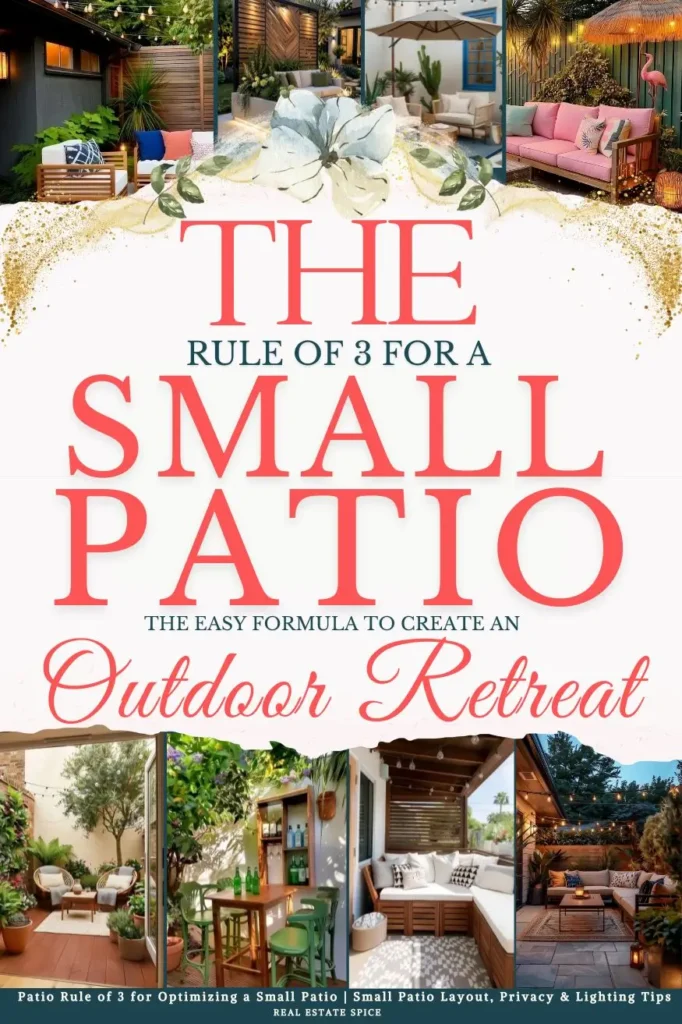
This small patio formula is meant to be framework-first.
Depending on your interests, later you can take a deeper dive into patio seating, patio lighting, patio privacy, patio furniture, outdoor rugs, and calm patio styling.
If you have a small backyard patio, a tiny patio, an apartment balcony, or a narrow townhome patio that feels forgotten, this gives you a clear path forward.
Grab your favorite beverage, pen, and paper for notes; take your time to study the images, design tips, and products, and enjoy!
ps…remember to save this and come back anytime for a dose of inspo!
What Is the Patio Rule of 3 for Small Spaces?
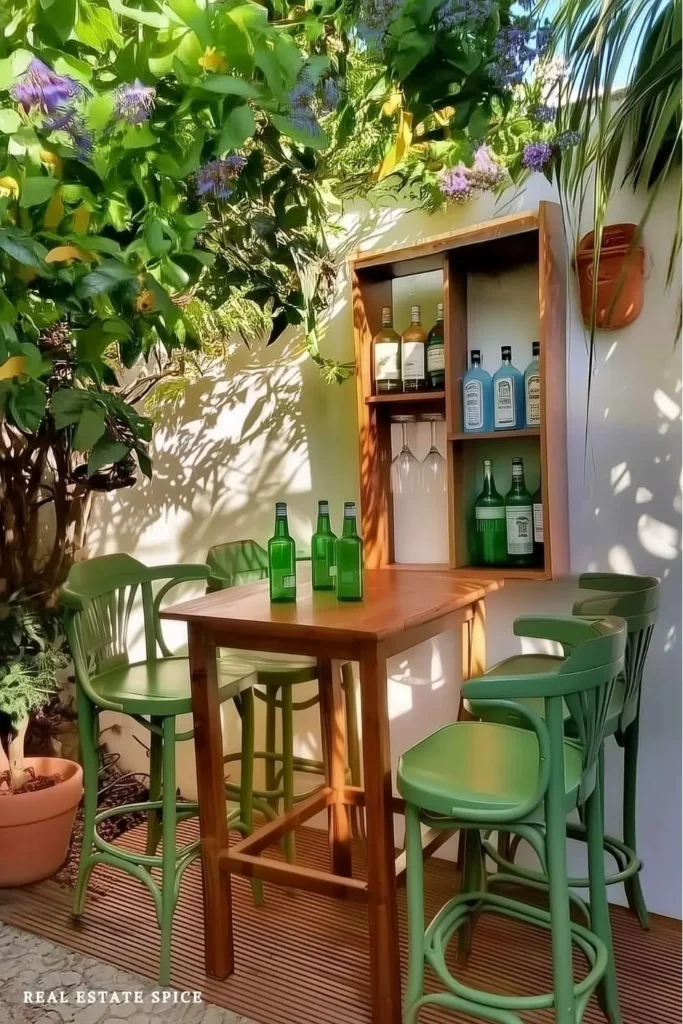
The patio rule of 3 for small spaces is a decorating and design framework built around three priorities that matter more than the rest when square footage is limited.
First, choose right-size seating for optimal style and comfort.
Second, use vertical space strategically.
Third, design for one clear focal point.
That’s the formula.
It sounds almost suspiciously simple, but that’s part of why it works.
A small patio rarely needs more stuff.
It needs better order.
Here, I help you with that order and take you step by step through it, so it’s super simple to design fast.
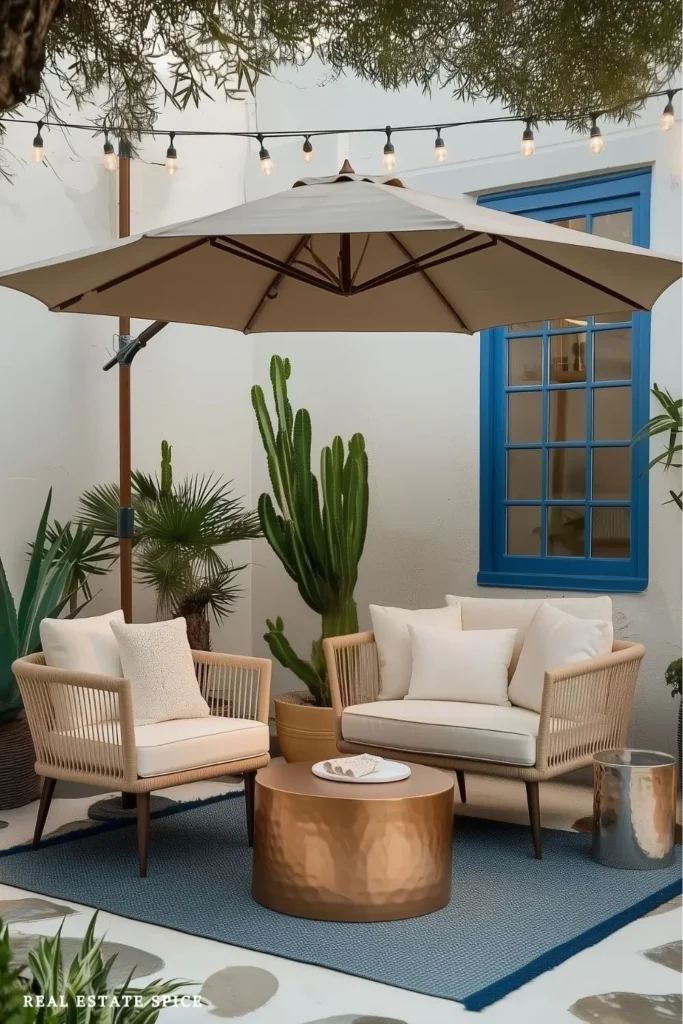
When a patio is tight, every piece has to earn its spot.
Seating has to feel comfortable without overwhelming the layout.
Vertical space has to help because floor space runs out fast.
A focal point gives the eye somewhere to land, so the patio feels intentional instead of like an outdoor storage space wearing a throw pillow.
This framework works on almost every kind of small outdoor space.
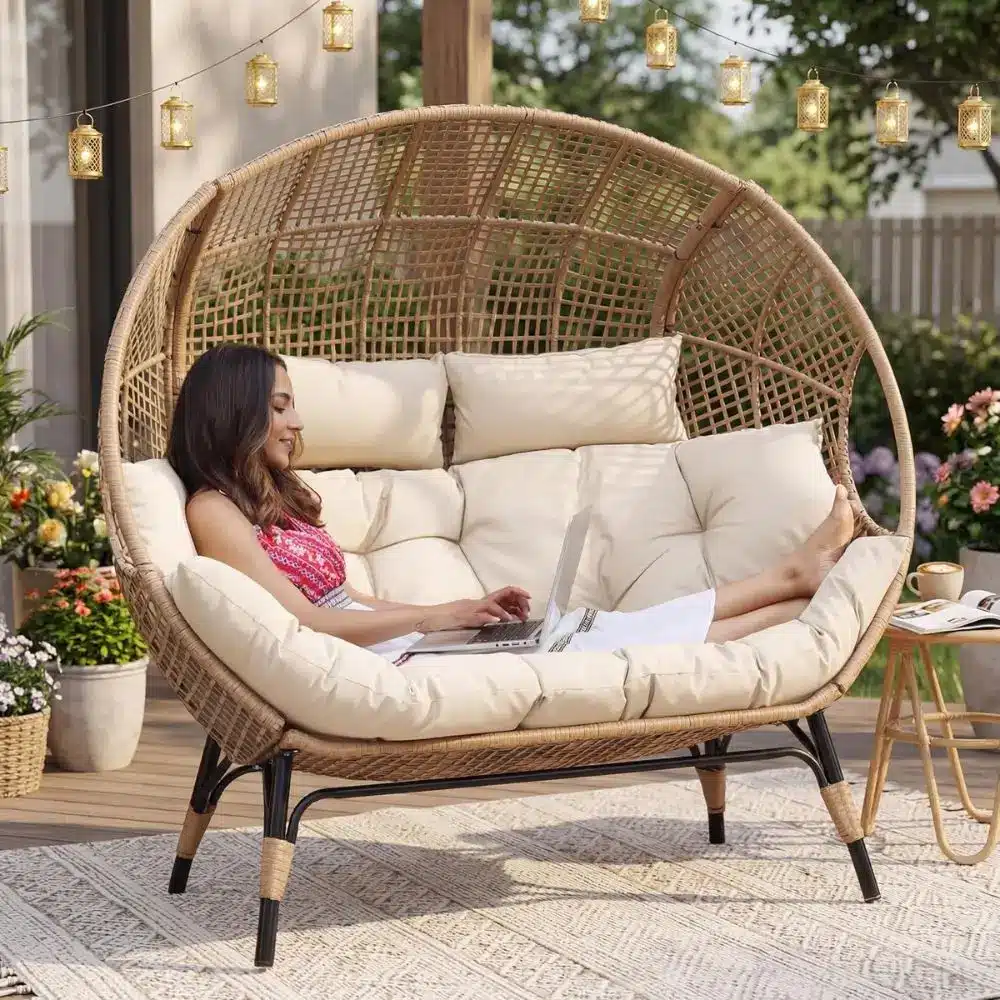
Apartment patio ideas can use it.
A tiny patio can integrate it.
It’s perfect for a narrow balcony-style patio.
Even a small outdoor patio in a townhouse courtyard can implement it.
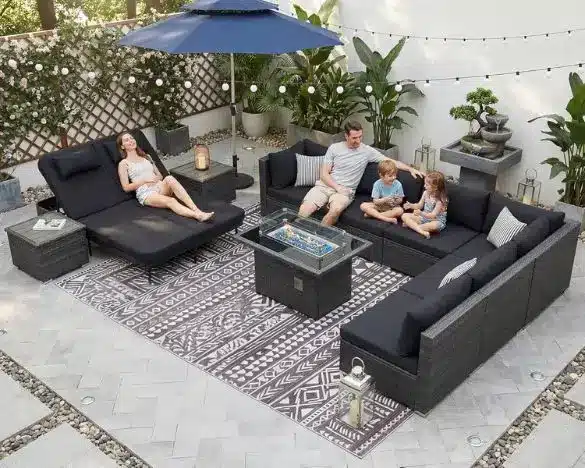
The materials may change.
Meanwhile, the structure stays the same.
Get My Free eBook
“100 Easy Ways To Refresh Any Room All Year Round”
Priority 1: Choose Right-Size Seating
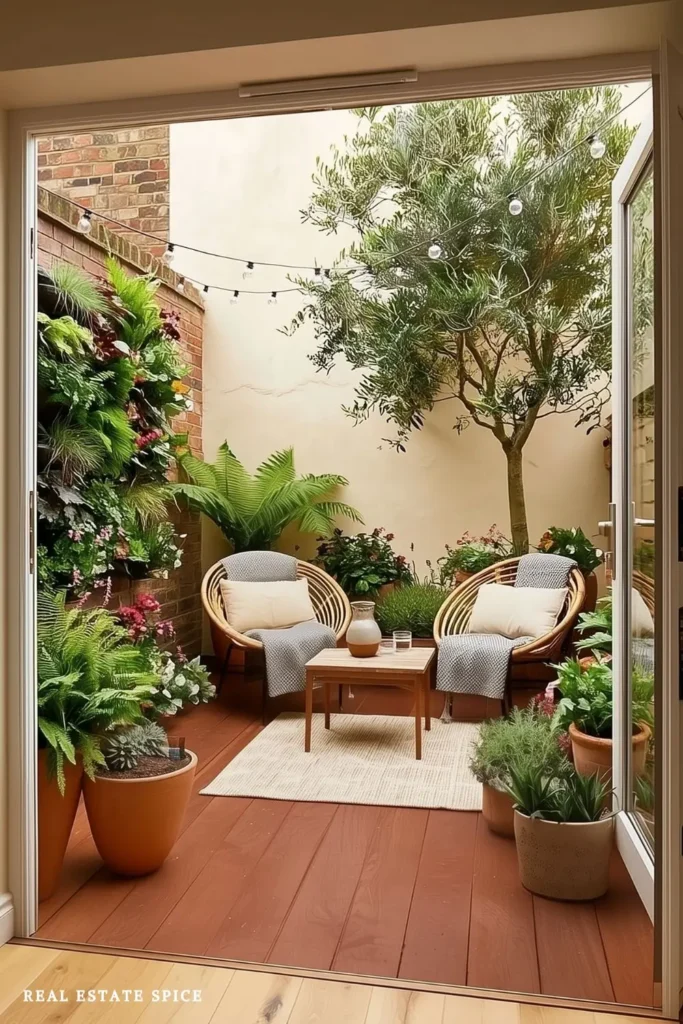
Don’t make the patio work around furniture that’s too big
Right-size seating is the first priority because it sets the tone for everything else.
A small patio can look charming in about five minutes when the seating fits.
It can also look crowded in about five seconds when the furniture is too bulky.
That’s why the best small patio ideas start with scale before style.
If a chair is beautiful but blocks the walkway, it’s not helping.
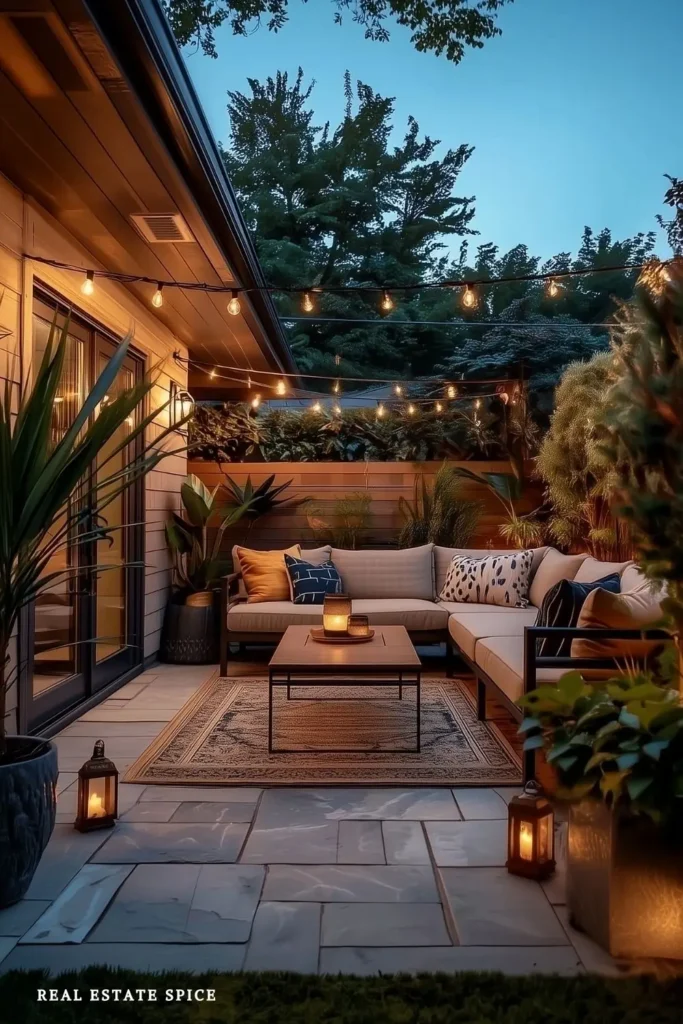
Likewise, if a loveseat looks dreamy online or in a catalog but eats half the patio in real life, it’s not the right loveseat for this job.
A lot of people assume comfort means oversized furniture.
It doesn’t.
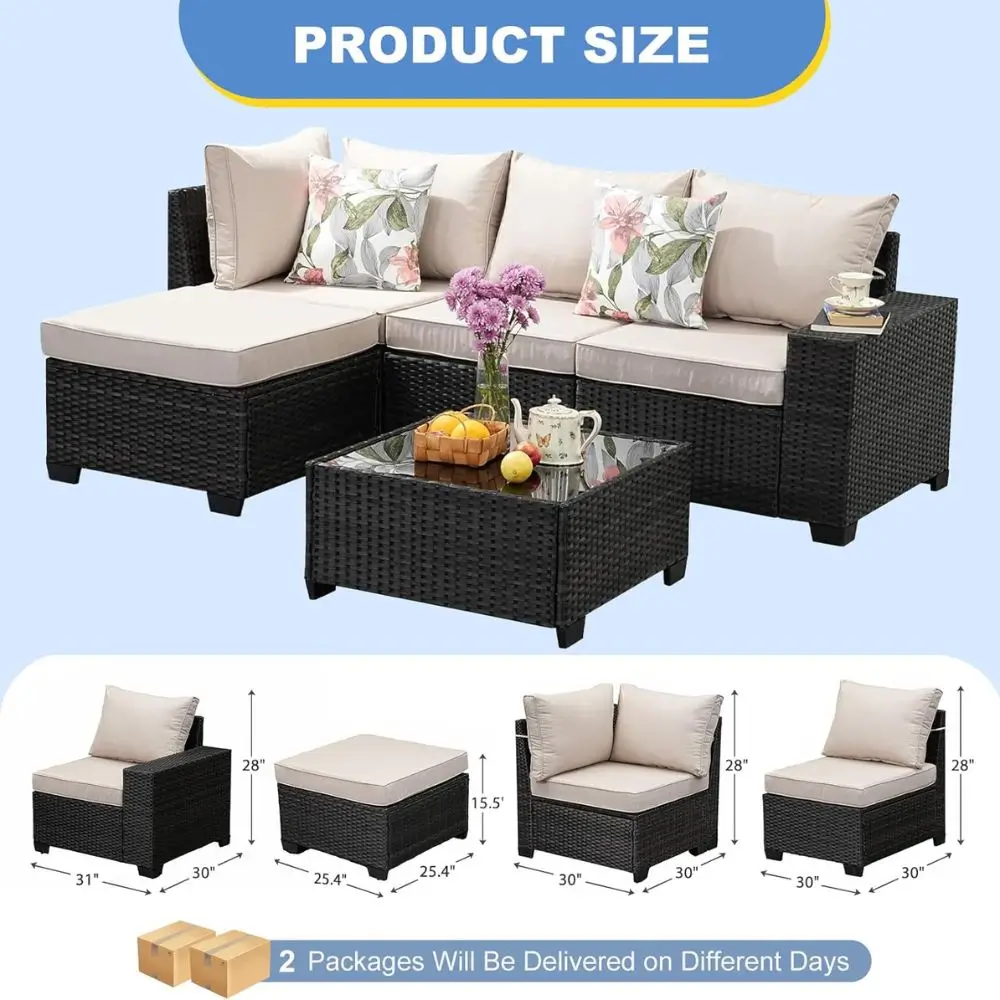
Comfort means the seat feels good, the spacing makes sense, and the patio layout still leaves room to move.
A compact cushioned chair can feel more relaxing than a giant deep chair that turns the patio into a maze.
Small patio seating should support real outdoor living, not dominate it.
Think in seating roles, not just furniture names
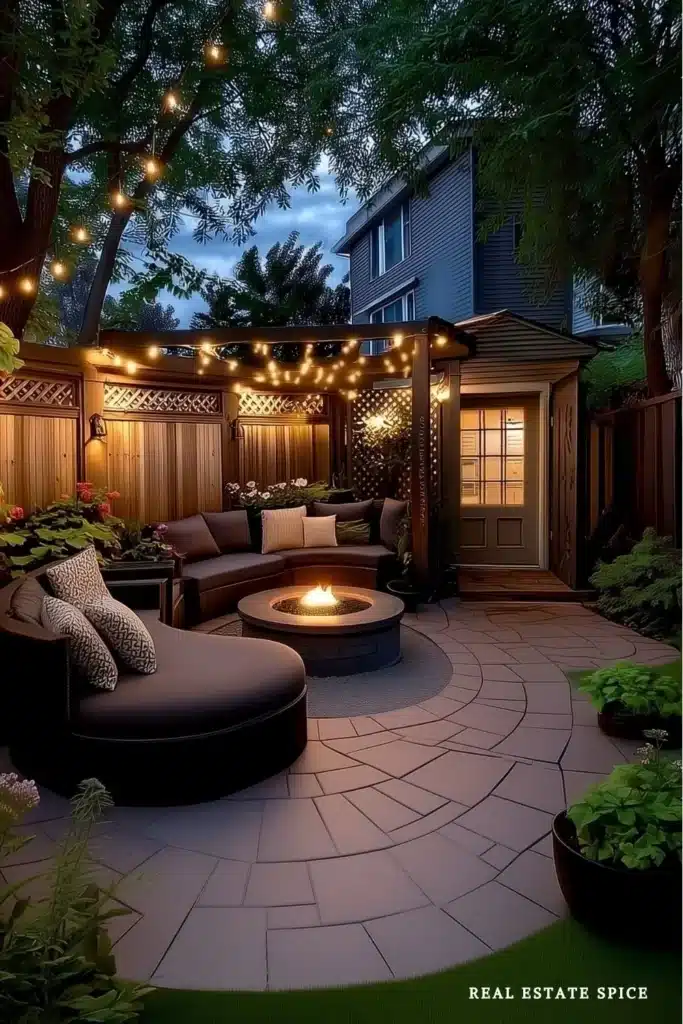
One helpful way to choose small patio furniture is to stop thinking about categories for a minute and start thinking about roles.
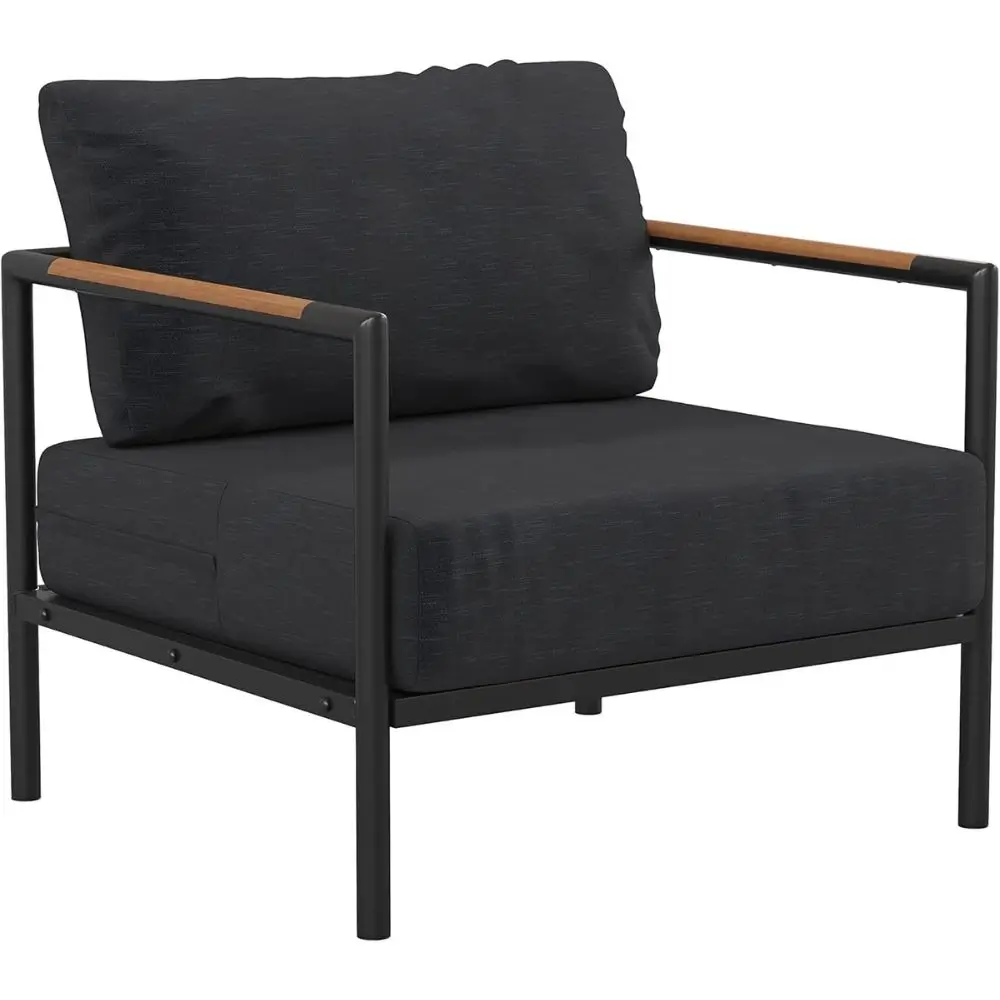
You need an anchor seat, one or two supporting seats, and one or two useful surfaces.
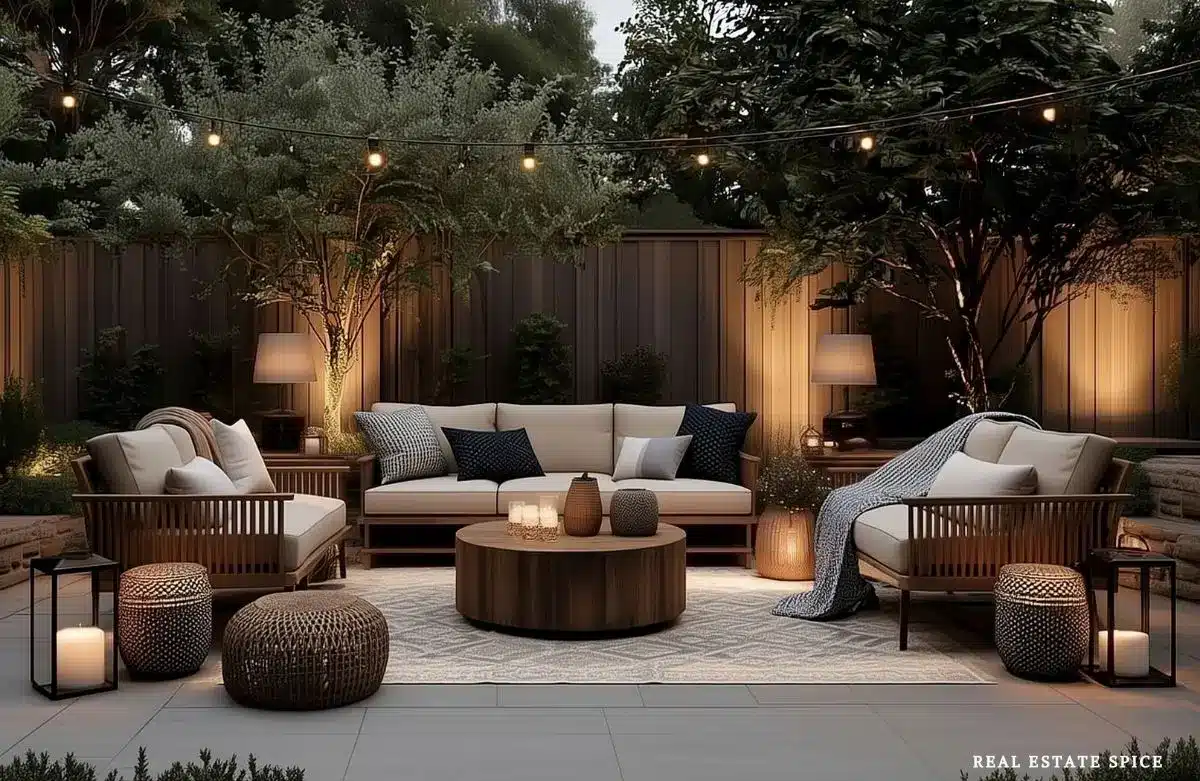
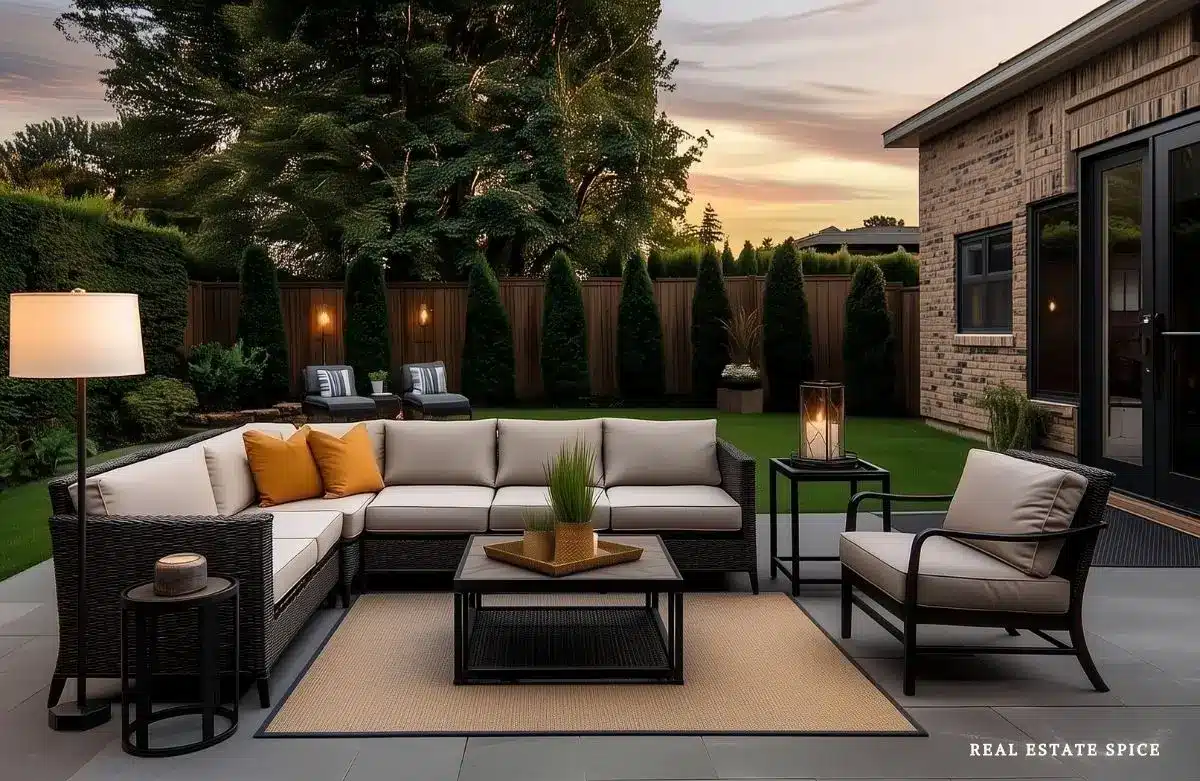
That could mean a small patio sofa with two side tables.
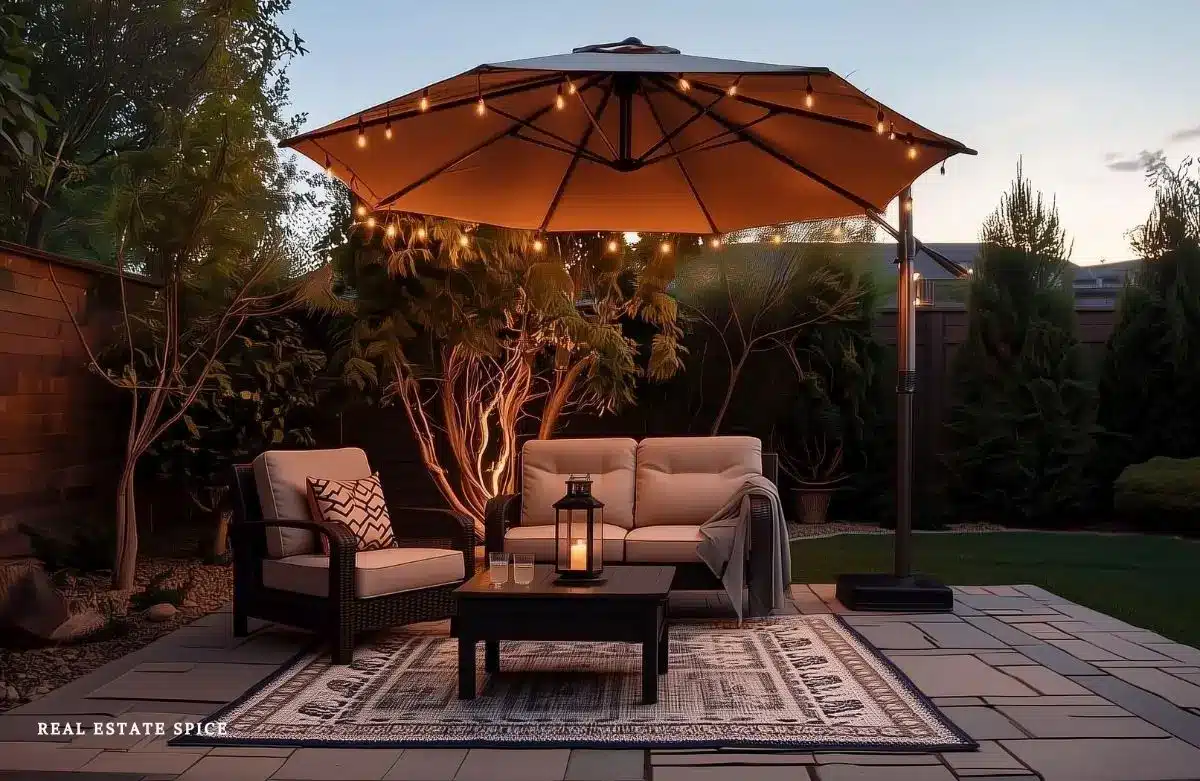
It might be two compact patio chairs with a bistro table between them.
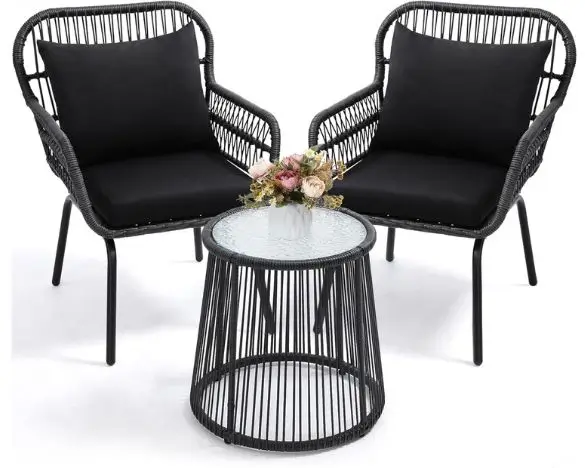
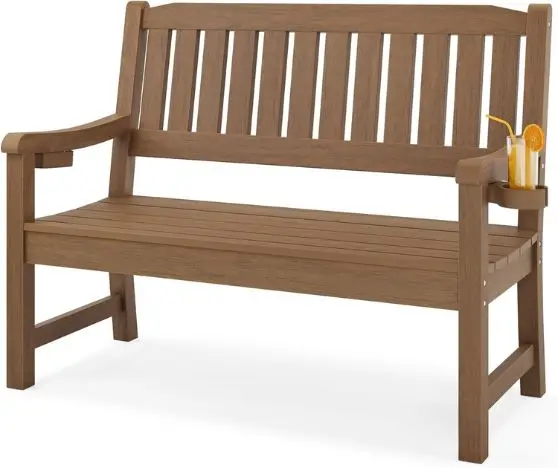
Sometimes it’s a patio bench against the wall with one chair opposite it and a stool or pouf nearby.
This is one reason small patio furniture sets can be useful.
They often give you a ready-made grouping that already understands proportion.
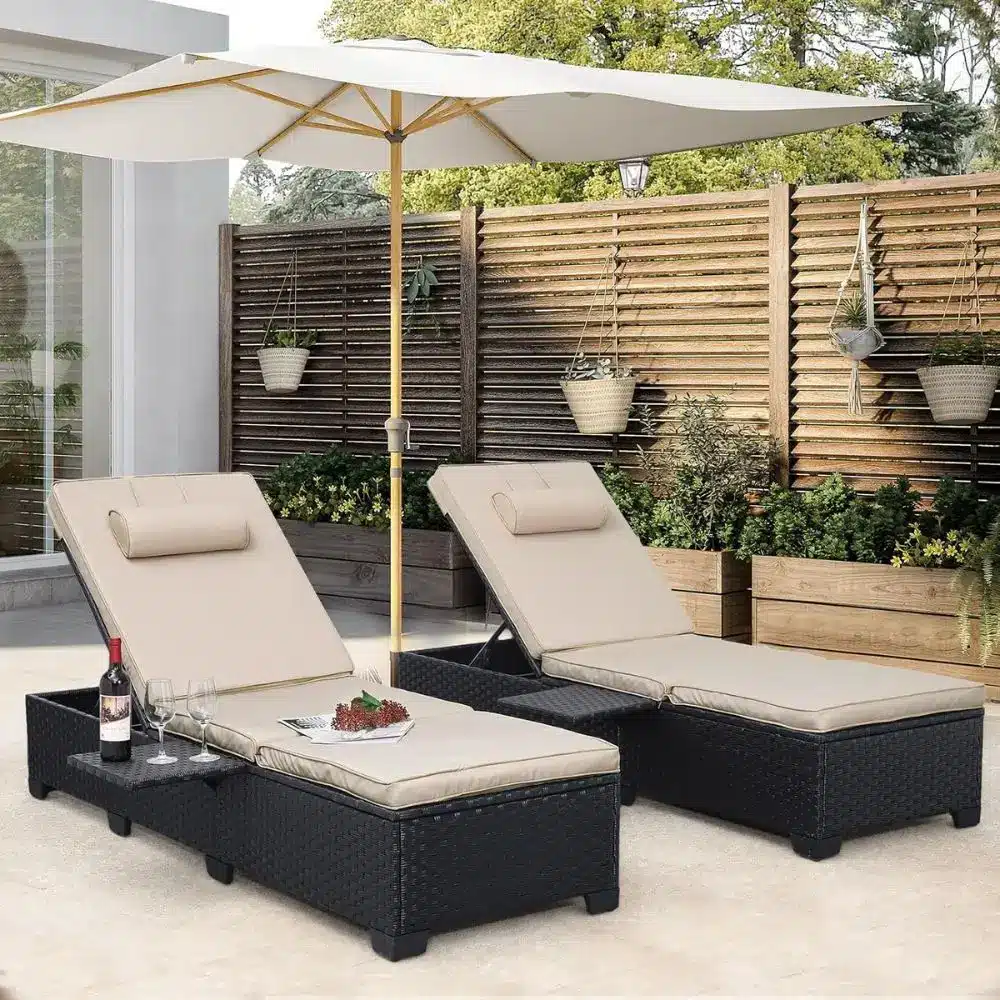
Still, you don’t have to use every piece exactly as shown in a photo.
Sometimes the smartest thing you can do is leave one chair inside or swap one table for something slimmer.
What right-size seating can look like
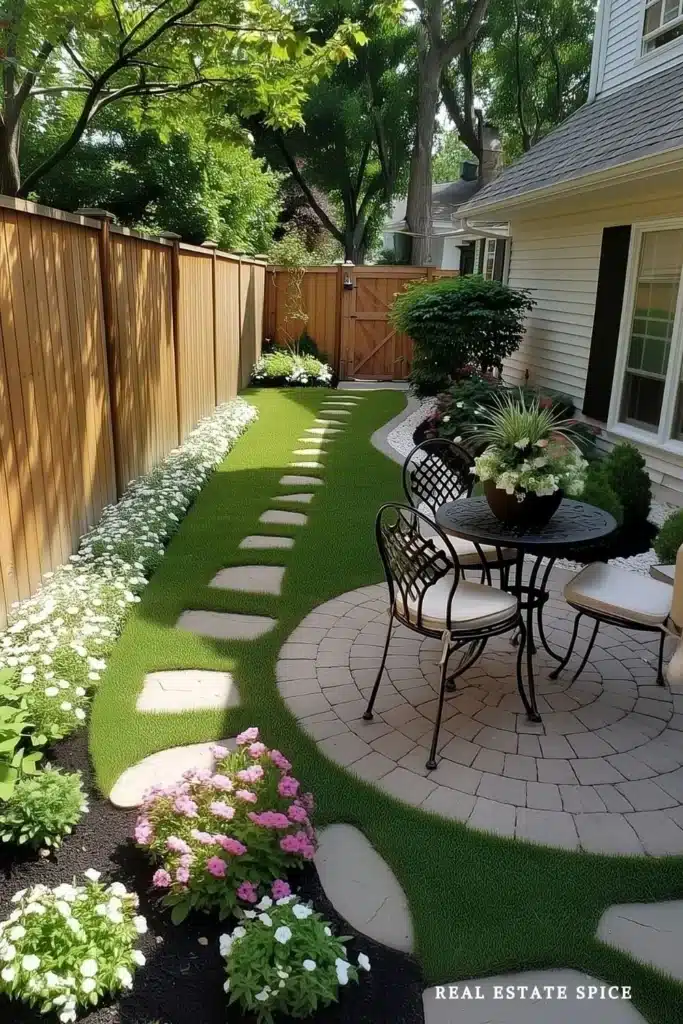
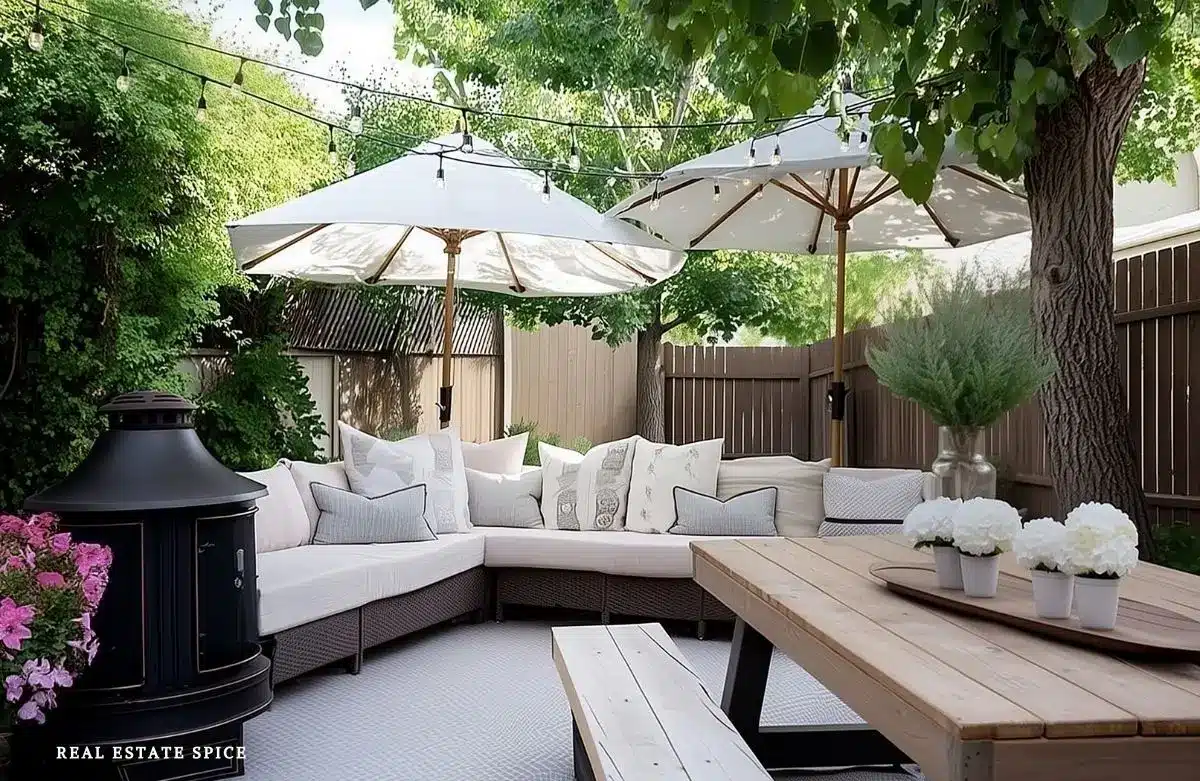
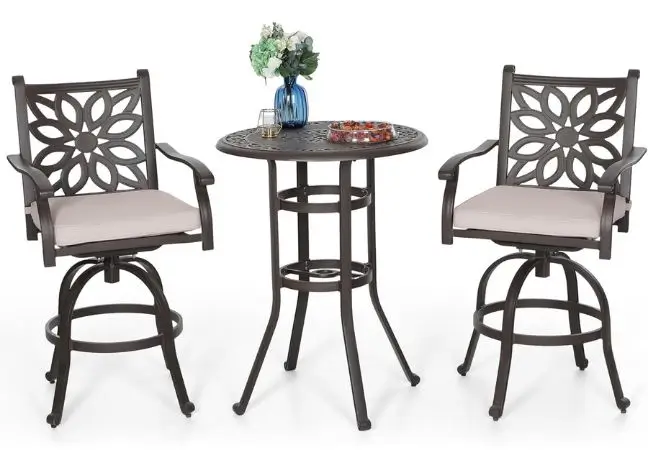
A bistro set is one of the best small patio ideas because it gives you structure without bulk.
Two slim chairs and one little table can create a true patio seating area even on a balcony-style patio.
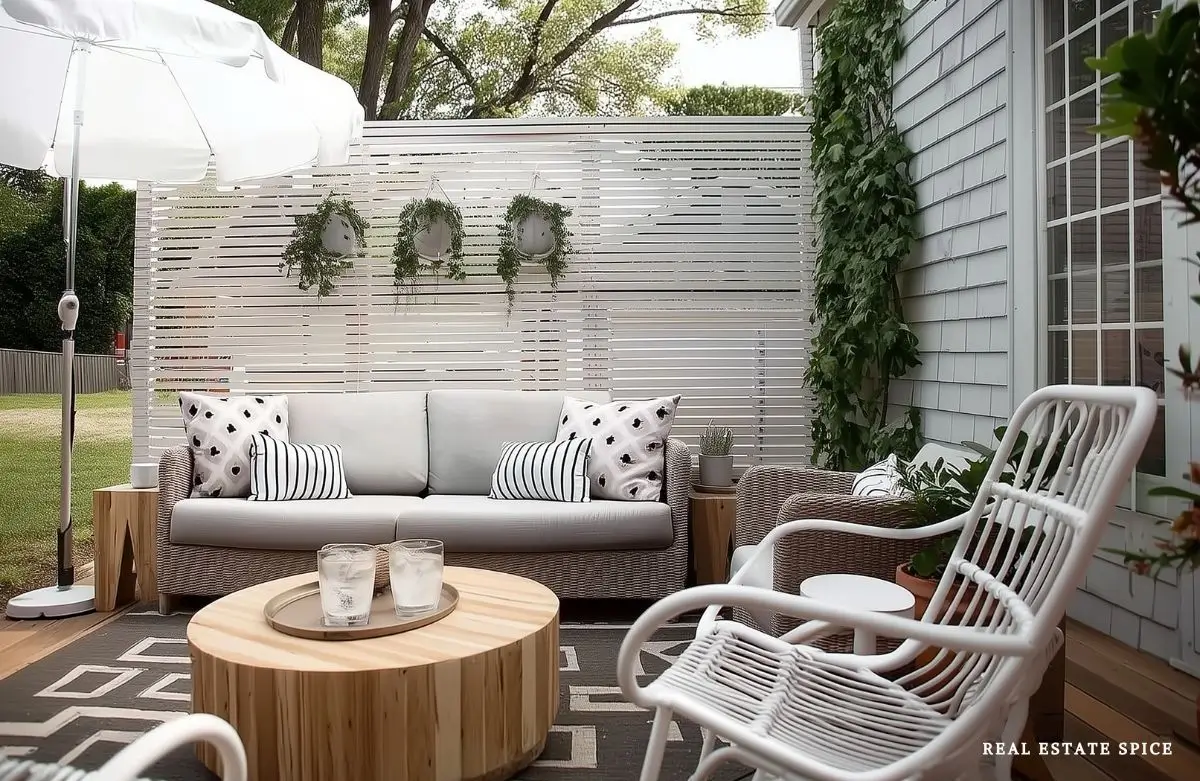
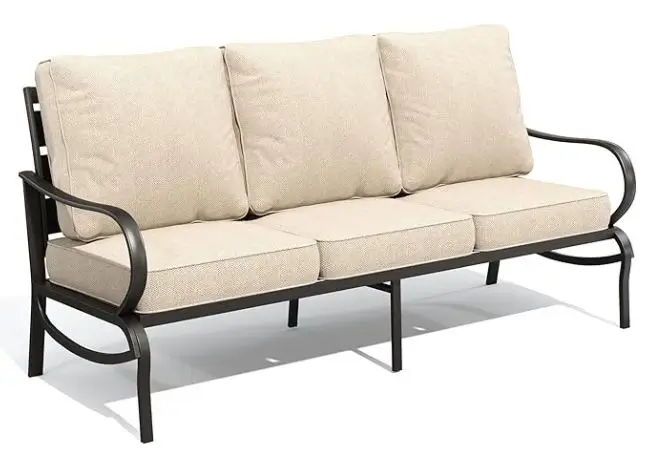
A small loveseat works beautifully when the patio is wider than it is deep and you want a stronger lounge feel.
Compact patio chairs are ideal if flexibility matters because they can shift easily and don’t visually crowd the space.
A patio bench is wonderful along a wall or railing because it saves floor area while still feeling grounded.
Folding chairs can be surprisingly stylish when chosen well, especially on patios that need to flex between everyday quiet and occasional company.

Outdoor poufs are helpful too because they can act as footrests, extra seating, or tiny tables when topped with a tray.
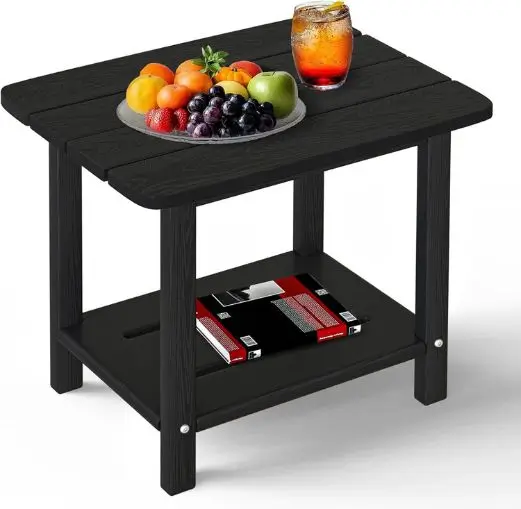
Side tables matter more than people think, because every good seat needs somewhere for coffee, a book, or a lamp to land.
Comfort still matters on a small patio
There’s a strange myth that small patios have to sacrifice comfort in the name of fitting everything in.
They really don’t.
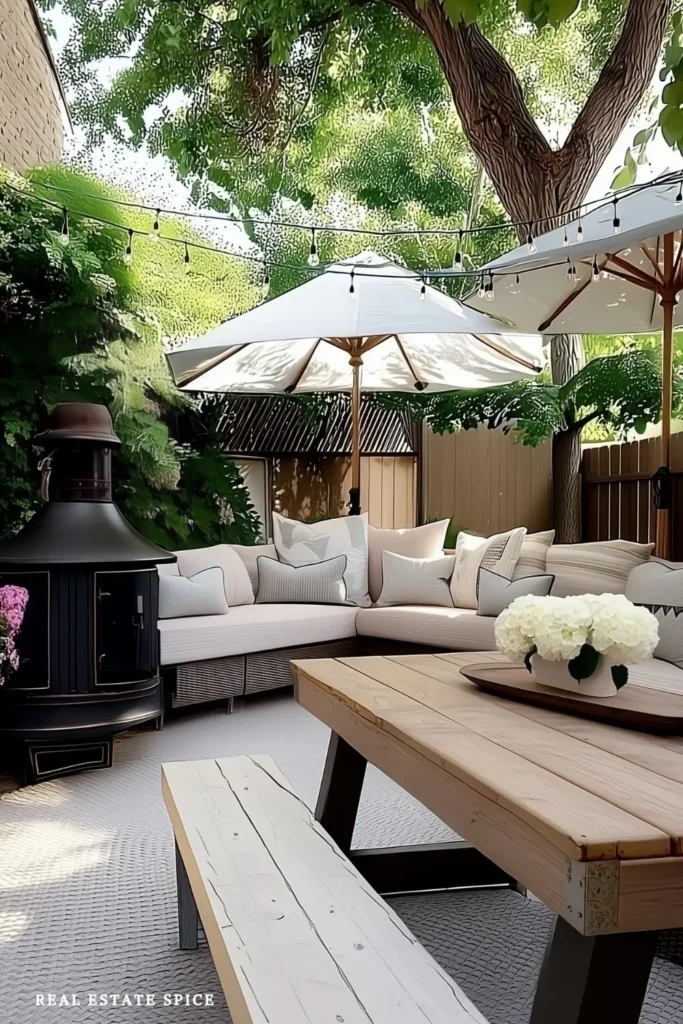
A small patio doesn’t need giant lounge patio furniture to feel welcoming.
It just needs a few pieces that truly fit.
Cushions help.
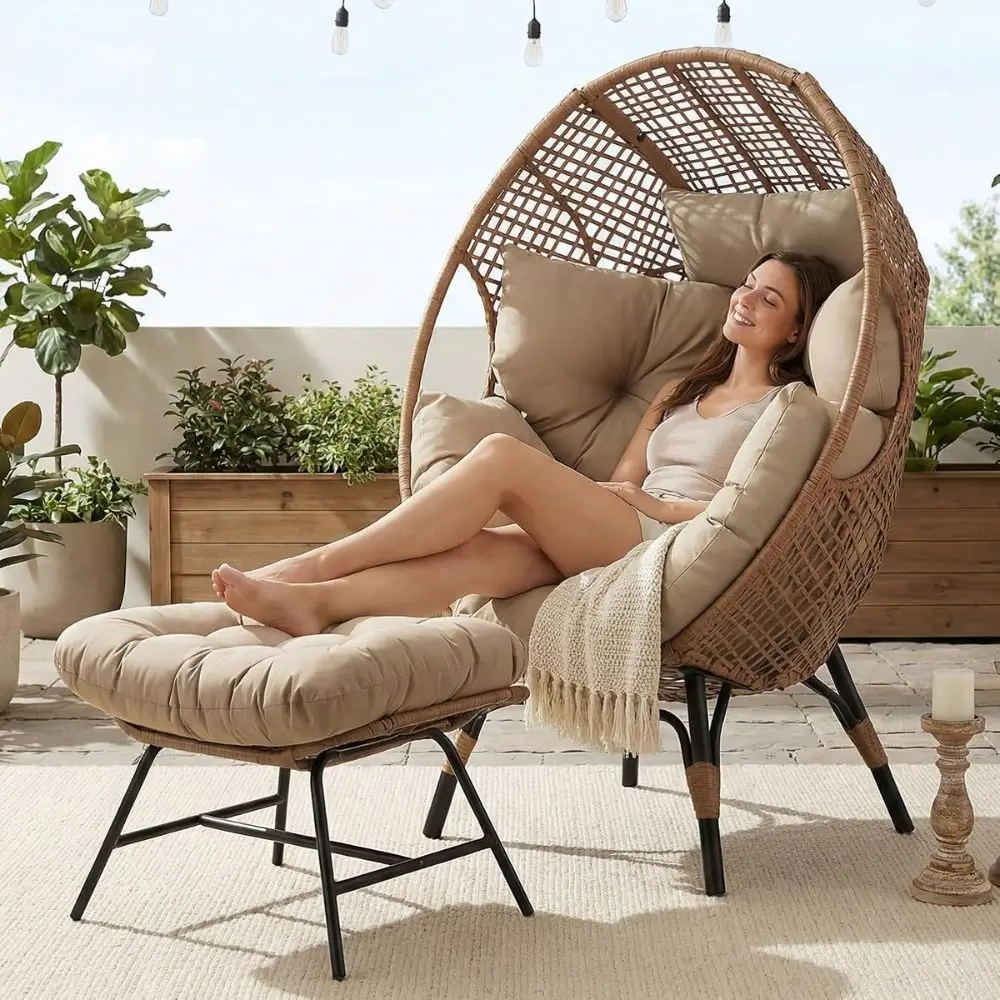
Supportive seat backs help.
A chair that doesn’t leave you shifting around after ten minutes is deeply underrated.
You can learn how to create a patio seating area and create a space that’s perfect for you.
Here, though, the framework stays simple.
Small patios need seating that matches the patio, not furniture that expects the patio to somehow grow around it overnight.
Priority 2: Use Vertical Space
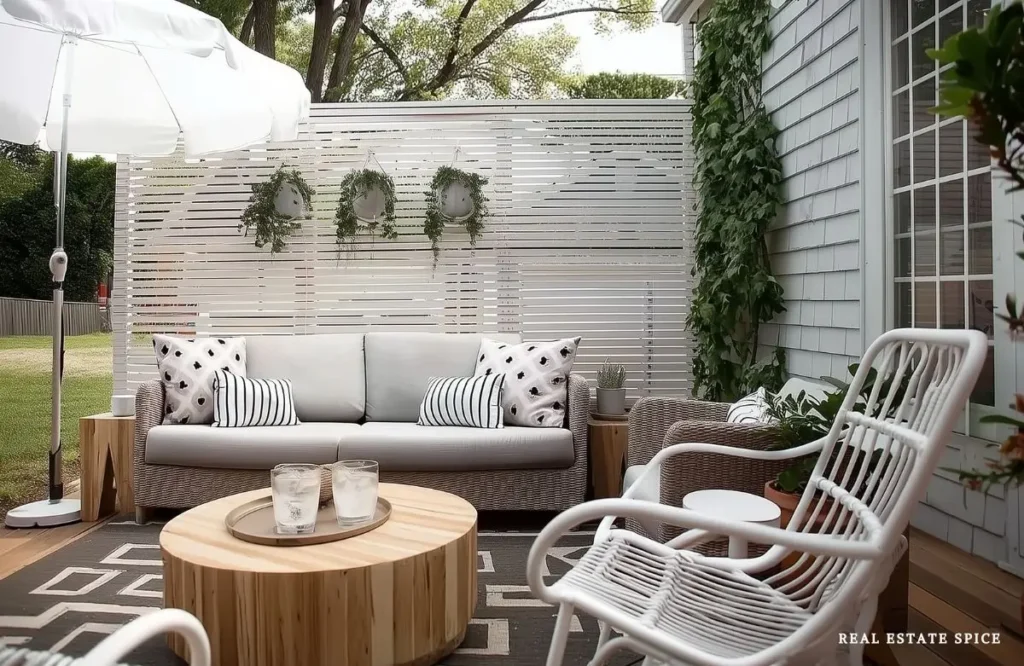
When the floor is limited, the walls become part of the patio
Once the seating is scaled correctly, the next priority is using vertical space.
This is where so many small patios either get clever or get cluttered.
If all the decor, plants, and privacy solutions stay on the floor, a small patio runs out of room fast.
The smarter move is to treat walls, railings, corners, and upright surfaces as part of the design.
Vertical space is what helps a small patio feel layered instead of cramped.
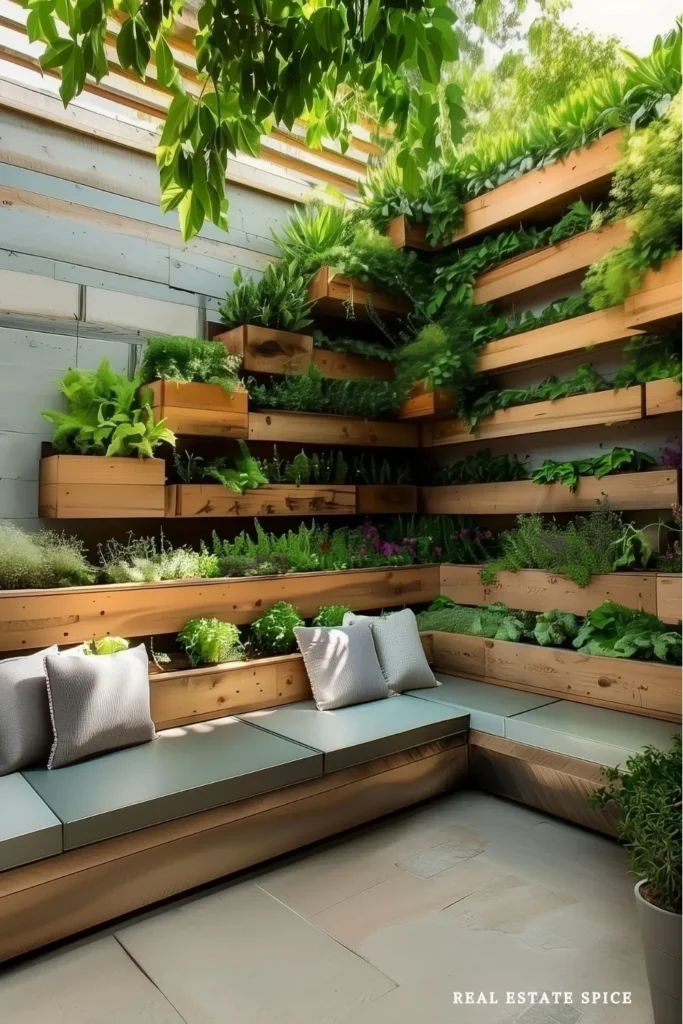
It gives you room for greenery, privacy, softness, and visual interest without stealing precious walking space.
This is especially useful on apartment patios, balcony patios, and narrow townhome patios, where the footprint is small, but the walls and railings are there, ready to help if anyone would just ask.
Use height to create softness and privacy
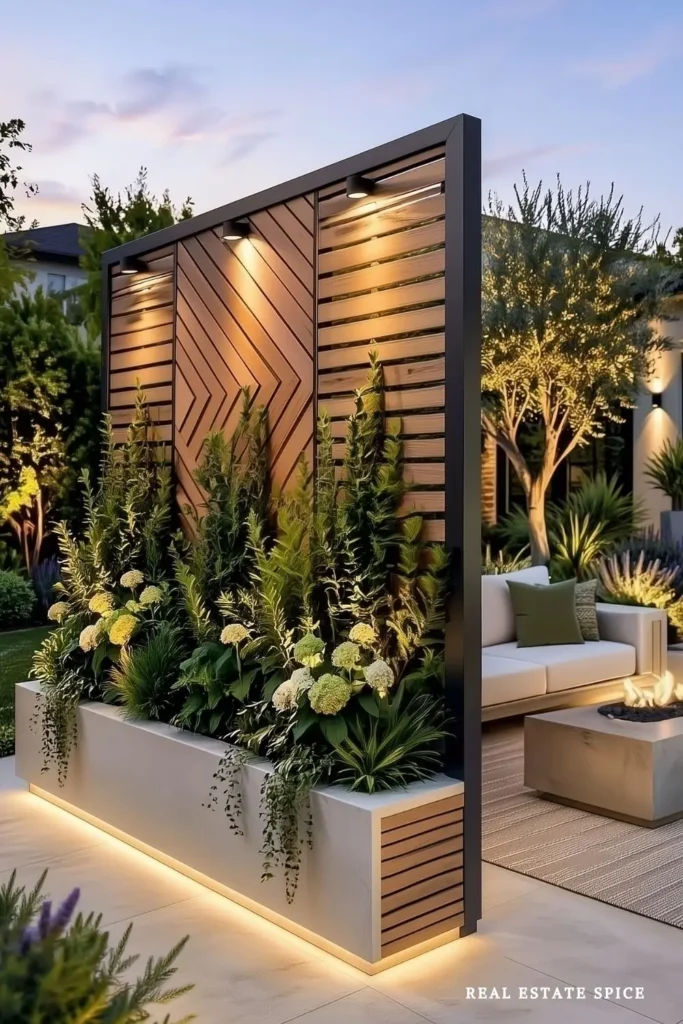
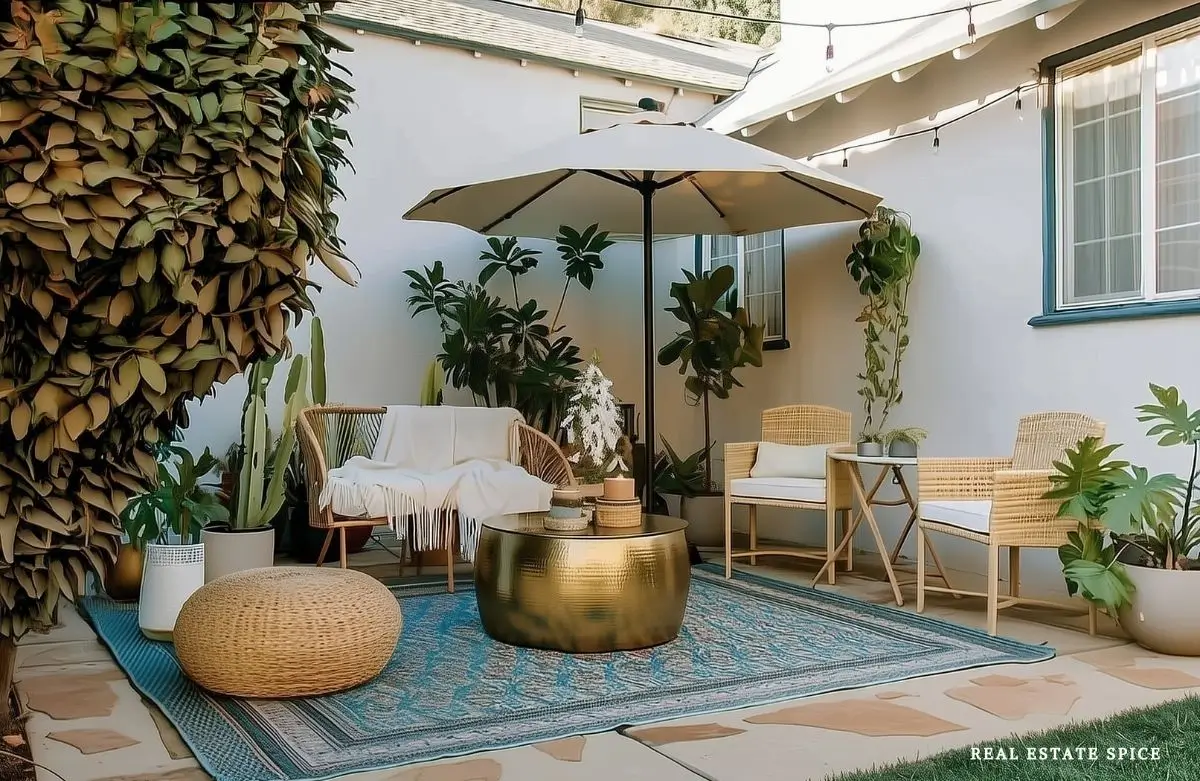
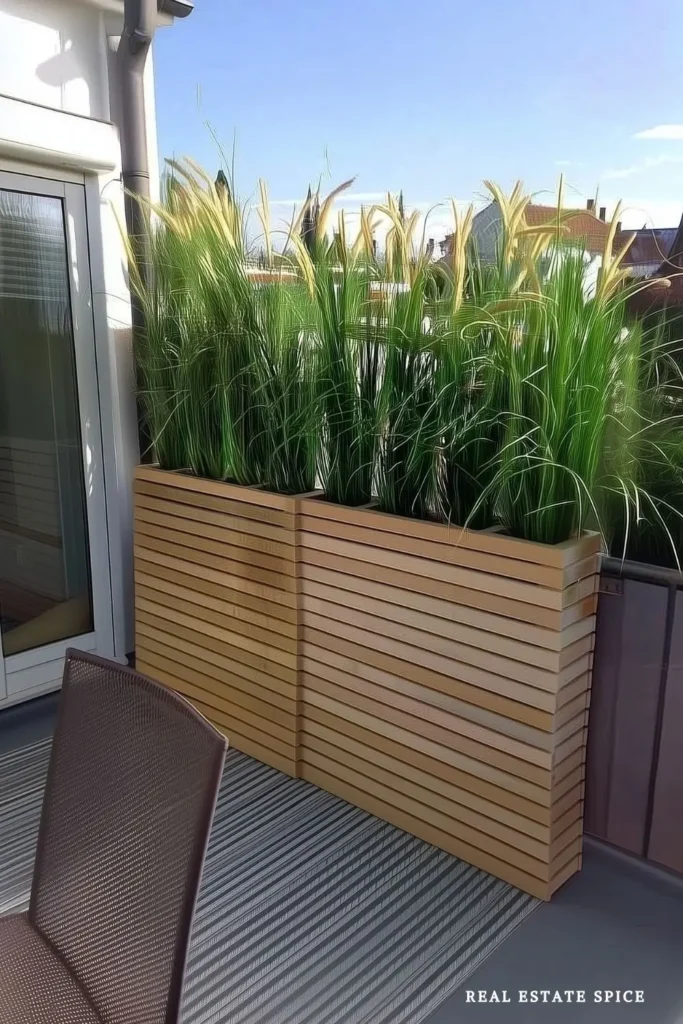
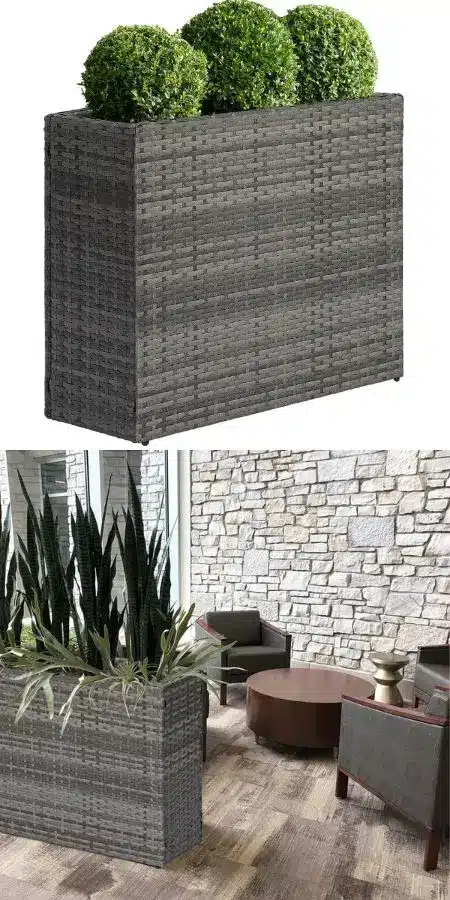
Tall planters are one of the easiest ways to make a small patio feel more complete.
They lift the eye, add a stronger perimeter, and make the whole patio seating area feel more tucked in.
A pair of tall planters can act like visual bookends around a chair grouping.
Three clustered planters at different heights can create a softer edge than one flat row of matching pots.
A potted olive tree, a feathery grass, or a narrow evergreen can all help a small patio feel more private without becoming boxed in.
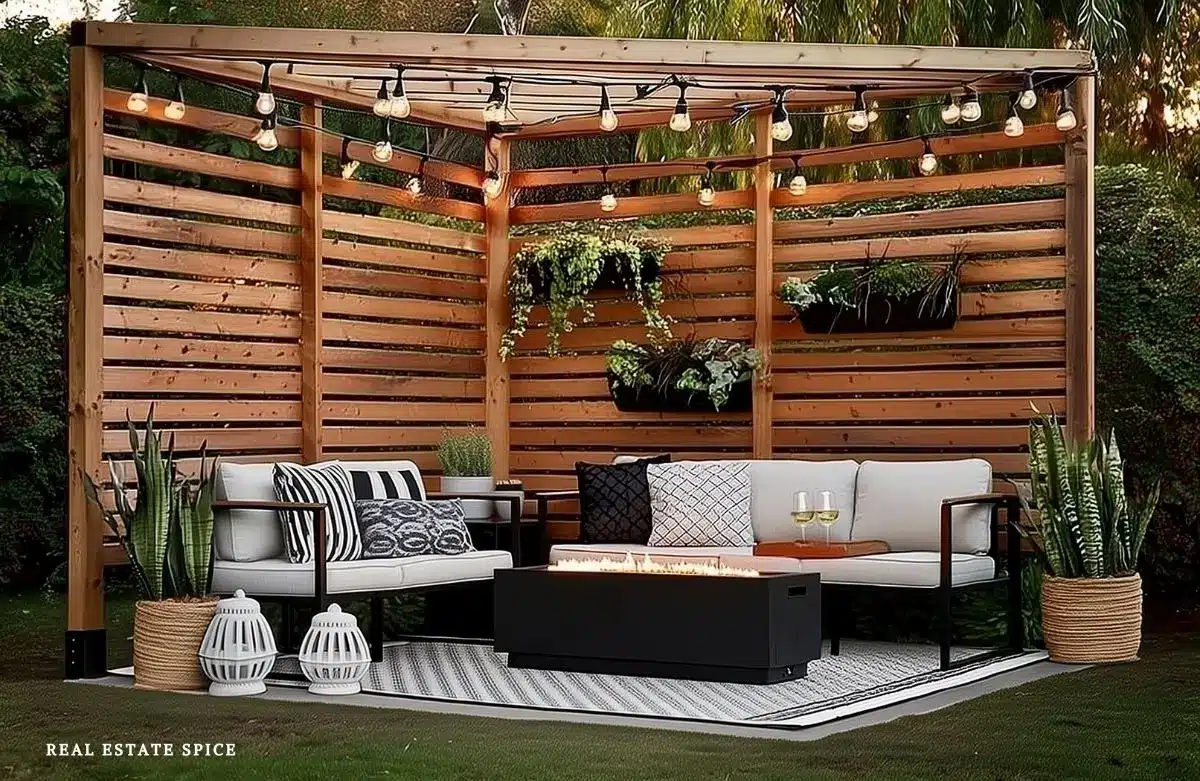
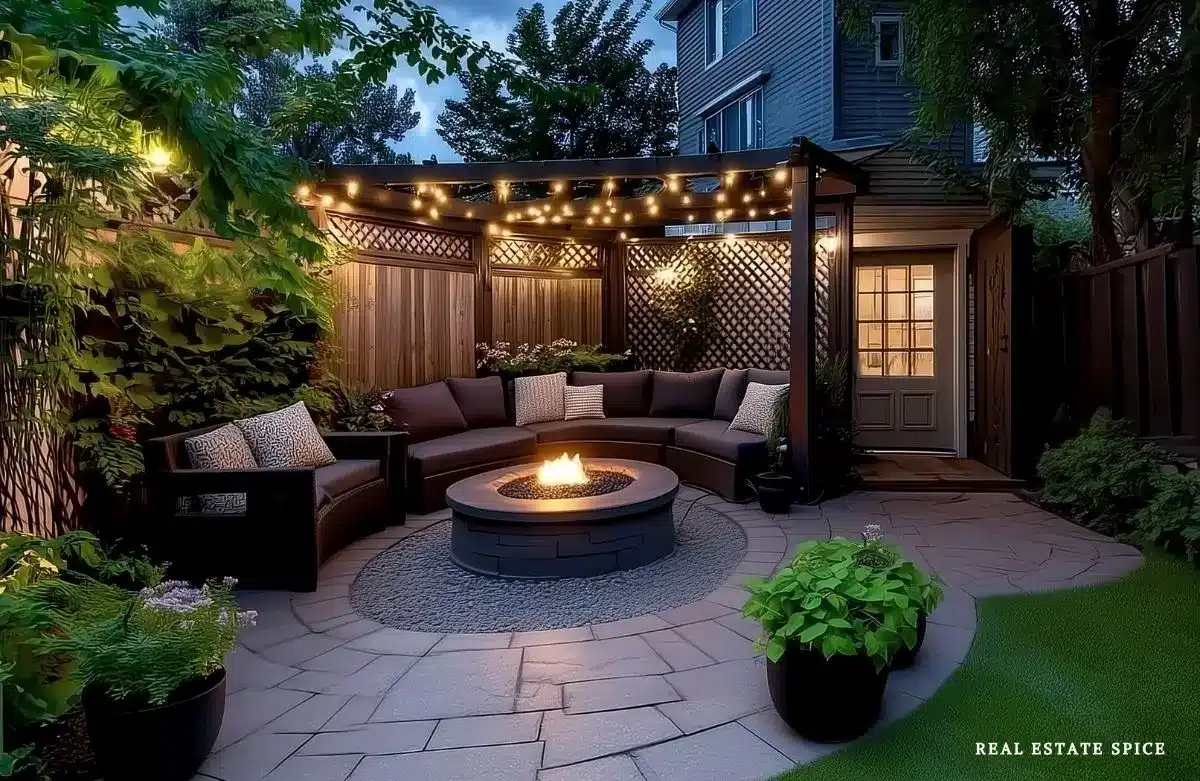
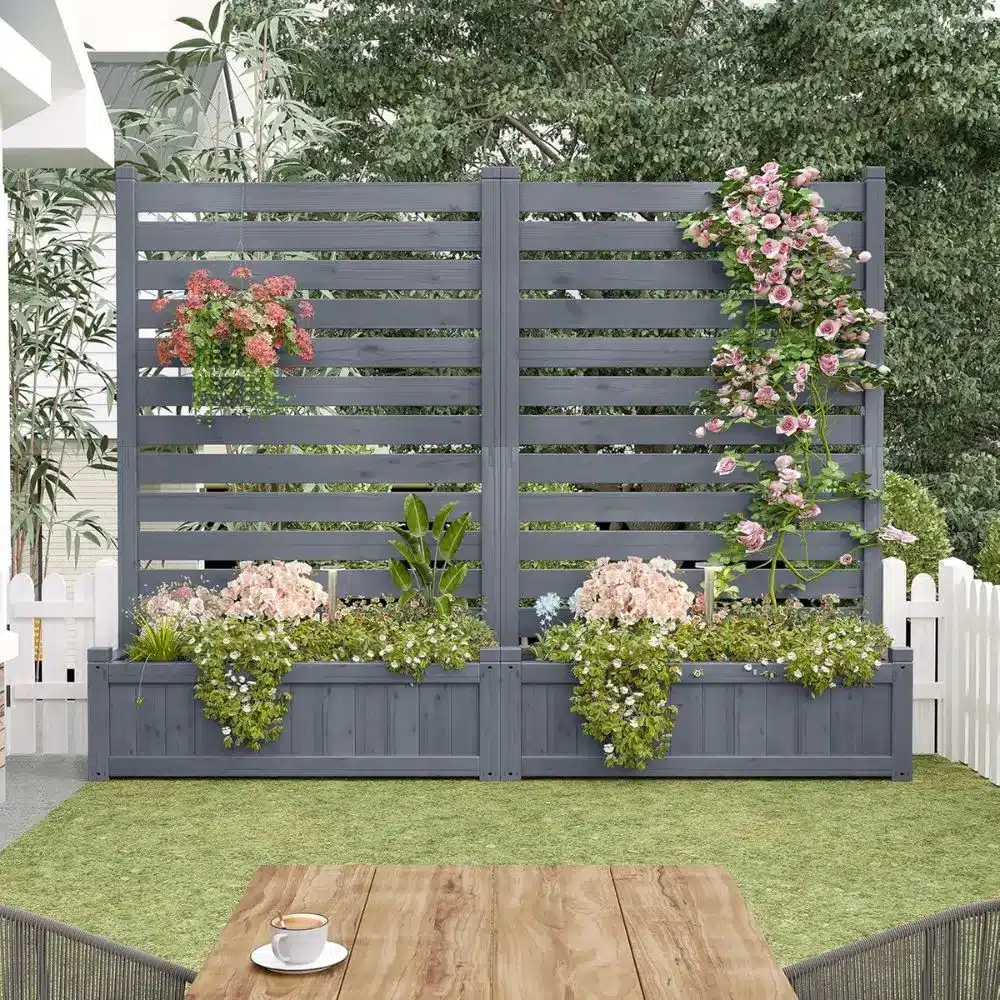
Trellises and lattice panels are especially useful when readers want patio privacy without having to build something huge.
Privacy screen with planters add depth and character.
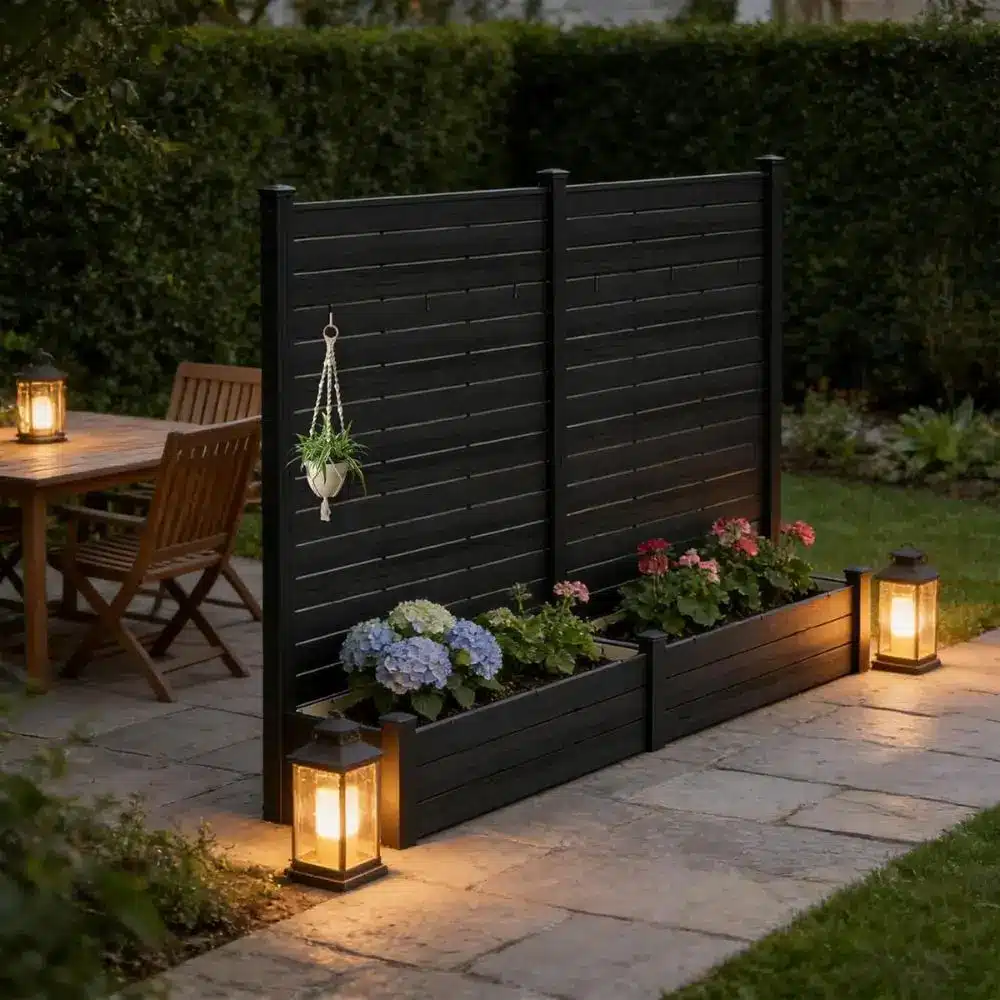
A slim trellis with climbing greenery gives the eye height and texture.
Lattice panels can filter a view while still feeling airy.
That’s one reason they work so well for small patio decor ideas.
They solve a problem without creating a new one.
Walls, railings, and corners are valuable real estate
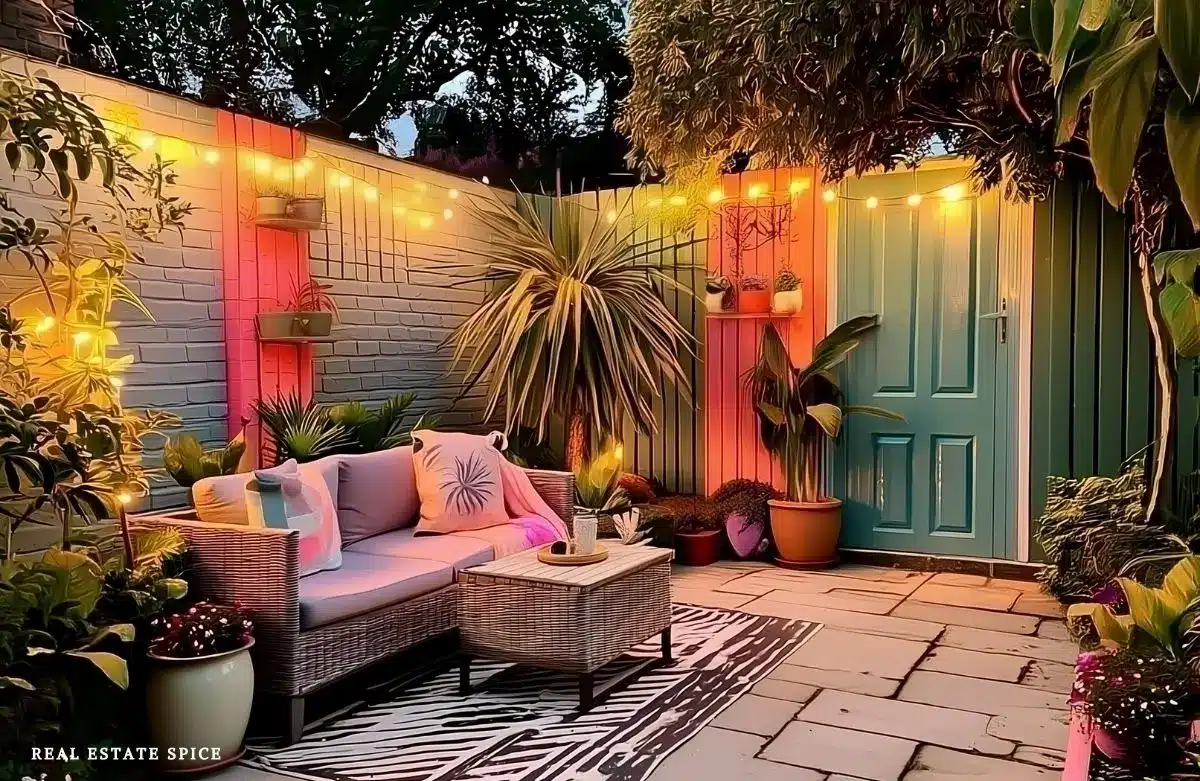
Wall planters, hanging baskets, and vertical gardens can completely change a small patio design because they shift beauty upward.
A bare wall suddenly becomes part of the room.
Meanwhile, a plain railing can hold greenery instead of only framing the view.
Corners that once felt dead or awkward become places for tall planters, a vertical garden, or one statement light.
One especially helpful trick is what I think of as the vertical frame.
Choose the edge of the patio that needs the most visual softness, then build a layered upright backdrop there.
Start with a trellis or lattice panel.
Add one tall planter beside it.
Finish with string lights or a lantern near the base.
That one backdrop can make the whole patio feel more designed without adding much to the floor at all.
Fabric and lighting count as vertical tools too
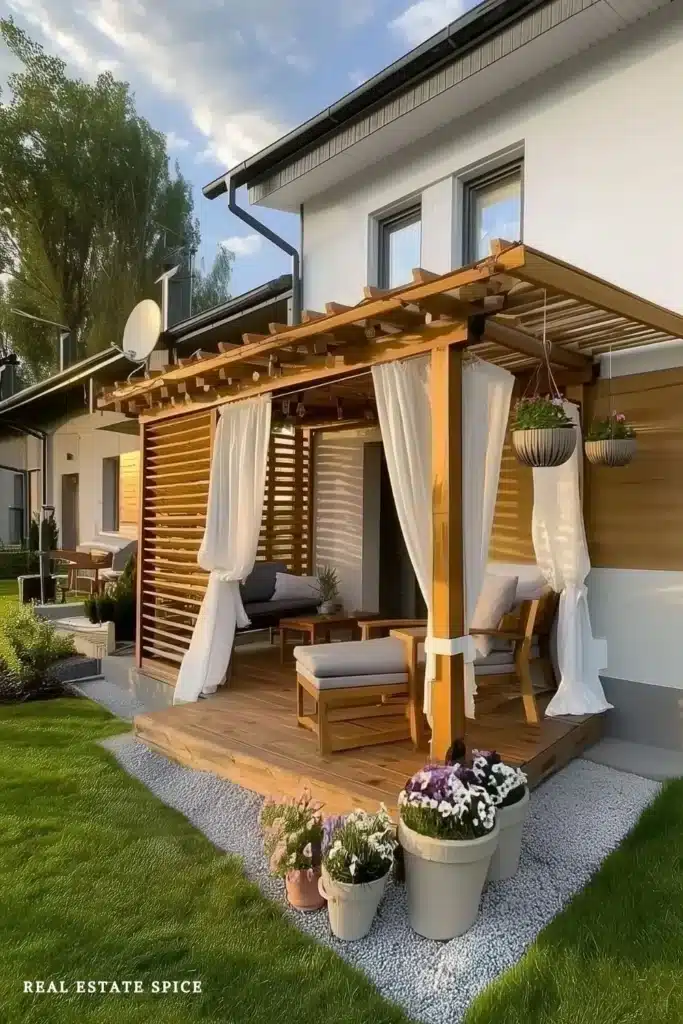
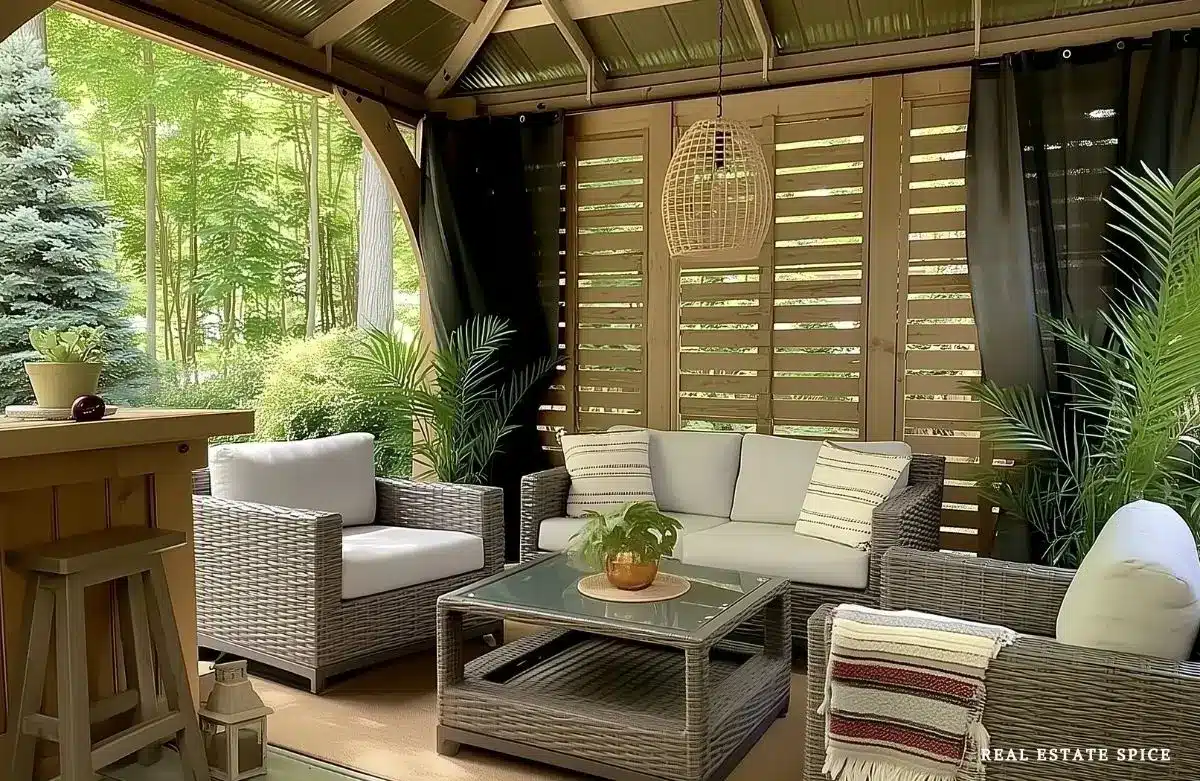
Outdoor curtains are often overlooked on small patios because people assume they’re only for bigger spaces or covered patios.
They can actually be lovely on a compact patio if there’s a simple frame, rod, or support for them.

Even one curtain panel can soften an edge beautifully.

It also helps a private patio feel calmer because fabric creates movement and warmth in a way hard materials can’t.
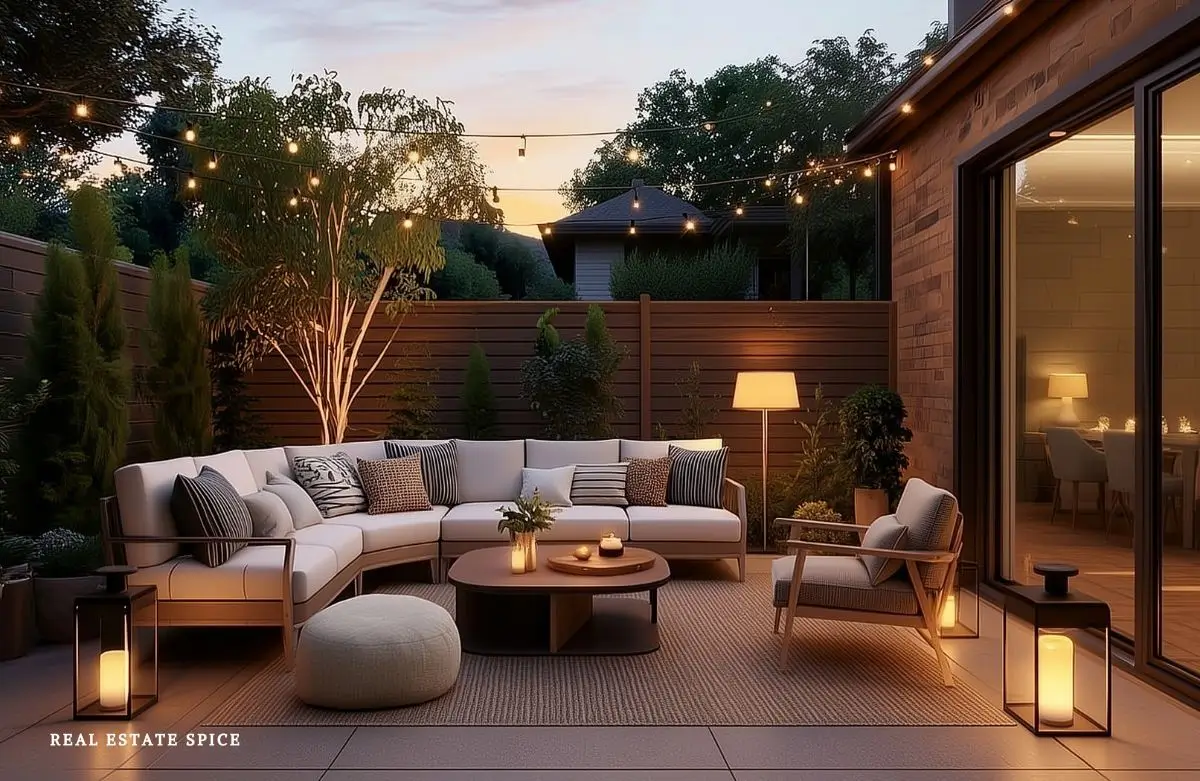
String lights belong in this section, too, because they do more than add glow.
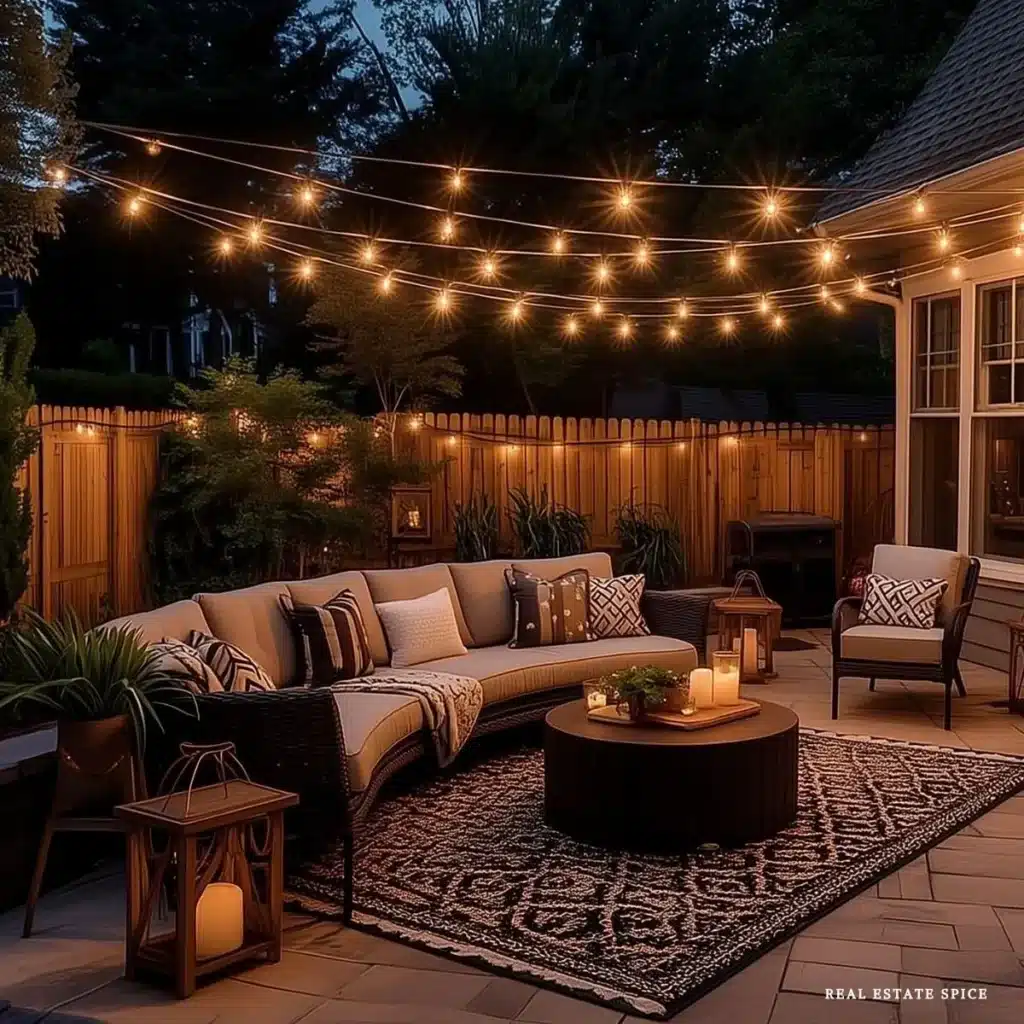
They create an upper layer that makes the patio feel more room-like.
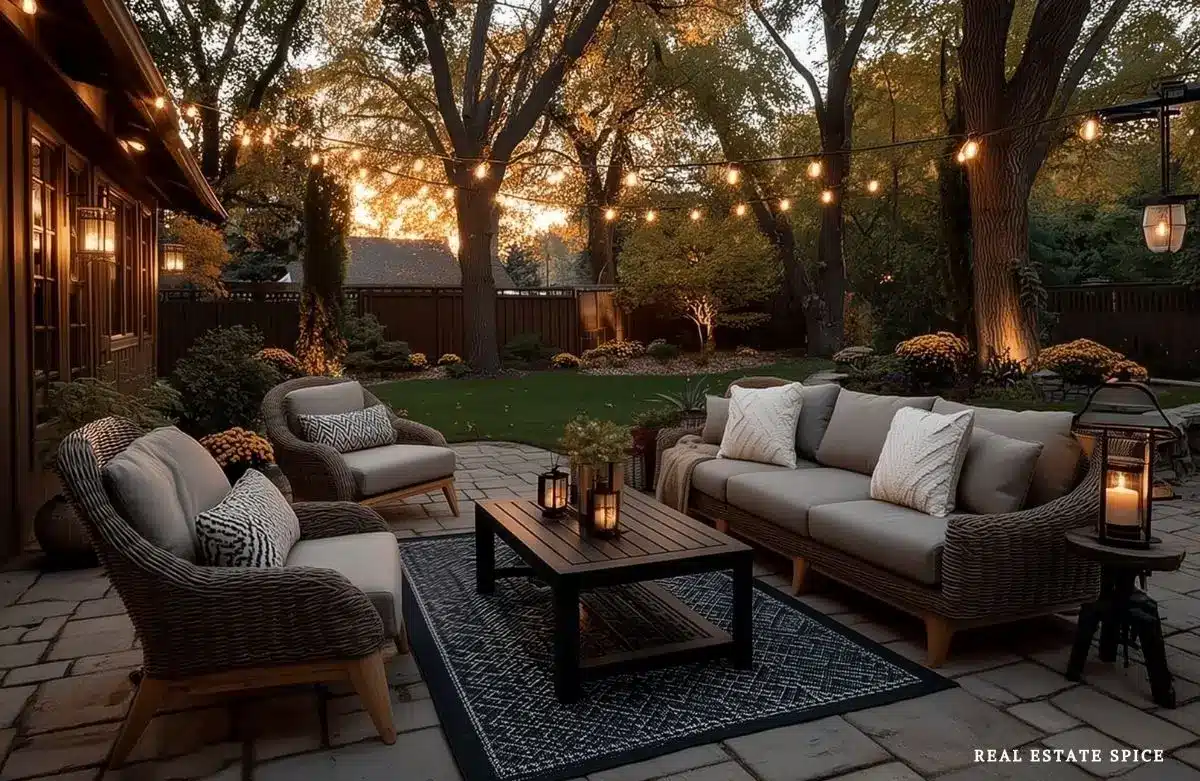
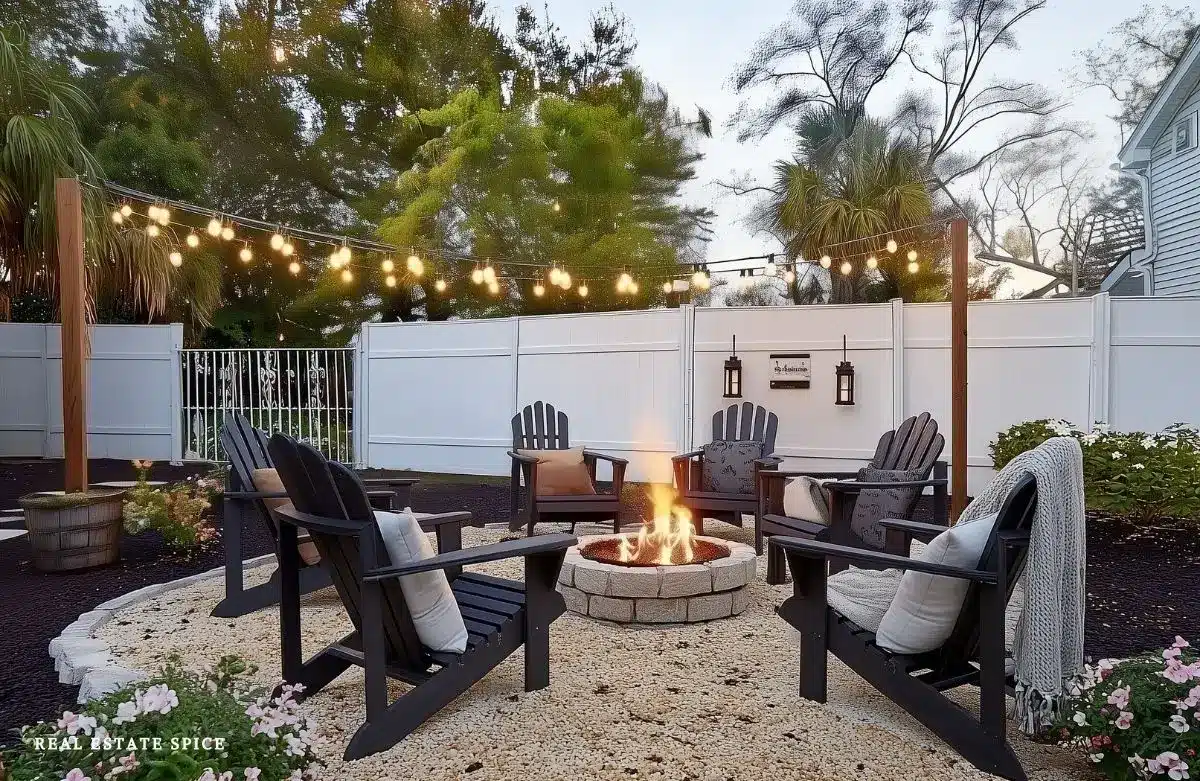
Hanging them along a railing, fence line, wall edge, or pergola helps define the top of the space and gives character without adding clutter below.
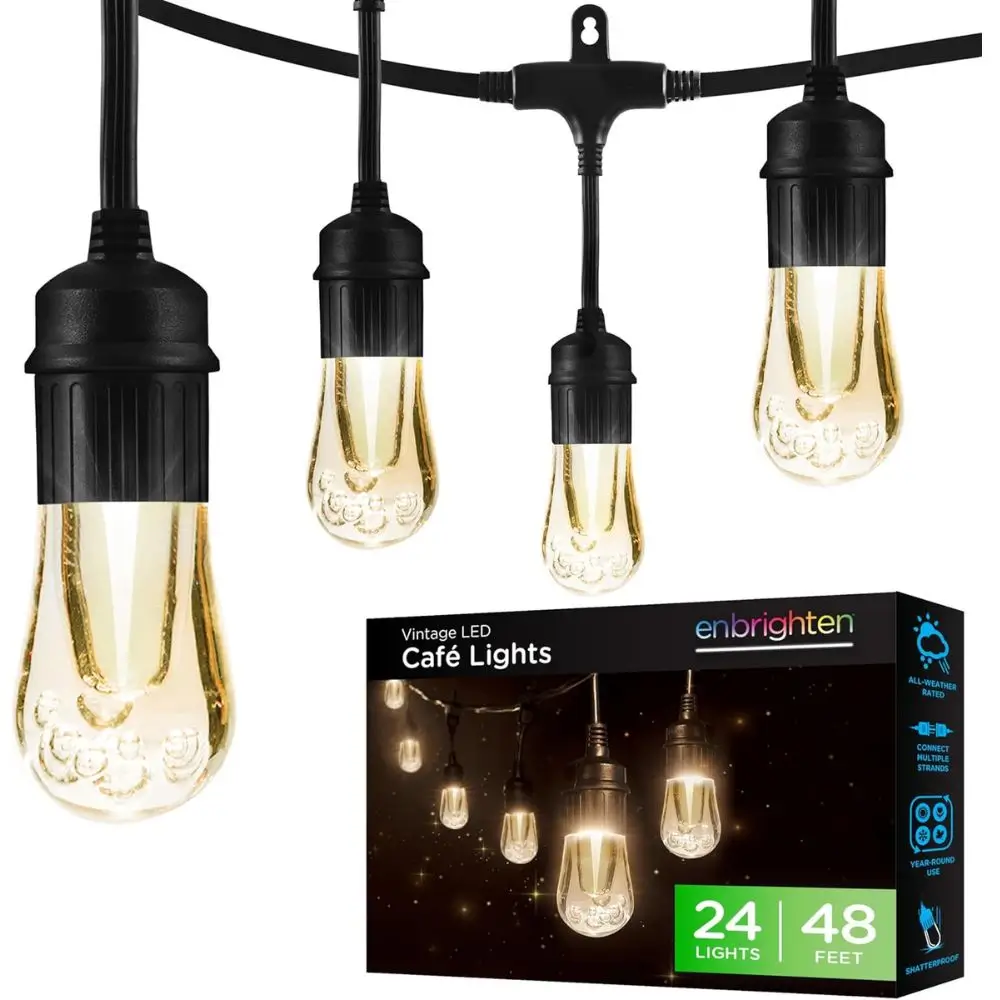
Lanterns and solar lighting can support the same feeling lower down.


If you’d like to go deeper into lighting, you can learn ways to light a patio for cozy ambiance and create a space that makes you linger long into the night.
Here, the main point is that vertical space isn’t just about plants.
It’s about using the full height of the patio.
Priority 3: Create One Clear Focal Point
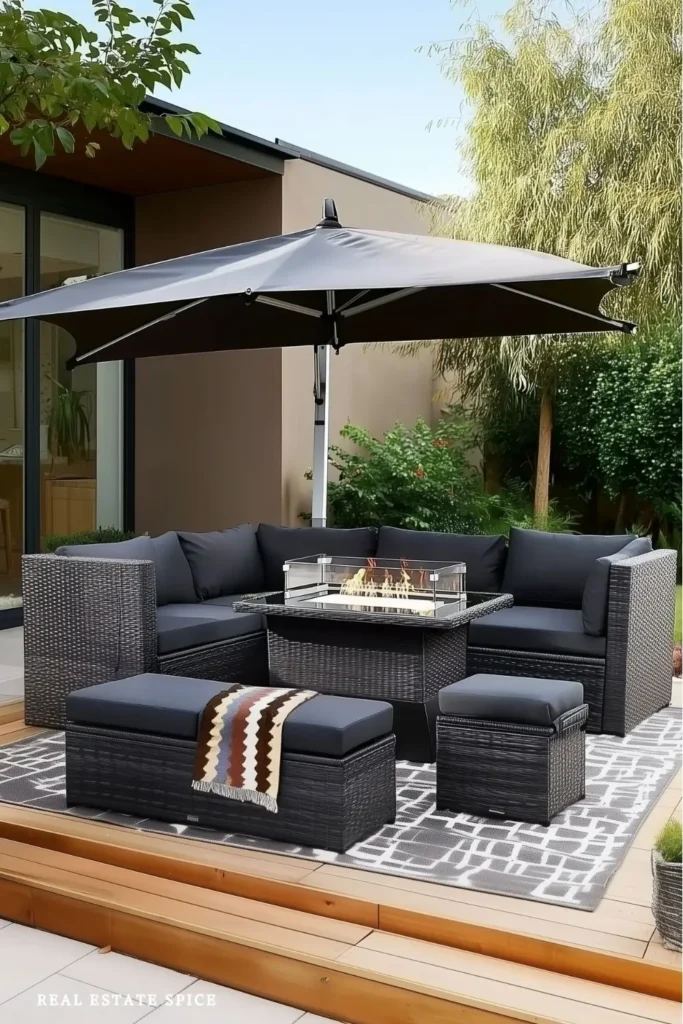
Small patios need visual clarity, not more “moments” competing
The third small-space priority is choosing one clear focal point.
This matters more on a small patio than on a big one because visual clutter builds quickly when everything is close together.

If a tiny patio has a bold rug, a bold bistro table, a bold lantern arrangement, a bold planter grouping, and a bold chair, the whole space can feel a little dizzy.
Small patios usually don’t need five statement pieces.
They need one strong center and a few supporting details.
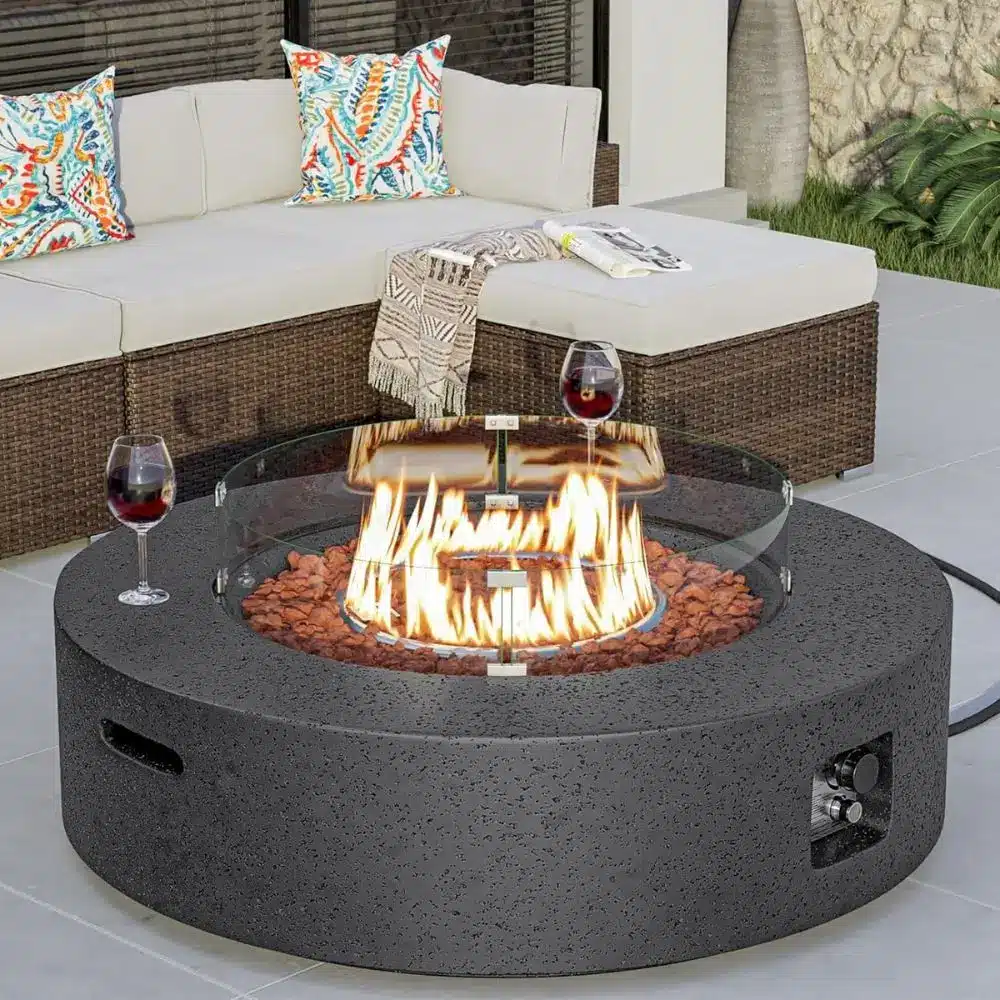
A focal point gives the eye somewhere to land.
It helps the patio design feel intentional.
More importantly, it creates calm, because your brain stops trying to sort through every object at once.
That’s one reason the patio rule of 3 small spaces framework works so well.
Once the seating fits and the vertical space is working, one focal point is often the final move that makes the patio click.
What can be a focal point on a small patio
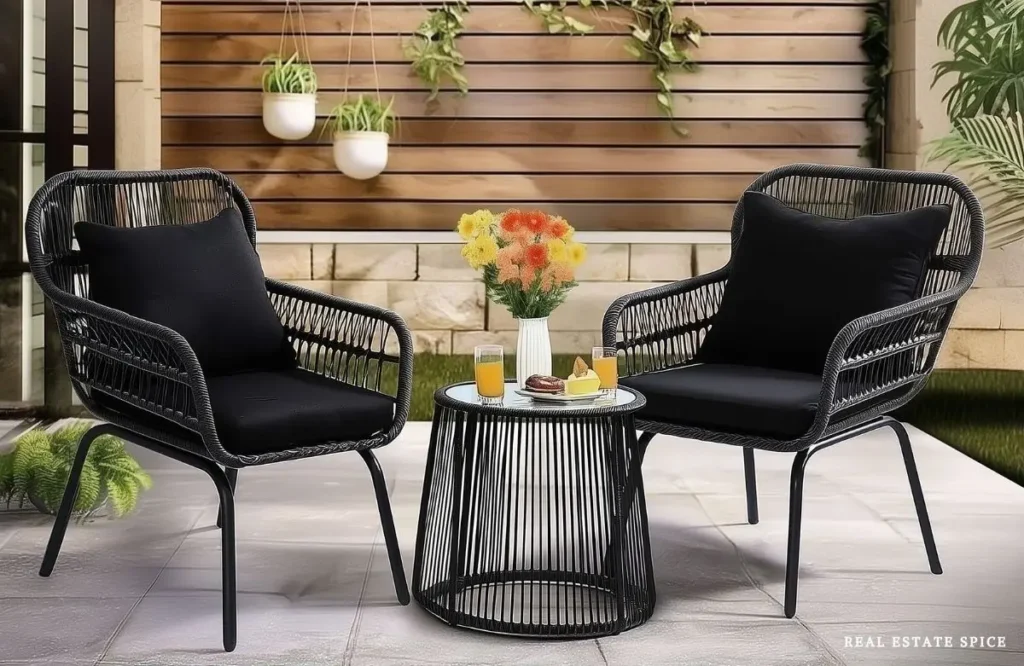
A bistro table can absolutely be the focal point, especially if it sits in the prettiest part of the patio and is styled simply.
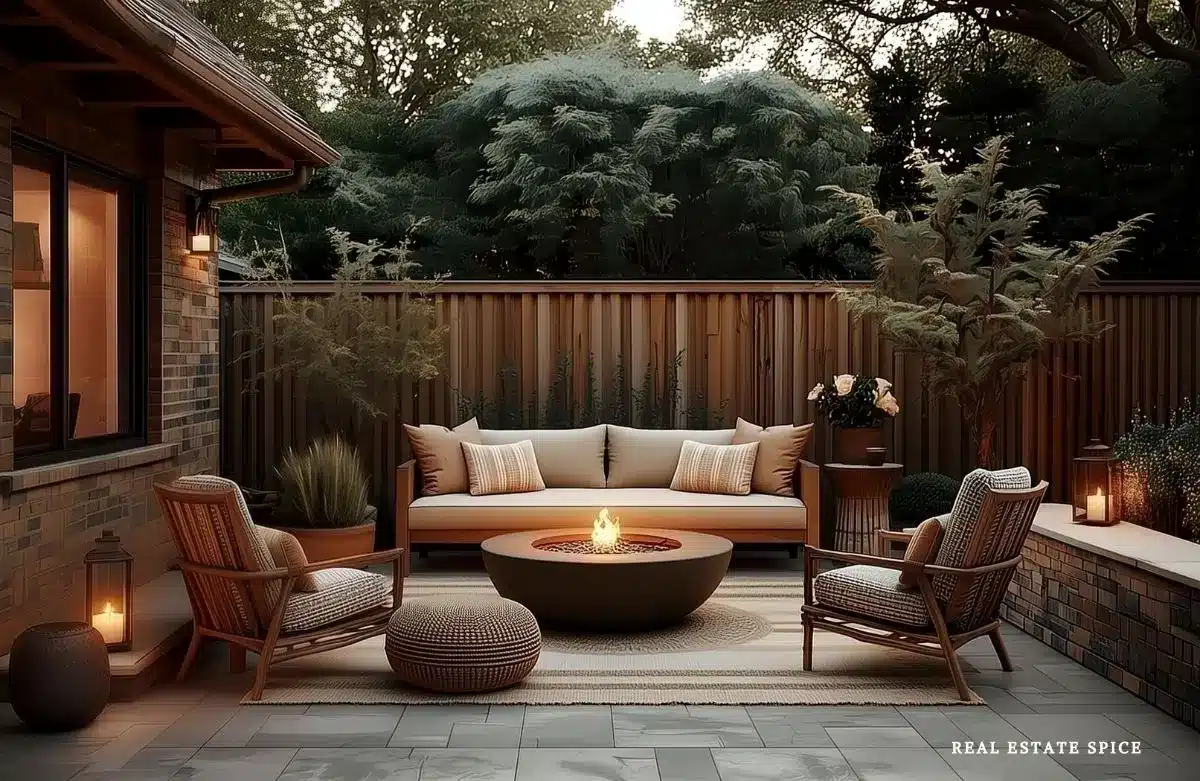
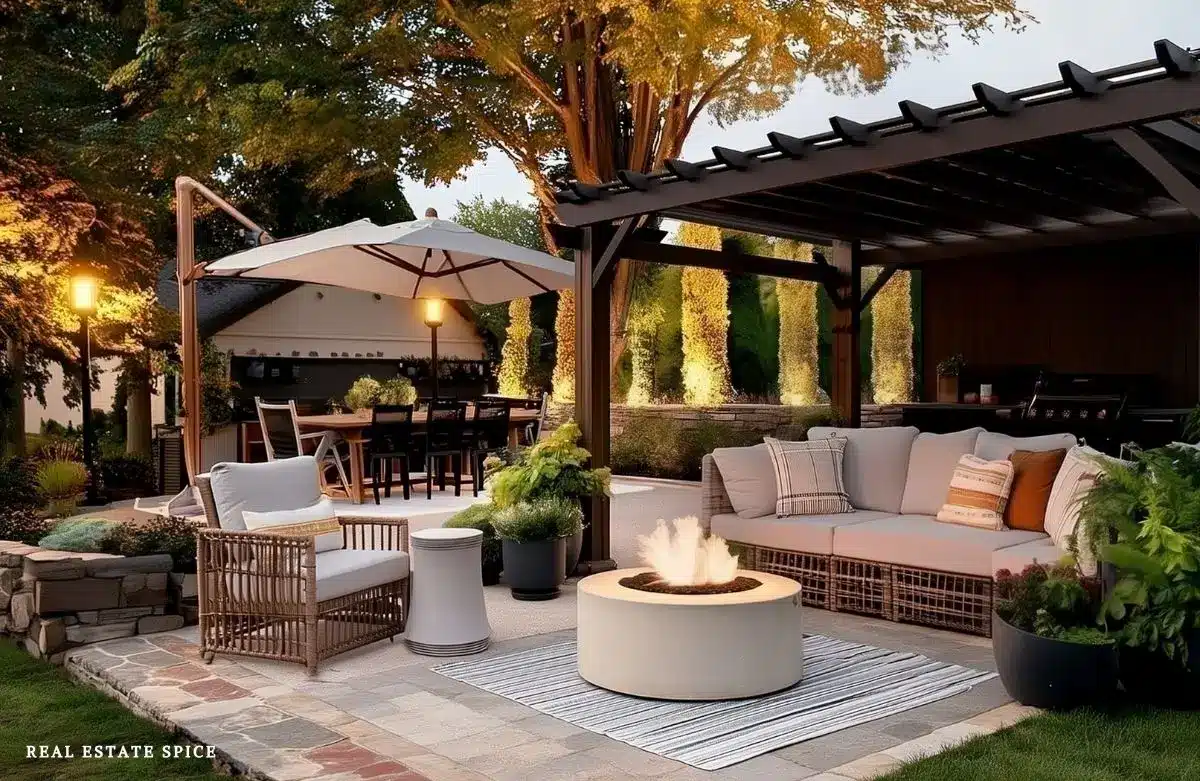
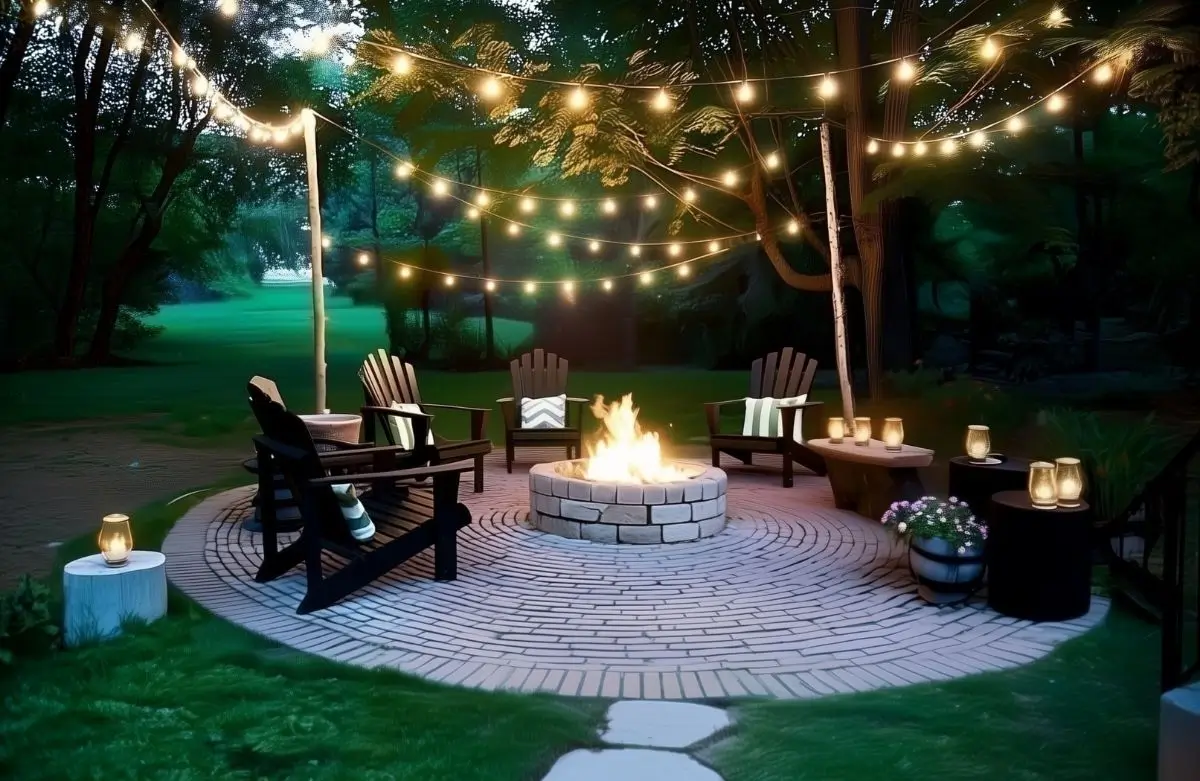
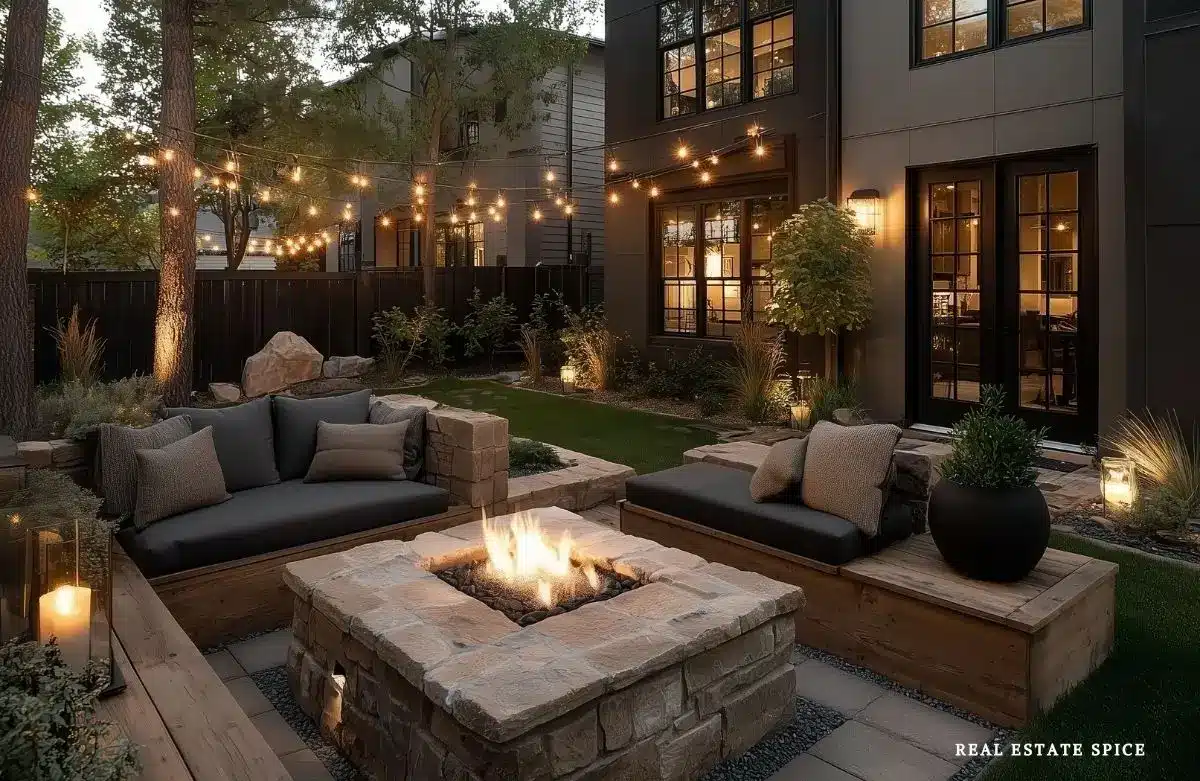
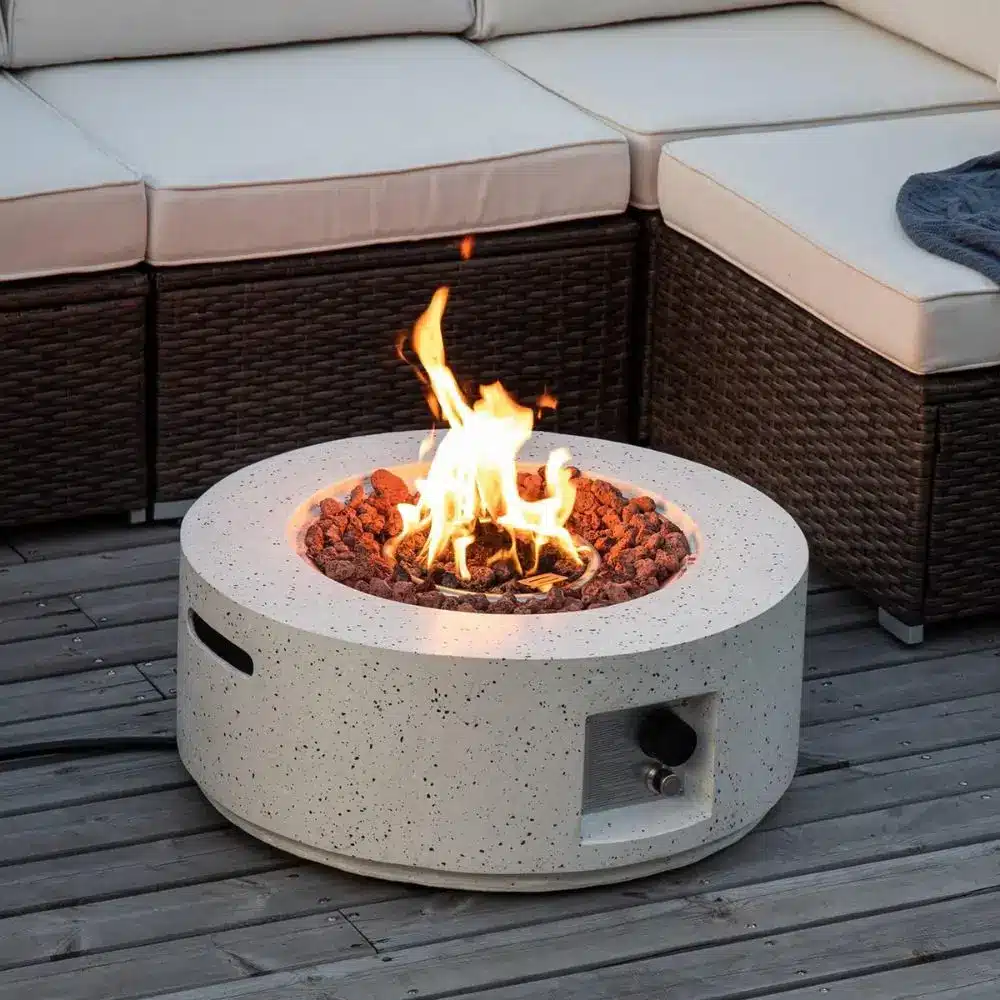
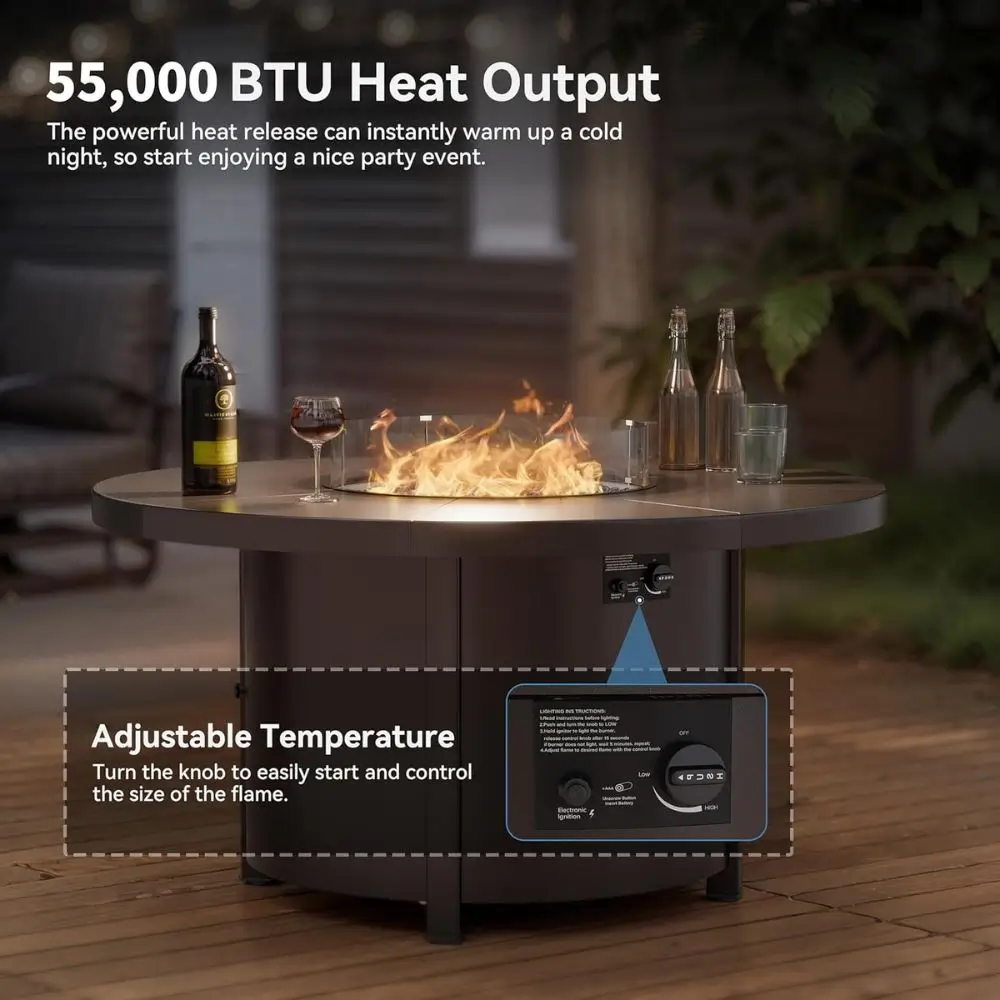
A small fire pit table can do it too, as long as the patio layout supports it safely and comfortably.
An outdoor rug with a beautiful pattern can become the visual anchor if the rest of the decor stays fairly neutral and calm.

A grouping of planters in one strong corner can work beautifully.
So can a small fountain, a lantern arrangement, one cozy chair setup, a tiny dining area, or even a beautiful view if the patio has one worth framing.
The best focal point is usually the one that reflects the patio’s everyday life.
If the patio is mostly for morning coffee, a charming bistro table might make more sense than a fire feature.
When the patio is where you read at night, maybe the focal point is one beautiful chair with a side table and one softly lit planter nearby.
A small patio doesn’t need drama.
It needs clarity.
Let the focal point lead the rest of the decor
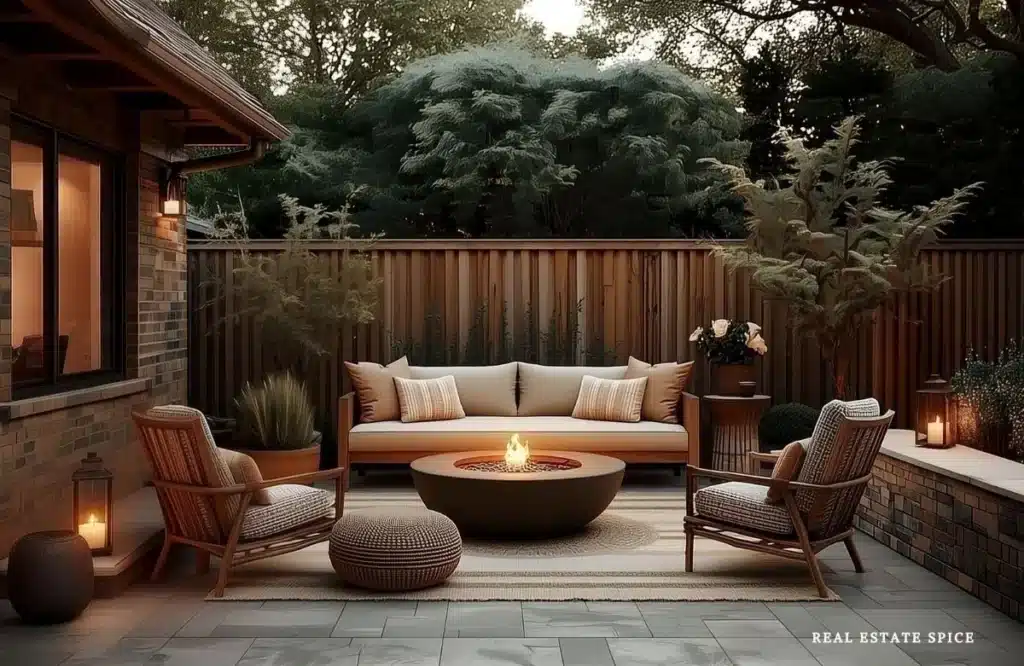
Once the focal point is chosen, the rest of the patio decor ideas should support it instead of competing.
If the focal point is a planter grouping, let the rug and furniture stay simpler.
When the focal point is the rug, don’t pile on a bunch of other patterned pieces trying to steal attention.
If it’s a bistro table, style it lightly and let the seating orbit around it instead of introducing three other “look at me” moments nearby.
How to Make a Small Patio Feel Cozy Without Overcrowding It
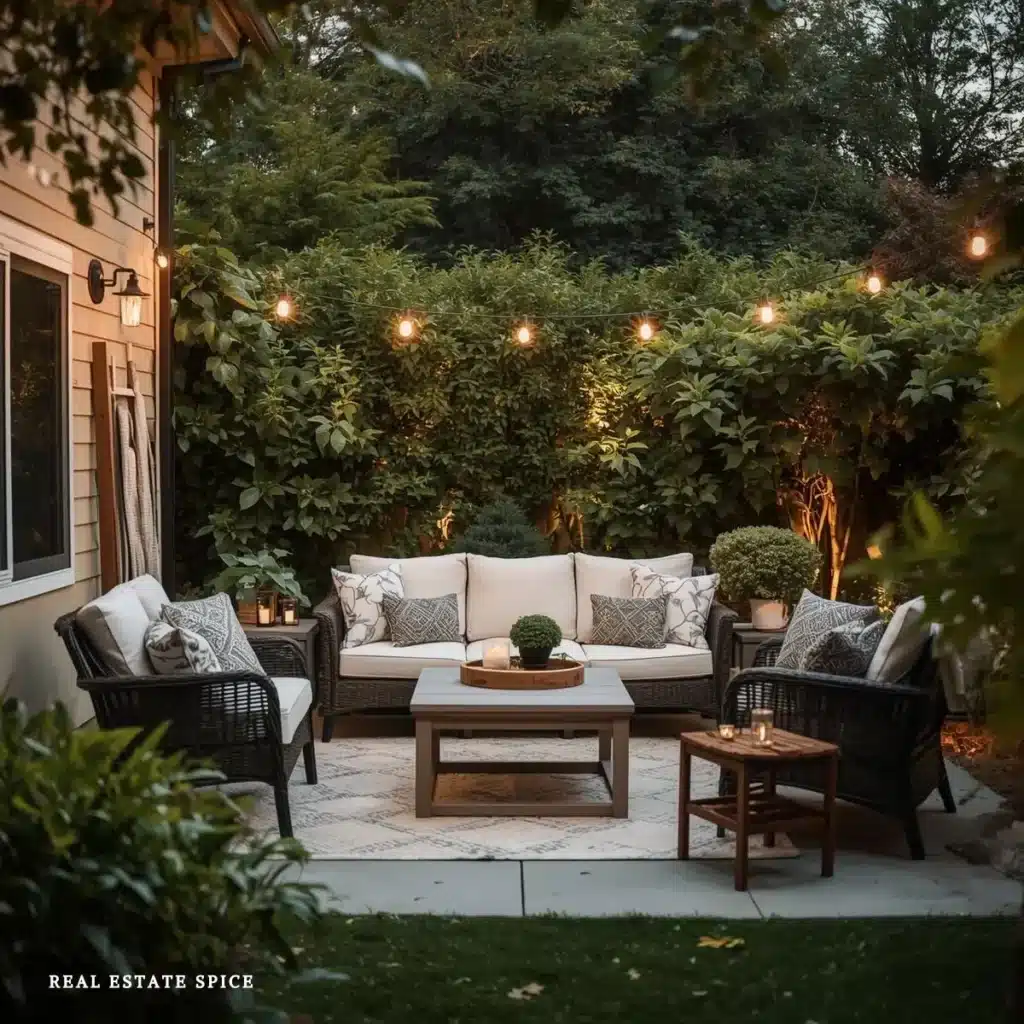
Cozy doesn’t come from adding more stuff.
That’s the biggest mindset shift.
A small patio feels cozy when the seating is comfortable, the palette feels calm, the lighting glows gently, and the edges feel softened.
One or two soft materials usually carry more warmth than a pile of extra objects.
Another good trick is leaving one pocket of negative space on purpose.
That empty corner, clear path, or open section of floor helps the patio breathe.
Counterintuitively, that breathing room often makes the patio feel more relaxed and more finished.
Cozy is not the same thing as packed.
How to Make a Small Patio Feel More Private
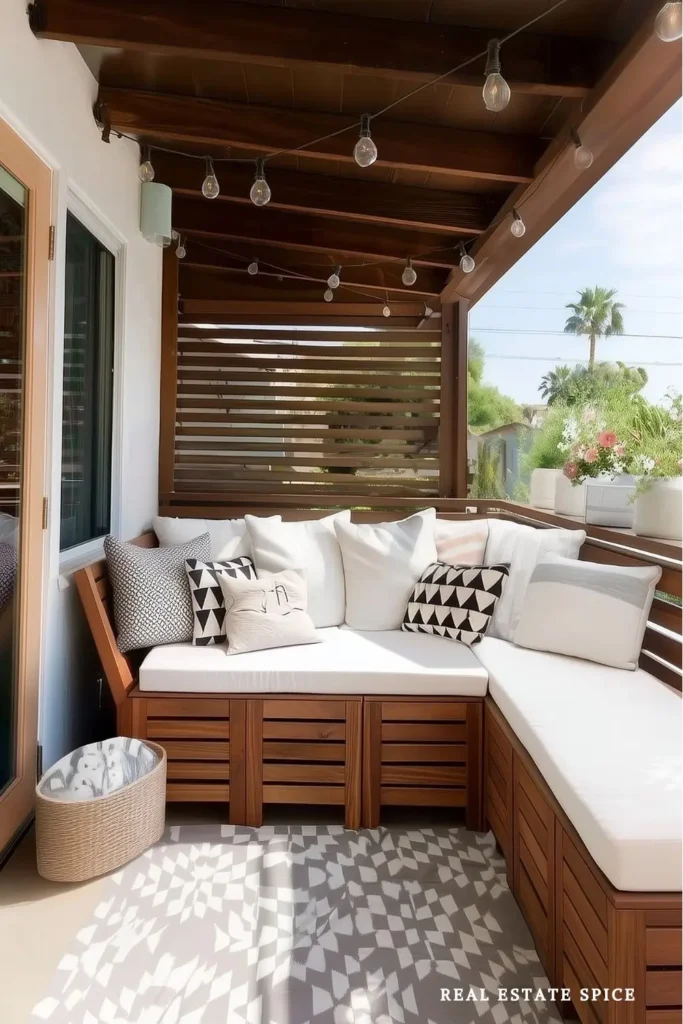
Privacy on a small patio usually works best when it’s selective.
Most patios don’t need screening on every edge.
Tall planters, a trellis, a lattice panel, or one outdoor privacy screen can make a huge difference, especially when the seating is placed near the protected side of the patio.
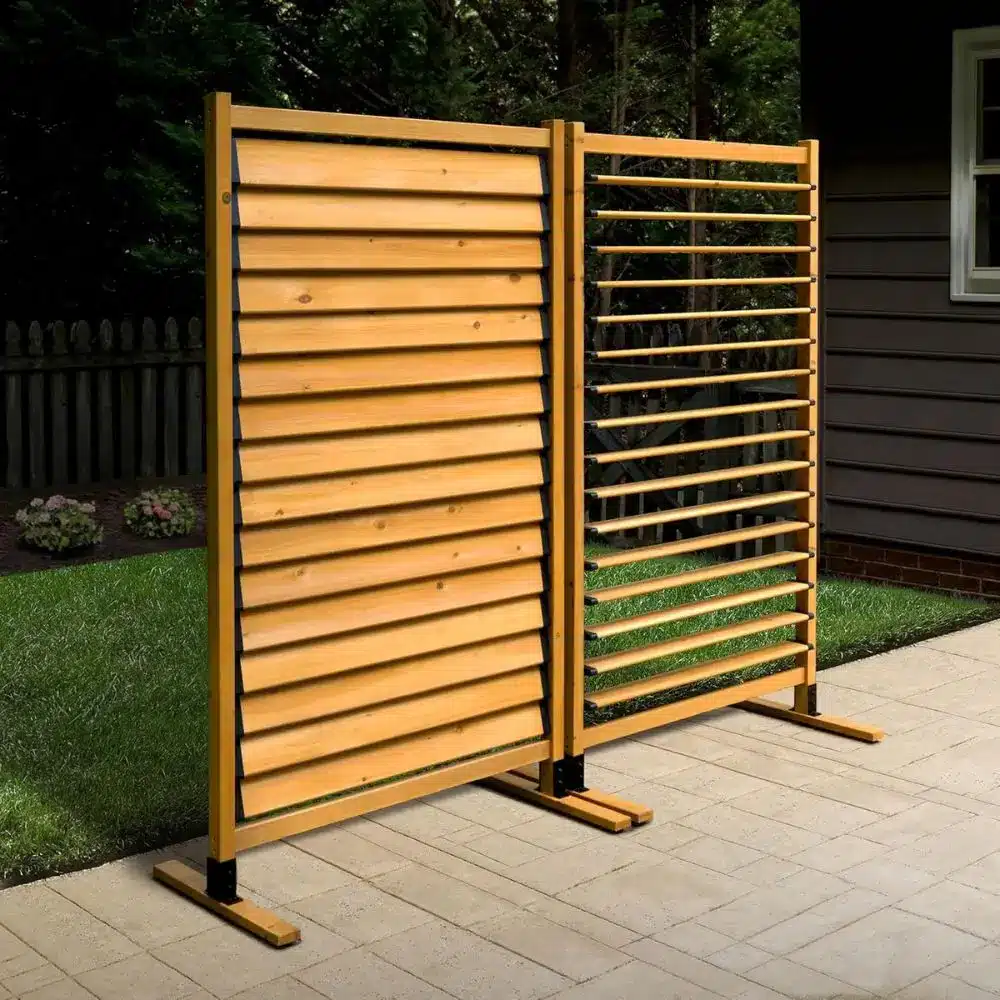
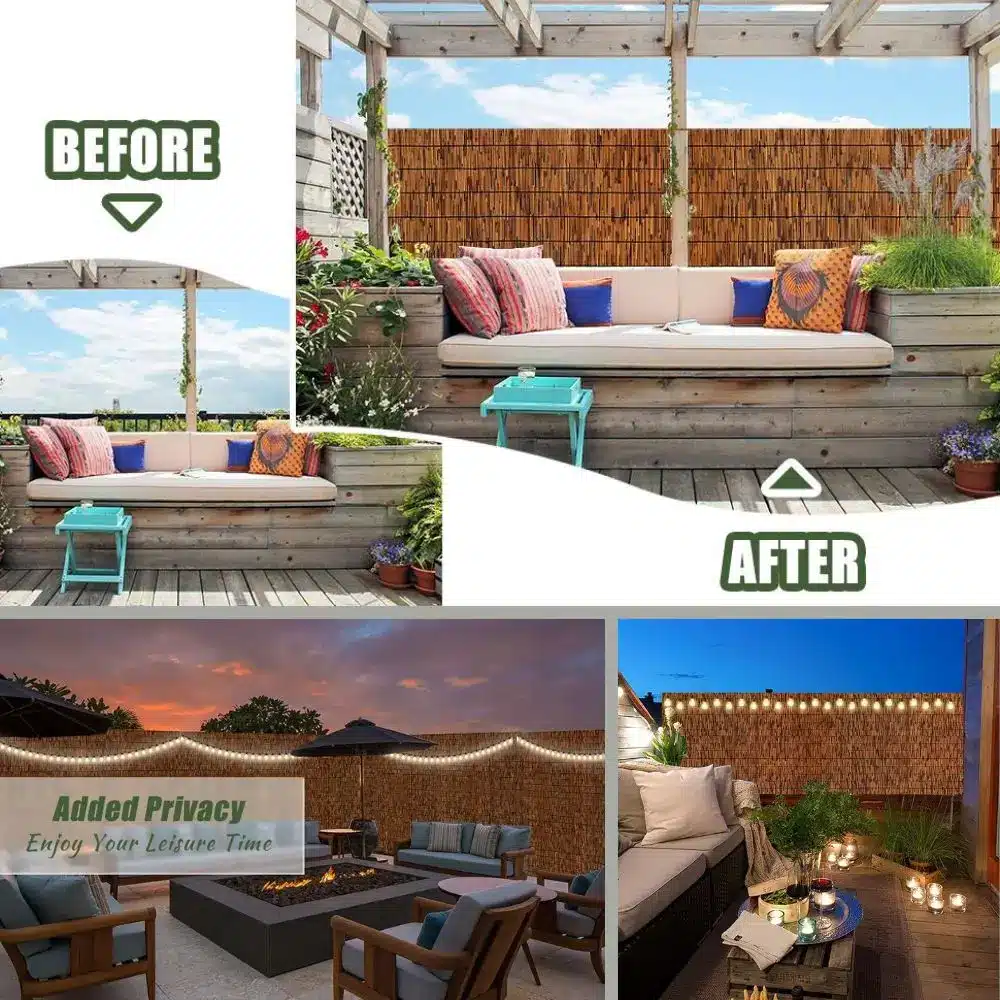
The key is to create a private patio feeling without blocking all the light that makes a small patio pleasant in the first place.
Fix the strongest sightline, soften the edges, and let the seating benefit from that privacy rather than sitting out in the open.
How to Use Lighting on a Small Patio
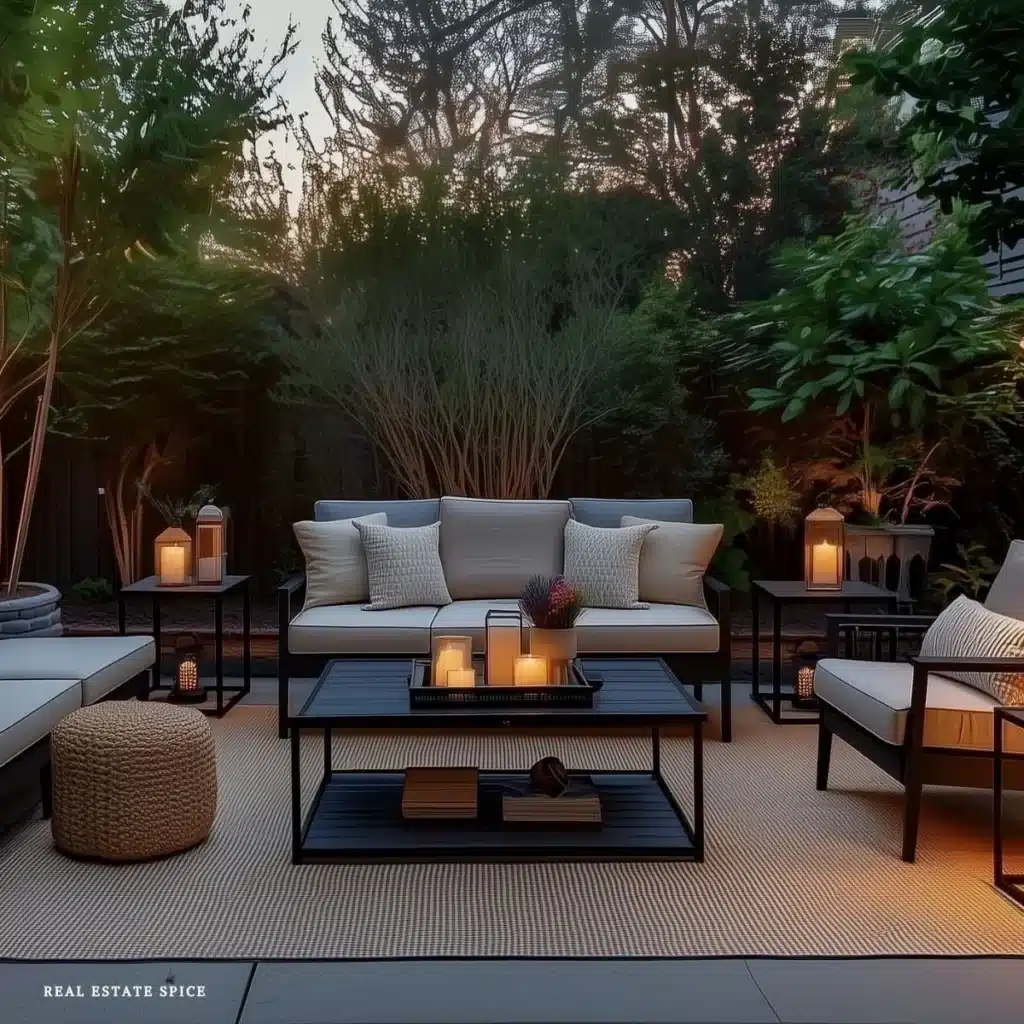
Small patio lighting works best when it’s layered and restrained.
One strong overhead light can flatten the whole space.
A softer combination usually feels more welcoming.
String lights overhead, one lamp or lantern on a table, and a little solar lighting near the edge or planters often does more for a tiny patio than a brighter fixture ever could.
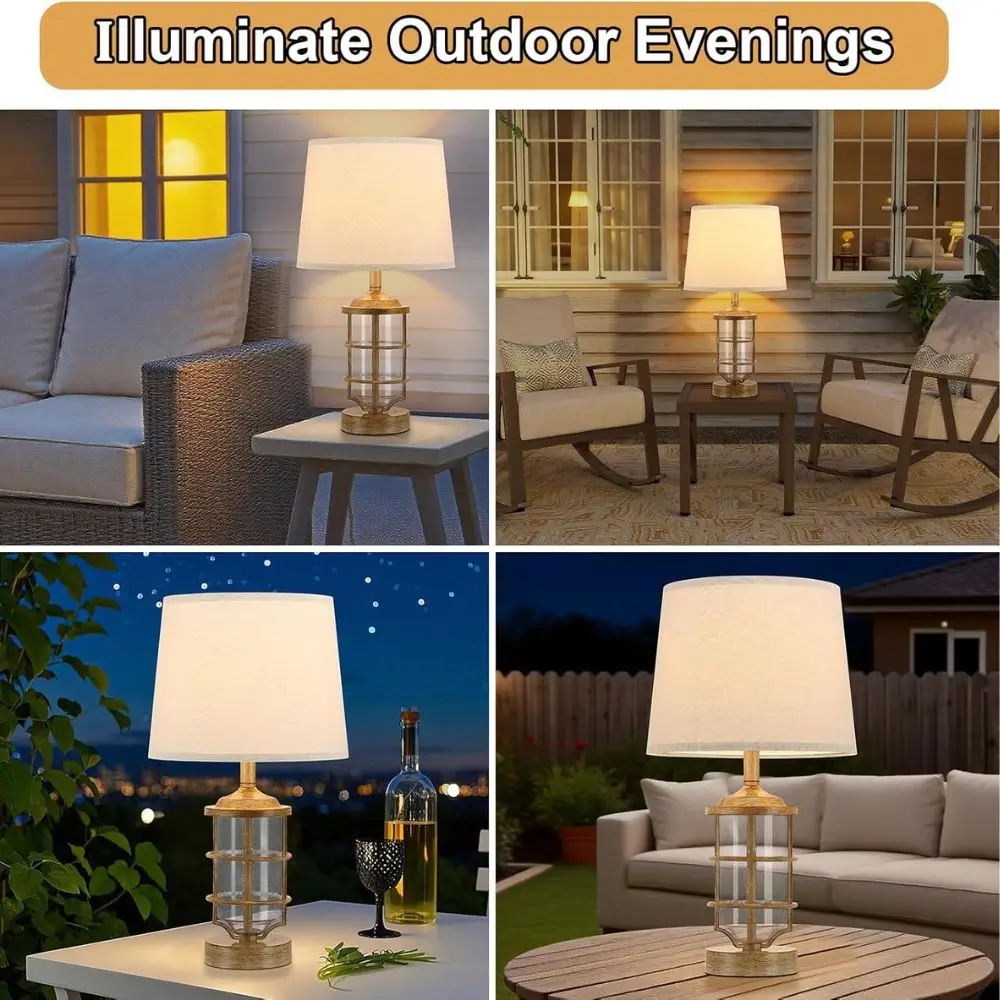
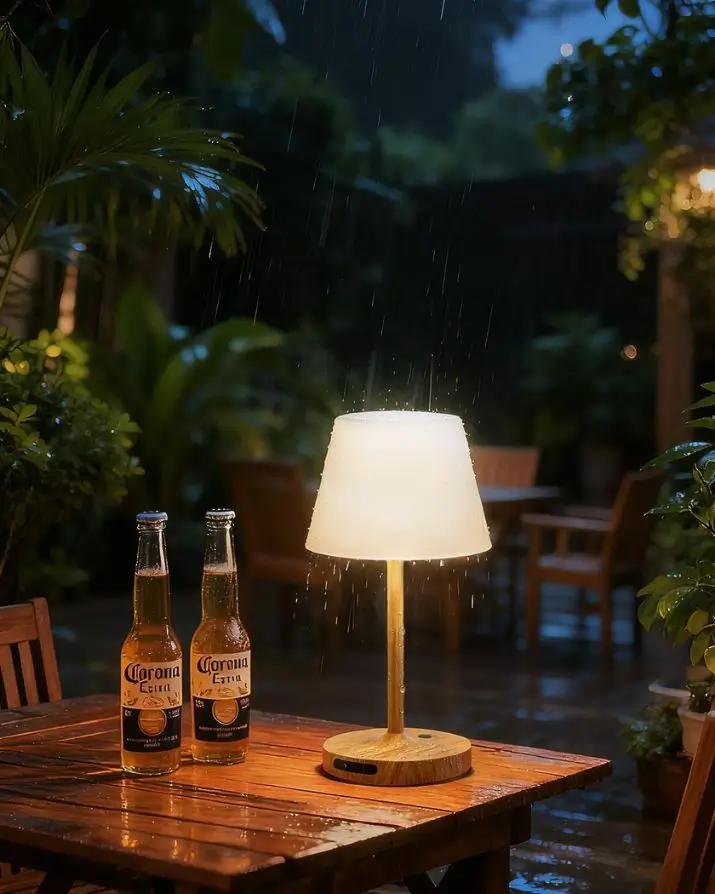
Lanterns are especially good on small patios because they add warmth without demanding much room.

Solar lighting helps pathways or edges feel more defined.

One portable lamp can make a chair corner feel like its own tiny room.
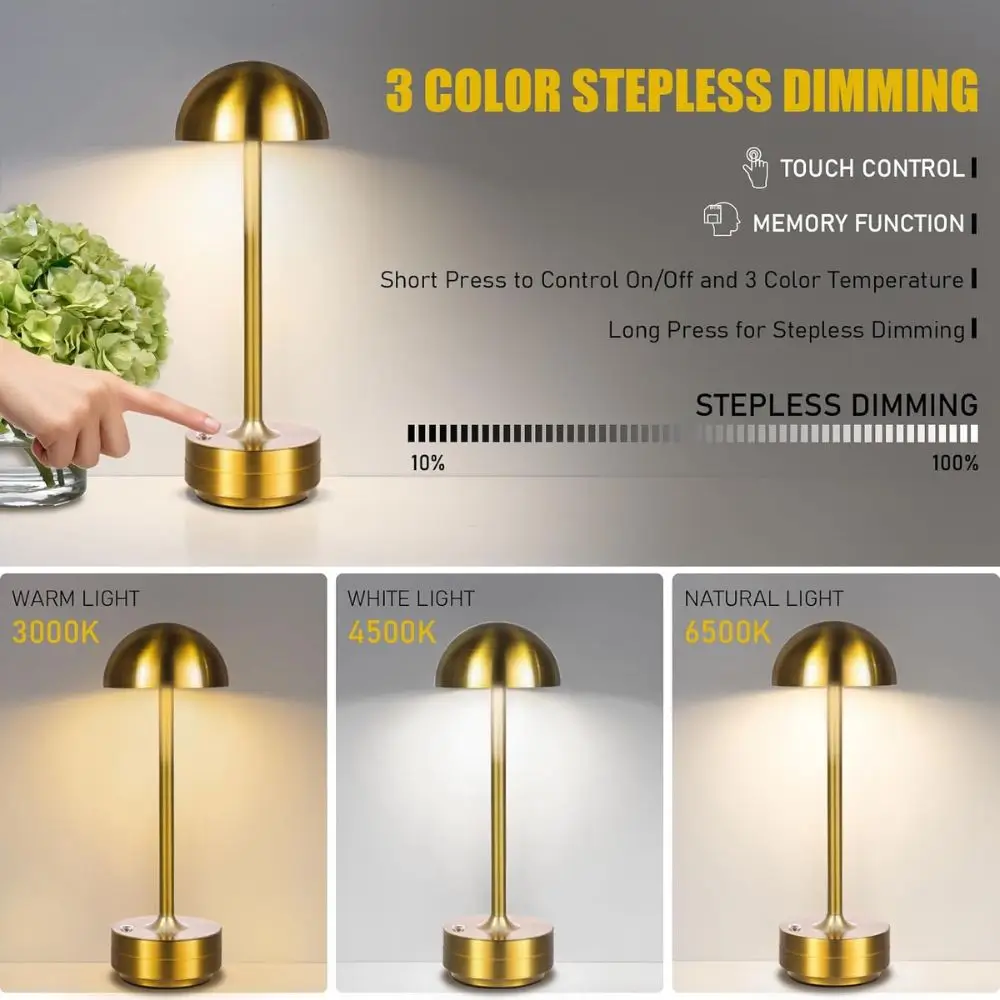
Take a deeper dive and pick up some tips on how to light a patio to create a cozy space.
How to Choose Furniture for a Small Patio
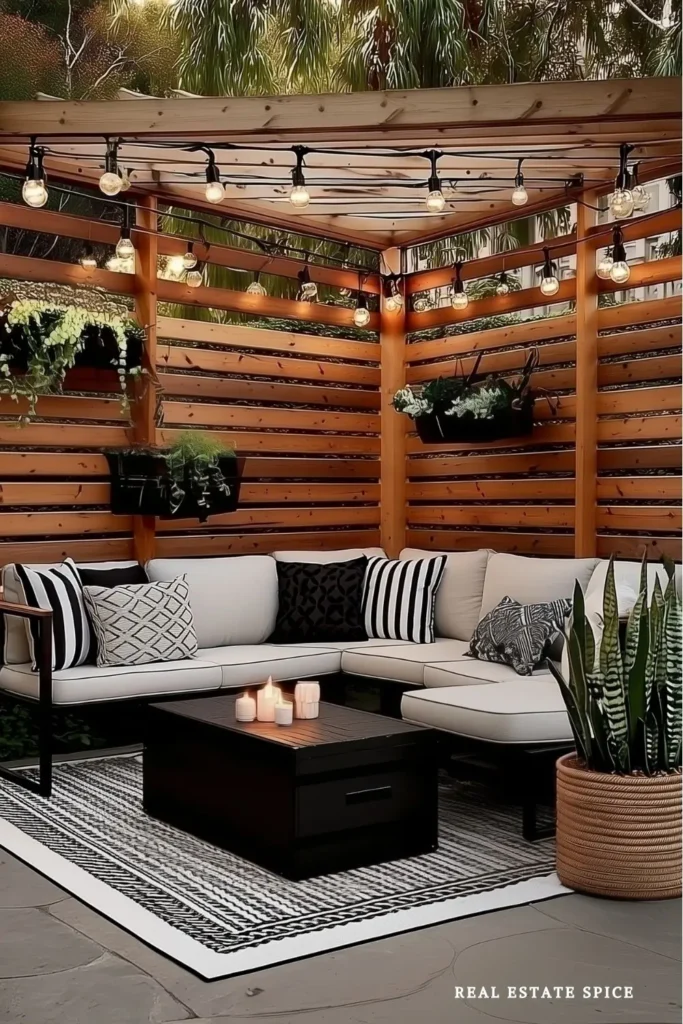
Small patio furniture should be measured by usefulness, not just by style.
Every piece should earn its footprint.
Bistro sets are fantastic when dining or coffee is the main function.
Small loveseats work well when the patio is wide enough to support one.
Compact patio chairs are great when flexibility matters.
Benches save room.
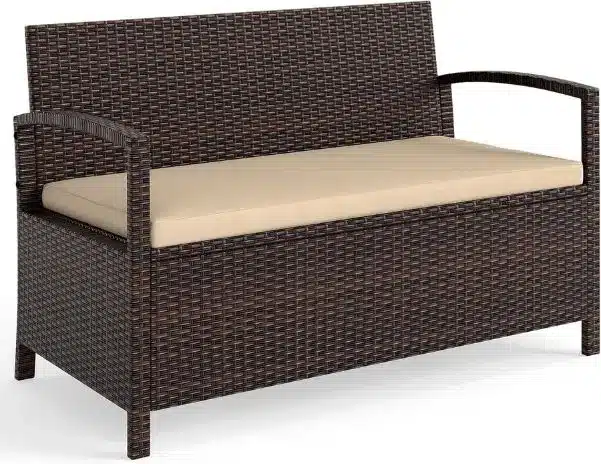
Folding chairs help patios multitask.
Stools and poufs can act as occasional seating or small tables, which is especially handy when the patio has to work hard.
How to Use an Outdoor Rug to Define the Space
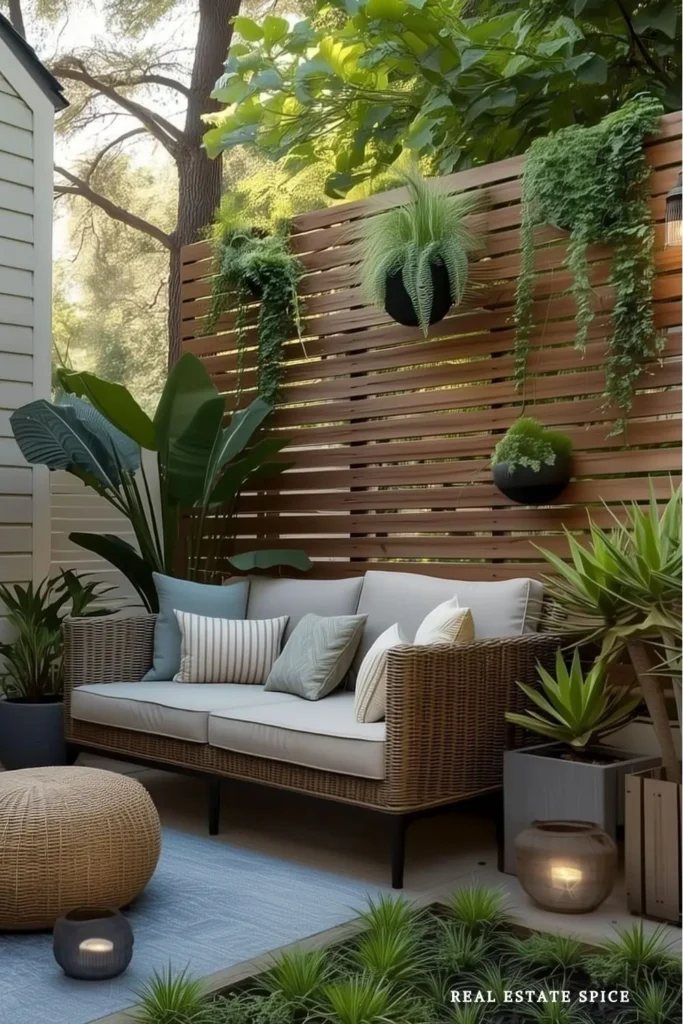
An outdoor rug is one of the easiest ways to make a small patio feel like a real room.
It grounds the seating, helps the furniture read as one group, and makes the patio feel more intentional almost immediately.
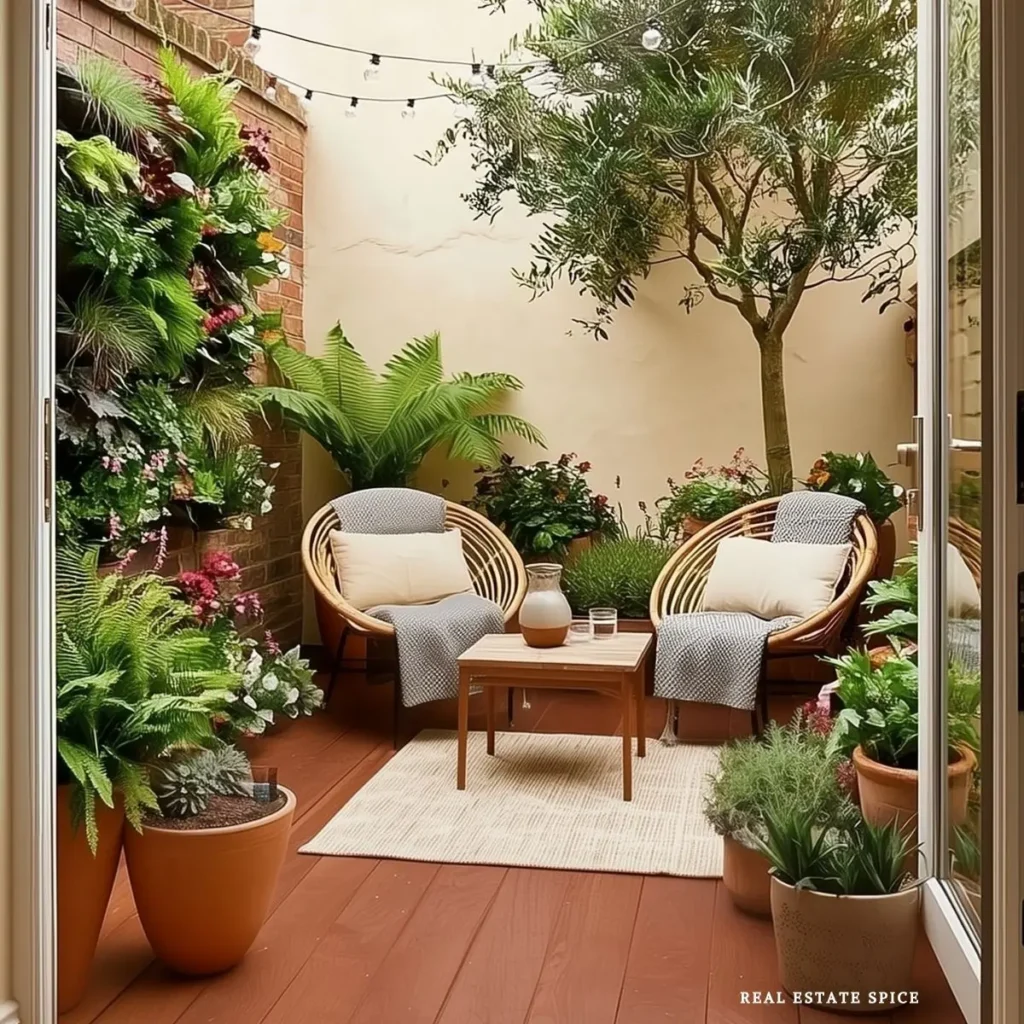
On a tiny patio, the rug can even act like the focal point if the pattern or color is strong enough.
The most important thing is making sure the rug supports the layout instead of being too small and making everything feel disconnected.
Small Patio Layout Ideas That Actually Work
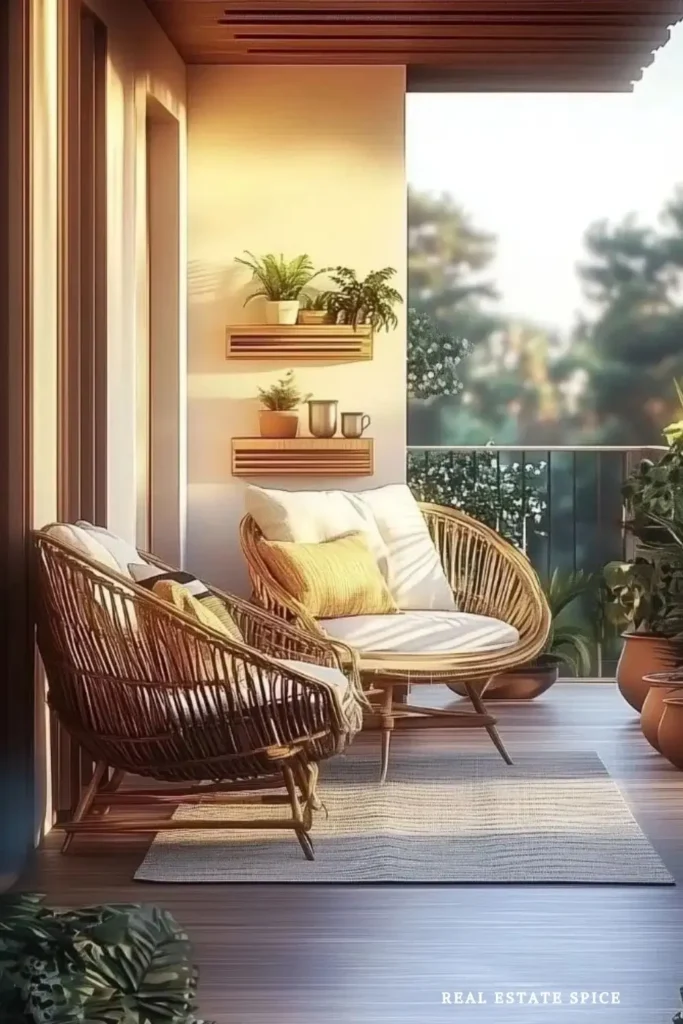
The two-chair nook
This is one of the simplest and best small patio ideas.
Two patio chairs, one side table or bistro table, one rug, and one planter can create a complete patio seating area without much square footage.
The bench-and-bistro layout
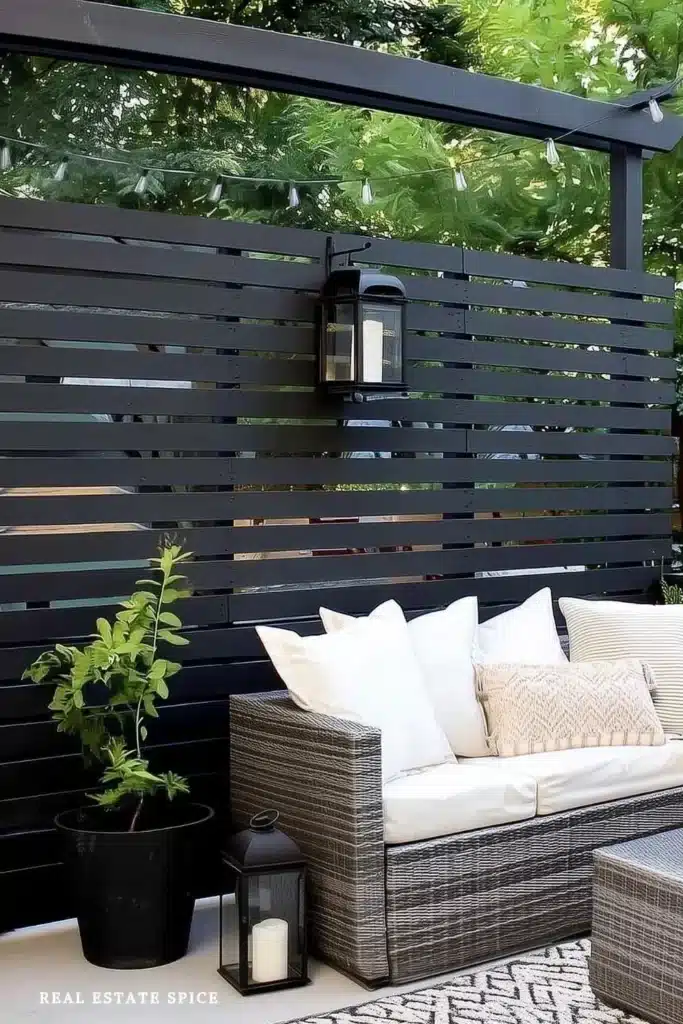
If the patio is narrow, a bench or sofa on one side and a small side table with a chair or stool opposite it can create a casual dining-meets-lounge setup that still feels open.
It’s especially useful for townhome patios and narrow courtyards.
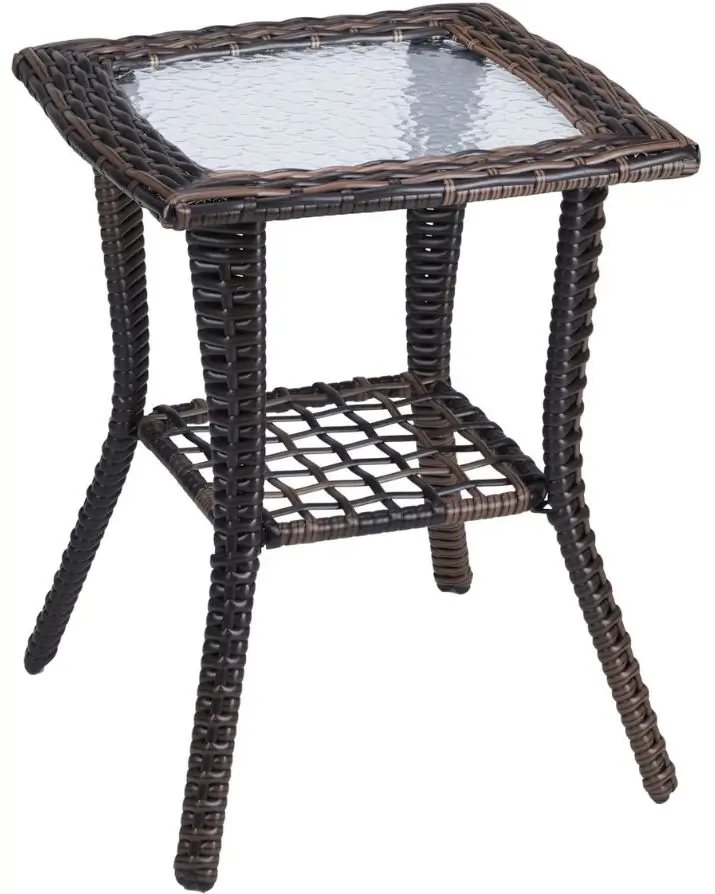
The corner lounge
Some small patios feel best when the furniture clusters into one protected corner.
That may be two chairs, a little table, and a vertical backdrop of plants or lattice panels.
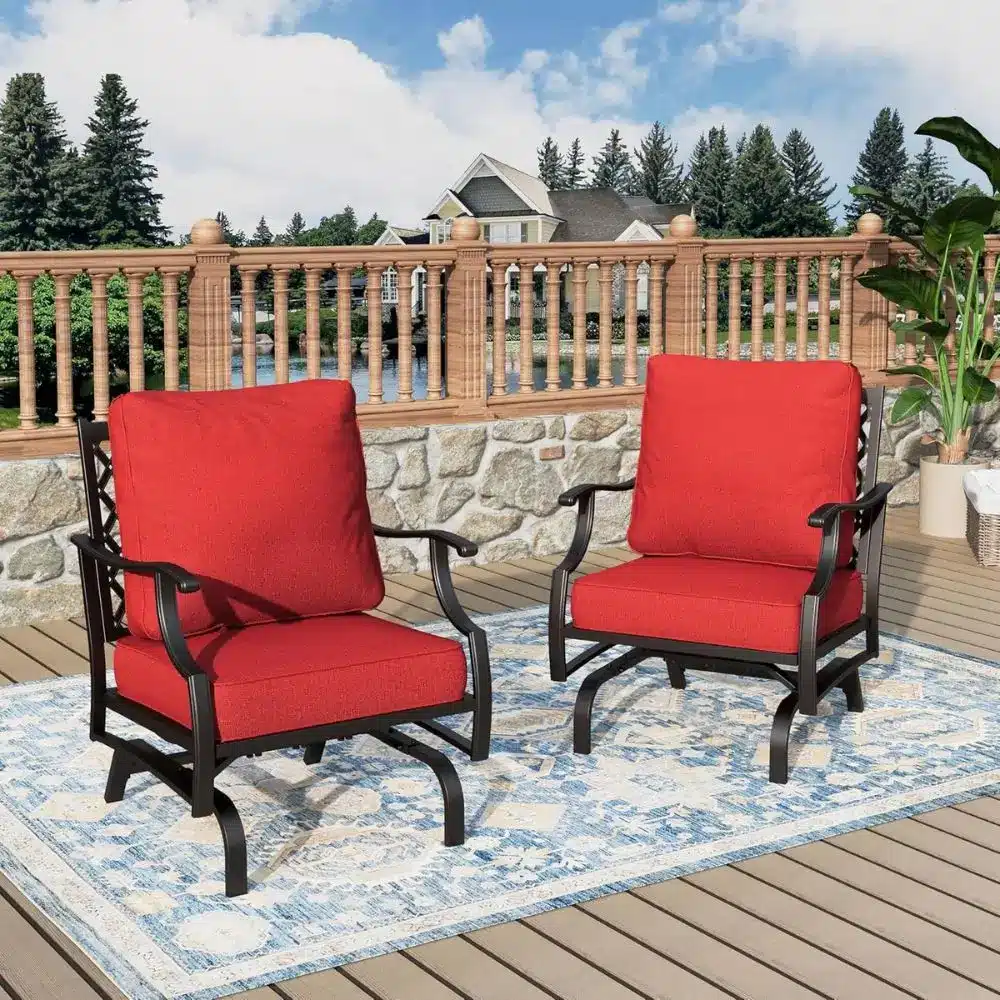
The rest of the patio stays mostly open, which helps the whole space feel larger.
Best Small Patio Elements to Consider
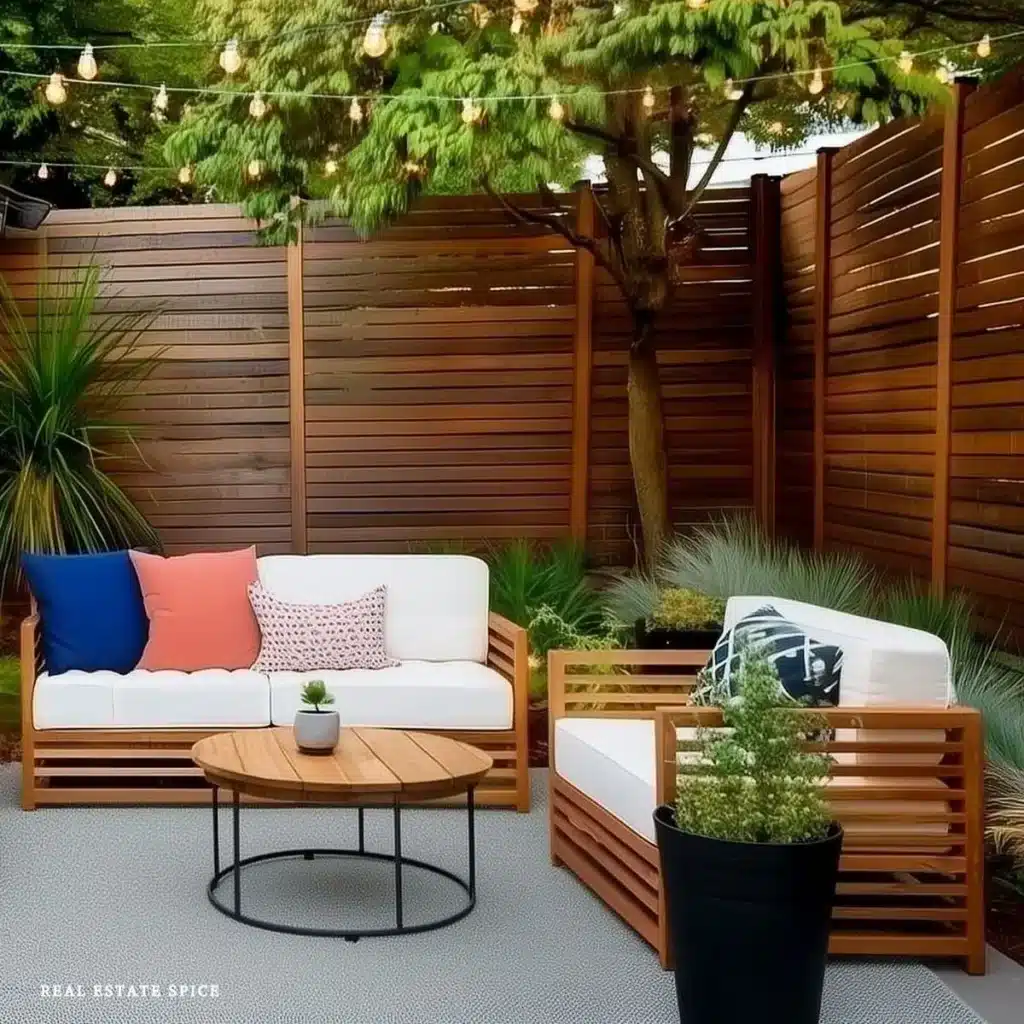
When you’re trying to decide what to actually use on your patio, a few elements consistently work well in compact spaces.
Bistro tables are classic because they’re useful without being bulky.
Slim patio chairs and folding chairs help preserve walking room.
Benches can tuck against walls and edges.
Side tables and garden stools add surface space.
Planters, trellises, lattice panels, and wall planters help utilize the vertical space and add character.
Outdoor rugs define the layout.
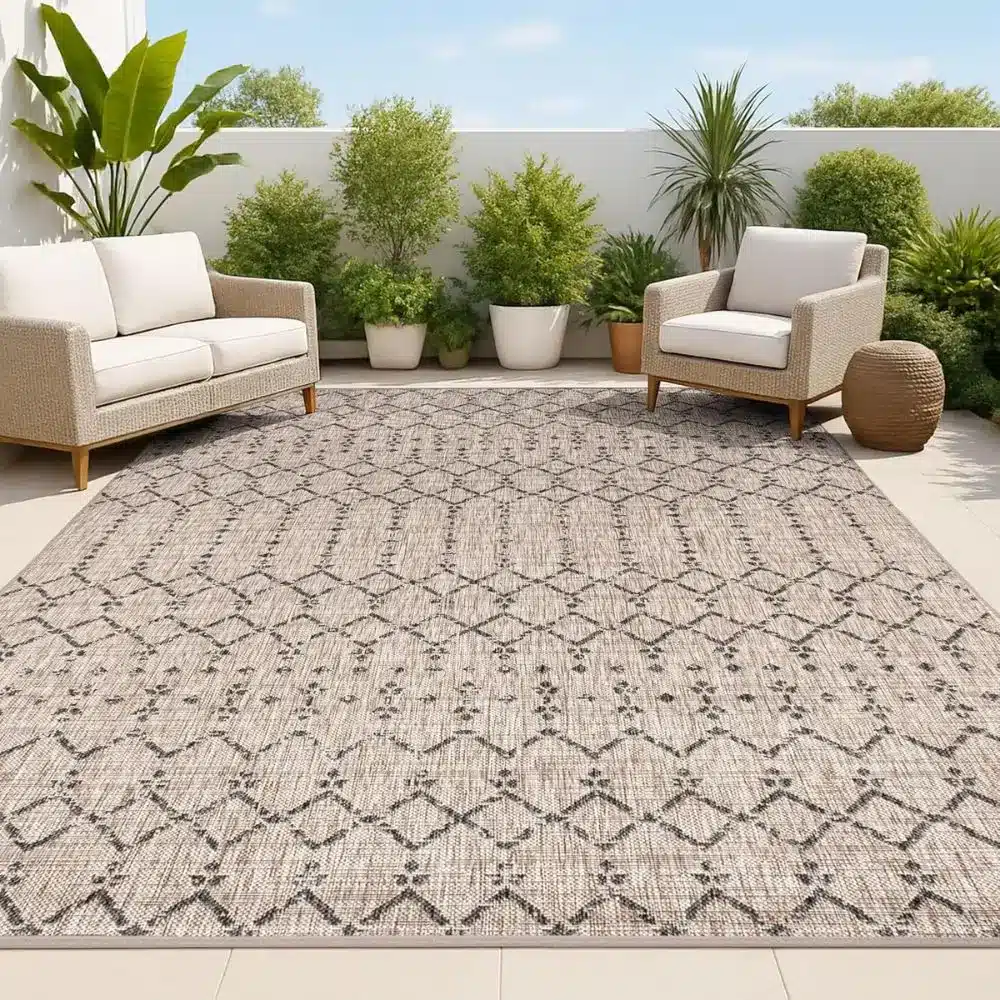
Lanterns, string lights, and solar lighting add warmth without crowding the floor.
Common Small Patio Mistakes
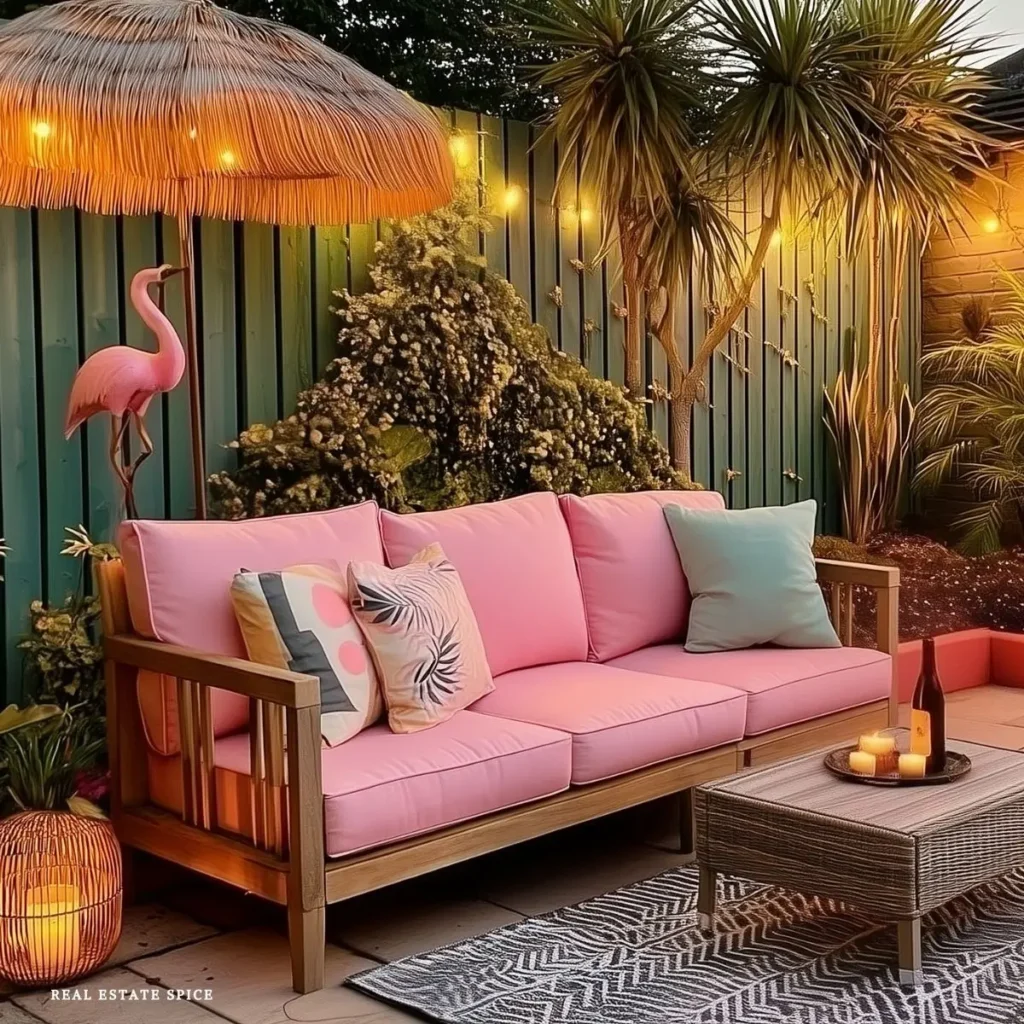
The first mistake is using furniture that’s too big because it looked good somewhere else.
The second is treating every wall and edge like it needs decor, which often creates clutter instead of charm.
Another common problem is skipping the focal point and hoping the patio will somehow look finished anyway.
Too much stuff that doesn’t blend with each other is a big one too.
So is underestimating lighting.
Lighting is such a great way to add layers, interest and ambiance.

Many small patios also stay awkward because the layout never gets solved before the decor starts arriving.
The patio rule of 3 small spaces fixes that by putting the decisions in the right order.
Final Thoughts
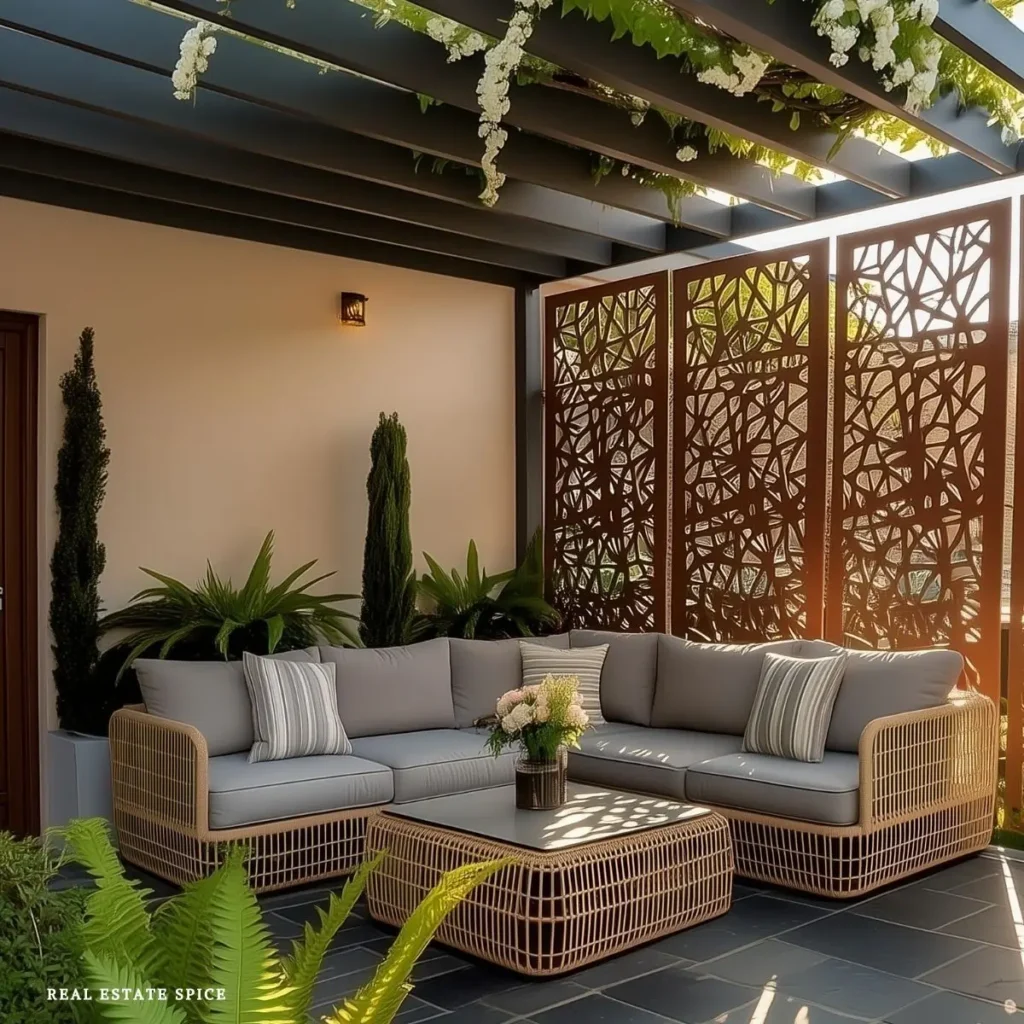
A small patio doesn’t have to feel cramped, cluttered, or forgotten.
With the right seating, vertical layers, and one clear focal point, even a tiny patio can feel comfortable, calm, and thoughtfully designed.
That’s the whole beauty of the patio rule of 3 small spaces framework.
Choose seating that fits.
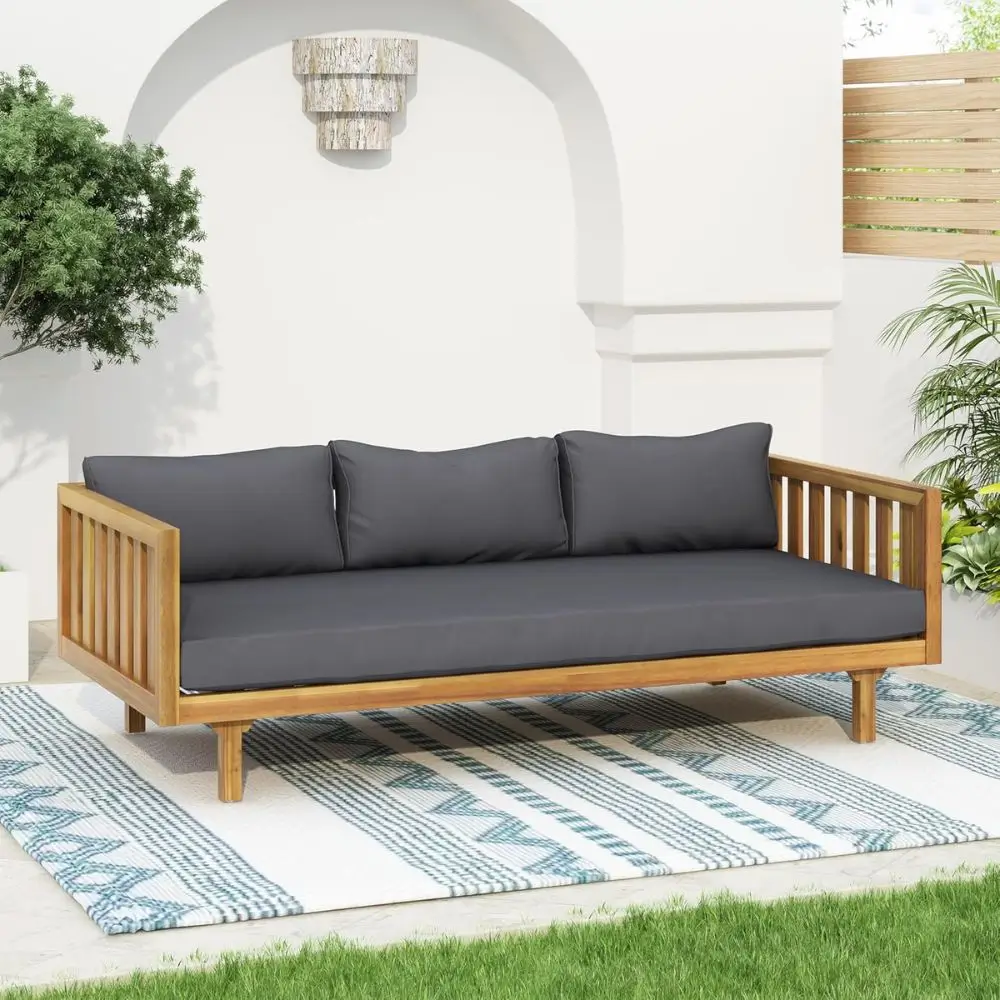
Create vertical areas of interest.
Use the walls, railings, and corners like they matter, because they absolutely do.
Then pick one focal point and let it give the whole patio a sense of purpose.
Once those three pieces are in place, the patio usually stops feeling like a leftover outdoor area and starts feeling like a real room you’re actually happy to spend time in.
That’s when a small patio becomes what it was trying to be all along.
Not a compromise.
Definitely not a decorating afterthought.
Just a genuinely lovely little outdoor space that works.