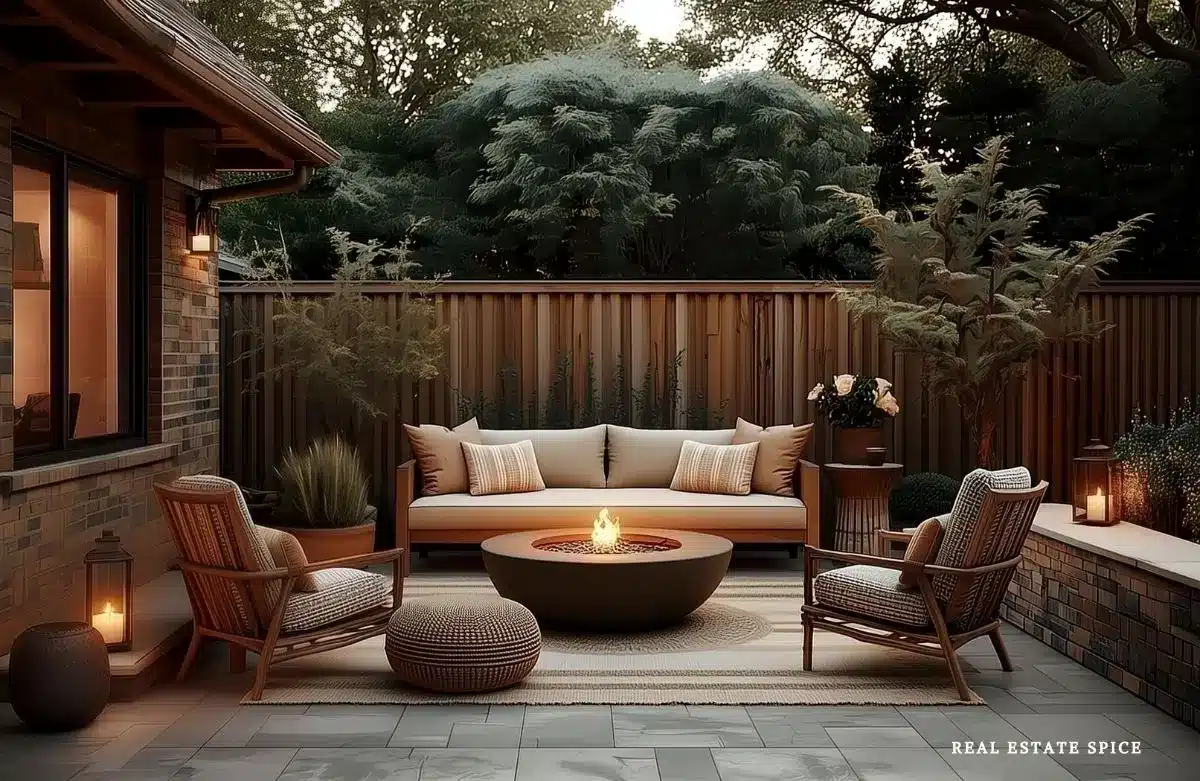
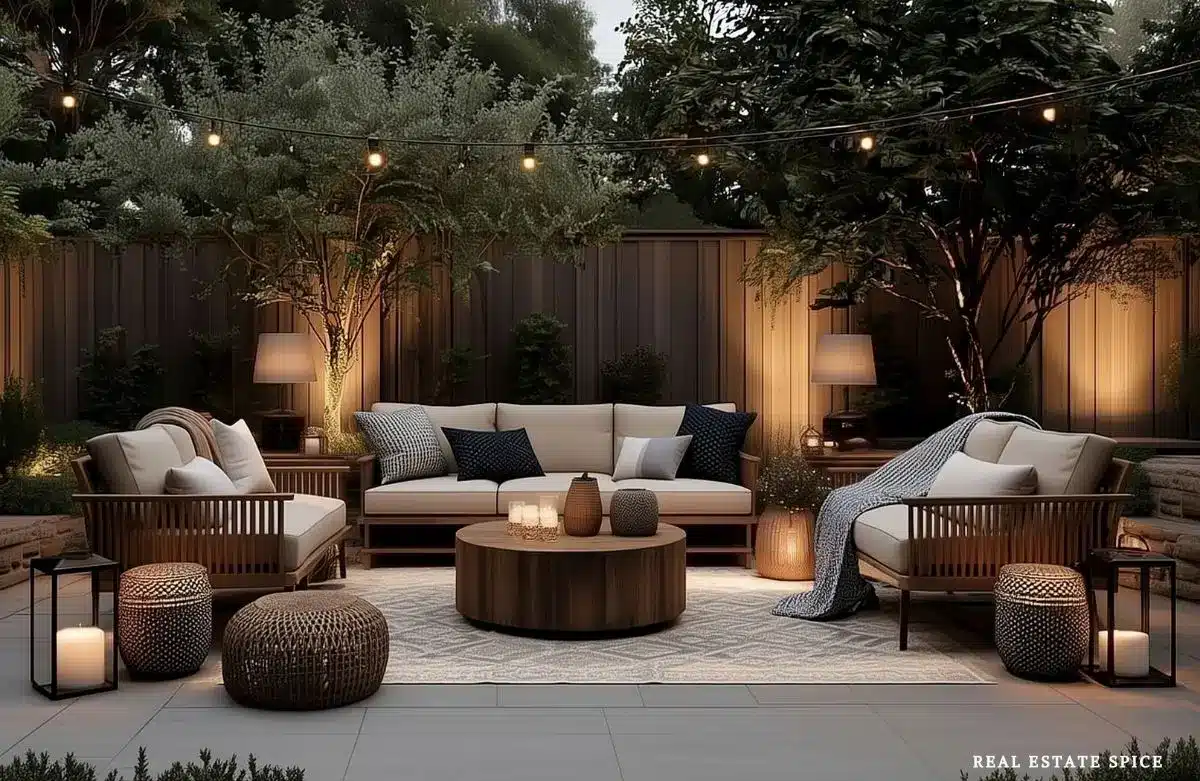
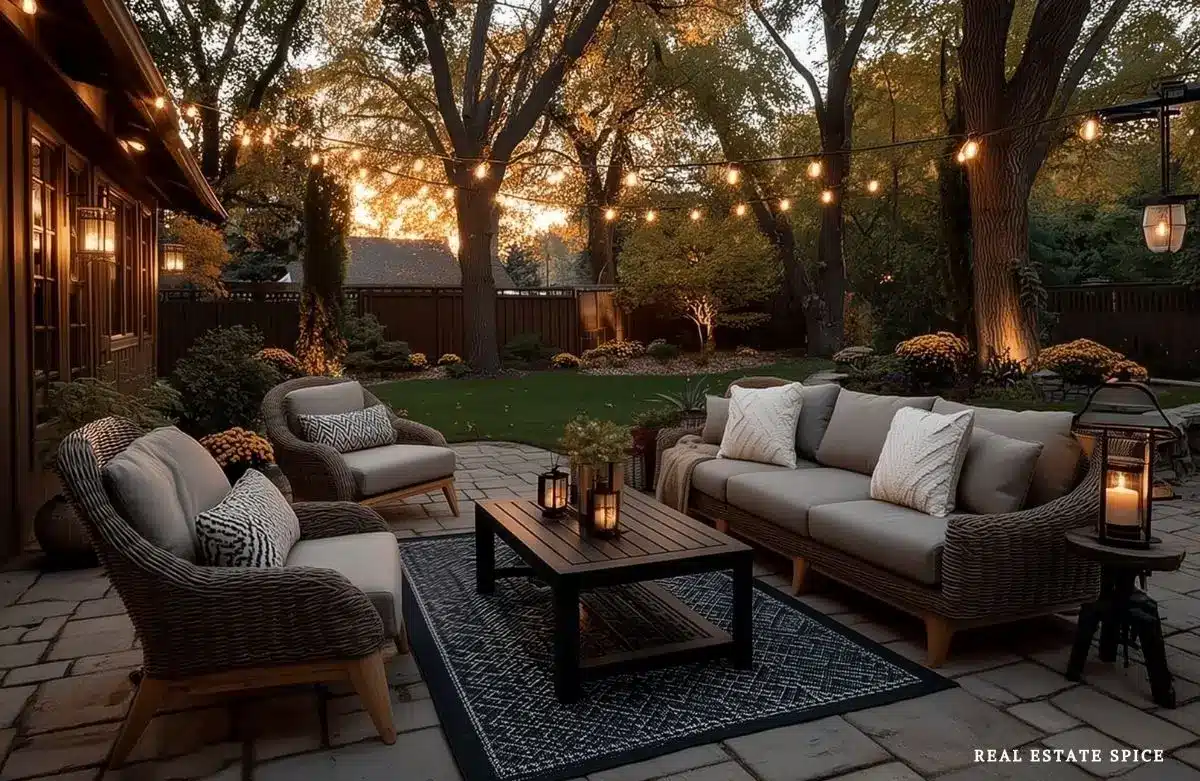
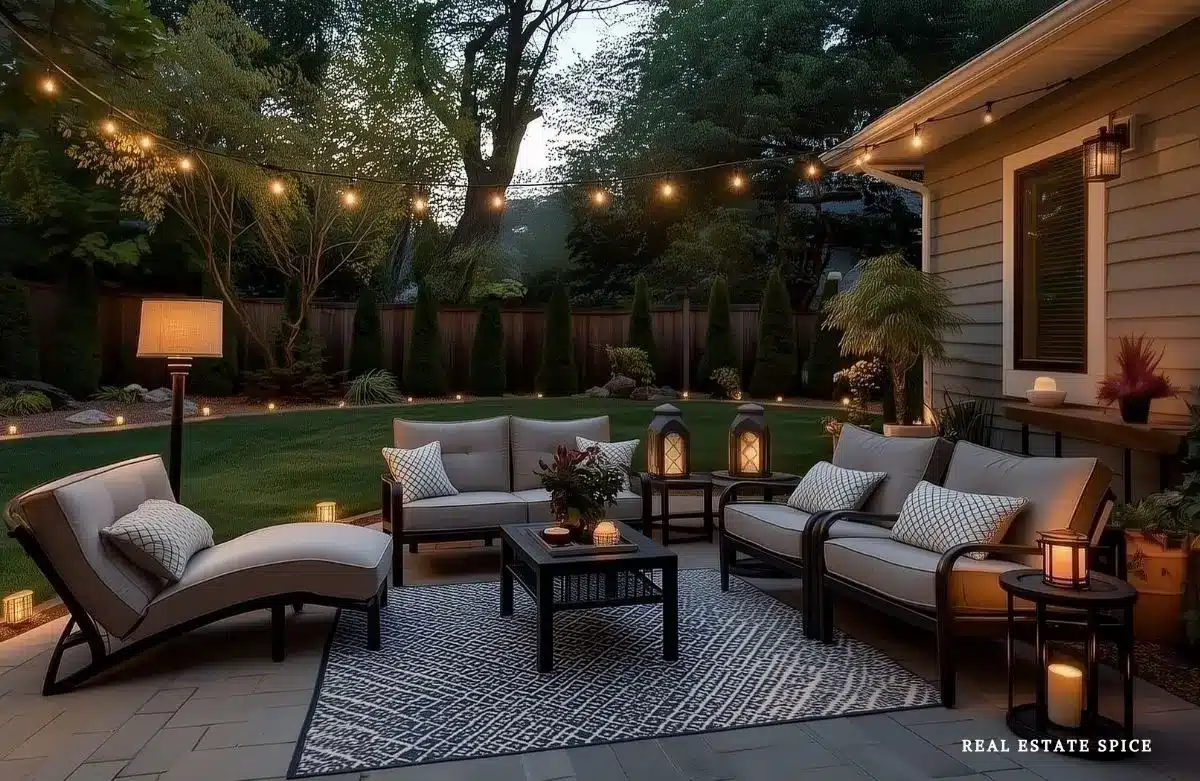
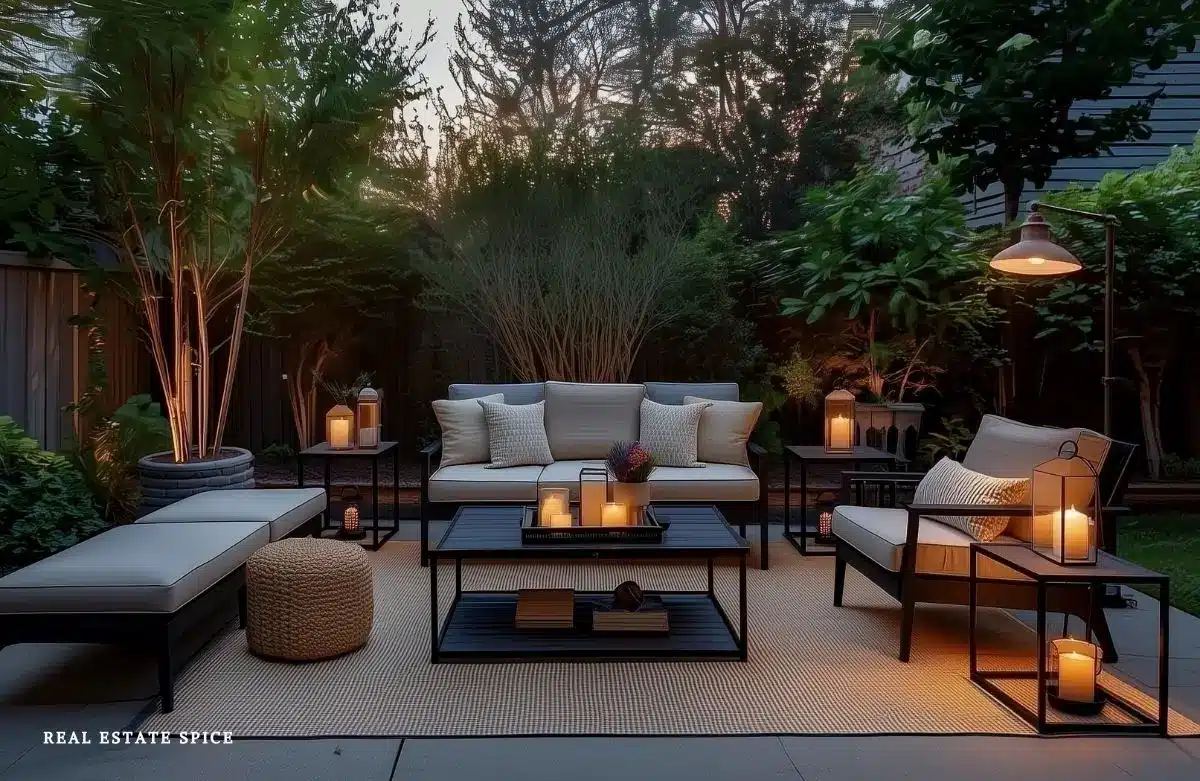
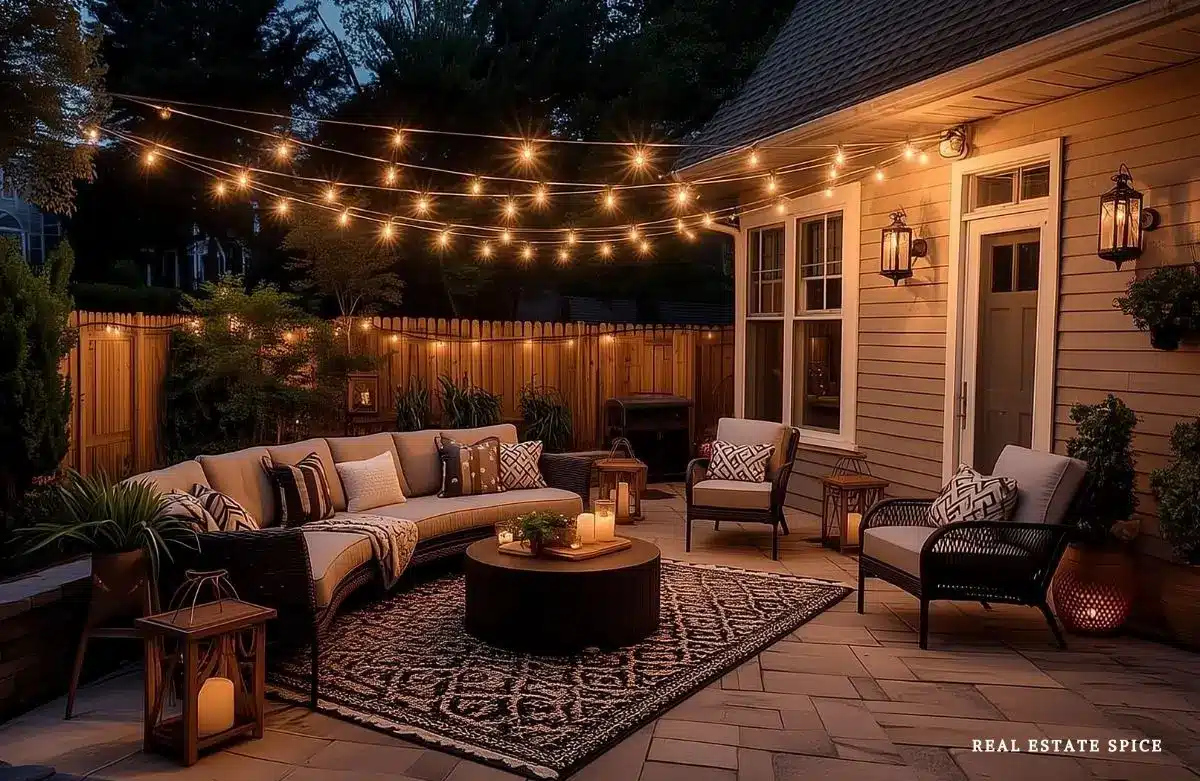
The Patio Rule of 3 Privacy: The Simple Formula to Create a Private Patio Space
Patio privacy has a way of changing how a space feels, not just how it looks.
A patio can have beautiful furniture, a clean layout, soft pillows, and one very optimistic lighting feature doing its best.
But the whole space can still feel a little tense when it’s wide open to the neighbor’s second-story window or the alley view.
Be sure to check out Patio Rule of 3: The Simple Formula to Design Any Patio and Patio Furniture Sets and Decor Ideas after this…
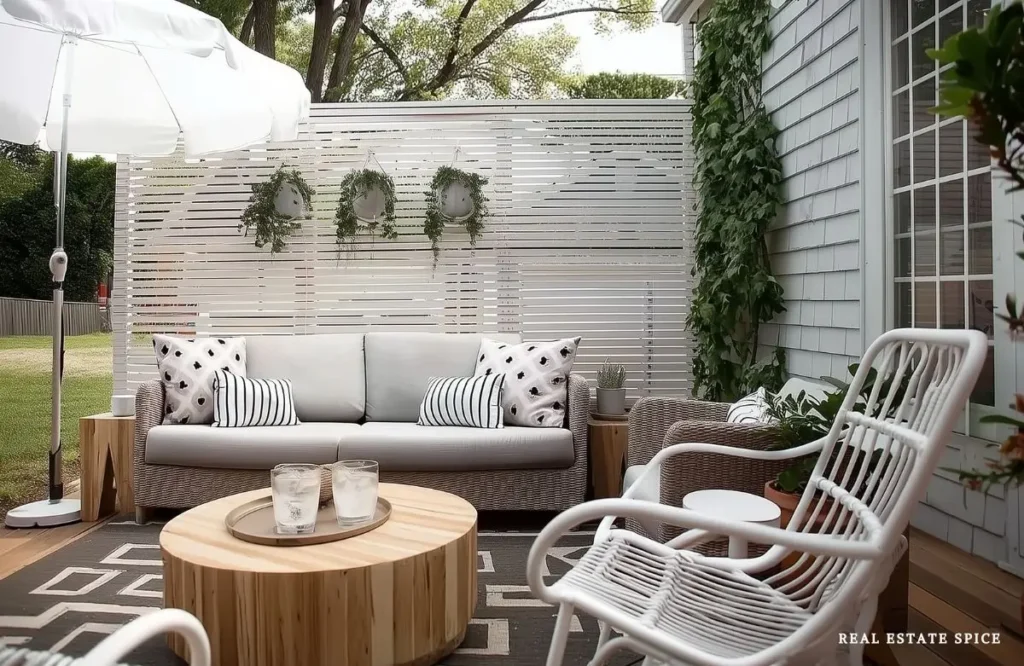
And then there’s that one side-yard angle that somehow makes dinner feel like a public event.
When a patio feels exposed, it usually never settles into the calm, welcoming mood most of us are actually craving.
A little more privacy creates a different mood.
Shoulders drop.
Conversations last longer.
Morning coffee feels slower.
That’s exactly why this patio rule of 3 privacy approach works so well.
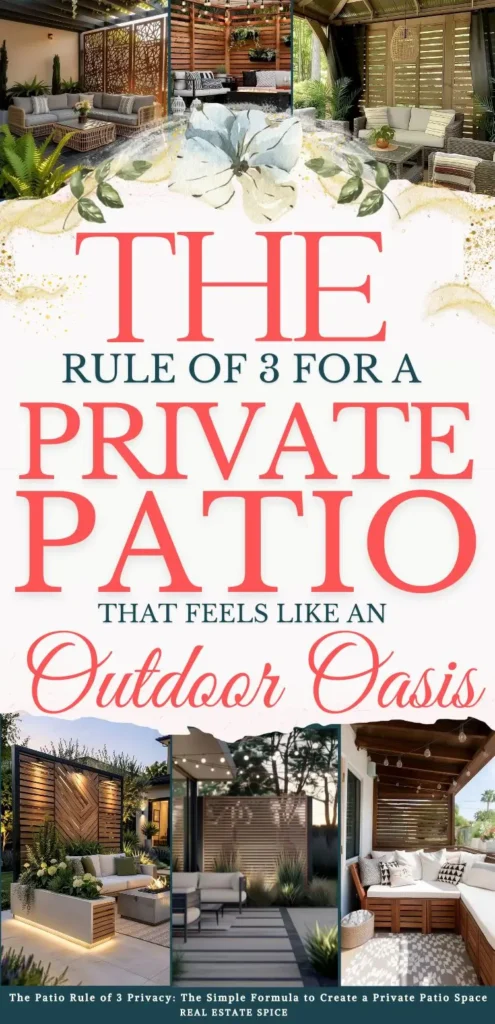
Instead of trying to solve every privacy problem at once, you focus on three simple priorities that make almost any outdoor patio feel more private and peaceful.
That’s the whole framework, and honestly, it’s enough to change the entire feel of a patio without turning it into a fortress.
The goal isn’t to wall yourself in.
It’s to block the right view, soften the edges, and create a private patio area that feels peaceful, comfortable, and easy to enjoy.
ps… You’ll also find easy patio privacy ideas for any type and size of space here.
Grab your favorite beverage, pen, and paper for notes; take your time to study the images, design tips, and products, and enjoy!
ps…remember to save this and come back anytime for a dose of inspo!
What Is the Patio Rule of 3 for Privacy?
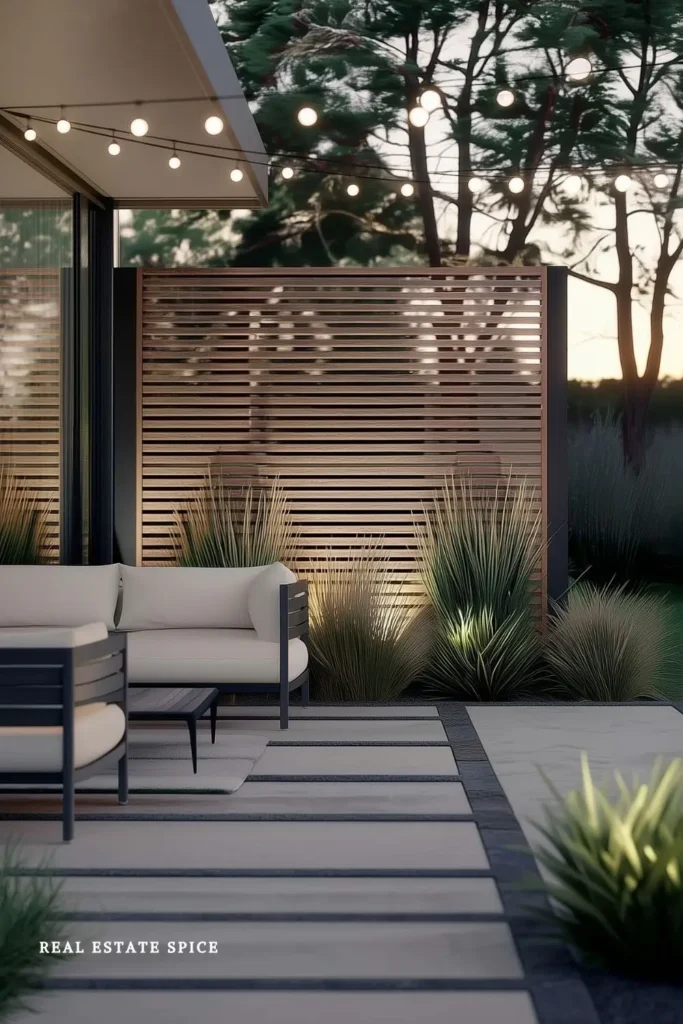
The patio rule of 3 privacy formula is simple on purpose.
A lot of people assume patio privacy is about adding one big barrier and calling it a day.
Sometimes that works, but more often it leaves the patio feeling heavy, boxed in, or weirdly defensive, like the space is preparing for a mild suburban siege.
A prettier approach is to think in three moves instead of one.
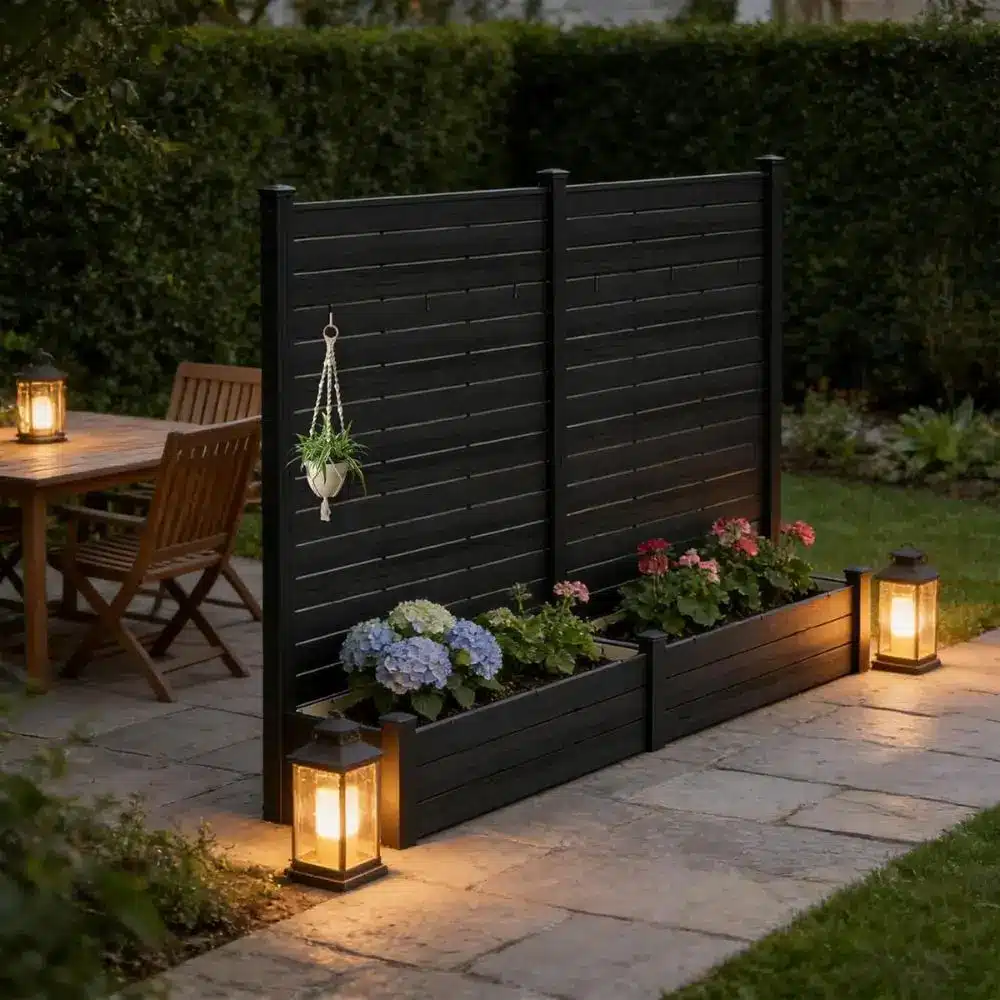
The first move is blocking the main sightline.
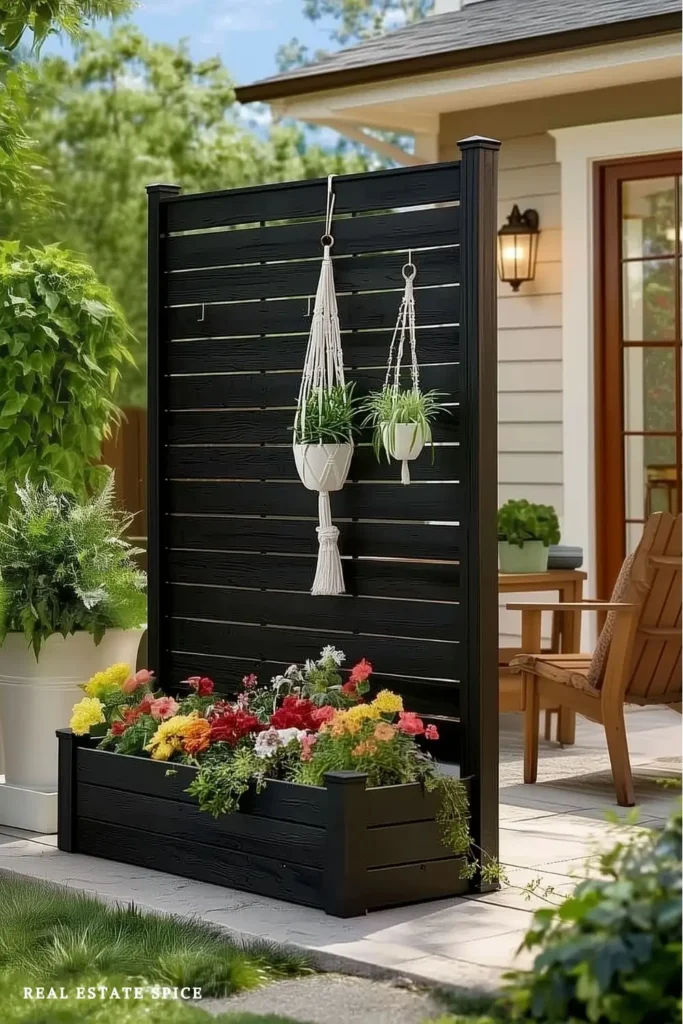
That means identifying the one view that most interrupts your comfort and softening or screening it first.
The second move is adding soft layers around the edges.
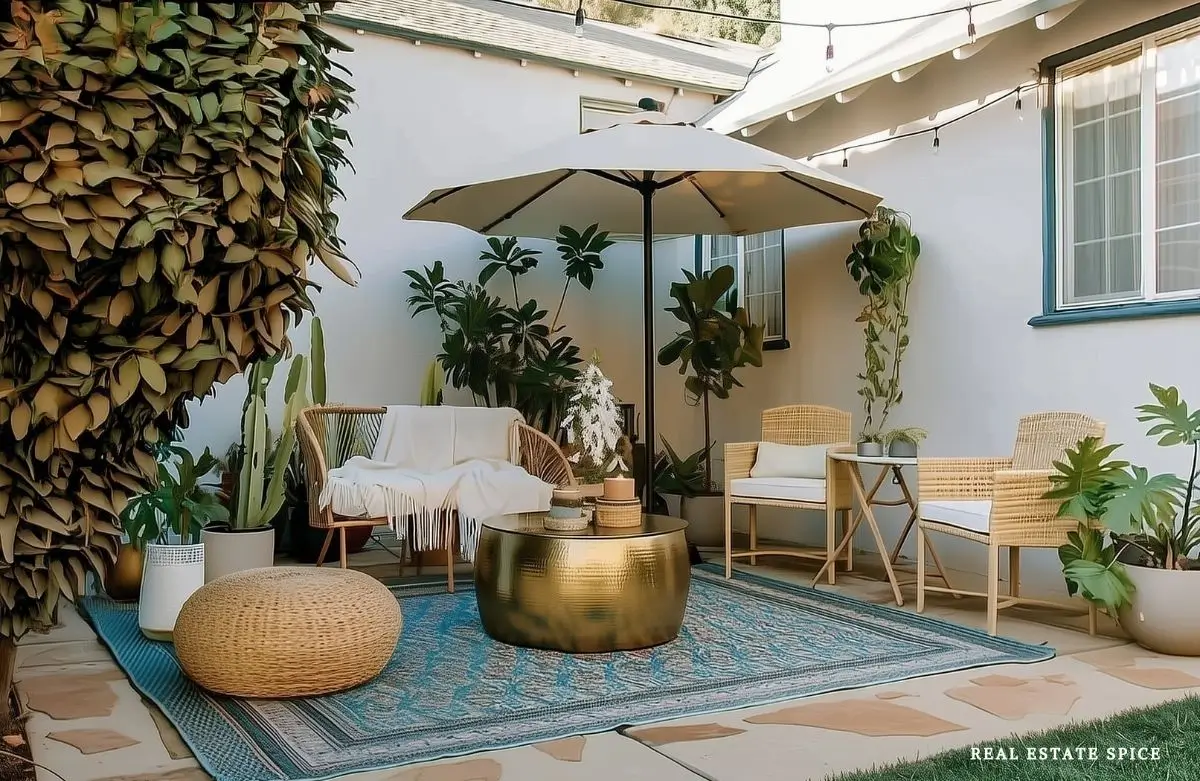
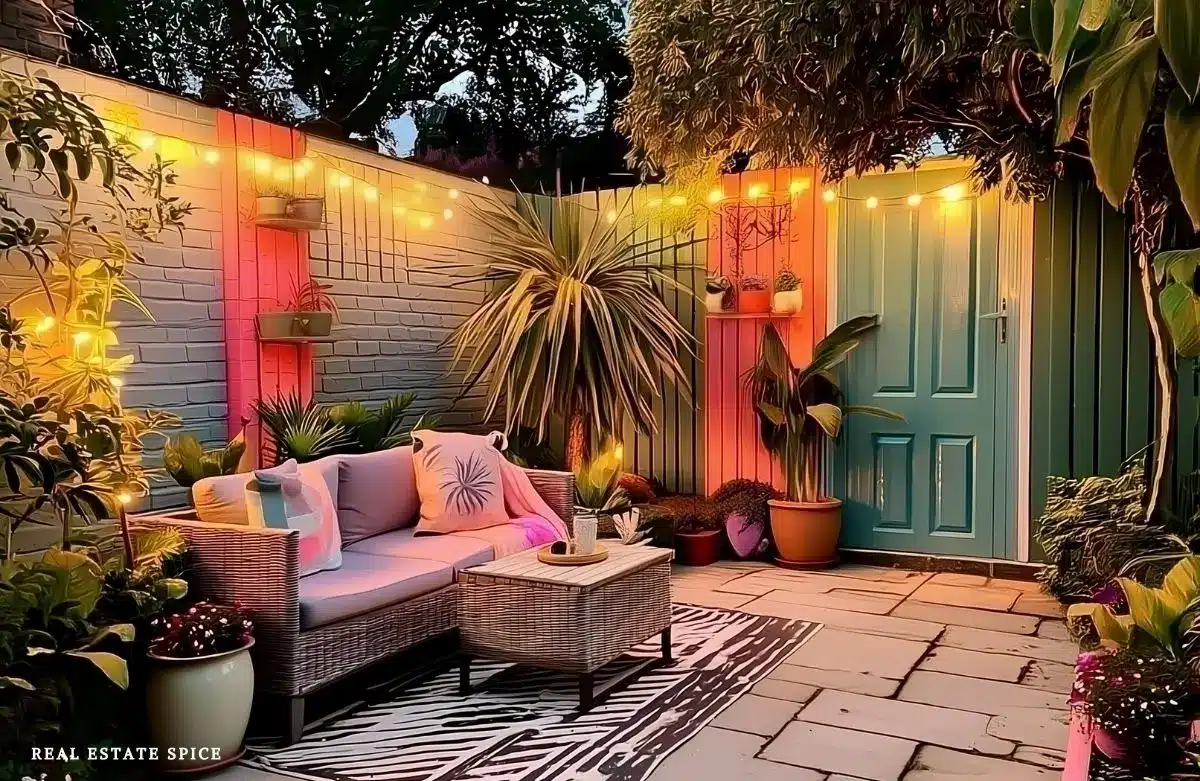
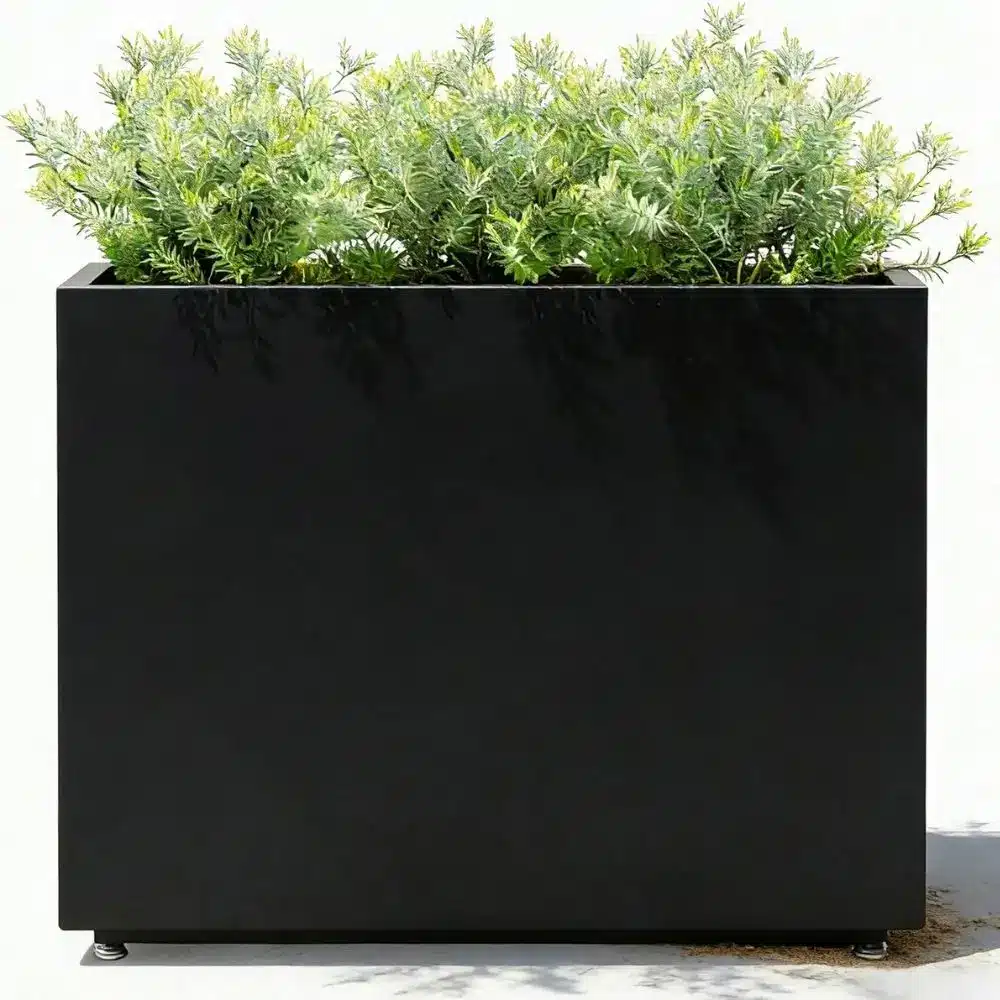
This is where planters, tall planters, trellis panels, lattice panels, patio curtains, outdoor curtains, and lighting all help the patio feel more finished instead of abruptly cut off.
The third move is creating a protected seating zone.
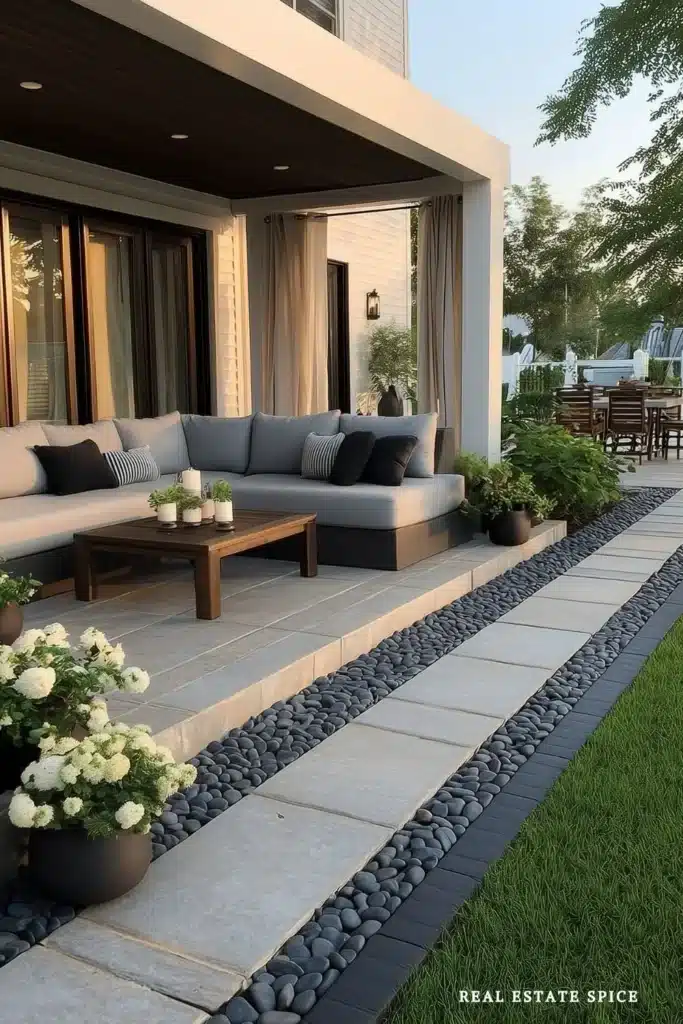
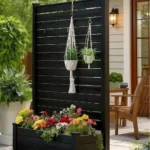
You can use outdoor curtains, a privacy screen, or tall greenery in planters.
That’s where the patio finally starts to feel calm, because the place where you actually sit is no longer exposed to every awkward angle around it.

Privacy doesn’t have to be solved all at once.
A giant budget isn’t required, and neither is a giant mood board.
Start by blocking the strongest sightline, softening the perimeter, and placing the seating where the space naturally feels more protected.
Once those three pieces come together, a patio almost always feels more designed.
Get My Free eBook
“100 Easy Ways To Refresh Any Room All Year Round”
Priority 1: Block the Main Sightline
Find the one view that’s doing the most damage
The first mistake people make with patio privacy is treating every edge of the patio like it needs the same treatment.
It usually doesn’t.
Most patios have one or two main sightlines that create the majority of the discomfort.
Maybe it’s a neighbor’s window that looks directly onto your patio seating area.
Maybe it’s the side gate, the street, the driveway, or the view from the house next door where you somehow always feel like someone could see you even when no one probably cares.
The point is not to guess.
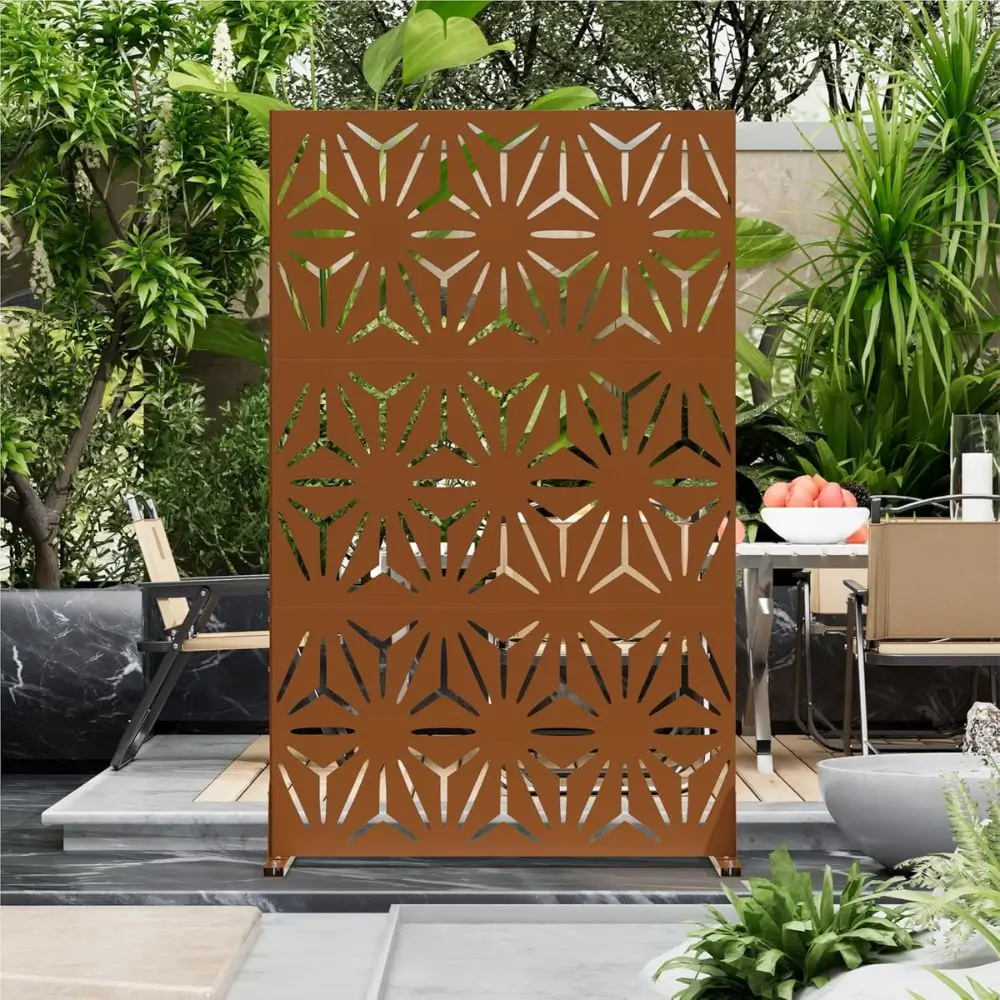
The point is to sit down where you’d normally sit and look around at seated eye level.
This simple step changes everything.
A patio that feels exposed from standing height may feel fine once you sit down.
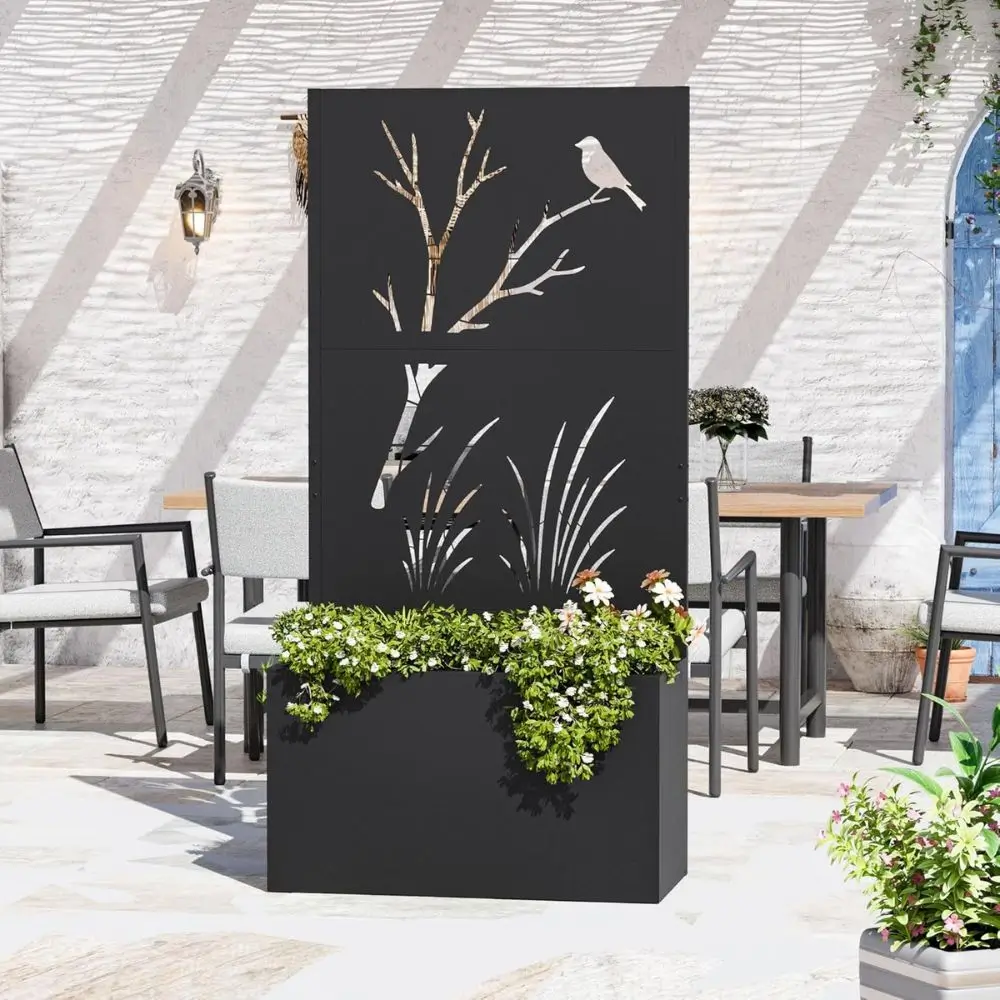
On the flip side, a private-looking patio can still feel very open when you’re actually in the chair and staring directly at the one gap in the fence line.
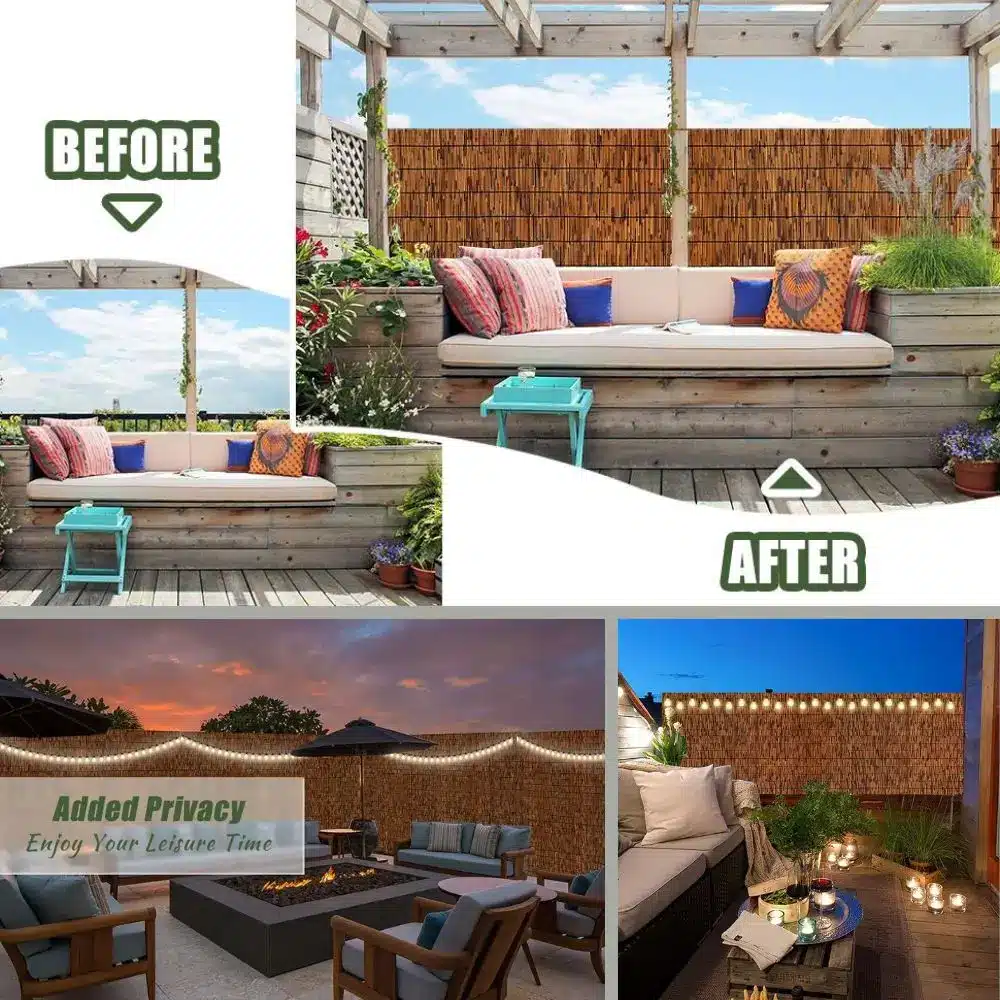
The strongest privacy moves come from identifying the worst angle first.
Choose the blocker that matches the problem
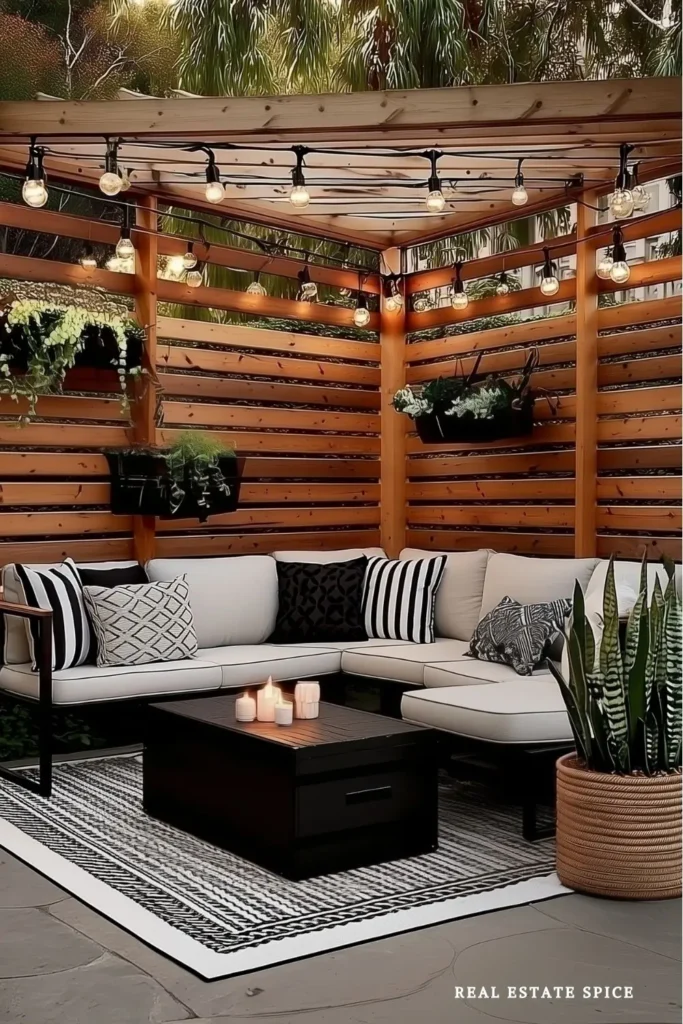
Once you know the main sightline, you can pick the right kind of block.
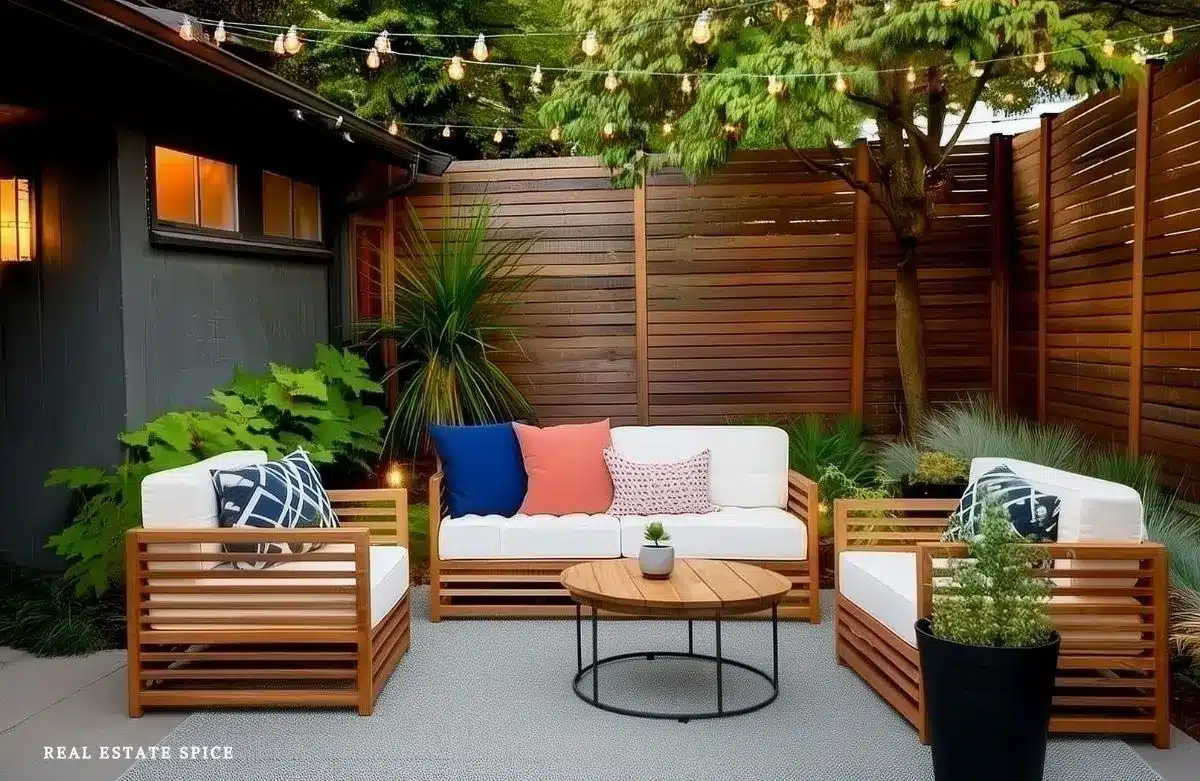
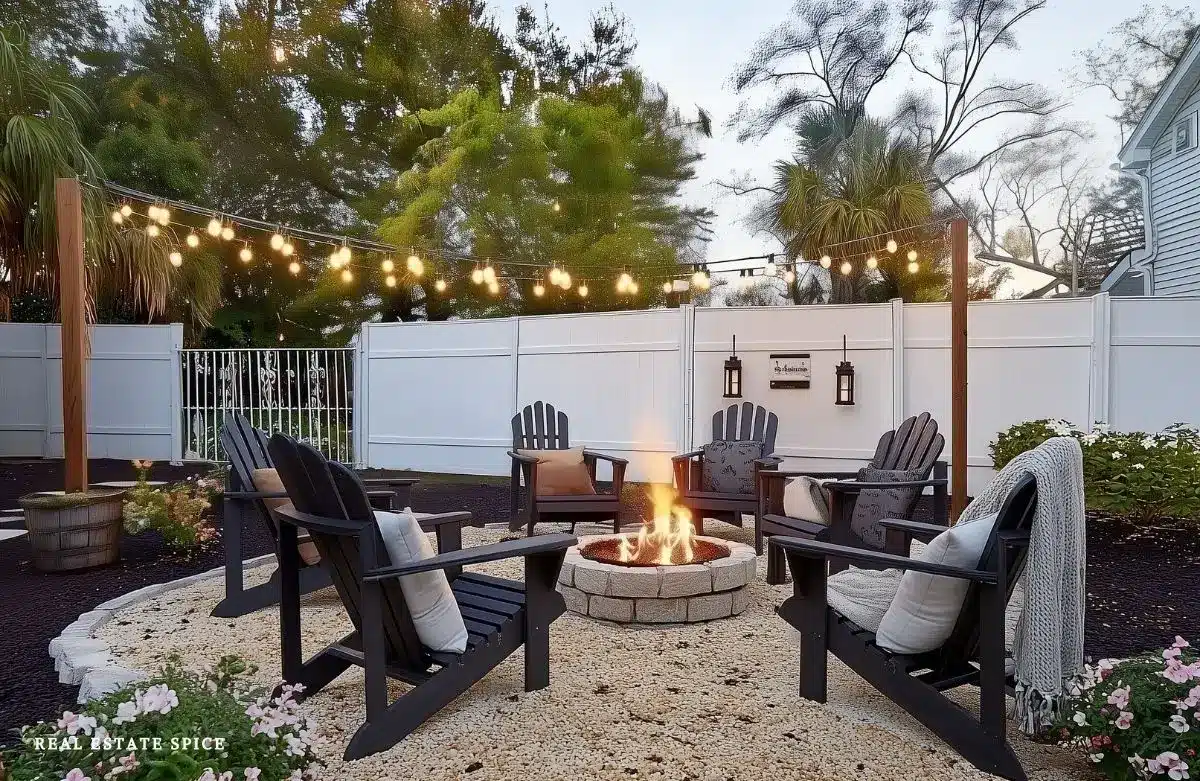
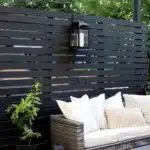
If the view is direct and fairly low, a privacy fence or patio privacy screen may be enough.
If it’s higher up, like a neighbor’s deck or second-story window, you may need taller planters, a trellis with greenery, or a stronger vertical element.
An outdoor privacy screen is especially useful when you want something flexible or renter-friendly.
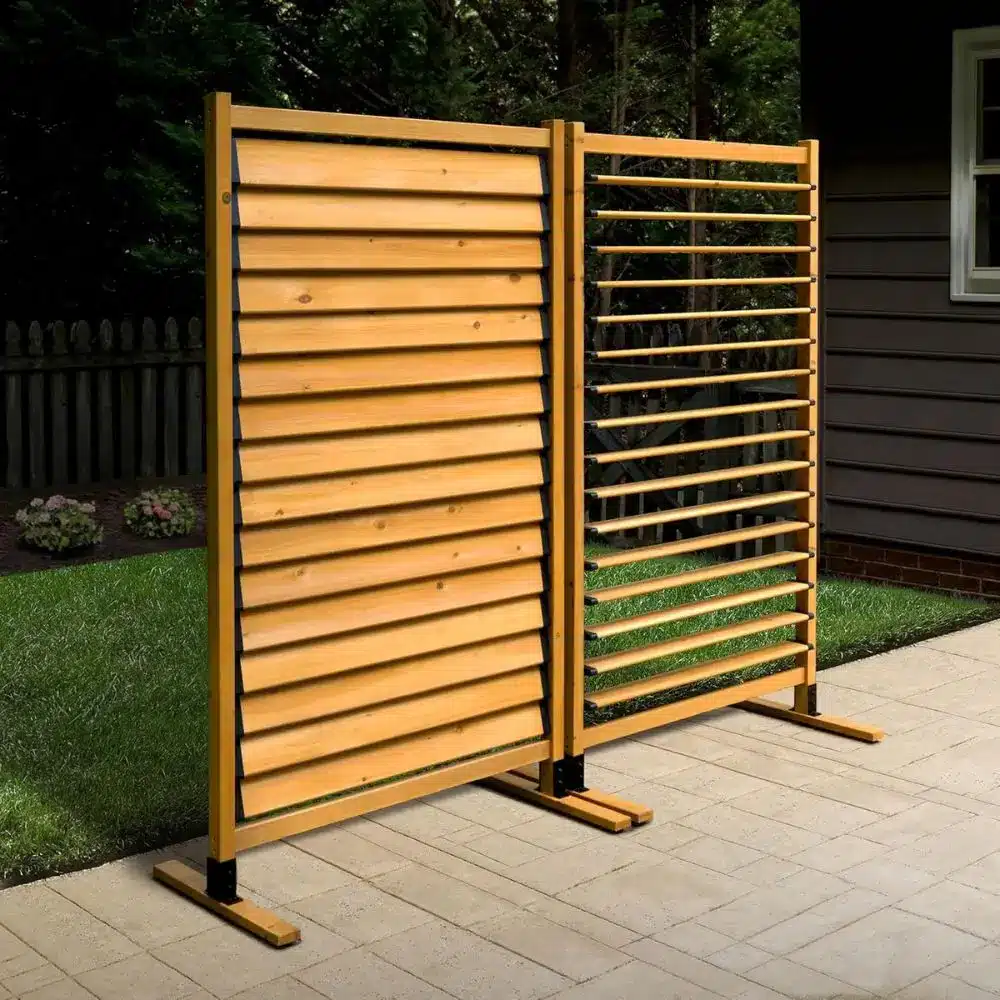
A patio privacy screen can sit behind chairs, beside a dining table, or along one exposed side without changing the entire structure of the patio.
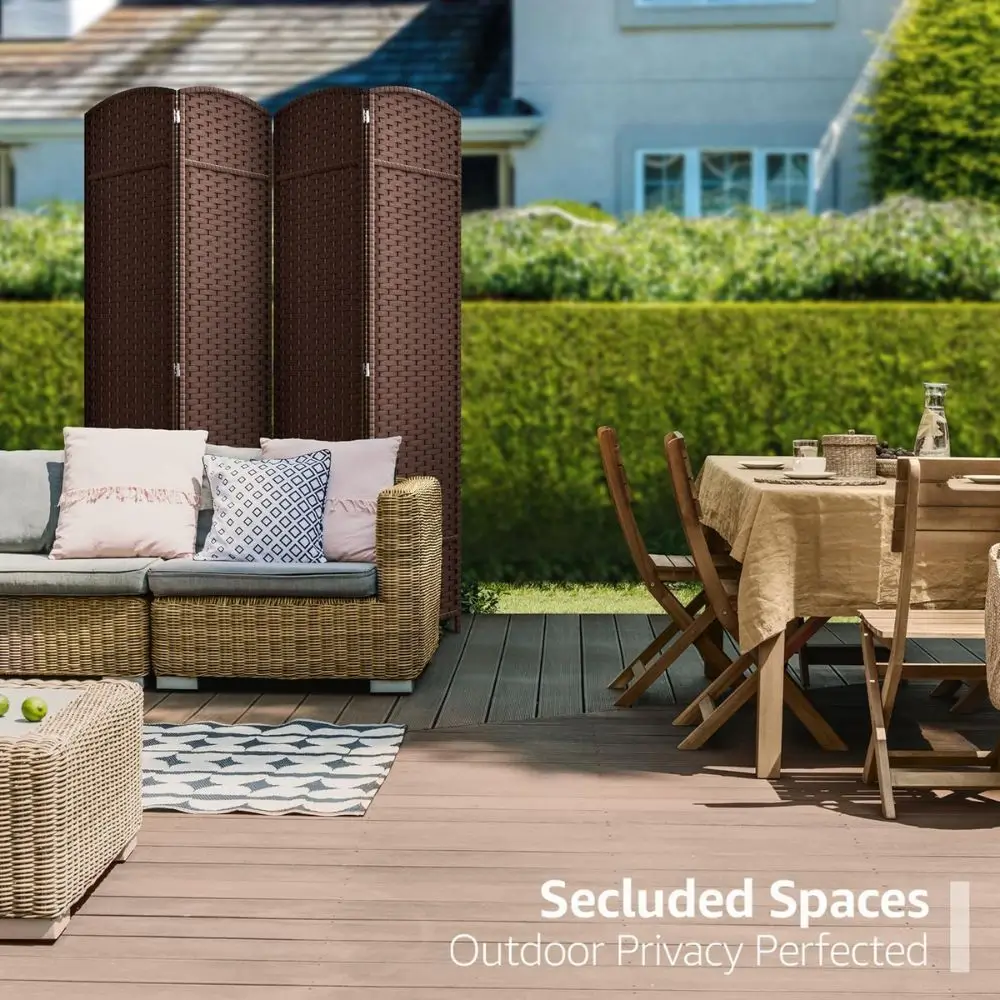
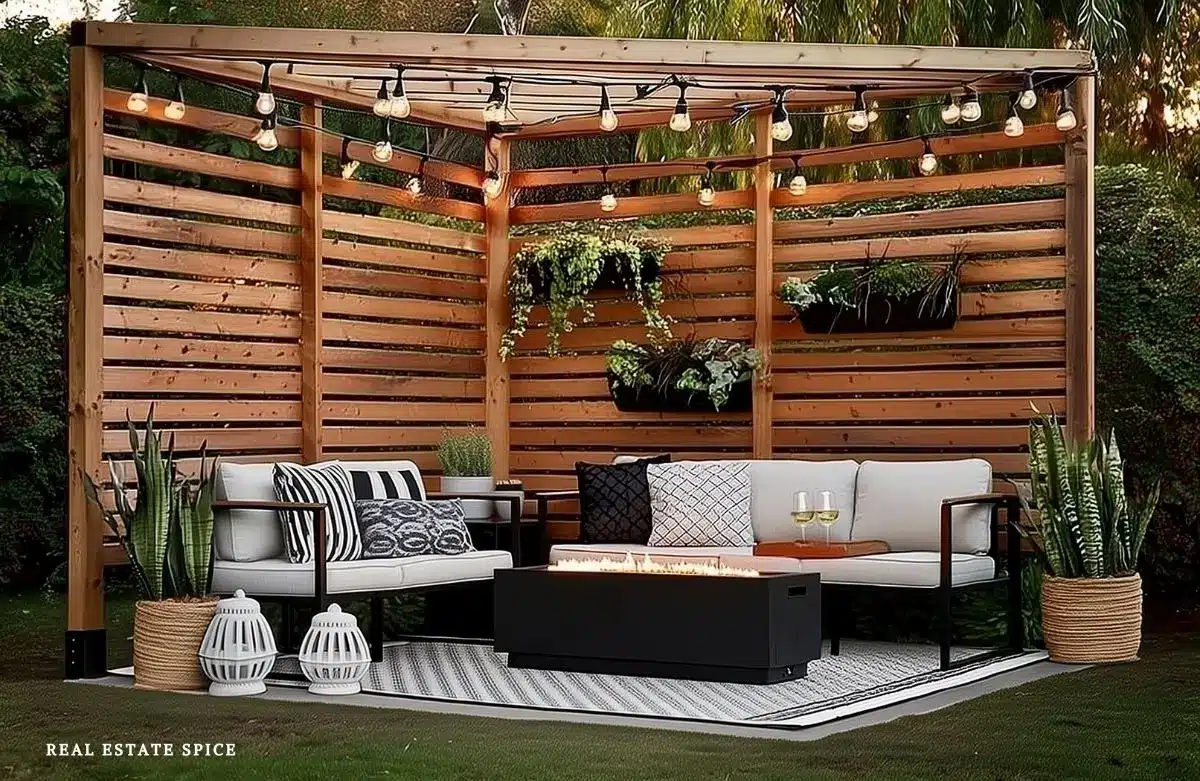
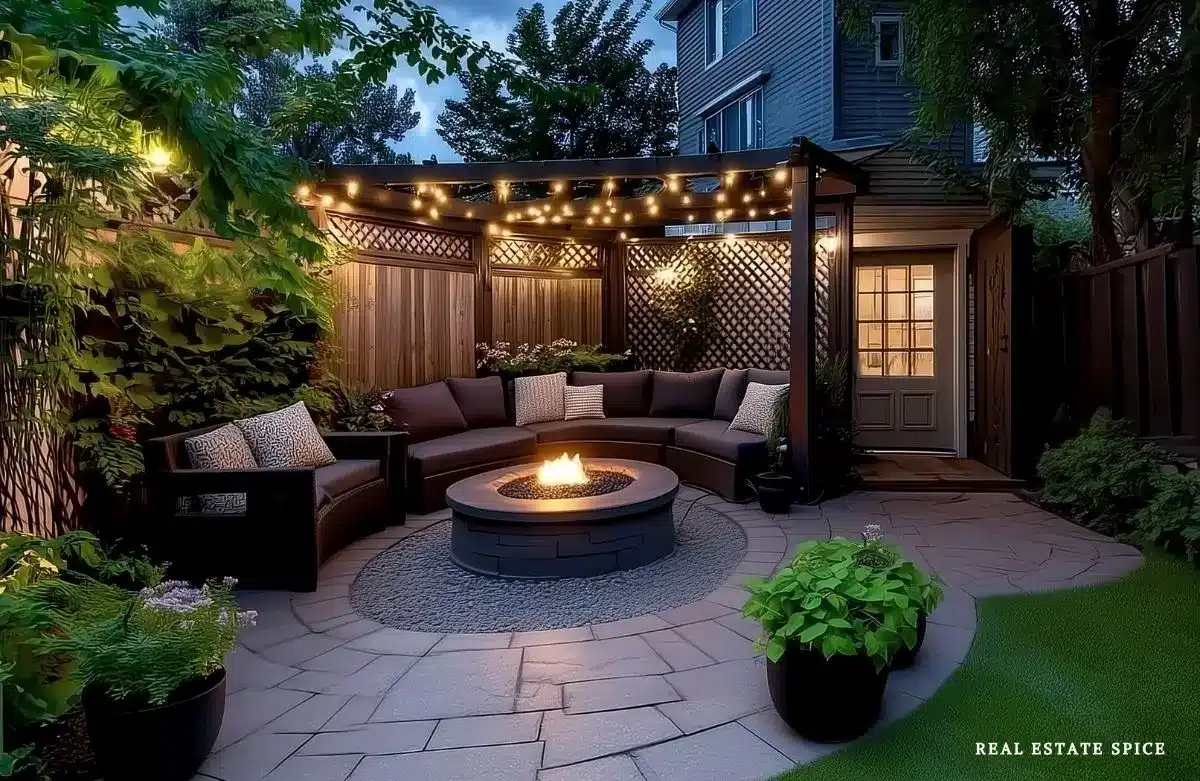
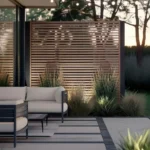
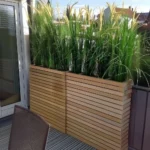
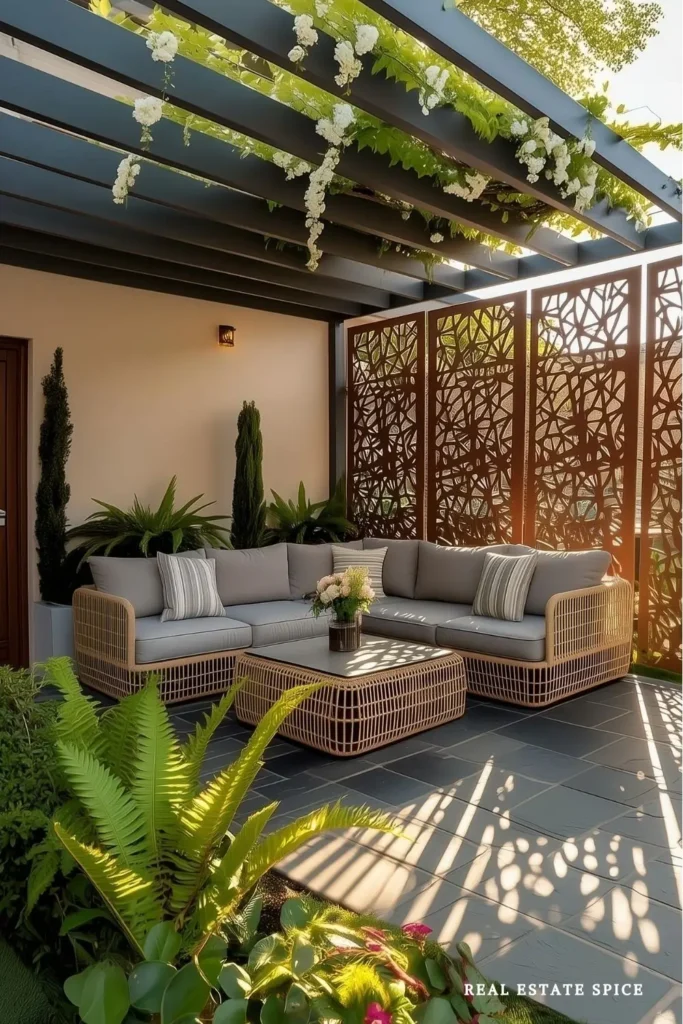
Lattice panels work beautifully when you want privacy that still feels airy.
They block just enough, especially once plants start softening them, and they don’t feel as severe as a full wall.
A trellis can do the same thing while adding height and visual texture.
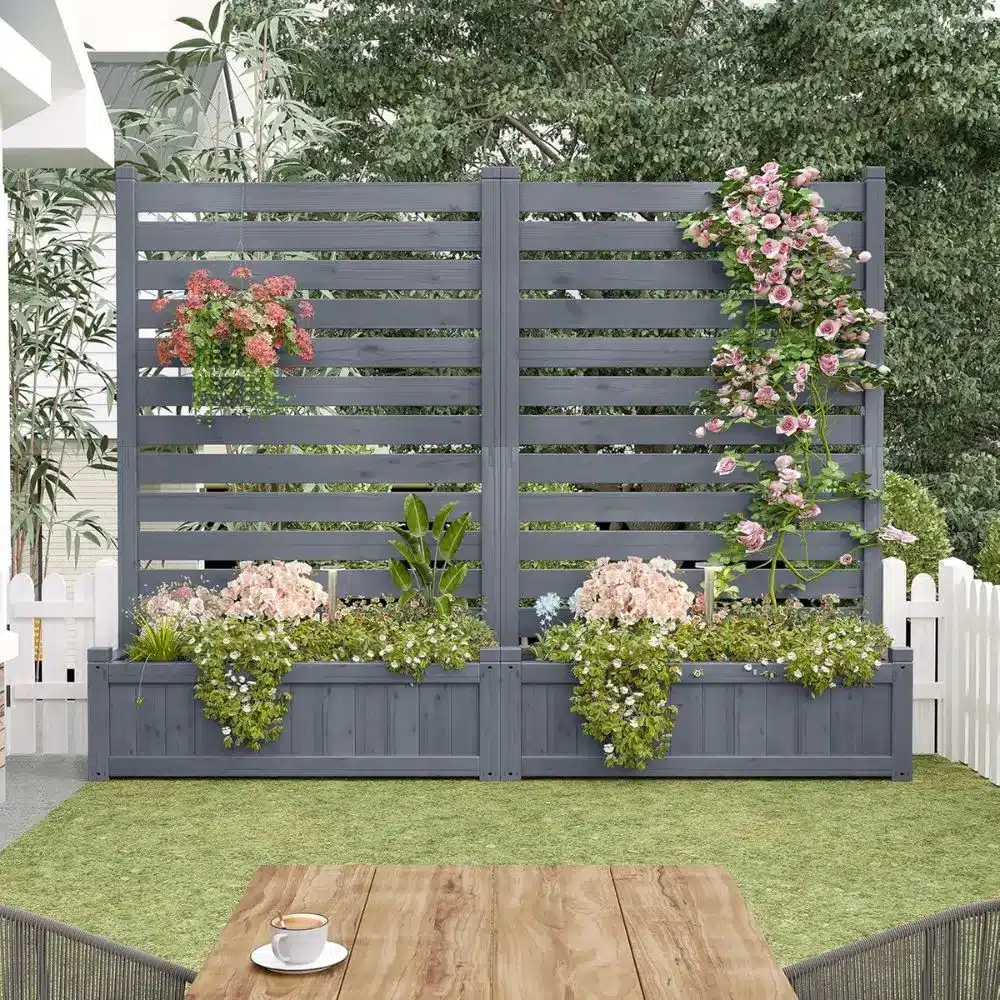
For patios that need more immediate coverage, patio curtains or outdoor curtains can work surprisingly well, especially when the patio already has some kind of overhead support or side frame to work with.
If you want to take a deep dive into stronger patio privacy strategies, learn step-by-step how to create a private patio space.
Keep one side a little more open
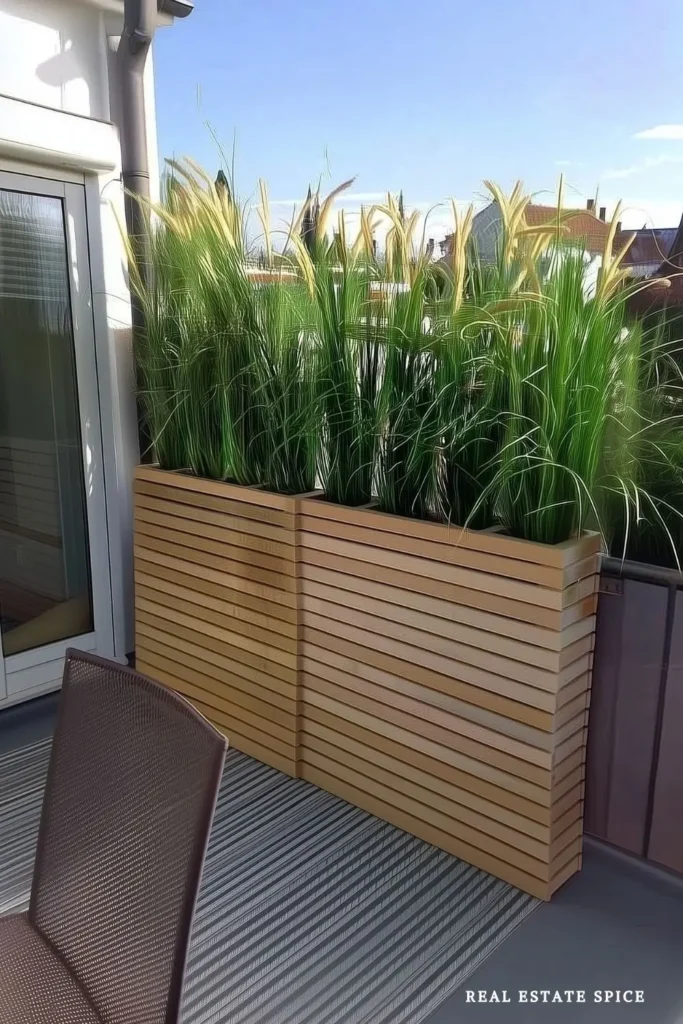
This is the part people often skip.
Once they realize privacy helps, the temptation is to block everything, everywhere, all at once.
Understandable, but not always pretty.
A private patio doesn’t need to feel sealed shut.
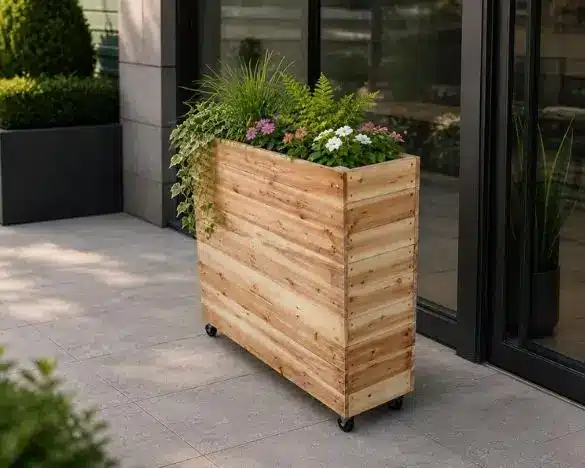
In fact, it usually feels better when one side stays a little lighter or more open.
That open side may frame the garden, the sky, a planting bed, or simply the least awkward direction.
Keeping one visual release point helps the patio breathe and stops the privacy elements from feeling too heavy.
That’s especially true on small patios.
Small patio privacy ideas tend to work best when the strongest block happens where it matters most, not all the way around the perimeter like you’re constructing a tiny backyard bunker.
The patio should feel protected, not punished.
Priority 2: Add Soft Layers Around the Edges
Why softness matters so much
Once the main sightline is handled, the next job is softening the edges of the patio.
This is where a lot of patios either become beautiful or start looking a little too literal.
One solid privacy barrier can solve the view, but if every edge feels hard, flat, and abrupt, the patio may still not feel peaceful.
Soft layers are what make patio privacy feel designed instead of merely installed.
Softness can come from planters, potted trees, trailing greenery, lattice panels, a trellis, outdoor curtains, or even the way lighting sits near the perimeter.

Texture matters here too.
A row of tall planters has a different mood than one solid panel.
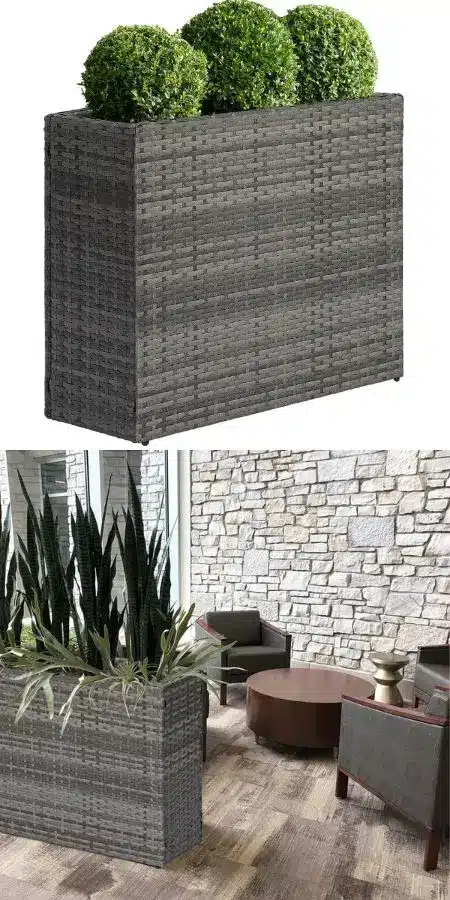
Grasses move.
Curtains shift.
Branches catch the light.
All of that creates gentleness around the patio and helps a calm patio space feel less rigid.
Think in heights, not just objects
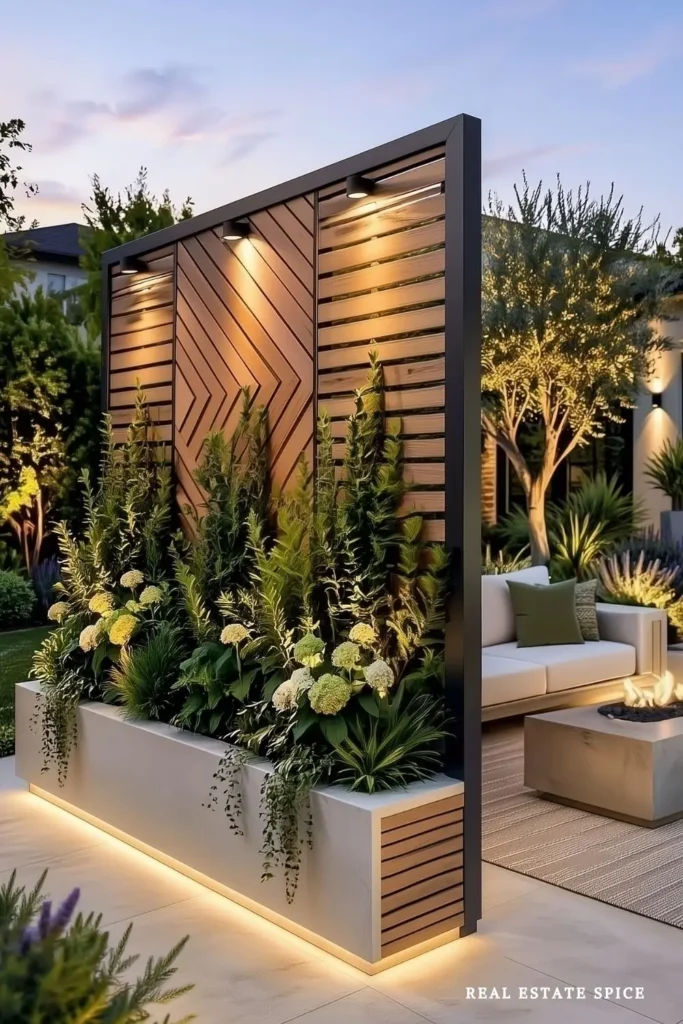
The prettiest patio edges usually have more than one height.
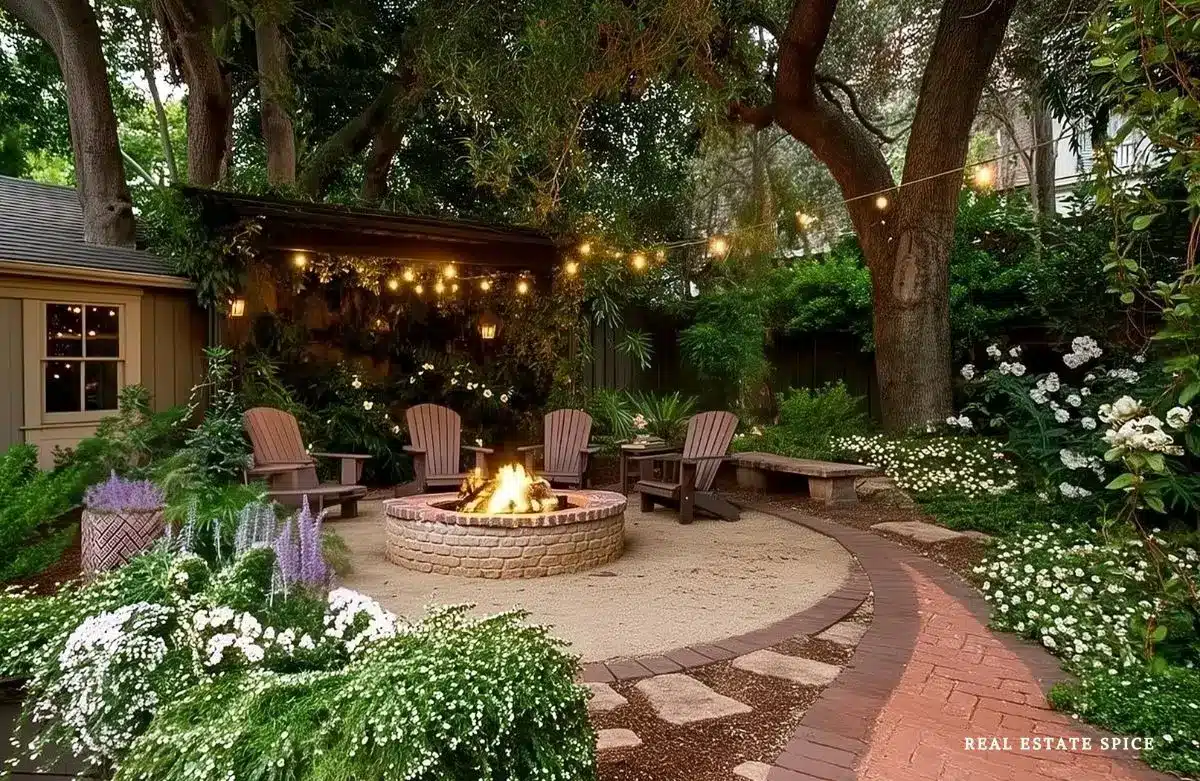
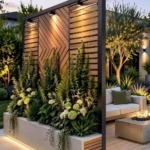
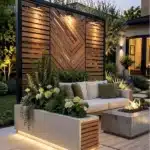
Maybe there’s a privacy fence or screen at the back, tall planters in front of it, and a lower layer of softer greenery, lanterns, or lighting closer to the floor.
That kind of layering creates depth, which is one of the reasons it feels so much more polished than a single hard barrier on its own.
A good way to think about this is as a little privacy landscape.
The tallest layer handles the broad block.
The middle layer softens the structure.
The lowest layer makes the patio feel grounded and warm.
When the edges have that kind of rhythm, the whole patio design gets calmer.
It stops feeling like a patio with privacy attached to it and starts feeling like a real outdoor room.
This is also where patio decor ideas can support privacy without becoming the main event.
A few well-placed lanterns, ground lighting, one beautiful pot, or a pair of matching planters can make the edges feel finished.


They help the privacy elements feel more intentional.
Use fabric and light to soften harder lines
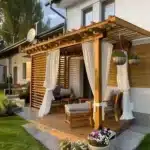
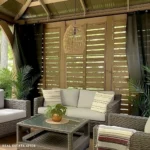
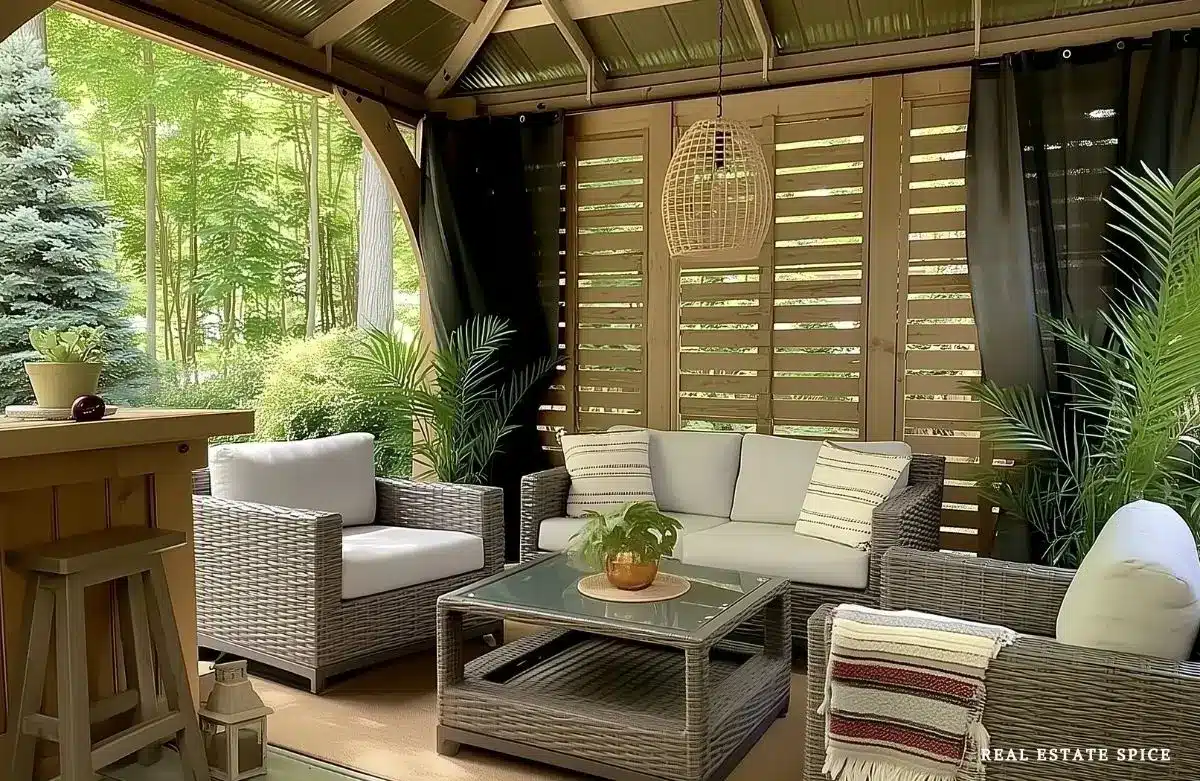
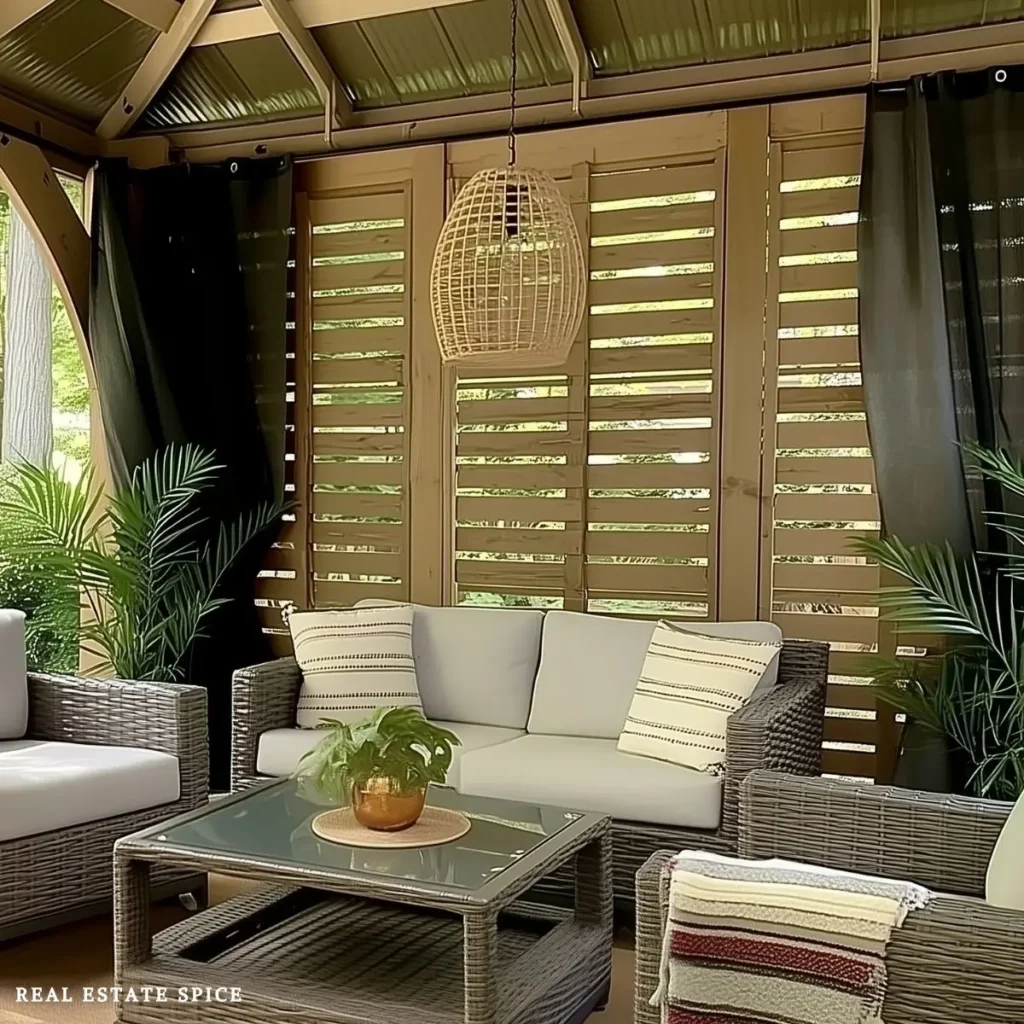
If the patio has pergolas, a gazebo, a side frame, or a covered structure, patio curtains can be incredibly effective.
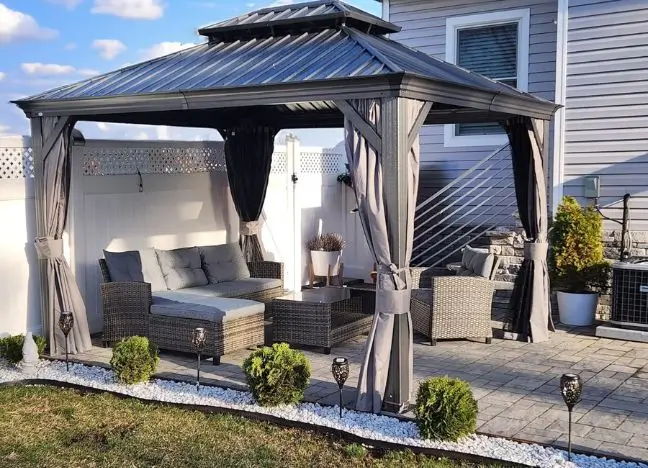
Outdoor curtains soften the edge, filter the view, and make the patio feel less abrupt.
They also work beautifully with evening patio lighting because fabric catches glow in a very flattering way.
A curtain panel lit from the side by a lantern or soft solar lighting can make the entire patio feel more layered at night.
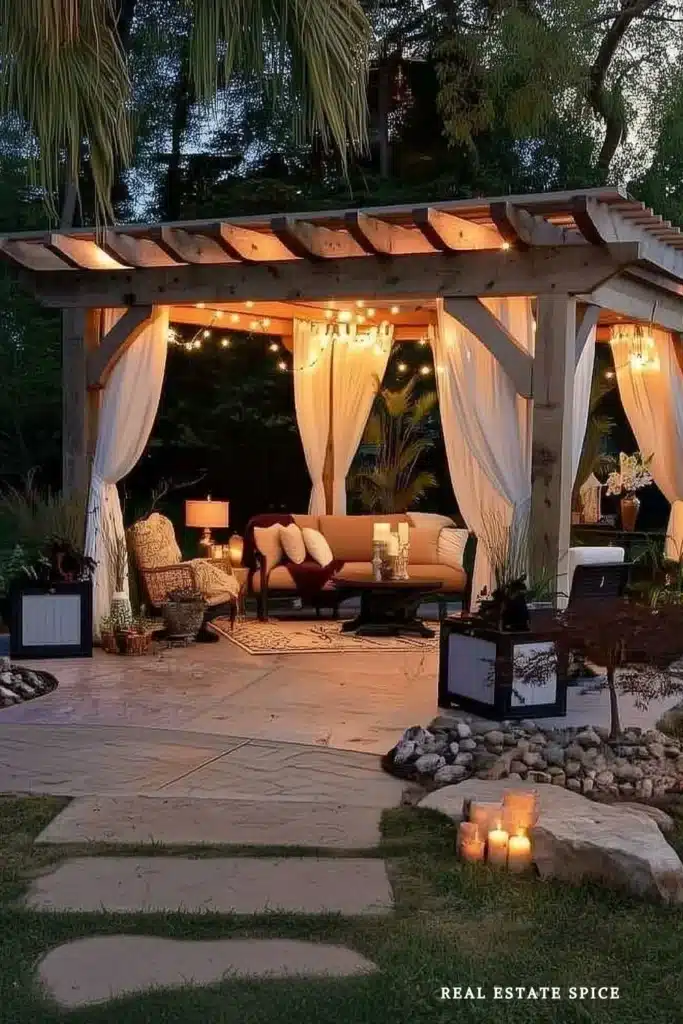
Lighting on the perimeter helps more than people realize.
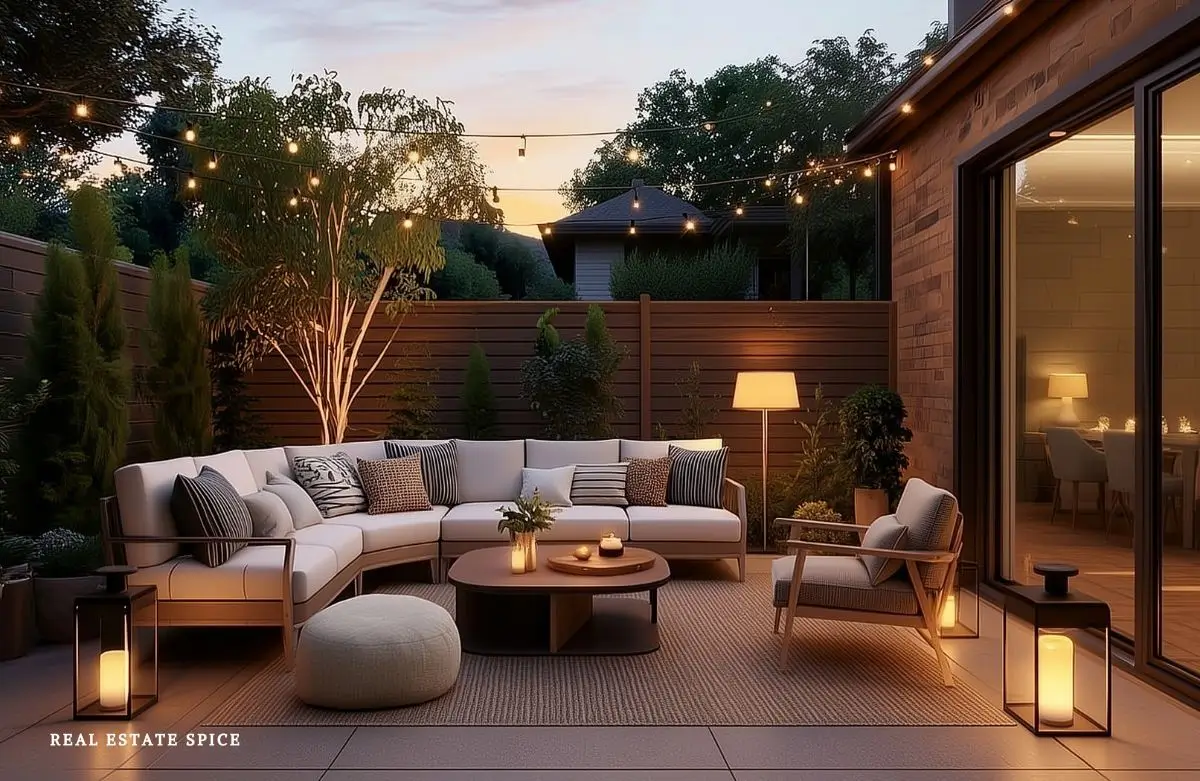
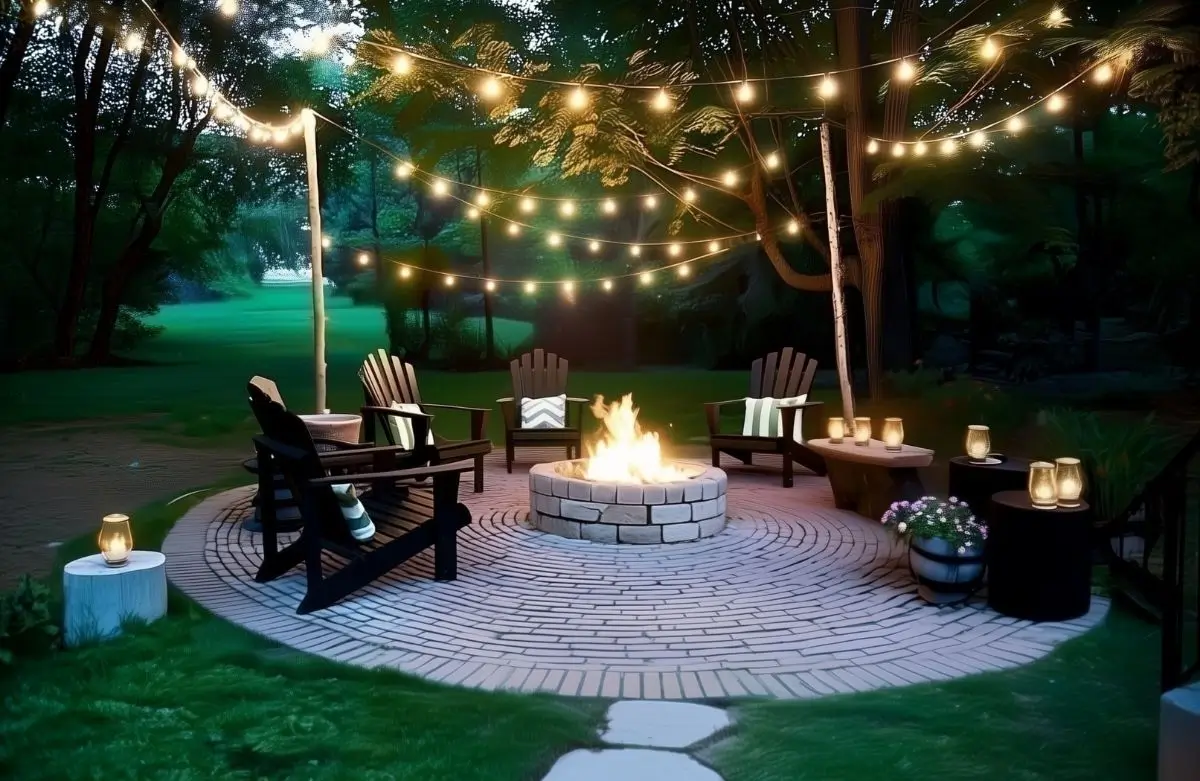
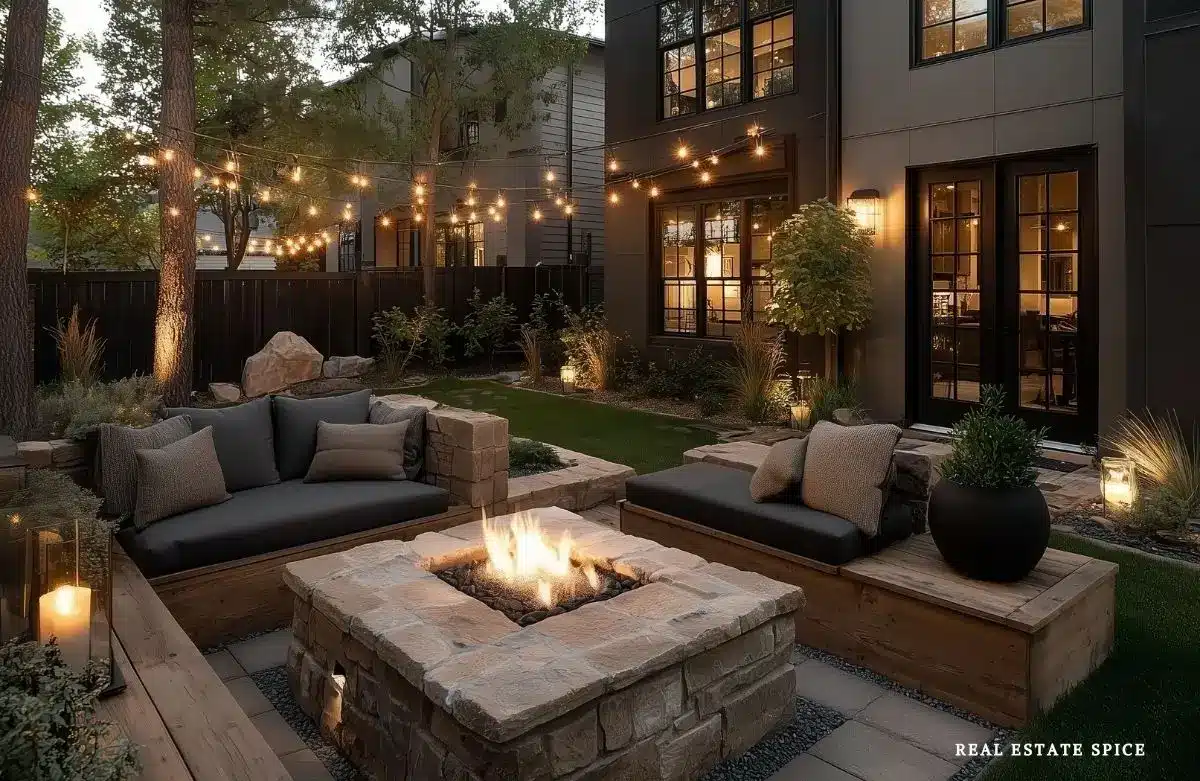
String lights overhead are lovely, but low solar lighting near planters or lanterns placed close to the edge can make the patio feel more contained after dark.
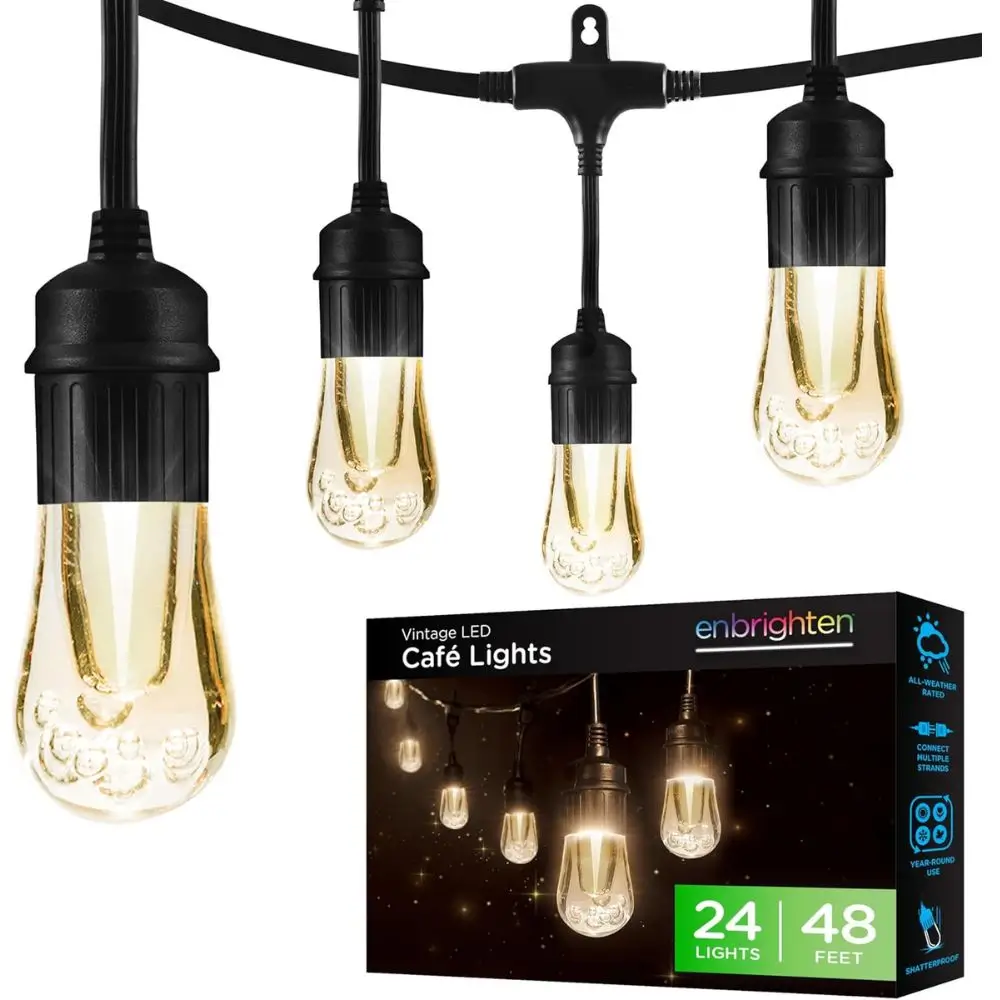


That’s one of those small design decisions that doesn’t scream for attention, yet the whole patio feels more complete because of it.
Priority 3: Create a Protected Seating Zone
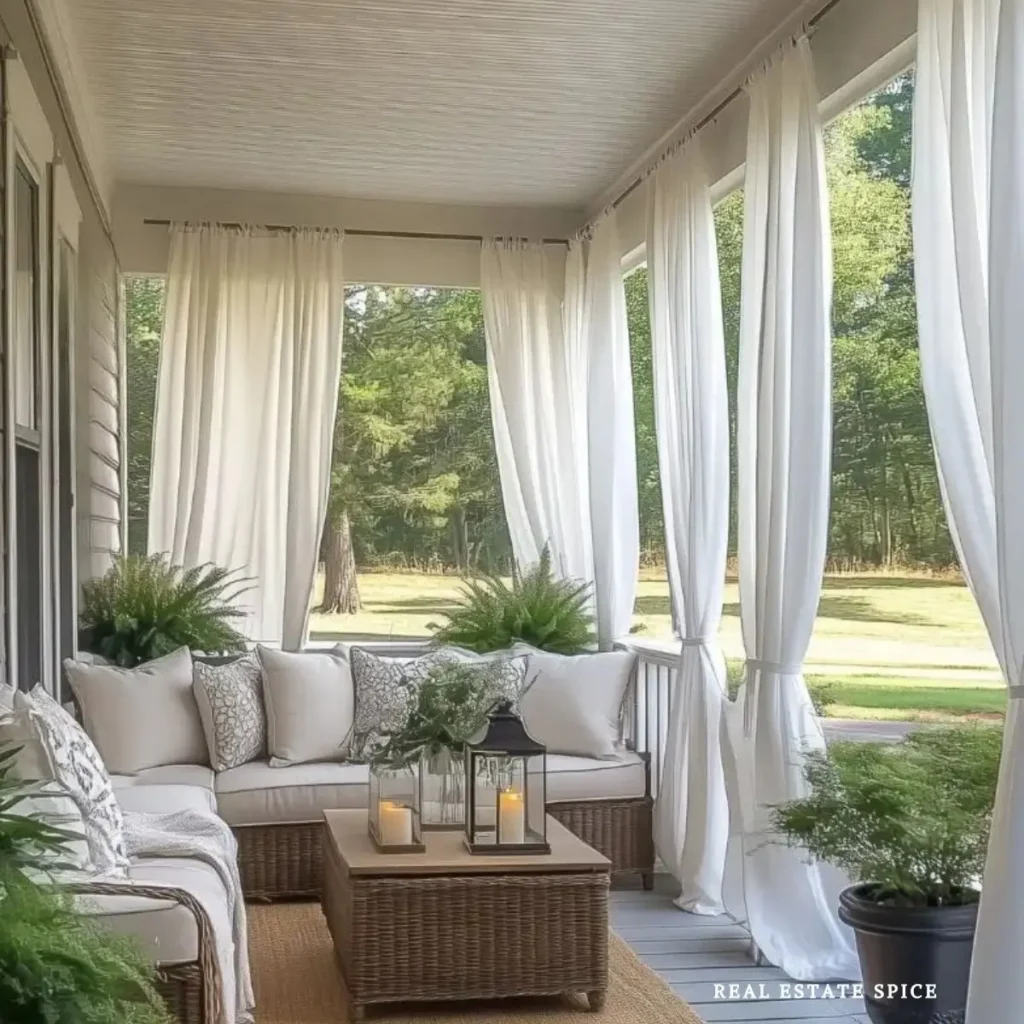
Privacy only matters if the seating benefits from it
A patio can have a nice screen, beautiful planters, and all the right decorative gestures, but if the actual patio seating area still sits in the most exposed part of the space, the patio won’t feel calm.
This is why the third priority matters so much.
The place where people sit has to be the place that feels most protected.
A protected seating zone doesn’t mean sealing the furniture into a box.
It means placing the seating where the privacy is strongest and most supportive.
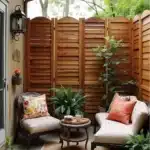
That might mean moving the sofa or chairs closer to the screened side of the patio.
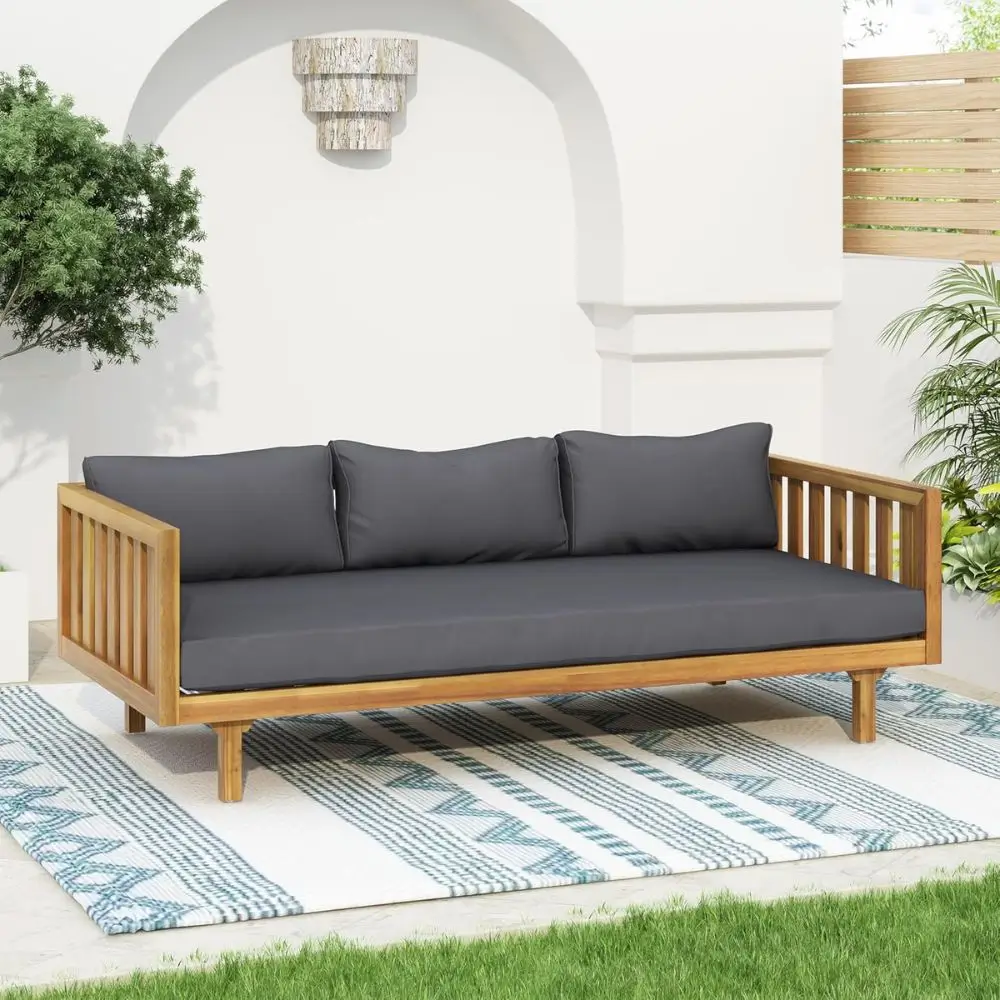
It might mean turning the seating inward so the eye lands inside the patio instead of at the neighboring house.
Sometimes it means using a bench, planter, or side table to reinforce the sense of enclosure around the chairs.
Let furniture help create privacy
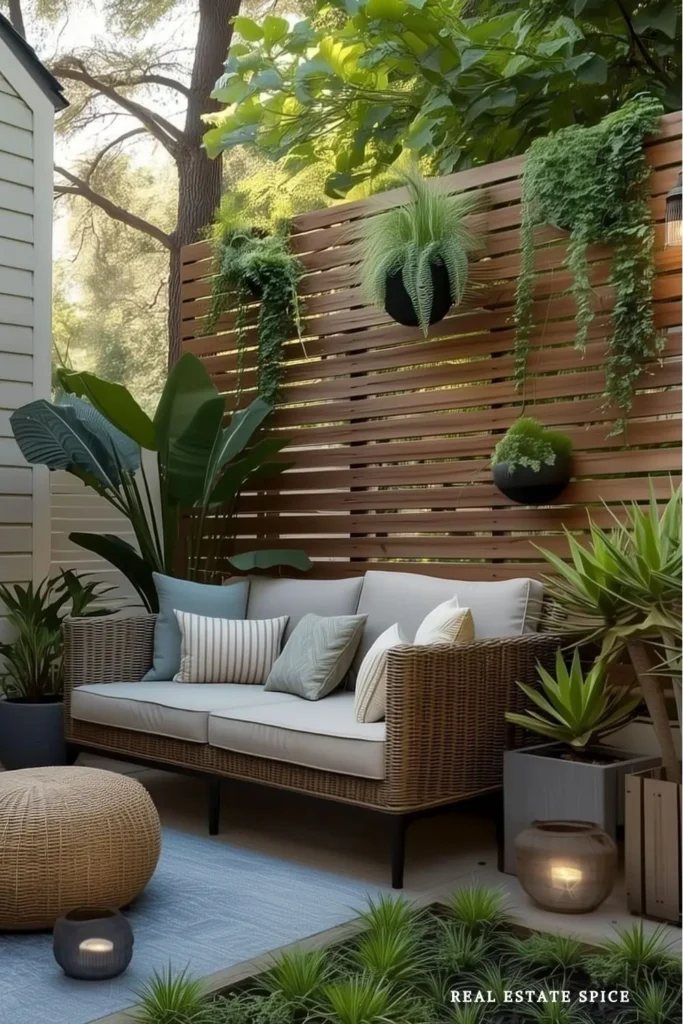
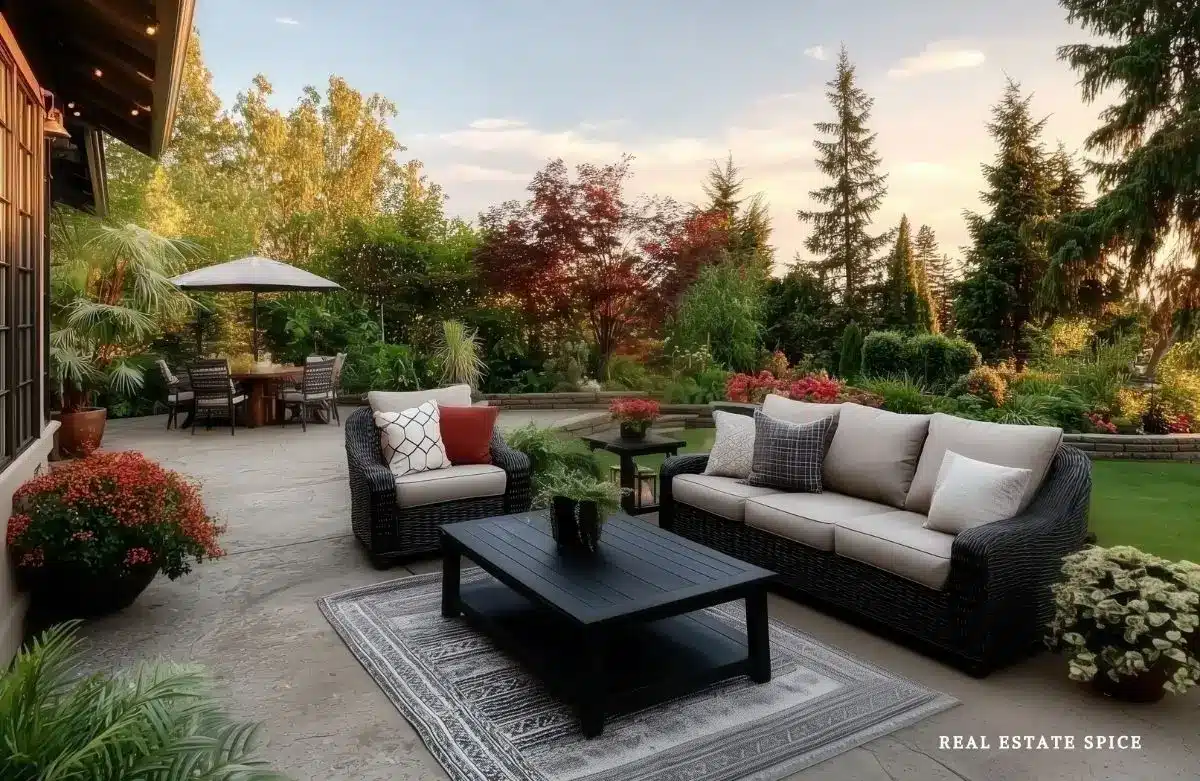
Patio furniture can support privacy when it’s arranged well.
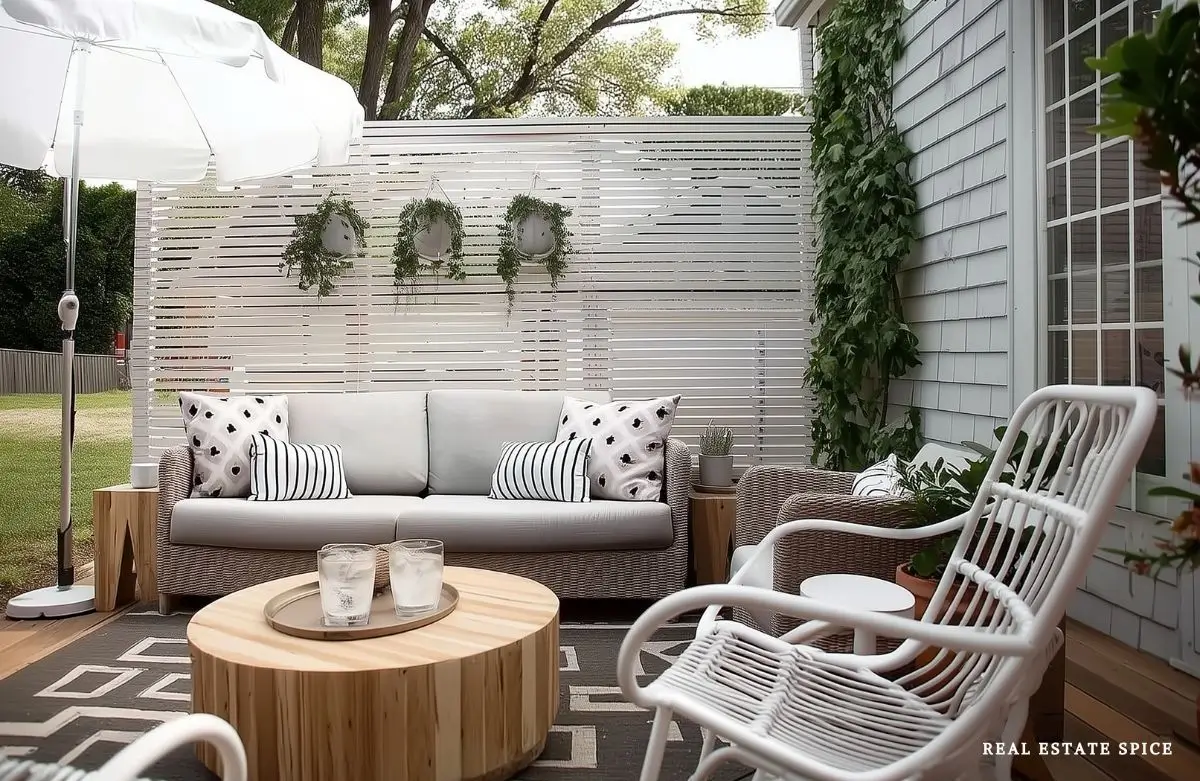
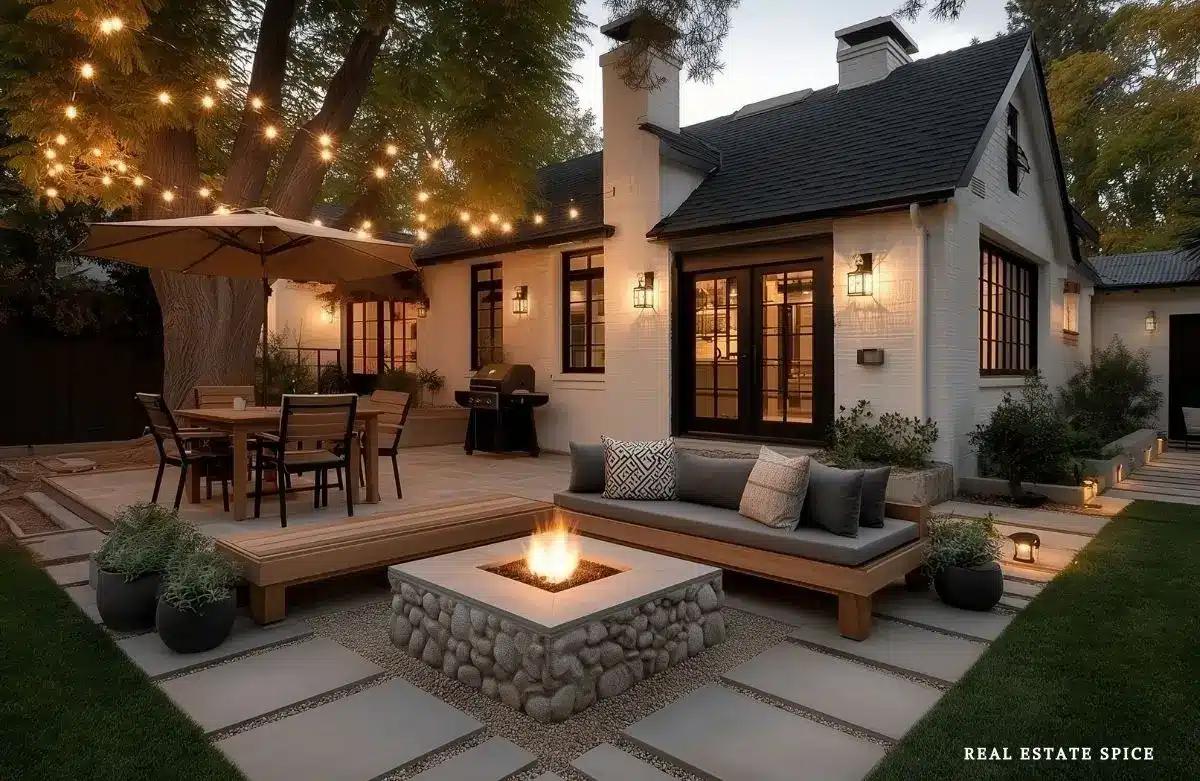
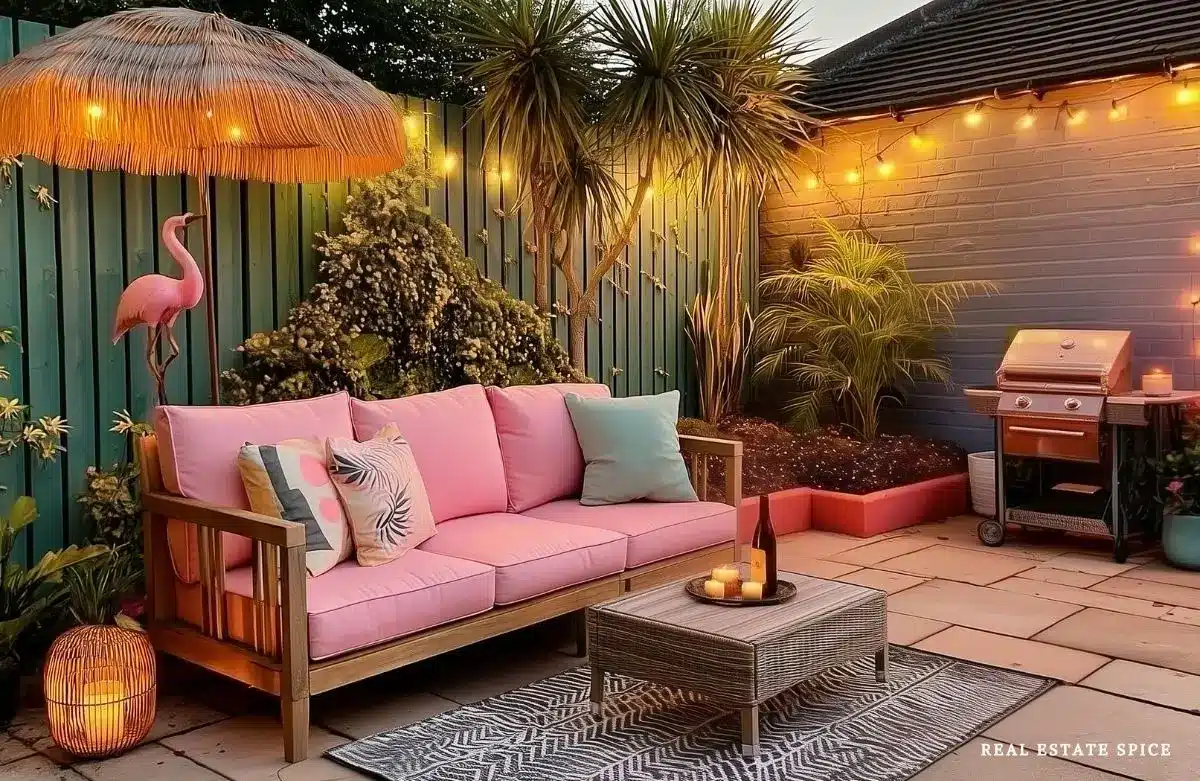
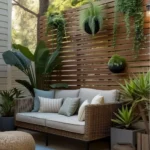
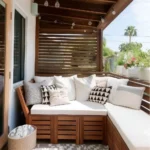
An outdoor sofa along a privacy screen instantly makes the seating feel more anchored.
A pair of chairs turned slightly inward creates a more protected conversation shape.
Even an outdoor rug can help because it clearly defines where the seating zone begins and ends, which makes the whole patio feel more put together.
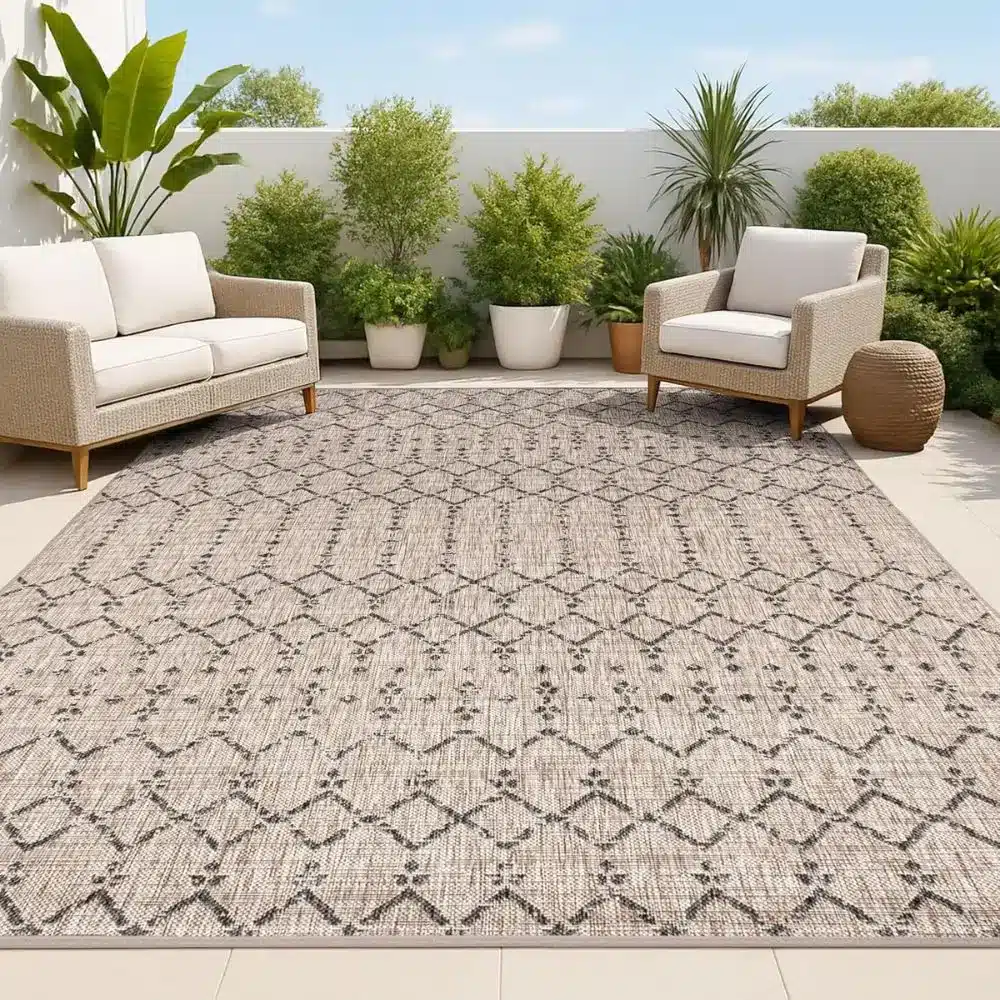
Patio layout and privacy really work together.
The privacy elements create the shell.
The seating arrangement turns that shell into an actual room.
Here, the main rule is straightforward.
Put the seating where privacy already feels strongest, then support that space with the layout rather than fight it.
Give the seating one soft boundary
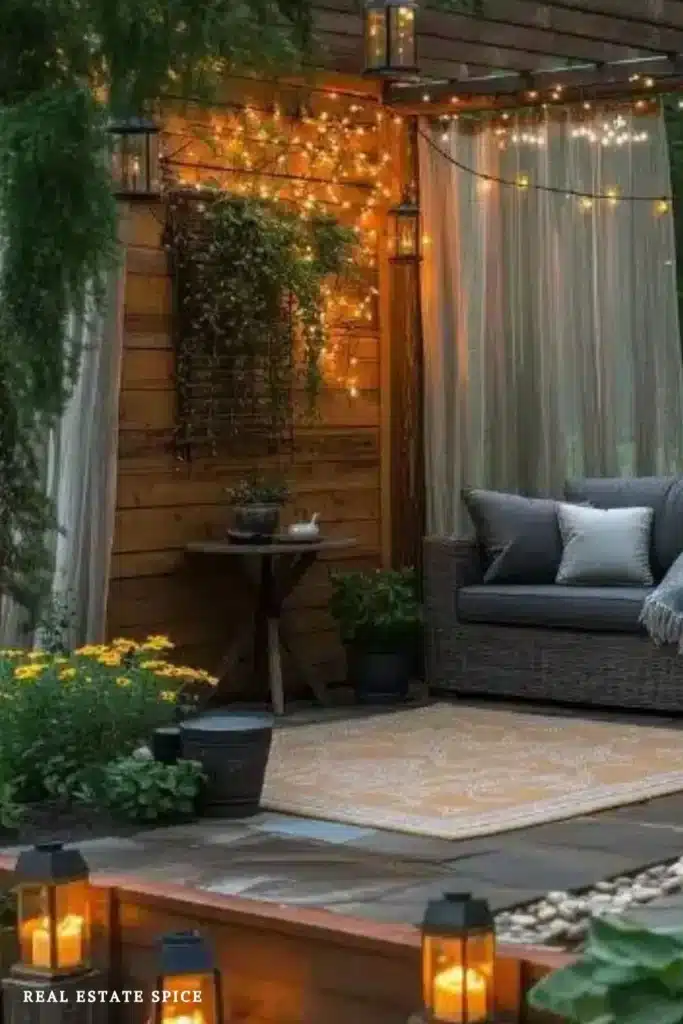
One especially effective trick is to give the seating area a soft boundary behind or beside it.
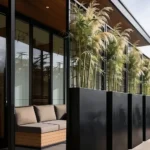
That could be a curtain panel, a bamboo privacy screen, a row of tall planters, a narrow trellis, a curtain panel, or a softened privacy screen.
The goal is to make the seating feel like it belongs somewhere, not like it’s floating in the middle of the patio.
A chair beside a blank wall feels very different from a chair beside a soft curtain and one warm lantern.
Same chair.
Completely different emotional outcome.
How to Use This Privacy Formula on a Small Patio
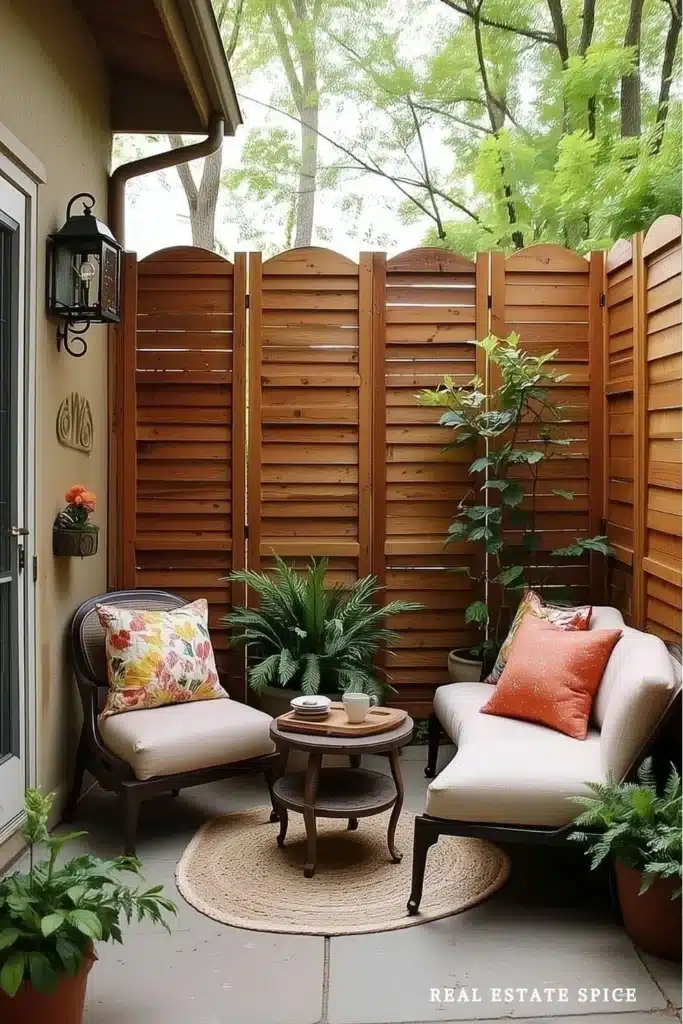
A small patio doesn’t need more privacy elements.
It needs more precision.
That’s why the patio rule of 3 privacy framework works so well in compact spaces.
You don’t need to screen every single side.
You just need to identify the one strongest sightline, soften the perimeter in a few smart places, and make sure the seating lands in the most sheltered zone.
On a small patio, scale becomes everything.
A row of massive planters can eat up the floor space you actually need for chairs and movement.
In most cases, lighter elements work better.
A slender outdoor privacy screen, a trellis with climbing greenery, a pair of tall planters instead of five medium ones, or one curtain panel on the exposed side can all do more than people expect.
Small patio privacy ideas usually look best when they’re small enough to fit the space.
A screen or two can change the entire feel of a patio.
If you have an outdoor structure, you can use outdoor curtains.
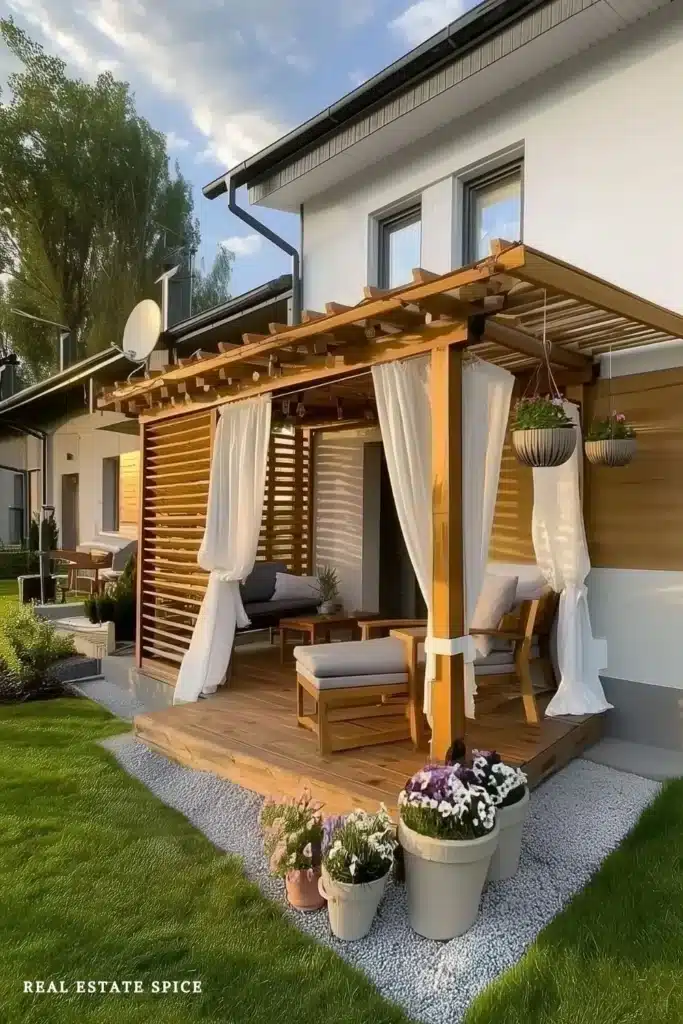
A grouping of planters helps soften views and define the space, while the seating layout does a lot of the heavy lifting when it faces the right direction.
Add an outdoor rug to ground the zone, and the whole area starts feeling more connected.
Once those things are doing their job, the patio can still feel open and airy instead of crowded with “privacy solutions” that become their own design problem.
How to Use This Privacy Formula on a Covered Patio
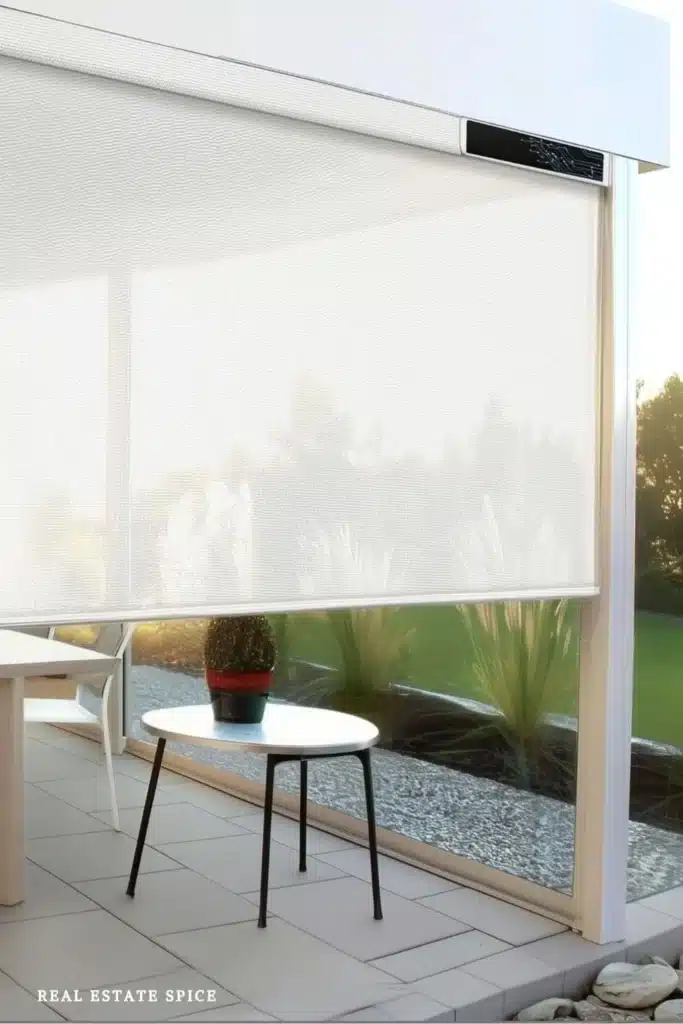
Covered patio privacy works a little differently because the structure already offers a strong design advantage.
The overhead cover makes the space feel more like a room before you do anything else.
That means the privacy work often becomes more about the sides and the view lines than about creating a sense of enclosure from scratch.
For a covered patio, shades or curtains become especially useful.
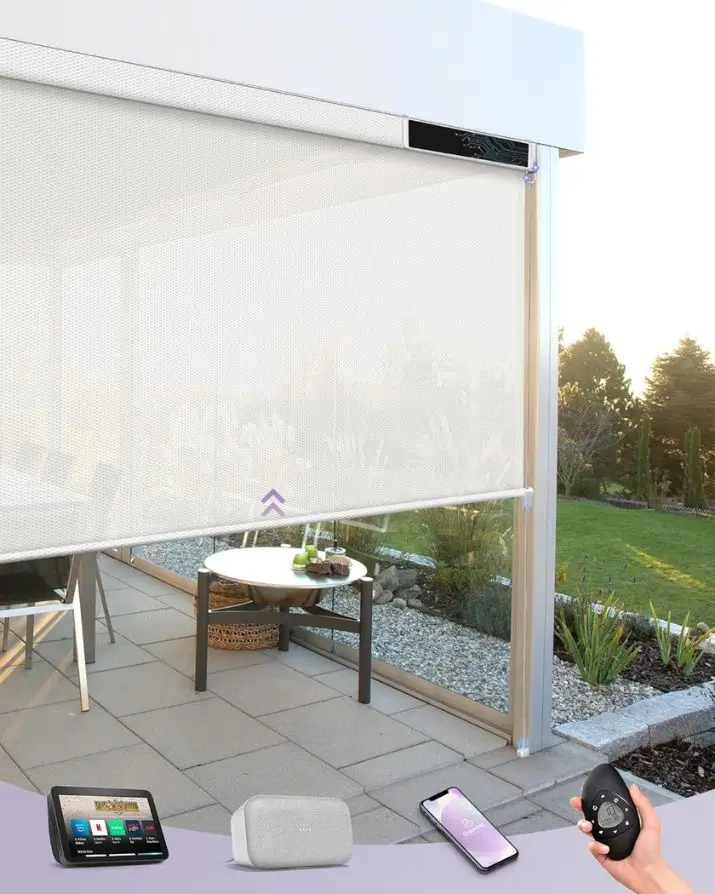
Patio curtains or outdoor curtains can soften one exposed side beautifully without making the patio feel dark.
They also look more integrated here because the structure gives them a natural home.
A privacy shade can work well too, especially if the patio gets strong sun from one side and needs both visual coverage and glare reduction.
The same rule still applies, though.
Block the main sightline first, soften the edges, then create the protected seating zone.
Covered patios can end up over-screened quickly, so let the roofline do some of the work.
How to Use This Privacy Formula on a Patio Without a Fence
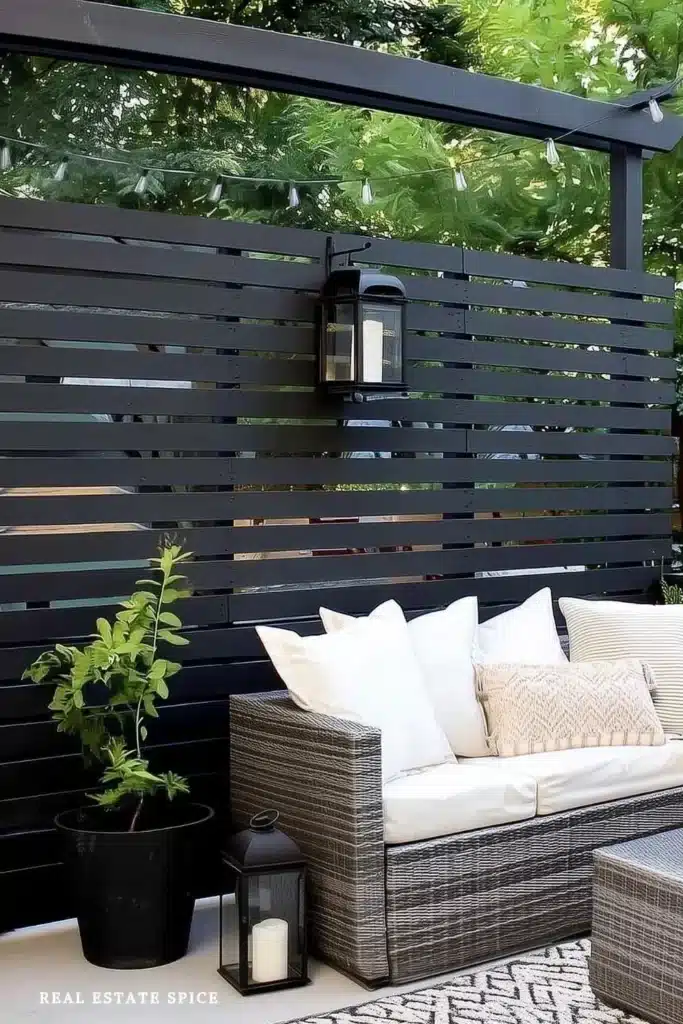
A patio without a fence can still feel private.
It just usually needs more movable or layered privacy than a patio with a fixed backdrop.
This is where tall planters, potted trees, outdoor privacy screen panels, and lightweight trellis structures really shine.
They give the patio shape without requiring permanent construction.
When there’s no fence, the main sightline often feels bigger because the patio is more exposed to surrounding yard areas or neighboring views.
That’s why it’s extra important to identify which view matters most.
Don’t try to build a full perimeter wall from scratch unless you truly need it.
Focus on the sightline that interrupts the comfort of the patio the most.
Once that’s blocked, let the soft layers do the rest.
A potted olive tree, grasses in planters, a trellis, and one row of warm lanterns can make a patio without a fence feel much more grounded.
A protected seating zone becomes even more important here because the furniture itself helps create the sense of room.
How to Create Privacy Without Making the Patio Feel Closed In
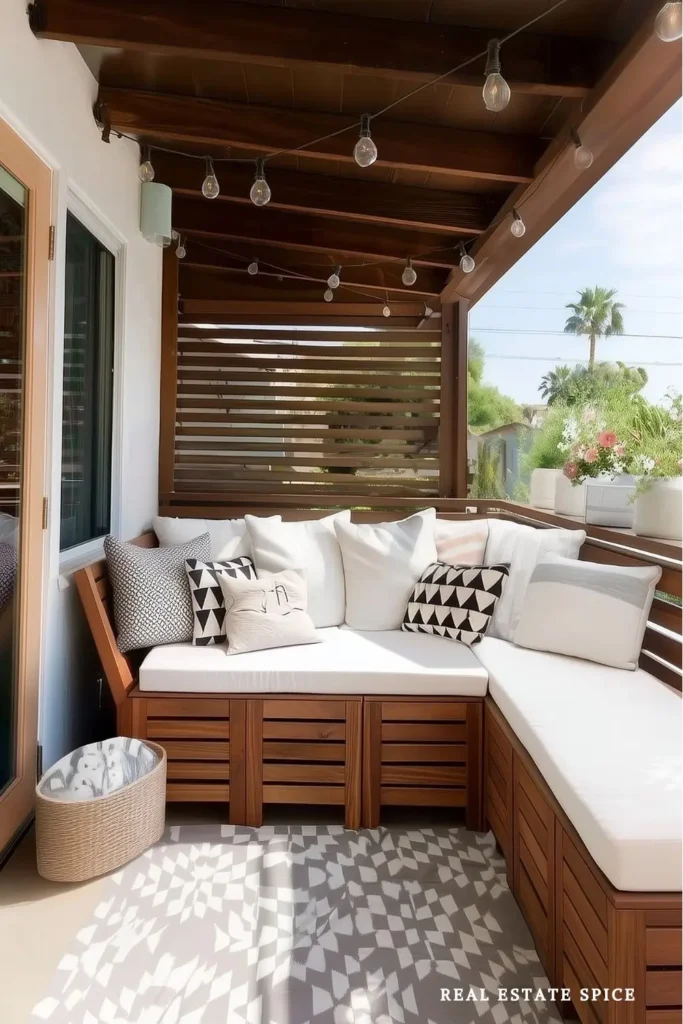
Privacy that feels heavy usually doesn’t feel peaceful.
The trick is filtering, softening, and framing instead of fully shutting everything down.
If the patio still gets light, breeze, and one open visual direction, it tends to feel calmer than a patio where every side is blocked equally.
Keep one side lighter.
Use slatted or airy elements when they’ll do the job.
Let plants and curtains soften the harder pieces.
Give the seating zone a protected feeling without placing a barrier two inches from everyone’s face. A
A private patio should feel peaceful, not trapped.
Best Patio Privacy Elements to Consider
For stronger structure
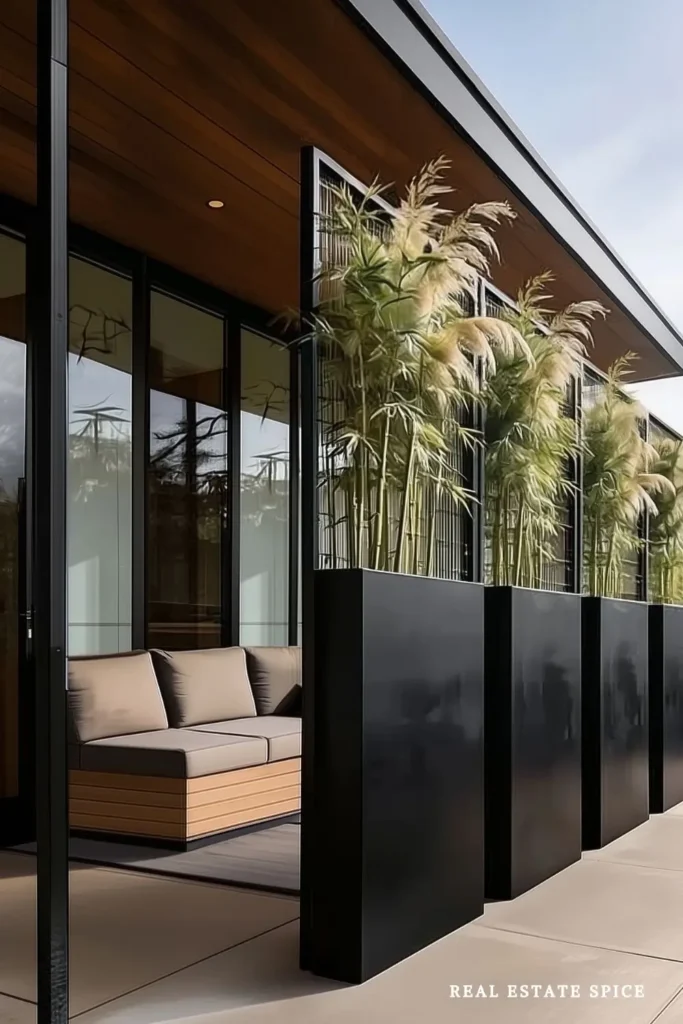
If the patio needs real screening, a privacy fence, patio privacy screen, outdoor privacy screen, lattice panels, or a trellis can all work beautifully.
These are the stronger elements that block the main sightline and help define the shell of the patio.
For softer edges and warmth
Planters, tall planters, potted trees, ornamental grasses, outdoor curtains, an outdoor rug, lanterns, string lights, and solar lighting all help the patio feel more protected and comfortable.
Some soften the boundary.
Others warm up the perimeter and make the whole outdoor patio feel more like a room after dark.
Privacy gets stronger when the lighting is intentional, the furniture is placed well, and the seating area feels comfortable, but those are supporting actors here, not the whole plot.
Common Patio Privacy Mistakes
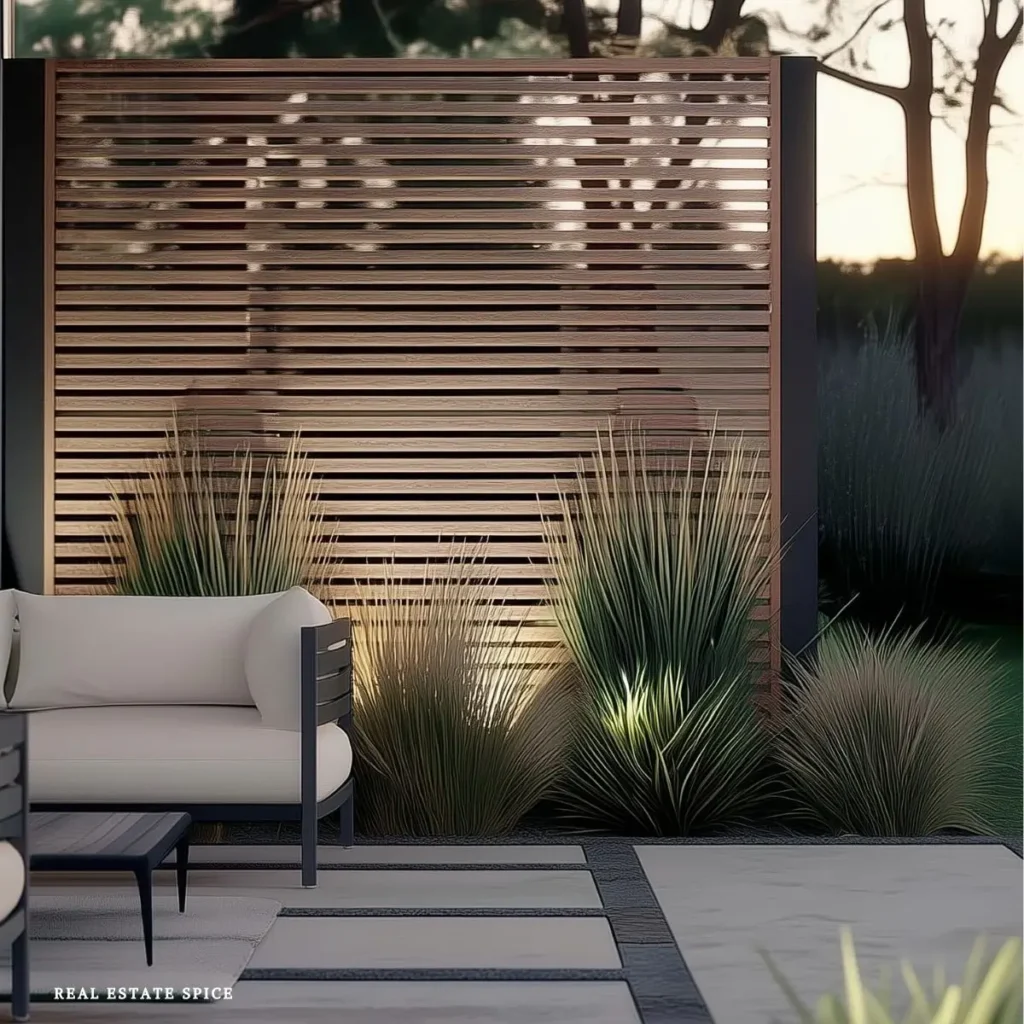
Blocking every side the same way
Most patios don’t need equal privacy on every edge.
The result can feel boxed in and heavier than necessary.
Ignoring seated eye level
Standing in the yard and making privacy decisions from that height is one of the easiest ways to misjudge what the patio actually needs.
Privacy should be evaluated from the chair, not just from the walkway.
Using only hard barriers
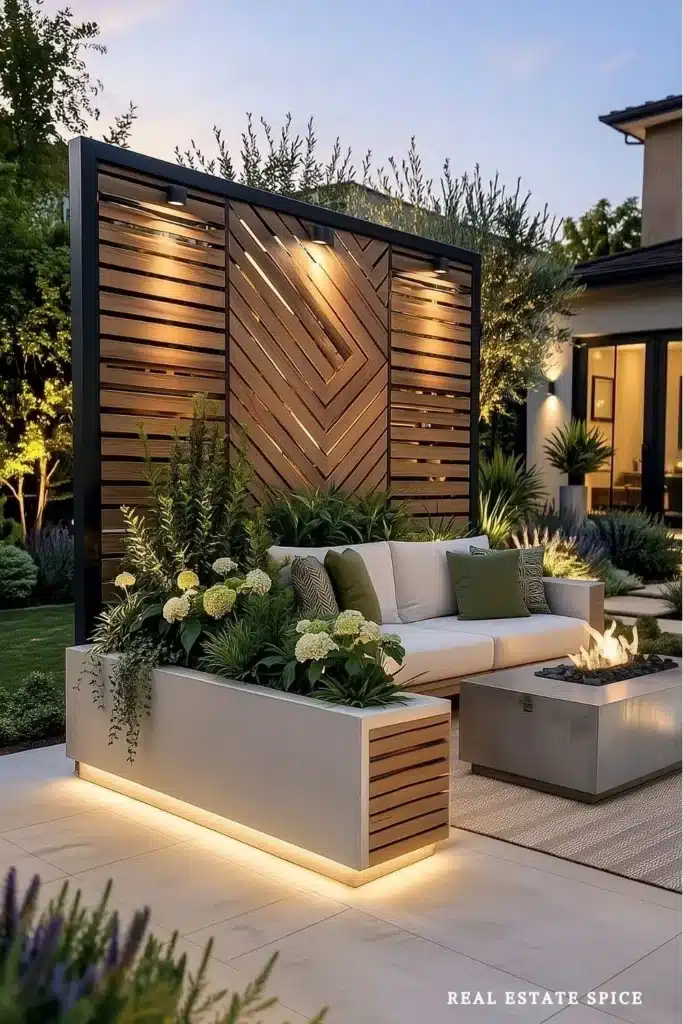
One solid wall may block the view, but without softer layers around it, the patio can still feel abrupt.
Softness is what makes privacy feel peaceful instead of severe.
Leaving the seating in the wrong place
If the strongest privacy is on one side of the patio, but the patio seating area stays in the most exposed spot, the whole framework falls apart.
The seating has to work with the privacy, not against it.
Forgetting the patio at night
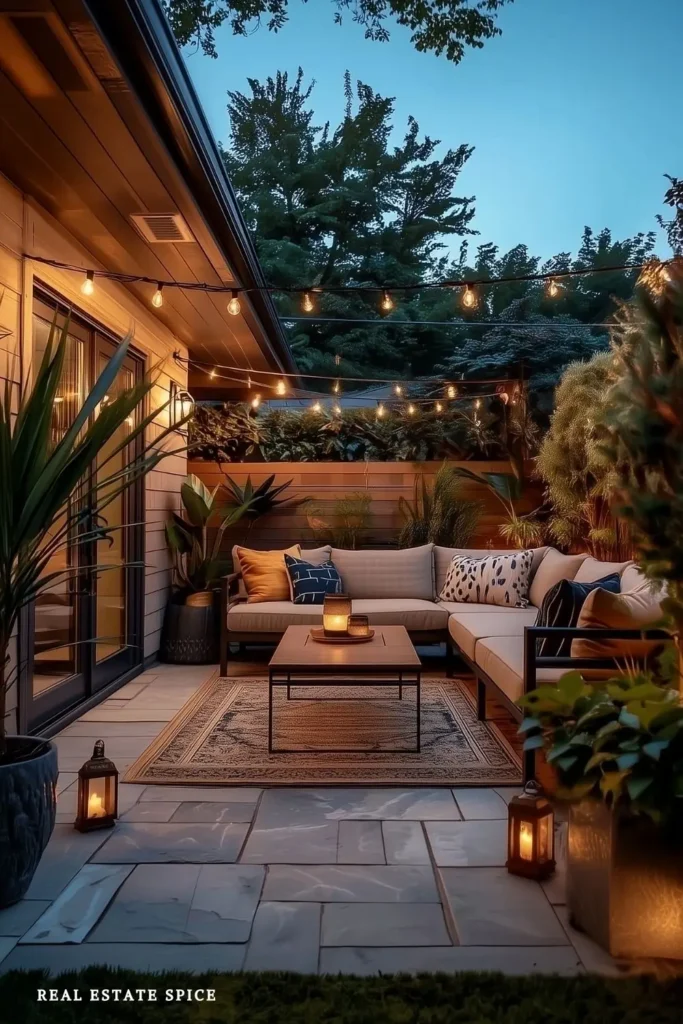
Privacy changes after dark.
If the patio has no layered lighting, it may still feel visually flat or oddly exposed even after the daytime sightlines are fixed.
Lanterns, string lights, and soft solar lighting often help the privacy work feel more complete once the sun goes down.
The Patio Rule of 3 Privacy Framework made easy
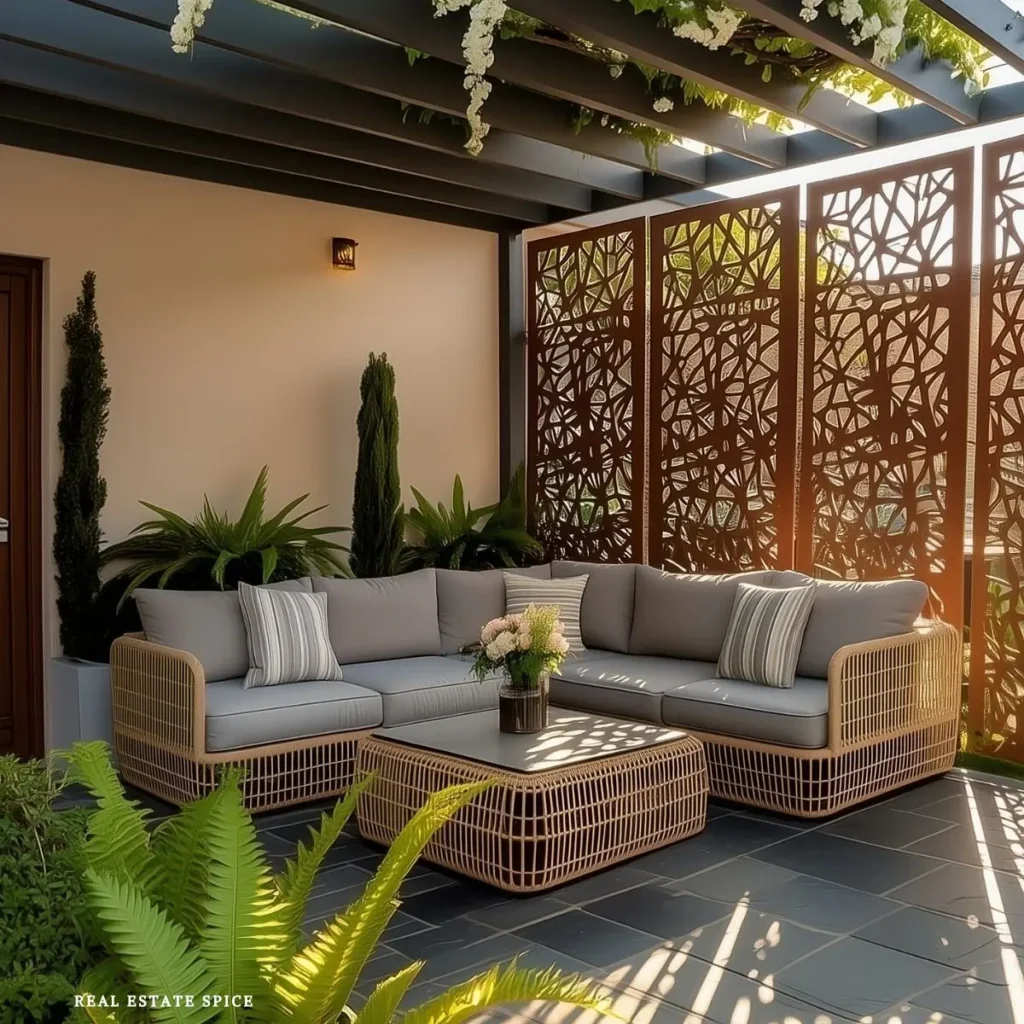
The patio rule of 3 privacy framework works because it turns a vague decorating problem into a clear, usable formula.
Block the main sightline.
Add soft layers around the edges.
Create a protected seating zone.
Those three priorities are enough to make a private patio feel calmer, more polished, and much easier to decorate well.
You don’t need to wall yourself in to create peace outside.
You don’t need to make every edge identical.
Most of the time, the patio just needs the right block in the right place, enough softness around the perimeter, and a seating area that actually benefits from all of it.
Once those pieces are in place, the patio usually starts feeling like a real room instead of a collection of nice intentions.
That’s the beauty of the patio rule of 3 privacy framework.
It’s simple enough to use right away, flexible enough for a small patio or covered patio, and strong enough to support the rest of your deeper patio articles naturally.
Privacy isn’t about shutting the world out. It’s about editing the view so the patio can finally exhale.