The Bedroom Furniture Rule of 3 to Create a Retreat

A bedroom can have all the basic furniture and still feel unfinished.
The bed may be in place, the nightstands may be doing their little bedside jobs, and the dresser may technically be holding half your life together.
But the room can still feel awkward, crowded, bare, or out of balance. And instead of feeling like a restful retreat, it feels like another space asking to be fixed.
Be sure to check out Bedroom Rule of 3: The Simple Formula that Makes Any Room Feel Designed and Bedroom Trends This Year after this…
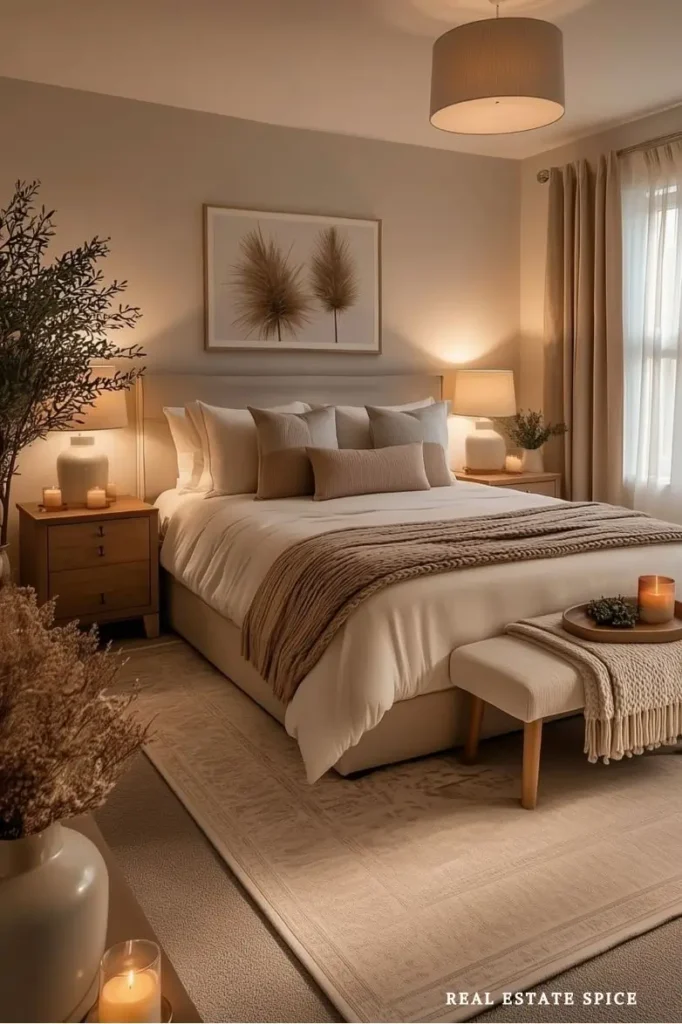
That’s why the Bedroom Rule of 3 is so helpful for furniture.
Instead of starting with every possible piece you could bring into the room…you focus on the three that matter most.
This formula shapes the room’s layout, storage, flow, and overall feeling.
When these work together, your bedroom feels more finished without needing a full makeover or a perfectly matched furniture set.
Bedroom furniture has a huge effect on how a room feels because it shapes the footprint, storage, traffic flow, and visual weight of the entire space.
Pretty bedding can help.

Good lamps can help too.
Still, if the bed is too large, the nightstands are the wrong height, or the dresser doesn’t actually help with storage, the whole bedroom can feel slightly off.
Even when every piece is perfectly nice on its own.
Here, I’m focusing on the Bedroom Rule of 3 bedroom furniture formula—the furniture choices that shape the whole room before anything else gets layered in.
These are the pieces that help turn the bedroom from a basic furniture setup into a calmer, more balanced retreat.
Once you see how these pieces affect the layout, flow, and overall feeling of the space, you can build on it with the other articles in my Bedroom Rule of 3 series.
From lighting to decor and design details, each one helps you pull the room together beautifully without trying to fix everything at once.
Grab your favorite beverage, pen, and paper for notes; take your time to study the images, design tips, and products, and enjoy!
ps…remember to save this and come back anytime for a dose of inspo!
What Is the Bedroom Rule of 3 for Furniture?
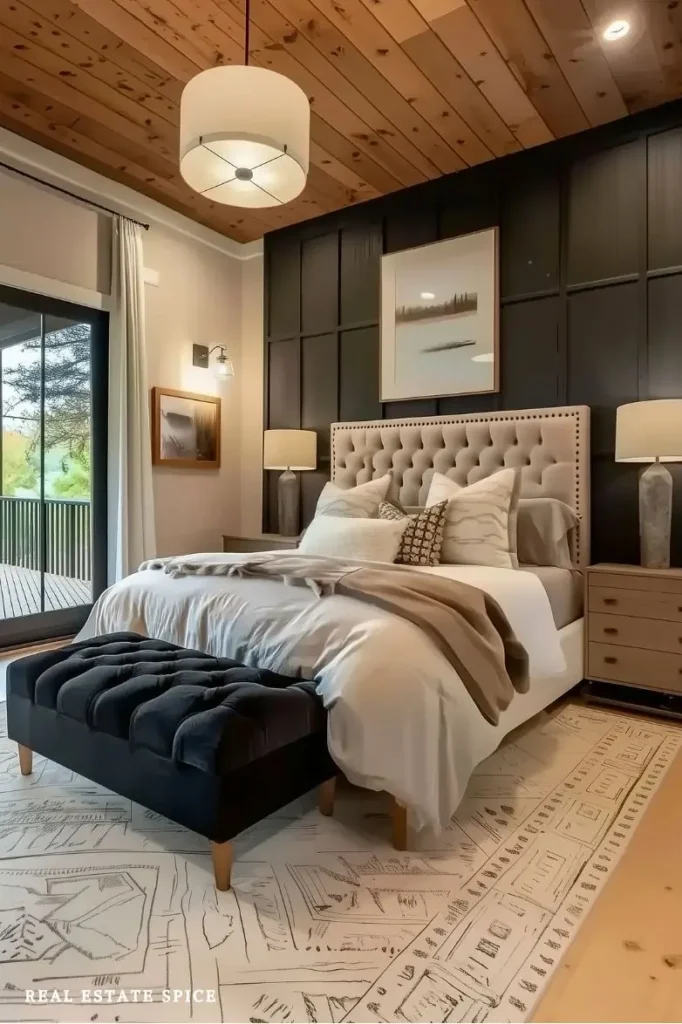
The bedroom rule of 3 furniture formula is a simple way to make bedroom furniture feel more pulled together without choosing the largest set in the store.
You focus on the three furniture decisions that carry the most visual and practical weight: the bed, the nightstands, and the dresser or storage piece.
That may sound basic at first, but this is where many bedroom furniture ideas succeed or fall apart.
The bed controls the room’s footprint and overall direction.
Nightstands support the way you use the bed every day.
A dresser, chest of drawers, wardrobe, or storage piece keeps the room functional enough to stay calm instead of becoming a laundry chair habitat.
We all know the chair.
It has seen things.
This framework helps when your bedroom furniture feels mismatched, bulky, too small, too large, overly coordinated, unfinished, or not useful enough.
It also helps when you’re looking at bedroom furniture sets, modern bedroom sets, or a white wood bedroom set.
Maybe you’re comparing oak bedroom furniture, black bedroom furniture, or white bedroom furniture.
Or maybe you found something in a bedroom furniture sale and you’re trying to decide what actually belongs in your room.
Get My Free eBook
“100 Easy Ways To Refresh Any Room All Year Round”
Why These Three Furniture Pieces Shape the Whole Room

A bedroom usually doesn’t need every possible piece of furniture.
It needs the right pieces in the right scale.
That’s the part people don’t always notice until the room feels crowded, empty, or hard to use.
The bed is usually the largest item in the bedroom, so it sets the footprint.
Nightstands tell you whether the bed area feels balanced and functional.
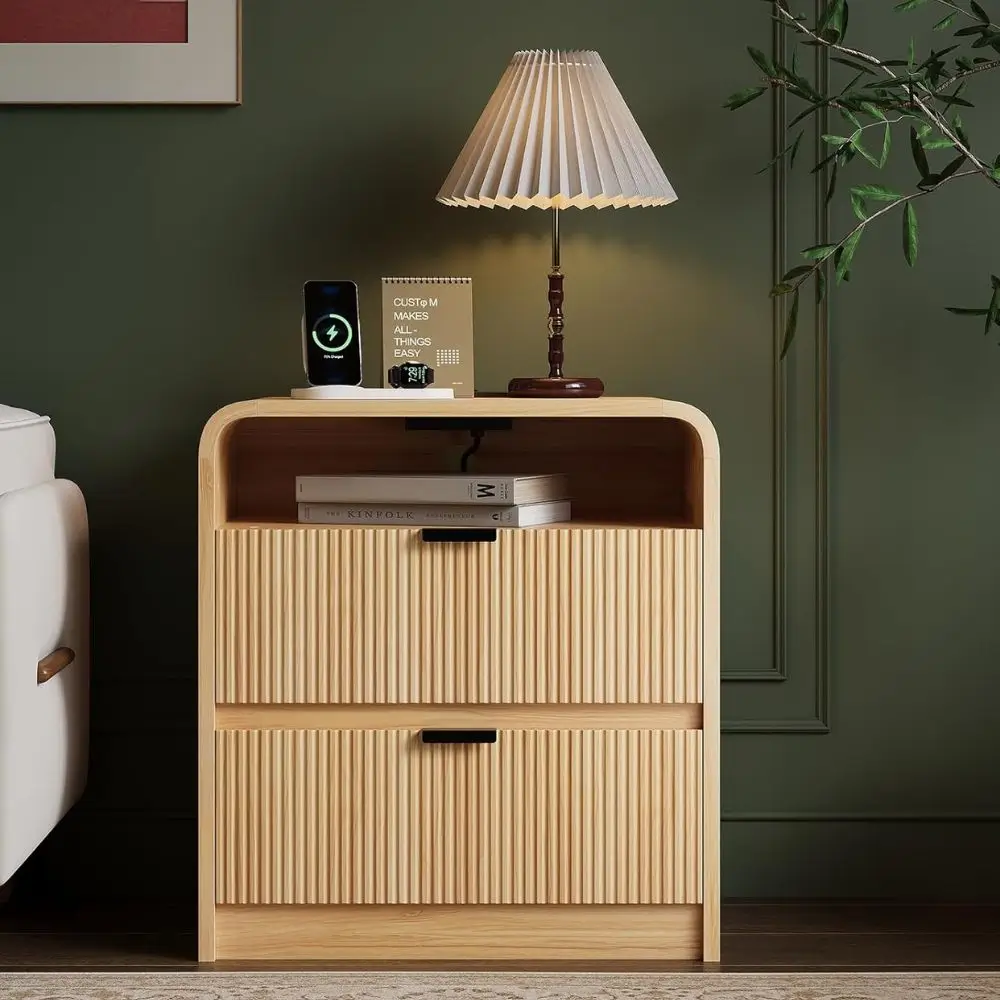
The dresser or storage piece decides whether real life can be tucked away neatly or whether clothes, linens, and accessories keep spilling into the room.
When these three pieces work together, the whole bedroom starts to feel more balanced, more usable, and much less random.
Bedding looks better on a bed that fits, and lighting feels more polished when the furniture placement makes sense.
Rugs and curtains also start to look more finished because the room finally has a better foundation.
When you’re ready to plan more than the furniture, use this luxury bedroom design formula to connect the backdrop, main pieces, and comfort across the whole room.
Priority 1: The Bed

The bed is the furniture piece that controls the room
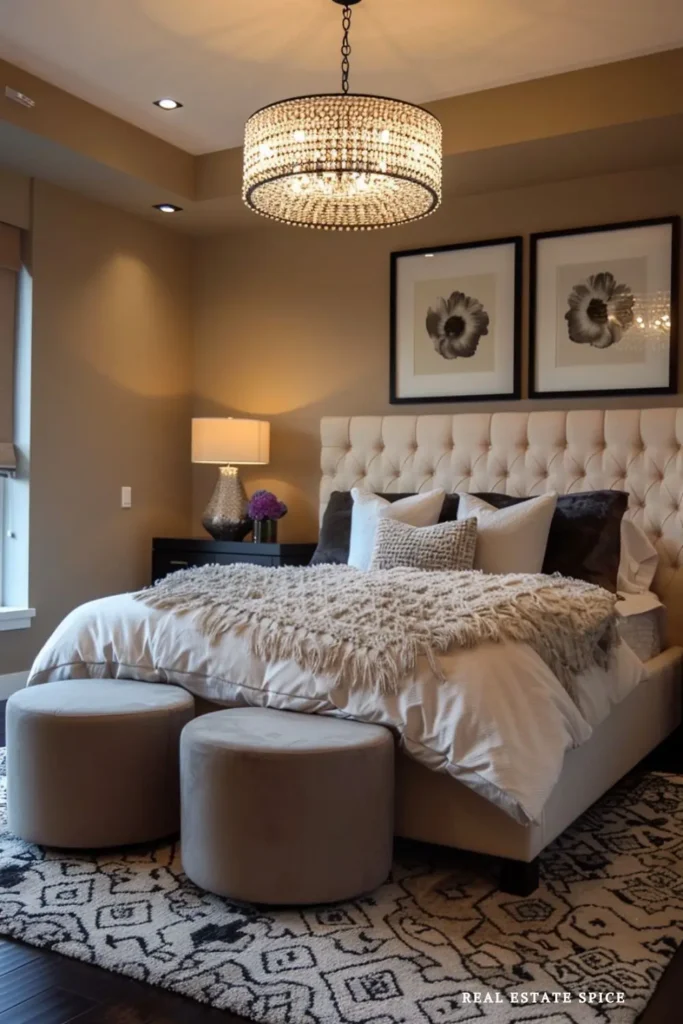
The bed is the first furniture choice to get right because it shapes so much of the bedroom layout.
It affects walking paths, nightstand size, rug placement, dresser placement, storage options, and whether the whole room feels open or cramped.
A bed can be beautiful and still be wrong for the room.
One huge upholstered frame may look amazing in a product photo, but swallow a small bedroom.
Low platform beds can feel sleek, but they may look undersized in a tall room with high ceilings.
Tall headboards add presence, while delicate metal bed frames feel lighter in a tight space.

Before choosing a new bed, map the bed area first.
Use painter’s tape, cardboard, or boxes to map where the bed, nightstands, and dresser will go.
It’s much easier to adjust the layout before the bed arrives and takes over the room.
Choose the bed size for the actual room

King beds are wonderful when the room can support them.
A king bed that leaves no room for nightstands, dresser drawers, or walking space can make the bedroom feel less comfortable overall.
King bedroom furniture sets often look grand online because they’re photographed in large rooms.
Your real room may have closet doors, windows, vents, and traffic paths that need to be respected.
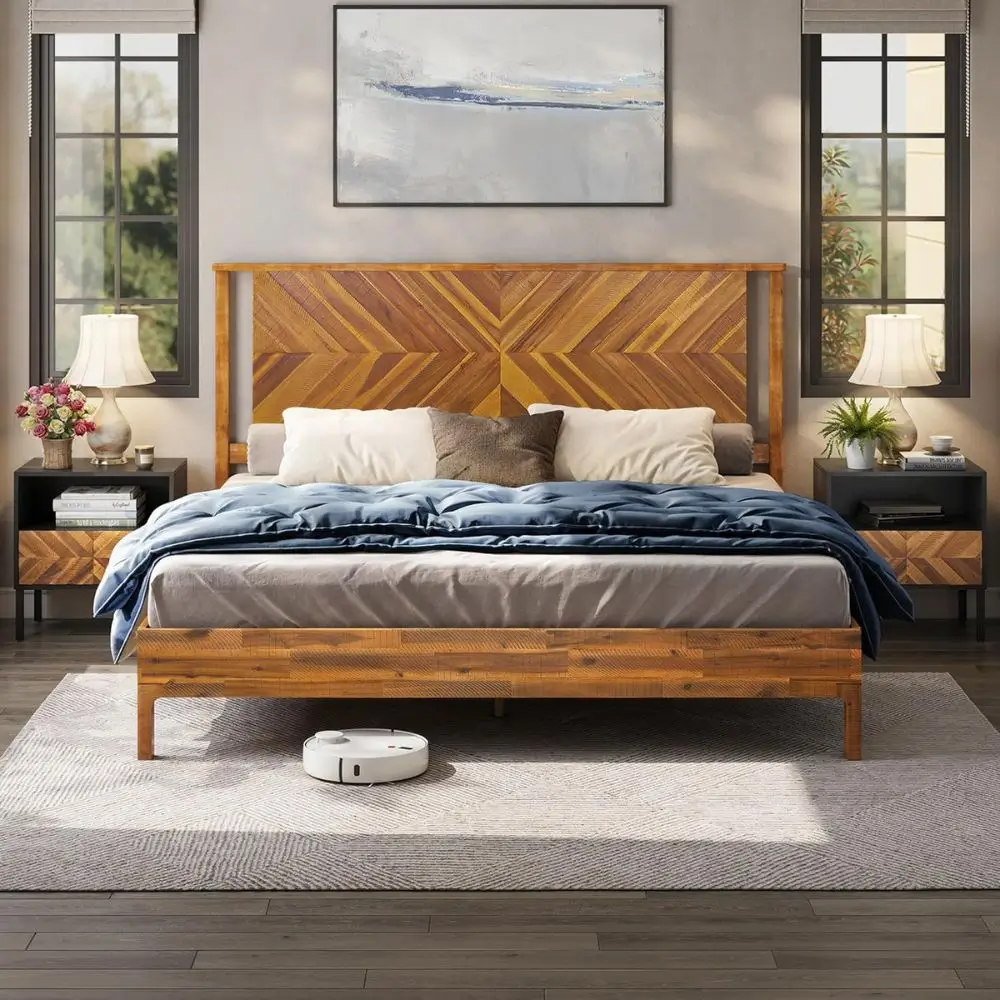
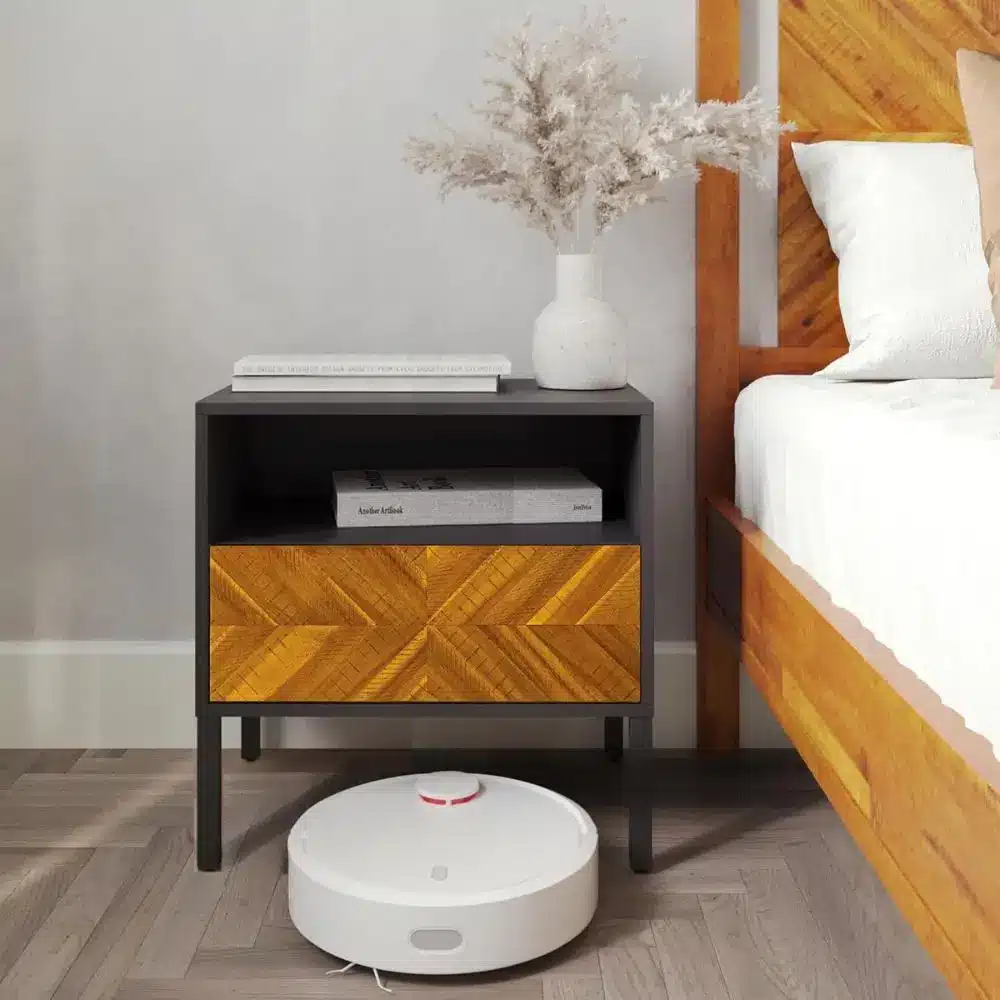
Queen beds are often the better choice in small or medium rooms.
A queen bed and mattress can still feel generous while leaving more room for storage and movement.
If you’re choosing between a king and a queen, think about the room as a whole, not just the mattress.
Here’s the traffic path check.
Make sure you can walk around the bed, open closet doors, access dresser drawers, and enter the room without squeezing sideways.
If every morning begins with a furniture obstacle course, the bed may be too large or placed in the wrong spot.
Pick a bed frame that matches the room’s scale
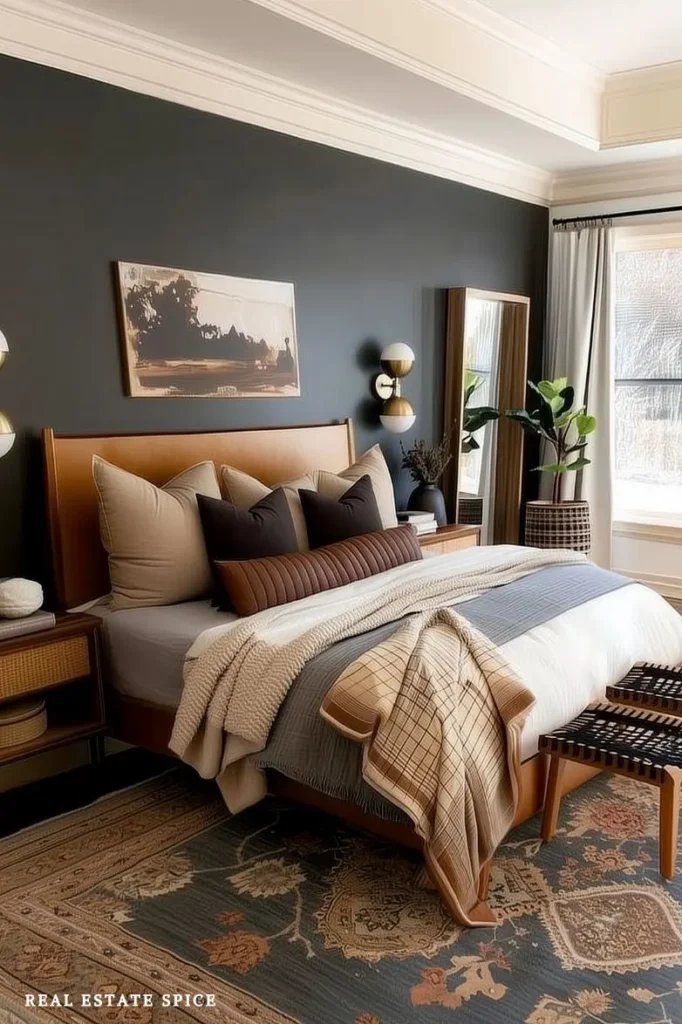
Bed frames come with visual weight, and visual weight matters.
Upholstered bed frames feel soft and substantial.
Wood bed frames can look warm, classic, earthy, or modern depending on the finish. Platform beds often feel clean and low.
Storage beds add function but can appear heavier because of the built-in drawers or base.
Affordable bed frames can be a great choice if the proportions are right.
Price doesn’t matter nearly as much as scale, finish, and comfort in the room.
A black bed frame can look fantastic with lighter nightstands, while an oak bed frame may feel grounded with white bedding and brass lamps.
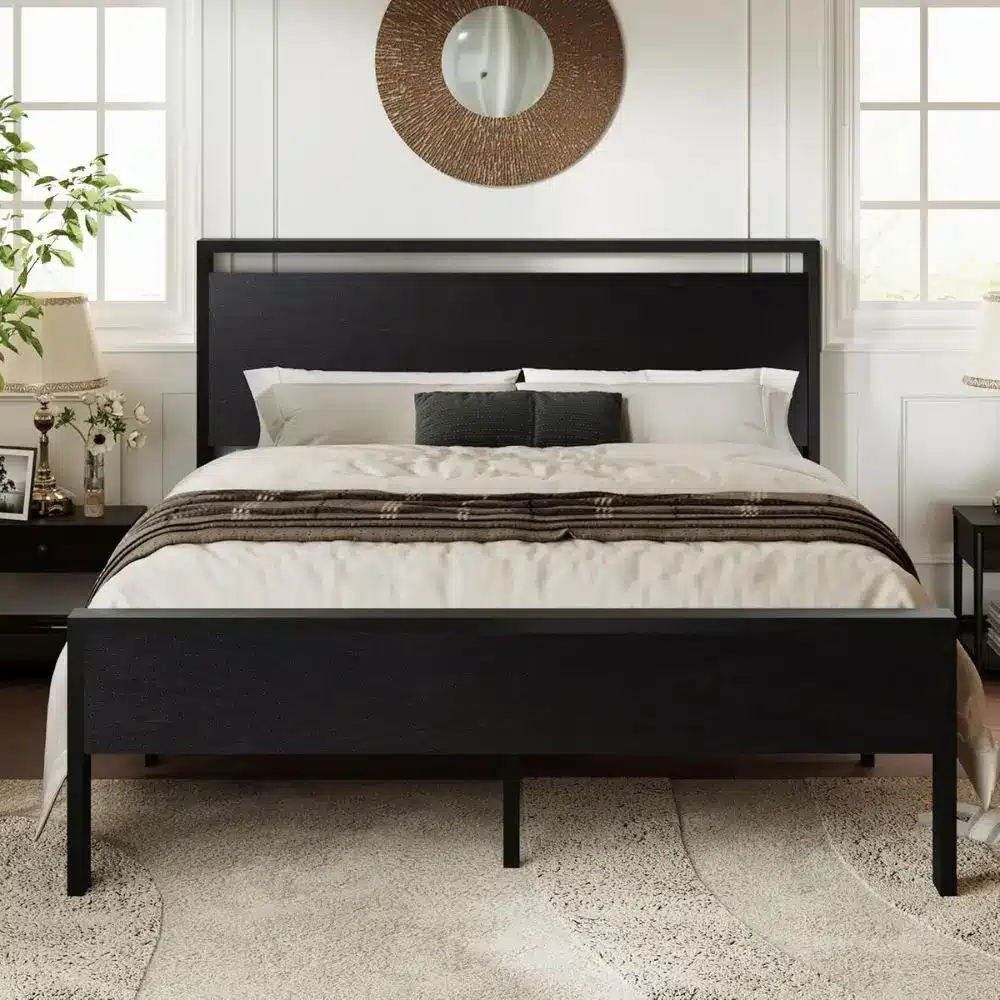
Headboards matter as furniture too.
A tall upholstered headboard can make a room feel more finished, while a low wood headboard may suit a relaxed modern bedroom.
In a small bedroom, a slimmer headboard often works better than a heavily padded frame.
Use the visual weight balance
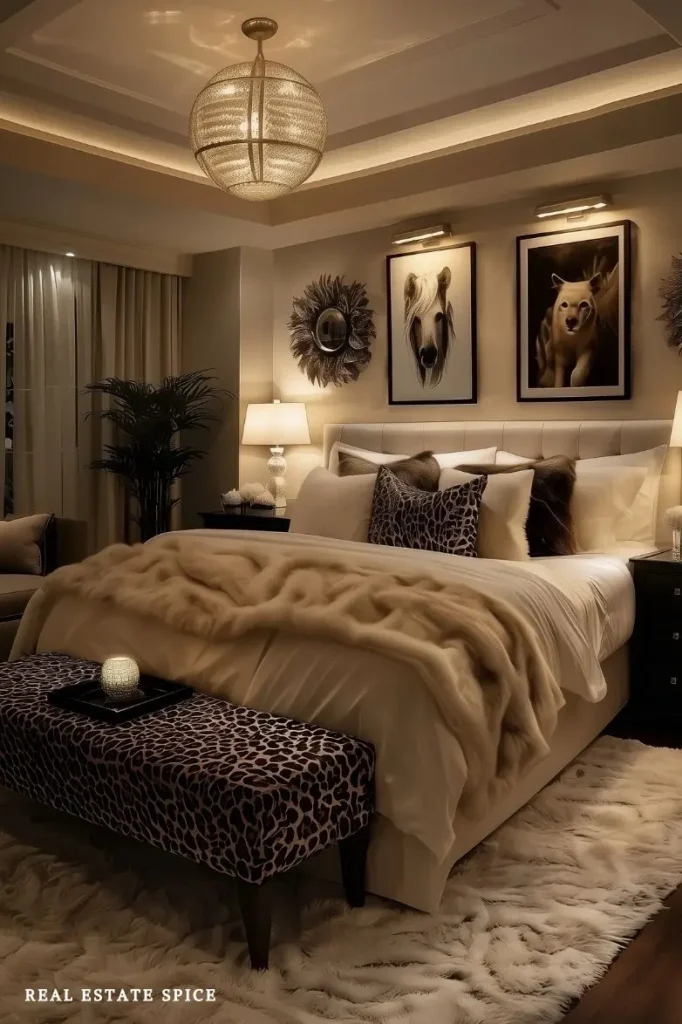
The visual weight balance is one of the most useful bedroom furniture ideas.
If the bed is heavy and dark, balance it with lighter nightstands or a softer dresser finish.
When the bed is very simple, the nightstands or dresser can carry more character.
For example, a black bed frame can look beautiful with wood nightstands and a white dresser.
A large upholstered bed may pair well with slimmer bedside tables.
If you have a very simple platform bed, a textured dresser or oak dresser can give the arrangement more interest.
Priority 2: The Nightstands
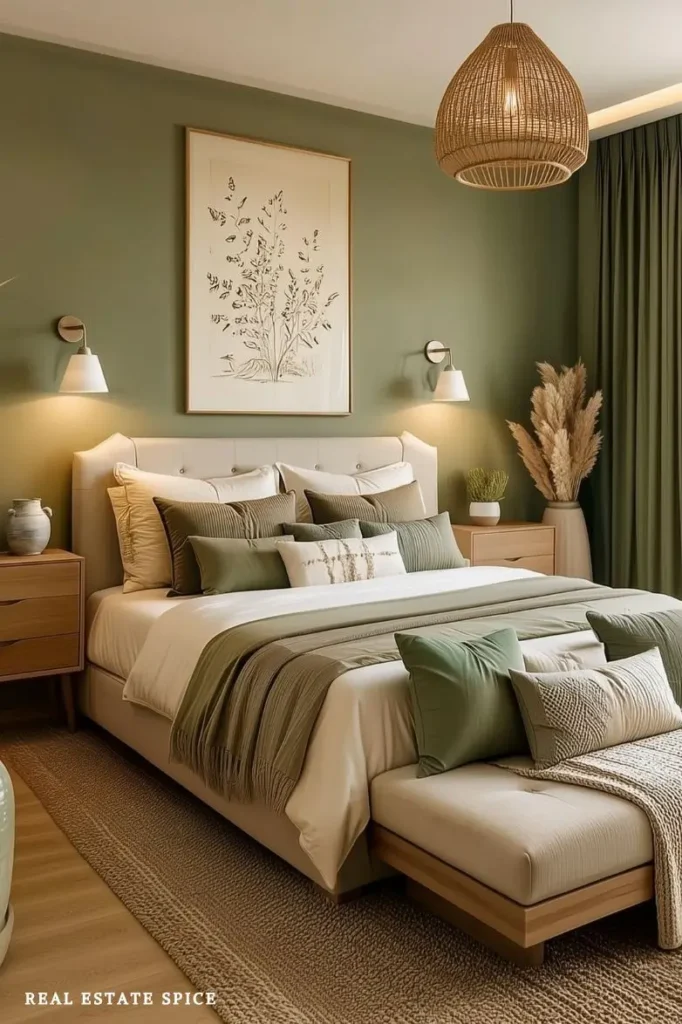
Nightstands are small, but they matter a lot
Nightstands can seem like minor furniture, but they have a big effect on how finished the room feels.
They frame the bed, support the things you use every night, and help the bedroom furniture arrangement feel balanced.
A nightstand that’s too short can make the bed look awkwardly tall.
One that’s too wide can crowd the mattress and squeeze the walkway.
Very tiny bedside tables may look sweet in theory, but they still need to work for real life.
If they can’t hold a lamp, book, water glass, charger, and the small things you actually reach for, they’ll probably frustrate you fast.
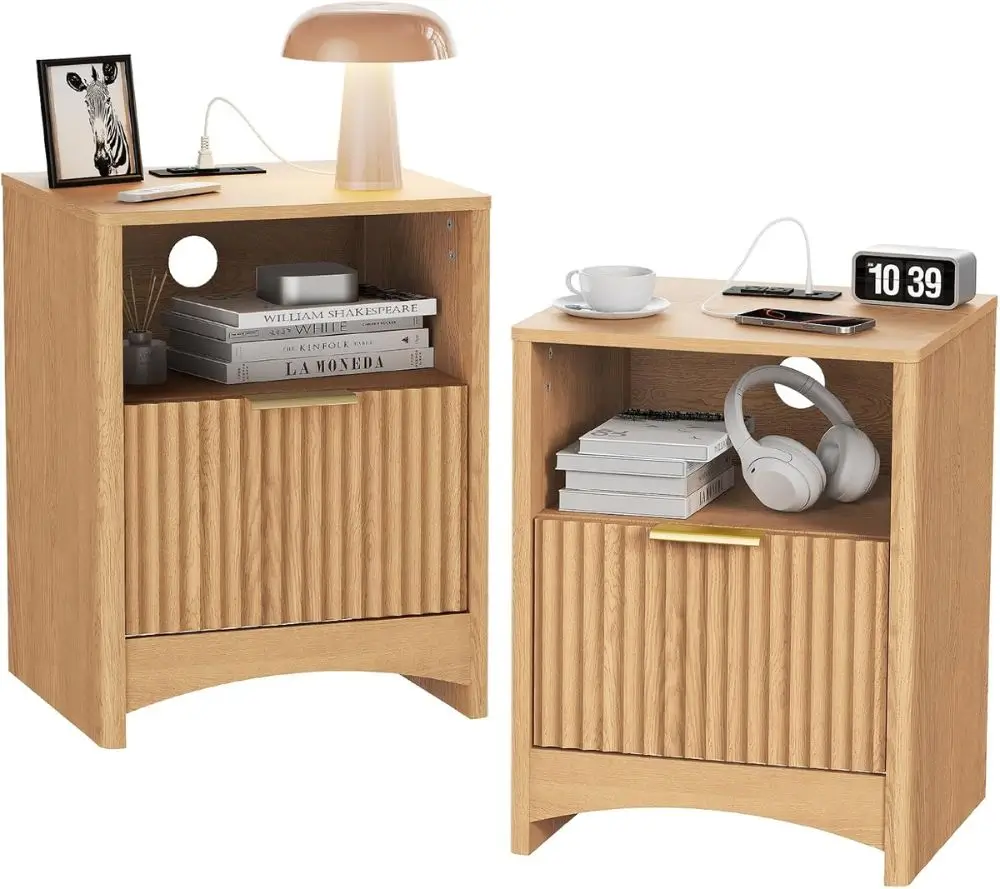
This is where the bedside height check helps.
Make sure the nightstand height works with the mattress height.
Reaching for a lamp, book, or glass of water shouldn’t feel awkward.
Ideally, the top of the nightstand should be close to the top of the mattress, give or take a little, depending on the bed and lamp.
Choose the width based on the bed and wall space
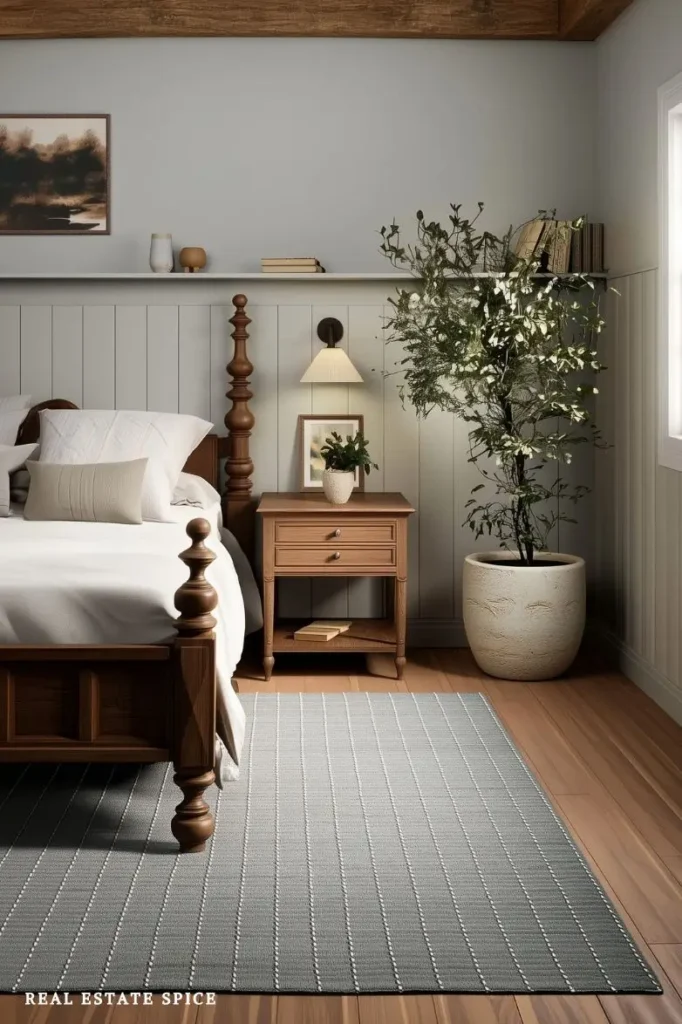
Nightstand width should relate to the bed size and the room itself.
King beds usually need wider nightstands to look balanced, while small bedrooms may need narrower bedside tables or wall-mounted options.
Wide nightstands can feel generous in a primary bedroom, but they need enough space around them to breathe.
Nightstands with drawers are practical because they hide bedside clutter.
Open-shelf nightstands can feel lighter, but they need baskets or neat storage if you don’t want the shelf to become a visible pile.
Wood nightstands bring warmth.
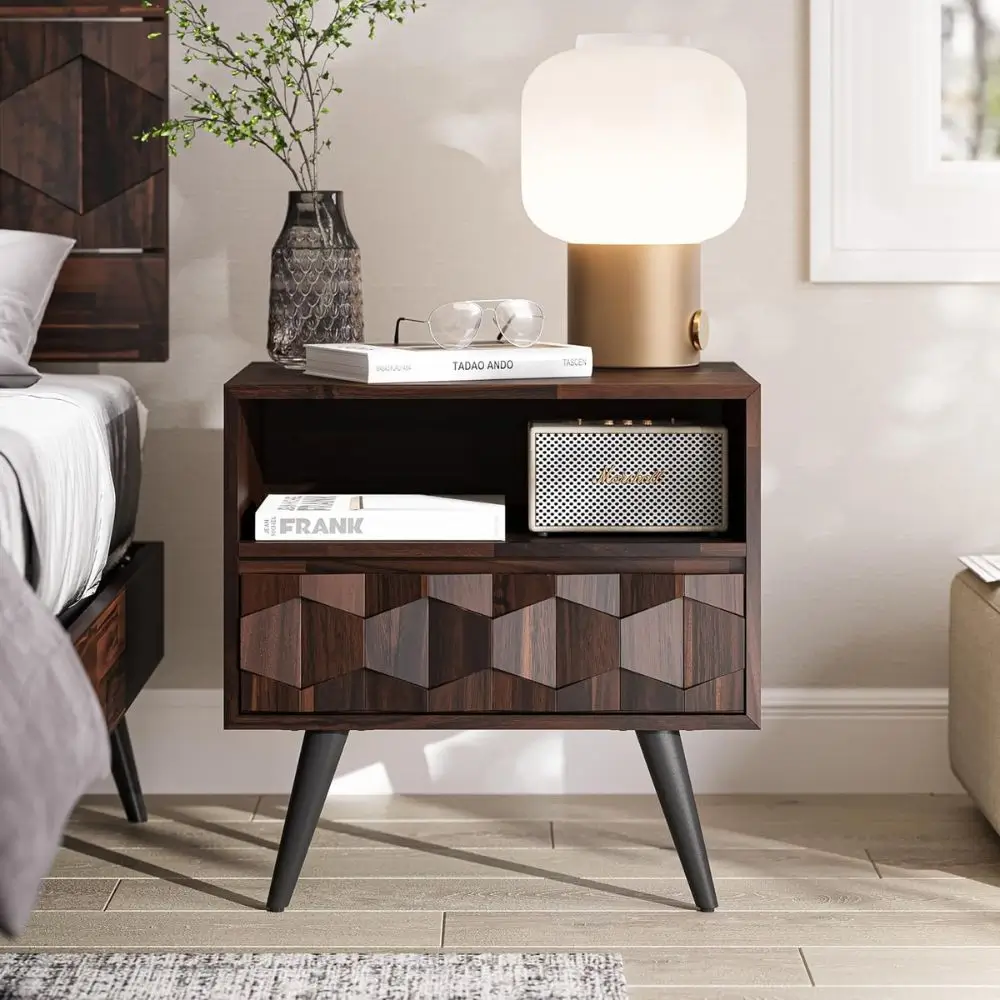
Black nightstands add contrast.
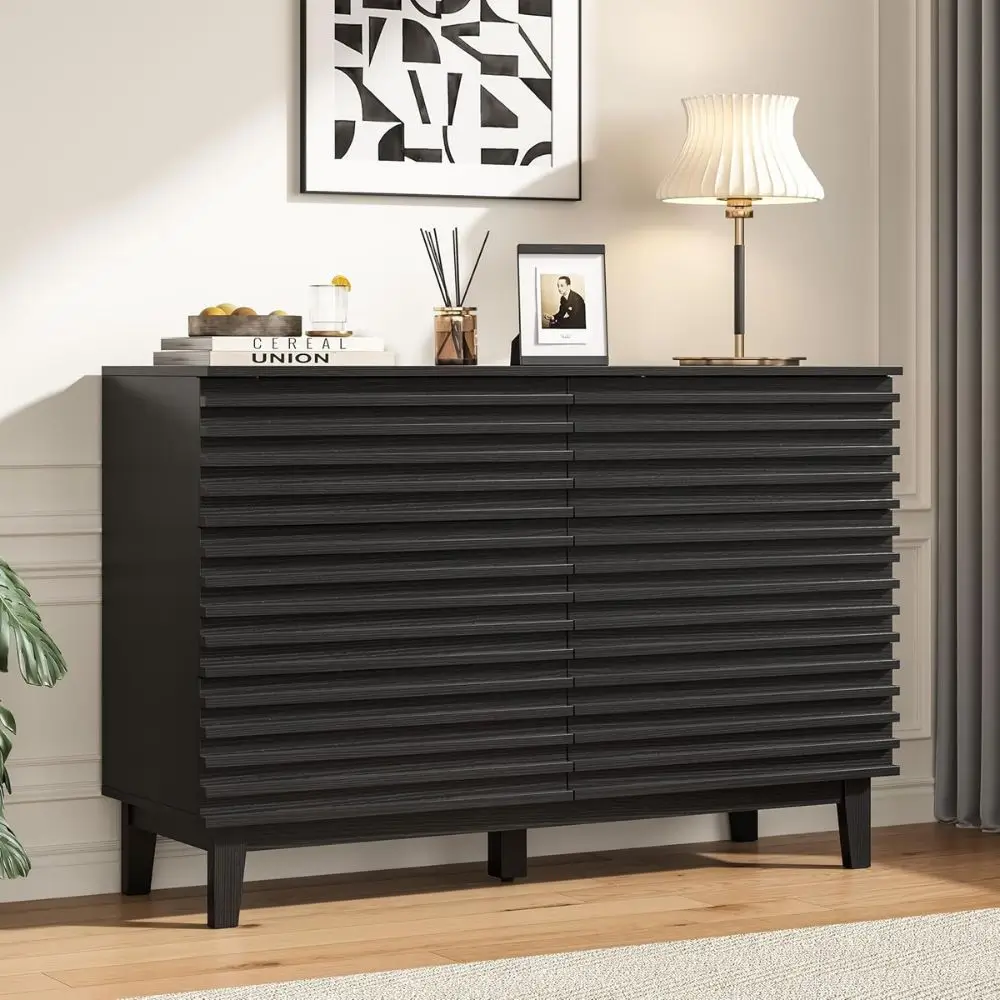
White nightstands can feel fresh and lighter, especially near darker beds or walls.
Think about what you need to store before choosing the style.
If you keep books, glasses, chargers, tissues, hand cream, medicine, and water beside the bed, a tiny table with no storage may not be enough.
Matching nightstands versus different nightstands
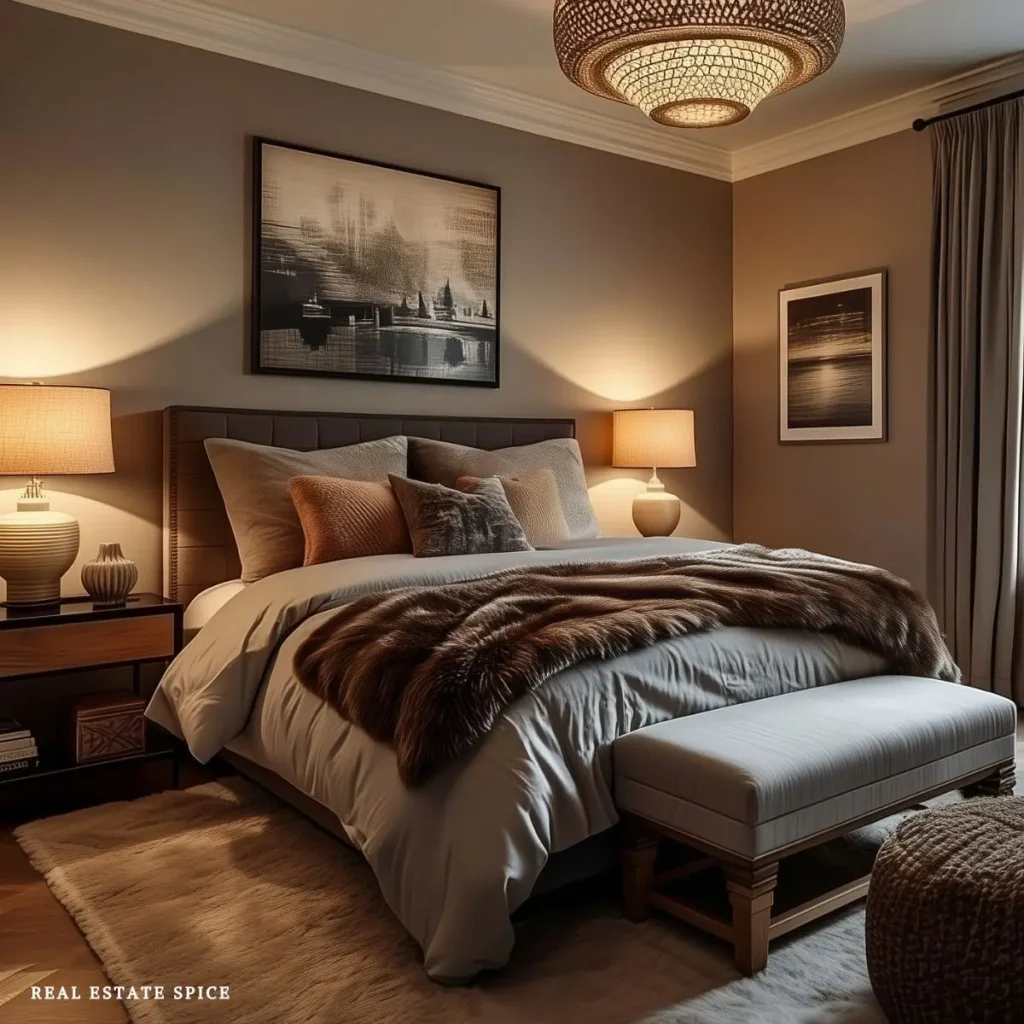
Matching nightstands work beautifully when you want symmetry and a simpler look.
They can quickly make the bed area feel polished, especially in master bedroom furniture layouts where the wall is wide enough for two balanced pieces.
Different nightstands can also work, but they need a connection.
They might share a similar height, finish, shape, or hardware style.
One nightstand could have drawers while the other is an open table, as long as they feel related.
A pair of mismatched nightstands often looks more intentional when the lamps match or when the same finish appears elsewhere in the room.
Use the finish bridge when mixing pieces.
Repeat one finish or material at least twice, such as oak, black metal, brass, painted white wood, woven texture, or upholstery.
If one nightstand is wood and the other is painted, maybe both use brass pulls.
Don’t choose nightstands just for looks
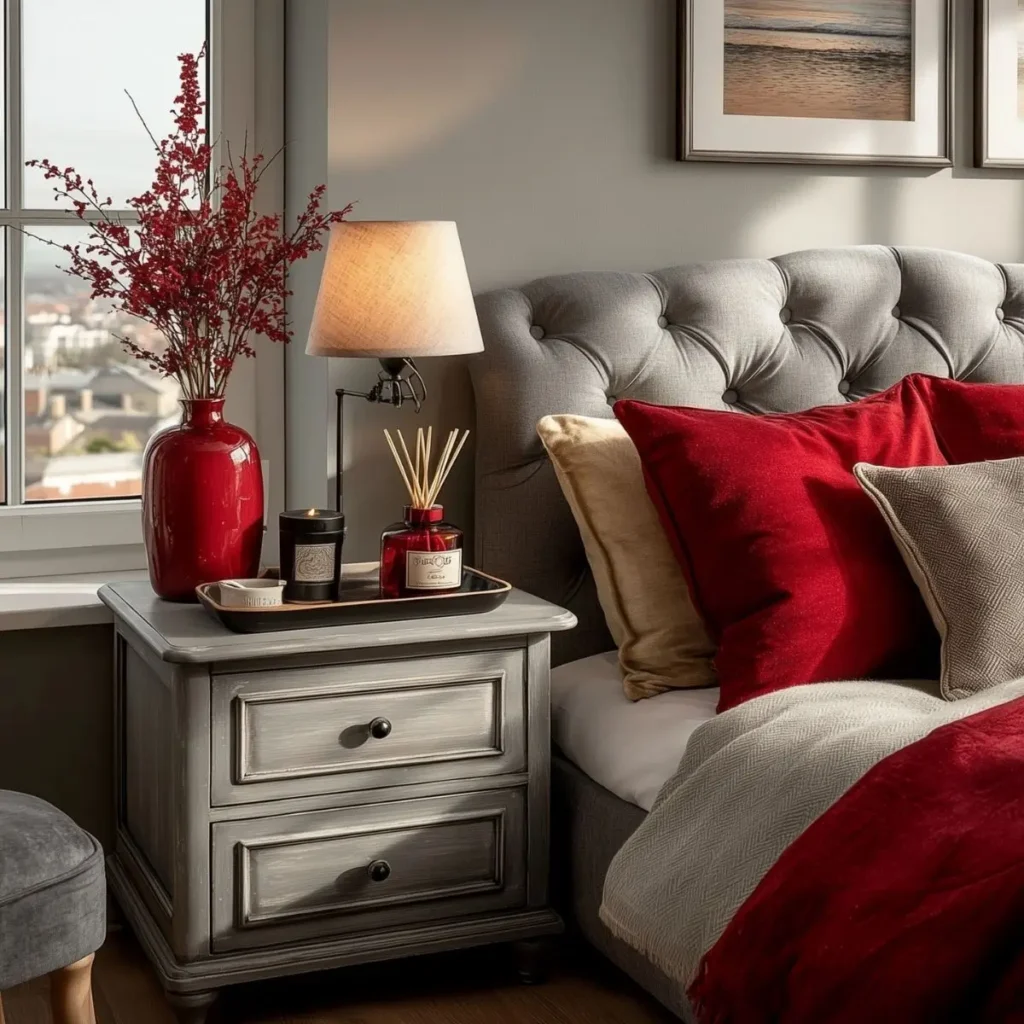
A nightstand can look perfect elsewhere and still be frustrating beside your bed.
Before buying, think through the everyday items that need a landing place.
Books, glasses, chargers, water, tissues, hand cream, lip balm, a phone, and maybe a small tray all require space or storage.
If you use a CPAP machine, have lots of cords, or like to keep several books nearby, choose a nightstand with drawers or a cabinet.
When you barely keep anything beside the bed, a slimmer table may be enough.
Priority 3: The Dresser or Storage Piece
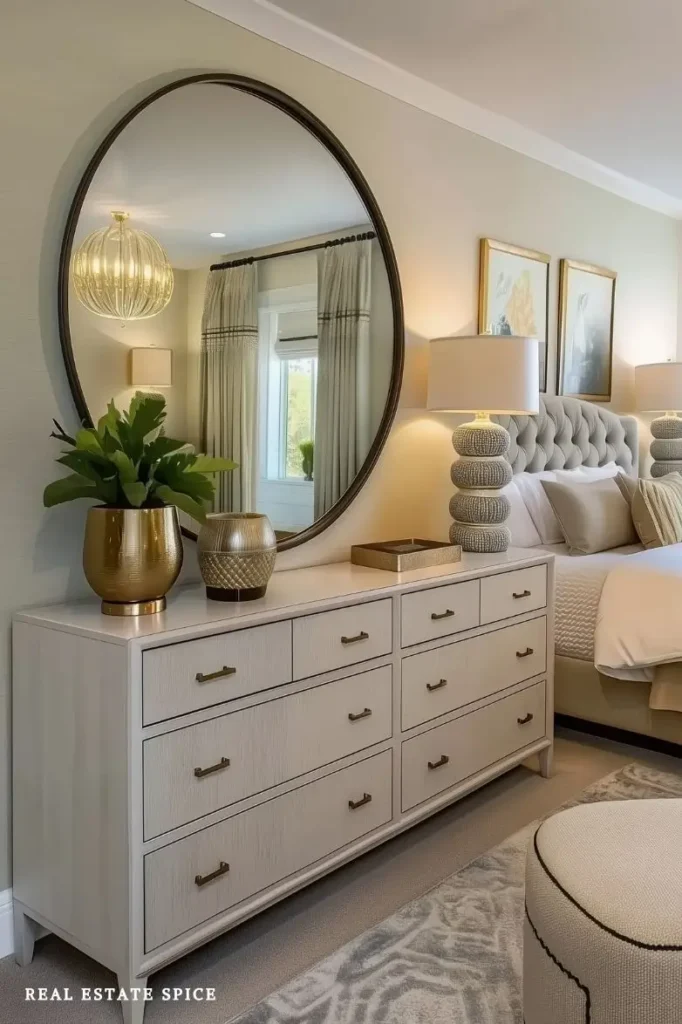
Storage is what keeps the bedroom livable
The dresser or storage piece is the third furniture priority because a beautiful bedroom won’t feel finished if the storage doesn’t solve the actual problem.
If clothes, linens, or accessories are always out, the room may not need more decor.
It may need a better dresser, bedroom chest of drawers, wardrobe, storage bed, or under-bed storage plan.
This is the storage honesty test.
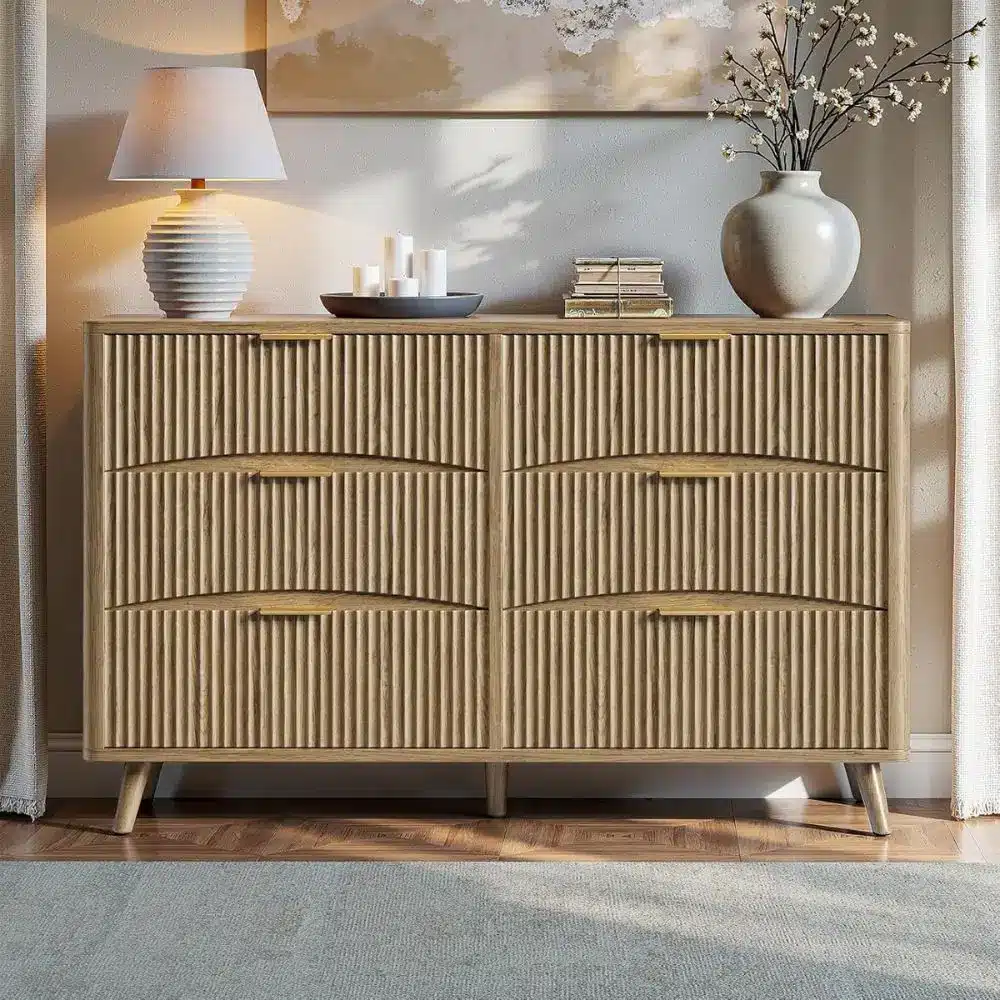
Look at what ends up on chairs, benches, the floor, or the top of the dresser.
Those items are telling you something.
If sweaters never fit, you may need deeper drawers.
When accessories pile up, drawer organizers or baskets may help.
If hanging clothes overwhelm the closet, a wardrobe or armoire might be the missing piece.
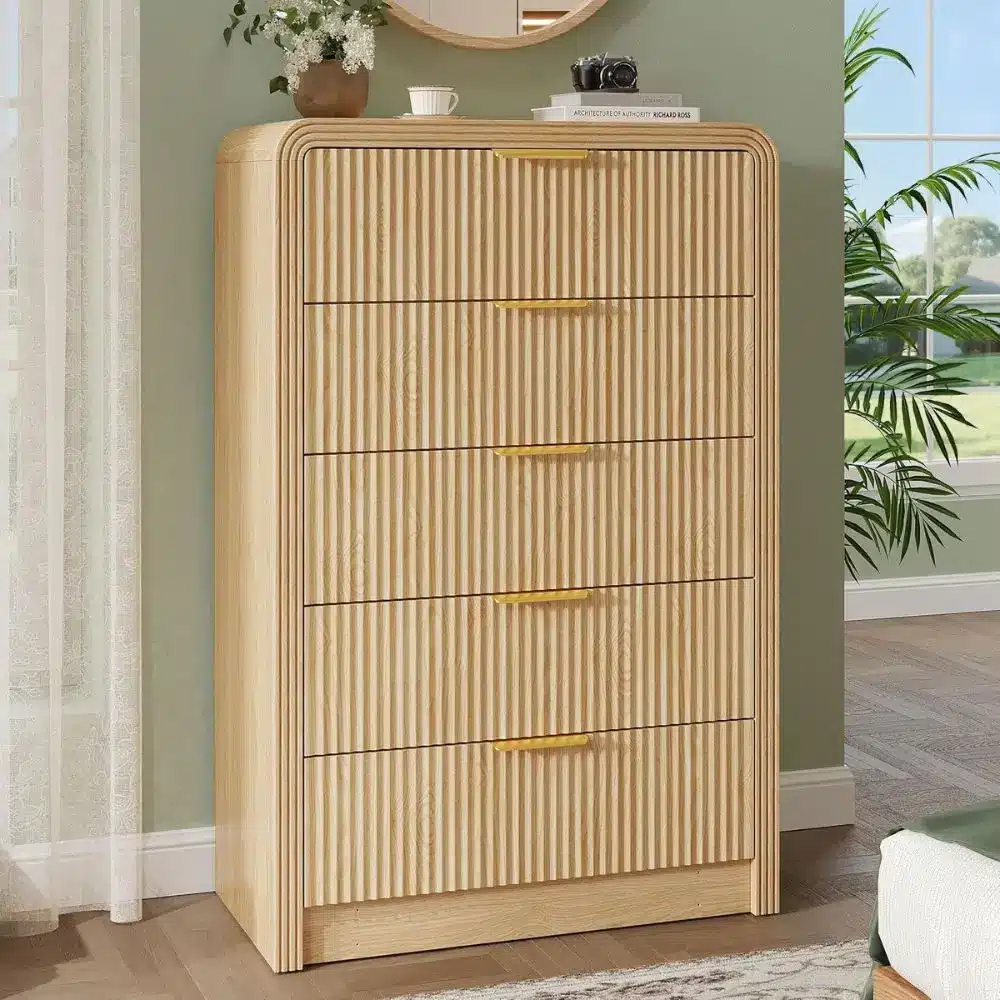
Bedroom storage ideas should begin with what you actually own.
A dresser chosen only because it looks good may not have the drawer capacity you need.
If floor space is tight, see how to choose a dresser for a small bedroom before you bring home something that looks petite online but arrives with the personality of a wardrobe.
Choose between a dresser, chest of drawers, wardrobe, or fitted storage
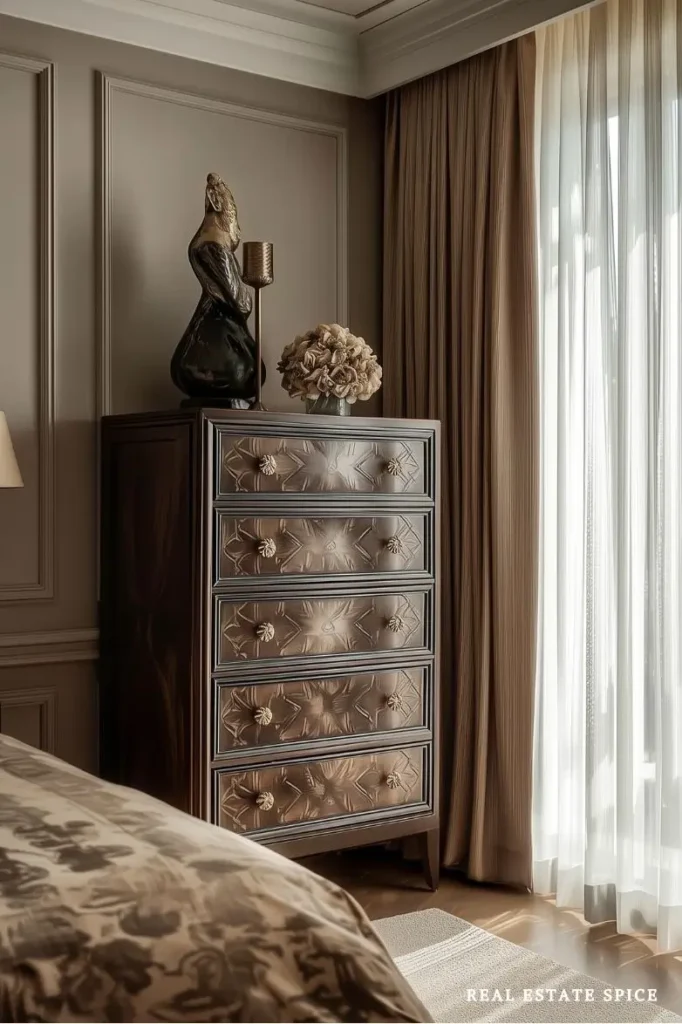
A wide dresser works well when you have wall space and need a generous surface for a mirror, lamp, tray, or daily items.
Low dressers can help a room feel wider and more relaxed.
Tall dressers or a bedroom chest of drawers are better when floor space is limited because they use vertical space rather than spreading across the wall.
Modern wardrobes and armoires are helpful when closet space is limited.
Short wardrobes can work in rooms with awkward ceiling angles.
Built-in or custom-fit bedroom furniture means pieces designed to fit your exact room.
This can be a strong option for sloped ceilings, alcoves, or small bedrooms with limited wall space.
Storage benches add function at the foot of the bed, especially for extra bedding, seasonal blankets, or out-of-sight bedroom storage.
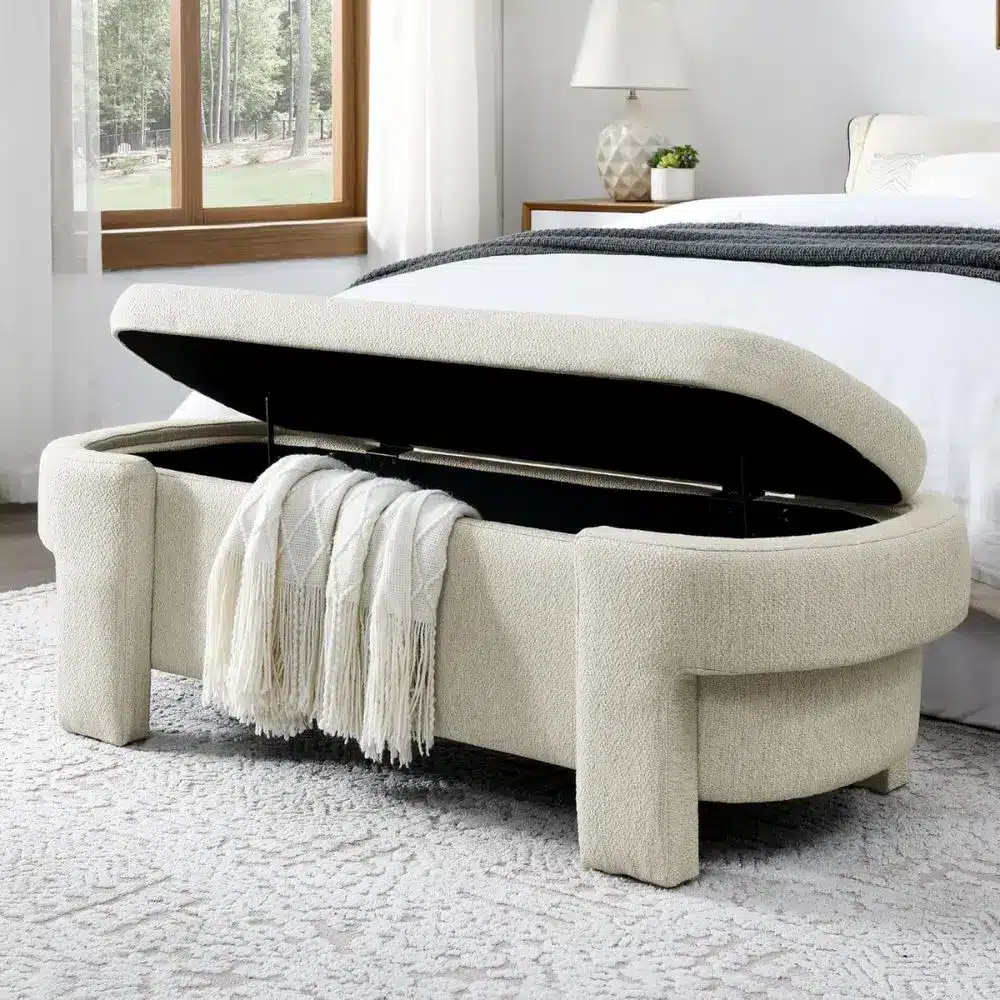
Under-bed storage can work too, particularly with storage beds or simple bins that fit neatly beneath the frame.
Think about dresser placement and walking space
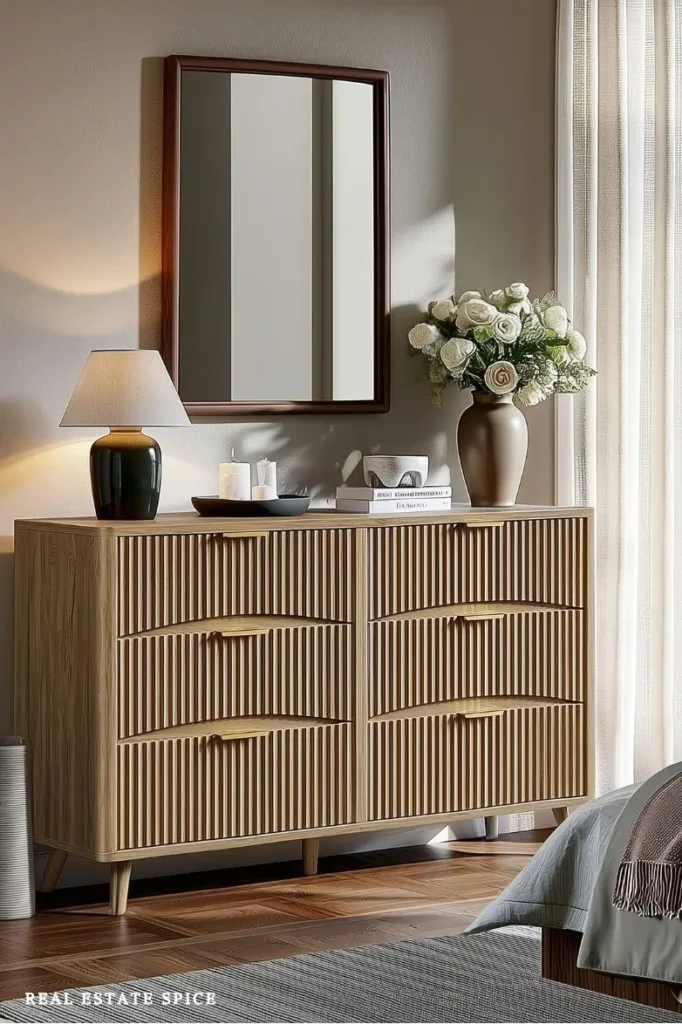
A dresser isn’t helpful if you can’t open the drawers comfortably.
This sounds obvious until you’re standing in a room where the drawer hits the bed every morning and everybody has decided to pretend that’s normal.
Use the traffic path check here, too.
Make sure you can open dresser drawers, walk past the bed, reach the closet, and move around the bedroom door.
A wide dresser may be beautiful, but if it blocks movement, a tall dresser may be smarter.
Mirror placement matters too.
A mirror above a dresser can make the storage wall feel more finished, but the dresser surface should still be useful.
That’s the dresser wall moment: treat the dresser as useful storage first, then add a mirror, lamp, tray, or art as space allows.
Furniture Terms Matter Less Than How the Piece Works for Your Room
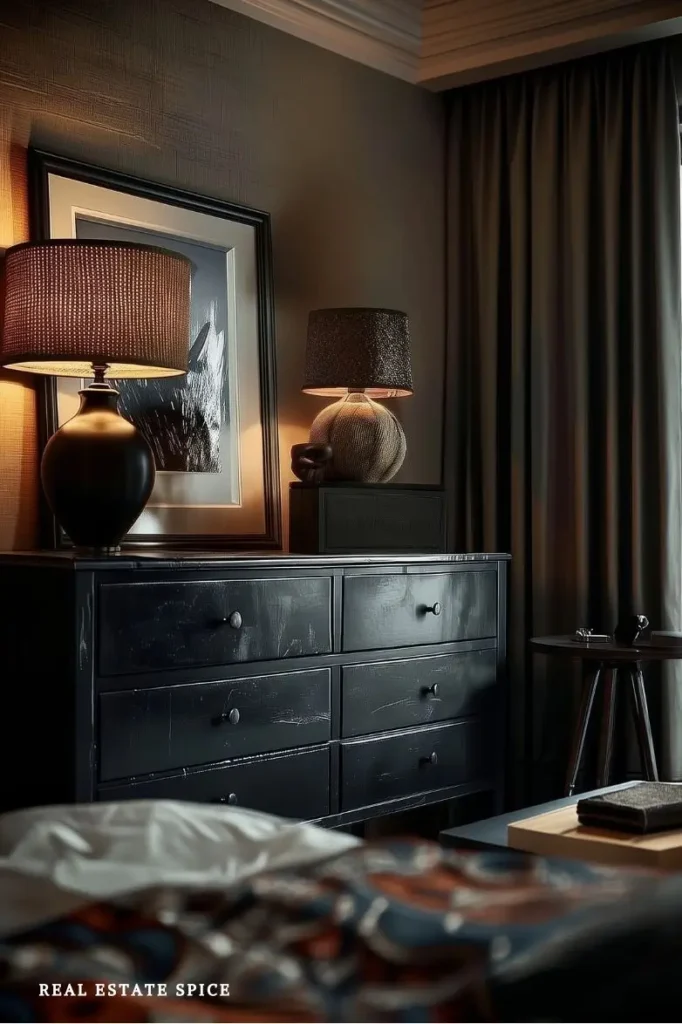
Some bedroom furniture terms are strangely specific, and “mens dresser” is definitely one of them.
What most people mean is a dresser with strong storage, clean lines, and enough drawer space for everyday clothes without a lot of decorative details.
That can be a black dresser, oak dresser, white dresser, or simple wood dresser depending on the room.
Focus less on the label and more on the function.
A good dresser should fit the bedroom layout, hold what it needs to hold, and connect visually to the bed and nightstands.
Do You Need a Bedroom Furniture Set?
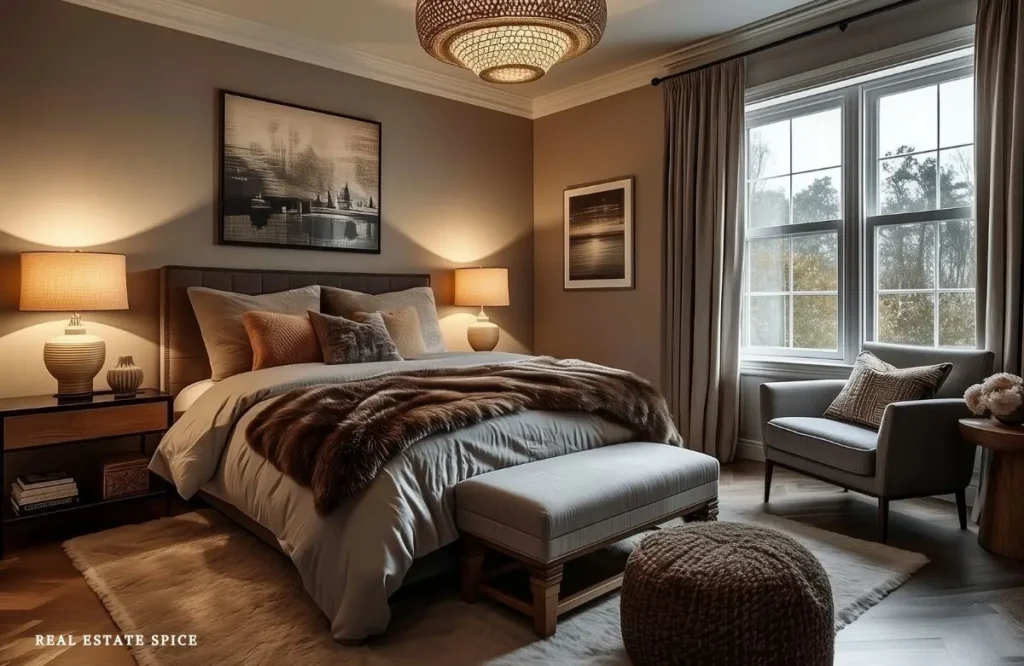
When a set is helpful
Bedroom furniture sets can be useful when you want a simple, coordinated starting point.
If you’re starting from nothing, a furniture set gives you a bed, nightstands, dresser, and sometimes a mirror that all relate.
Modern bedroom sets can be especially helpful if you want a cleaner look quickly.
Use this modern bedroom design formula to see which pieces will look good together and make daily life easier.
White bedroom furniture can make a room feel lighter.
Wood bedroom furniture often adds warmth.
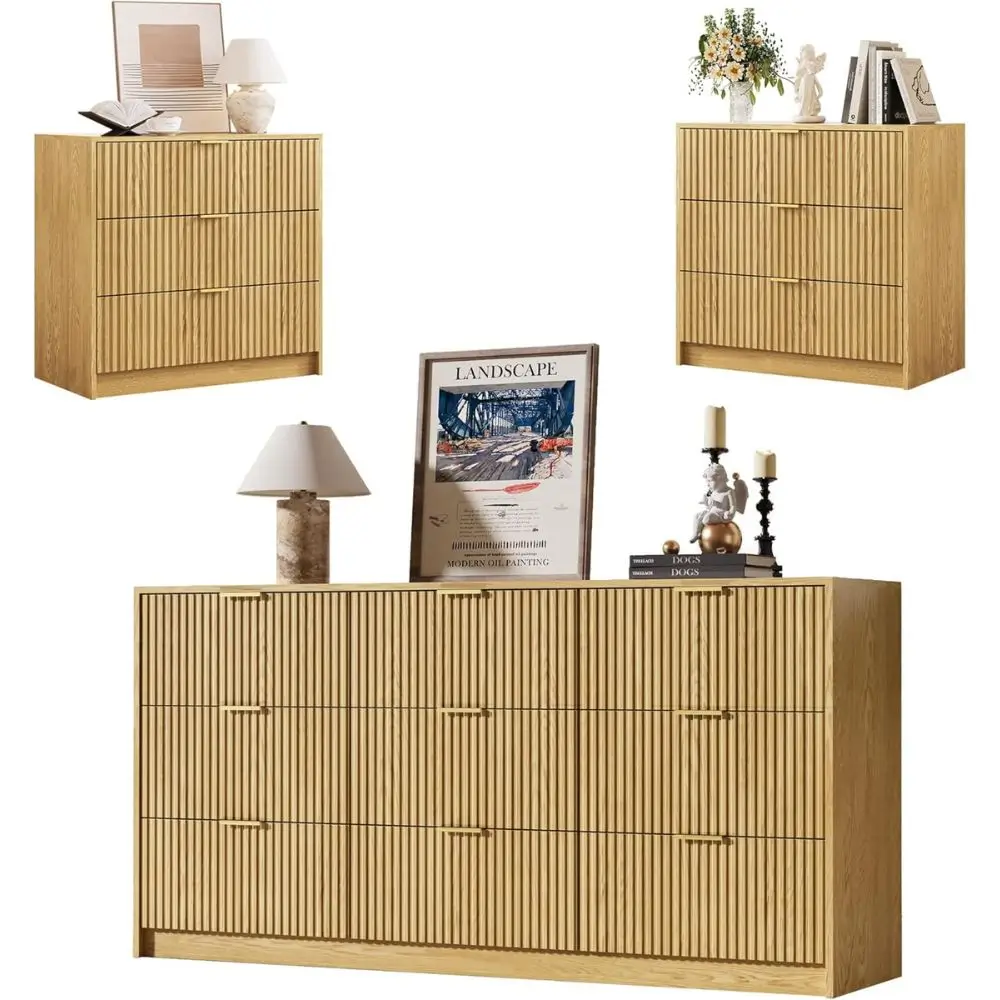
Black bedroom furniture can bring contrast and structure.
King bedroom furniture sets can work beautifully in larger primary bedrooms, especially if you want the bed, nightstands, and dresser to feel connected from the start.
A white wood bedroom set can suit a soft neutral bedroom.
If you’re shopping bedroom furniture stores or watching for a bedroom furniture sets sale, measure first so the discount doesn’t decide the layout for you.
When a set can feel too flat

A full matching furniture set can sometimes make a bedroom feel a little too predictable.
Everything matches, but nothing has much personality.
The room can start looking like a showroom display instead of a bedroom that belongs to you.
That’s where the set-breaking move helps.
If you already own a matching bedroom furniture set, add one contrasting piece, such as a different lamp, mirror, bench, rug, or nightstand in a different finish.
You don’t have to replace a set to make it feel personal.
You just need contrast and texture.
My neutral bedroom design Rule of 3 can help you choose the light, medium, and deep colors around the furniture so every piece looks connected without matching.
Small Bedrooms: Choose Furniture That Saves Floor Space

Small bedroom furniture works best when the measurements are careful and the room still has space to breathe.
Start with the bed size.
A queen may be better than a king if it allows room for nightstands and a dresser.
In a very tight bedroom, a full bed may even make sense for a guest room or smaller household.
The small room swap can help.
Choose a taller chest of drawers instead of a wide dresser.
Use wall-mounted nightstands instead of bulky tables.
Consider a storage bed instead of adding extra furniture.
Add under-bed storage.
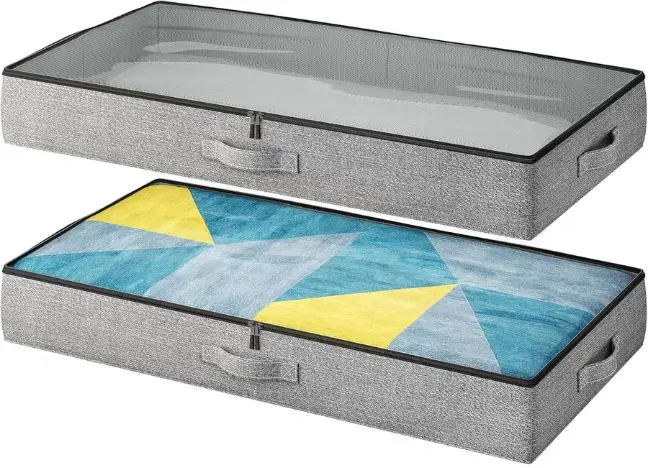
A platform bed can make the room feel simpler, but a storage bed may solve a real problem if closet space is limited.
Small bedroom layout decisions depend on walking paths.
Do you work or study in your bedroom? Consider a loft bed.

Keep the bed from blocking closet doors or dresser drawers.
Use small nightstands with drawers if possible.
Primary Bedrooms: Give the Main Pieces More Breathing Room
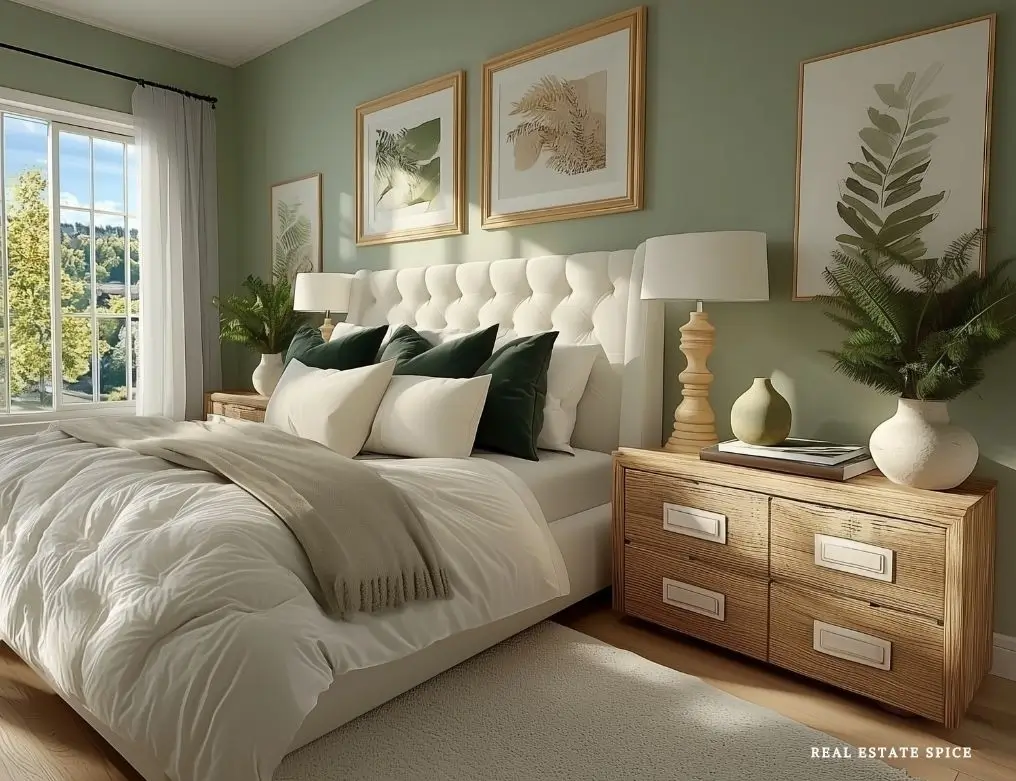
A primary bedroom can usually support larger furniture, but bigger isn’t automatically better.
Before choosing or replacing the main pieces, plan a master bedroom layout that keeps the bed, closet, bathroom, and walking paths working together.
Master bedroom furniture should feel generous without crowding the room.
A king bed may work beautifully if the room has enough space for wide nightstands, a dresser, and easy paths around everything.
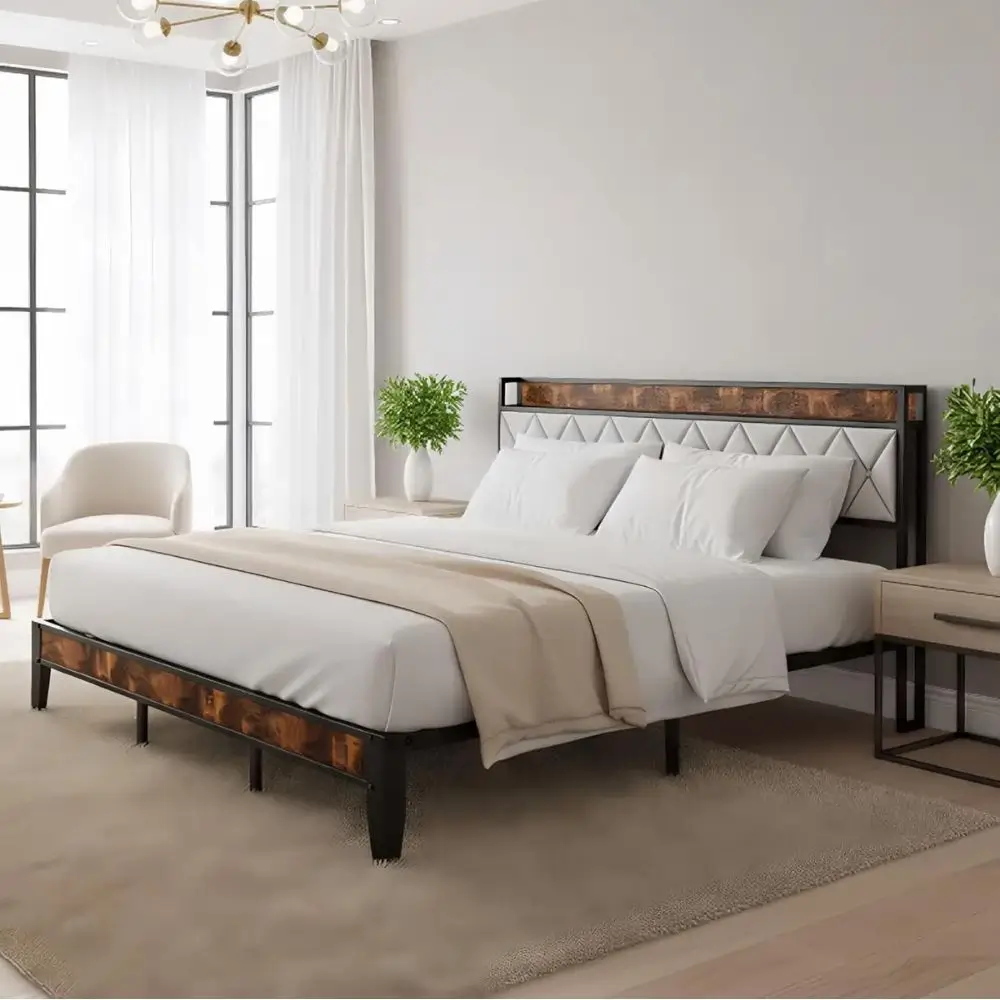
Primary bedrooms often benefit from stronger storage.
A low dresser, tall dresser, wardrobe, storage bench, or armoire can help depending on the closet situation.
If you have space for an accent chair, make sure it doesn’t become the official laundry tower.
A chair is only useful if it has a purpose and enough room around it.
Guest Bedrooms: Keep the Furniture Comfortable and Flexible
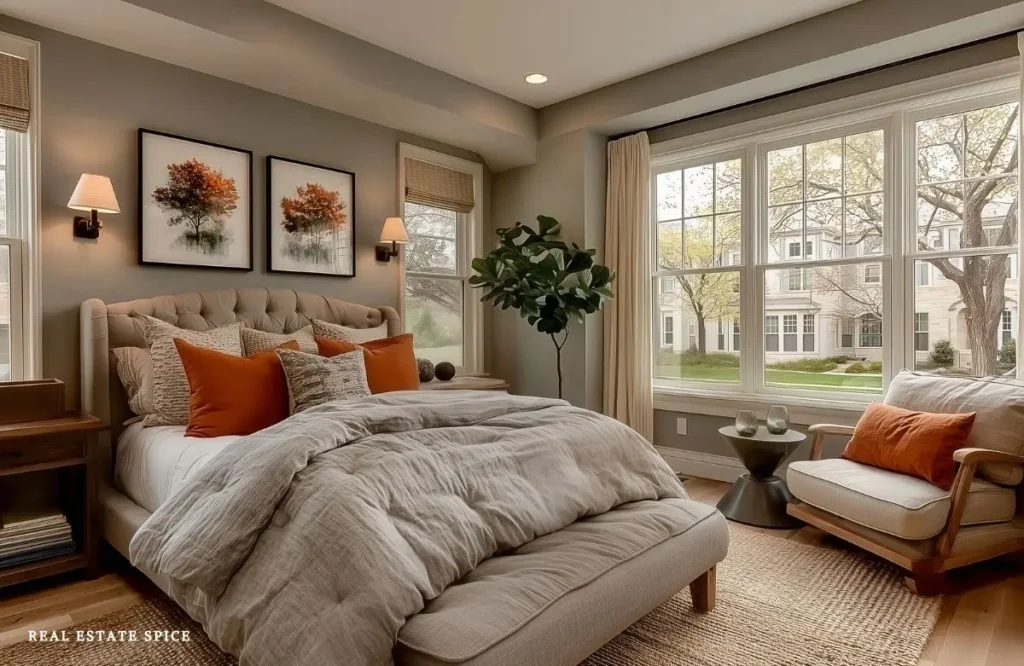
Guest bedroom furniture should be comfortable, practical, and easy to understand.
A queen bed often works well, while a full bed may be enough in smaller guest rooms.
Nightstands should give guests a place for a phone, glass of water, book, and maybe a lamp.
Storage can be simpler in a guest room, but don’t skip it entirely.
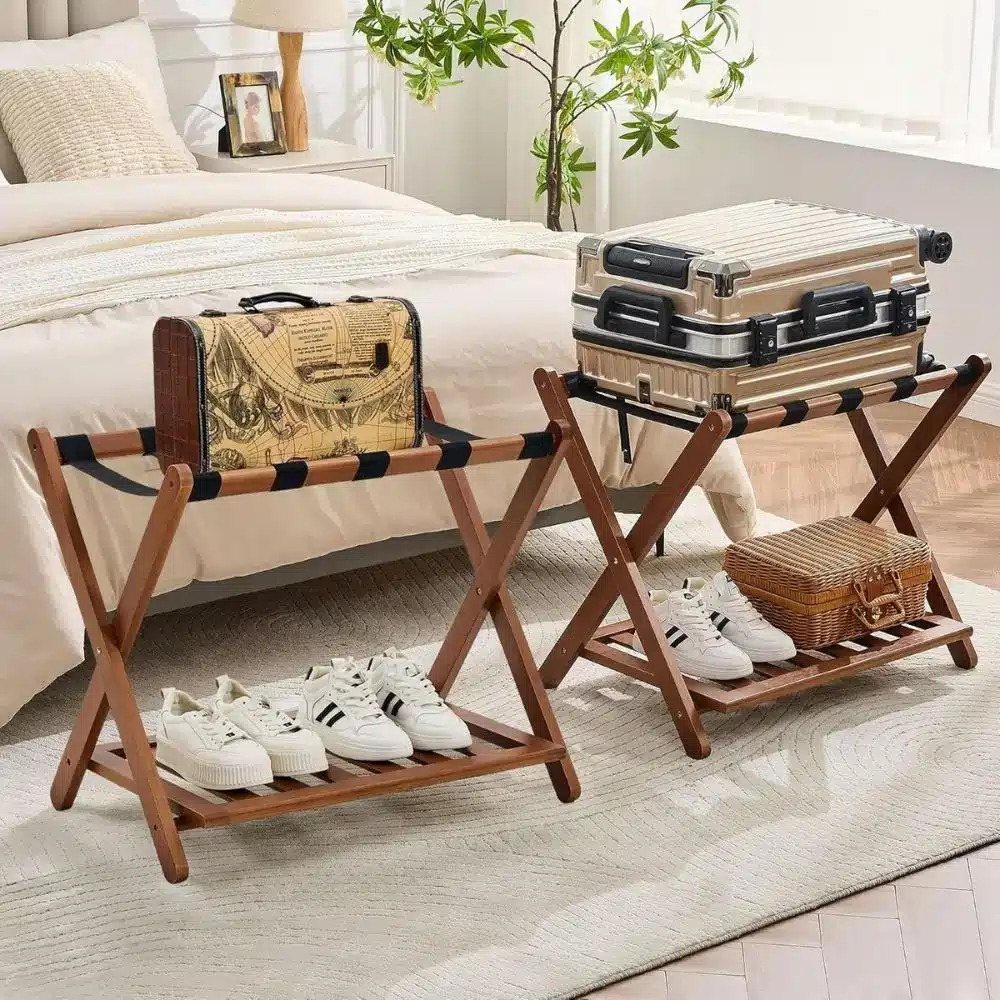
Once the bed, luggage rack, and storage pieces are chosen, use the guest bedroom rule of 3 to make the entire room comfortable and easy for overnight visitors to use.
A small dresser, chest of drawers, luggage rack, storage bench, or a few baskets can make the room more useful.
Rental Bedrooms: Choose Furniture You Can Take With You Later
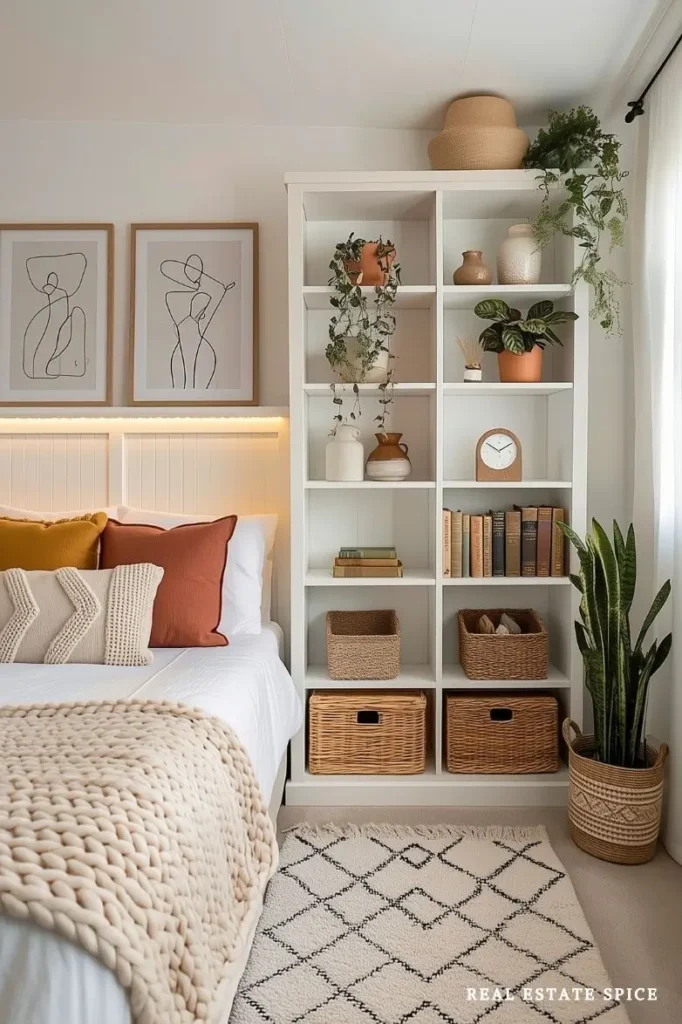
Renters can still make bedroom furniture feel intentional because this framework doesn’t require renovation.
Choose a bed that fits the actual room, even if the wall color isn’t your favorite.
Use nightstands that support your real habits.
Bring in storage that solves the room’s specific problems.
Freestanding wardrobes, dressers, storage benches, baskets, and under-bed storage can all move with you later.
If the rental bedroom is awkwardly shaped, flexible furniture matters.
A tall chest of drawers may be easier to place than a wide dresser.
Small nightstands or wall-mounted shelves can work when door swings and closet doors create challenges.
Budget Bedrooms: Fix the Biggest Furniture Problem First
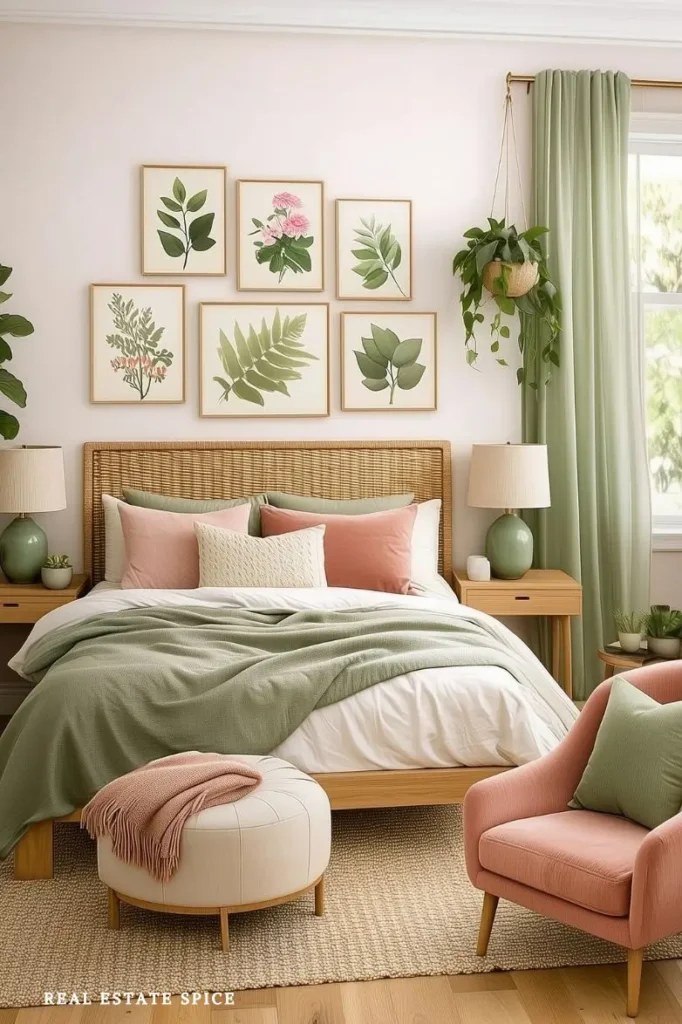
Budget-friendly bedroom furniture ideas work best when you prioritize function first.
Start with the weakest piece.
If the bed is uncomfortable or too large, solve that first.
When nightstands are unusable, replace or rethink them.
If clothes are always out, storage may matter more than new decor.
Affordable bed frames can look great when the scale is right.
Secondhand dressers can be fantastic if the drawers work well and the dimensions fit.
A new mirror, hardware, or lamp can make an existing dresser feel better without replacing it.
Bedroom furniture sets sale options can be helpful, but measure carefully so the deal doesn’t become a crowded room.
The best budget move is often rearranging before buying.
Try a new bedroom furniture arrangement, move the dresser to a better wall, or swap nightstands from another room.
How to Mix Bedroom Furniture Without Making the Room Feel Random
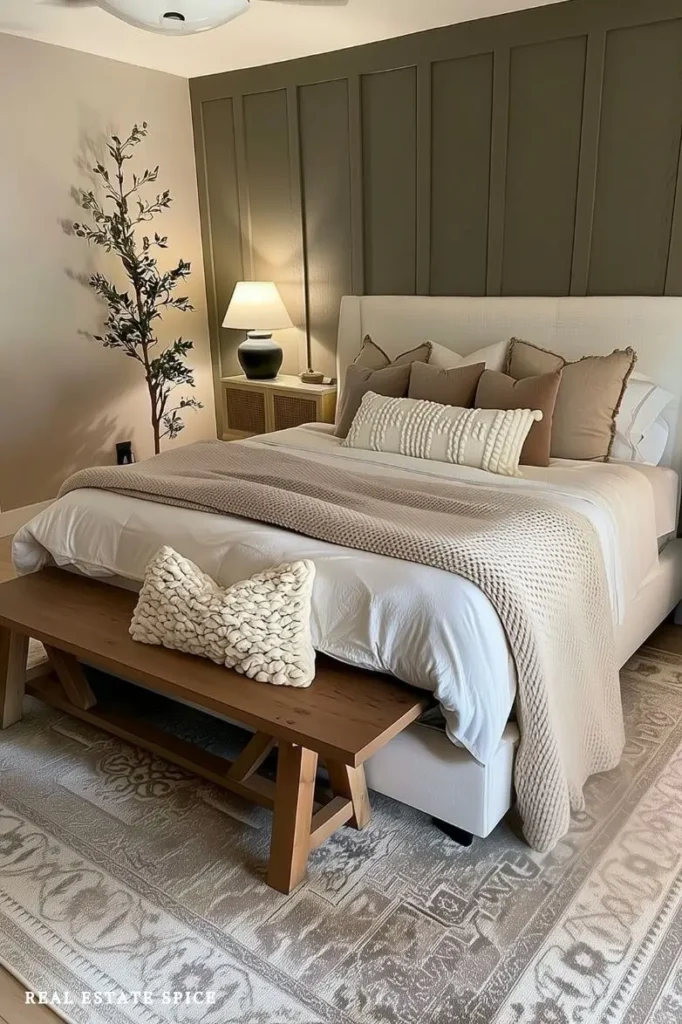
Mixed bedroom furniture can look more personal than a matching set, but it needs connection.
Use the finish bridge.
Repeat one material or finish at least twice.
Oak, black metal, brass, painted white wood, woven texture, and upholstery are all easy bridges.
For example, an oak dresser can connect to wood nightstands.
A black bed frame can relate to black drawer pulls or black lamps.
An upholstered headboard can relate to a fabric bench.
White nightstands can connect to a white dresser, while wood accents keep the room from feeling too stark.
Scale matters as much as finish.
A delicate nightstand beside a massive bed can feel off even if the colors are perfect.
Good furniture design is really about proportion, function, and connection.
Bedroom Furniture Mistakes That Make a Room Feel Unfinished
Buying the set before measuring the room
Bedroom furniture sets can be helpful, but only if they fit.
Measure the bed, nightstands, dresser, walking paths, and drawer clearance before buying.
Product photos don’t show your closet door, radiator, window placement, or awkward corner.
Choosing a bed that’s too large for the space
A king bed may be tempting, but it shouldn’t crowd out everything else.
If the room loses nightstands, storage, or walkability, the bed is probably too large.
Using nightstands that don’t match the mattress height
Nightstands should feel comfortable from bed.
Too low or too high can make the bedside area look and feel awkward.
Picking storage based only on appearance
A beautiful dresser still needs to hold your clothes.
Use the drawer reality check before buying.
Letting matching furniture become too predictable
Matching furniture can be practical, but too much sameness can make the room feel flat.
Add contrast through texture, lighting, rugs, mirrors, or one different furniture piece.
Ignoring traffic flow
Furniture placement should leave easy paths around the bed, closet, dresser drawers, and bedroom door.
A room that looks good but functions badly won’t feel finished.
When the Furniture Finally Fits the Life of the Room

Bedroom furniture isn’t about buying the biggest set, matching every piece, or filling every wall.
It’s about choosing the right bed, nightstands, and dresser or storage piece so the room feels balanced, useful, comfortable, and finished.
Start with the bed as furniture, not just as a place for bedding.
Make sure the size, frame, height, and footprint work with the actual room.
Choose nightstands that support your bedtime life and relate to the bed in scale.
Then pick bedroom storage that solves the real problem.
Once those three pieces work together, the rest of the bedroom gets easier.
Bedroom decor feels more natural.
Lighting makes more sense.
Rugs and curtains support the furniture instead of trying to fix it.
That’s the beauty of the Bedroom Rule of 3 furniture framework.
It helps the room stop feeling like a collection of pieces and start feeling like a true retreat—one that feels calmer the moment you walk in.
When the bed fits, the nightstands support your daily rhythm, and the storage piece brings a little order back to the room, the whole space changes.
It starts to feel softer, steadier, and more personal.
The kind of bedroom that lets your shoulders drop, your mind settle, and the whole room finally feel like a retreat.