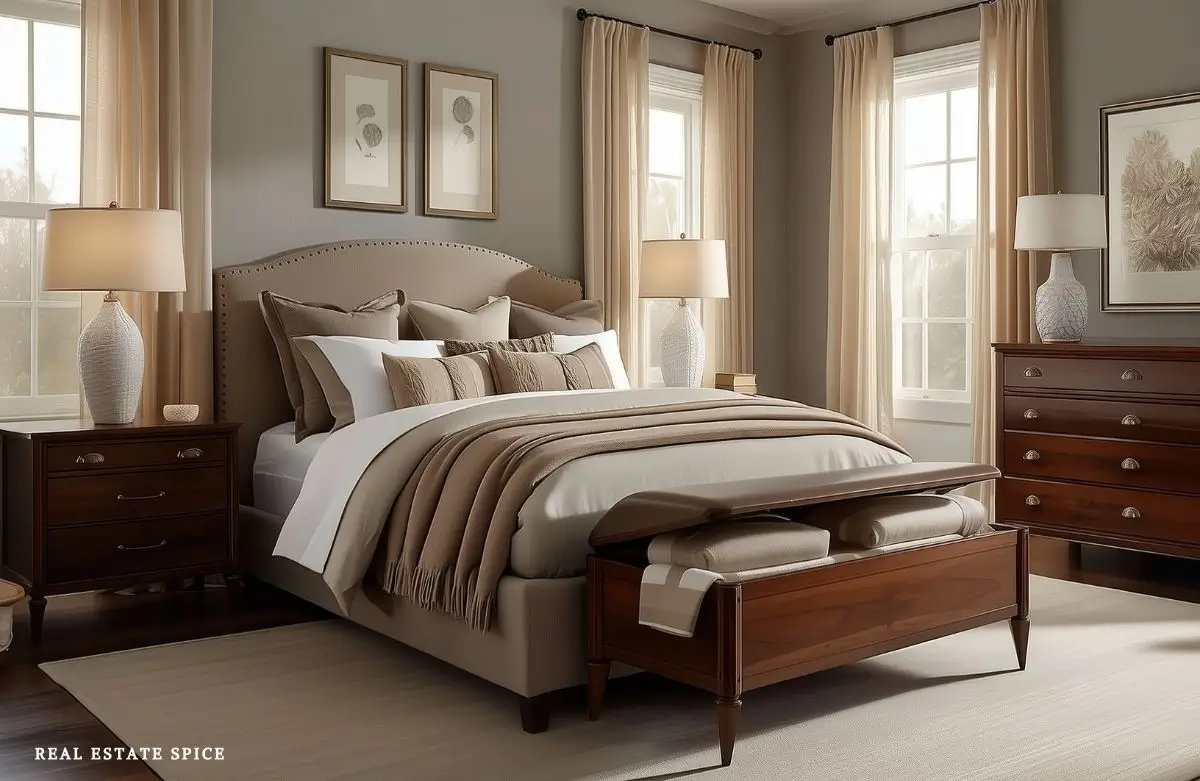
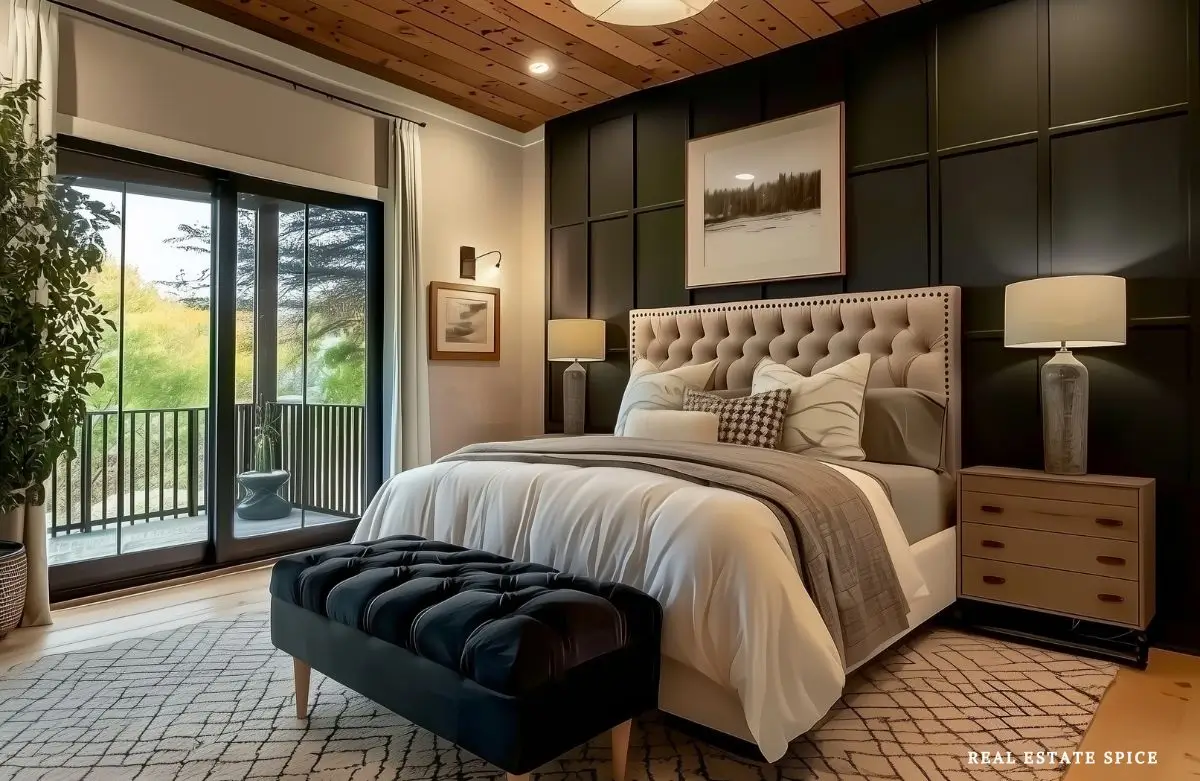
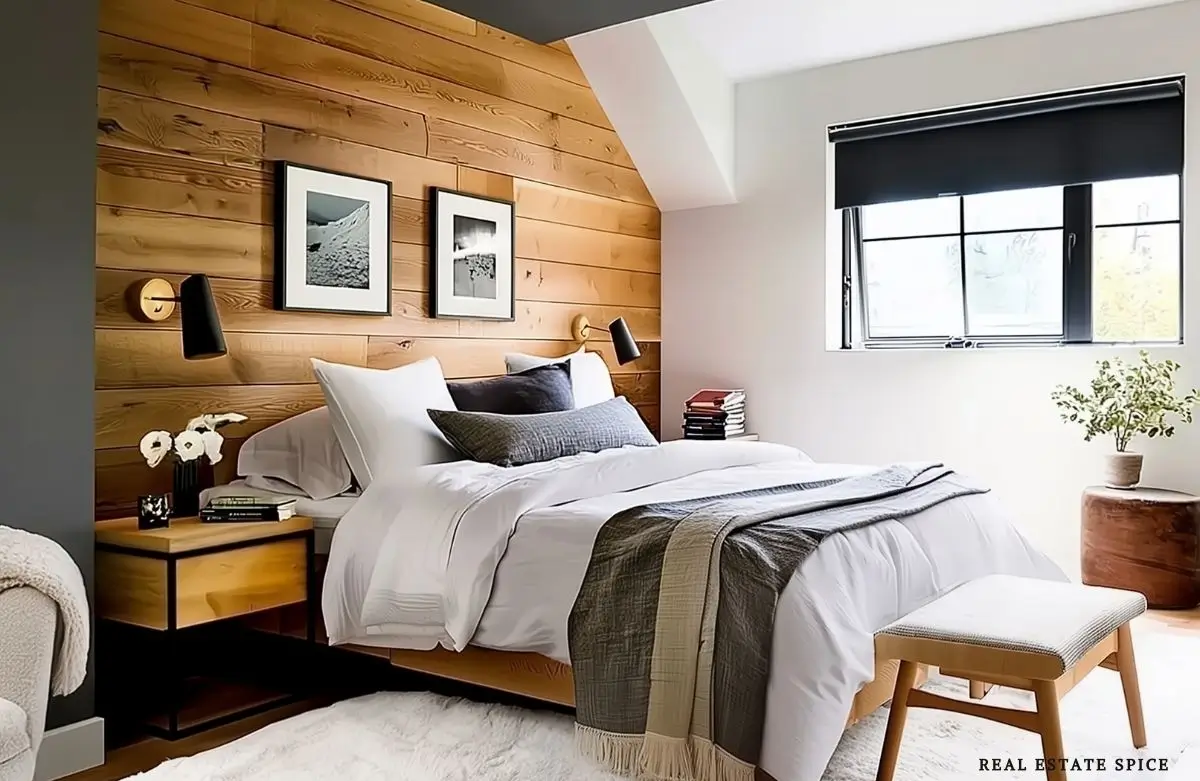
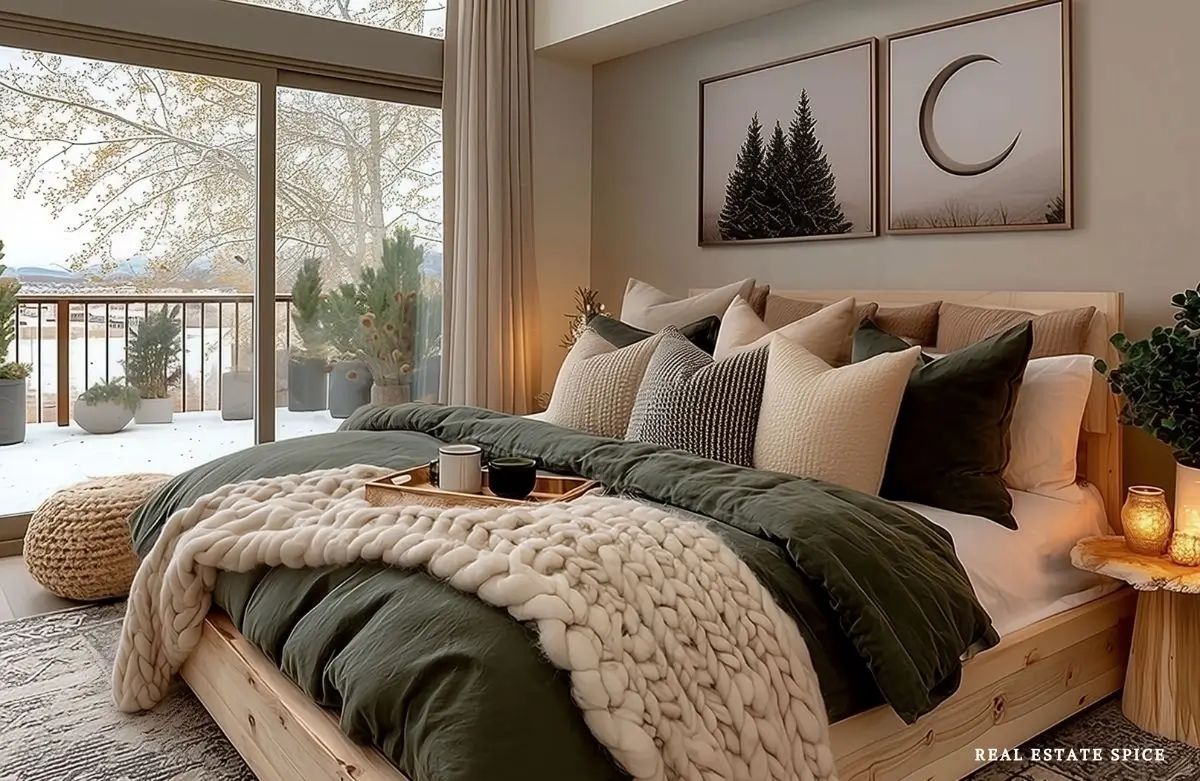
Dressers for Small Bedrooms: How to Find One That Fits Well
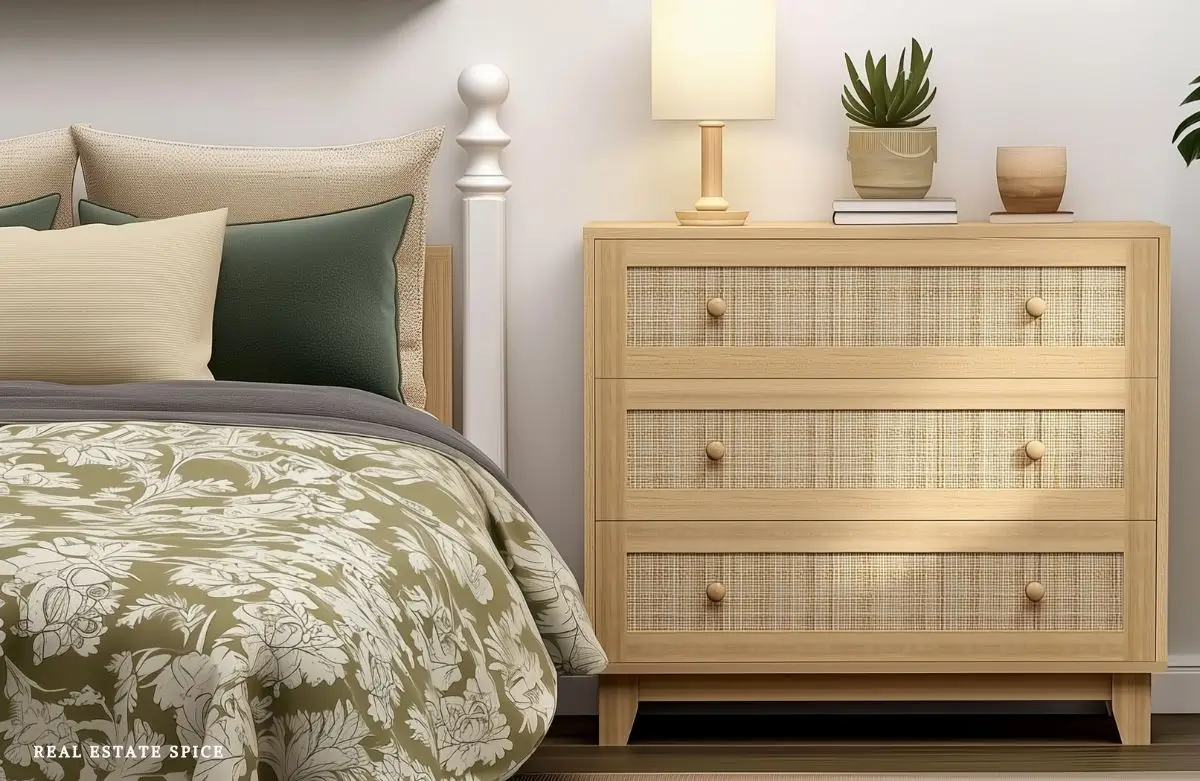
A dresser can solve one of the biggest problems in a small bedroom: where on earth to put all those clothes.
Unfortunately, the wrong dresser can create an entirely new problem.
It may fit against the wall but leave barely enough room to walk past it.
Be sure to check out The Small Bedroom Rule of 3 Formula and 50 Small Bedroom Decorating Ideas This Year this…
The drawers may open beautifully until they bump into the bed.
That gorgeous mirror may make the whole piece feel twice as large.
And suddenly, retrieving a pair of socks requires a sideways shuffle and a little negotiation with the furniture.
The best dresser for a small bedroom gives you useful storage without taking over the room.
That usually means choosing the right shape, measuring the dresser with its drawers open, and placing it where it won’t interrupt the way you move from the bed to the closet or doorway.
A tall dresser may be perfect when you have very little wall width.
A slim or shallow dresser can protect a narrow walkway.
A low dresser might fit beneath a window or give you a larger surface without towering over the bed.
In some rooms, the smartest place for a small dresser is inside the closet.
Your answer depends on the room you have, the clothes you need to store, and the wall space that isn’t already claimed by a door, window, radiator, vent, or bed that has apparently decided it owns the entire place.
Let’s find a dresser that gives you more storage and still lets your bedroom breathe.
Grab your favorite beverage, pen, and paper for notes; take your time to study the images, design tips, and products, and enjoy!
ps…remember to save this and come back anytime for a dose of inspo!
How to Choose a Dresser for a Small Bedroom
Before looking at finishes, hardware, drawer styles, or that beautiful wood color that is already whispering your name, begin with the space.
A dresser can look wonderfully compact in a product photograph and feel enormous once it arrives in your bedroom.
Product images are often taken in larger rooms or shown without the nearby bed, doorway, and laundry basket that exist in real life.
The measurements give you a much more accurate answer.
Get My Free eBook
“100 Easy Ways To Refresh Any Room All Year Round”
Measure the Available Wall Space
Measure the width of the wall where you might place the dresser.
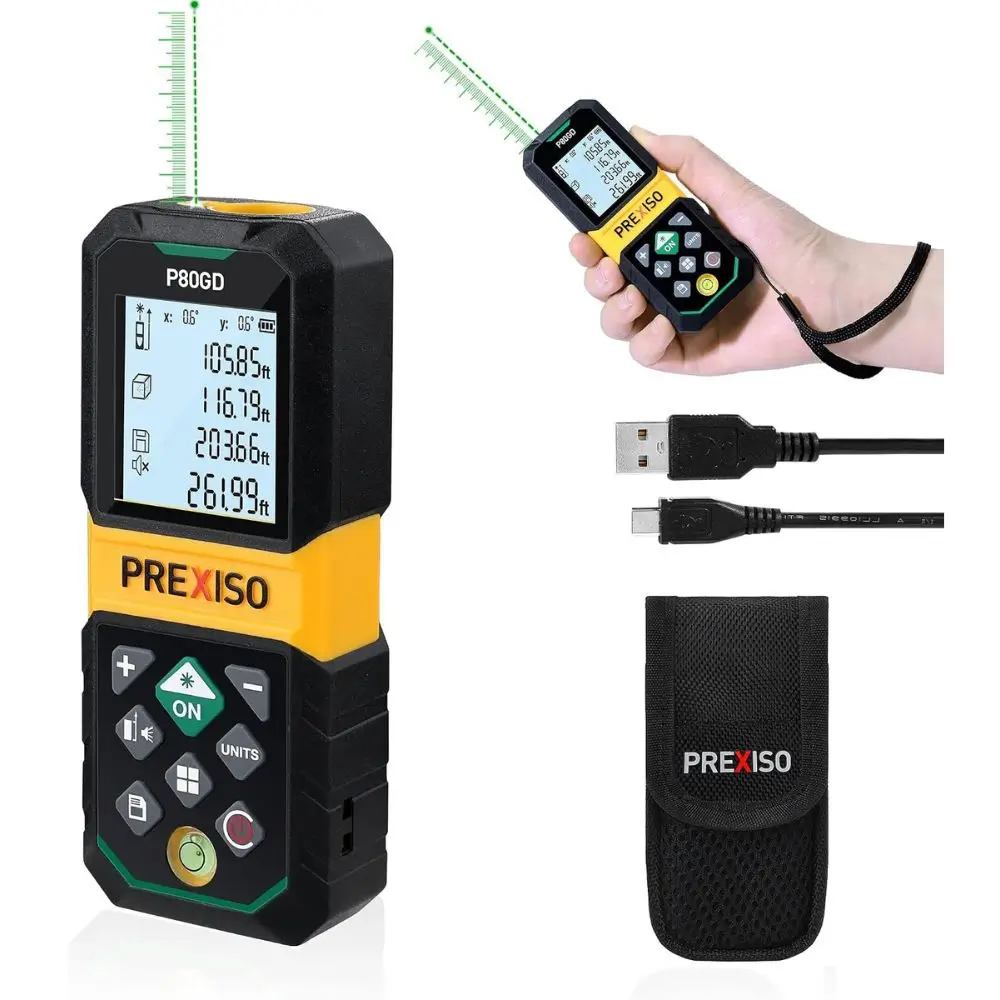
Then look at everything surrounding that wall.
Does a bedroom door swing toward it?
Will a closet door need to open beside it?
Are there floor vents, outlets, baseboard heaters, curtains, or window trim nearby?
A dresser that technically fits between two walls may still cover an outlet or stop a door from opening completely.
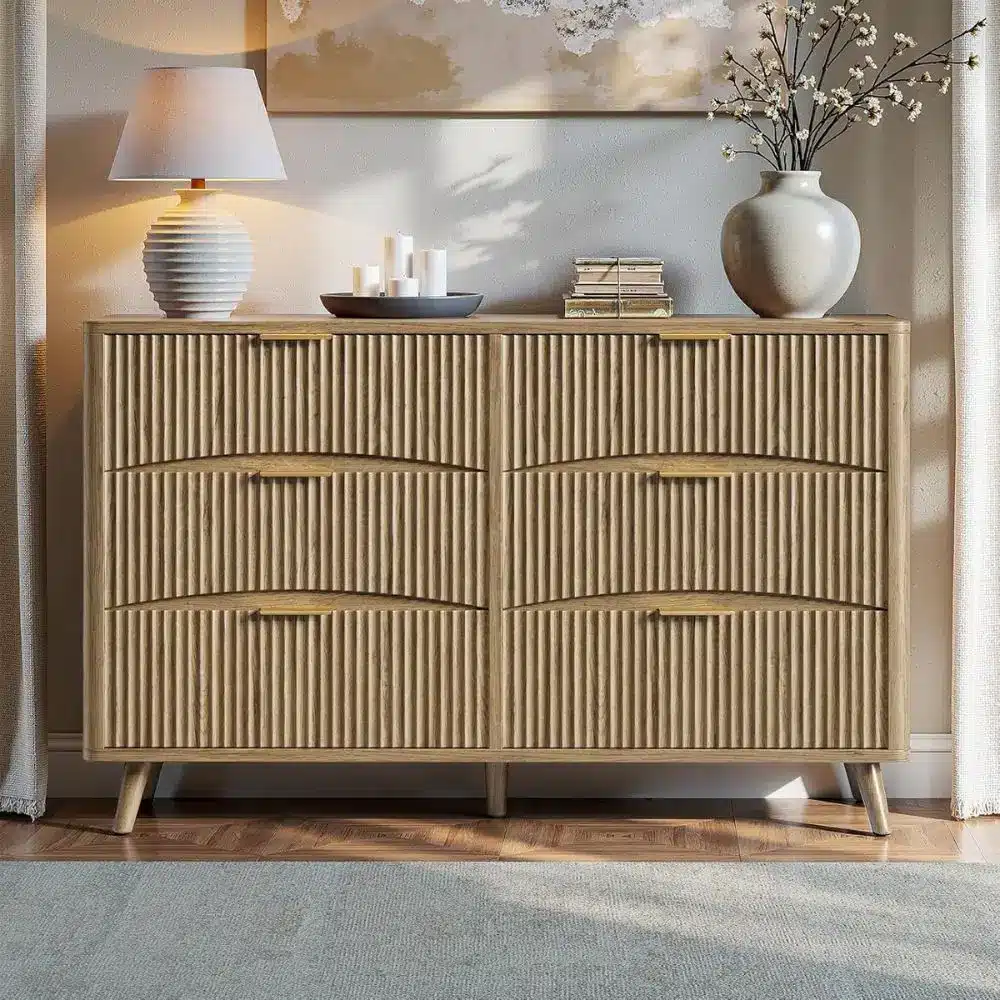
Leave enough room around the piece so it doesn’t look wedged into place.
A narrow, tall dresser often fits best when available length is a concern.
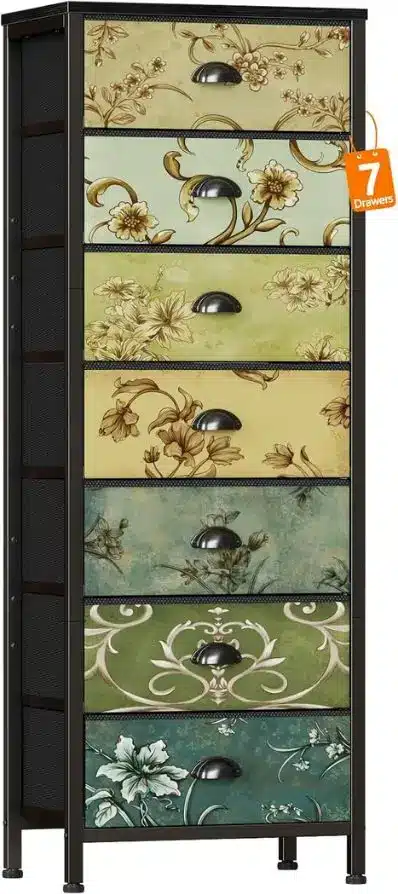
A few inches of visible wall can help a small dresser feel deliberately placed instead of squeezed into the only gap that surrendered.
Measure the dresser’s height as well.
This is especially important beneath a window, mirror, wall-mounted television, artwork, or hanging clothes inside a closet.
If you plan to place the dresser beneath a window, measure from the floor to the bottom of the window trim.
Remember to check whether curtains will hang behind or beside it.
Curtains trapped behind a dresser tend to bunch, wrinkle, and spend the rest of their lives looking mildly annoyed.
Perform the Open-Drawer Test
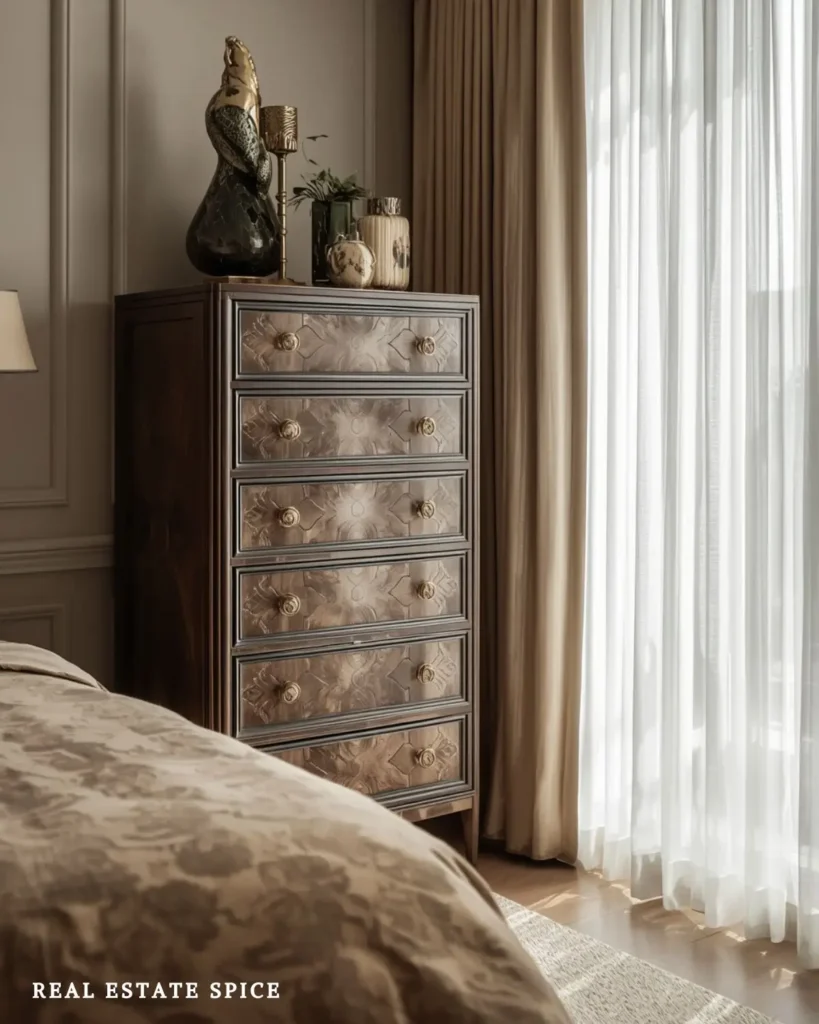
The dresser’s listed depth only tells you how far the closed furniture extends into the room.
You also need room to open the drawers and stand in front of them.
Find out the dresser’s closed depth.
Use painter’s tape or temporary markers suitable for your flooring to outline the dresser’s closed footprint.
Next, mark the approximate reach of what would be the open drawer on a dresser there.
Stand in front of that line and pretend you’re putting away clothing.
BEFORE YOU BUY
Measure For the Open Drawer, Too
Mark the dresser’s closed footprint, then add the open drawer and enough room for you to stand. Check the bed and walkway, too. A dresser only fits when you can comfortably use it.
This is the part that saves you from discovering that your new dresser only works when nobody opens it.
Decide What the Dresser Needs to Hold
A small dresser shouldn’t be judged by the number of drawers alone.
Look at the size and shape of those drawers.
Several very shallow drawers may work beautifully for socks, underwear, jewelry, and smaller accessories.
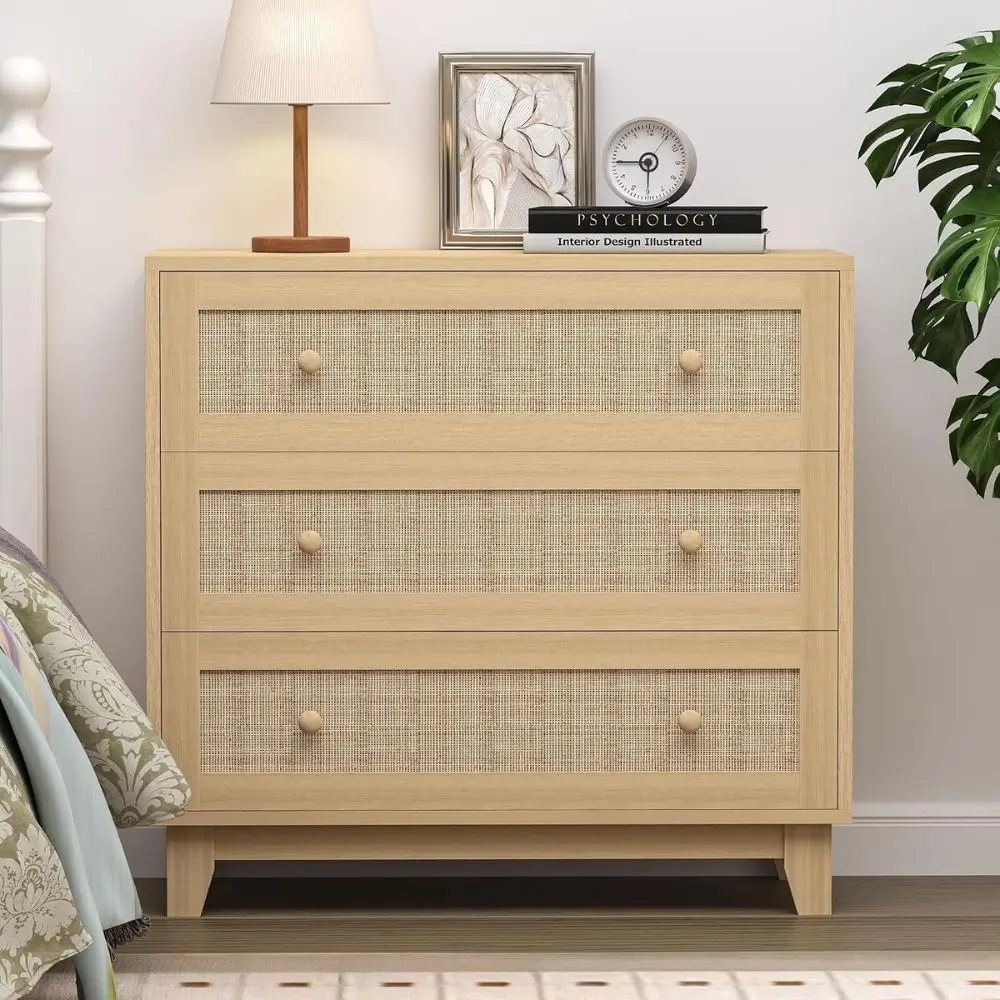
They may be far less helpful if you need to store bulky sweaters, jeans, pajamas, or extra bedding.
Think about what is currently missing a home.
Do you need everyday clothing storage?
Are you trying to move folded items out of an overfilled closet?
Will the dresser hold seasonal clothes, linens, makeup, or a combination of several things?
Do you need a tall dresser to capitalize on vertical space?
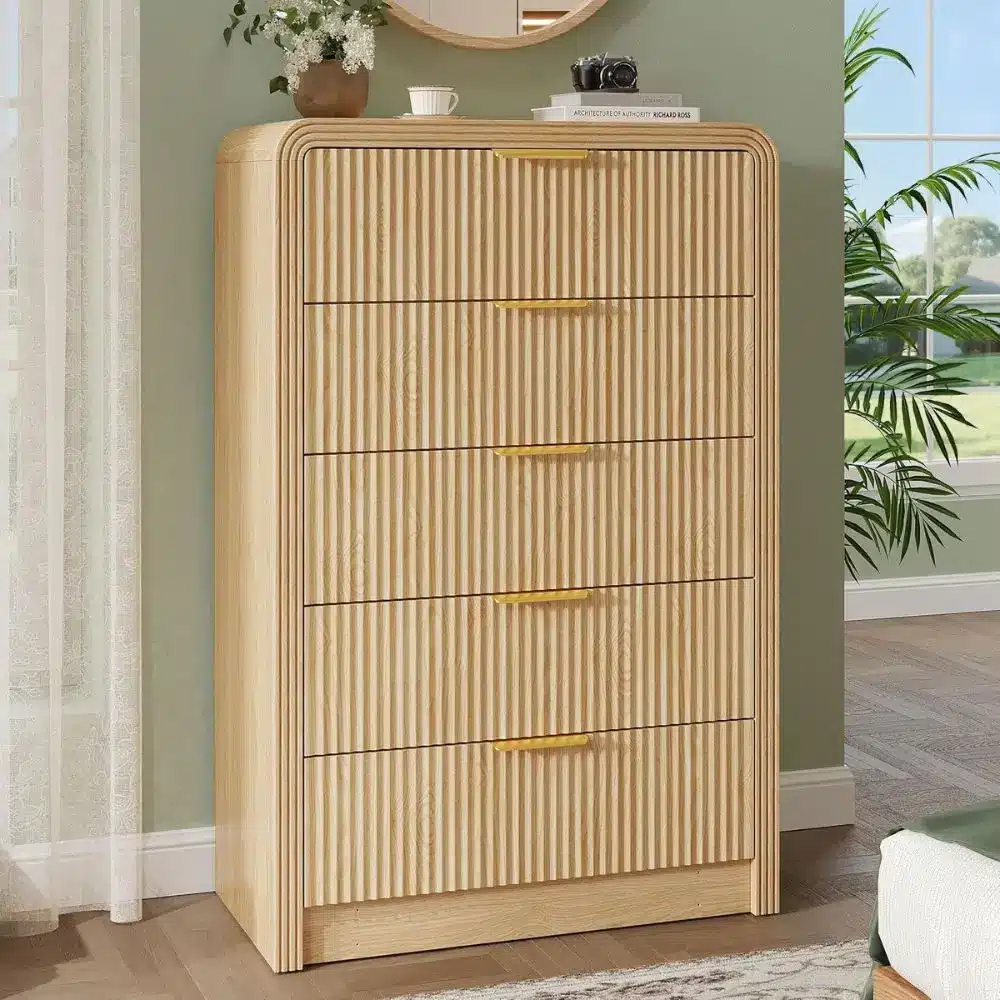
A dresser with fewer but deeper drawers may hold more of your wardrobe than a taller piece filled with tiny drawers.
On the other hand, smaller drawers can make it easier to separate categories without everything collapsing into one fabric avalanche.
There isn’t one perfect drawer arrangement.
There is only the arrangement that makes sense for what you own.
For a complete plan for the rest of the room, the Small Bedroom Rule of 3 will help you protect the bed, useful storage, and open movement without cramming in more furniture than the room can handle.
Tall, Wide, Slim, or Shallow: Which Dresser Fits Best?
Small dressers come in more than one useful shape.
The right one depends on whether your room is short on wall width, walking space, drawer capacity, or all three at once.
Where will the dresser be placed? If it’s next to the bed, a three-drawer dresser might be a perfect fit.
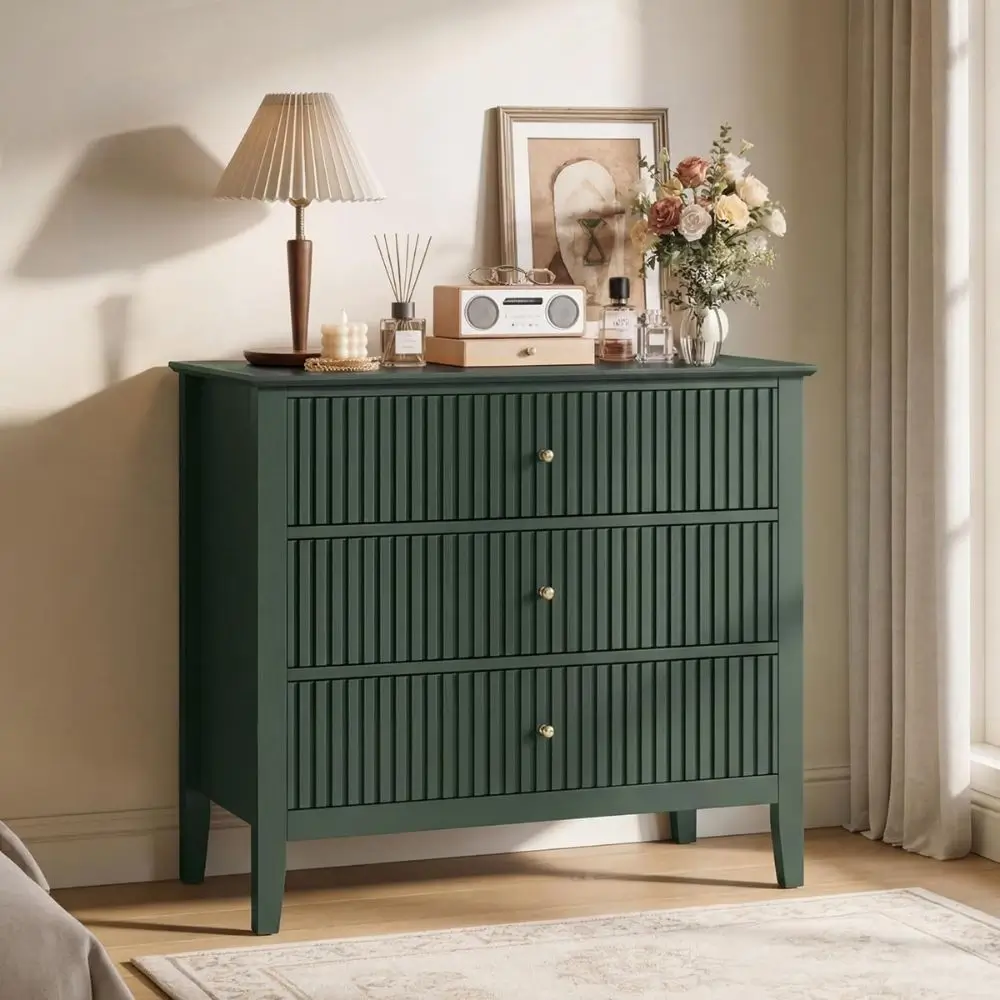
Start with the limitations of your space, what might cause the most trouble, and then figure out what will be perfect for your situation, wants, and needs.
You May Also Like:
→ The Bedroom Storage Rule of 3 to Turn Clutter Into Calm
→ The Bedroom Furniture Rule of 3
→ 50 Bedroom Decorating Ideas This Year
Choose a Tall Dresser When Wall Width Is Limited
A tall dresser uses vertical space, which can be incredibly helpful when the bed occupies most of the available wall.
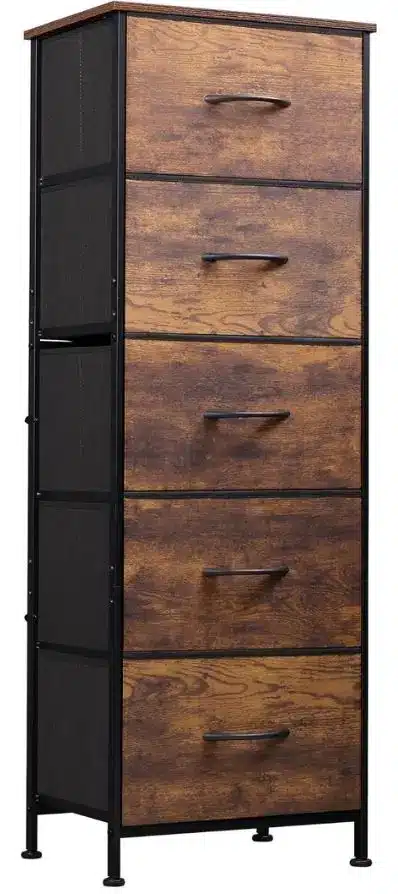
It gives you several drawers while requiring less floor width than a traditional low dresser.
This shape often works beside a closet, in a narrow corner, or on a short wall between a doorway and window.
Pay attention to scale before choosing the tallest option you can find.
A towering dresser placed beside a low bed may feel top-heavy, particularly if the room also has low ceilings.
You want useful height, not a piece of furniture that appears to be keeping watch over you while you sleep.
Look at the drawer arrangement too.
The highest drawers should hold lighter or less frequently used items if reaching them feels awkward.
Everyday clothes belong where you can reach them without stretching, climbing, or using a sock bundle as a retrieval tool.
Tall dressers and other furniture with drawers should be secured according to the manufacturer’s directions.
The U.S. Consumer Product Safety Commission recommends anchoring dressers and other heavy furniture to help prevent dangerous tip-overs.
Try a Slim Dresser for a Narrow Wall
A slim dresser can fit in spaces where a standard chest is simply too wide.
It may work beside the bed, between two doors, near a closet, or along a wall that still needs to preserve a walkway.
Check the actual drawer width before buying.
Some slim dressers use most of their exterior width well.
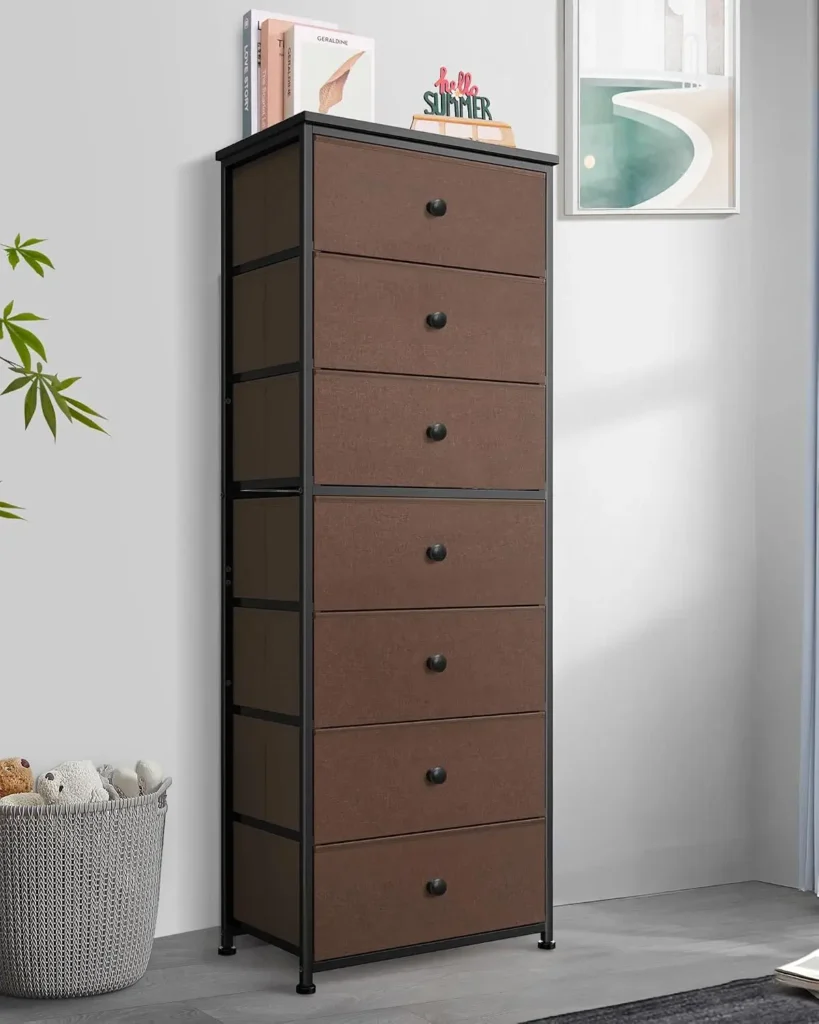
Others lose a surprising amount of interior space to thick sides, framing, or decorative trim.
Compare the usable drawer measurements with the clothes you plan to store.
A narrow piece can be tremendously helpful when it holds the right things.
It becomes far less impressive when each drawer accommodates two shirts and a hopeful attitude.
Look for a Shallow Dresser Beside a Walkway
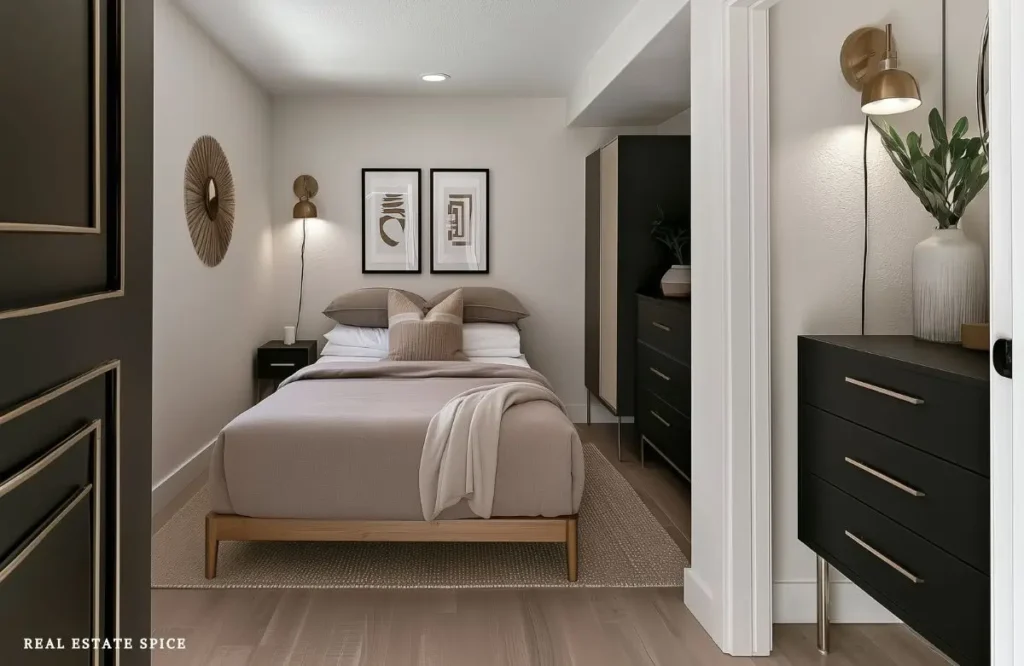
A shallow dresser reduces how far the piece projects into the room.
That can make a meaningful difference when it sits across from the bed or beside the main path to the closet.
Even a modest change in depth may give you more comfortable walking room.
Be careful not to assume that “small” automatically means shallow.
A dresser may be narrow in width but surprisingly deep.
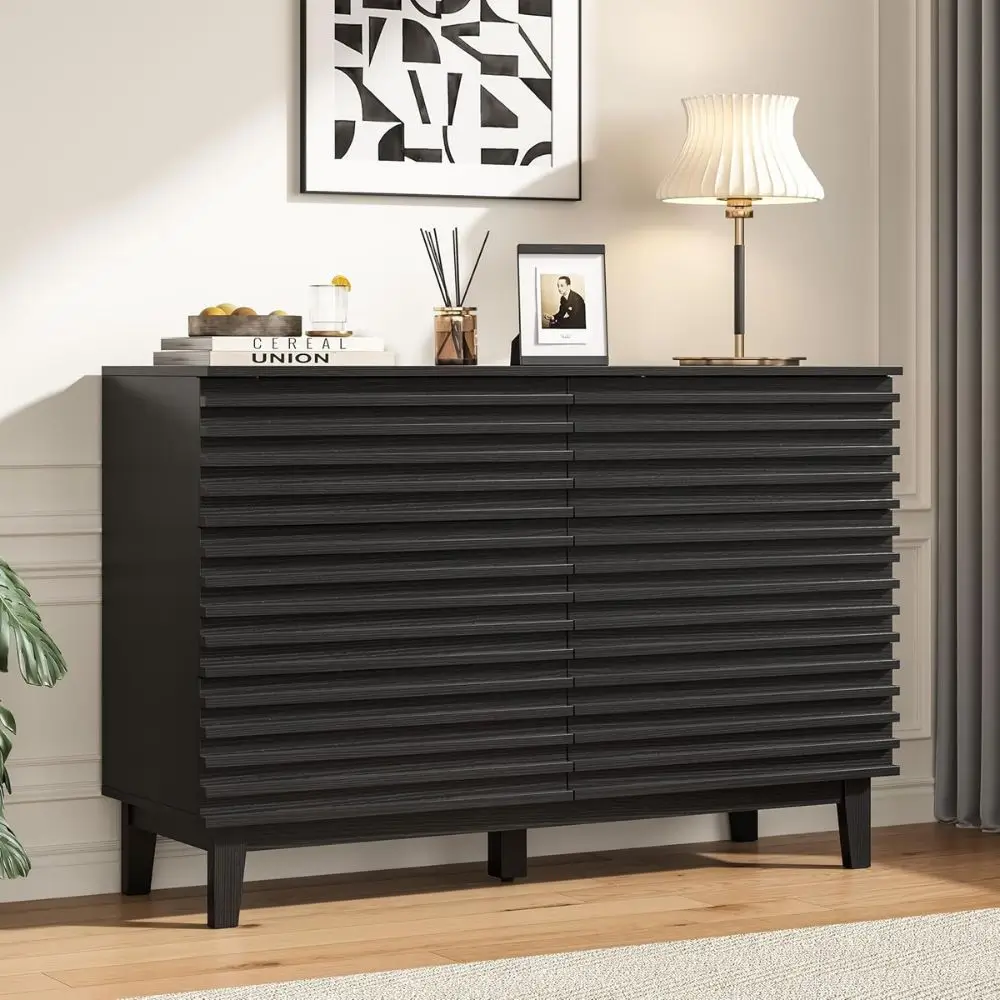
Always check all three dimensions.
Shallow drawers work especially well for folded shirts, smaller clothing, accessories, and items arranged in shorter rows.
Bulky sweatshirts and thick sweaters may need deeper storage elsewhere.
You might be thinking, “But, Jaymie, won’t a shallow dresser hold less?”
Sometimes it will.
But a slightly smaller dresser that you can open and walk past is far more useful than a cavernous one that makes the room miserable.
Use a Low Dresser When You Have More Wall Width
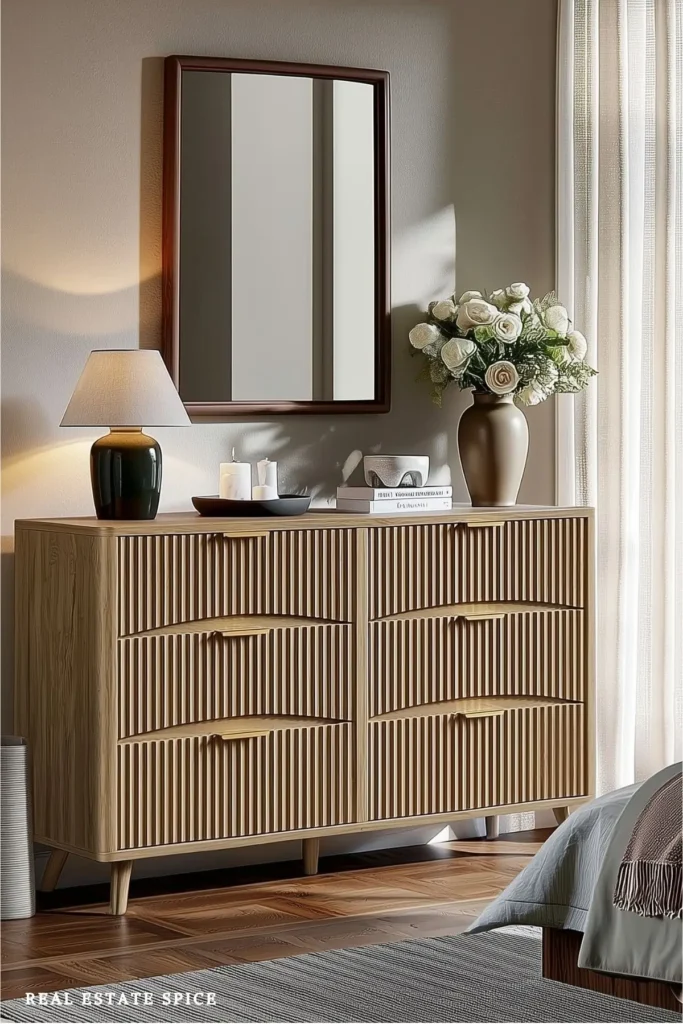
A low, wider dresser gives you a generous top and lets clothing lie in broader drawer rows.
It can fit beneath some windows, mirrors, artwork, or wall-mounted televisions when the measurements work.
The long horizontal shape may also balance a tall headboard or high ceiling.
However, wider pieces require more uninterrupted wall space.
They can overwhelm a very short wall or interfere with bedroom and closet doors.
The top can be useful for a lamp, mirror, jewelry box, or several everyday items.
It can also become the official headquarters for receipts, charging cords, half-folded laundry, and objects you plan to deal with “later.”
We both know later has a very flexible schedule.
If you choose a wide dresser, decide what belongs on top before it arrives.
Preserving some open surface will help the furniture look lighter and make the room feel less cluttered.
Where to Place a Dresser in a Small Bedroom

The best dresser placement supports the way you get dressed without interfering with the way you move through the room.
Begin with the closet, bed, doorway, and bathroom.
Those are usually the places you walk between most often.
A dresser placed near that route can make mornings easier.
A dresser sitting directly in the middle of that route can make mornings feel like an obstacle course before coffee.
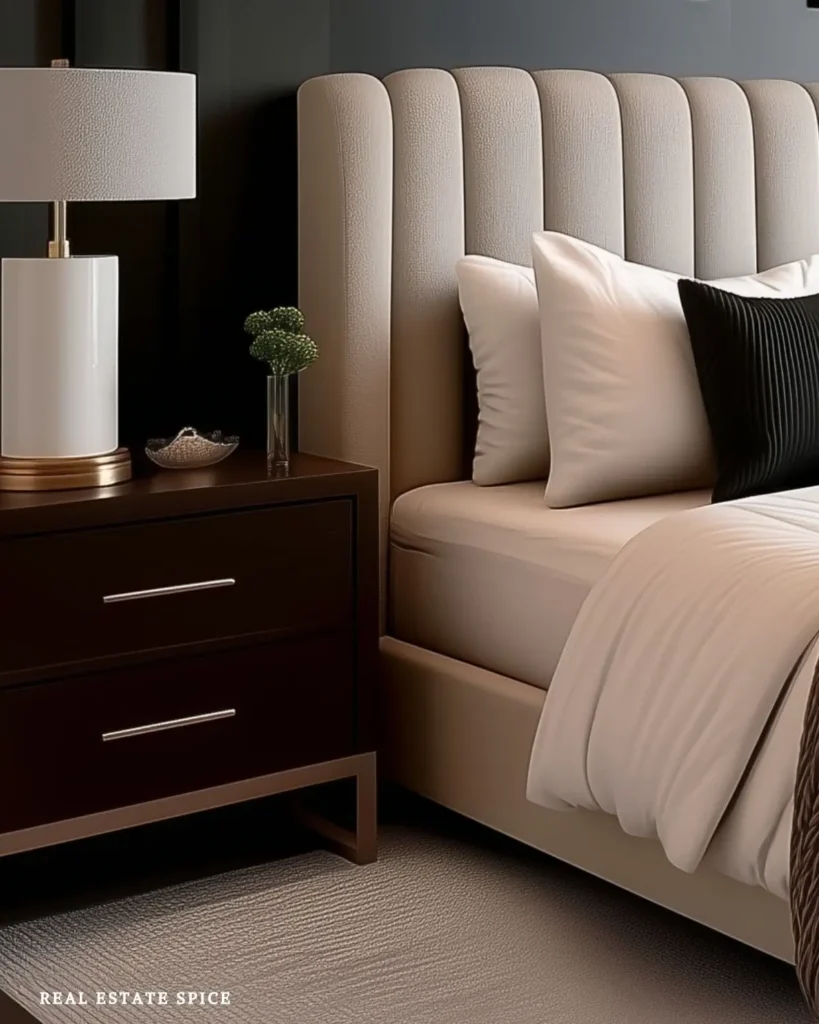
Use a Small Dresser Beside the Bed

A small dresser can replace a nightstand when there isn’t enough room for both pieces.
This is one of my favorite ways to make furniture work harder in a small bedroom.
You gain a bedside surface for a lamp, phone, water, and book.
You also gain several drawers without using another section of wall.
Check the dresser height against the top of your mattress.
A piece that is much taller than the bed can make reaching the lamp or setting down a glass uncomfortable.
A very low dresser may leave you leaning farther than you expect.
JAYMIE’S PRO TIP
But, Jaymie, How Tall Should a Bedside Dresser Be?
Tape the dresser height on the wall, sit on the bed, and reach toward it. Your lamp (if it doesn’t have a remote), phone, and water should feel easy to grab. If the reach feels awkward now, it will feel worse at midnight.
Keep the top simple.
A lamp, small tray, and one or two personal items may be enough.
The dresser is already performing two roles.
It doesn’t need twelve decorative accessories cheering it on.
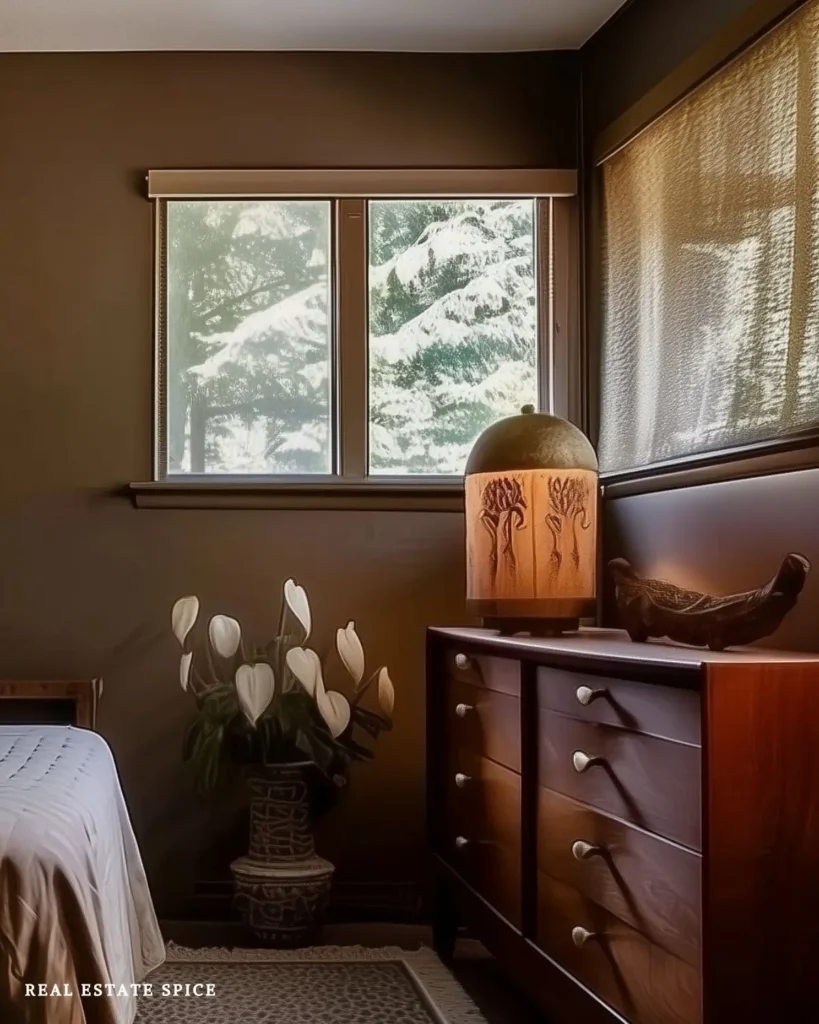
Place a Low Dresser Beneath a Window
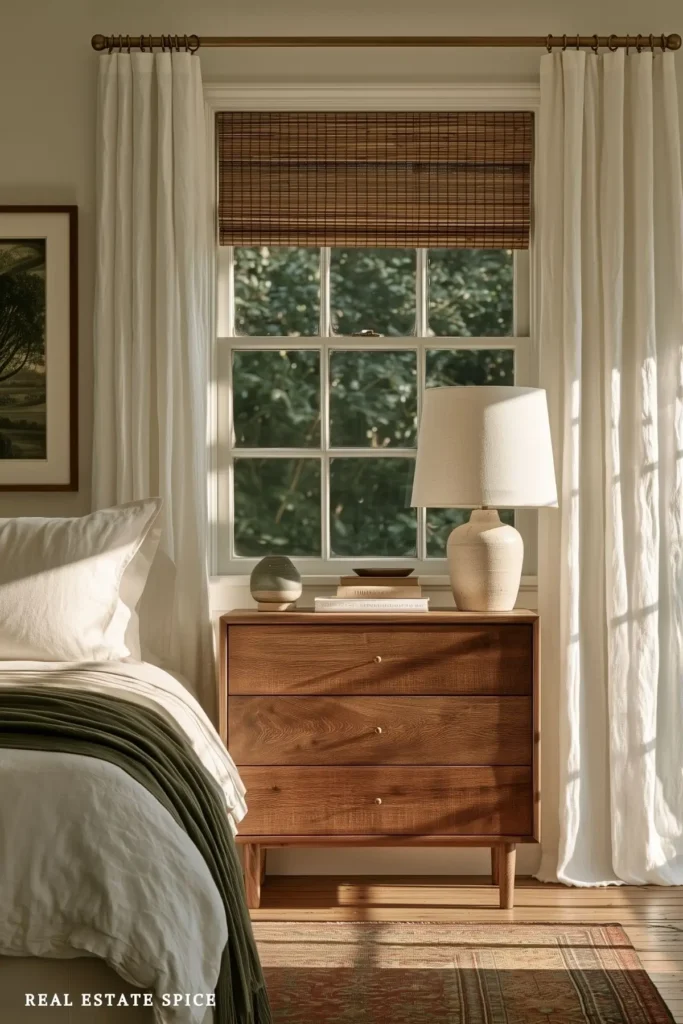
The wall beneath a window is often overlooked because it cannot hold taller furniture.
A low dresser may fit beautifully there when the window is high enough and the room has adequate drawer clearance.
Measure the window trim, sill, curtains, and any floor vent before making a decision.
Never block a heat source, air return, or necessary ventilation.
Consider how the window opens too.
You should still be able to reach locks, handles, and blinds without kneeling on the dresser or leaning across everything sitting on top.
If full-length curtains cover the wall, a dresser may interfere with how they hang.
Roman shades, blinds, or shorter window treatments may work more easily in that particular spot, but only change the window treatment if you already like the alternative.
The dresser shouldn’t trigger a chain reaction that ends with you redecorating the entire room on a Tuesday.
Try an Awkward Short Wall
That narrow wall beside a closet or bedroom door may be too small for a standard dresser but perfect for a slim chest.
Measure the wall, door casing, baseboards, and door swing carefully.
Open every nearby door while the temporary footprint is still marked.
Then walk past it several times.
Carry a laundry basket during one pass.
A route that feels adequate with your arms at your sides may feel entirely different when you’re carrying a basket full of towels and one fitted sheet that refuses to fold properly.
If the dresser forces you to turn sideways every time you enter the room, choose a shallower piece or leave that wall open.
A slim narrow dresser could be the perfect fit.
Be Careful With the Foot of the Bed
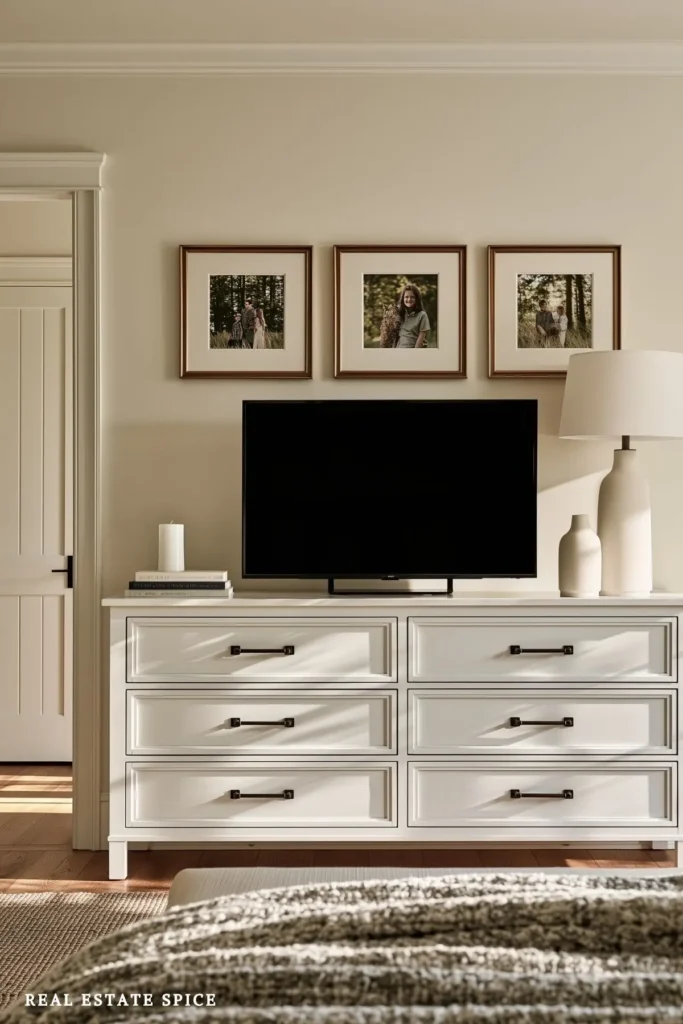
A low dresser at the foot of the bed can work in a long, narrow room, but it needs generous clearance.
Mark the dresser and its open drawers before considering this placement.
Walk around the bed in daylight.
Then imagine making the same trip when the room is dark and you’re half awake.
A beautiful dresser is much less charming when your shin meets it at two in the morning.
If the walkway becomes tight, move the dresser elsewhere.
A storage bench may offer a slimmer alternative, although it should still leave enough room to walk and open any nearby doors.
For help choosing the room’s main pieces without overwhelming the available space, continue with the Bedroom Furniture Rule of 3.
Can You Put a Small Dresser Inside the Closet?
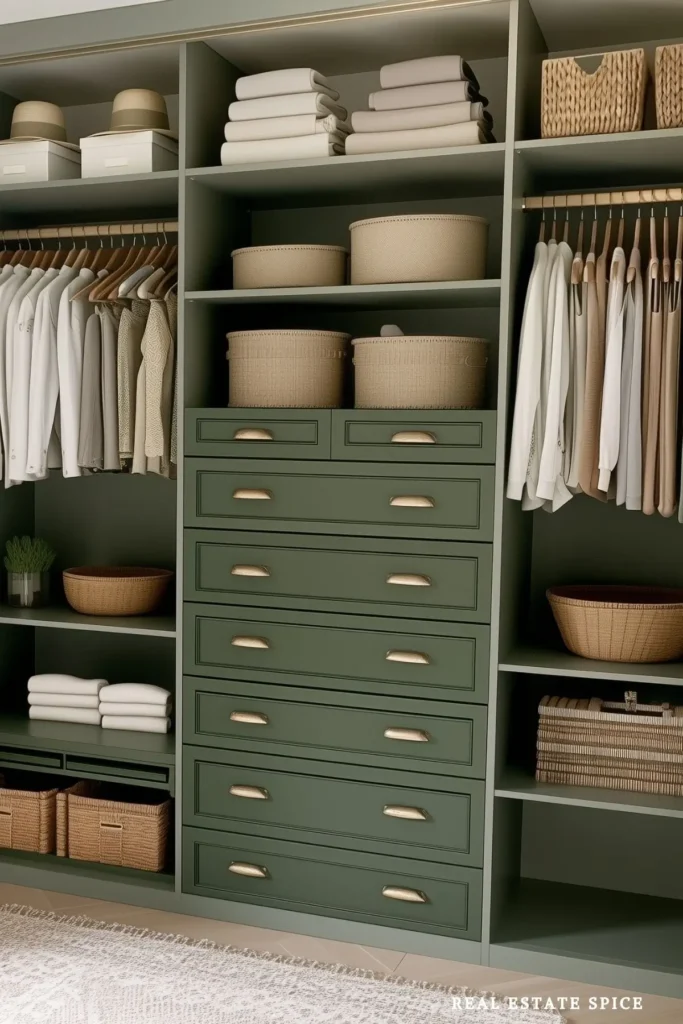
A dresser inside the closet can free an entire bedroom wall.
It may also keep folded clothing close to hanging clothes, shoes, and accessories.
This works especially well in a reach-in closet with unused floor space or beneath a shorter section of hanging clothes.
Measure the closet opening, interior width, shelf height, hanging rods, and doors.
Don’t stop at the interior wall measurement.
The dresser also has to pass through the closet opening.
That sounds obvious until a fully assembled dresser is standing in the hallway and the closet door appears to have shrunk out of spite.
Check the Hanging Clothes Above It
If the dresser will sit beneath a clothing rod, measure the longest garments hanging in that section.
Shirts, folded pants, and shorter jackets may work well above a low dresser.
Dresses and long coats need more hanging length.
Open the top drawer and make sure the clothing won’t become trapped inside it.
Leave enough room to see the dresser surface and use it without pushing hanging clothes aside every time.
The top can hold folded items temporarily, but avoid filling it so completely that the clothing above becomes difficult to reach.
Make Sure Every Drawer Opens
Sliding closet doors may block part of a dresser even when the piece fits inside.
Hinged doors can interfere with the drawers or handles.
Place the dresser where you can open the closet and access every drawer without moving another object first.
If one side of the dresser will always remain hidden behind a sliding door, test whether the door can move far enough to expose it.
A smaller dresser that opens easily will serve you better than a wider one with two drawers held hostage behind the closet door.
Use the Closet Dresser for the Right Clothes
An in-closet dresser is wonderful for socks, underwear, exercise clothing, pajamas, folded shirts, and accessories.
It may also hold out-of-season clothing if you don’t need those drawers every day.
Keep the most frequently used items in the easiest drawers to reach.
Detailed drawer organization belongs in the Bedroom Storage Rule of 3.
First, make sure the dresser itself belongs in the closet and improves the way you use the space.
Should You Choose a Dresser With a Mirror for a Small Bedroom?
A dresser with a mirror can combine clothing storage and a getting-ready area on one wall.
The mirror can also reflect light and make it easier to check an outfit without crossing the room.
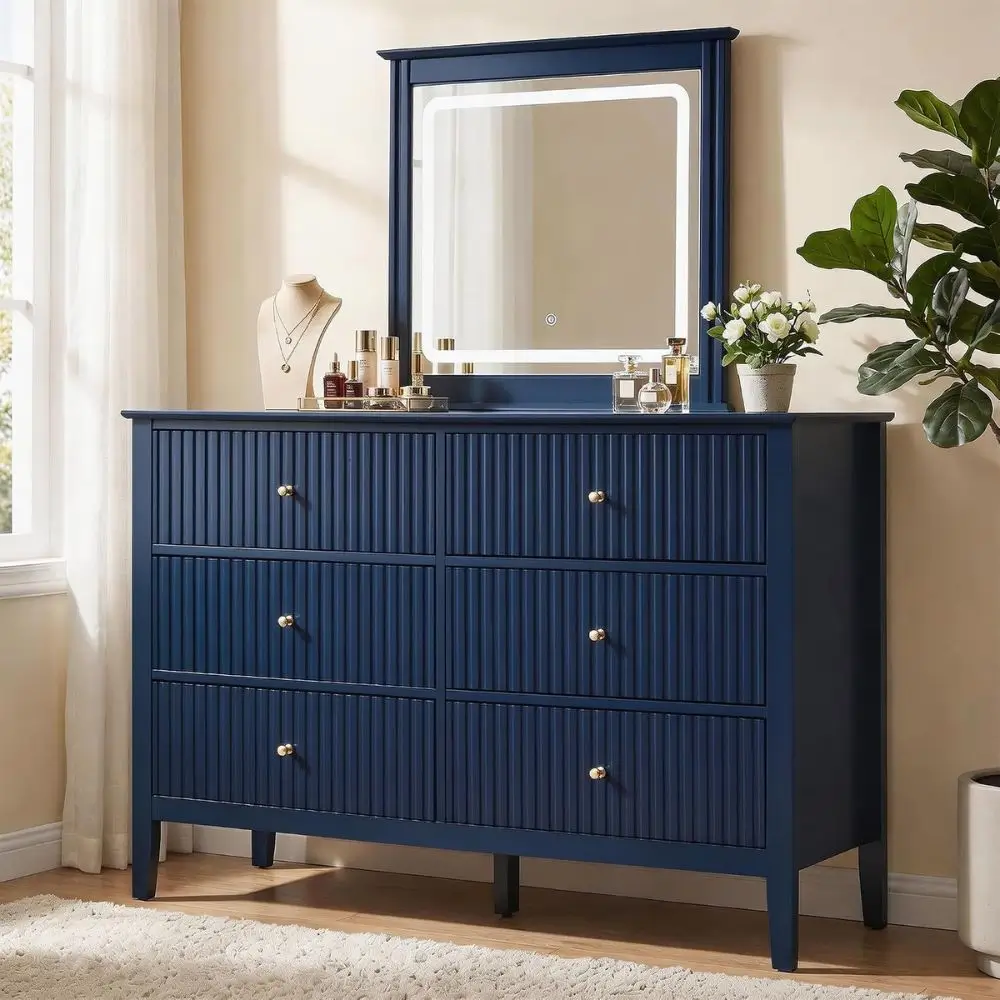
That combination may be perfect when the dresser already sits along your natural route from the closet to the door.
It is less helpful when the attached mirror makes the furniture too tall, blocks a window, or visually crowds the wall.
Compare an Attached Mirror With a Wall-Mounted Mirror
An attached mirror usually creates one substantial furniture piece.
That can feel polished and complete when its size matches the dresser and surrounding wall.
A separate wall-mounted mirror gives you more freedom.
You can hang it slightly higher, choose a lighter frame, move it to another wall, or select a shape that softens a boxy dresser.
If the dresser is already tall, a large attached mirror may create more height than the room needs.
A smaller wall mirror or full-length mirror placed elsewhere may give you a better view without making one wall feel overloaded.
Watch What the Mirror Reflects
Stand where the mirror will be and look at what it faces.
Will it reflect a window, attractive bedding, or open space?
Wonderful.
Will it reflect the laundry pile, television cords, or the closet on the one day every hanger staged a rebellion?
You may prefer a different angle.
The reflection becomes part of what you see in the room, so choose it as carefully as you choose the mirror itself.
What Works in a Very Small Bedroom?
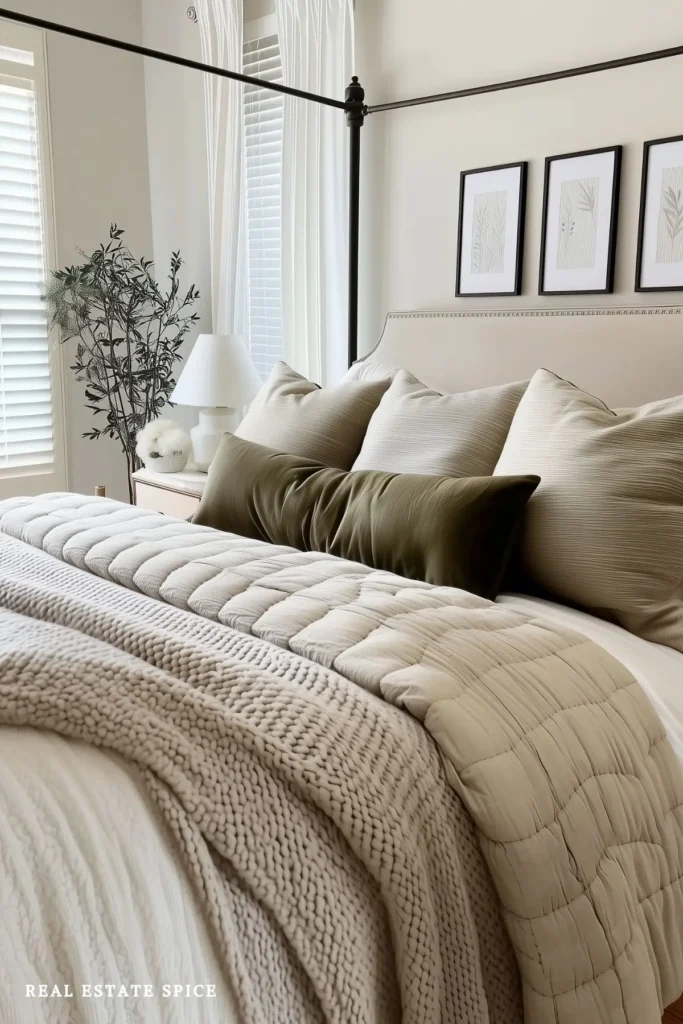
A very small bedroom may not have enough room for a traditional dresser at all.
That doesn’t mean you have to accept clothing piled on the floor or balanced on one heroic chair.
It means the storage needs to be divided more carefully.
Let One Piece Handle Two Needs
A small dresser beside the bed can replace the nightstand.
A low dresser may provide folded-clothing storage and a surface for a mirror.
An in-closet dresser can free wall space for the bed.
A narrow chest might fit where a wider storage piece cannot.
Choose the combination that removes furniture rather than multiplying it.
One useful piece is better than two cramped pieces.
If replacing a nightstand with a dresser gives you the storage you need, you may not need another chest across the room.
If the closet can hold a small dresser, the bedroom may feel much more open without one on display.
Improve the Closet Before Adding Furniture
Look inside the closet before assuming the bedroom needs another dresser.
Are the shelves being used well?
Could a second hanging rod, shelf divider, drawer unit, or better arrangement create the missing storage?
Do you have clothing taking up drawer space that you no longer wear?
Sometimes the room needs a dresser.
Sometimes the existing storage simply needs to stop behaving like everything was placed inside during a fire drill.
Test the closet first.
Then buy the dresser only if you still need it.
Consider Under-Bed Storage
Under-bed drawers or lidded containers can hold seasonal clothing, spare bedding, or less frequently used items.
This won’t replace a dresser for everyone.
It may reduce the number or size of drawers you need.
Choose containers that fit the actual clearance beneath your bed and can be pulled out without hitting another piece of furniture.
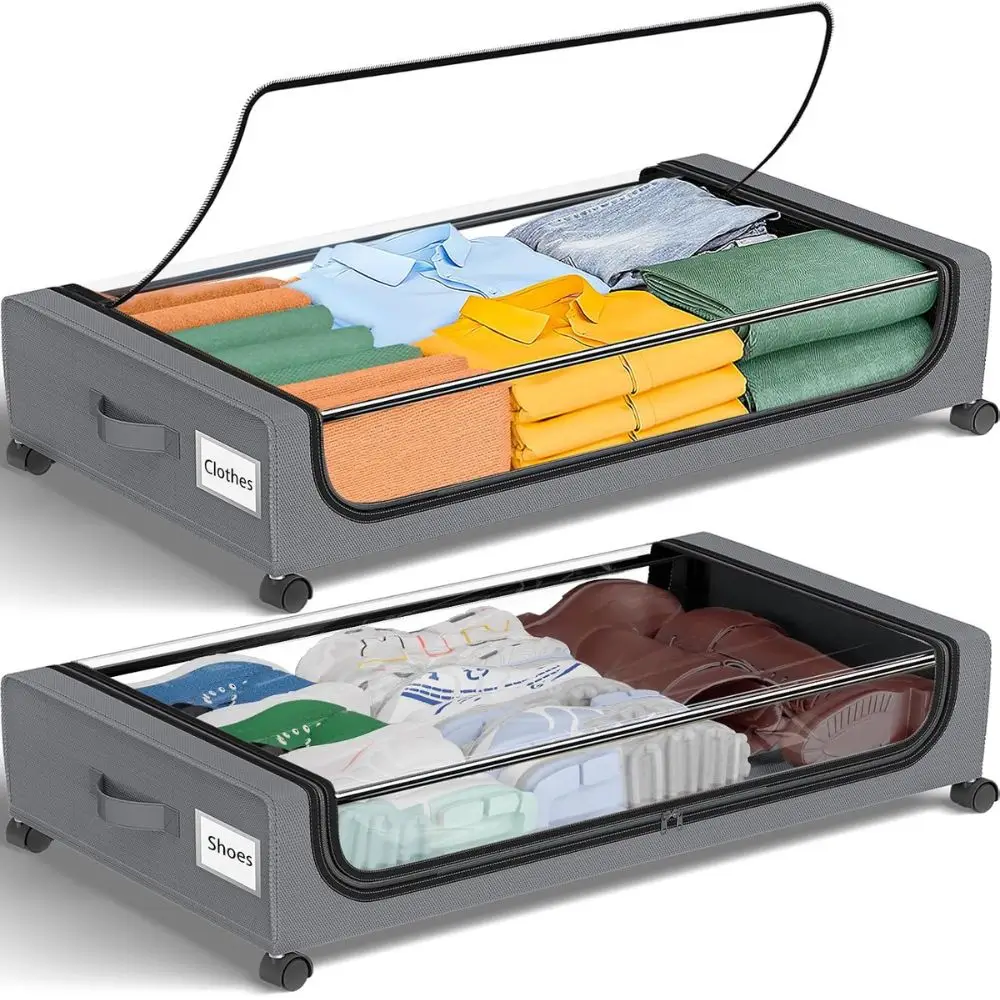
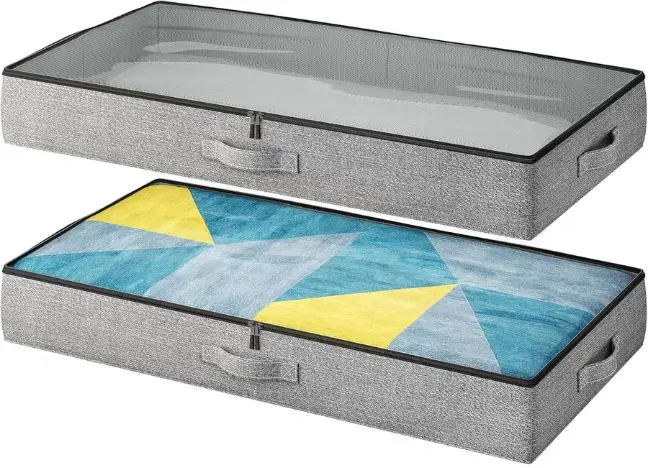
If accessing them requires moving a rug, nightstand, and half the room, they won’t feel convenient for everyday clothes.
Small-Bedroom Dresser Mistakes That Steal Space
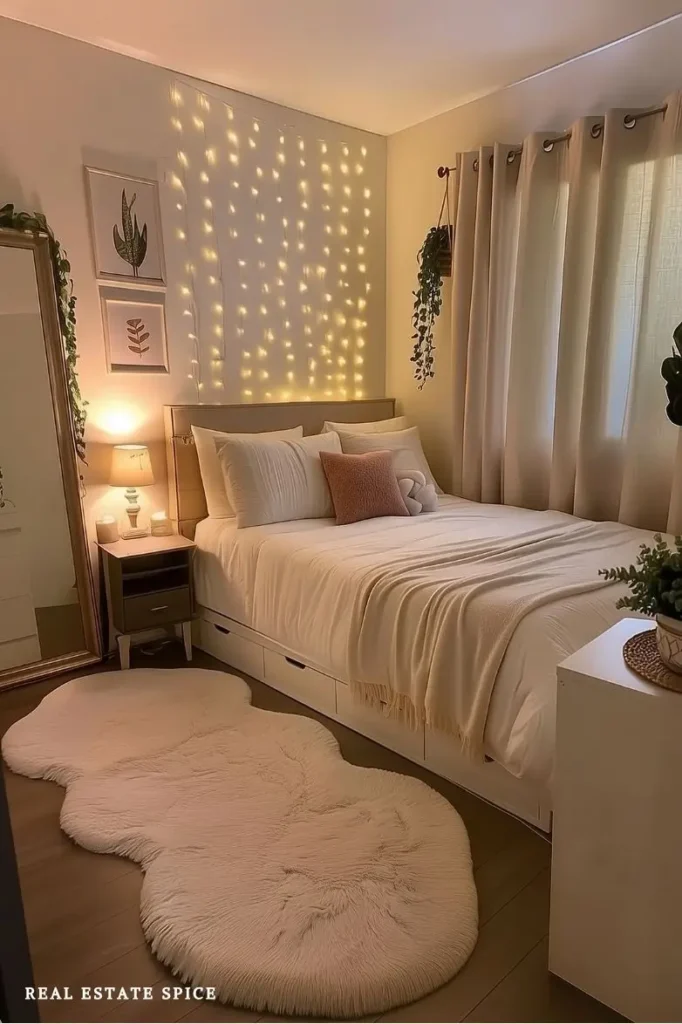
Small rooms expose every furniture decision.
A mistake that disappears in a large bedroom may become the first thing you notice in a smaller one.
Fortunately, most dresser problems can be spotted before the furniture arrives.
Measuring Only the Closed Dresser
This is the most common problem.
The dresser fits against the wall, but the open drawers collide with the bed or leave nowhere for you to stand.
Always mark the closed depth and the open-drawer area.
Walk through the remaining space before buying.
The tape on your floor may not be glamorous, but neither is returning a fully assembled six-drawer dresser.
Choosing Drawers That Don’t Match Your Clothes
A dresser can have an impressive number of drawers and still hold very little of what you own.
Check the interior dimensions whenever they’re available.
Think about your bulkiest folded items.
If sweaters are the main problem, a collection of narrow accessory drawers won’t solve it.
If you need to organize smaller clothing, one enormous drawer may turn into a layered mystery where every missing sock goes to begin a new life.
Match the drawers to the items.
Blocking a Natural Walking Path
Watch how you move from the doorway to the bed, closet, bathroom, and dresser.
Protect the route you use most.
A dresser should not require a detour every time you cross the room.
If one placement creates a clear path and another creates a daily squeeze, choose the clear path even if the dresser looks more symmetrical elsewhere.
You live in the room from many angles.
It doesn’t need to be arranged solely for the five seconds you see it from the doorway.
Filling the Dresser Top
A small bedroom can feel crowded when every horizontal surface is covered.
DRESSER-TOP SHOPPING SHORTCUT
Choose Something Beautiful That Also Helps
Start with one useful piece: a lamp, mirror, jewelry tray, or decorative box. Then add only what the remaining surface can comfortably hold. Buy something that lights, reflects, or contains before adding filler.
Try clearing the entire top.
Add back only what you use or truly enjoy seeing there.
The dresser may suddenly look smaller without changing by one inch.
Forgetting Furniture Safety
Follow the manufacturer’s assembly and anchoring instructions for your dresser.
Install the supplied anti-tip device promptly, and use wall hardware appropriate for your wall and the manufacturer’s directions.
This matters in every home and becomes especially important around children, visiting grandchildren, or anyone who might pull on open drawers.
Keep heavier belongings lower when possible, and don’t place items on top that may tempt a child to climb.
A beautiful bedroom should also be a safe one.
Frequently Asked Questions About Dressers for Small Bedrooms
What Is the Best Dresser for a Small Bedroom?
The best dresser provides the storage you need while preserving enough room to walk, open every drawer, and use nearby doors.
A tall dresser is often best when wall width is limited.
A shallow dresser may work better across from the bed or beside a narrow walkway.
A low dresser can fit beneath a window, while a small dresser may work inside the closet or beside the bed.
Measure the room and the open drawers before choosing the shape.
Is a Tall or Wide Dresser Better for a Small Bedroom?
A tall dresser is usually better when the room has very little available wall width.
It uses vertical space and can provide several drawers without stretching across a long wall.
A wide dresser may be better when you have an open wall, need broader drawers, or want a lower surface beneath a window or mirror.
Neither shape is automatically better.
Choose the one that fits the available wall and holds the types of clothing you need to store.
How Deep Should a Dresser Be in a Small Bedroom?
There isn’t one correct dresser depth for every small bedroom.
The correct depth leaves room for the closed dresser, fully opened drawers, your body while using them, and the walking path behind you.
Measure from the wall to the nearest obstruction.
Then compare that available space with the dresser’s closed and open dimensions.
If a standard dresser crowds the route, look for a shallow dresser and check its interior drawer capacity before purchasing.
Where Should a Dresser Go in a Small Bedroom?
Good placements may include beside the bed, beneath a window, inside the closet, on a short wall, or across from the bed when there is enough clearance.
The dresser should stay outside the main walking path and avoid blocking doors, vents, outlets, and curtains.
Place it close enough to the closet or getting-ready area to make storing and choosing clothes easier.
Can a Small Dresser Replace a Nightstand?
Yes, a small dresser can replace a nightstand and provide much more storage.
Choose a height that remains comfortable beside the mattress.
Make sure the drawers can open without hitting the bed.
Keep enough room on top for the bedside items you use most, such as a lamp, phone, book, or glass of water.
Can I Put a Dresser in a Small Closet?
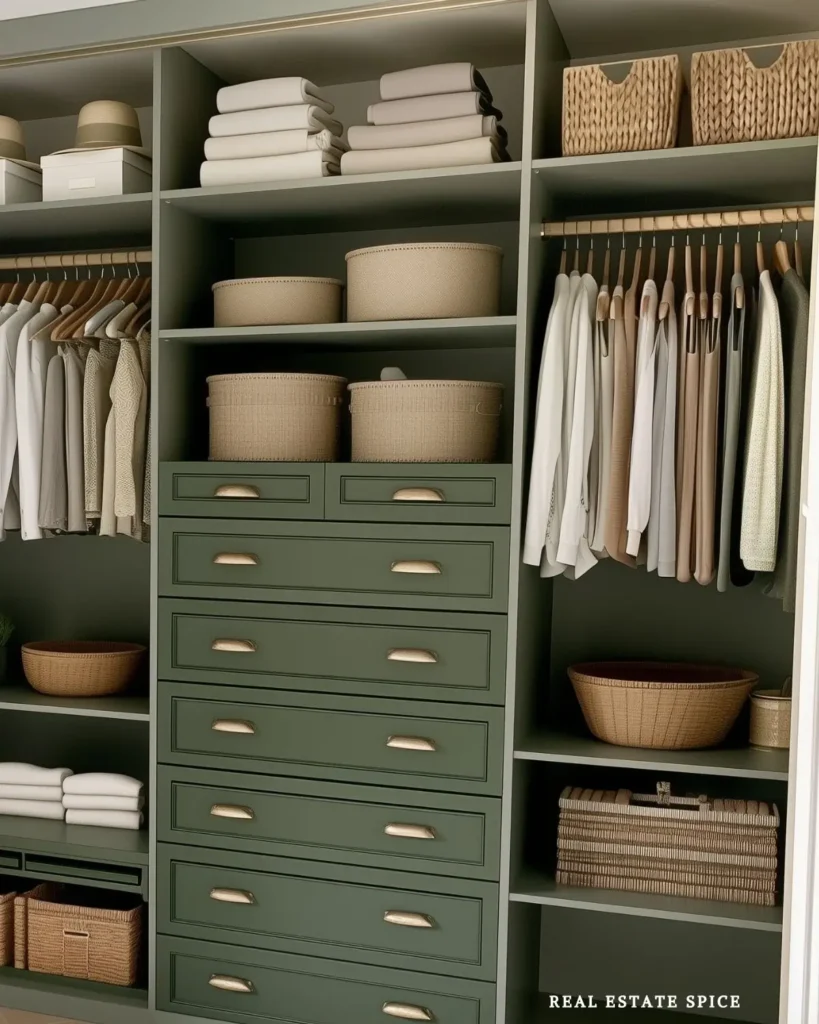
A small dresser can work extremely well inside a closet when it fits through the opening and allows the closet doors and dresser drawers to open.
Check the height beneath hanging clothes and make sure longer garments won’t cover the drawers.
This arrangement can free bedroom wall space and keep folded clothing close to the rest of your wardrobe.
How Can I Make a Dresser Look Smaller in the Room?
Clear excess objects from the top and leave some open space around the furniture.
A mirror or artwork appropriately scaled to the dresser can help the wall feel connected instead of chopped into several unrelated pieces.
Reducing nearby furniture may also make a noticeable difference.
Sometimes the dresser isn’t too large.
It only looks too large because a chair, basket, floor lamp, and side table are all trying to occupy the same corner.
Dressers for Small Bedrooms Can Make Mornings Feel Easier
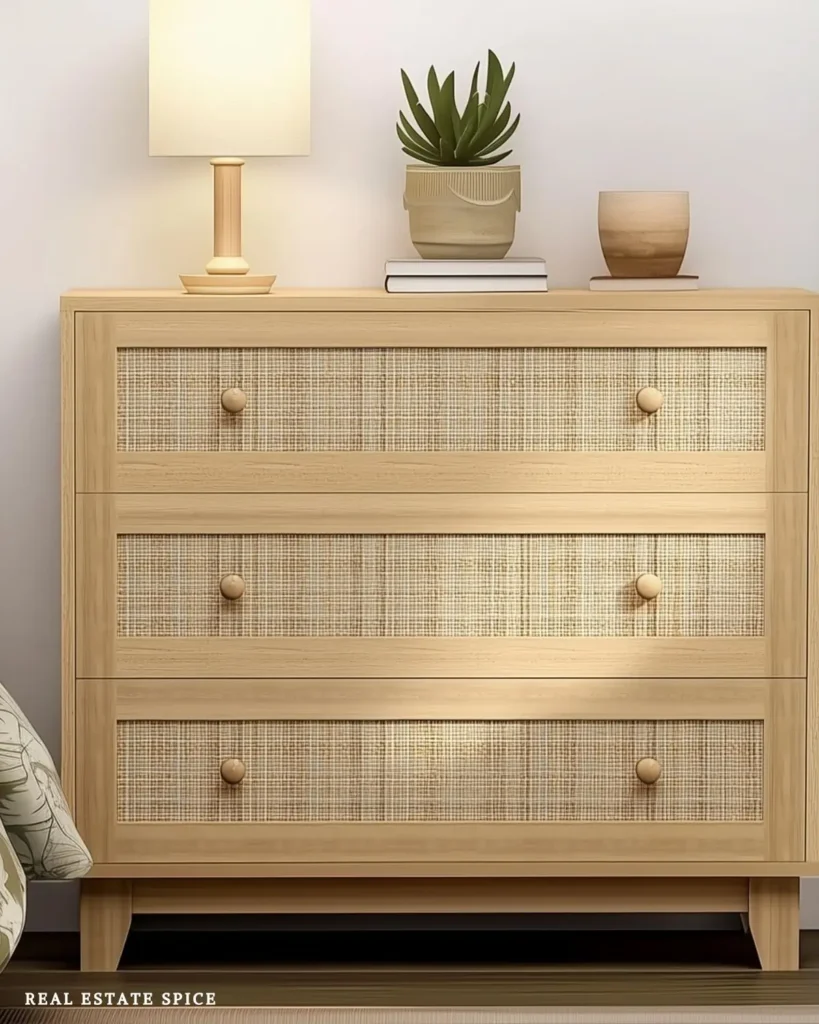
The right dresser gives your clothes a clear home without making the bedroom feel like a furniture showroom with no emergency exits.
You can open the drawers without hitting the bed.
You can walk to the closet without turning sideways.
The top holds the things you use instead of becoming a small archaeological site filled with receipts and missing hair ties.
Your dresser might be tall, shallow, slim, low, tucked into the closet, or standing beside the bed.
Its shape matters less than the way it fits your room and supports your routine.
Measure the wall, mark the open drawers, and walk the remaining path before you buy.
Then choose the piece that gives you enough storage without taking more space than the room can comfortably spare.
If your next challenge is deciding what should go inside those drawers, the Bedroom Storage Rule of 3 will help you organize the room without simply relocating the clutter.
A small bedroom doesn’t need the smallest dresser you can find.
It needs the right dresser in the right place, giving you calmer mornings, clearer pathways, and one less pile of clothes waiting for your attention.
When you walk into the room tonight, you’ll see a bedroom with room to move, storage that makes sense, and not a single dresser drawer preparing an ambush for your shin.