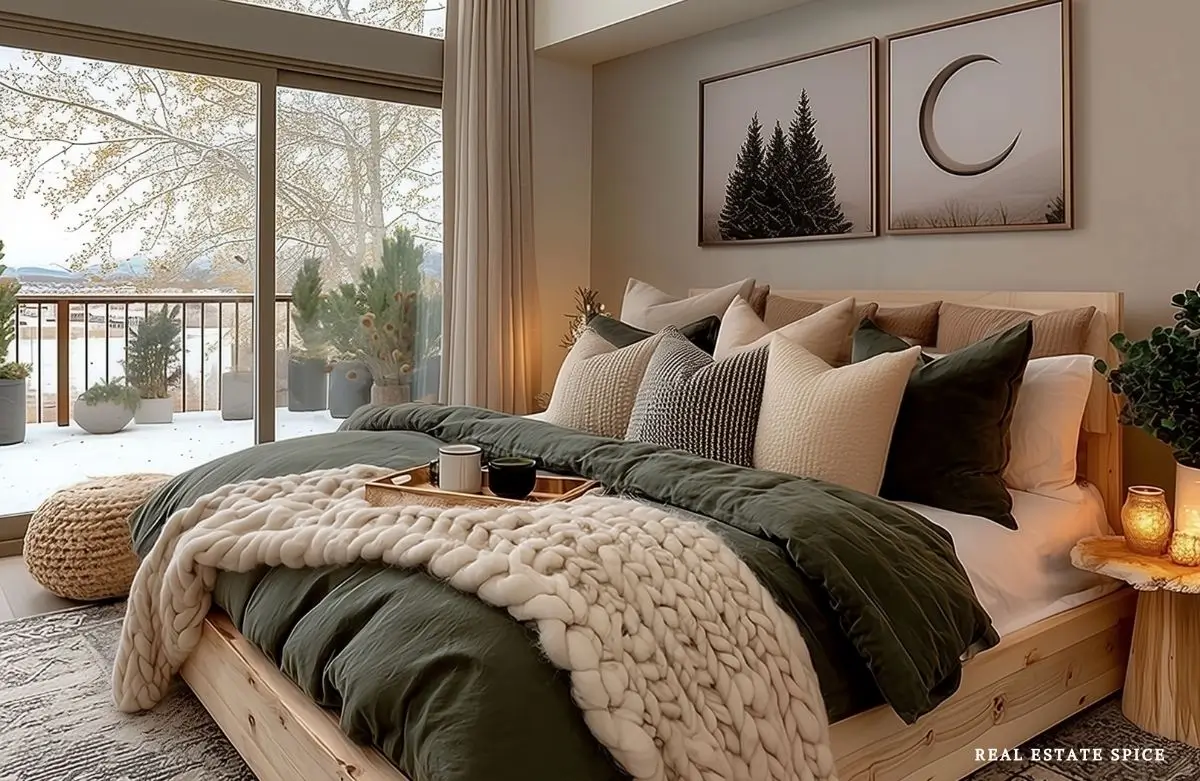
Modern Master Bedroom Design: 7 Easy Steps to a Beautiful Room You’ll Love
Modern master bedroom design becomes much easier when you make each choice in the right order.
It’s tempting to begin with a beautiful bed, dramatic ceiling light, or plush rug you found while browsing late at night.
But the room can become a very expensive puzzle when the bed blocks a window, the rug looks too small, and the dresser hits the bathroom door.
Be sure to check out Master Bedroom Layout Rule of 3 and Modern Bedroom Design Rule of 3 after this…
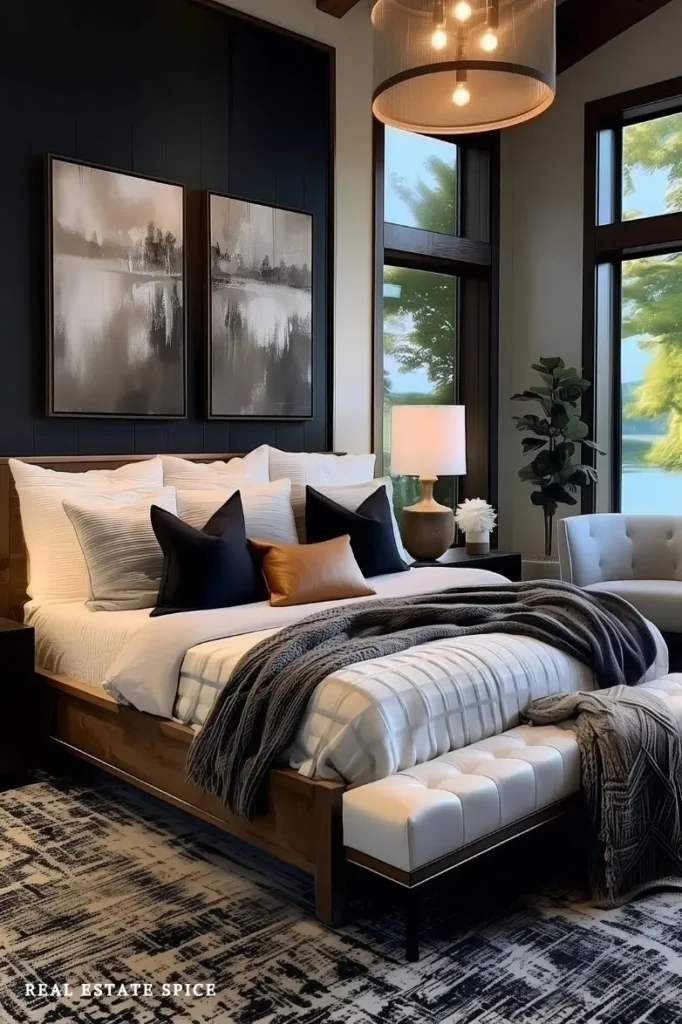
You may already own a wood dresser, upholstered bed, favorite painting, or wonderful quilt you want to keep.
If you’re still exploring the look you want, my modern master bedroom ideas can help you find colors and features you love.

Here, I help you turn those ideas into a complete modern master bedroom interior design plan.
We’ll look at where you walk, what you reach for at night, where you get dressed, and how you like to relax.
You can use the same seven steps for a small modern master bedroom, a large primary suite, or a room filled with furniture you already own.
Grab your favorite beverage, a pen, and paper for notes.
Take your time with the images, design tips, and products, and enjoy!
P.S. Remember to save this and come back anytime for another dose of inspo!
1. Measure the Room and Decide How You Want to Use It

Before you move the bed or order anything new, measure the room and the furniture you plan to keep.
Those numbers will show you what fits and where you need room to walk, open doors, and pull out drawers.
Measure the Parts That Will Stay in Place
Begin with the walls, windows, doors, outlets, and vents.
These parts will shape where the bed, dresser, and other furniture can go.
A tape measure works well for furniture and shorter spaces.
When you’re working alone, a laser tape measure can make it easier to check long walls.

Write down the length of every wall.
Then measure from each corner to the nearest door or window.
Measure the height and width of the windows too.
Those numbers will help later when you compare a headboard, curtains, Roman shades, or cellular shades.
Open the bedroom door, closet door, bathroom door, and every dresser drawer that is already in the room.
Notice how much space each one uses and where you naturally stand.
A door may look perfectly harmless when it’s closed, then smack into the dresser the moment you open it.
Get My Free eBook
“100 Easy Ways To Refresh Any Room All Year Round”
Think Through a Full Day in the Bedroom

Next, think about what happens in the bedroom from morning through night.
Perhaps you get dressed there, read in a chair, watch television, fold laundry, or enjoy coffee near the window.
You may also need a place for medication, glasses, books, chargers, extra blankets, or that sweater you may wear again tomorrow.
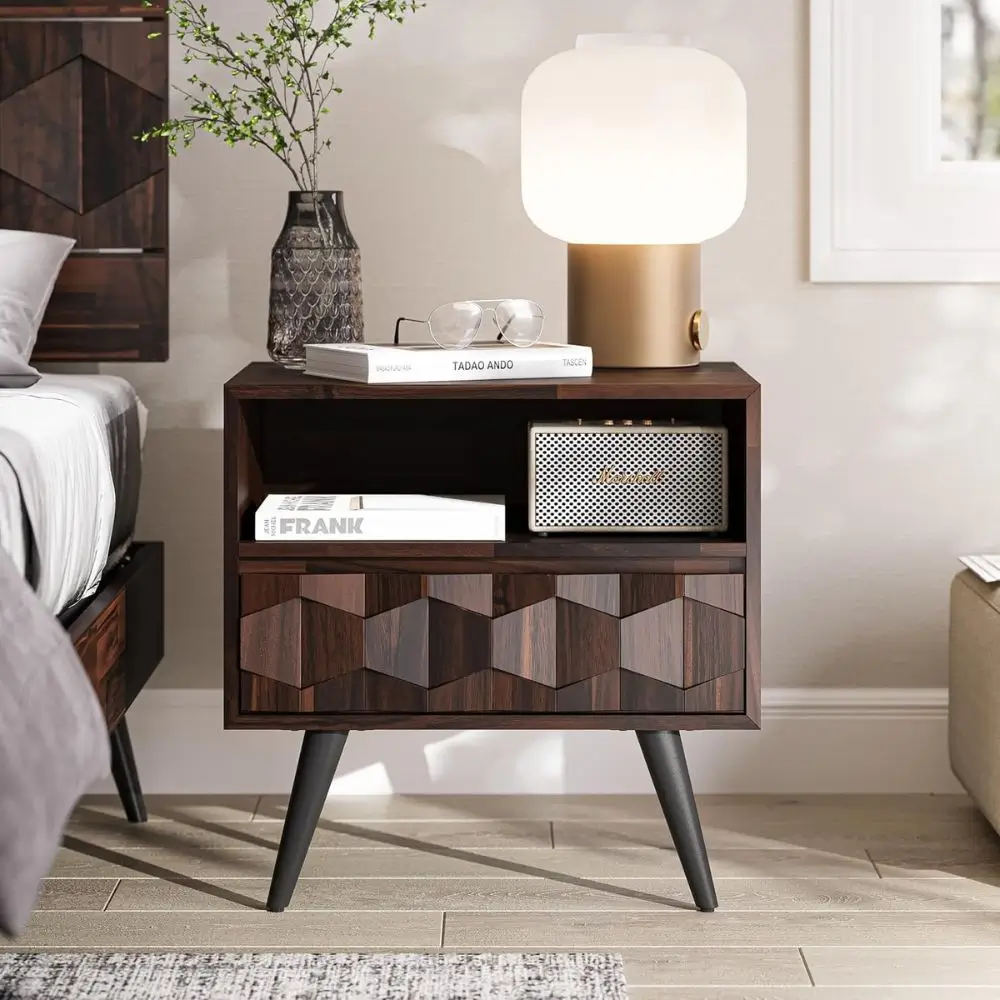
Write down what you do there most often.
Then choose furniture, storage, and lighting that make those parts of your day easier.
We both know the sweater isn’t ready for the hamper yet.
Keep What You Love and Plan What to Replace
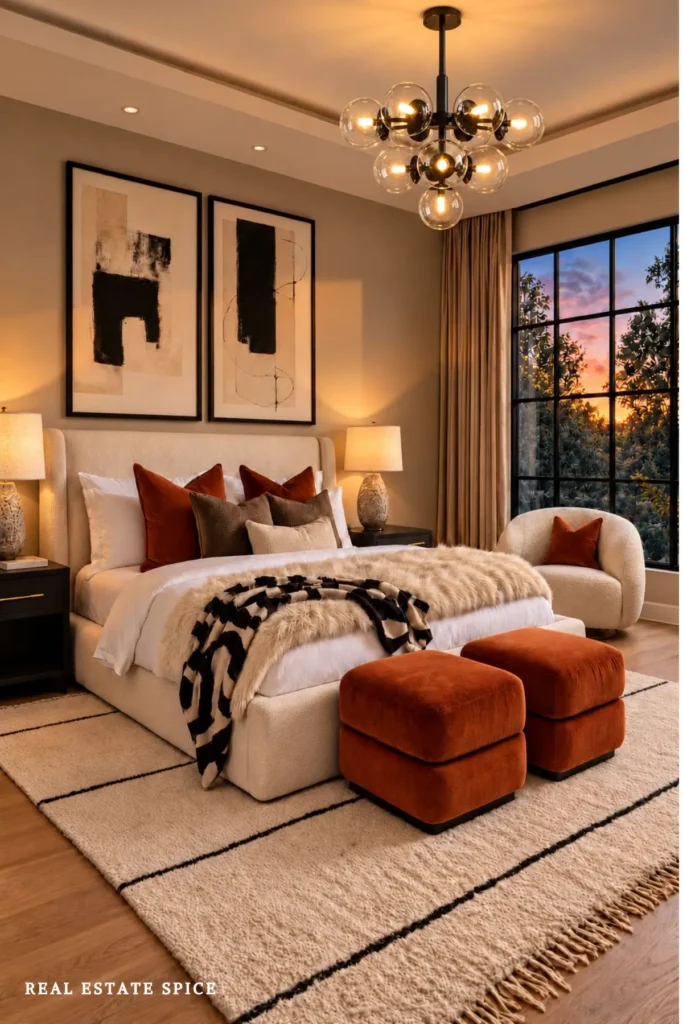
Before you buy anything, look at what you already own.
You may have a solid wood dresser, vintage nightstand, family quilt, or favorite photograph you still love and want to use.
Keeping them can make the bedroom feel more personal and leave more money for a better mattress, curtains, or storage.
Now make a list of what isn’t working.
Perhaps the mattress hurts your back, the curtains let a streetlight reach your pillow, or the dresser is losing its daily battle with your clothes.
Fix those problems before another decorative pillow sneaks into the cart.
Set a spending limit, then measure every large piece you plan to keep.
Write down the full width, depth, and height.
Include the space needed to open each drawer, door, or storage lid.
Use painter’s tape to mark the size of a possible bed, dresser, bench, or chair on the floor.
Leave the tape down for a day if you can.
JAYMIE’S PRO TIP
But, Jaymie, the painter’s tape fits. How do I know the furniture won’t still feel too big?
Painter’s tape shows the floor space, but it can’t show the height. Stack empty boxes inside the outline until they’re close to the dresser, bench, or nightstand you’re considering. Then check the view from the doorway and the bed. Check the height, not only the footprint.
Walk around it, open the nearby doors, and notice whether you can still use the room without turning sideways.
Keep what you love, then spend your money fixing the problems you notice every day.
Start the Shopping List Before You Buy
Before you shop, write down what you already own and what you still need to buy.
Beside each item, add the largest width, depth, and height that will fit, along with your spending limit.
Choose the largest pieces first: the bed frame, dresser or wardrobe, necessary storage, and window treatments.
Measure the pieces that fit around them: the nightstands, rug, bench, chair, lamps, and wall sconces.
Save these for last: the bedding, new artwork, pillows, throws, trays, and smaller decorative pieces.
Keep the list on your phone so one beautiful lamp doesn’t send the whole bedroom in a different direction.
Once the room is together, walk through it, sit on the bed, open the drawers, and reach for the lamps.
Move or remove anything that creates the same frustration every day.
You’re done when the drawers open, the lamps are within reach, the paths stay clear, and you enjoy what you see from bed.
2. Place the Bed and Build the Layout Around It

Start with the bed before you place the nightstands, dresser, bench, or chair.
A few extra minutes here may save you from moving half the bedroom again tomorrow.
Choose the Best Wall for the Bed

The bed is usually the largest piece in the room, so its position affects nearly everything else.
Look for a wall where the bed can sit without blocking a window, door, vent, or path to the bathroom.
The longest solid wall may work well, but it isn’t the only good choice.
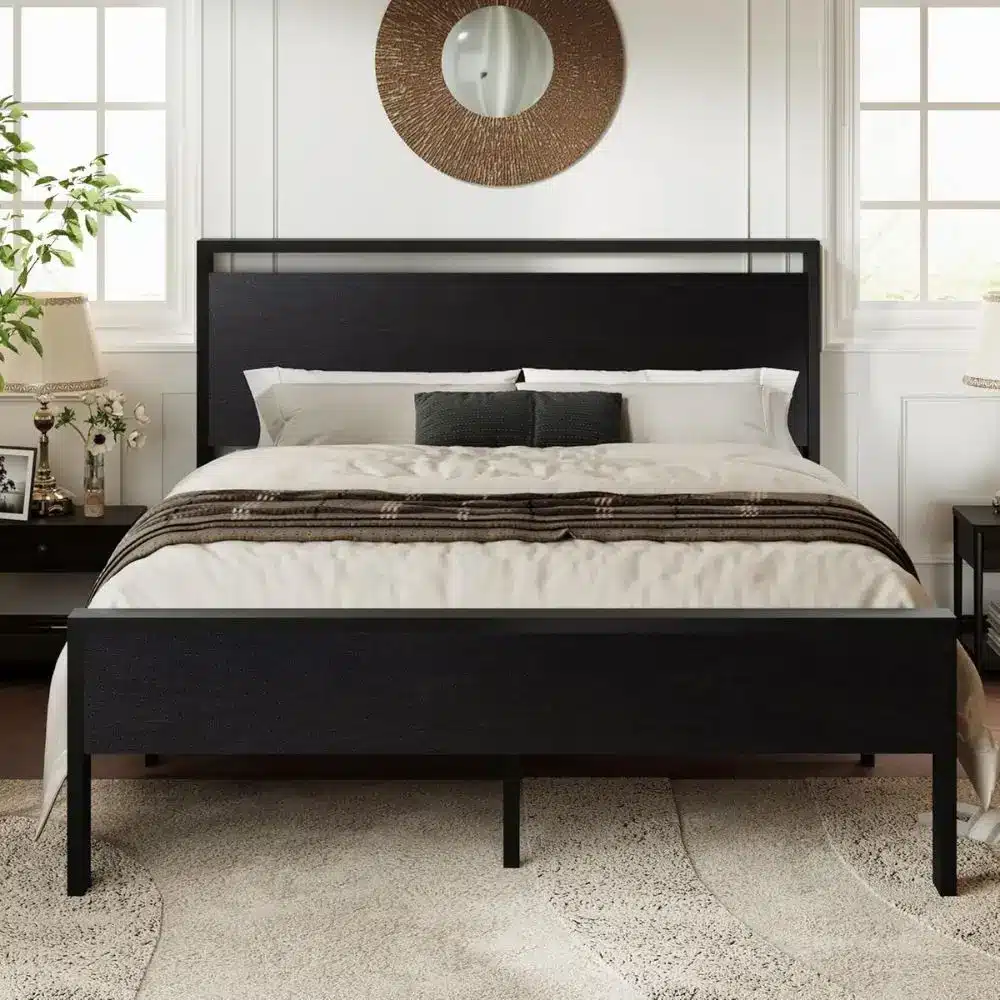
An off-center window, angled ceiling, fireplace, or several doors may make another wall more practical.
Before moving anything, picture the bed on each wall as you walk to the closet, bathroom, and windows.
Mark the Full Size of the Bed
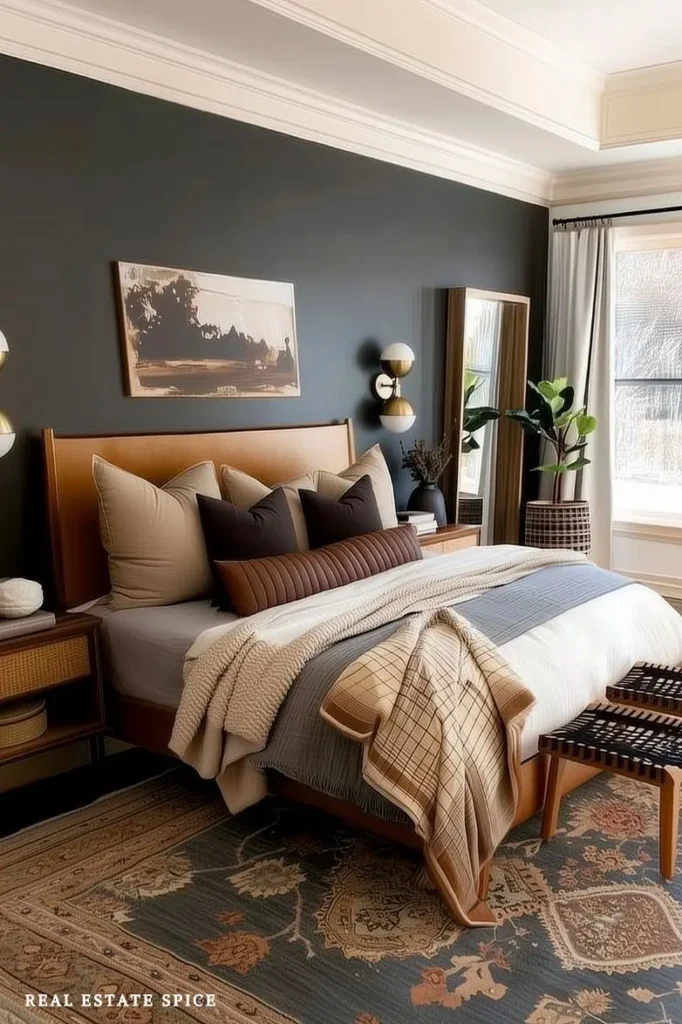
Measure the full bed frame instead of using the mattress size alone.
A modern king bed frame may extend several inches beyond the mattress on every side.
Wide headboards can take up even more wall space once the nightstands are added.
That generous frame feels less luxurious when you have to turn sideways to reach your own closet.
Use painter’s tape to mark the outside edge of the entire frame.
If two people use the bed, try to leave a comfortable path on both sides.
Around 30 inches can feel comfortable when the room allows, but each person should be able to get in and out of bed without bumping the wall or nearby furniture.
Leave enough space at the foot for the bedding to hang freely and for you to walk past the frame.
Add the Nightstands, Dresser, Bench, and Chair

Now mark the nightstands beside the bed.
They should sit close enough to hold a lamp, water, glasses, and the items you reach for at night.
The two nightstands can differ when each side of the bed has different needs.
One person may want drawers and a charging station, while the other prefers a smaller table with an open shelf.
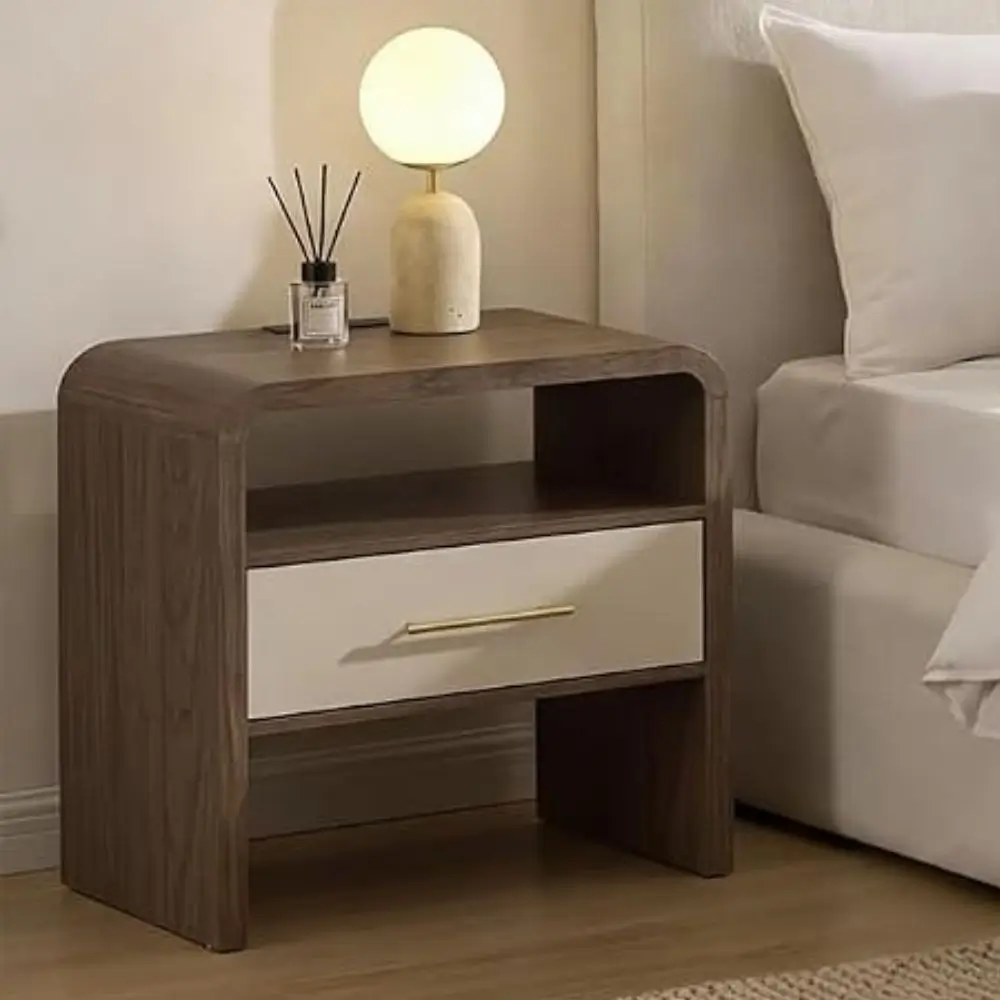
Next, check the best position for the dresser, wardrobe, bench, and any chair you hope to include.
A dresser needs room for the drawers and for you to stand in front of them.
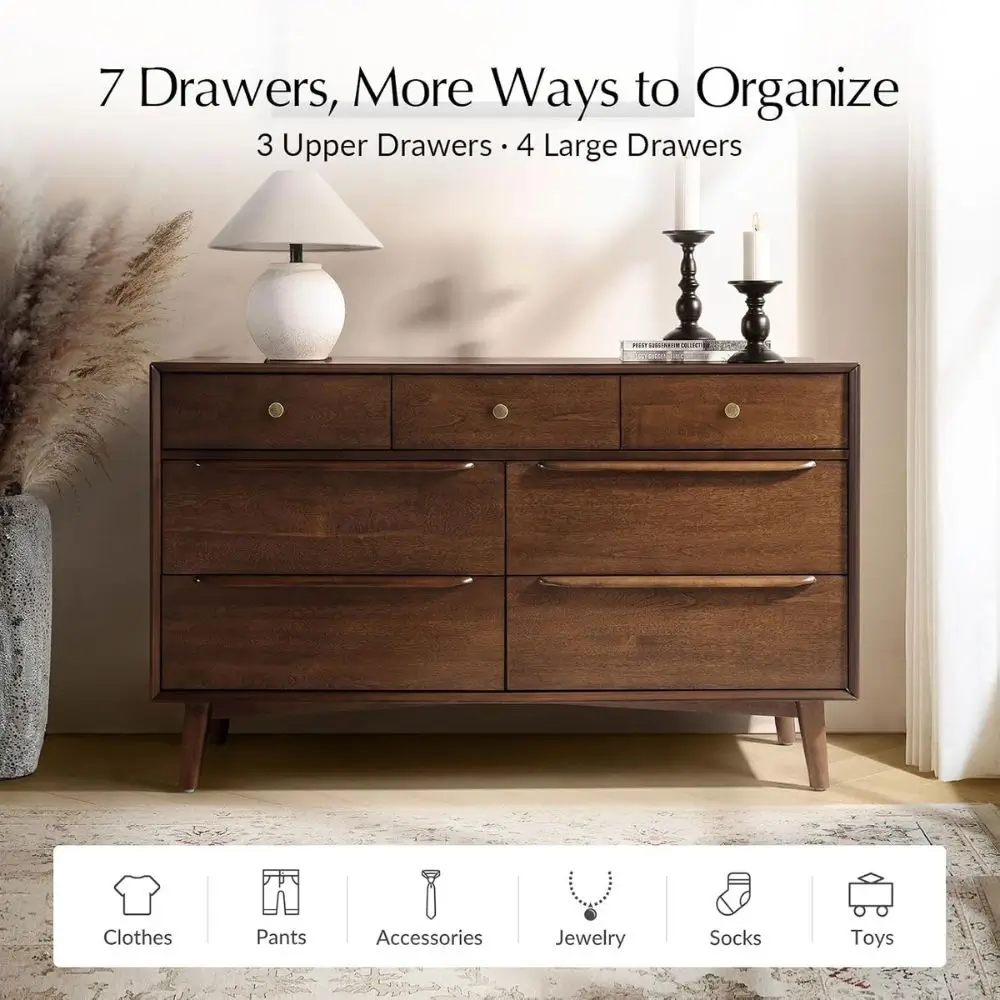
Place a bench at the foot of the bed only when the walkway remains easy to use.
A chair is much more useful when you can reach a lamp, set down a drink, or enjoy the view.
Adapt the Layout to the Size of the Room
For a small modern master bedroom design, keep the paths to the door, closet, and bathroom open before adding another piece.
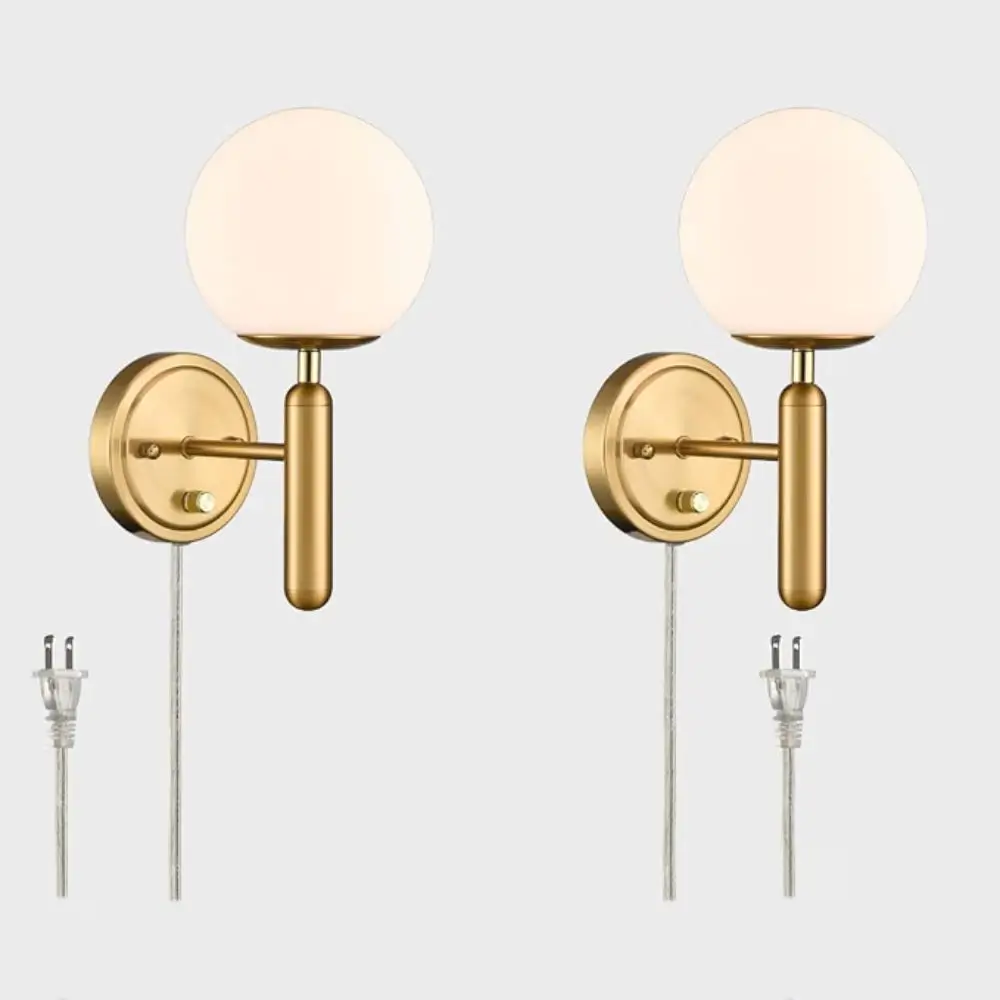
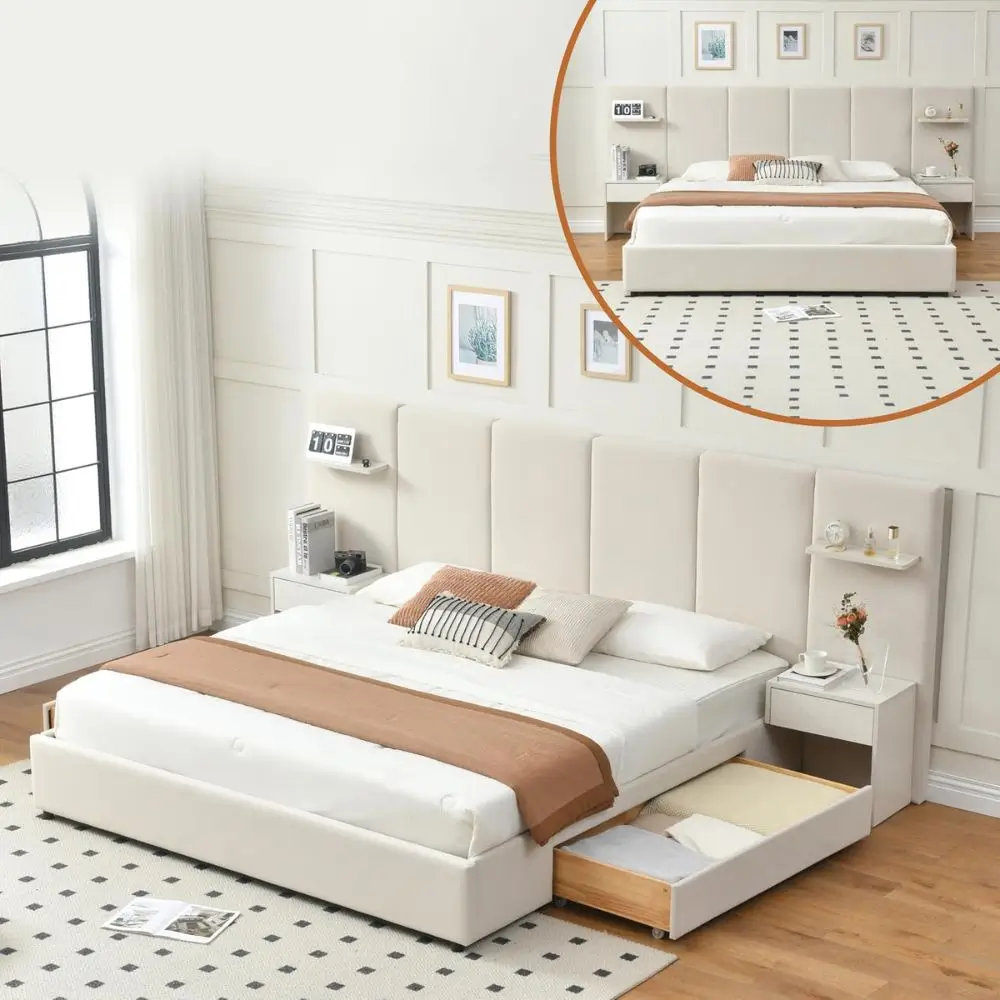
Floating nightstands and wall sconces leave more floor showing, while a storage bed can hold extra blankets or clothes.
In a large modern master bedroom, group the furniture by how you use each part of the room.
The bed can form the sleeping area, while a chair and lamp create a separate place to read.

When you compare modern master bedroom floor plans, look past the shape of the room.
Notice how the doors, closets, and windows affect the paths you use.
You should be able to reach the bathroom half awake, carry a laundry basket, and cross the room in the dark without bumping into furniture.
The layout works when every piece fits and you can still walk through the bedroom without dodging the bench or squeezing past the dresser.
Choose What Goes Across From the Bed
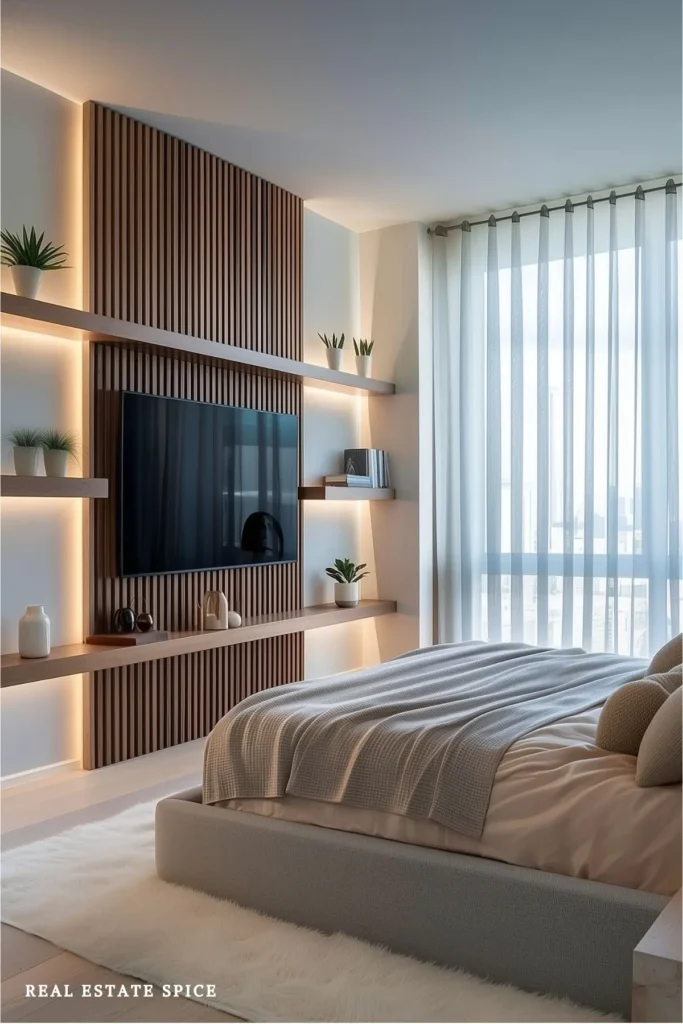
Sit up in bed and look at the wall across from you.
If you get dressed there, a dresser and mirror may be the most useful choice.
If you watch television at night, plan the screen, console, and cords together instead of adding each one later.
A modern electric fireplace can add warm light when the wall has enough space for it.
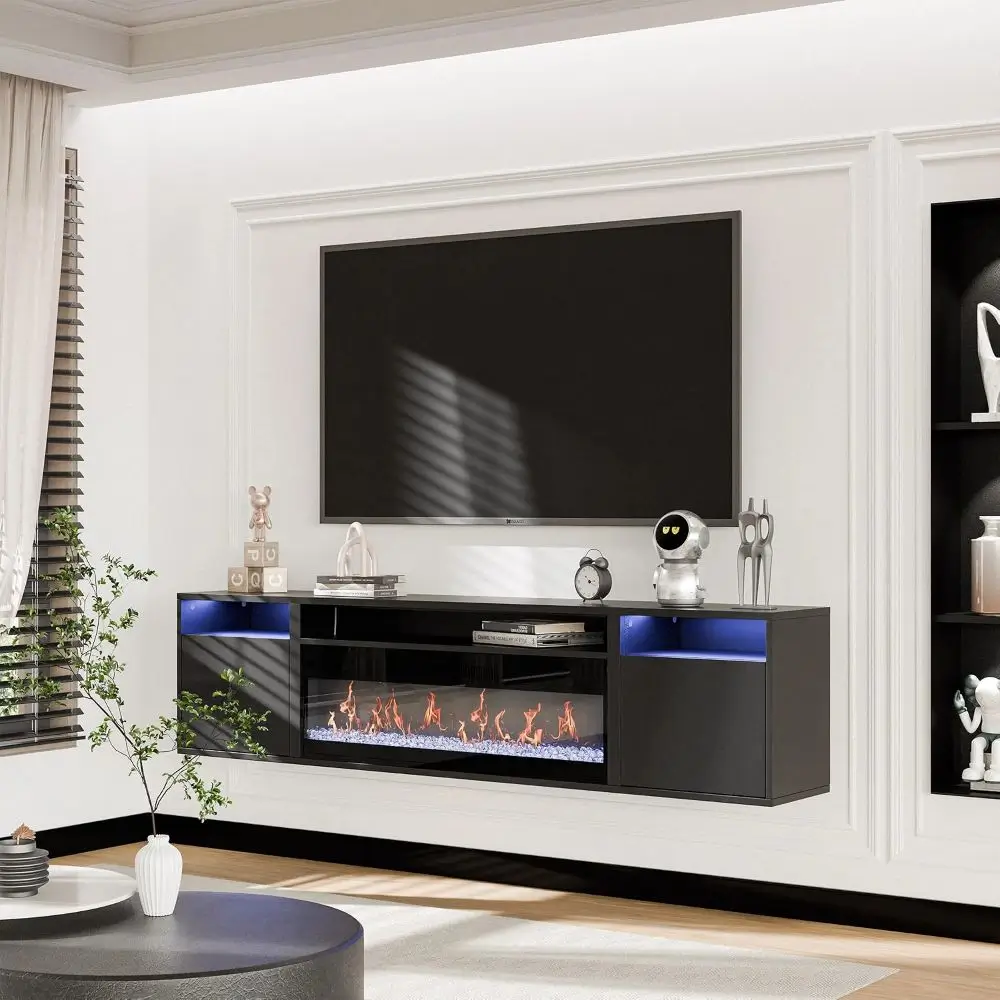
Compare wall-mounted and freestanding styles, then follow the product directions for power, clearance, placement, and heat use.
Keep the remote in a nearby drawer or tray unless you enjoy lifting every pillow at 10:30 p.m. while asking where it went.
A dresser, television, or fireplace can work there, but the wall rarely needs all three.
3. Choose the Colors and Materials

Color is only one part of the plan.
The wood, fabric, metal, glass, and painted finishes also help the bed, nightstands, lighting, and other pieces look connected.
Begin With Something You Plan to Keep
Choose one item in the room that you already love and plan to keep.
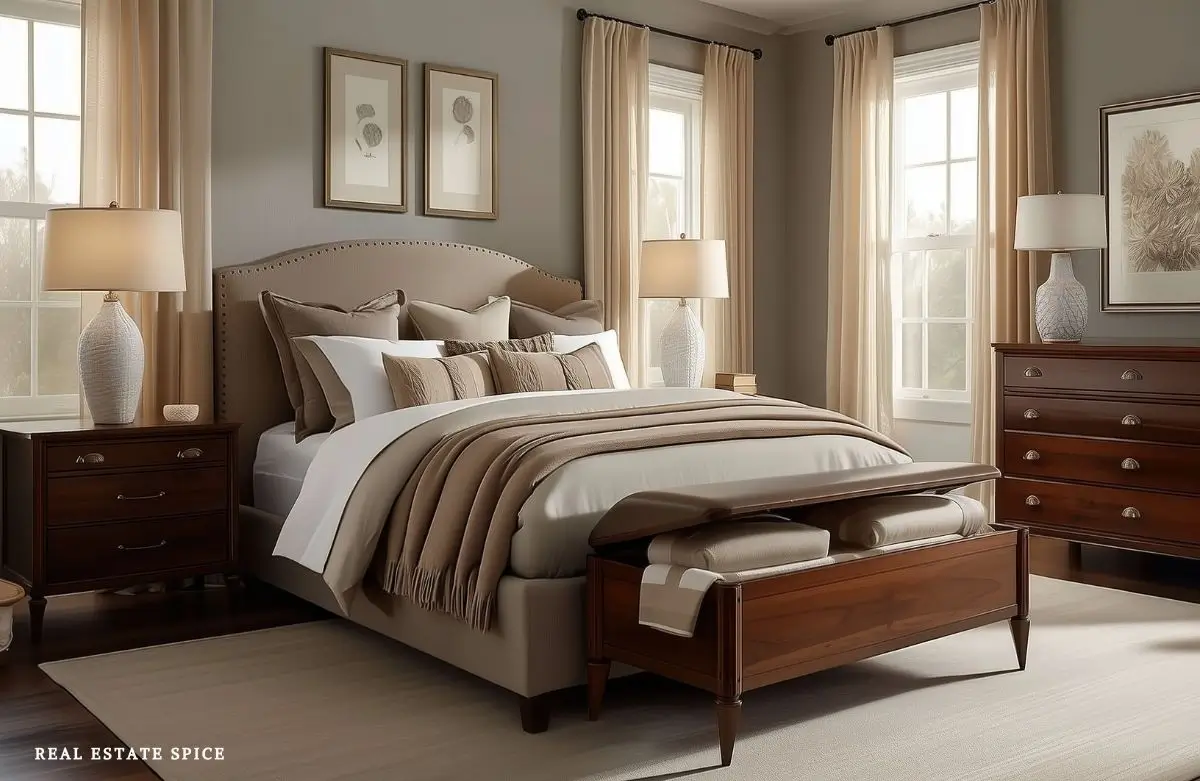
That starting piece might be a walnut dresser, cream upholstered bed, colorful painting, wood floor, rug, or quilt.
Use its colors and finishes to guide the walls, bedding, furniture, and lighting.
Building the room around one real item is easier than trying to match a group of tiny paint chips to an imaginary bedroom.
Build a Simple Three-Part Color Plan
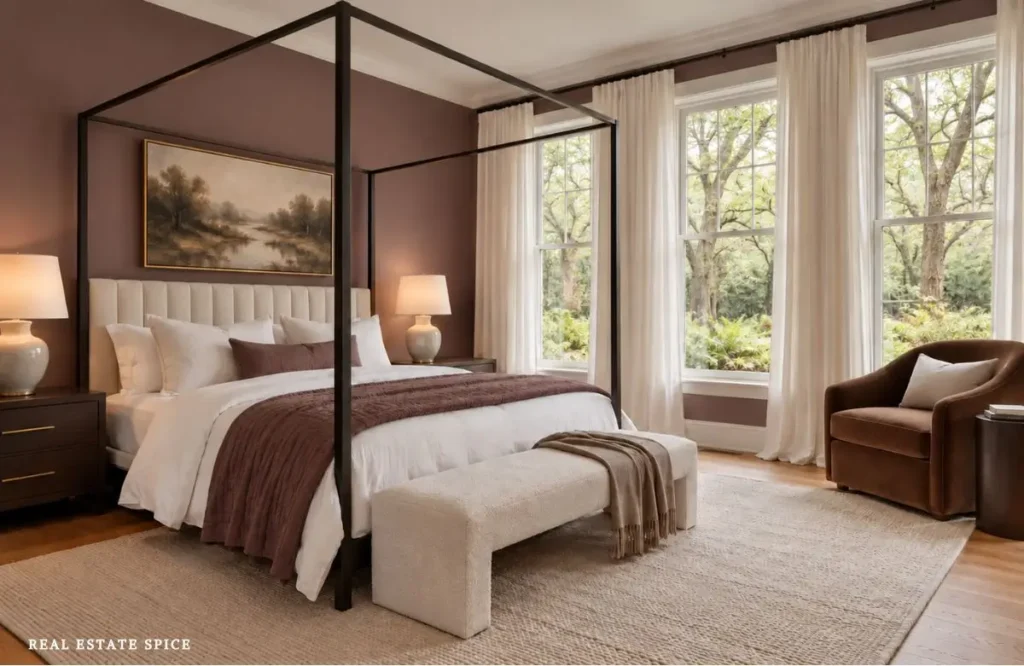
Create a simple three-part plan using a main room color, a furniture or wood finish, and one accent color.
For example, you might combine warm cream walls, walnut furniture, and deep green fabric.
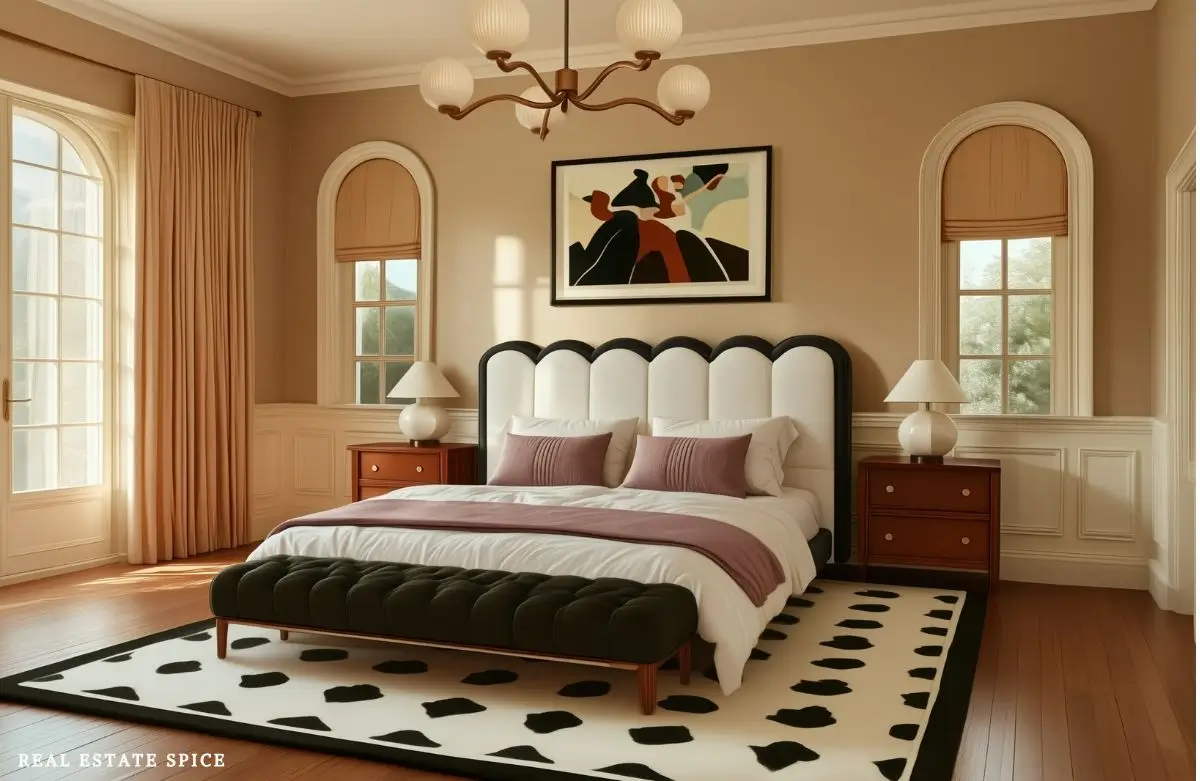
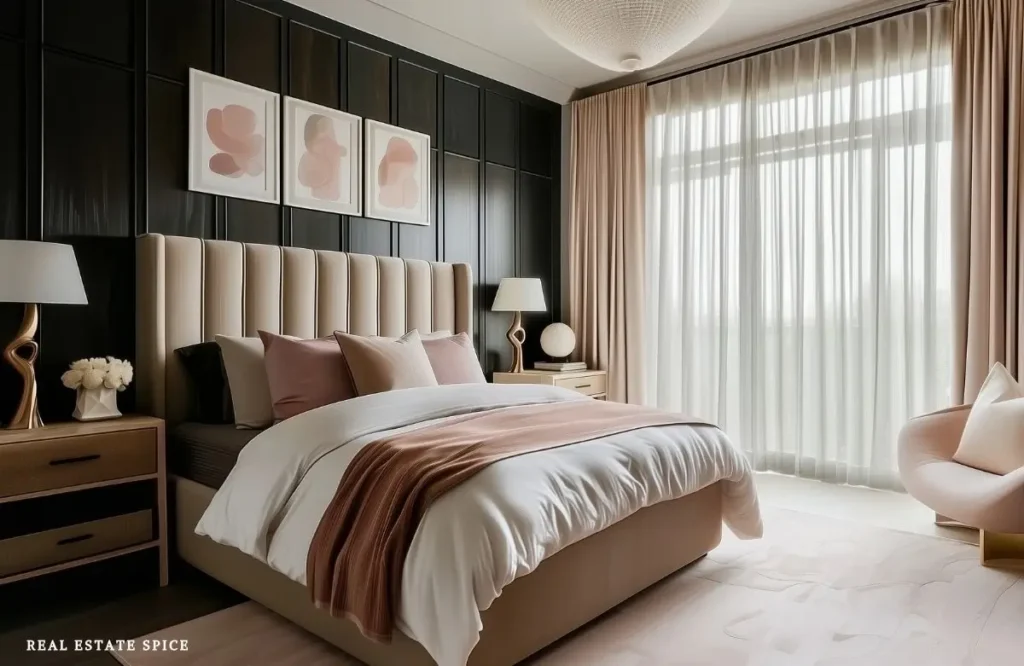
The bedroom shown here uses muted plum walls, black furniture, and cream bedding.
Repeat those colors across the bedding, artwork, rug, and curtains instead of adding a different color with every purchase.
Check the flooring before you choose the paint and wood finishes.
Warm oak floors can work beautifully with cream, brown, green, charcoal, or muted blue.
Cool gray flooring often looks better beside soft white, navy, black, or a warmer wood tone.
Hold the samples against the floor in morning and evening light before choosing a winner.
Plan the Wall Behind the Bed
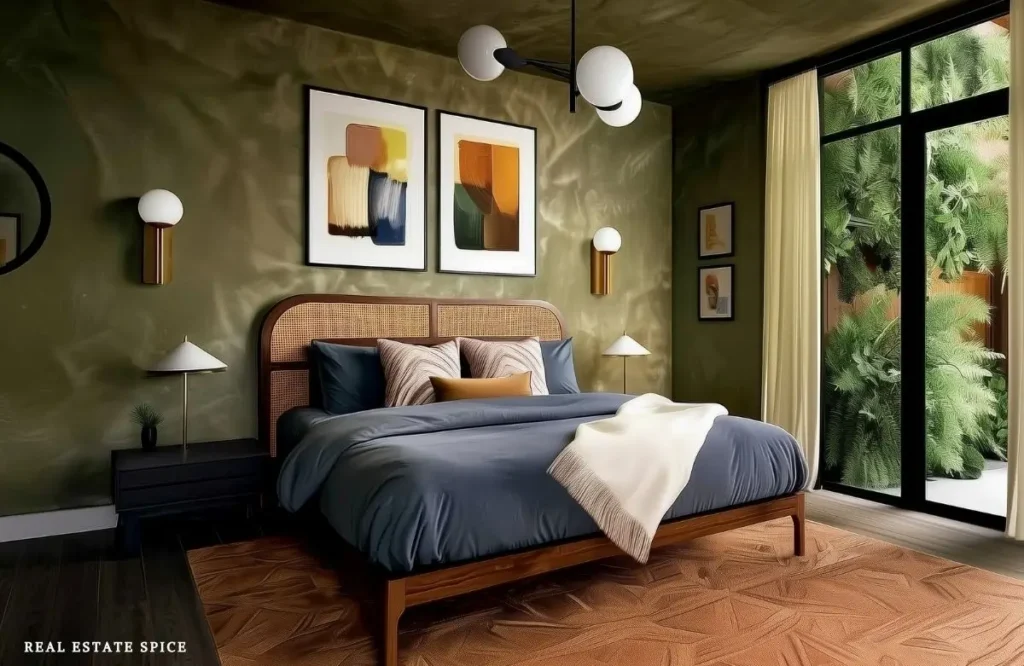
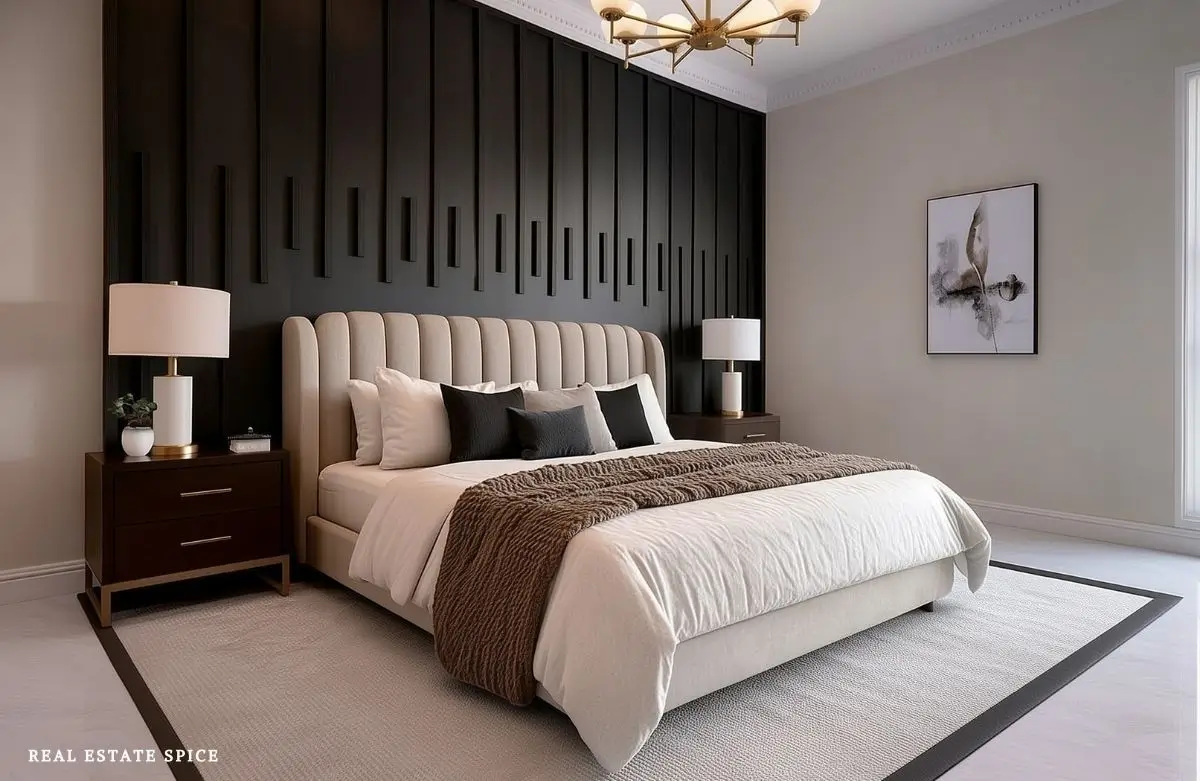
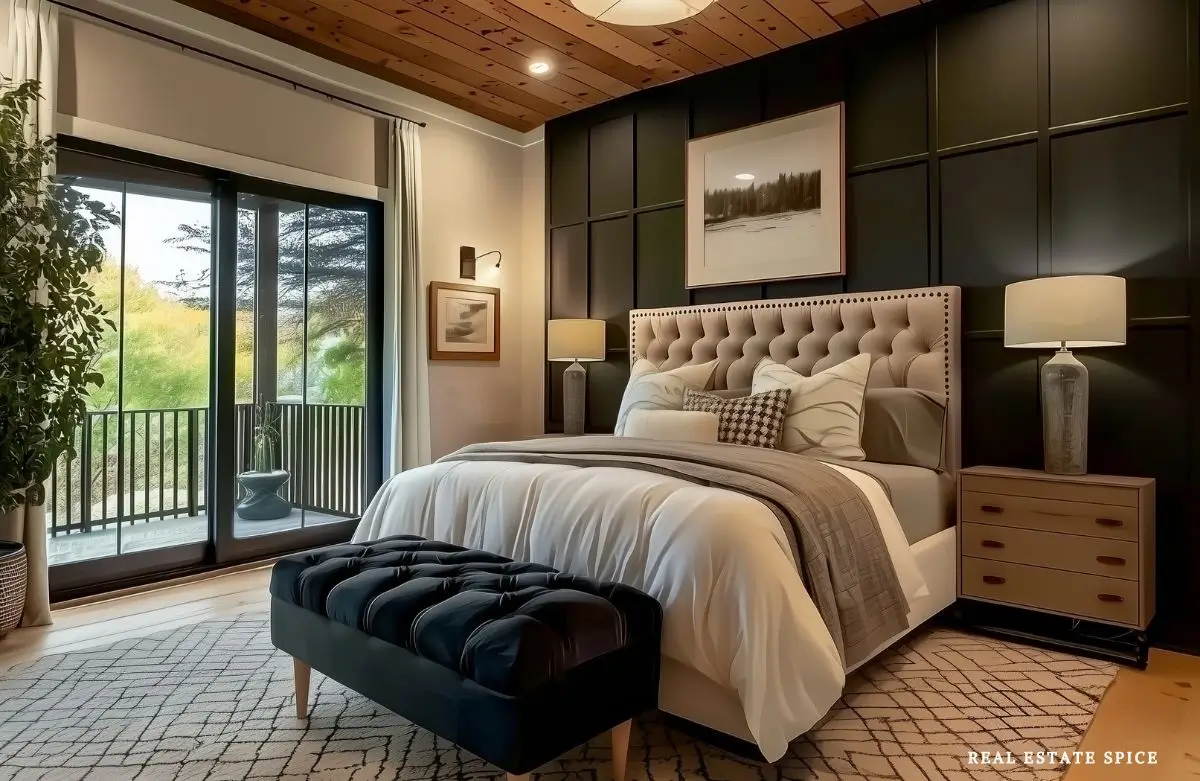
A modern bedroom accent wall can frame the bed and give you a clear starting point for the artwork and bedside lights.
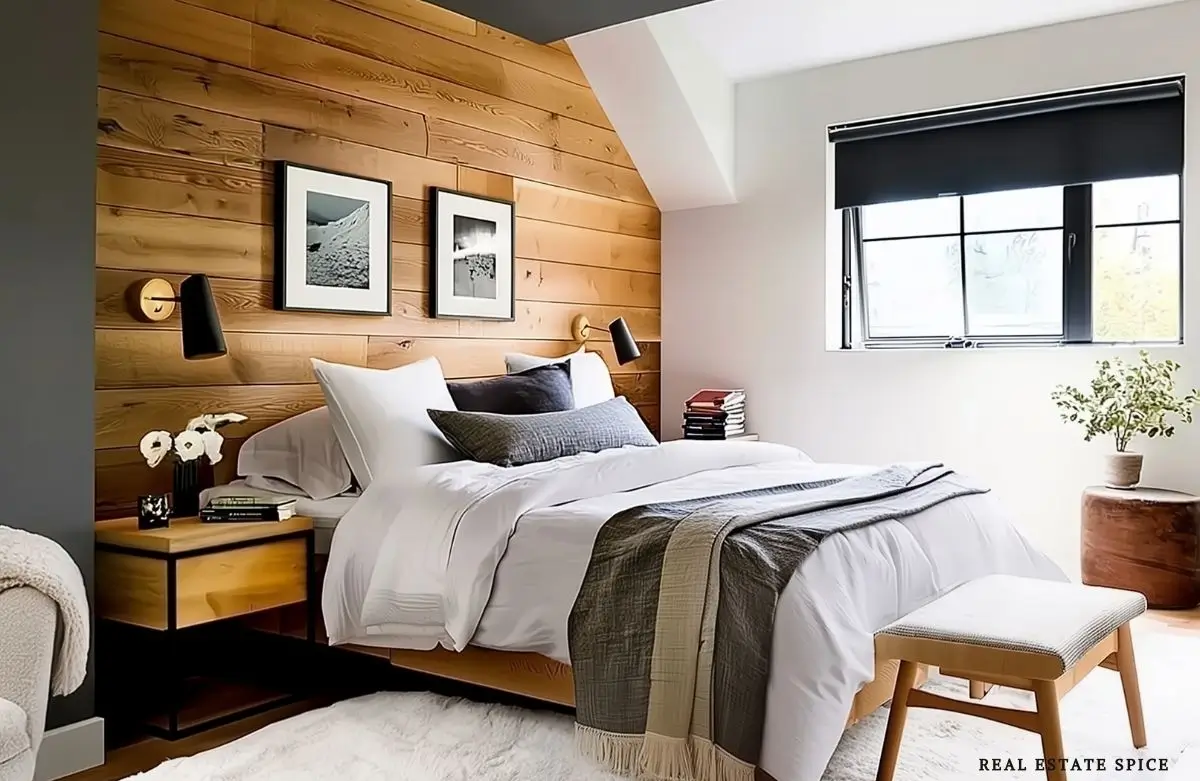
Choose one main treatment, such as a deeper paint color, wide paneling, vertical wood slats, wallpaper, or fabric panels.
Let the headboard help you decide whether the wall should stay simple or carry more detail.
A tall channel-tufted headboard may look wonderful against simple paint, while a lower bed can handle more pattern or texture.
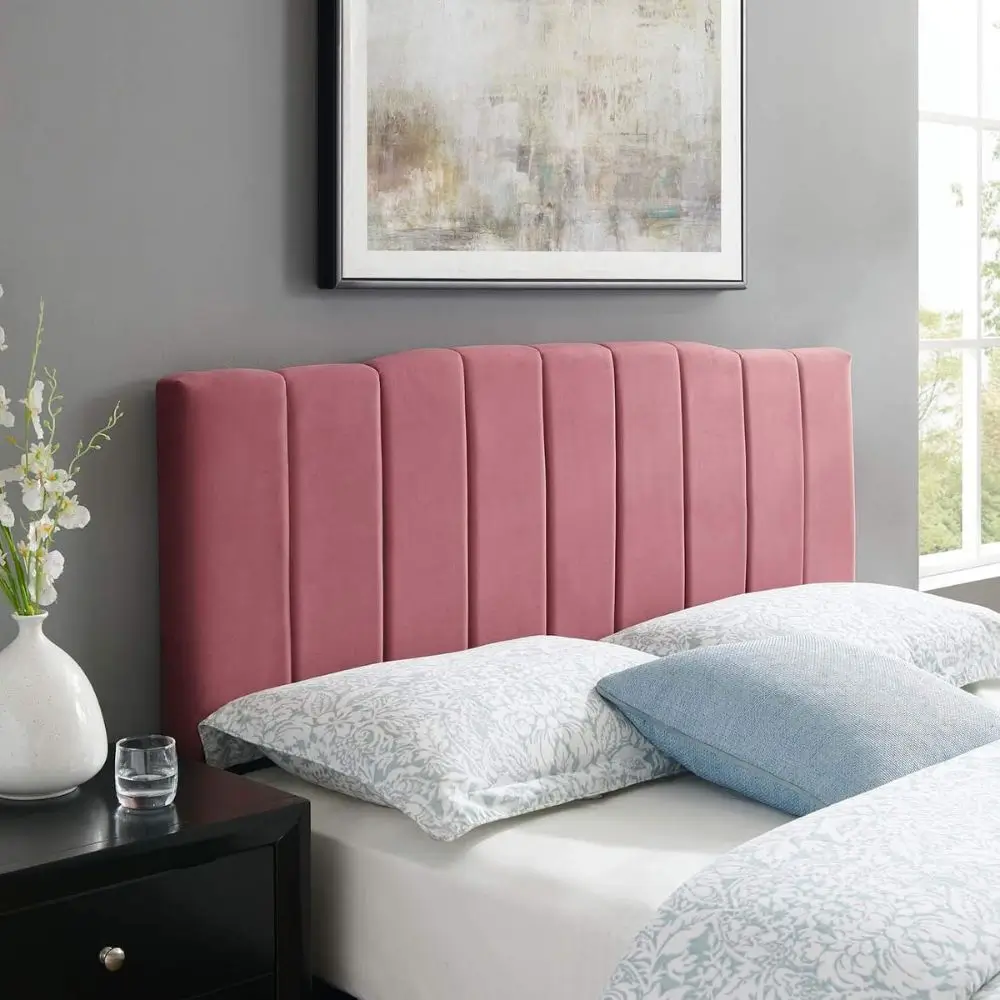
For a built-in look, carry the paneling or wallpaper past the outer edges of the nightstands instead of stopping at the headboard.
Next, decide whether the wall also needs artwork.
Paneling, bold wallpaper, a tall headboard, large artwork, and a picture light can all be beautiful.


Using every idea at once may make the bed disappear.
If your eyes jump from the wallpaper to the headboard to the artwork, remove one layer before adding another.
Check Every Color in the Room’s Light
Use large paint samples and look at them in the morning, afternoon, and evening.
Artificial light can change a color after the sun goes down.
A shade that looks soft during the day may become much brighter or duller beneath a cool white bulb.
Bring fabric, wood, metal, and paint samples together before you order the bed, curtains, rug, or dresser.
Place the samples on the floor, then step back and check whether one color looks much brighter, cooler, or warmer than the others.
If you want a modern luxury master bedroom design, you might add velvet, brass, stone, dark wood, or a beautiful chandelier.
Pair those richer finishes with furniture that has simple lines and bedding that feels good against your skin.
For a closer look at light and undertones, see my calming bedroom colors guide.
The best color is one that still looks beautiful beside your floor, furniture, bedding, and evening light.
4. Choose Modern Bedroom Furniture That Fits the Room
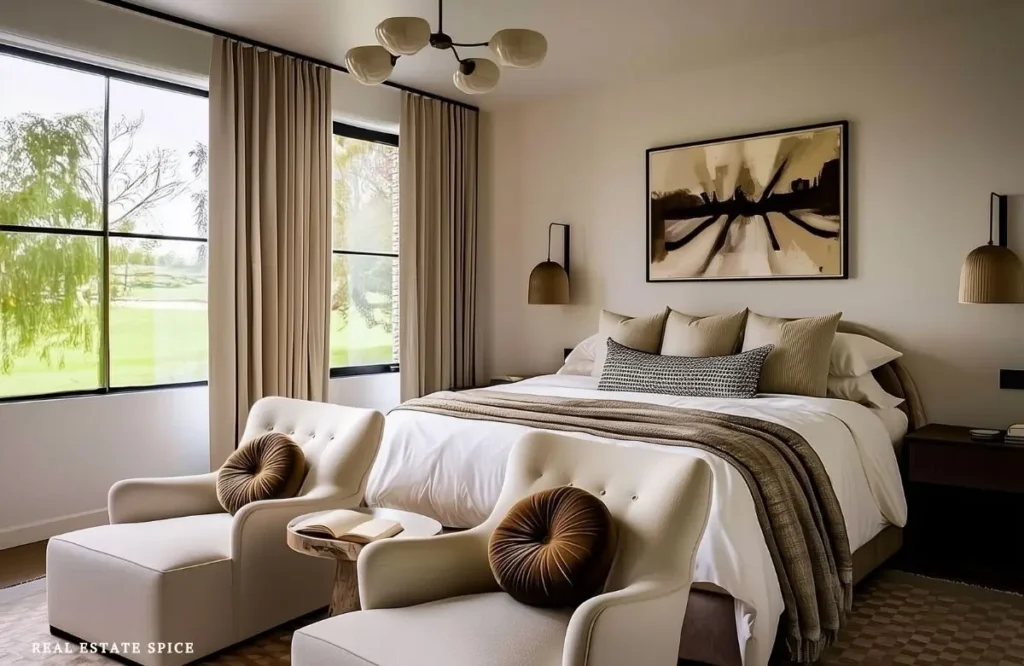
Modern bedroom furniture may have simple lines, smooth drawer fronts, warm wood, upholstery, or slim metal details.
The pieces don’t have to match, but each one should fit the room and be easy to use.
Choose the Bed Frame First
A modern bed frame may be low and wide, softly upholstered, made from warm wood, or raised high enough for storage beneath it.
Compare the headboard height with the ceiling, windows, artwork, and thickness of your mattress.
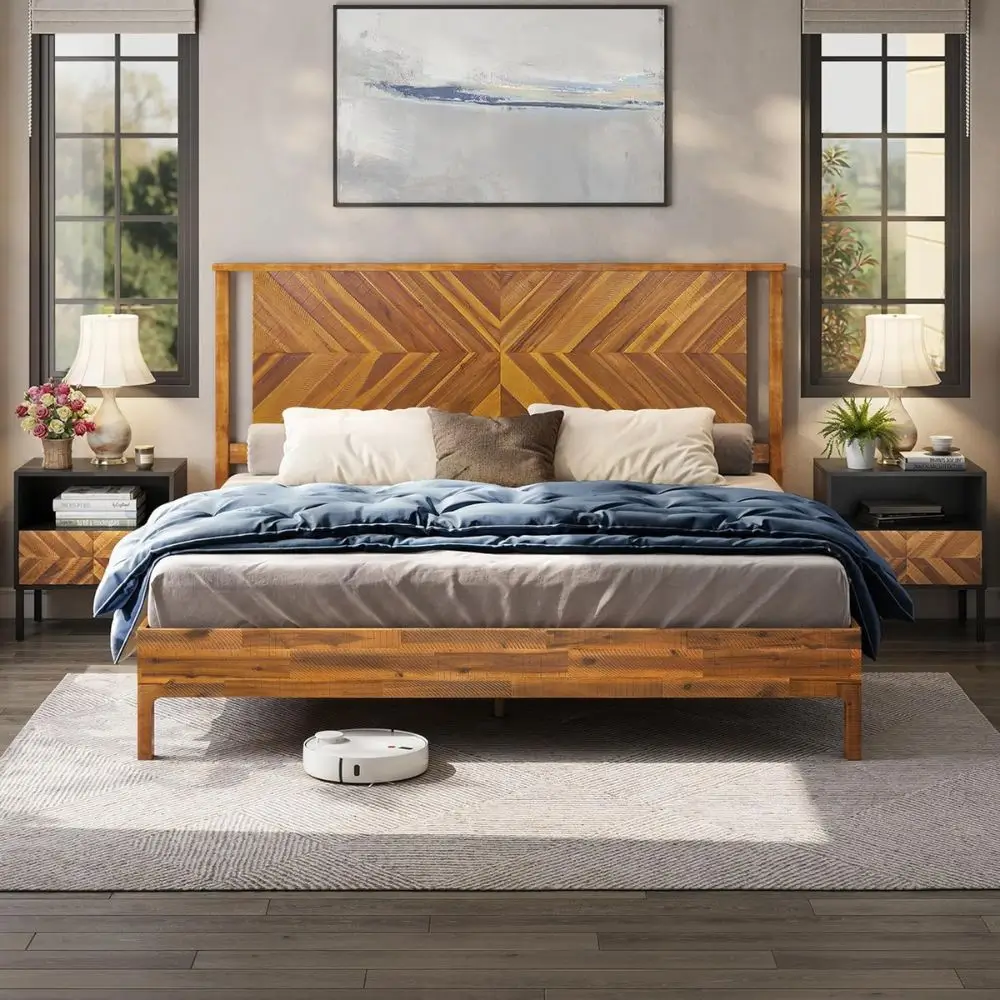
The most beautiful part of the headboard should remain visible after the sleeping pillows are in place.
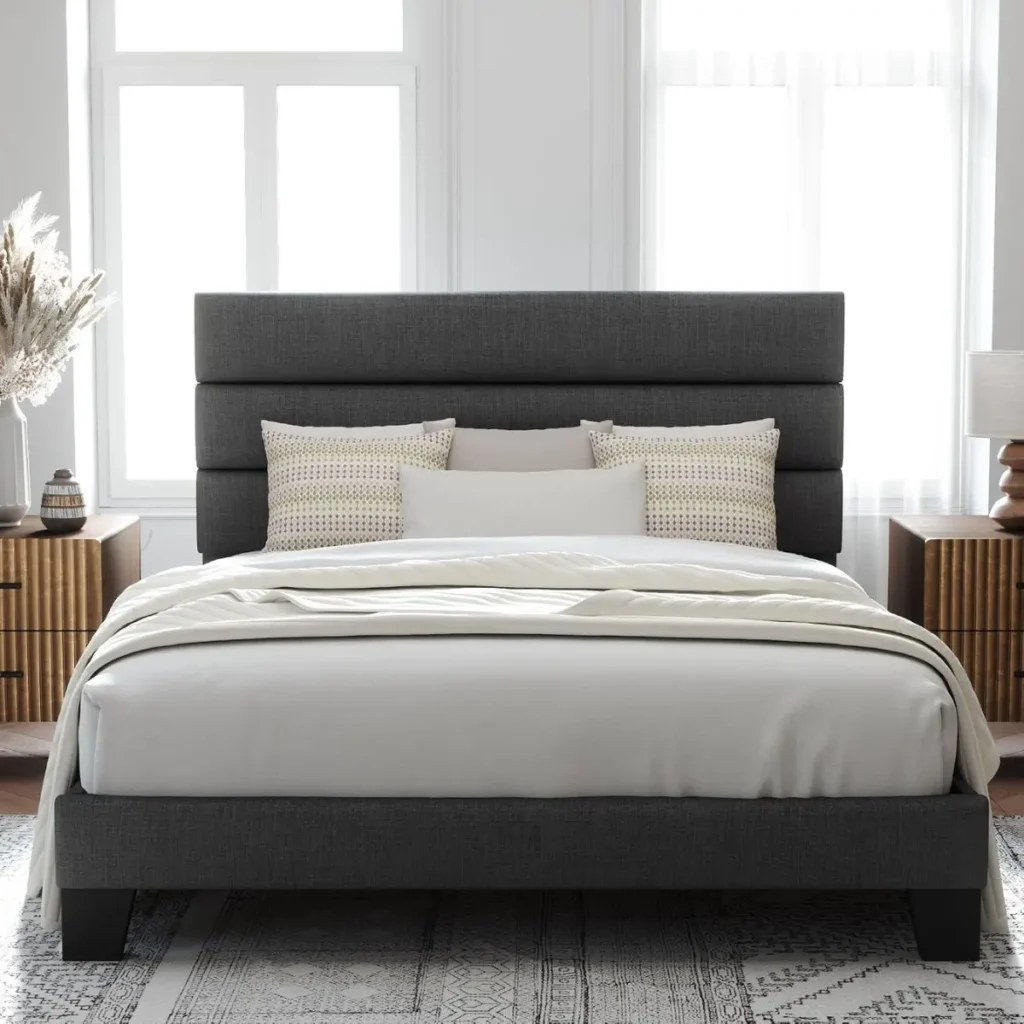
A modern king bed frame can make a wide wall feel complete, but it shouldn’t leave narrow paths on both sides just to claim the larger size.
If storage is limited, a frame with drawers or a lift-up mattress can replace another large chest.
Check how the storage opens before you buy it.
Side drawers need open floor beside the bed, while drawers at the foot need a clear path beyond the mattress.
Give Each Side a Useful Nightstand
Modern bedroom nightstands can look related without being identical.
Keep the height, color, or material similar so both sides still look like part of the same bed wall.
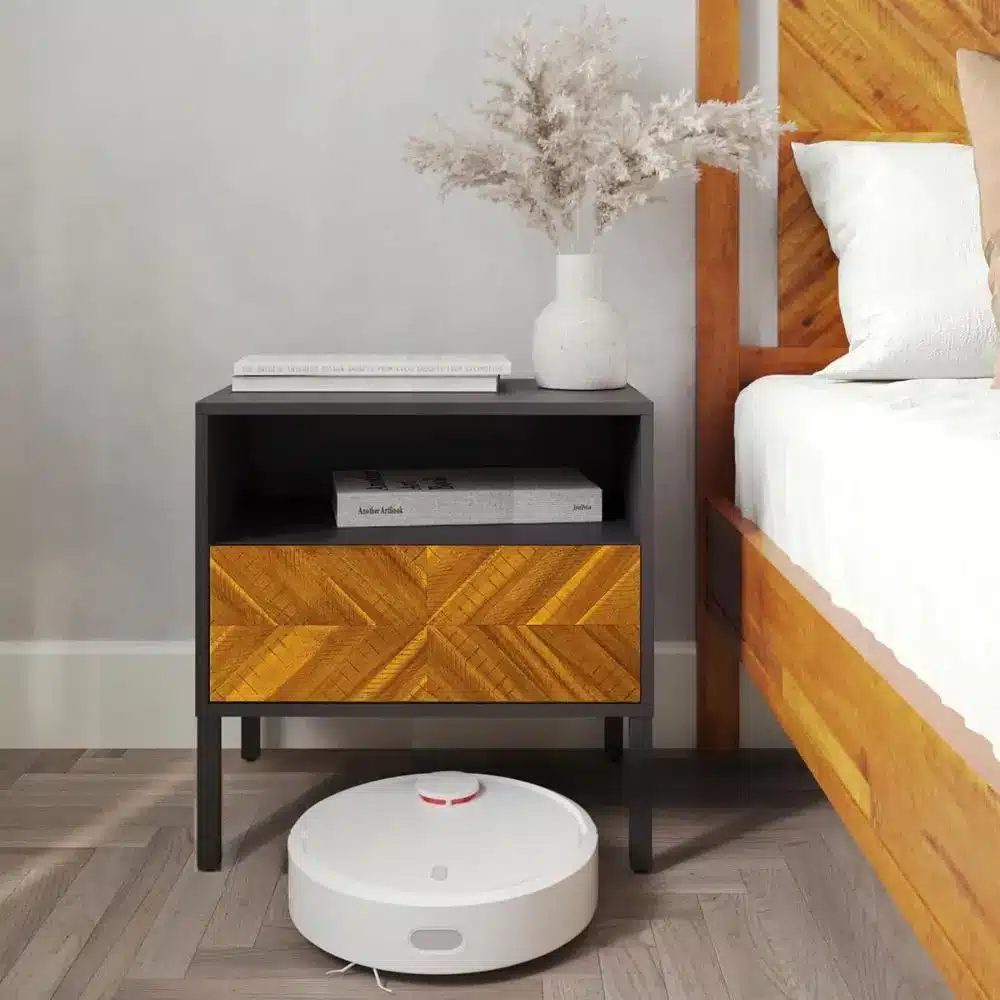
Keep the top near the height of the mattress so water, glasses, and the lamp are easy to reach.
Reaching for a drink shouldn’t require a midnight yoga move.
A charging nightstand may help control cords, while drawers can hide medication, remotes, and other small items.
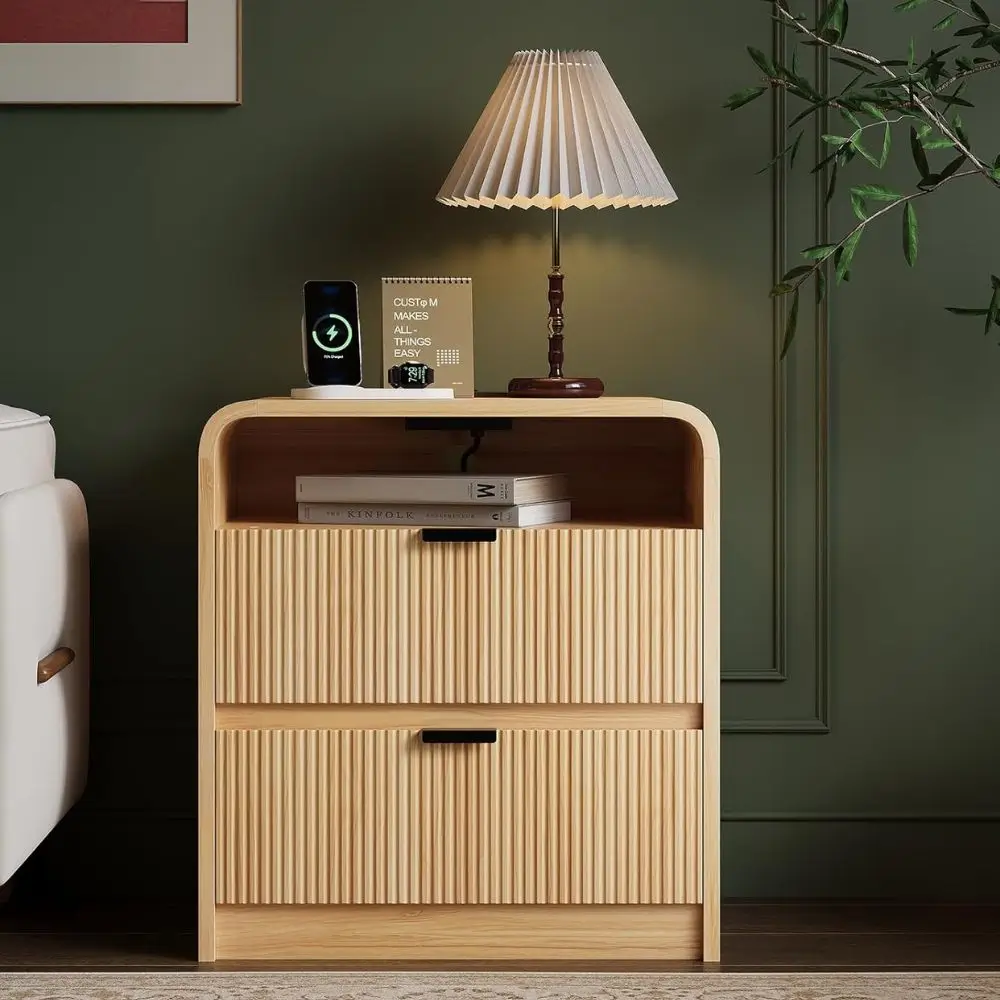
For a narrow path, a skinny nightstand can work well, while a floating nightstand can leave more floor showing.
Measure the lamp base and anything else that will sit on top before choosing the width.
Choose a Dresser That Fits the Wall and Opens All the Way

A modern bedroom dresser can add useful storage and bring warm wood or color into the room.
Mark its full width and depth on the floor, then add the space required for every drawer to open.
Think about what you’ll place above it too.
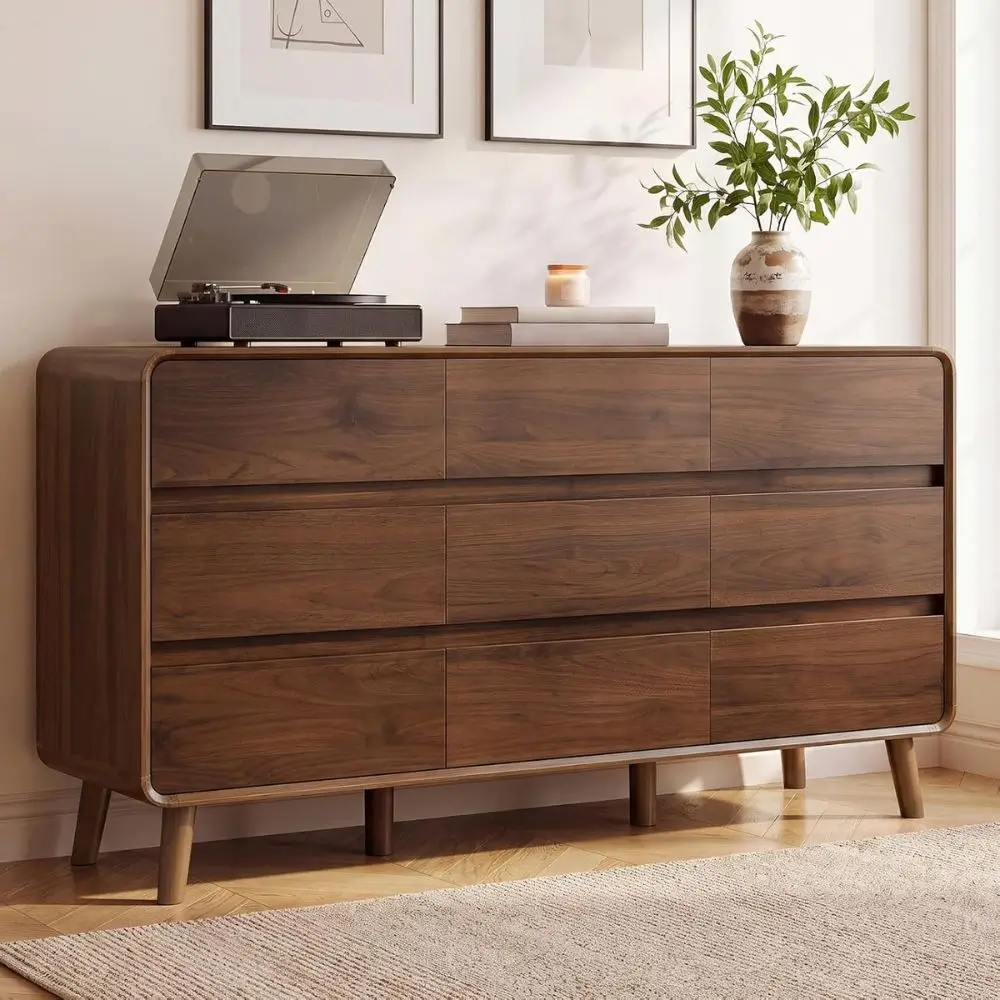
Add a mirror if you get dressed there, or hang artwork if you’d rather see something beautiful from bed.
Perhaps a television suits the way you relax at night, and the bedroom design police still won’t come knocking.
Leave enough open space on top for the things you use each day.
Add a Wardrobe When You Need More Storage

A modern wardrobe can add helpful storage when the closet is small or the room lacks a dresser.
Built-in wardrobes in a bedroom can hold hanging clothes, folded clothes, shoes, and bags across one wall.
Choose the mix of doors, drawers, shelves, and hanging space around the clothing you actually own.
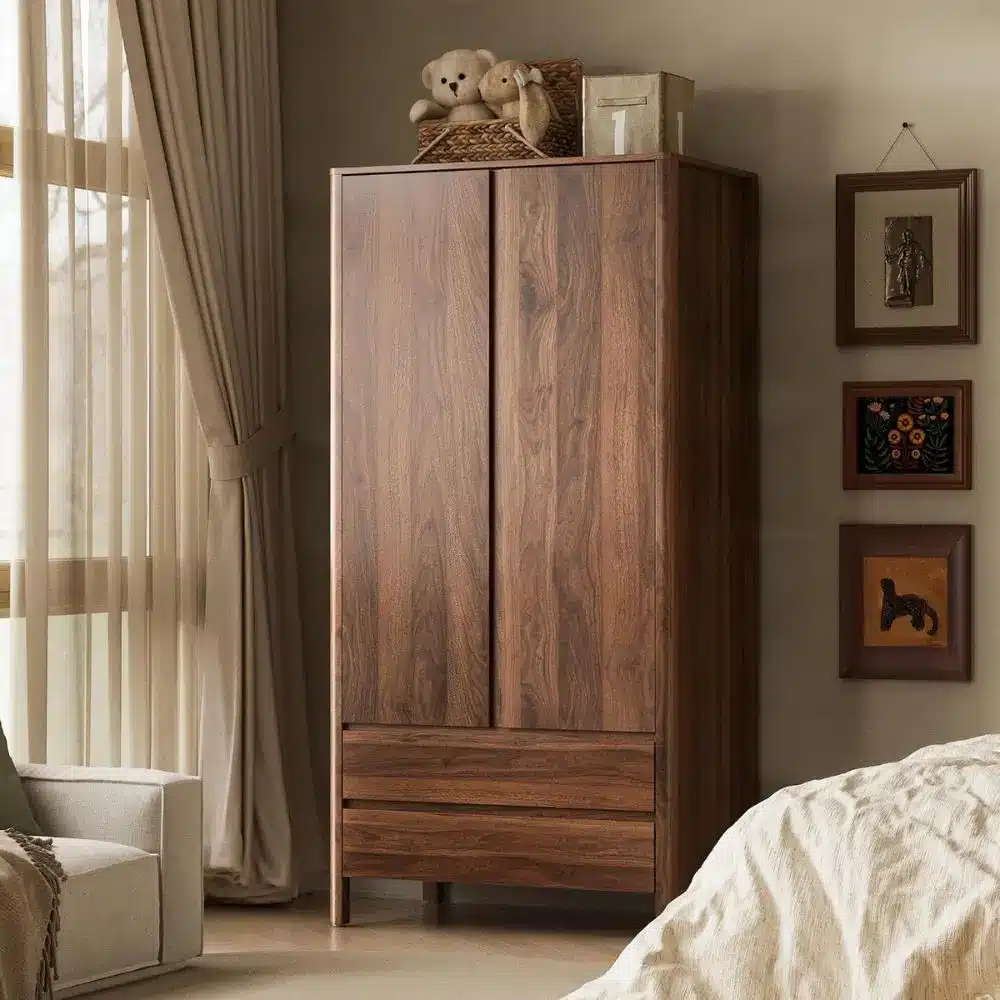
Repeat wood from the bed or nightstands, or choose handles that match the lamps and other metal in the room.
Use Only the Pieces That Fit
Avoid buying an entire matching set only because the pieces are sold together.
The bed may fit beautifully even when the dresser overwhelms the opposite wall, so the pieces don’t have to stay together forever.
You might be wondering, “But, Jaymie, what if I already own the full set?”
Keep the pieces that fit and work well, then move an extra chest or nightstand to another room.
When you compare modern bedroom furniture sets, write down the size of every included piece and decide how you’ll use it.
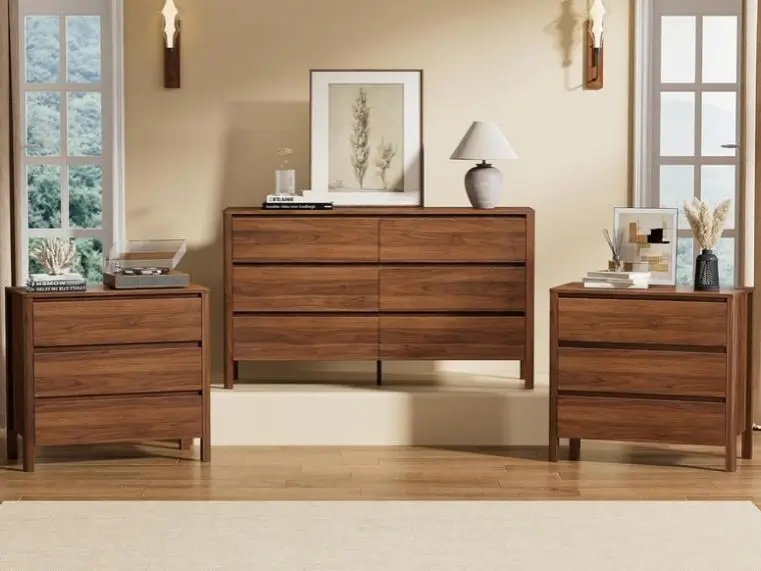
Mixing in one vintage nightstand, curved chair, or older wood dresser can keep the room from looking like a furniture showroom.
Before adding another large piece, use my Bedroom Furniture Rule of 3 to compare the bed, nightstands, and dresser.
The furniture fits when you can open every drawer, walk around the bed, and use each piece without squeezing past another one.
5. Plan the Lighting and Window Treatments Together
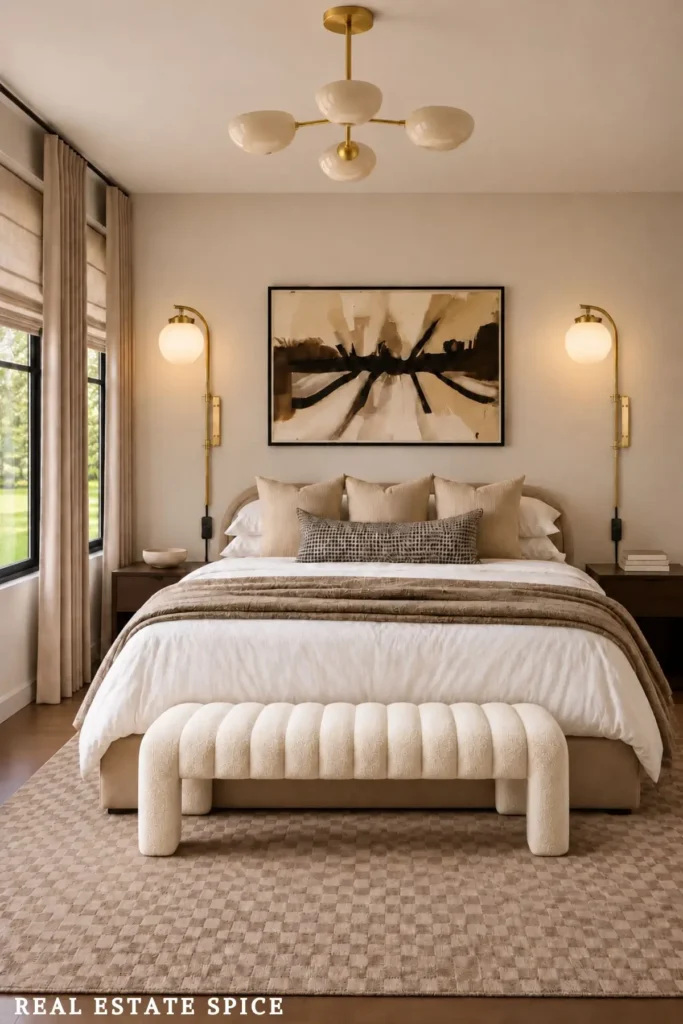
The room may need bright light for getting dressed, softer light at night, privacy after dark, and less sun while you sleep.
Looking at all four now can save you from ordering beautiful curtains that still let a streetlight reach your pillow.
Begin With Sunlight, Sleep, and Privacy
Begin by noticing when direct sunlight reaches the bed, dresser, chair, and television.
Then think about the view from outside after dark.
After the sun goes down, turn on the bedroom lights and look at the window from outside to see how much privacy you truly have.
One window layer may handle privacy, while another softens the wall or blocks early morning light.
Pair Shades With Full Curtains
Roman shades can bring fabric and shape close to the glass.
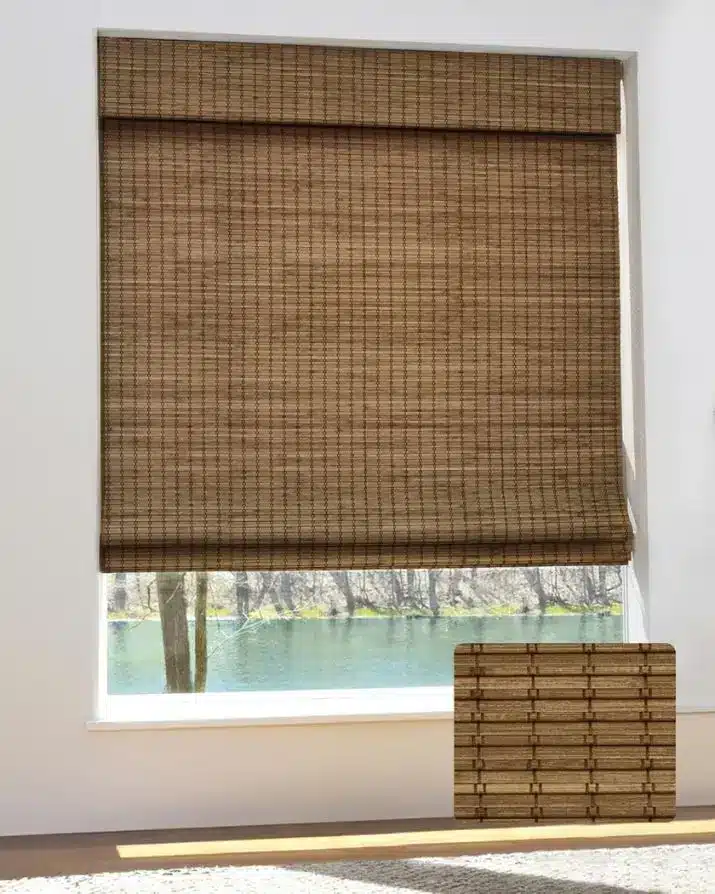
Custom Roman shades may help when a window has an unusual width or sits near built-in furniture.
Cellular shades can keep the window simple while helping with light, privacy, and temperature changes near the glass.
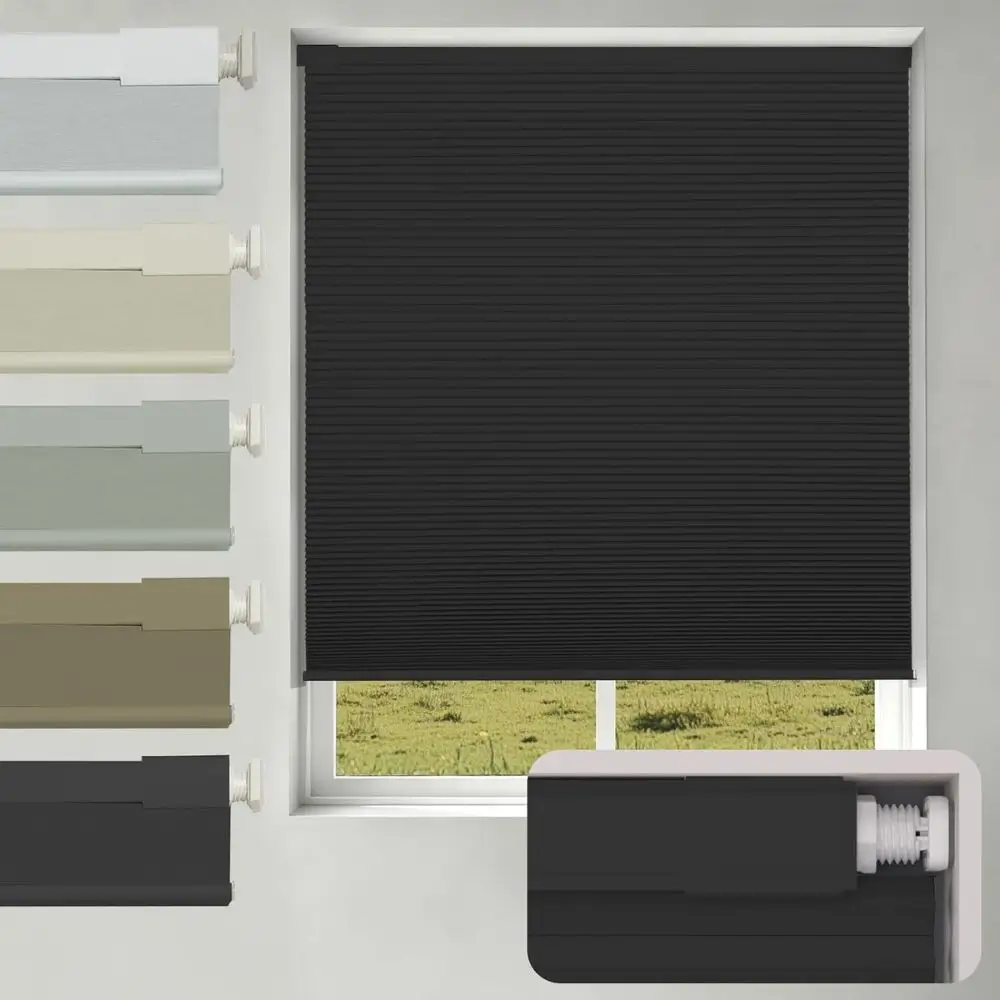
They are also a useful choice when you want curtains to provide the color and softness around the window.
Blackout curtains for the bedroom may help when early sunlight, passing cars, or a nearby streetlight reaches the pillow.

Modern bedroom curtains can soften the straight lines of the furniture and carry fabric higher on the wall.

Custom curtains can help when standard lengths stop above the floor or a wide window needs more fabric for full folds.
Hang the rod high enough to make the window feel taller, and choose enough fabric for the curtains to keep their folds when closed.
Make Tall Windows Easier to Adjust
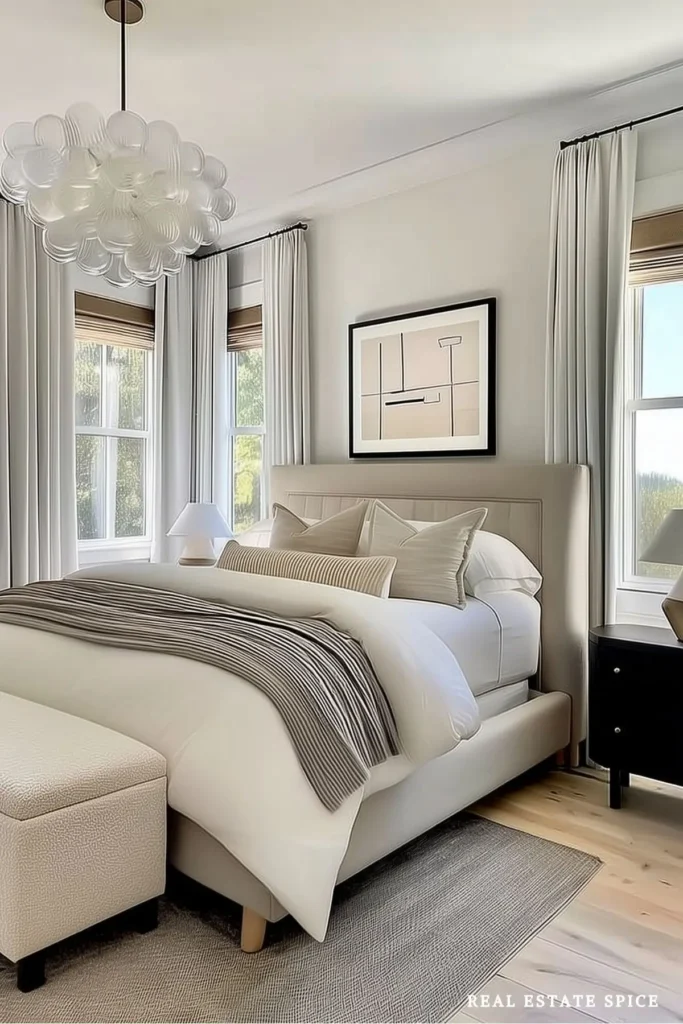
Motorized shades and remote control shades can make tall or hard-to-reach windows easier to use.
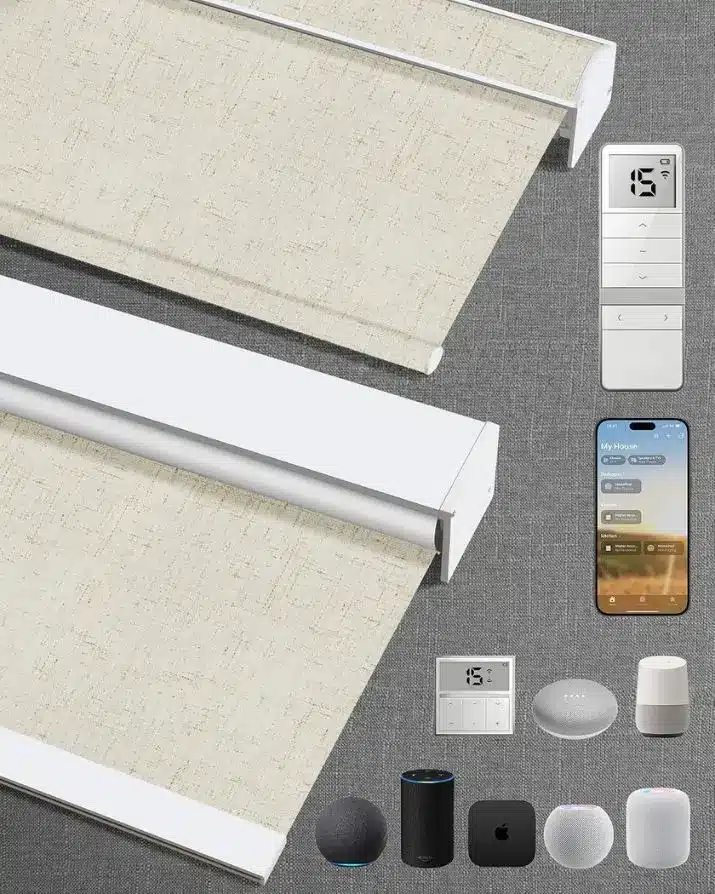
Smart blinds may also work well when you already use schedules for bedroom lights or other devices.
Keep the shade remote in the nightstand so you can lower the shades without getting back out of bed.
Choose the Main Ceiling Light
Modern bedroom lighting works best when the ceiling, bedside, and accent lights each have a clear purpose.
Begin with the main ceiling fixture.
With an eight-foot ceiling, a flush or semi-flush light can leave more open space overhead.

A taller ceiling can hold a chandelier or pendant with more height.
Compare the width of the fixture with the bed and the open space around it.
A tiny ceiling light may disappear above a king bed, while an oversized chandelier can make the ceiling feel lower.
Modern ceiling lights for the bedroom may have clean lines, curved arms, glass globes, or a more sculptural shape.
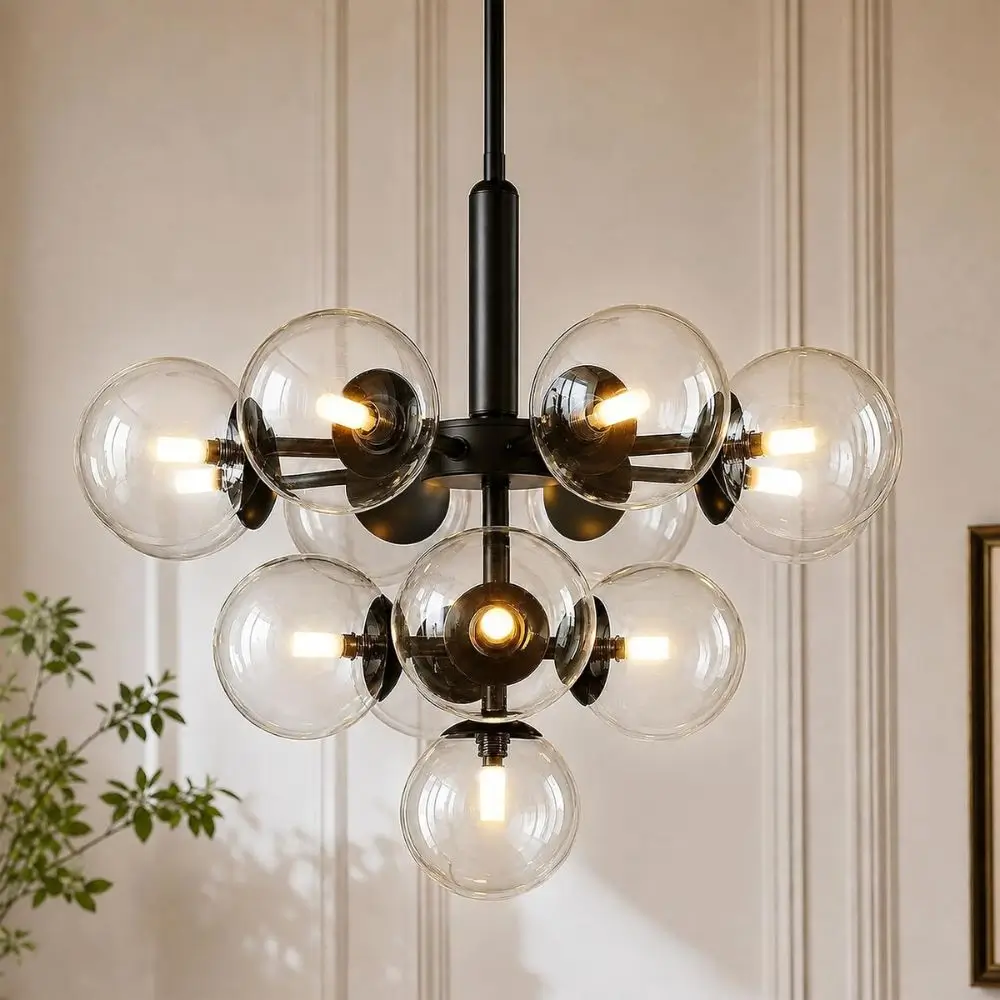
If the fixture hangs above the bed, center it with the mattress instead of the entire wall.
The main light should be bright enough for getting dressed, cleaning, and finding the earring that has once again left without telling you.
Connect the Lights Without Buying a Matching Set

Repeat one detail from the ceiling light in at least one other fixture.
That detail might be the metal finish, glass shape, or color of the shade.
For example, a brass ceiling light may connect with brass wall sconces, a picture light, or the handles on the dresser.
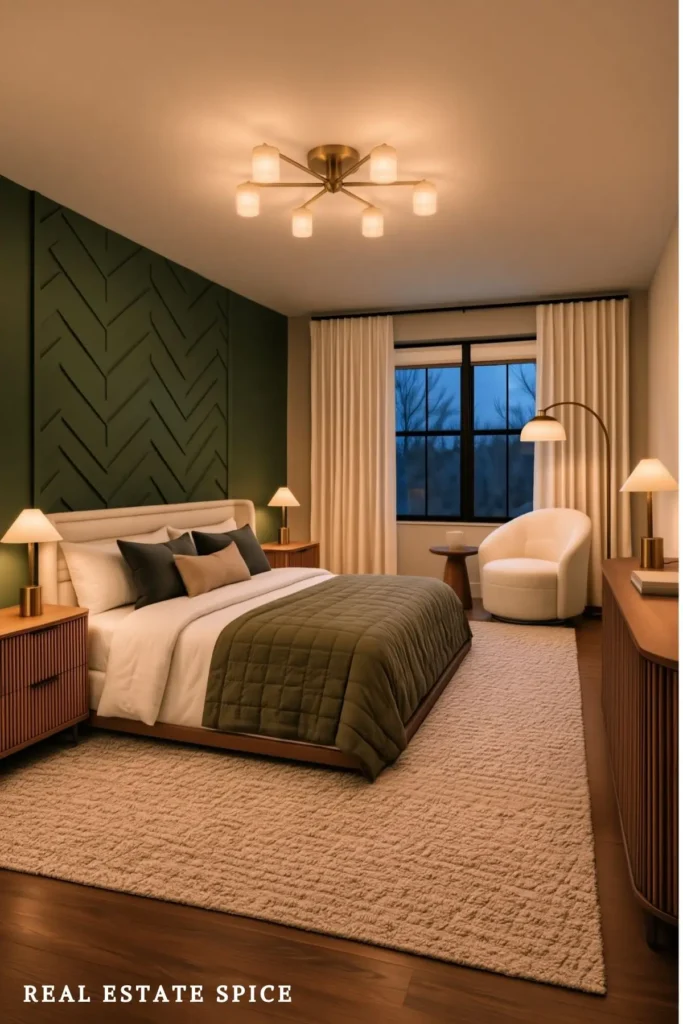
In this bedroom, the globe ceiling light, bedside lamps, and picture lights have different shapes, but their warm light helps them work together.
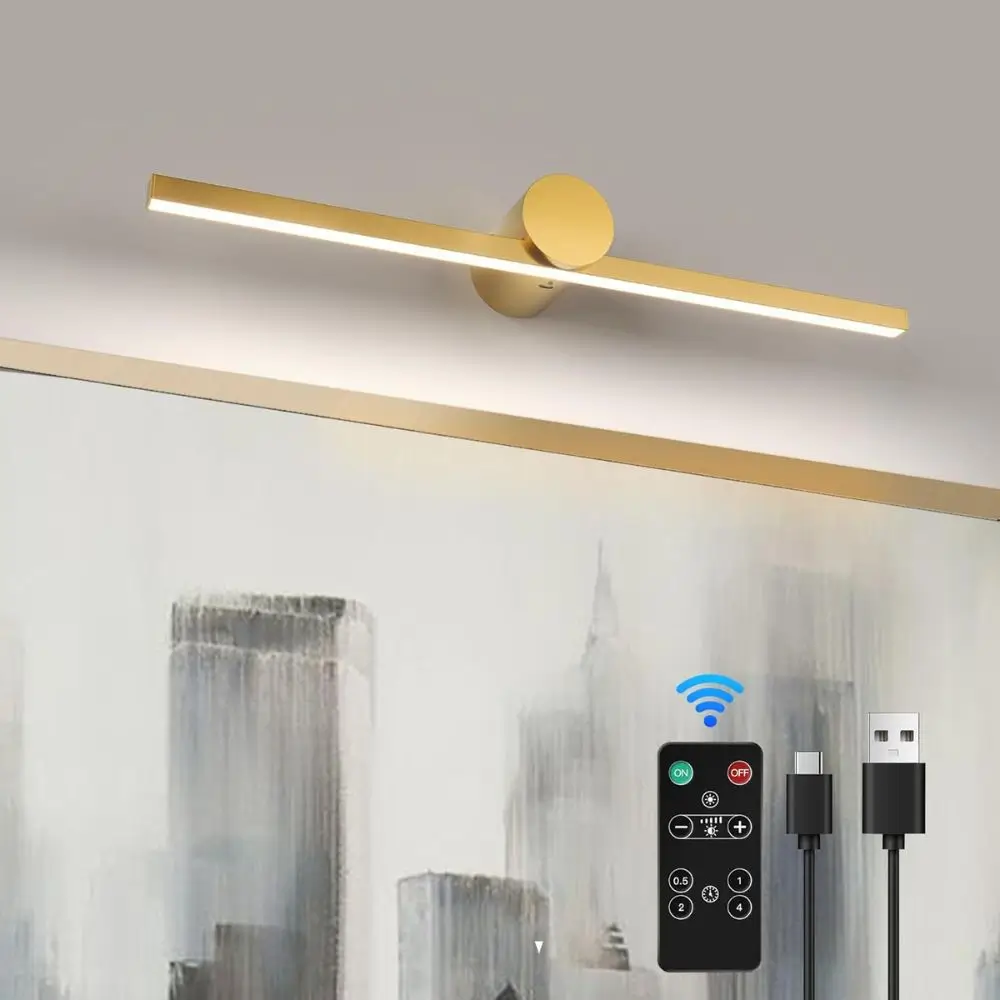
The fixtures should look related, but they don’t have to arrive together in one enormous matching box.
Put Bedside Light Where You Can Use It
Bedside lamps, pendants, or wall sconces for the bedroom bring the light closer to reading and nighttime tasks.

Sit against your sleeping pillows before choosing the height of a sconce or pendant.
The light should reach your book without shining directly into your eyes.
THE 30-SECOND BEDSIDE TEST
The lamp looks bright, so why is your book still hard to read?
Sit where you normally read and open a book. If your head or shoulder casts a shadow across the page, the light is coming from the wrong spot. Move the lamp, sconce, or pendant forward, back, or higher until both pages are easy to see. Check the page, not the bulb.
Plug-in sconces can work when hardwiring isn’t part of the plan, while table lamps are easy to move as the room changes.
Keep the switch within reach so turning off the light doesn’t require one final stretch across the nightstand.
If the lamp switch is too far from the bed, you may be able to keep the lamp and add a wireless remote control outlet.
The remote lets you turn a bedside lamp or floor lamp off from beneath the covers.
A floor lamp can also provide bedside light when the nightstand is too small for a table lamp.
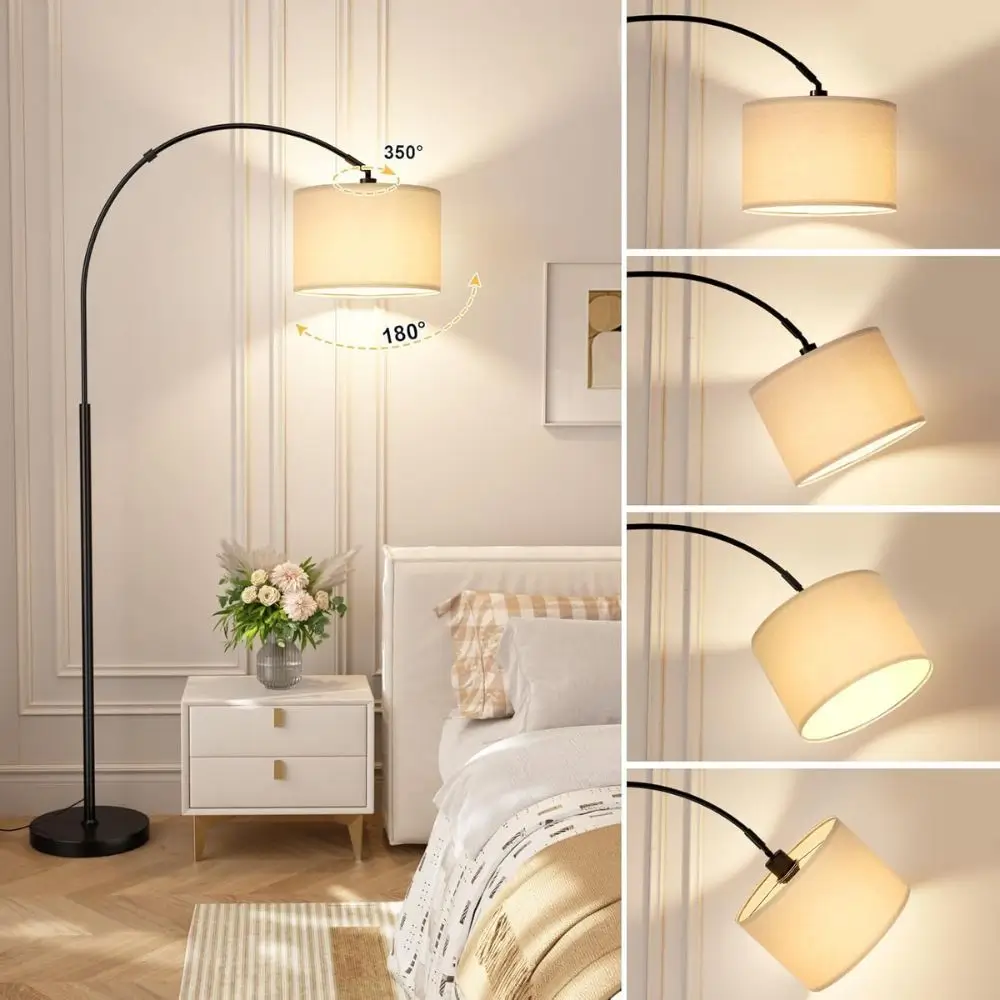
Place it beside or just behind the nightstand so the base and cord stay out of the walking path.
Check that the remote outlet works with your lamp, then keep the lamp remote in the same place on the nightstand each night.
Add Light to the Darker Parts of the Room
A dresser lamp, floor lamp beside a chair, or picture light above artwork can brighten an area the ceiling fixture misses.
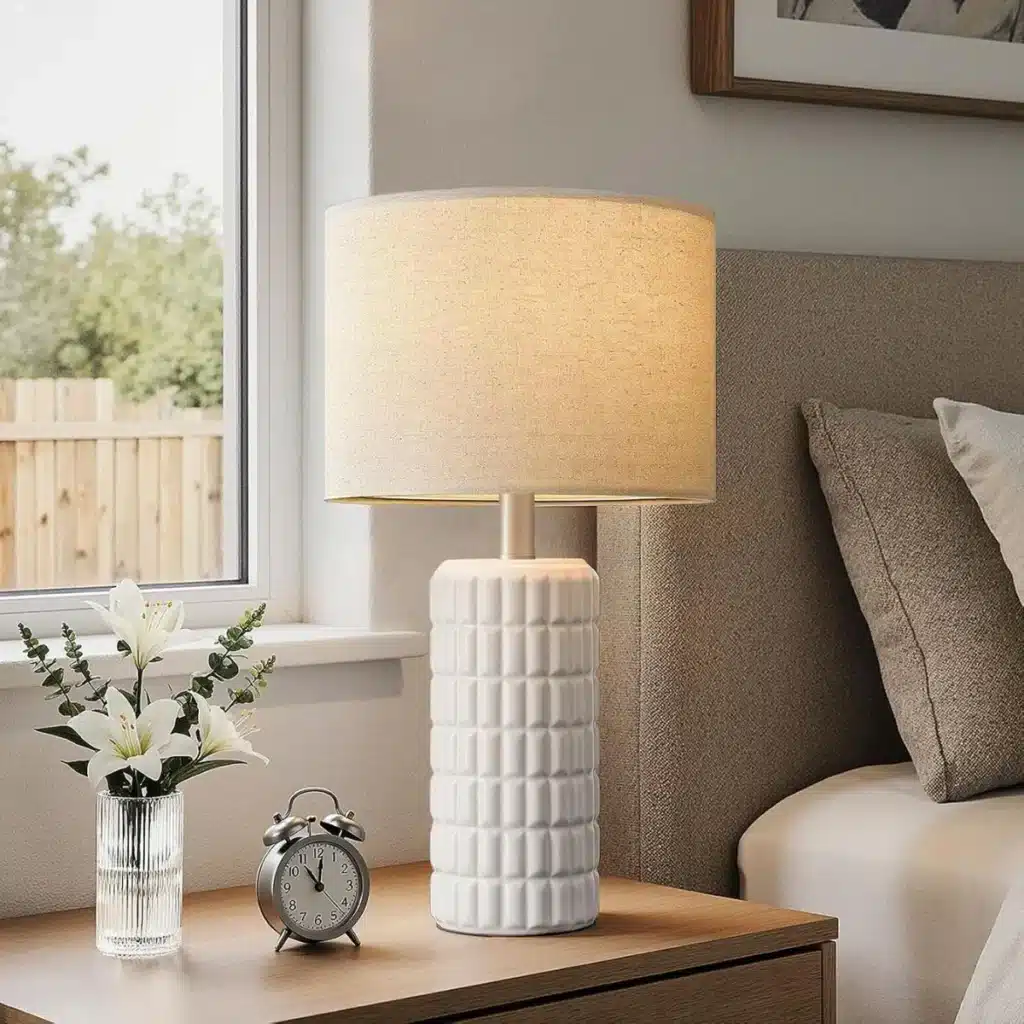
Choose bulbs with the same color temperature so one side of the bedroom doesn’t look golden while the other looks icy blue.
Dimmers give you brighter light when you need it and a softer glow as bedtime gets closer.
If you prefer more air movement, compare sizes, lights, and controls in my best ceiling fans for bedrooms guide.
You can also use my Bedroom Lighting Rule of 3 to check the main, bedside, and accent lights.
The right lighting lets you wake up, get dressed, read, and settle into bed without relying on one bright ceiling light for everything.
6. Add Storage, a Charging Spot, and a Place to Sit
By this point, the large pieces are planned.
Now decide where the extra blankets, phone charger, laundry, and morning coffee will go.
Decide Where the Blankets, Clothes, and Laundry Will Go
Look at what is currently piled on the chair, dresser, or floor.
Those piles show you which kind of modern bedroom storage is missing.
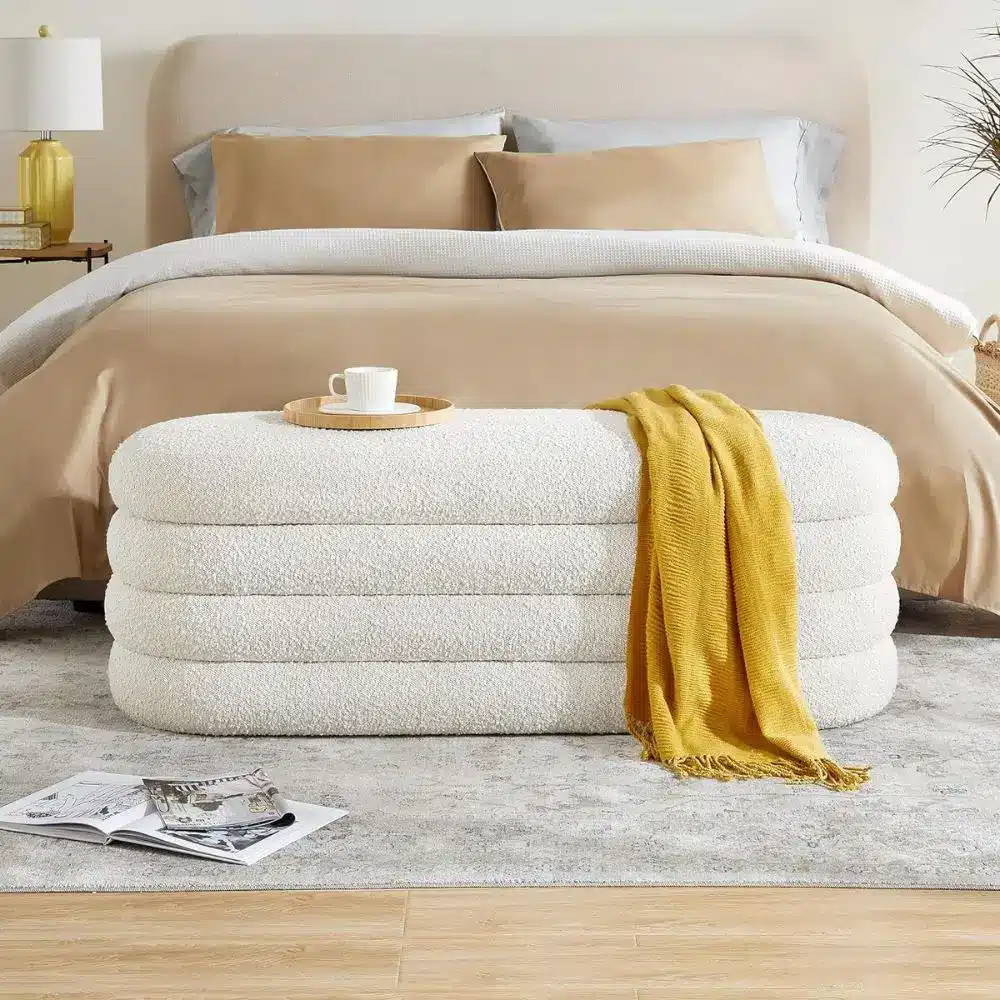
Extra bedding may fit inside a storage bed, a boucle bench with storage, or fitted under-bed storage containers.
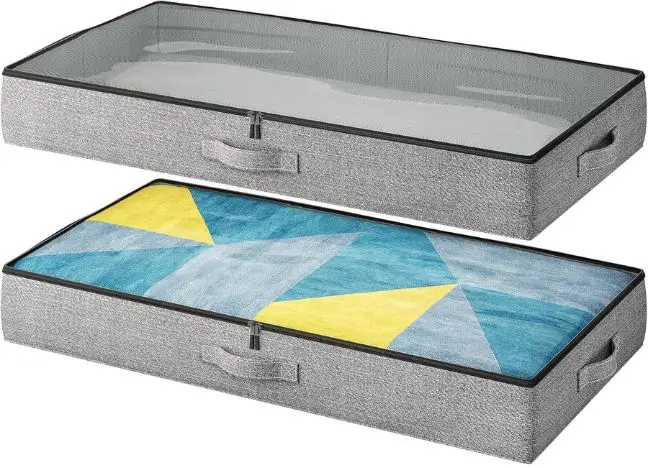
Seasonal clothes may work better in a wardrobe, closet system, or dresser with deeper drawers.
Decide what you’ll put inside each storage piece before you order it.
Otherwise, a beautiful new basket may end up holding two receipts, one pillow, and a lonely sock.
A bedroom storage bench can hold bulky blankets, but the lid still needs room to open.
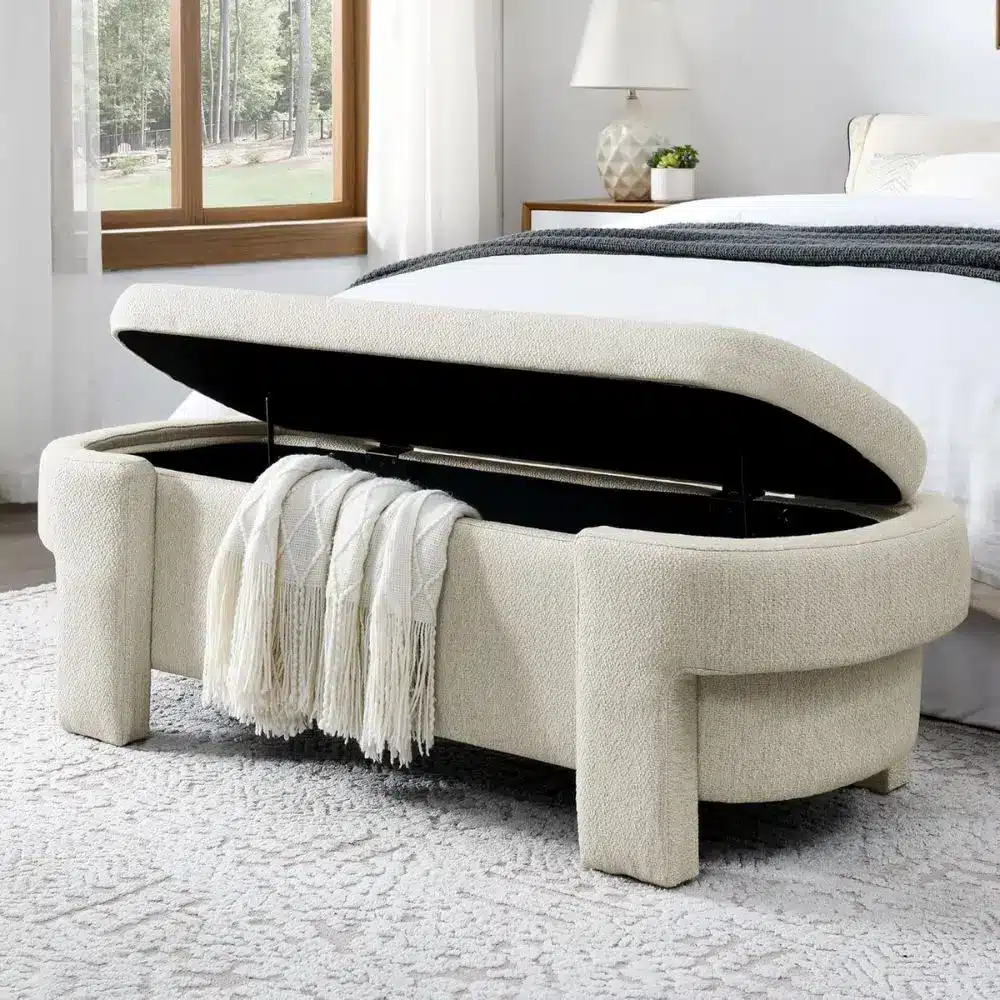
Keep the bench slightly narrower than the bed so it doesn’t look wider and heavier than the bed frame.
If the bench makes the path at the foot of the bed too tight, enjoy the open floor space instead.
You May Also Like:
→ The Bedroom Storage Rule of 3 to Turn Clutter Into Calm
→ The Bedroom Furniture Rule of 3
→ 50 Bedroom Decorating Ideas This Year
Keep Chargers Close Without Covering the Nightstand
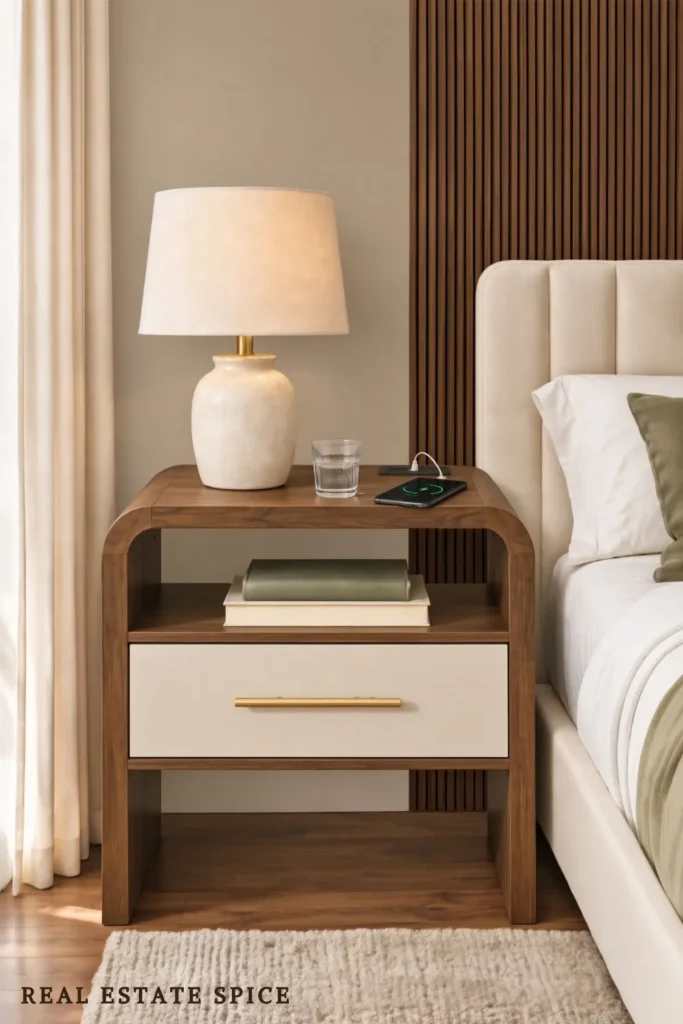
A nightstand with a charging station can keep your phone close without spreading cords across the top.
Before you buy one, check where the outlets and USB ports sit and whether the lamp will cover them.
Cord clips can stop the charger from falling behind the bed before your eyes are fully open.
Keep your water away from the charging ports in case the glass gets bumped during the night.
Keep charging blocks away from the bedding, and follow the product directions for safe use.
Make a Place to Read, Talk, or Enjoy Coffee

If you have an open corner, decide whether you would truly use it for reading, calling a friend, or enjoying coffee.
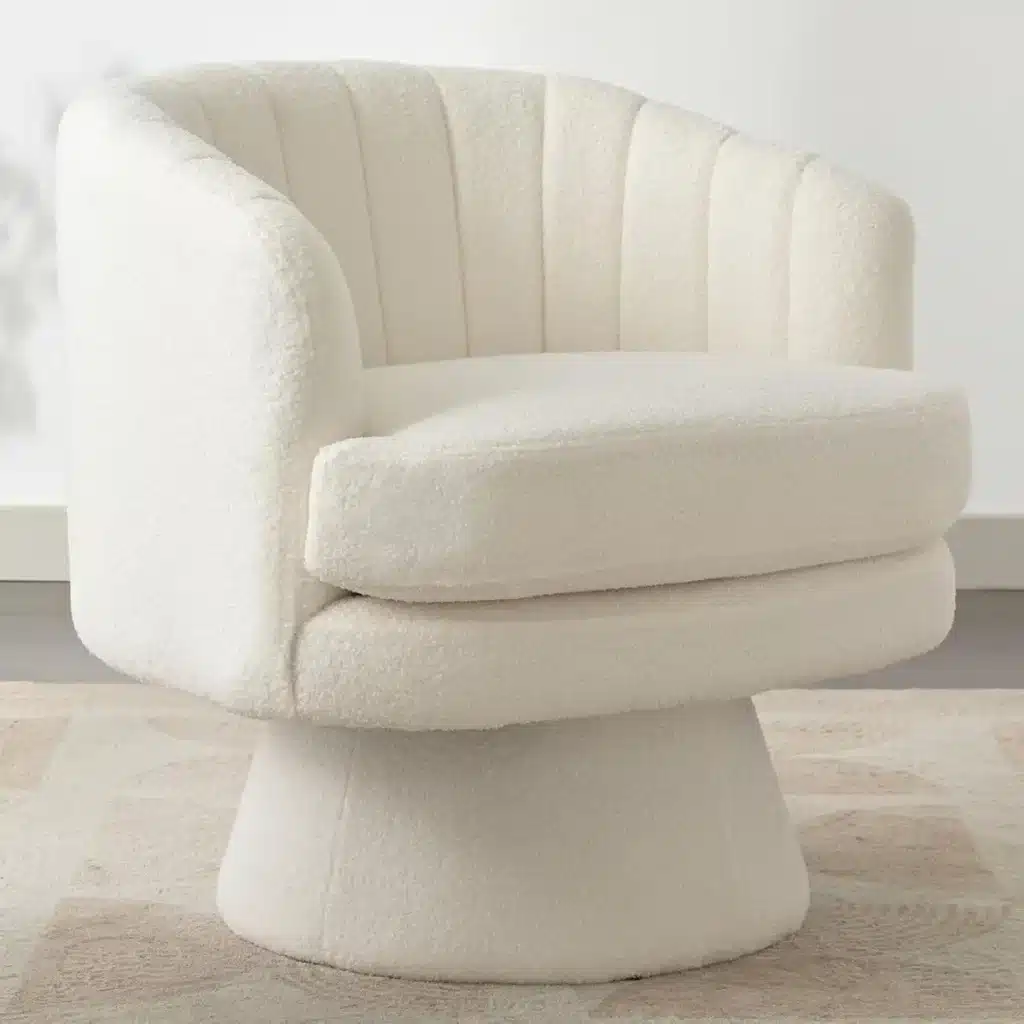
A curved or swivel chair near a window can give you a comfortable place to spend time during the day.
Place a small table within reach, then add a floor lamp that shines onto your book.
Choose a chair that feels comfortable when you sit in it, because a beautiful shape can’t rescue a chair you never want to use.
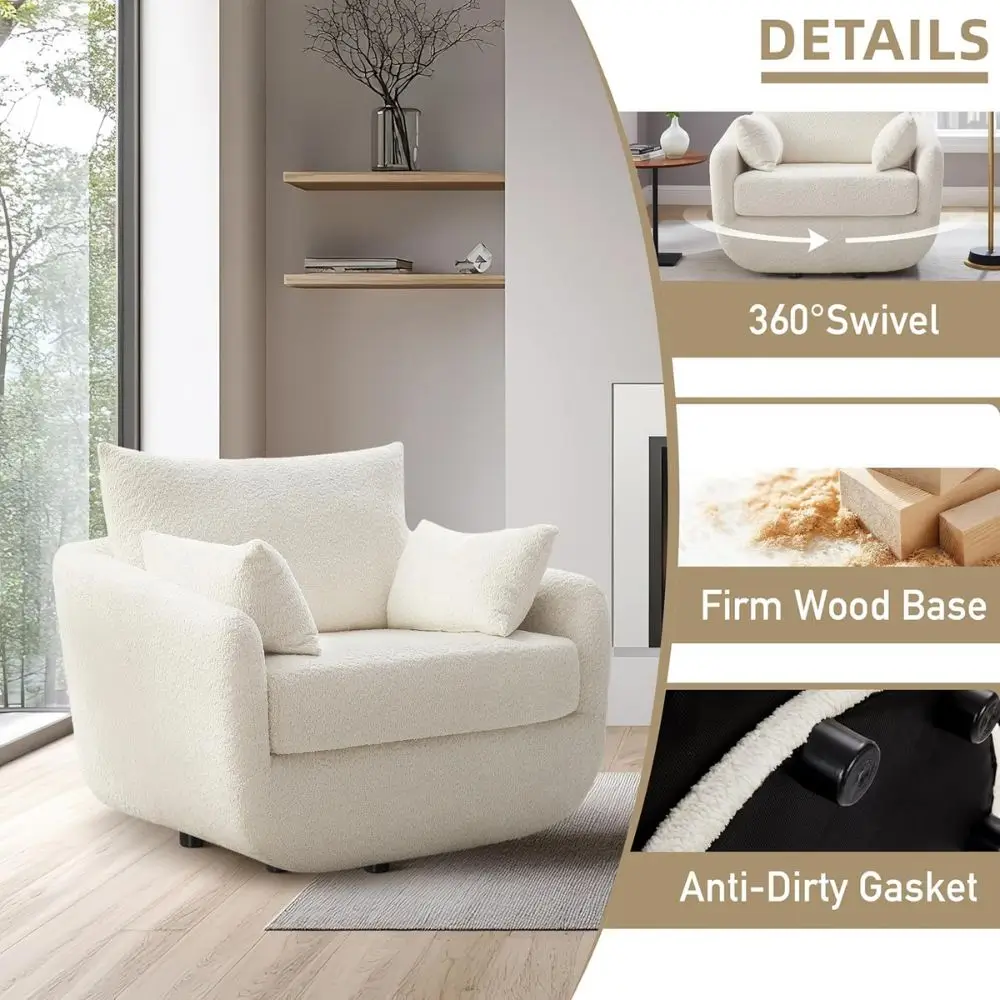
Move the hamper closer if tomorrow’s jeans keep claiming the chair before you do.
If a chair crowds the room, supportive pillows can make the bed comfortable for daytime reading.
7. Place the Rug, Then Add the Bedding, Art, and Personal Details
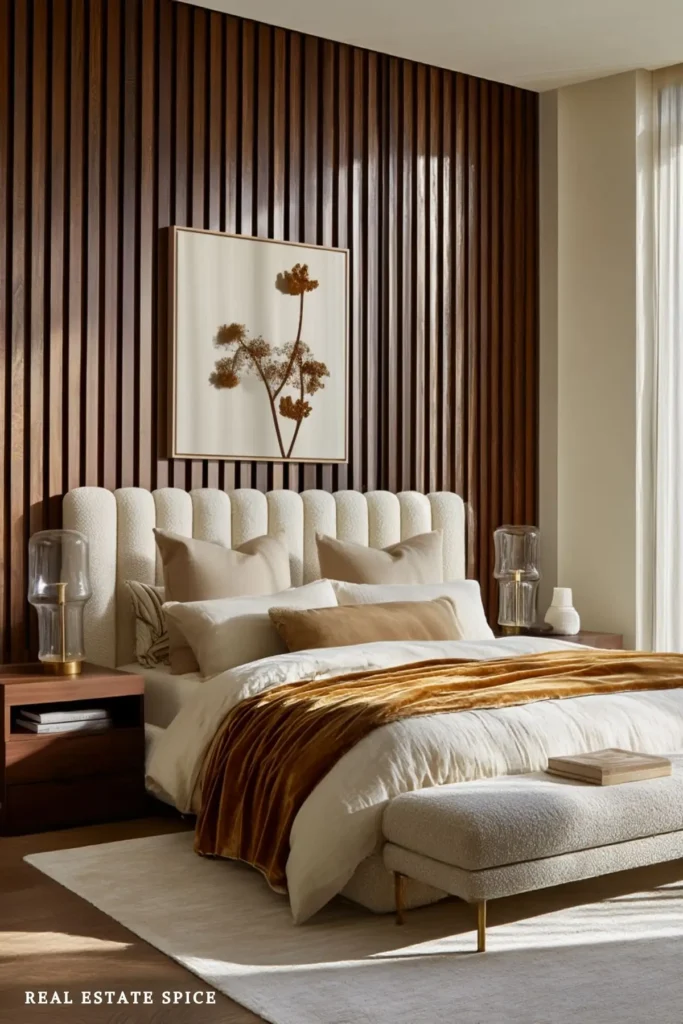
Choose the rug size after you know where the bed and nightstands will sit.
If the rug will go beneath the bed, put it down before the bed is moved into its final place whenever possible.
Measure the Rug Around the Bed
A large modern bedroom rug can frame the bed and nightstands while giving both sides a soft place to step.
Stand beside the bed and notice where your feet touch the floor.
The rug should cover that spot instead of ending just beyond your toes.
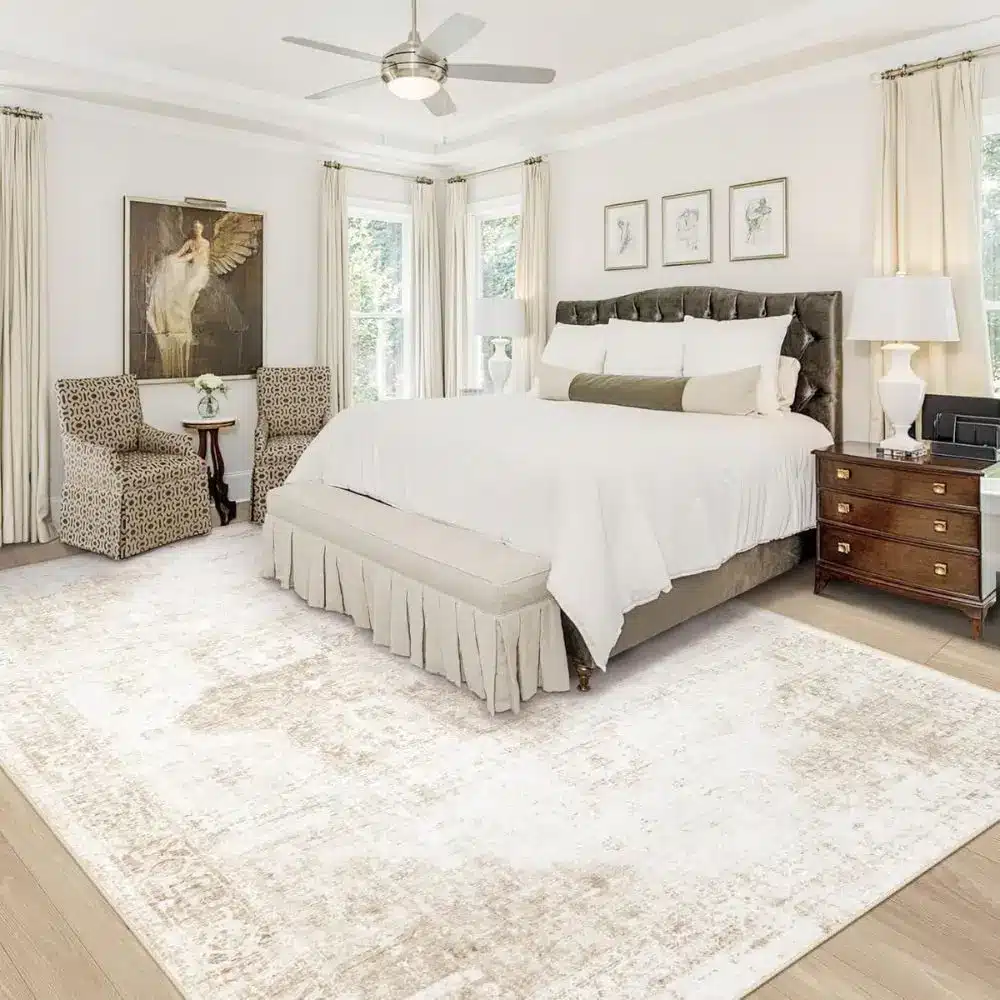
Use painter’s tape to mark the outside edges before ordering, then open every nearby door and dresser drawer.
If the bed is already in the room and too heavy to move, use a bedside runner on one or both sides.

If you still want a large rug beneath an existing heavy bed, ask for help rather than trying to lift or drag the bed alone.
Check your measurements against the common sizes in my area rug measurement guide before ordering.
Choose Bedding for Comfort First
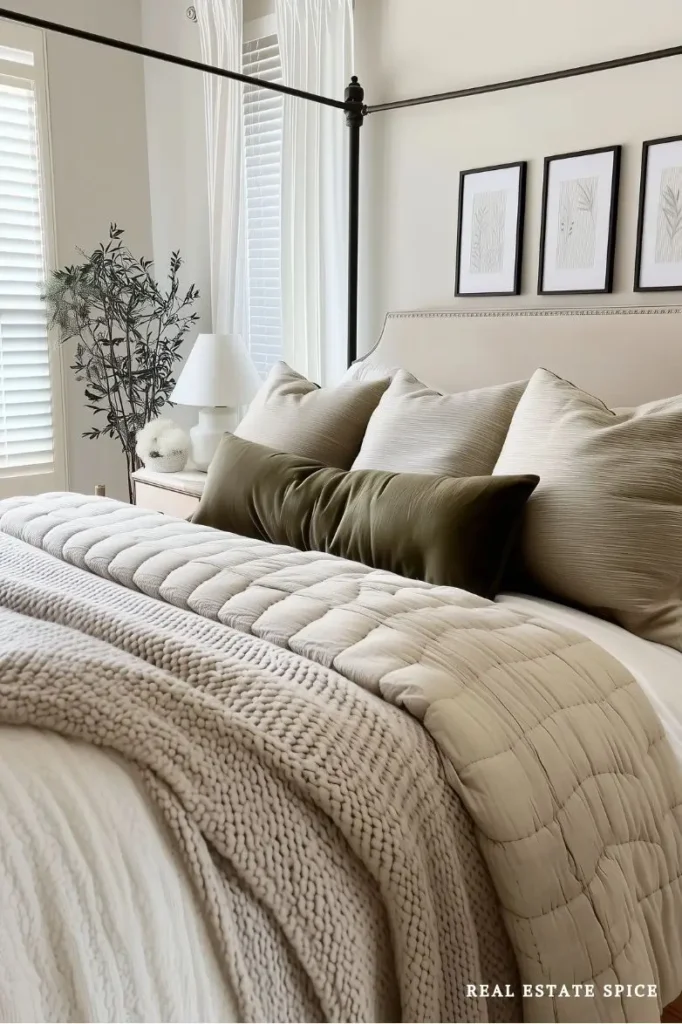
Start with how the sheets and covers feel when you’re in bed.
Hot sleepers may enjoy breathable sheets and a lighter duvet insert, while someone who feels cold may prefer warmer sheets and an extra blanket.
Fold the duvet or comforter back far enough to show the sheets and keep the bed from looking like one large block of fabric.



Globan Hotel Collection Down Feather Pillow (A Splurge But Worth It)

Add one quilt, coverlet, or throw near the foot for color, warmth, or texture.
Euro pillows can add height behind the sleeping pillows, while one lumbar pillow may be enough in front.
The bed can look beautiful without making you carry six pillows to a chair every night.

For more ways to combine sheets, duvet inserts, covers, and quilts, see my luxury bedding ideas.
Choose Artwork and a Few Personal Pieces
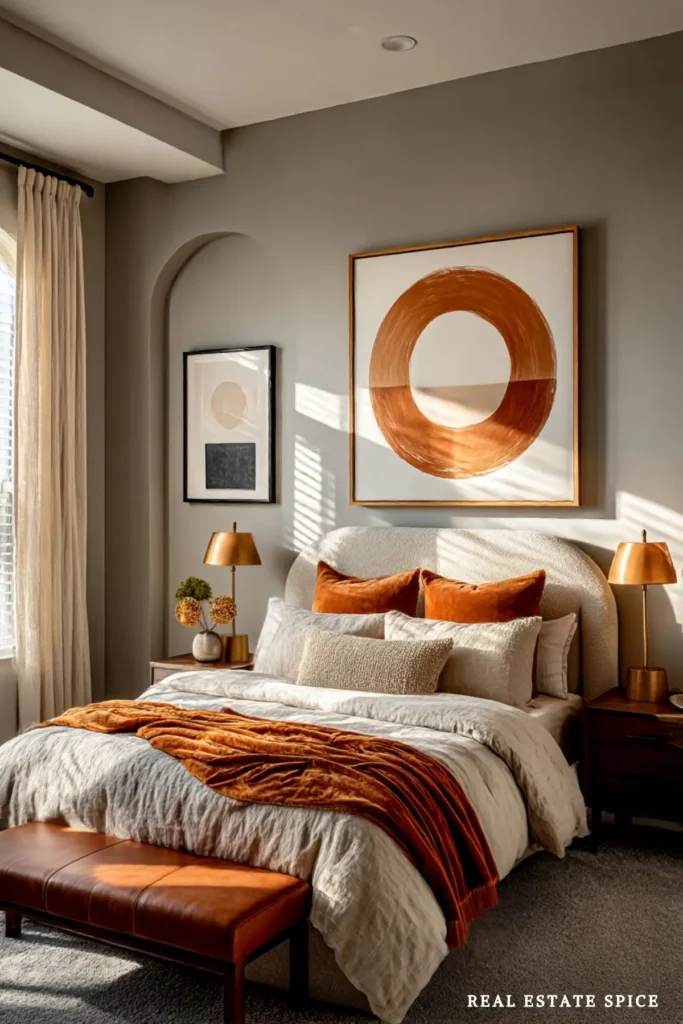
Before choosing modern bedroom wall art, decide whether it will hang above the bed, across from it, or on another open wall.
Landscape art can add the feeling of a view, while an abstract painting can repeat colors from the bedding, rug, or curtains.
A favorite photograph may be the piece you enjoy seeing most when you wake up.
Above a wide bed, one large piece often looks better than several small frames spread far apart.
Keep the bottom of the frame closer to the headboard than the ceiling.
If you add a picture light, turn it on after dark and adjust the angle so it brightens the artwork without shining toward the bed.
For help choosing artwork, mirrors, or another wall treatment, see my master bedroom wall decor ideas.
Once the artwork is hung, add a few personal pieces to the dresser and nightstands.
A family bowl, travel photograph, favorite books, handmade quilt, or vintage lamp can keep a modern bedroom from looking staged.
Leave room on the nightstands for the lamp, water, glasses, and other things you use each night.
The dresser doesn’t have to display every beautiful thing you own at once.
Your Modern Master Bedroom Design Is Ready for Real Life
You began with a tape measure instead of a shopping cart.
Now the bed fits the wall, the dresser opens without hitting anything, and the path to the bathroom stays clear.
The bedside lamp gives you enough light to read, the phone charger stays beside the bed, and the curtains provide privacy when the lights come on.
Tomorrow’s jeans may still visit the chair, but the hamper is close enough to give them a better option.
You also have measurements and a shopping list ready when another beautiful lamp, bench, or rug catches your eye.
Before you call the room finished, use my Modern Bedroom Design Rule of 3 to check the bed, colors, and furniture as one final group.
You should be able to use your bedroom without moving something out of the way first.
In the morning, the drawer opens, your feet land on the rug, and everything you need is easy to reach.
Tonight, lower the shades, turn off the lamp from beneath the covers, and take one last look around the room you planned.
Then pull the covers close, take a deep breath, and exhale.
Let the day end there, with the room settled and nothing in your way.