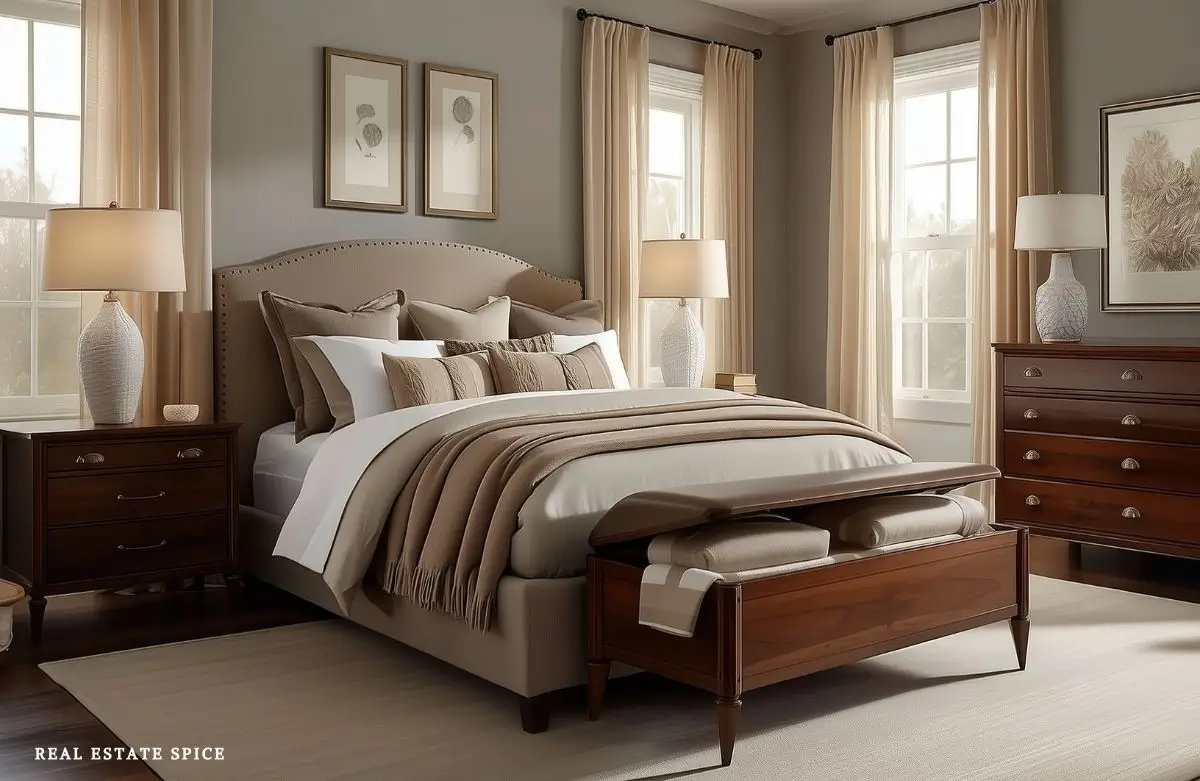
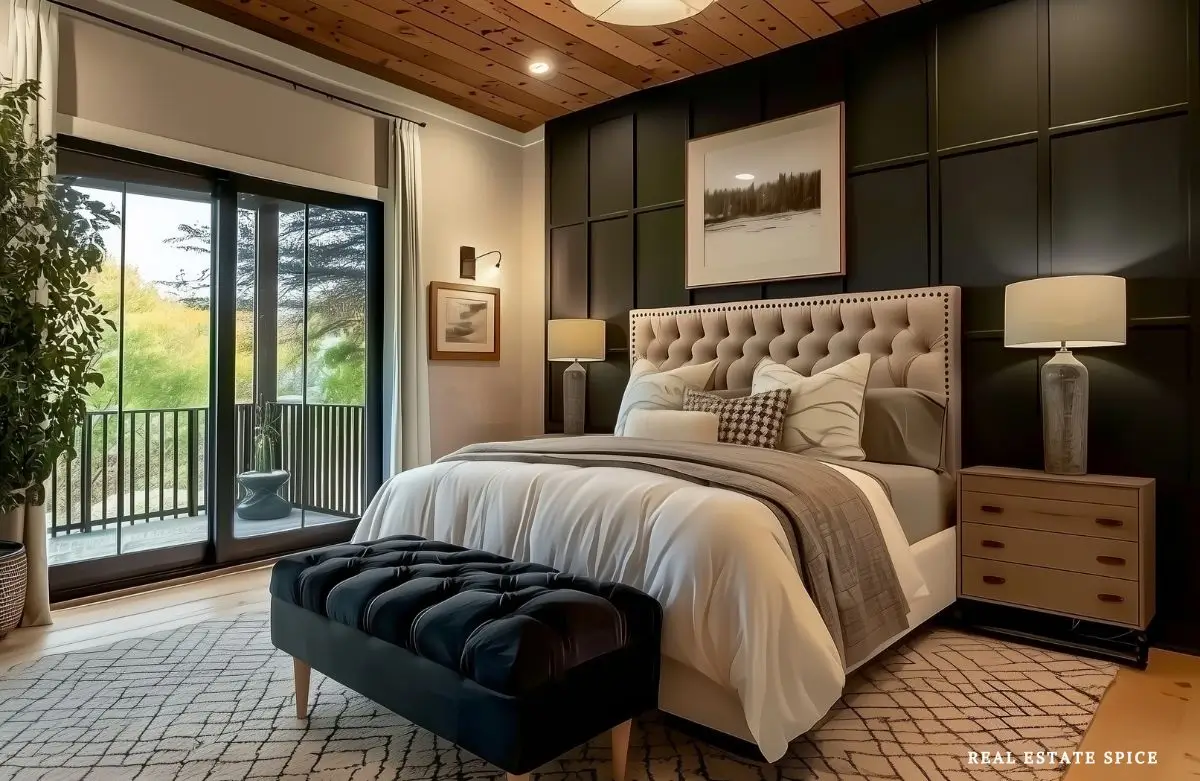
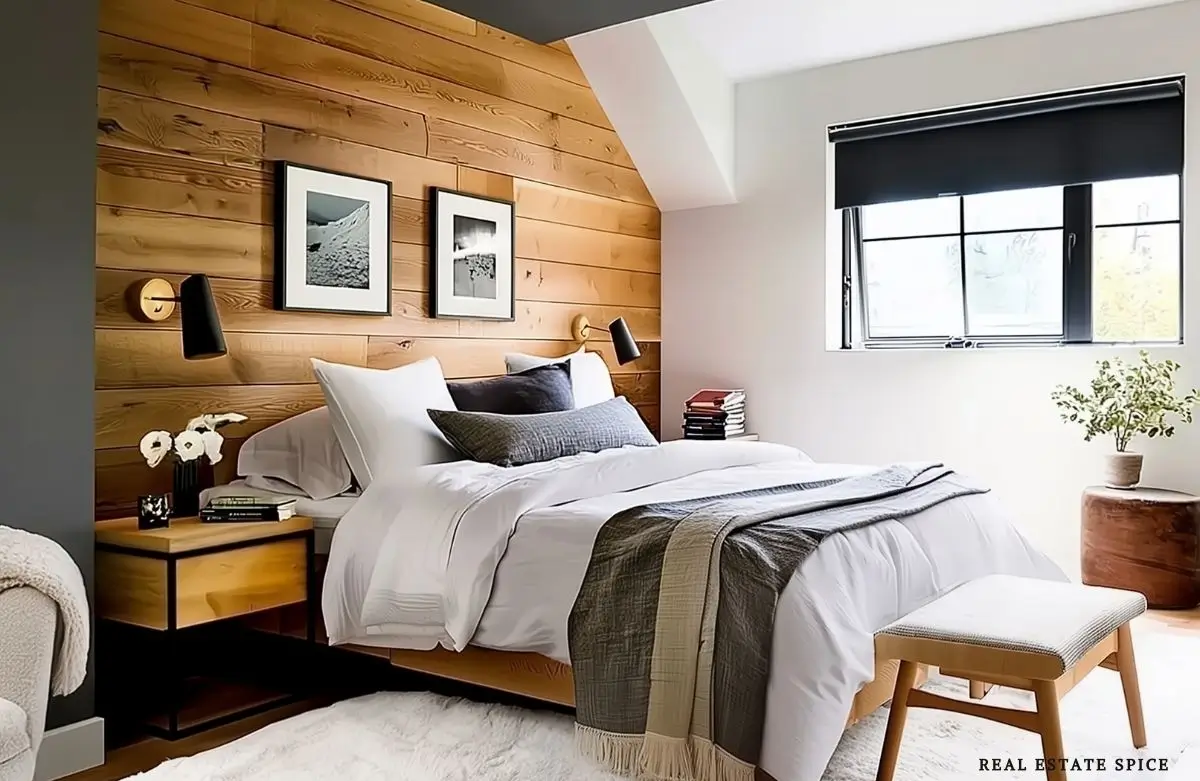
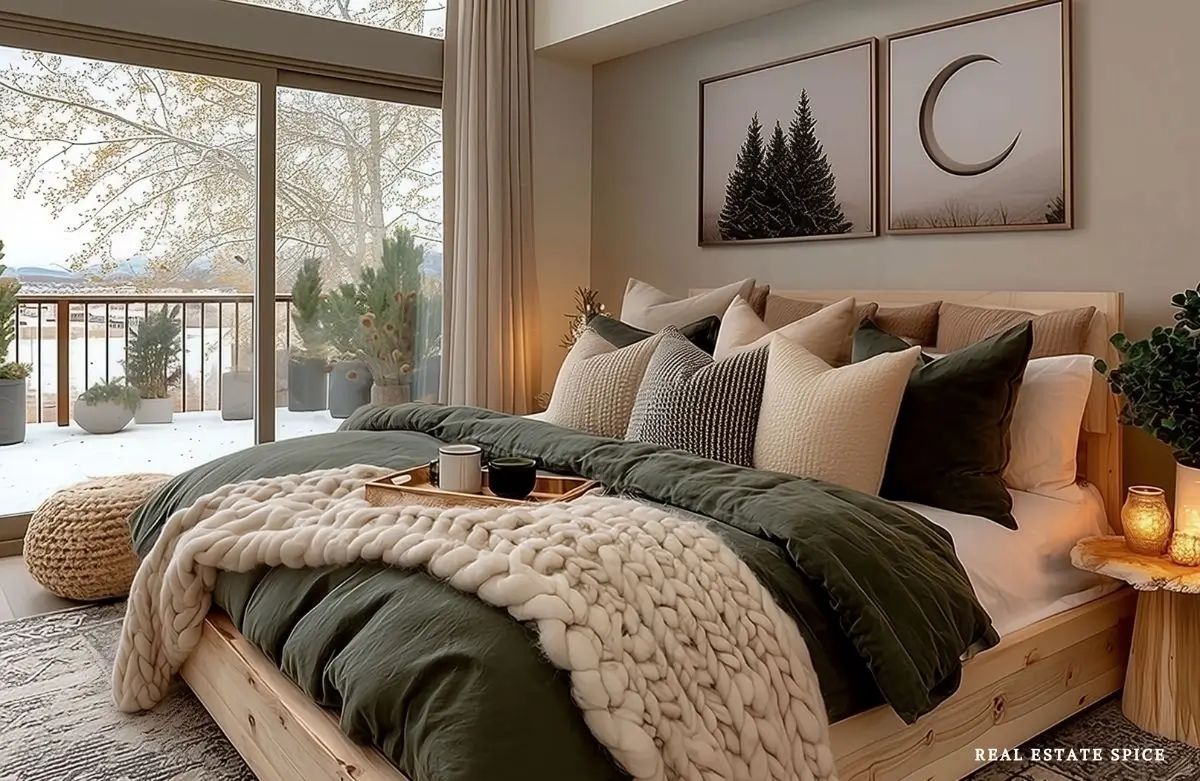
The 3 Bedroom Decor Formula For a Designed Retreat
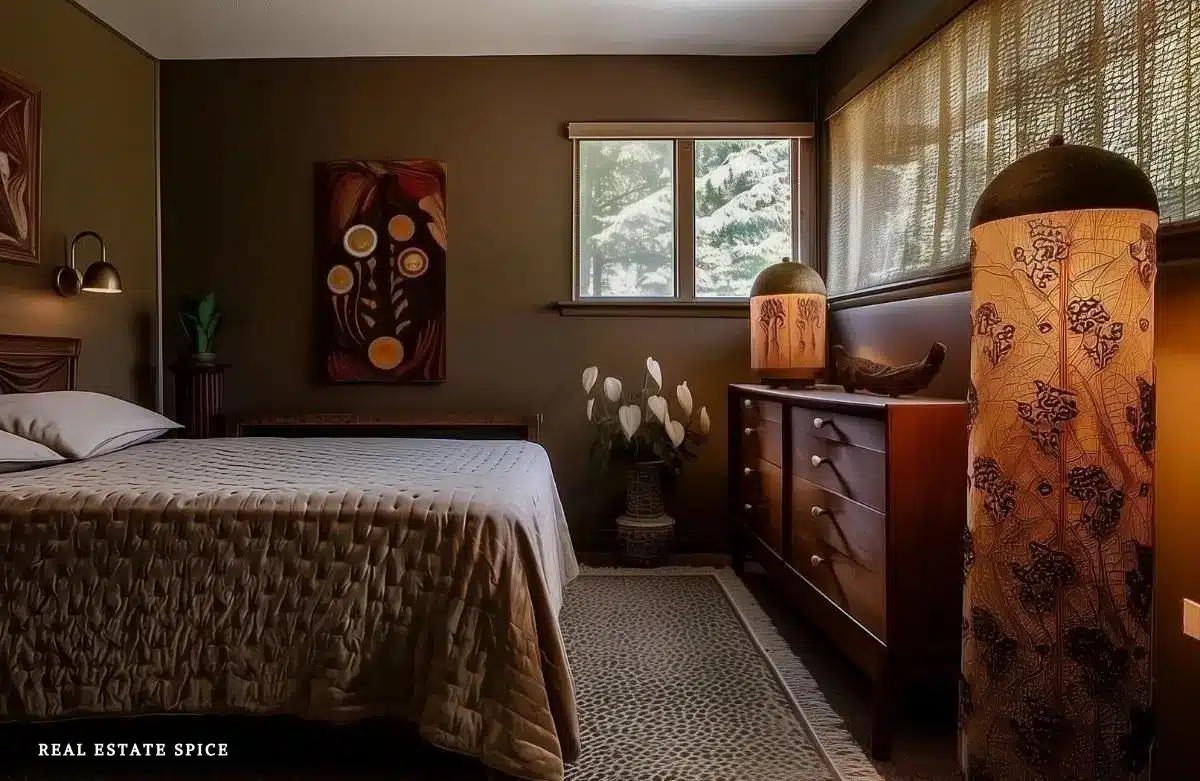
Bedroom decor can feel oddly scattered even after you’ve bought pretty things.
You can have a stunning lamp, a soft throw blanket, a framed print you genuinely love, and a little tray on the dresser, yet the room still doesn’t feel pulled together.
It’s annoying in the way only home decorating can be annoying, because the pieces are good.
They just aren’t speaking the same language yet. It’s not the designed bedroom retreat you’d like.
Be sure to check out Bedroom Trends This Year and 50 Bedroom Decor Ideas after this…
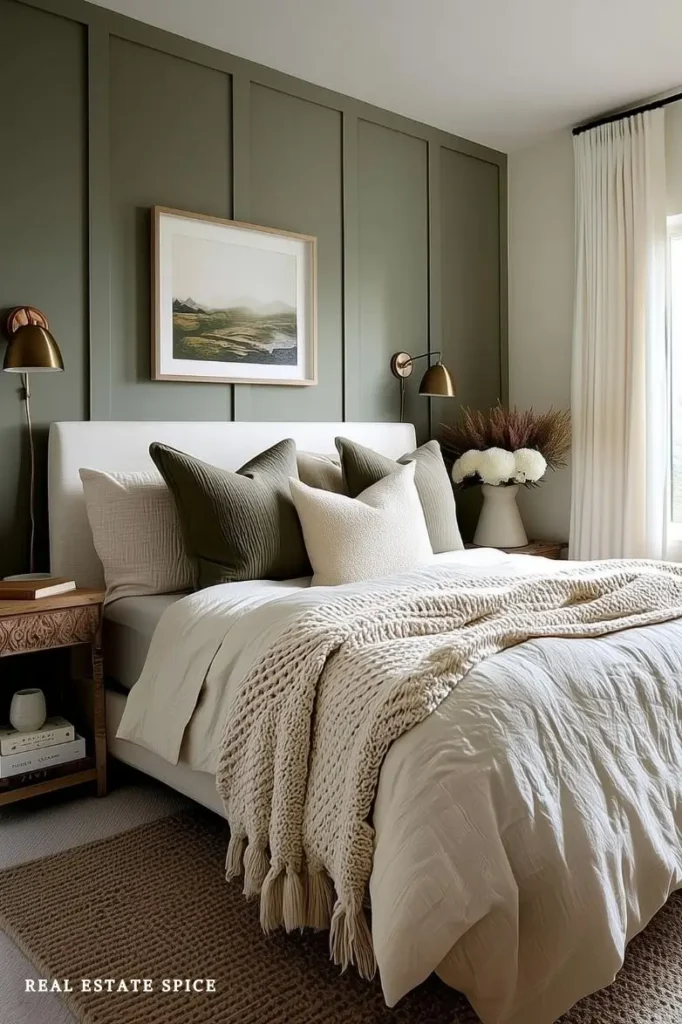
This is where the bedroom rule of 3 decor framework comes in handy.
You won’t find a giant list of bedroom decor ideas that makes you feel like you need to buy forty-seven new things and a decorative object shaped like a pear.
The point is much simpler.
Bedroom decor feels more finished when you choose the mood and main colors first.
Then repeat materials throughout the room and use fewer, stronger decor moments so everything feels connected instead of scattered.
Here, I’m focusing specifically on bedroom decor choices like color, texture, finishes, art, lamps, mirrors, baskets, curtains, bedding details, and personal pieces.
These are the details that help your room feel pulled together and much more like you.
It’s about decor choices.
This comes down to how you choose color, texture, finishes, art, lamps, bedding, mirrors, baskets, curtains, and personalized details that reflect you or the story you’re creating in the bedroom.
When those pieces work together, your bedroom decor feels like a well-designed bedroom retreat perfect for you, rather than random.
I help you with these decisions here.
You’ll see how a few carefully chosen pieces can make the whole room feel calmer, warmer, and much more like you.
If your bedroom feels unfinished, cluttered, bare, mismatched, or like it has several tiny style personalities competing for control of the room, you’re in the right place.
You need a simple way to make better decisions.
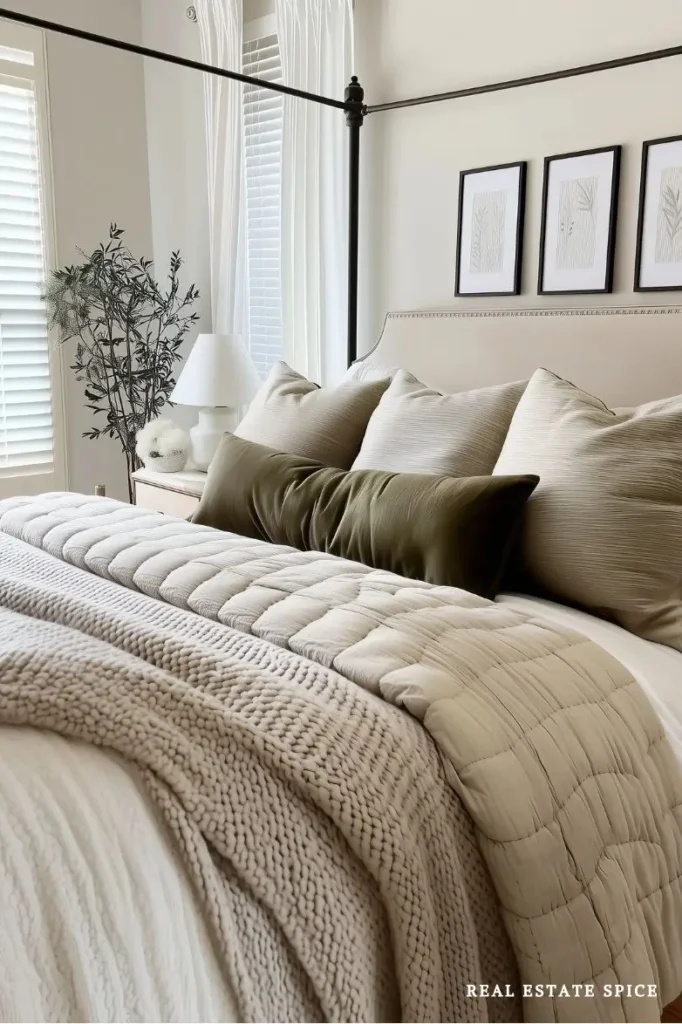
For the bigger picture, start with my Bedroom Rule of 3 hub – The Simple Formula that Makes Any Bedroom Feel Designed.
And if you want help with the main room areas, my Bedroom Rule of 3 areas article walks through the bed wall, nightstand zone, and floor layers.
Grab your favorite beverage, pen, and paper for notes; take your time to study the images, design tips, and products, and enjoy!
ps…remember to save this and come back anytime for a dose of inspo!
What Is the Bedroom Rule of 3 for Decor?
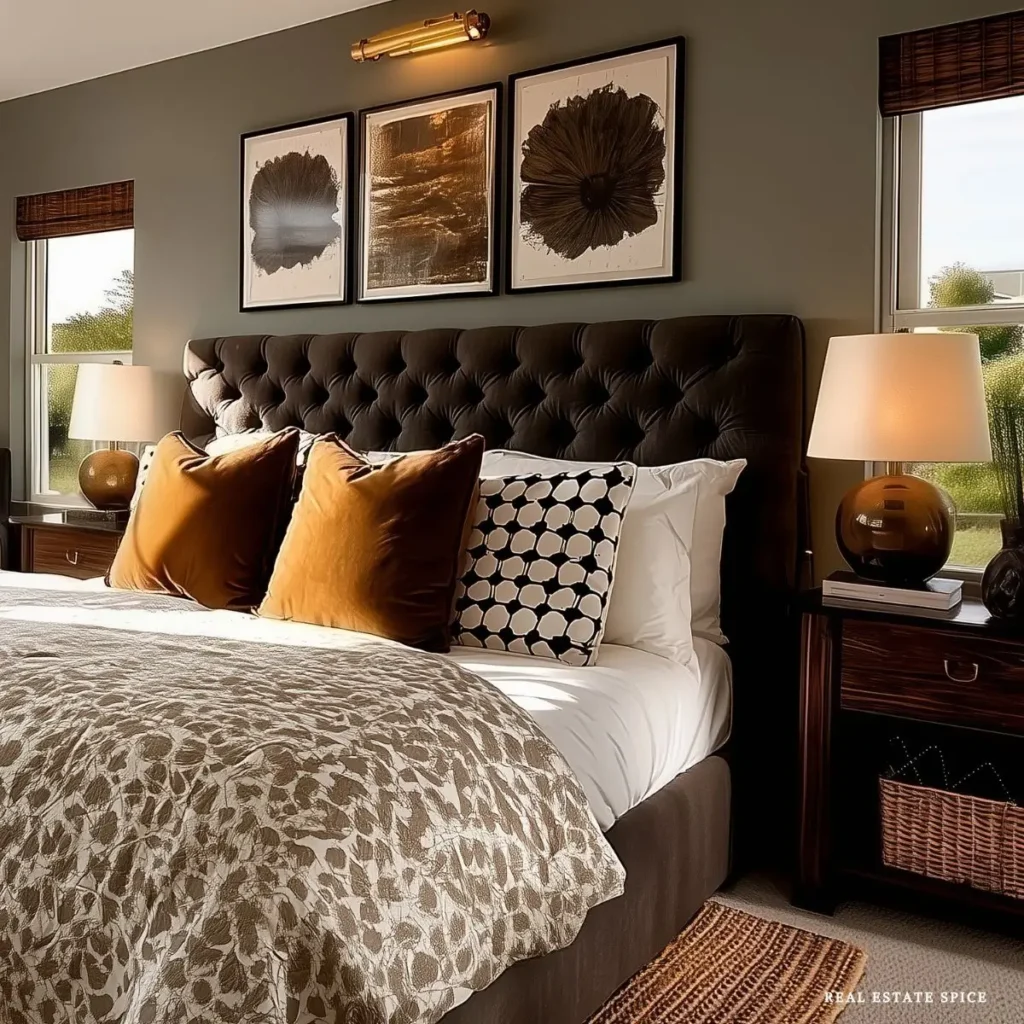
The bedroom rule of 3 for decor is a simple decorating framework built around three priorities.
First, choose a clear mood and color story.
Second, repeat materials, finishes, and shapes around the room.
Third, style fewer, stronger decor moments.
Those three decisions help your bedroom look calmer, cozier, and much more pulled together.
What makes this useful is that it gives your bedroom decor a sequence.
Take a moment, pause and reflect on what feeling you want to create.
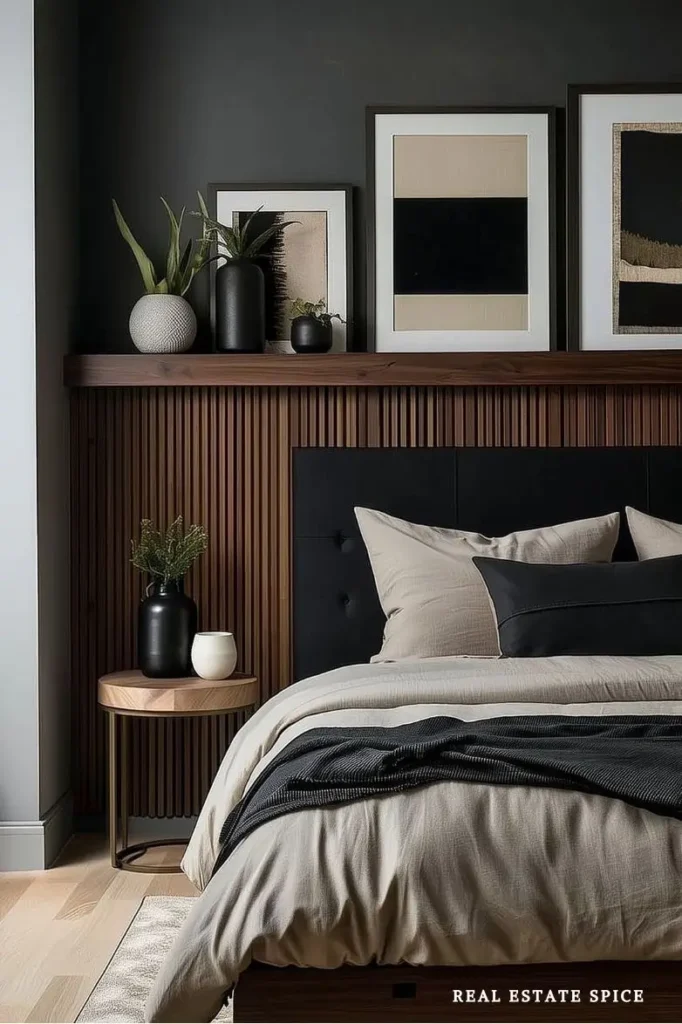
After that, think about what details need to be repeated so the room feels connected.
Then look around your bedroom and ask yourself, “Which few places deserve styling, and which surfaces can stay simple?”
This framework works with almost any style.
A neutral bedroom, modern bedroom decor, cottage bedroom decor, and traditional bedroom decor can all use it because the pieces change, but the thinking stays steady.
Get My Free eBook
“100 Easy Ways To Refresh Any Room All Year Round”
Why Bedroom Decor Works Better When Your Choices Connect
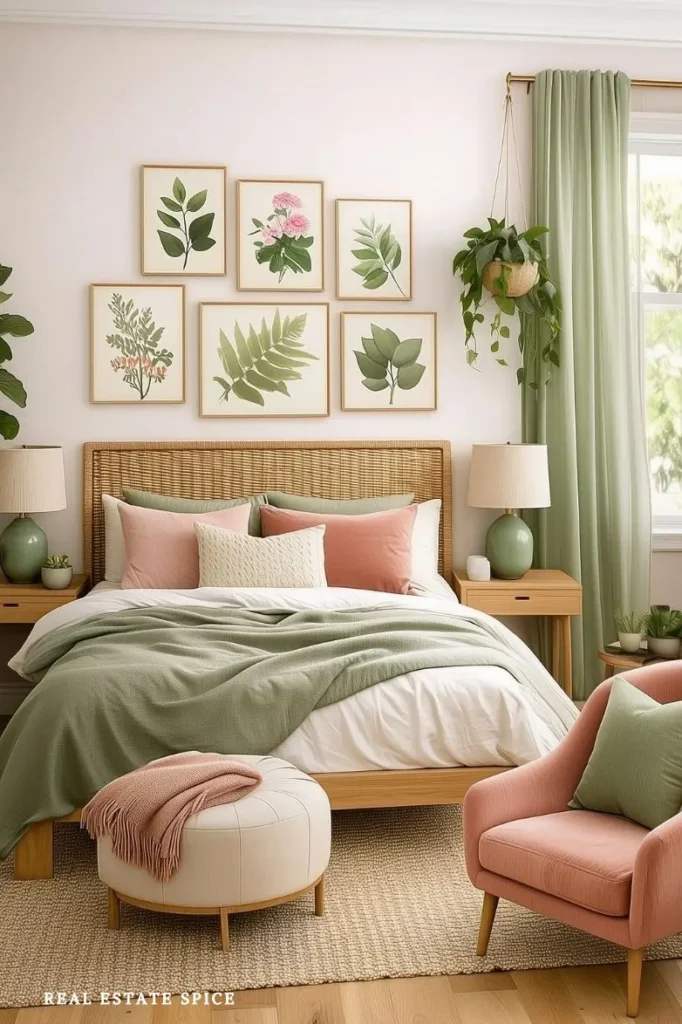
Most bedroom decorating problems aren’t caused by one bad item.
They’re caused by too many unrelated items.
The lamp is modern, the rug is cottage, the bedding is glam, and the throw pillows are apparently attending a different party in another zip code.
Connection is what makes bedroom decor feel designed.
That connection might come from a soft color palette, repeated wood tones, matching metal finishes, similar shapes, or textures that show up more than once.


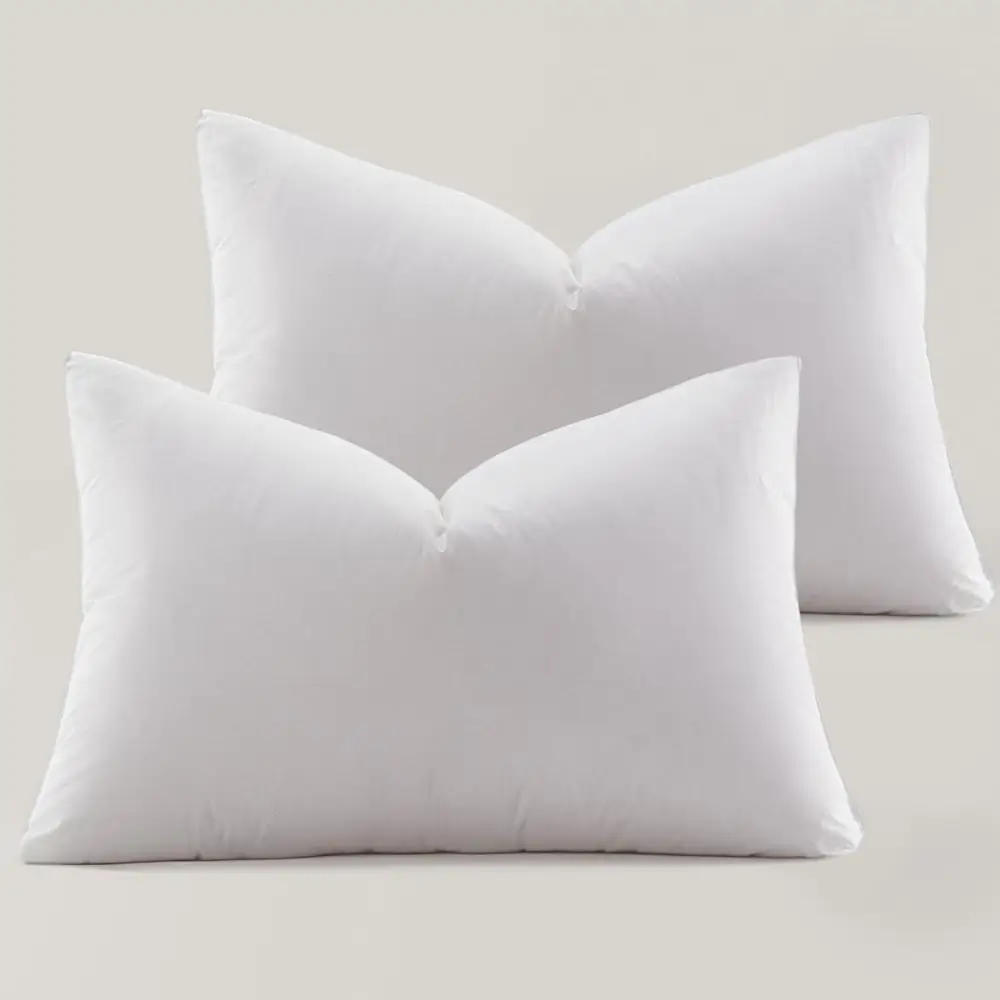
Globan Hotel Collection Down Feather Pillow (A Splurge But Worth It)

It doesn’t mean everything has to match perfectly.
When decor choices connect, the bedroom feels easier on the eyes.
Start by choosing two or three finishes, colors, or textures you want to repeat around the room.
Maybe your curtain rod, mirror frame, and lamp base all share a warm brass finish.
Maybe your bedding, curtains, and throw blanket all pull from the same soft color family.

Or maybe woven baskets, a wood dresser, and a natural fiber rug repeat that same warm, earthy texture.
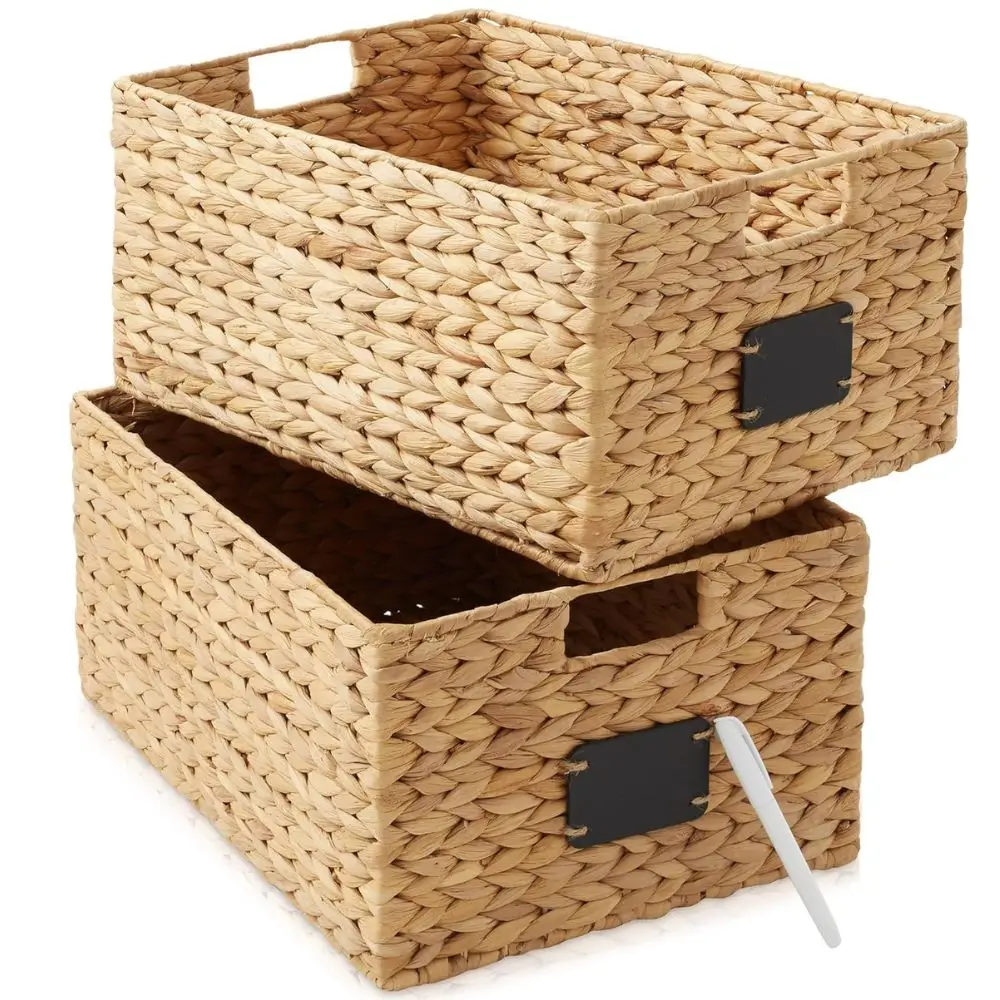
The goal is to give your eye little “oh, that belongs with that” moments around the room.
When those small repeats show up in your bedding, lamps, curtains, mirrors, art, and baskets, the bedroom starts feeling pulled together instead of like each piece showed up separately and hoped for the best.
That’s why bedroom decor becomes more useful when it’s part of a framework.
A pretty idea is nice.
One that fits the color story, repeats a material, and strengthens one decor moment is much better.
Priority 1: Choose a Clear Mood and Color Story
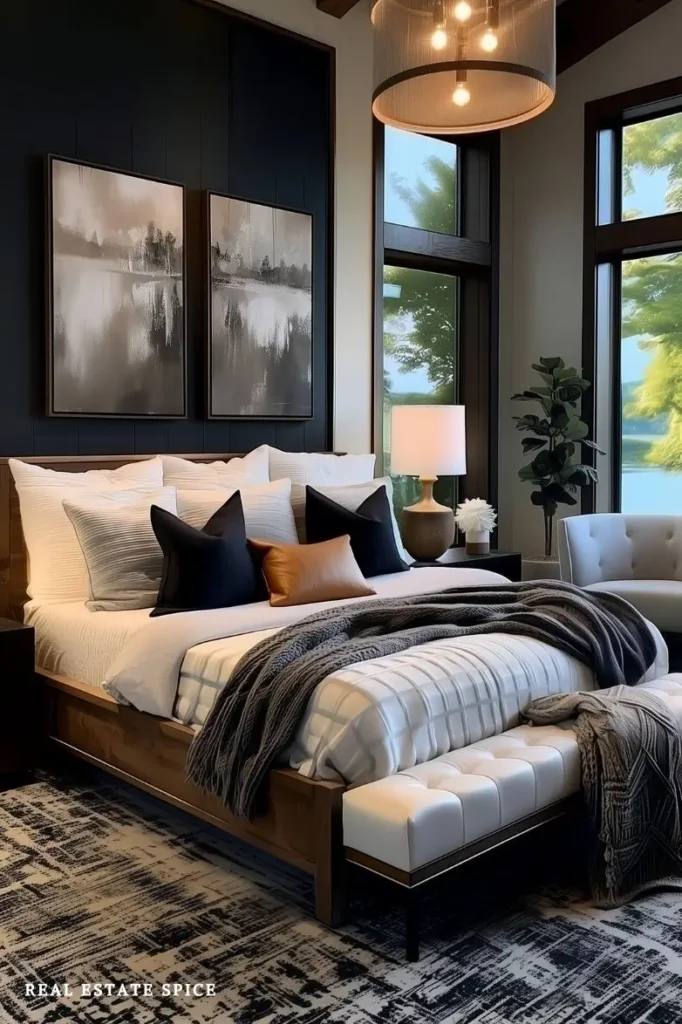
Start with how you want the room to feel
Take a moment and reflect on what feeling you want.
Do you want the bedroom to feel calm, cozy, romantic, moody, fresh, airy, warm, earthy, cottage-inspired, traditional, modern, boho style, or relaxed?

A calm bedroom might lean into warm neutrals, creamy whites, soft blues, muted greens, natural textures, and gentle contrast.
For a cozy bedroom, earth tones, layered bedding, velvet pillows, throw blankets, wood tones, and softer lighting can feel right.
Modern bedroom decor might use cleaner lines, black accents, simple bedding, metal finishes, and one strong piece of art.
Cottage bedroom decor could bring in quilts, painted furniture, florals, woven baskets, and vintage-inspired lamps.

Notice that none of those directions requires a themed costume.
You don’t need your bedroom to scream “coastal” or “cottage” or “modern farmhouse” from the doorway like it’s introducing itself at a very intense networking event.
A clear direction can be subtle.
You’re choosing a mood, not staging a movie set.

Use a main color, a supporting color, and one accent

One of the easiest ways to make bedroom decor feel pulled together is to choose a simple color palette you can repeat around the room.
Choose one main color, one supporting color, and one accent.
That’s it.
This keeps the room from feeling like every pretty color you’ve ever liked has been invited over without supervision.
Your main color is usually the largest visual impression in the room.
It might be creamy white, warm beige, soft gray, muted green, or a gentle taupe.
The supporting color adds depth.
That could be a wood tone, a deeper neutral, a dusty blue, a soft lavender, clay, mushroom, charcoal, or warm brown.

The accent color is the smallest but most noticeable detail.
Maybe it’s brass, black, olive, blush, navy, rust, or a little bit of soft gold.
This color formula works beautifully with bedding, duvet covers, comforter sets, quilts, throw pillows, throw blankets, bedroom rugs, area rugs, curtains, and framed art.
If your bedding is creamy white and your rug has warm beige, maybe your accent becomes black through picture frames, a mirror, or bedside lamps.
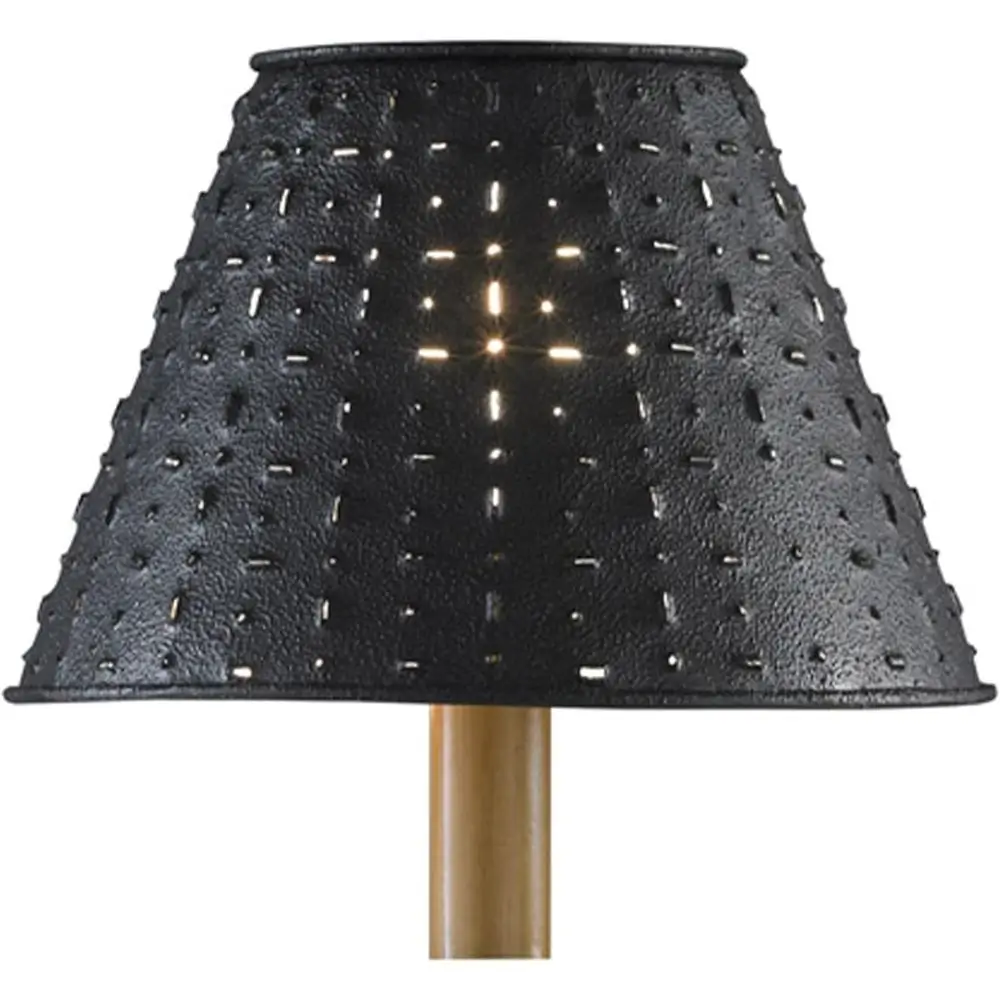
In a room with wood tones and muted green curtains, brass accents on drawer pulls or lamps can create the final touch.

Let the color story guide your choices
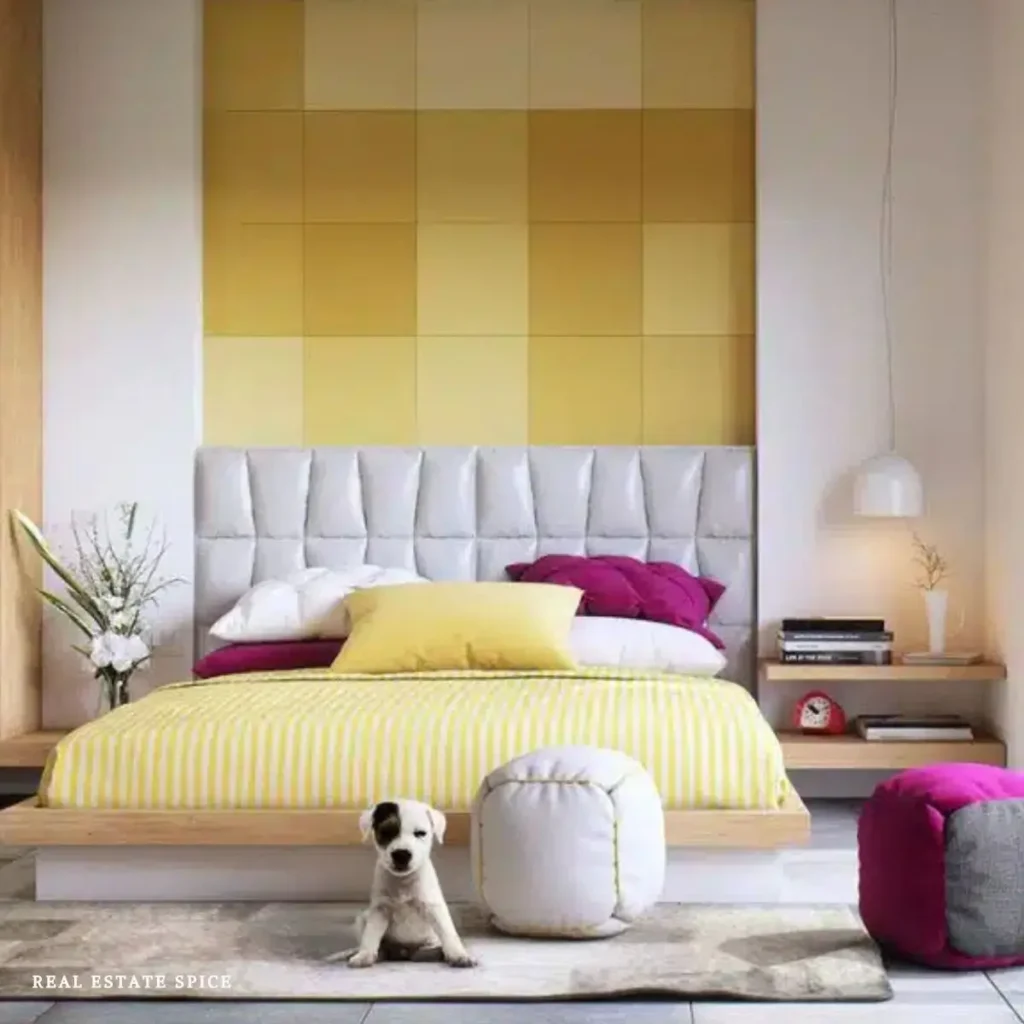
A clear color story keeps you from buying random pieces that don’t work together.
You might love a bright pink lamp, and that lamp may deserve a beautiful life somewhere.
But if your bedroom is built around warm neutrals, olive, and black, it may be happier in another room where it doesn’t have to compete with the overall mood.
That’s not a tragedy.
Think of it as the lamp continuing its journey elsewhere, probably with excellent confidence.
Bedroom color ideas don’t have to be complicated.
If you’re starting from scratch, look at the pieces you already plan to keep.
Maybe your bed frame is warm wood.
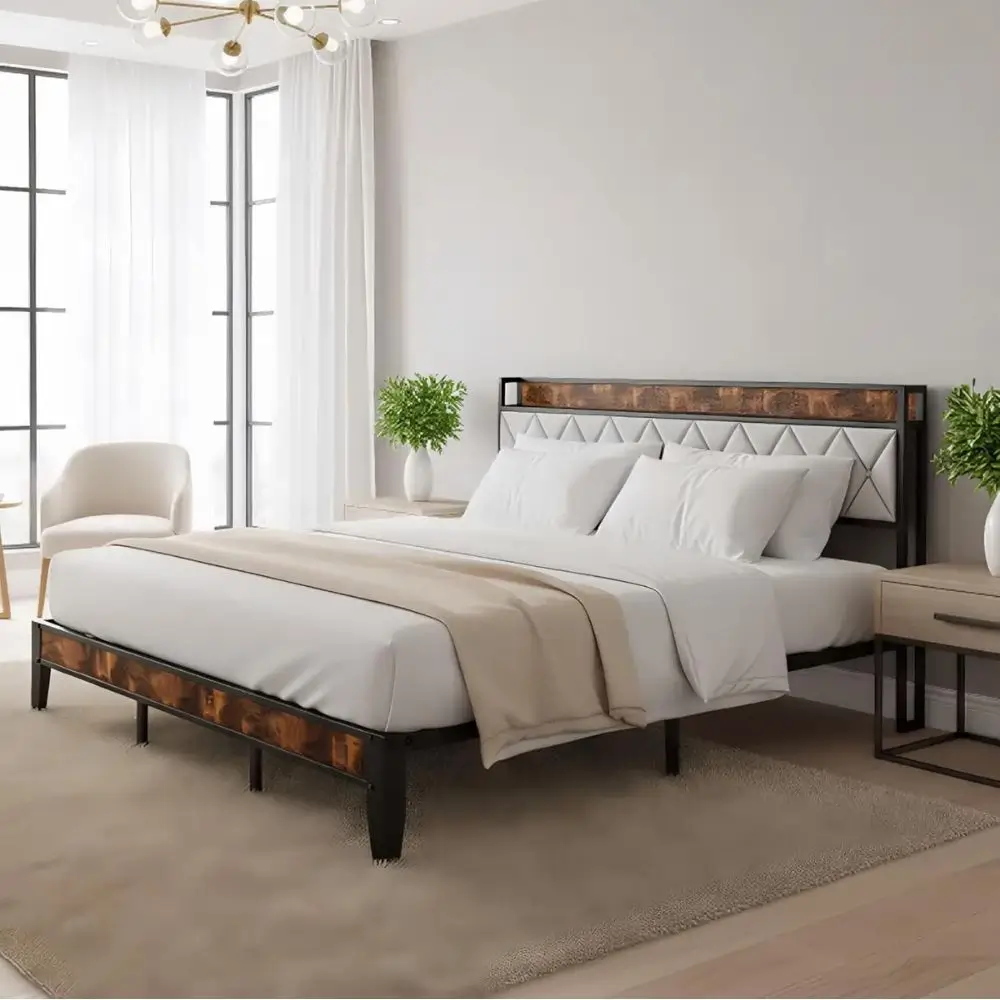
Perhaps your dresser has black metal hardware.
Your headboard may be upholstered in beige linen.
Those existing details can become part of the color story instead of fighting against it.
This is especially helpful if you’re working with bedroom furniture sets.

Matching furniture can be practical, but it can also feel a little flat if the color story stops there.
Add contrast through bedding, lamps, curtains, bedroom wall decor, or a rug so the room gets depth. The goal is harmony, not one-note matching.
Pick a direction that matches your real life

Your bedroom decor should fit how you actually live.
If you have pets, kids, coffee near the bed, or a general distrust of pure white fabrics, don’t force a delicate all-white room because it looked beautiful elsewhere.
A neutral bedroom can still include washable bedding, textured rugs, darker wood tones, and practical storage.
Pretty and sensible can absolutely sit together.
They might even become friends.
If you love calm bedroom ideas, your decor direction may need fewer high-contrast moments and more texture.
When a cozy bedroom style is more your speed, you might add heavier curtains, soft lamps, warm bedroom colors, and layered blankets.

For a fresh and airy room, lighter bedding, glass lamps, pale woods, and simpler window treatments may feel right.
The direction should support your life, not make you feel like you’re living inside someone else’s mood board.
Priority 2: Repeat Materials, Finishes, and Shapes
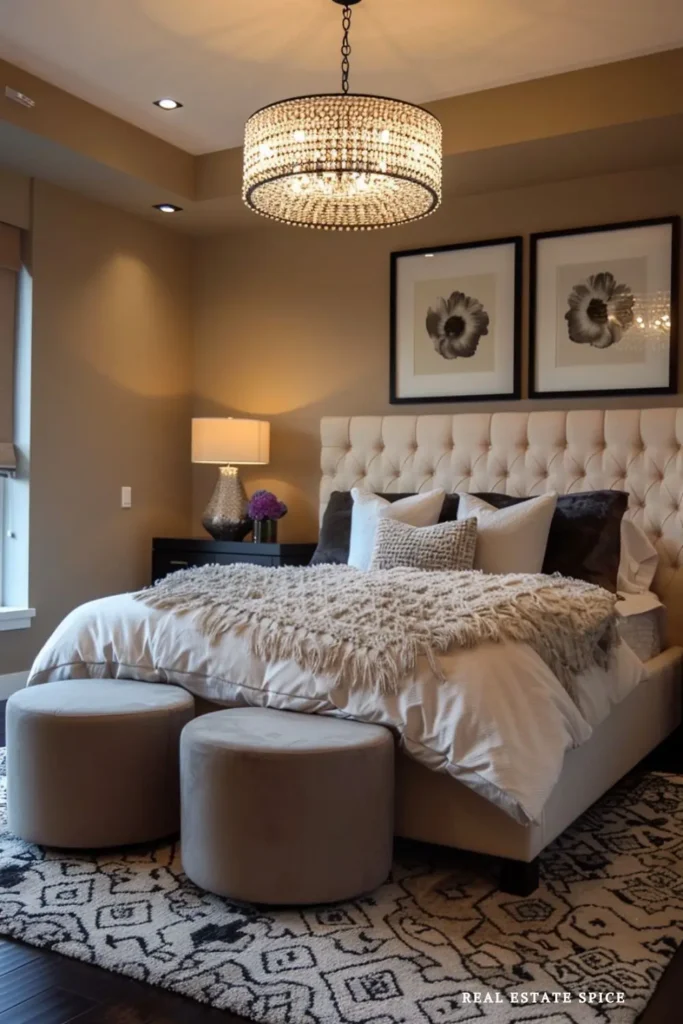
Repetition makes decor feel connected
Once you’ve chosen a mood and color story, the second priority is repetition.
Bedroom decor feels more pulled together when certain materials, finishes, or shapes show up more than once.
Repetition tells the eye that the room has a plan.
It’s the decorating version of everyone at the table understanding the group project.
This doesn’t mean every finish has to match.
In fact, a room with too much matching can feel stiff.
Repetition is softer than matching.
It means a few details return in different places so the room feels connected.
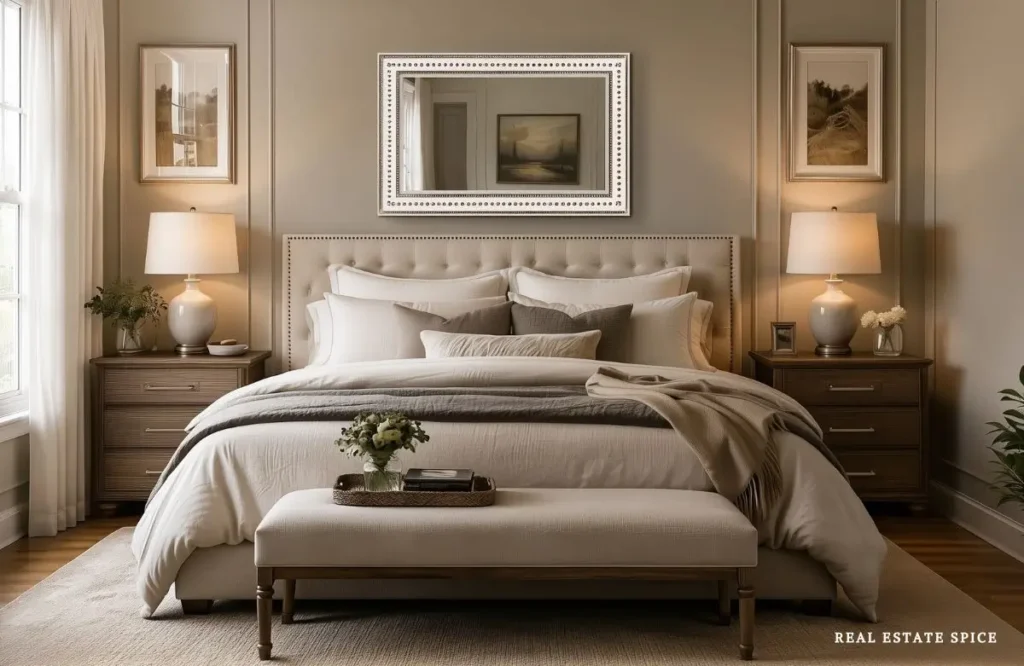
A beading look might show up in the bed frame, mirror, and picture frames.
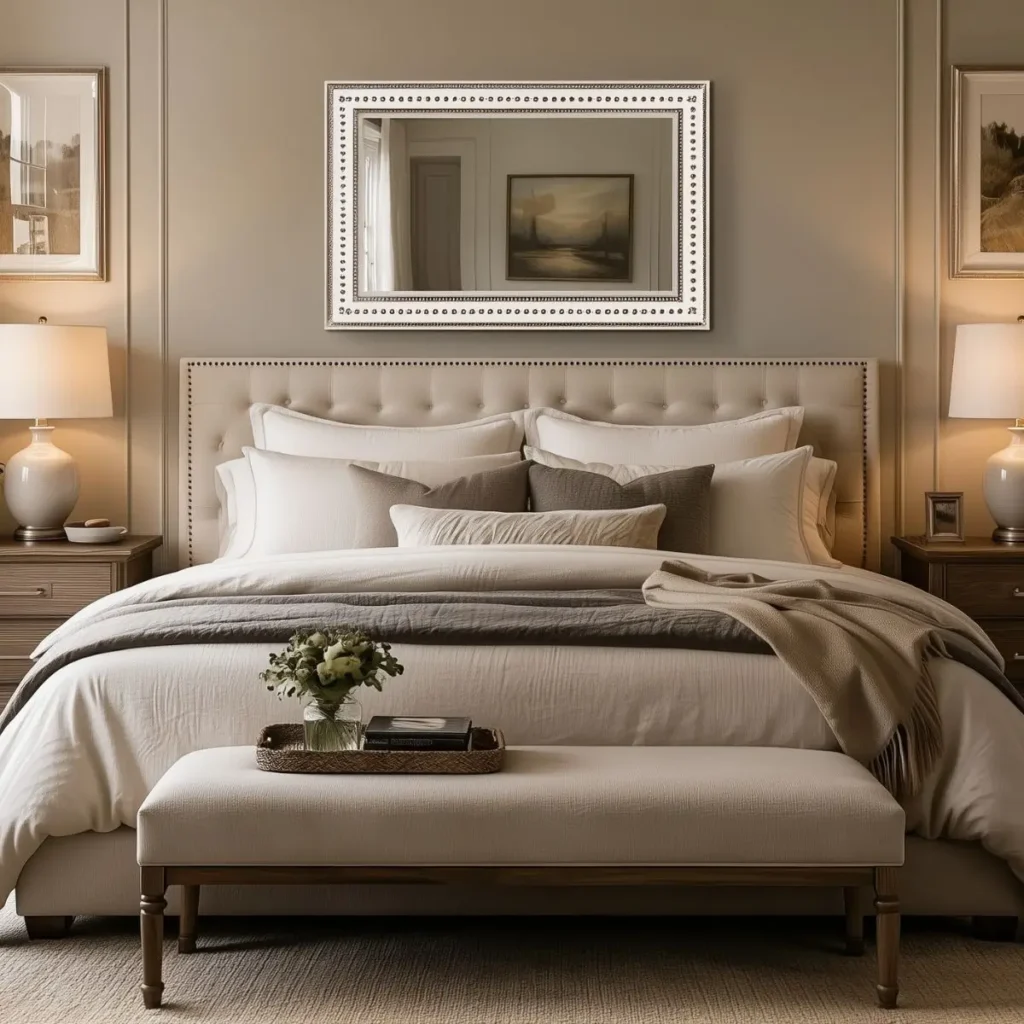
Brass finishes could appear on bedside lamps, drawer pulls, and a picture light.
Black metal finishes may repeat in the curtain rod, wall sconces, and framed art.
Materials can repeat too.
Linen might show up in curtains and bedding.
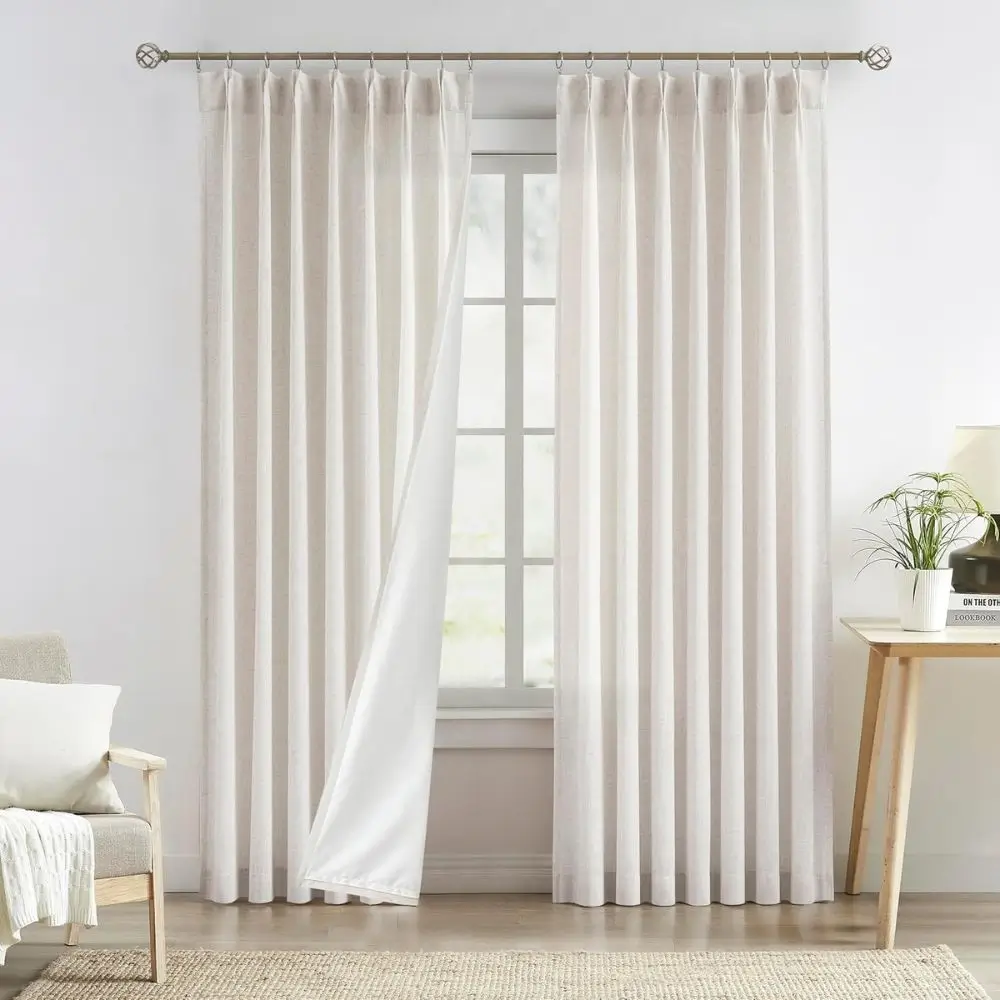
Cotton can appear in sheets and quilts.
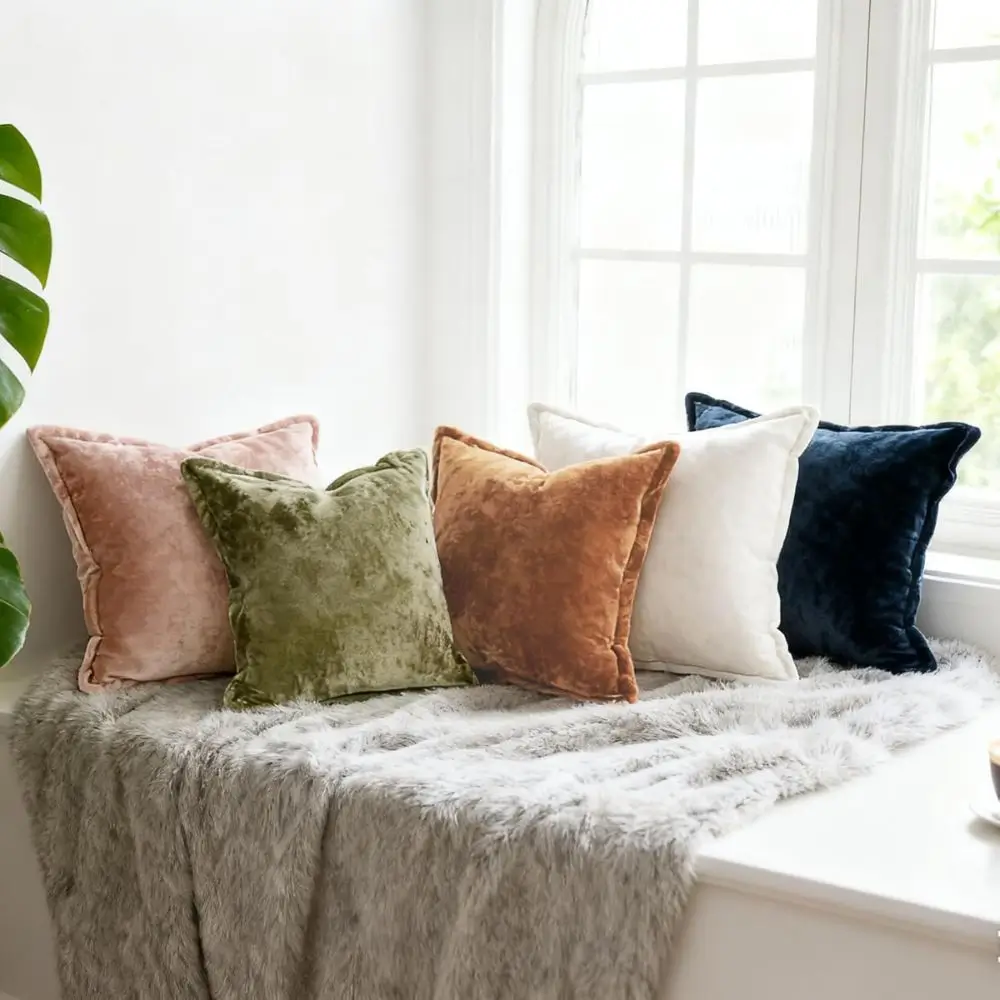
Velvet may be used in one pillow and one accent chair.
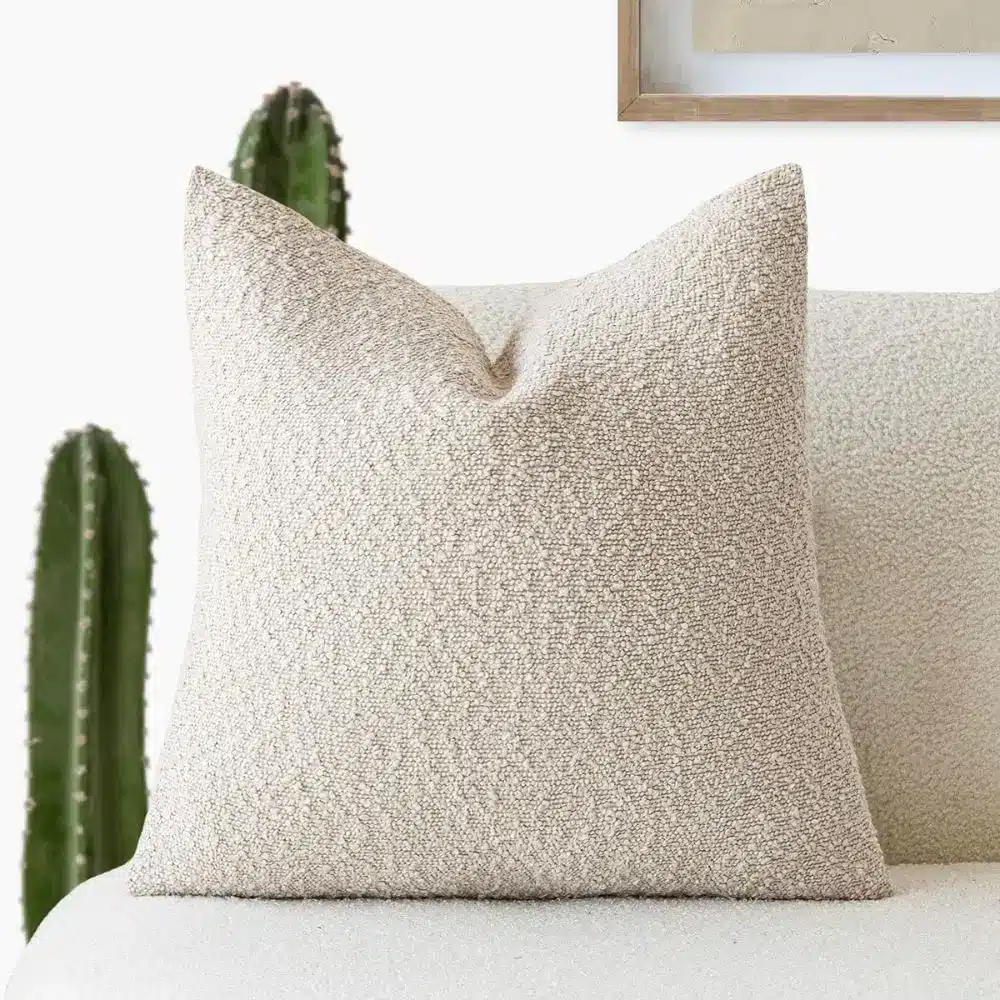
Boucle could show up on a bench, throw pillow or small ottoman.
**Boucle (pronounced boo-CLAY) is a soft, looped, nubby fabric that brings instant warmth and texture to a space. The name comes from the French word for “curled” or “looped,” perfectly describing those tiny woven loops that give it its cozy feel.
Woven textures might appear in baskets, natural fiber rugs, or a lampshade.
Connect the bedroom furniture without making it too matched
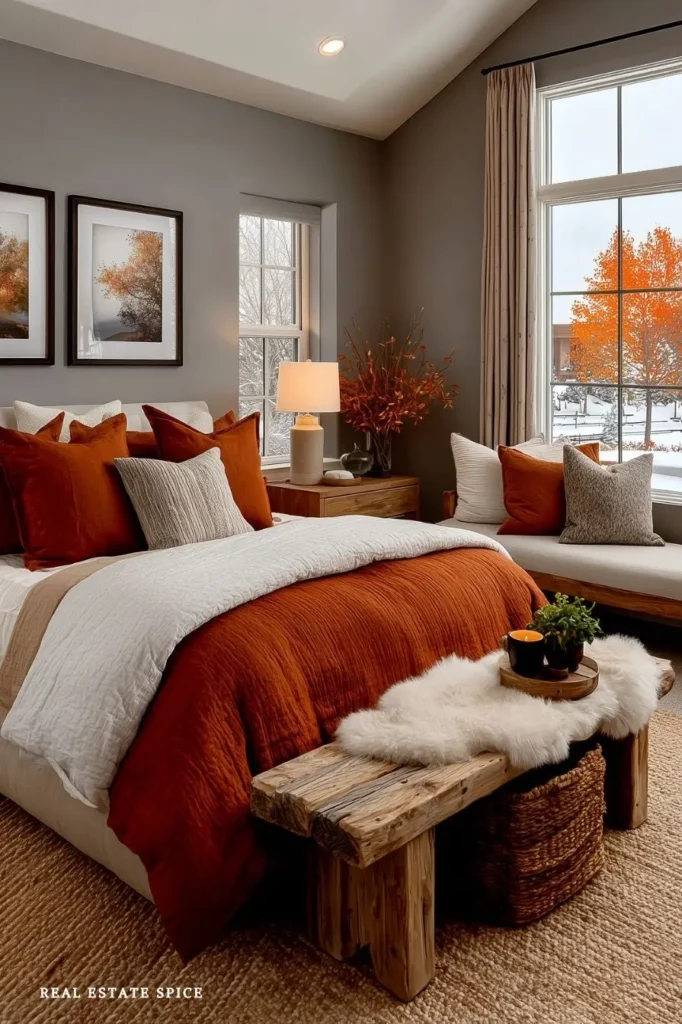
Bedroom furniture does a lot of visual work, so the materials should feel related.
Bed frames, headboards, nightstands, dressers, storage benches, and accent chairs don’t all need to come from the same set.
Still, they should share something.
Maybe the wood tones are similar.
Perhaps the shapes are both rounded.
The metal finishes may repeat in hardware and lamps.
That little connection is what keeps the room from feeling like every piece showed up separately and hoped for the best.
Bedroom furniture sets can be a great starting point, especially if you want the room to feel cohesive quickly.
To keep a set from feeling too predictable, bring in contrast through lamps, textiles, curtains, mirrors, and art.
A matching dresser and nightstands can look more personal when paired with an upholstered headboard, textured bedding, and a rug that brings in natural fibers.
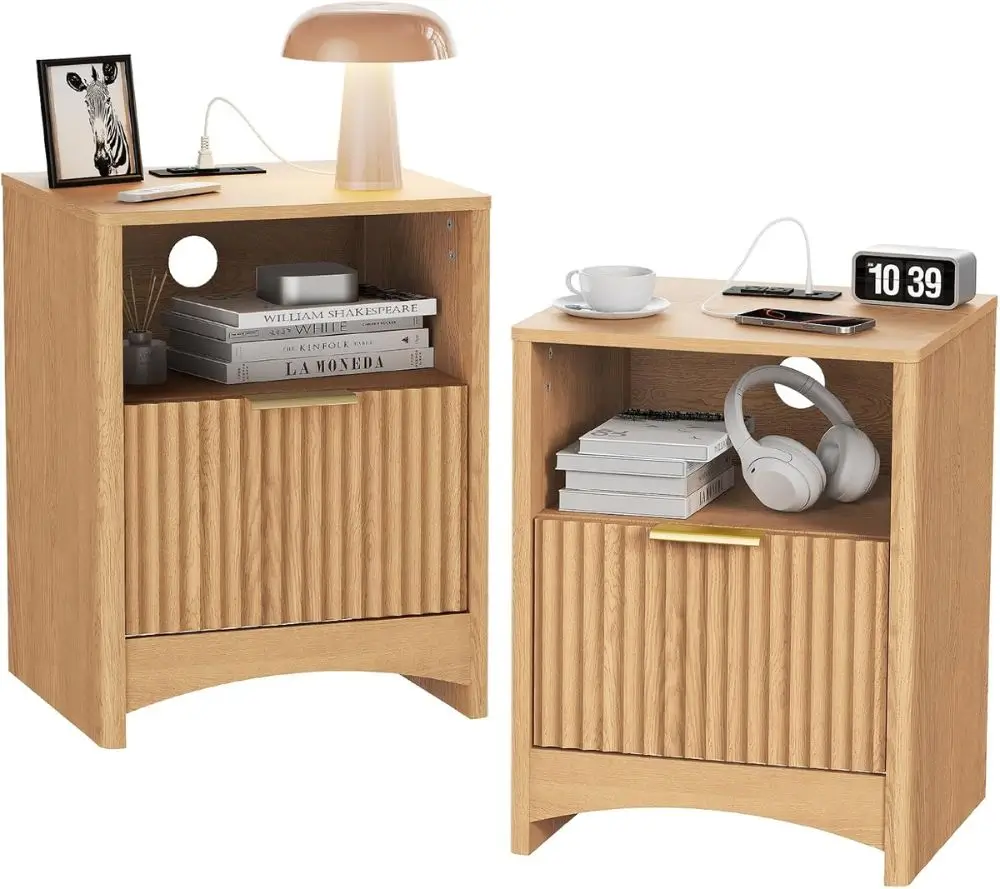
If your furniture pieces are already mixed, don’t panic.
You can connect them through decor.
A dresser with black pulls can relate to black wall sconces.

Wood bed frames can connect to wood-framed mirrors.
Upholstered headboards can relate to fabric lampshades, throw pillows, or curtains.
You’re not trying to erase the differences.
Instead, you’re helping them feel like they belong in the same conversation.
Repeat shapes for a more polished look
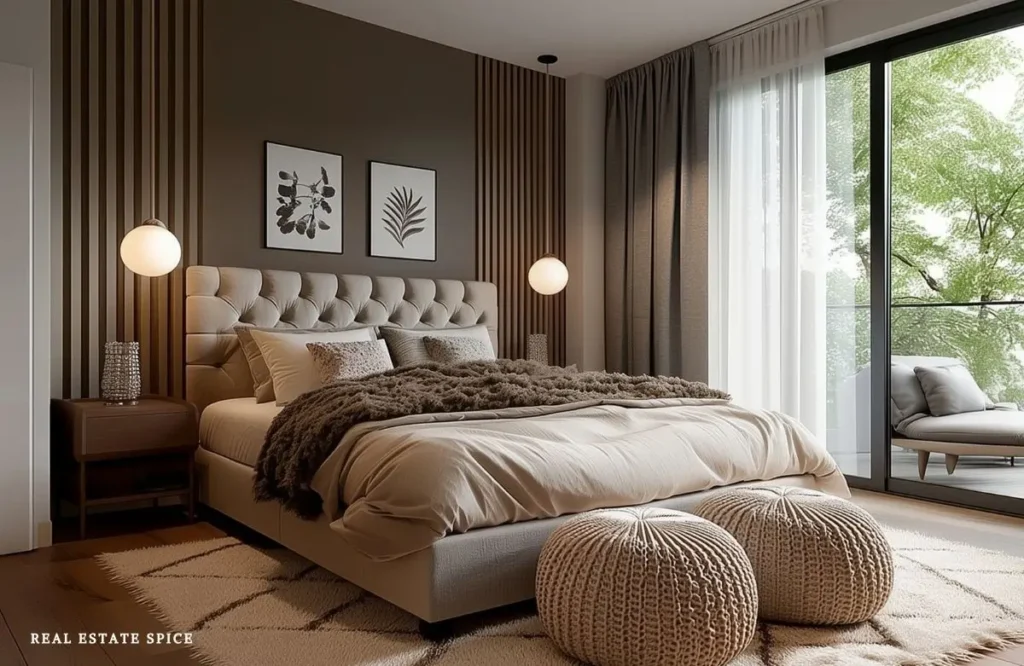
Shapes matter too, and they’re one of the easiest details to overlook.
A bedroom full of sharp rectangles can feel a little rigid.
Rooms with too many round forms can start feeling visually soft in a way that lacks structure.
The best mix usually repeats one or two shapes so the decor feels intentional.
For example, arched mirrors can connect with rounded headboards or curved lamps.
Rectangular-framed art might pair well with a clean-lined dresser and a modern bed frame.
Curved lamps can echo curved drawer pulls or a curved floor mirror.
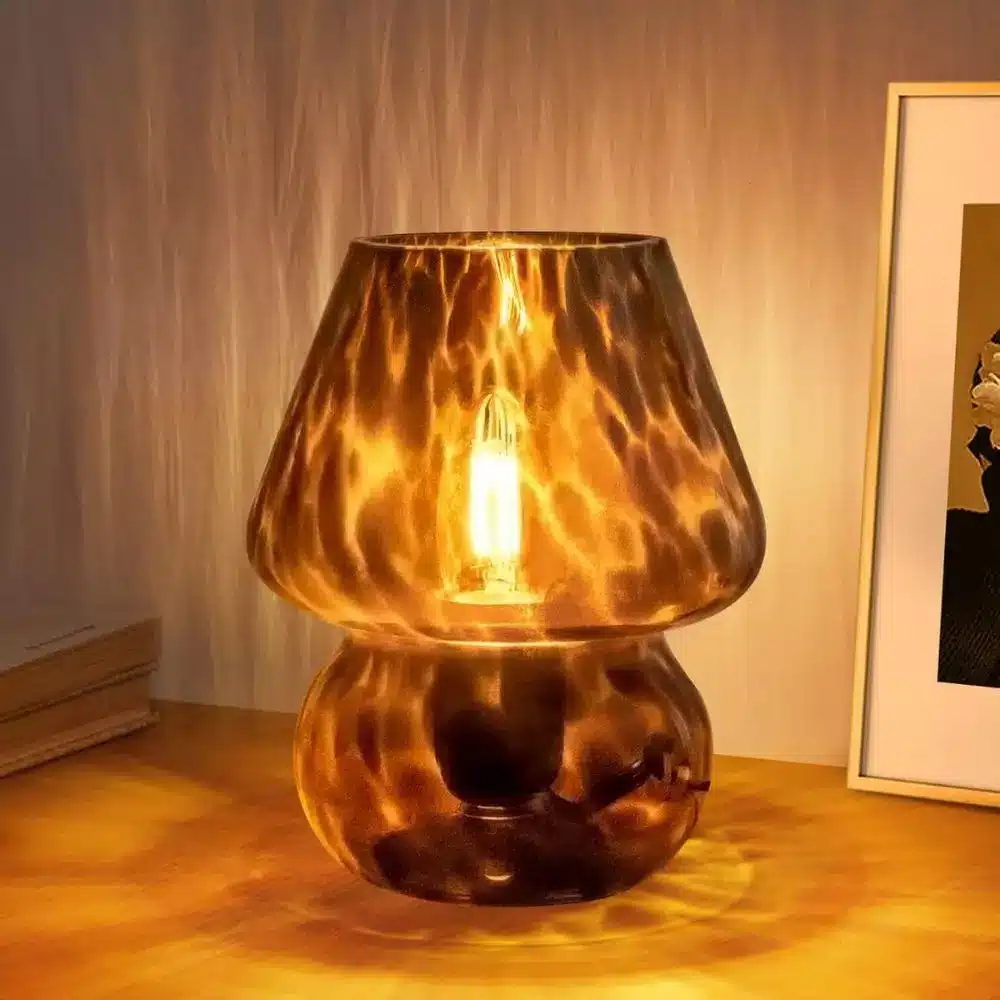
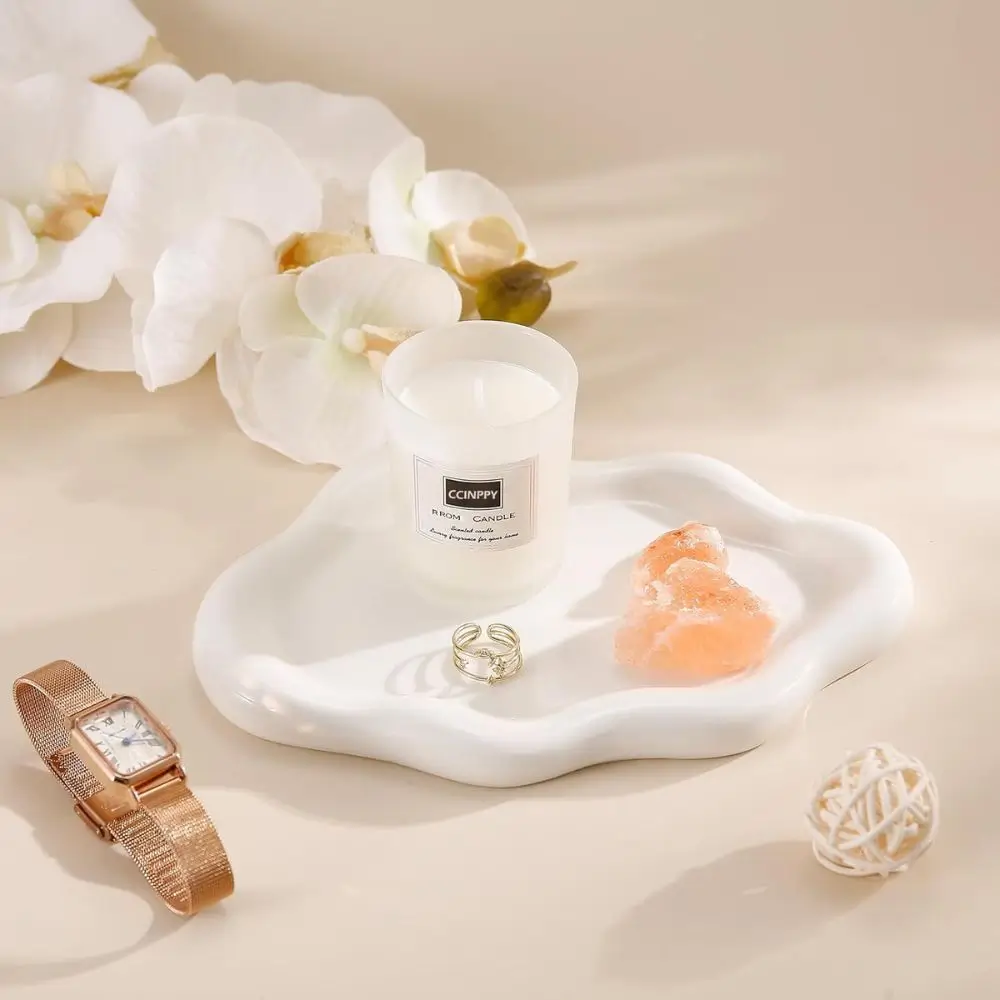
Even a tray, vase, or unique sculptural piece can reinforce the room’s style.
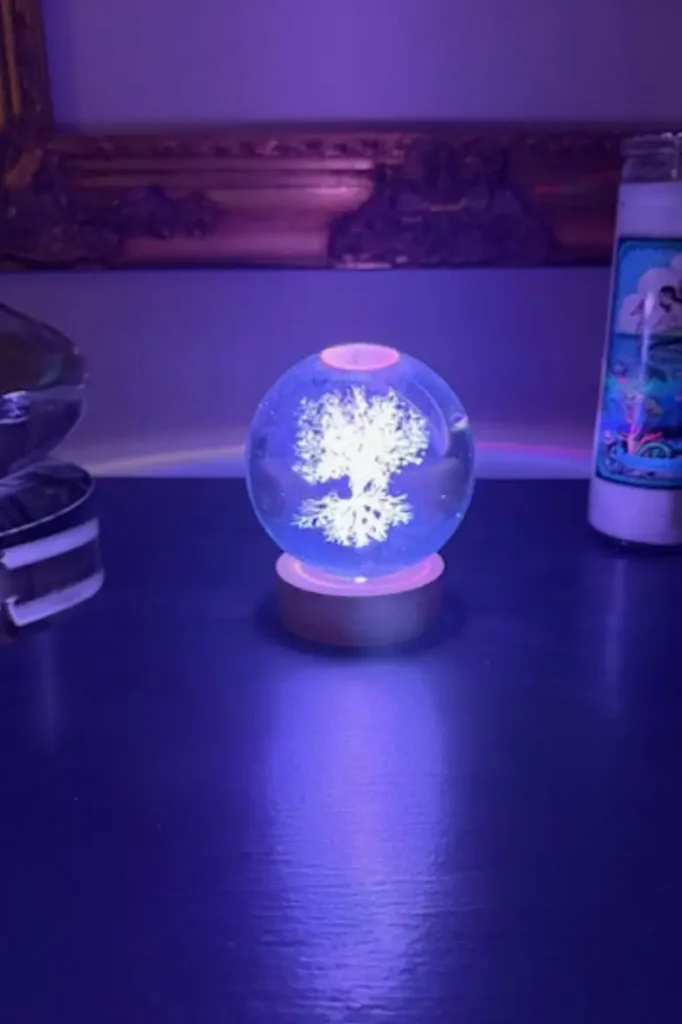
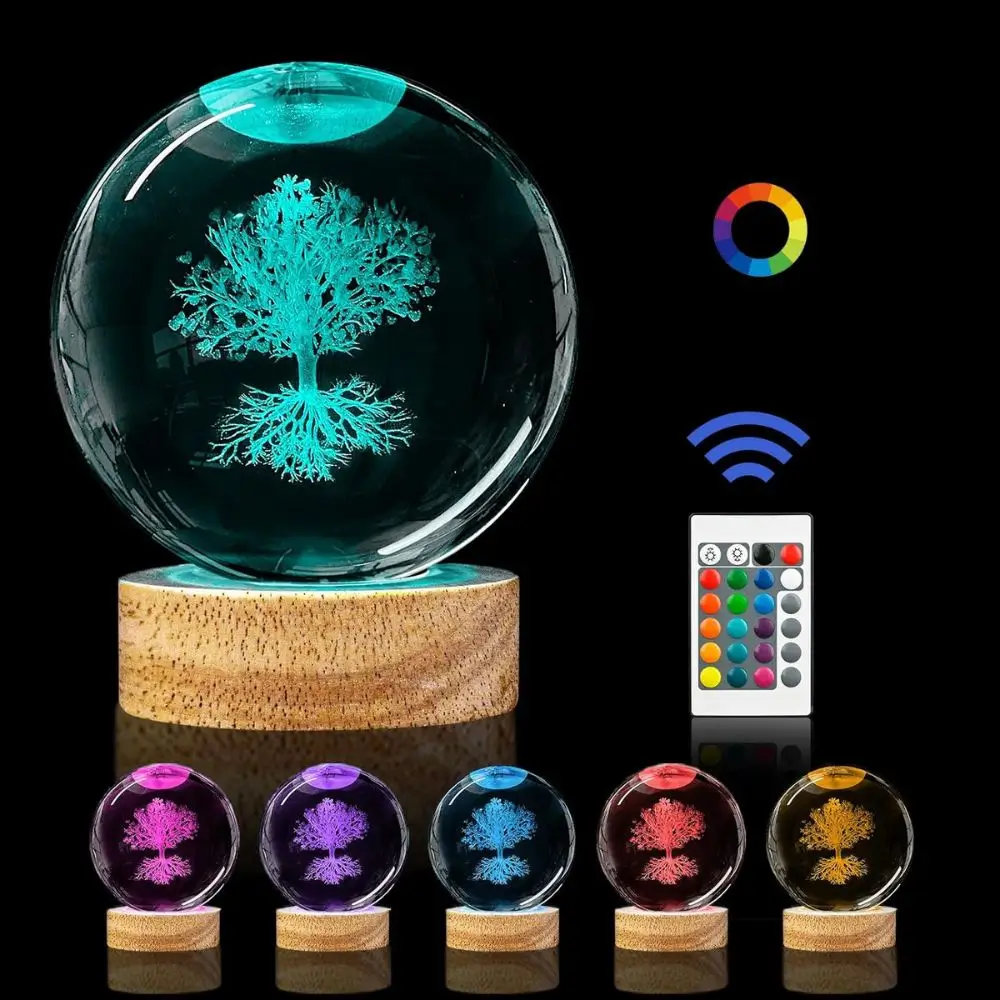
I love anything trees, nature, and curves, so this is one of my favorite decor pieces…a glowing tree of life.
Use finishes to tie the lighting into the rest of the room
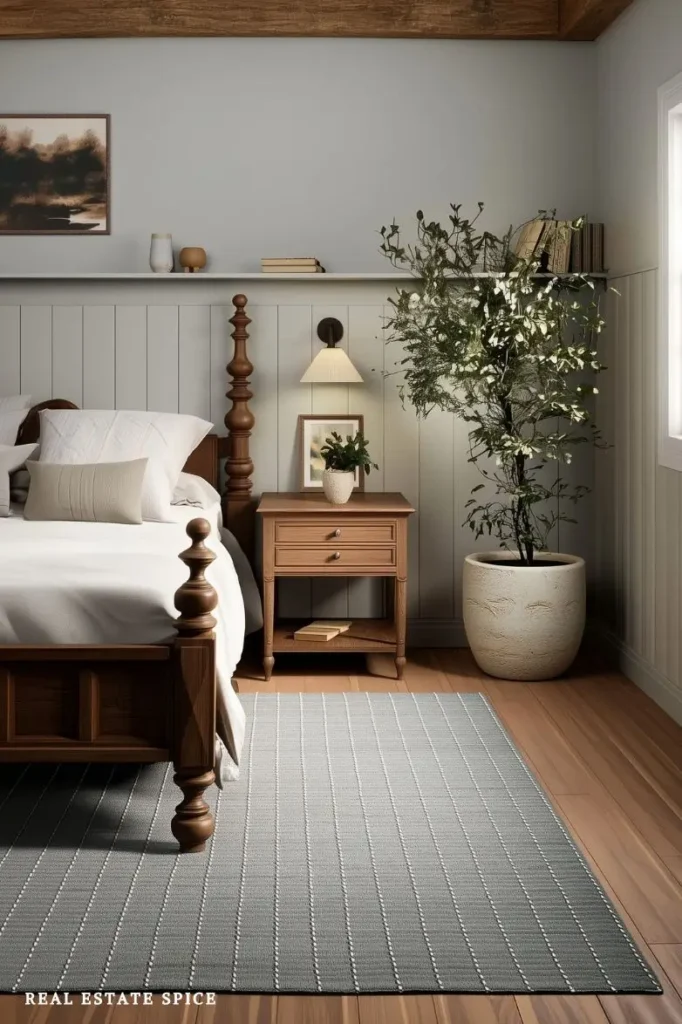
Bedroom lighting is one of the easiest places to repeat finishes.
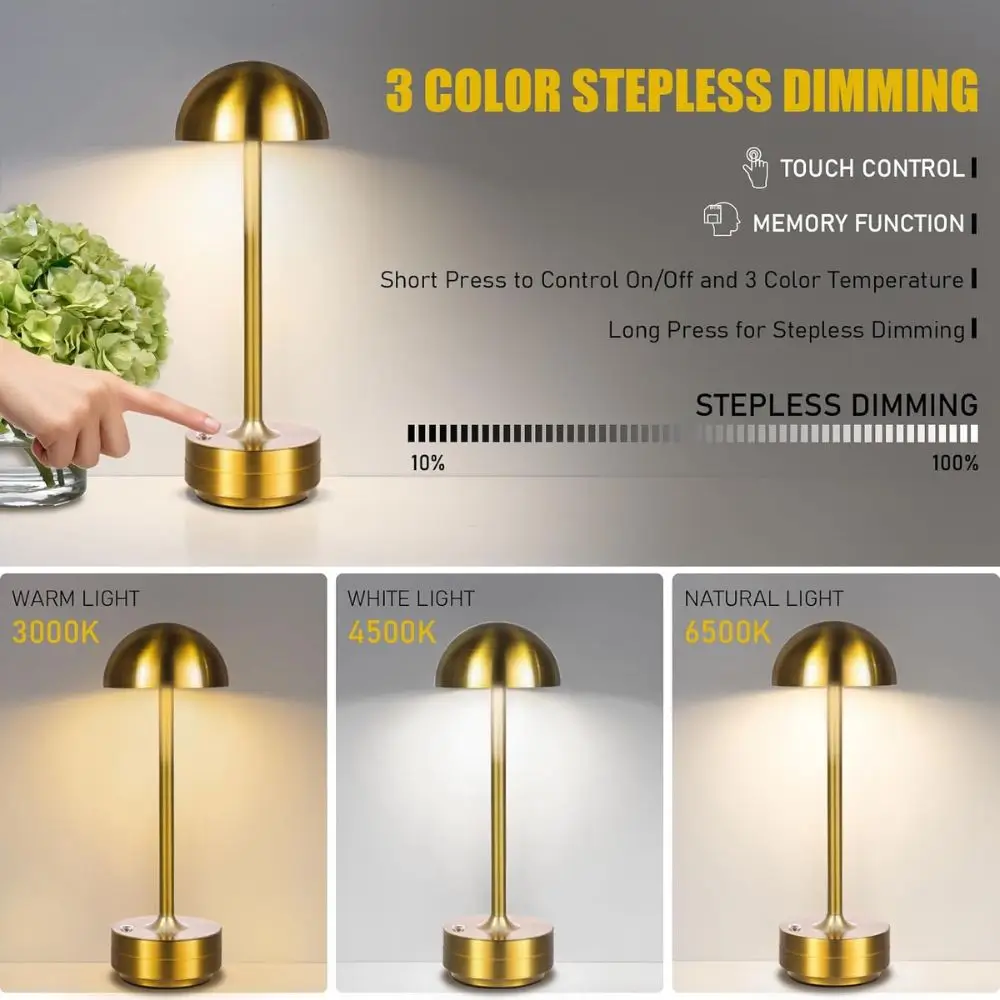
Bedside lamps, wall sconces, plug in wall sconces, picture lights, lamps on dressers, and even candleholders can all help tie the room together.
If you use brass bedside lamps, consider repeating brass in drawer pulls or a picture light.
When your wall sconces are black metal, your curtain rods or mirror frame can echo that finish.

Glass lamps can bring a lighter feeling to a room with heavier wood furniture.
Ceramic lamps add texture, and fabric shades connect nicely with curtains, bedding, or upholstered headboards.

For more lighting-specific ideas, Bedroom Trends This Year: Colors, Styles, Lighting and Layouts can take you deeper.
Here, the takeaway is simple.
Repeat a few finishes and shapes so the bedroom feels connected without looking overly matched.
Priority 3: Style Fewer, Stronger Decor Moments

Not every surface needs to be decorated
The third priority is where bedroom decor often becomes either beautiful or cluttered.
Once you have a mood, color story, and repeated materials, you don’t need to decorate every surface in the room.
In fact, you probably shouldn’t.
A bedroom usually feels more pulled together and enjoyable when a few key spots are styled well.
It doesn’t need every dresser top, nightstand, shelf, bench, and windowsill competing for attention like they all want the lead role.
This is where restraint becomes your friend, because a bedroom doesn’t need every pretty thing to show up at once.
You’re not trying to add more decor.
The goal is better decor.
Fewer, stronger moments give the room personality without making it feel crowded.
If you’re ready to simplify more than the accessories, this simple bedroom interior design guide walks through the entire room one practical decision at a time.
Choose the moments people actually notice
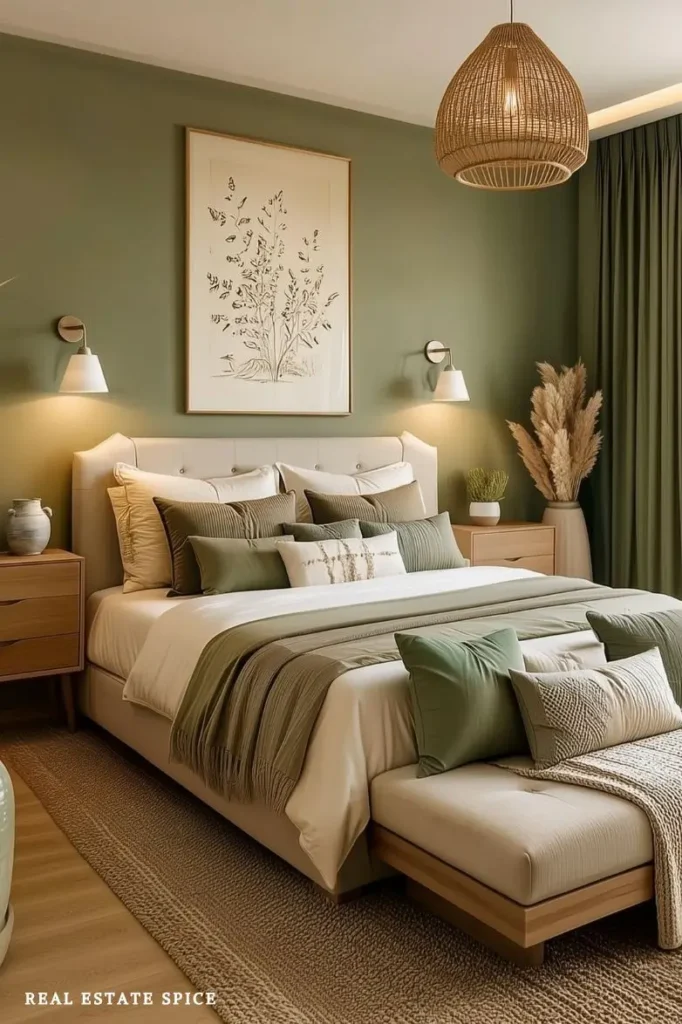
Start with the places your eye naturally lands.
A dresser top is usually one of them.
One nightstand might be another.
A bench at the end of the bed, a reading corner, a mirror moment, or a small plant grouping can all carry the room without taking over it.
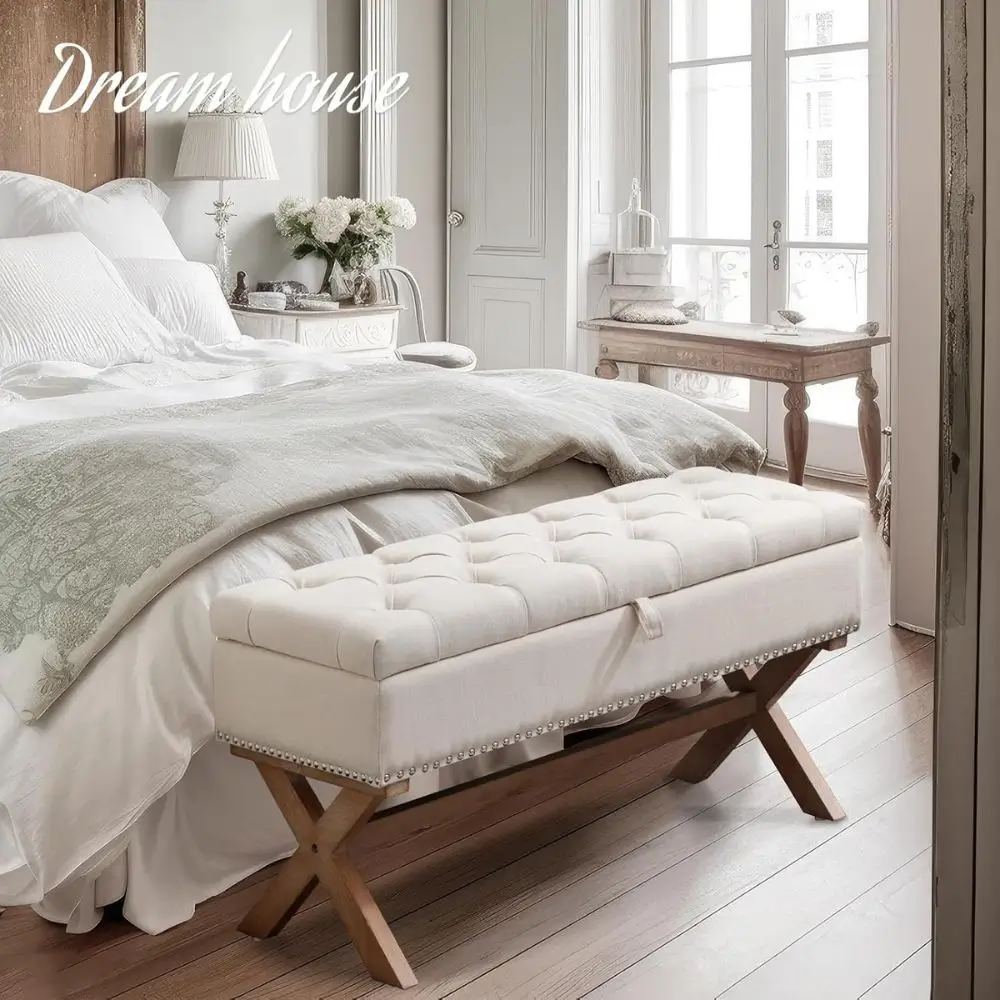
Each moment should have a clear purpose.
A tray with useful items on a dresser can look polished and keep little things from wandering.
Even a simple stack of books with a lamp adds height and warmth.
Framed art leaning behind a plant can feel layered.

A basket by a chair can hold throw blankets.
One meaningful accent can tell a small personal story without turning the bedroom into a memory museum.
Style a dresser without turning it into a display table
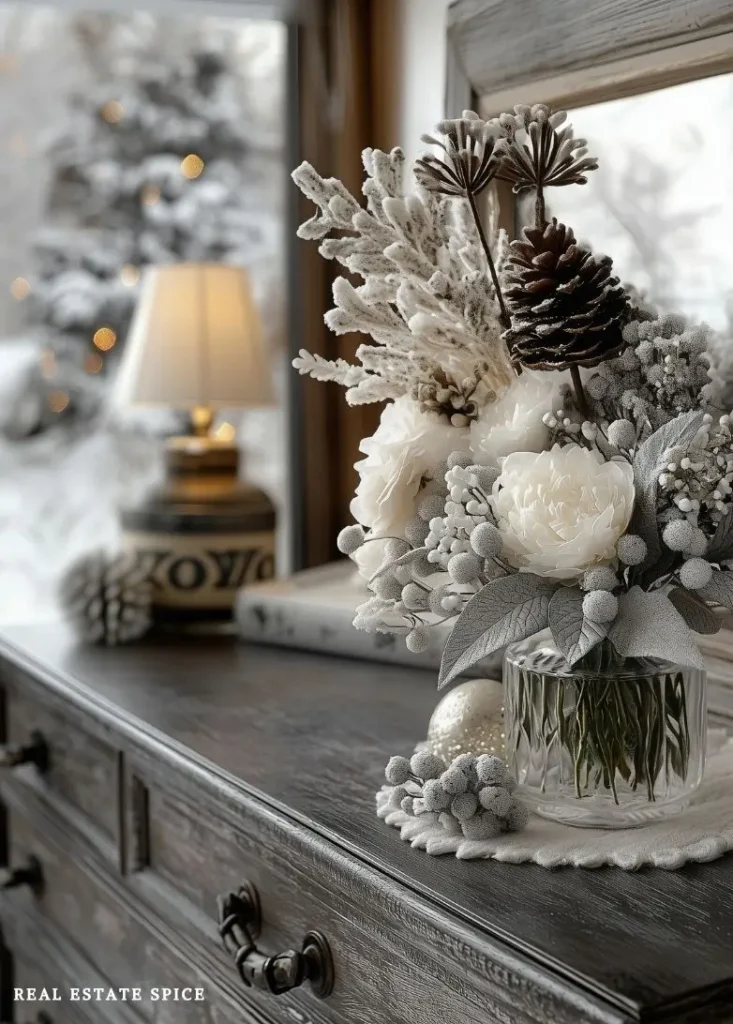
Dressers are sneaky.
Because they’re wide and flat, they attract objects like they’re offering free snacks.
The strongest dresser styling usually includes a few larger pieces instead of lots of little ones.
A mirror or framed art above the dresser can anchor it.
Then a lamp gives height and warmth.

Use a tray for jewelry, perfume, or daily items.
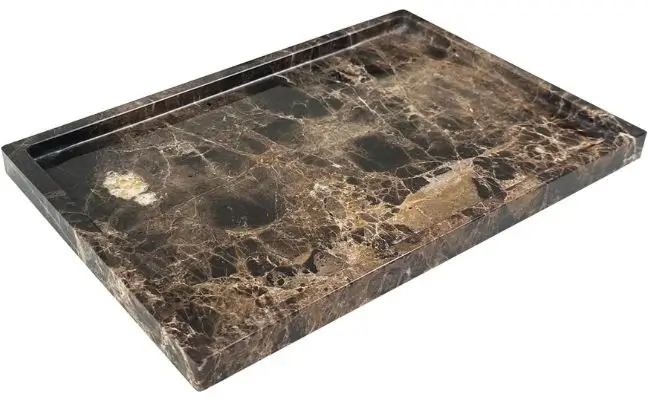
Add a plant, vase, or candle if it fits your style.
Leave some breathing room on the surface.
A dresser doesn’t need to prove it has hobbies.
It just needs to feel useful and considered.
Give nightstands a job instead of a pile
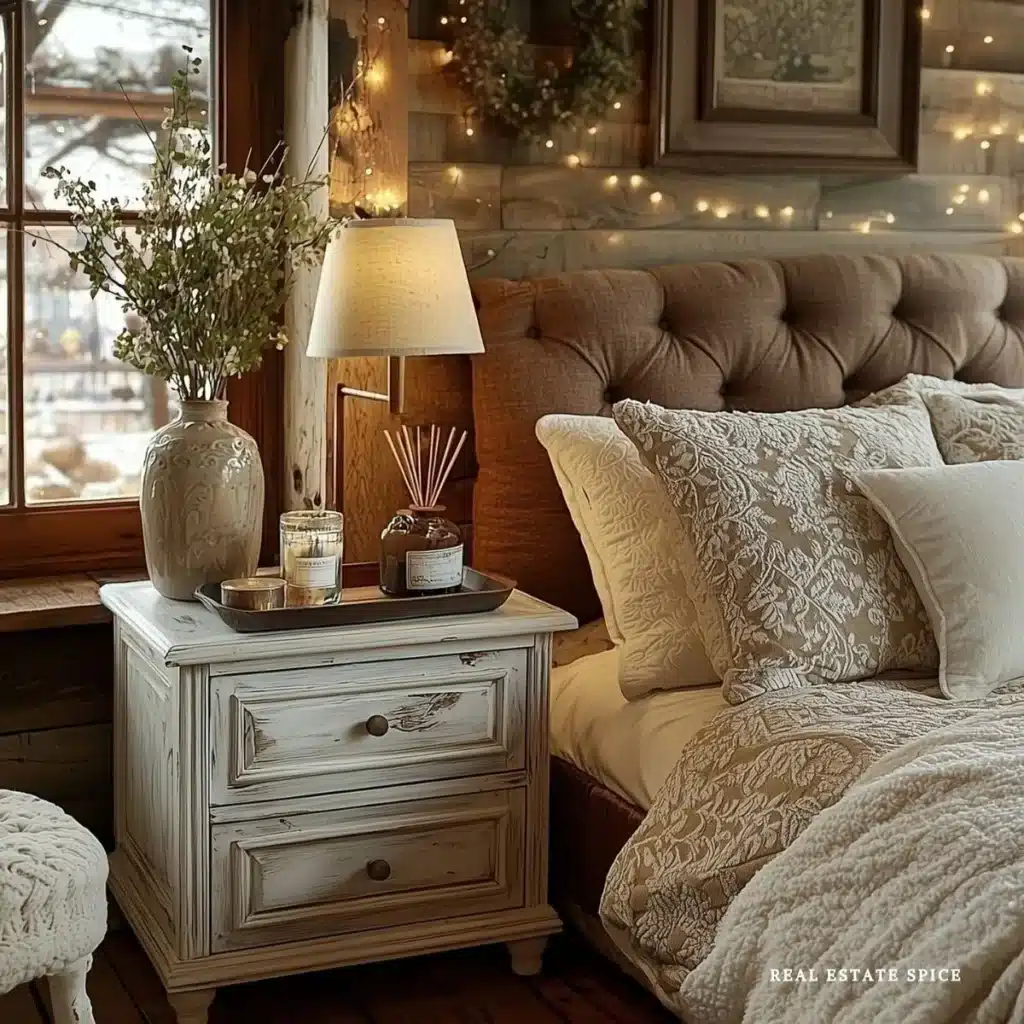
Nightstands are small, so they can’t handle a lot of visual traffic.
A bedside lamp or sconce, a book, a coaster, and one small personal item may be plenty.
If you need storage, choose nightstands with drawers or add a basket underneath.
A charging station can be tucked away or placed on a tray so it doesn’t become cord spaghetti by morning.
This is one of those product-friendly areas where small upgrades matter.
Better bedside lamps, plug-in wall sconces, a tray, a storage nightstand, or a drawer organizer can make the whole bedroom feel cleaner fast.
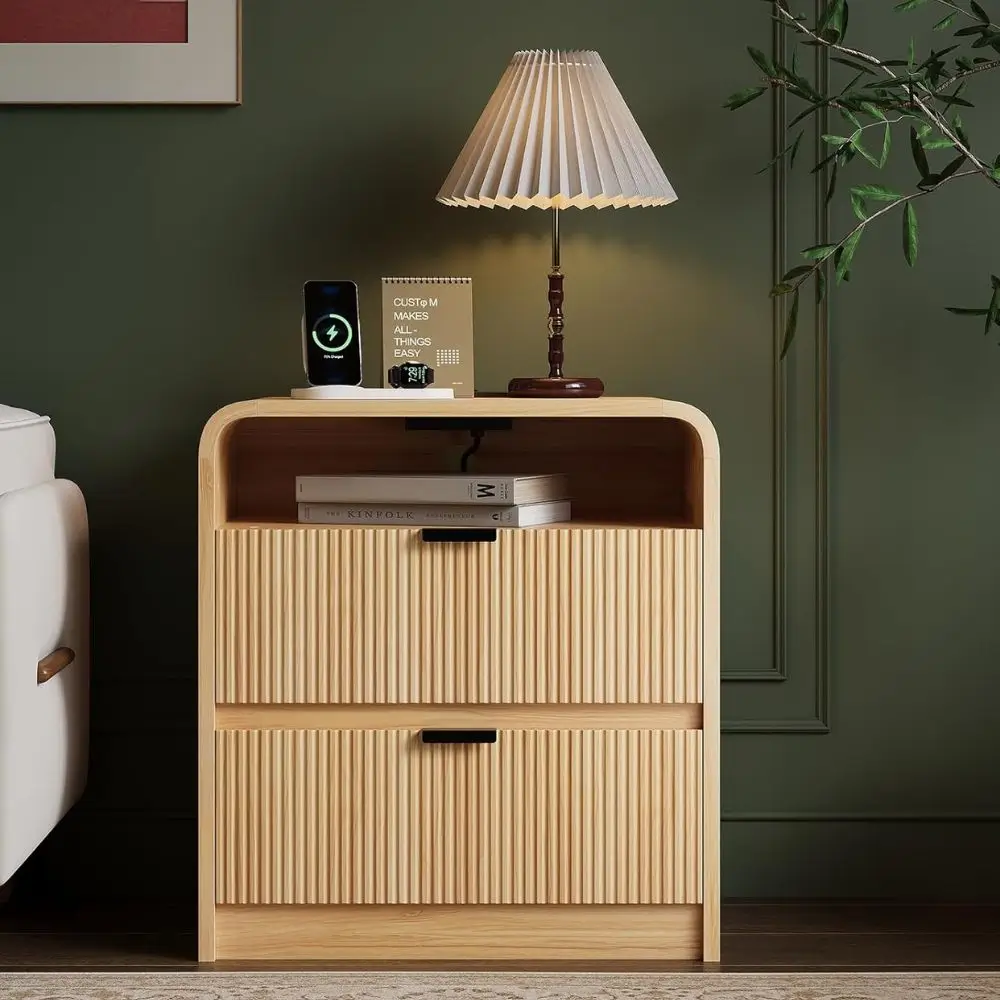
And the best part is that none of those require a full bedroom makeover or a weekend project you immediately regret starting.
Add personality with one special accent
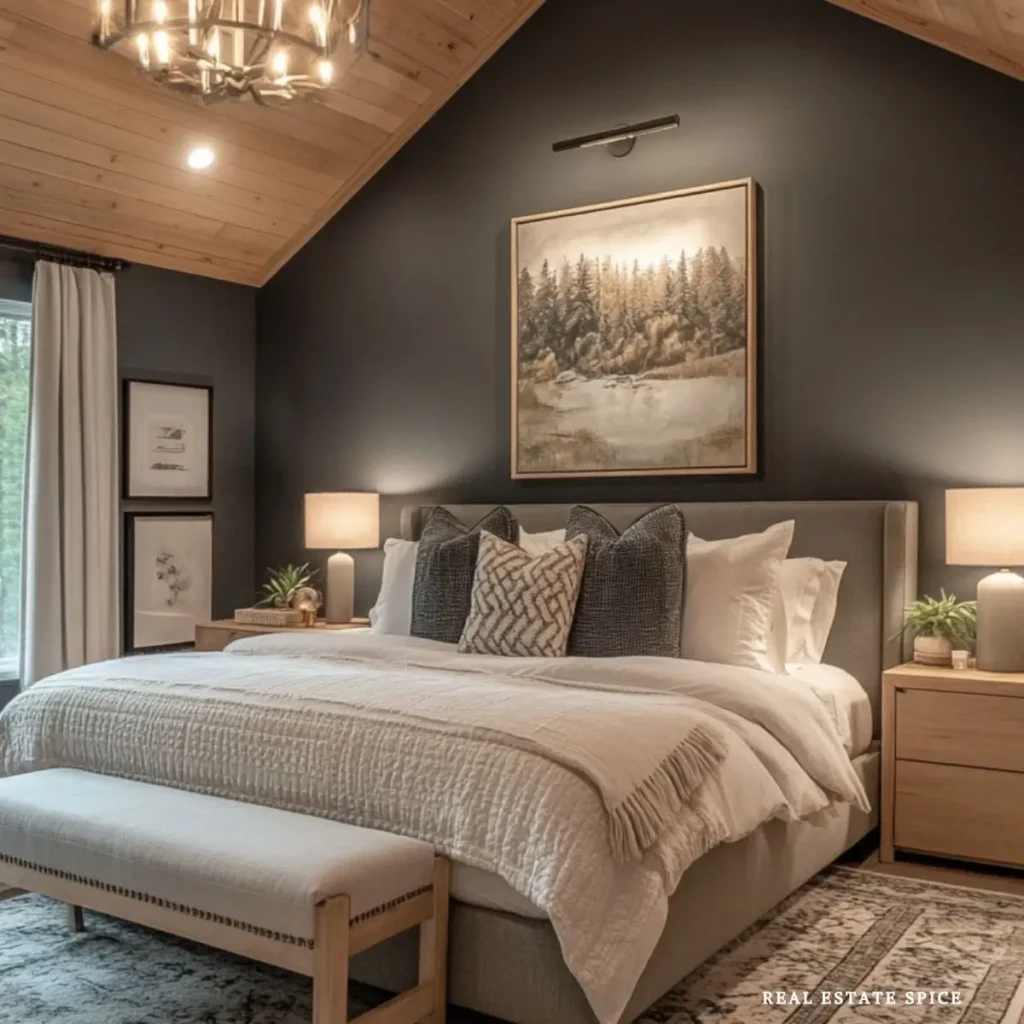
Personality doesn’t require a lot of stuff.
Sometimes, one vintage piece, one sculptural object, one framed photo, one handmade bowl, or one piece of art you truly love is enough.
Books add warmth, plants bring softness, baskets help with bedroom storage, and framed art gives the room a point of view.
How to Use This Bedroom Decor Formula in a Small Bedroom
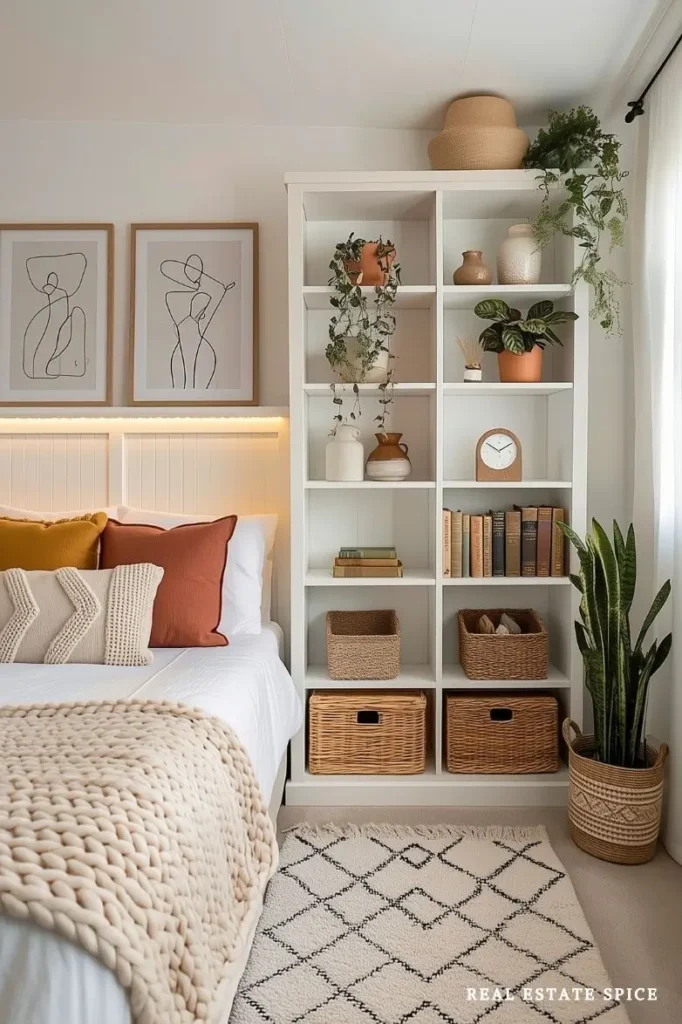
Small bedroom design benefits from this formula because small rooms can’t hide disconnected decor.
Start with a tight mood and color story.
A soft color palette, warm neutrals, muted greens, soft blues, or creamy whites can make the room feel calmer.
Then repeat just a few materials, like wood tones, linen, woven textures, and one metal finish.
Keep the styled moments limited to the places that matter most.
In a small bedroom, your decor should work harder.
Use mirrors to reflect light and baskets for storage, so the room feels brighter and cleaner without adding more furniture.
Wall sconces or strip lights above the bed can free up nightstand space, while area rugs or runners soften the floor without overwhelming the layout.
Choose a few stronger pieces rather than many small accents.
If you want more small-space help, Small Bedroom Decorating Ideas and Styling Tips This Year is a natural next read.
You May Also Like:
→ The Bedroom Storage Rule of 3 to Turn Clutter Into Calm
→ The Small Bedroom Design Rule of 3
→ 50 Bedroom Decorating Ideas This Year
How to Use This Bedroom Decor Formula in a Primary Bedroom

A primary bedroom usually has more room for layered decor, but it still needs direction.
Choose a mood first.
Maybe you want warm, romantic, and earthy.
Perhaps fresh, tailored, and neutral feels more like you.
Once that direction is clear, repeat materials through bedroom furniture, bedding, lamps, curtains, and rugs.
Then style the strongest surfaces rather than filling every corner.
Use my Master Bedroom Decorating Rule of 3 to balance those pieces from the highest wall detail to the rug or open floor.
Master bedroom ideas often work best when the decor feels a little more substantial.
Larger bedside lamps, fuller curtains, a bigger area rug, an accent chair, storage benches, or a stronger dresser moment can help the room feel complete.
For deeper primary bedroom inspiration, Master Bedroom Ideas and Designs helps you explore a myriad of options.
How to Use This Bedroom Decor Formula in a Guest Bedroom
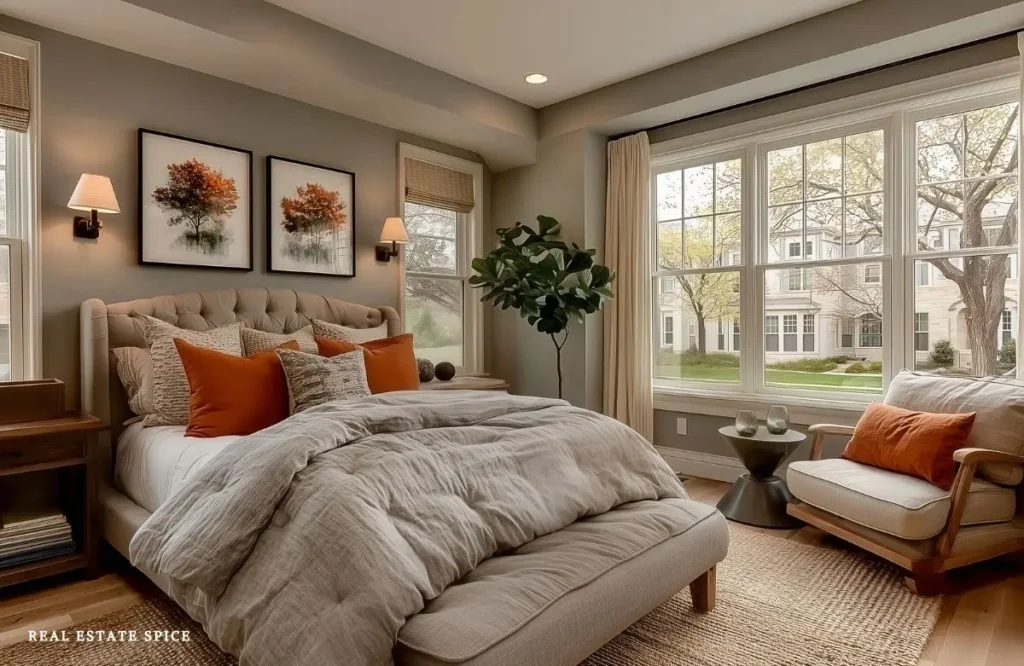
Guest bedrooms need a slightly different touch because the room should feel welcoming without feeling overly personal.
A simple color story helps a lot.
Warm neutrals, soft blues, or muted greens usually work beautifully.
Repeat materials through bedding, lamps, nightstands, and curtains so the room feels pulled together.
Keep personal details light and useful.
A guest room might only need a pretty lamp, a comfortable throw blanket, a small stack of books, a mirror, and a basket for extra bedding.
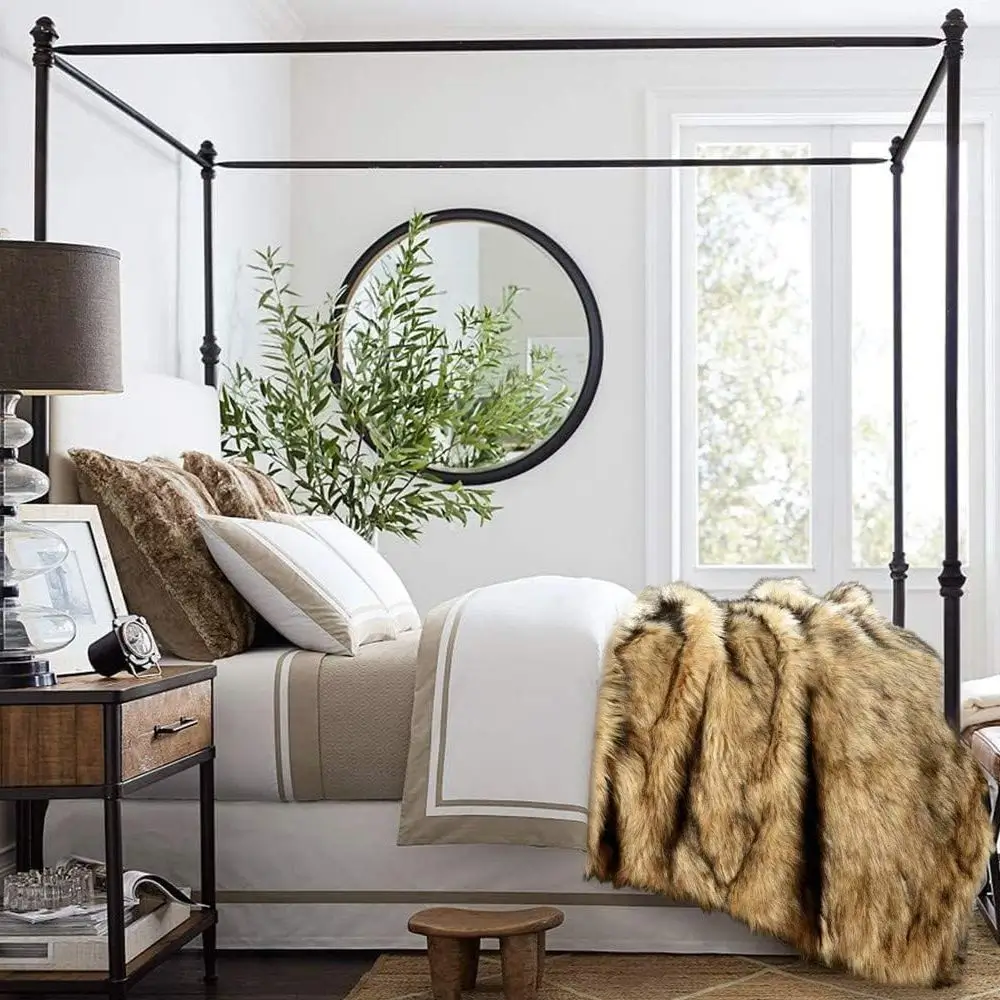
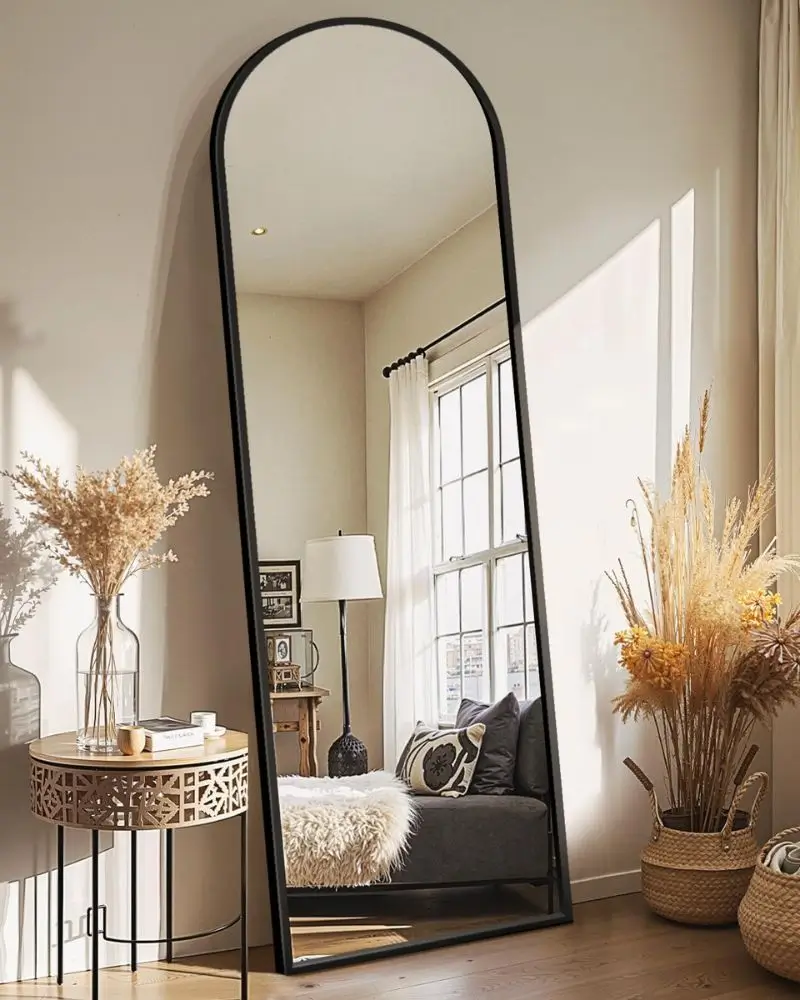
Framed art is lovely, but it shouldn’t feel so personal that guests feel like they’re sleeping inside your family archive.
Including a folding luggage rack is a thoughtful touch.

For more guest-specific ideas, 50 Welcoming Guest Bedroom Ideas This Year is the right follow-up.
How to Use This Bedroom Decor Formula if You Rent

Renting doesn’t mean your bedroom decor has to feel temporary.
You can still choose a mood, repeat materials, and create stronger decor moments without touching anything permanent.
Removable wallpaper, peel-and-stick trim, plug in wall sconces, freestanding lamps, curtains, rugs, baskets, and mirrors can all make a huge difference.
If you can’t paint, lean on bedding, art, curtains, and rugs for the color story.
When you can’t change overhead lighting, use lamps and sconces to soften the room.
If you’re decorating a rental bedroom with basic finishes, connect the space with repeated colors, textures, and finishes you can take with you later.
A rental bedroom can still feel warm and pulled together, even when the lease is over there whispering, “Please don’t get ambitious with the walls.”
How to Use This Bedroom Decor Formula on a Budget
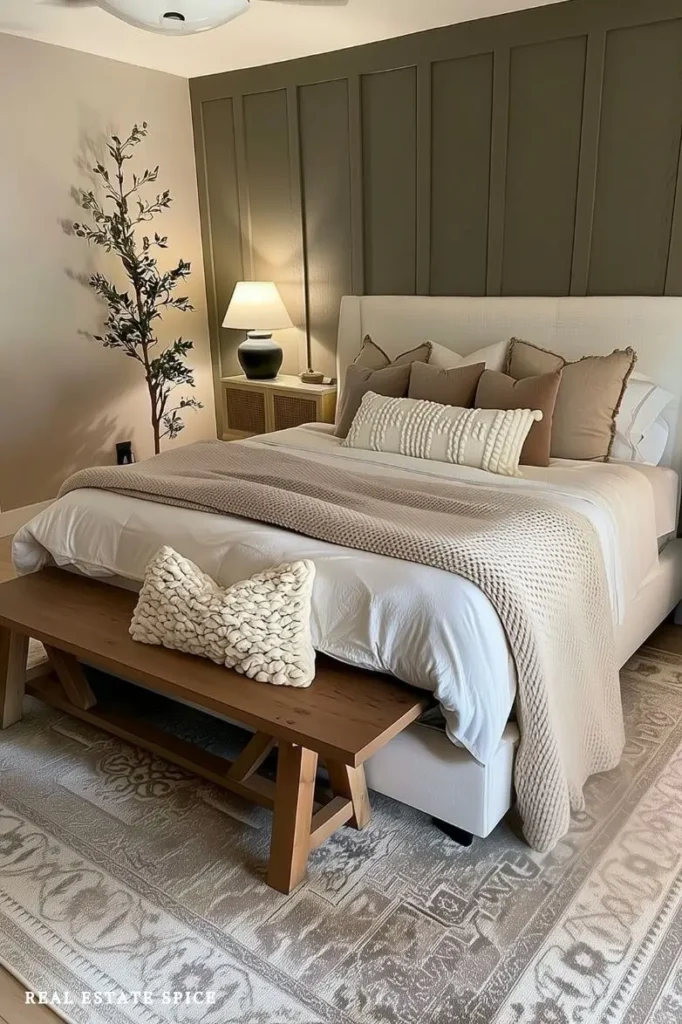
Budget-friendly bedrooms works best when you spend energy before money.
Start by choosing the mood and color story from what you already own.
Maybe your bed frame, dresser, or curtains are already pointing the way.
After that, repeat the best existing material or finish in one or two new places.
A wood mirror can connect to a wood bed frame.
Black lamps can connect to black curtain rods.
Woven baskets can relate to a natural fiber rug.
Then choose one decor moment to improve first.
Maybe the dresser needs a lamp and tray.
Perhaps the bed needs better throw pillows and a blanket.
Globan Hotel Collection Down Feather Pillow (A Splurge But Worth It)
Your nightstand might need a sconce or a drawer organizer.
Bedroom makeover ideas don’t have to be dramatic to work.
Sometimes the best change is swapping out a lamp, adding fuller curtains, choosing a better duvet cover, or replacing tiny art with one stronger framed piece.
Bedroom Decor Mistakes That Make a Room Feel Unfinished
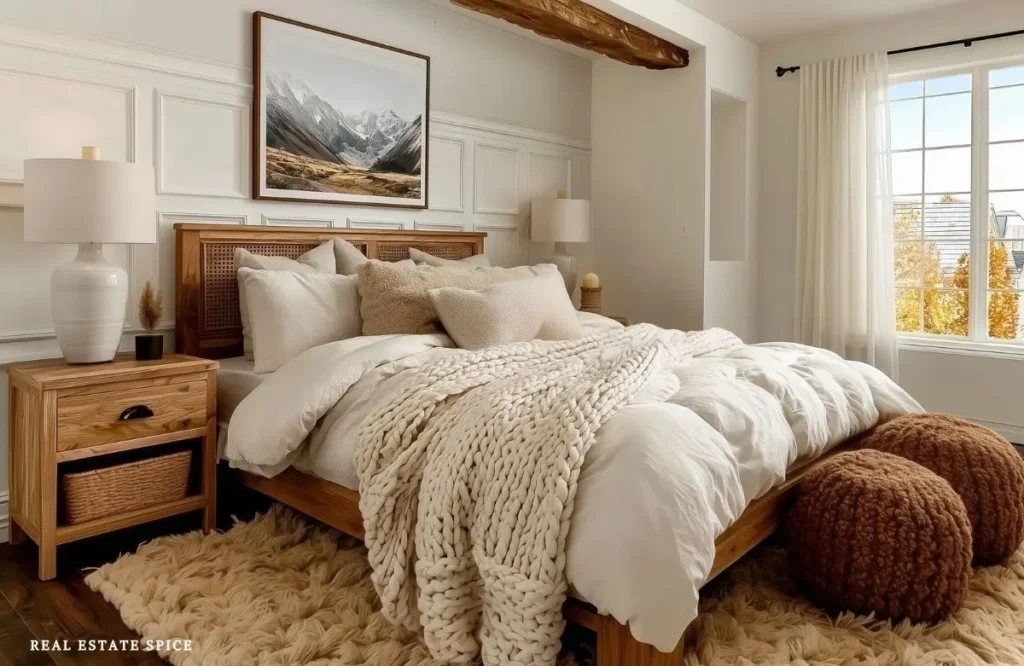
When Pretty Pieces Don’t Work Together
This is the fastest route to scattered decor.
A piece can be beautiful and still not belong in this bedroom.
Choose the mood first, then let the decor choices follow.
Matching everything too perfectly
Bedroom furniture sets can be helpful, but a room can feel flat when everything matches too much.
Bring in contrast through textiles, lamps, mirrors, framed art, or natural textures.
Using too many unrelated finishes

Too many metal finishes, wood tones, or fabric textures can make the room feel busy.
Repeat a few favorites instead of collecting every possible option.
Styling every surface
Every surface doesn’t need decor.
A few strong moments are more effective than a lot of small ones.
Let some surfaces stay simple so the room can breathe.
Forgetting scale

Tiny lamps beside a large bed, small art over a wide dresser, or a rug that barely reaches the bed can make the room feel unfinished.
Scale can make ordinary decor look expensive when it’s handled well.
Letting personality become clutter

Your bedroom should feel personal, but not every meaningful item needs to be visible at once.
Choose one or two accents that support the room and let them have room to shine.
When Bedroom Decor Finally Feels Finished
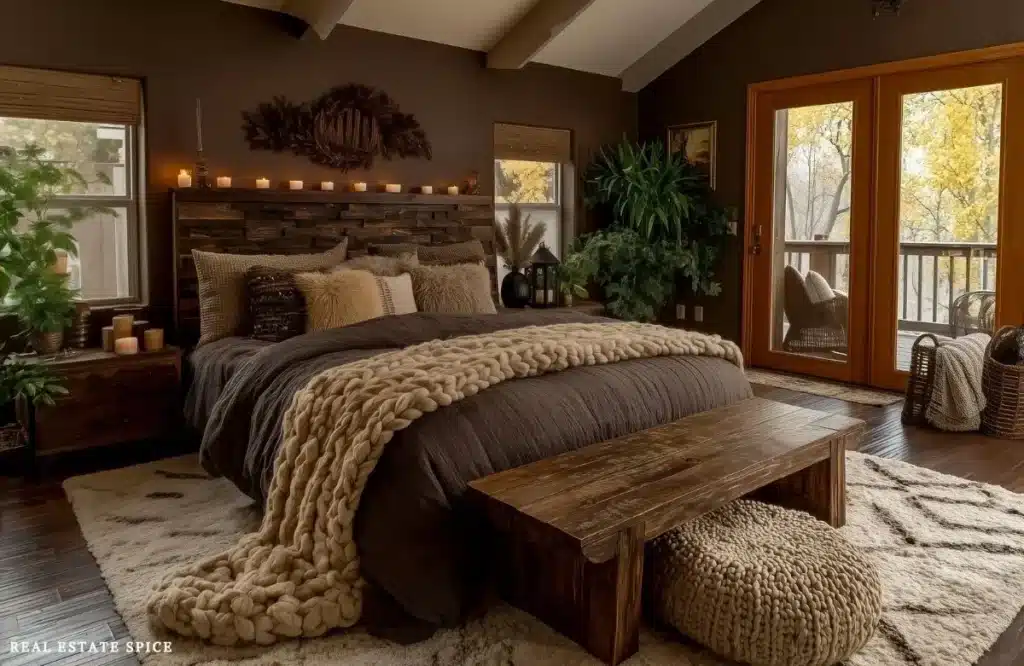
Bedroom decor isn’t about selecting a pile of pretty things and hoping they magically become a finished room.
It’s about choosing the mood and main colors first, repeating materials so the room feels connected, and styling fewer, stronger decor moments.
Once you use that framework, the bedroom starts making more sense.
You don’t have to decorate every wall, surface, and corner at once.
Start with the feeling.
Repeat the materials.
Choose the moments that matter.
That’s how bedroom decor becomes calmer, cozier, more personal, and much more polished.
And that’s when the room stops feeling scattered and starts feeling like a space you look forward to walking into—and don’t want to leave quite so quickly.