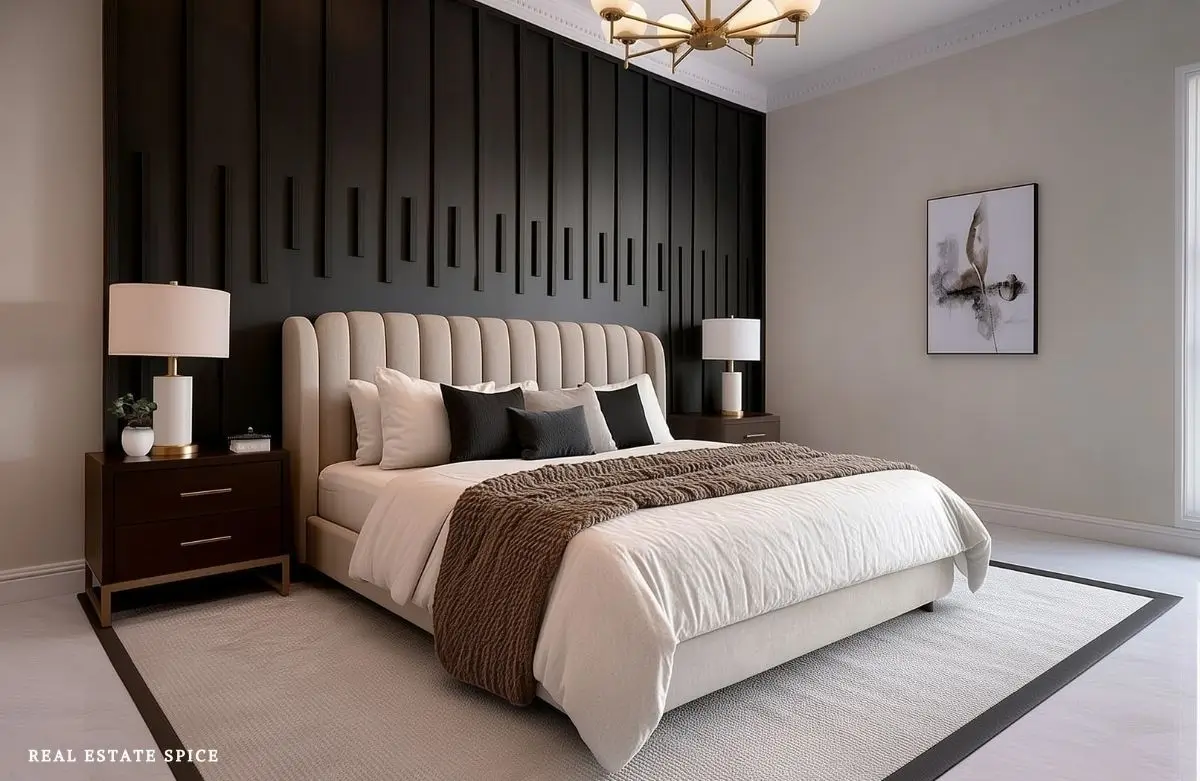
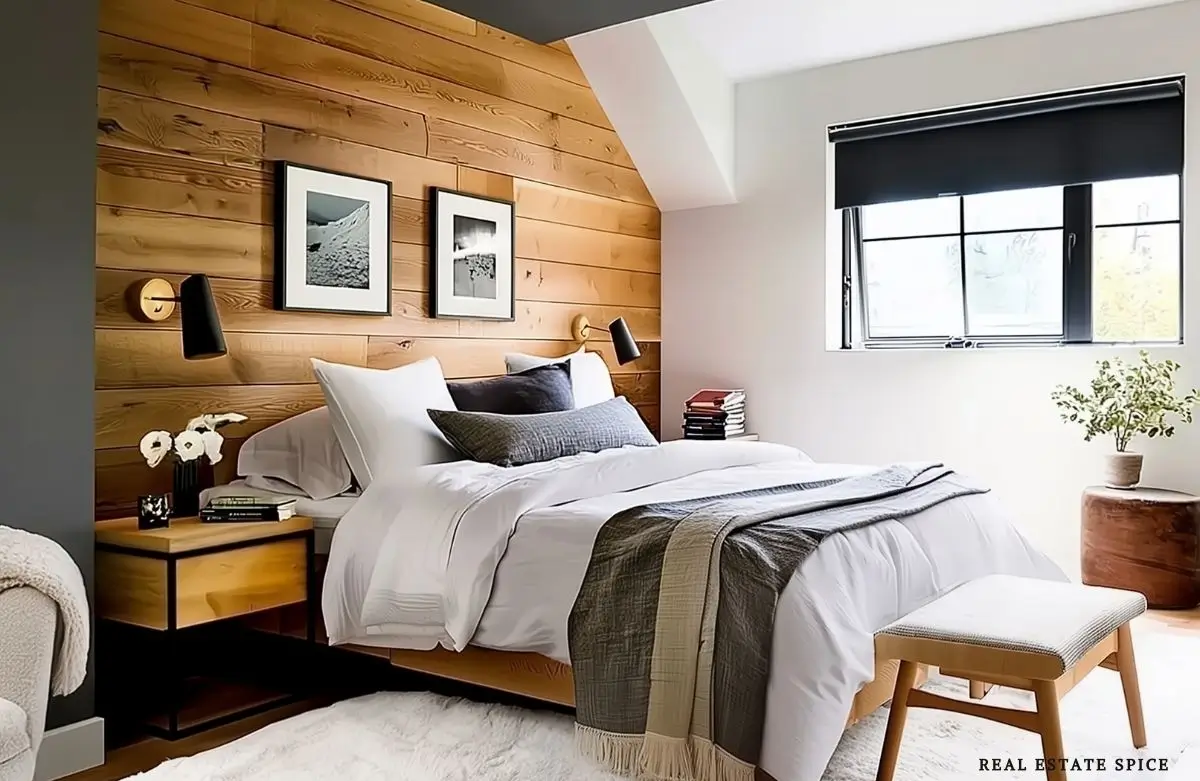
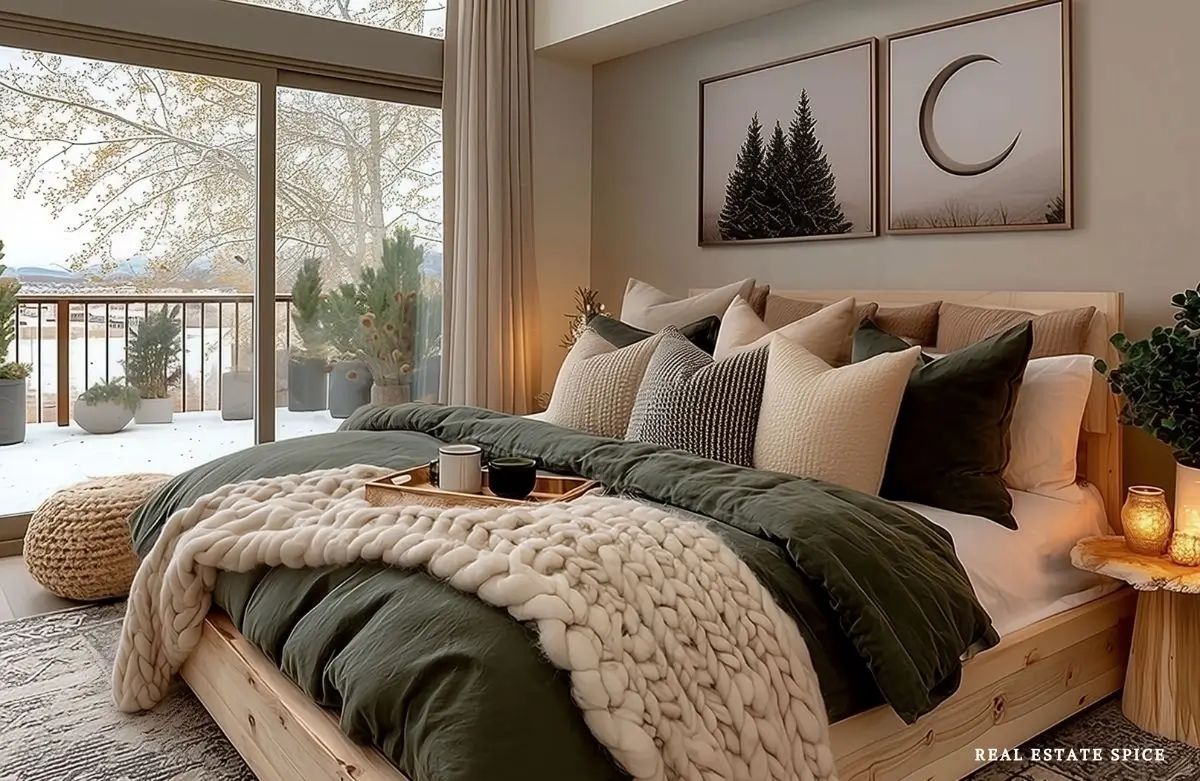
The Bedroom Storage Rule of 3 Formula That Turns Clutter Into Calm
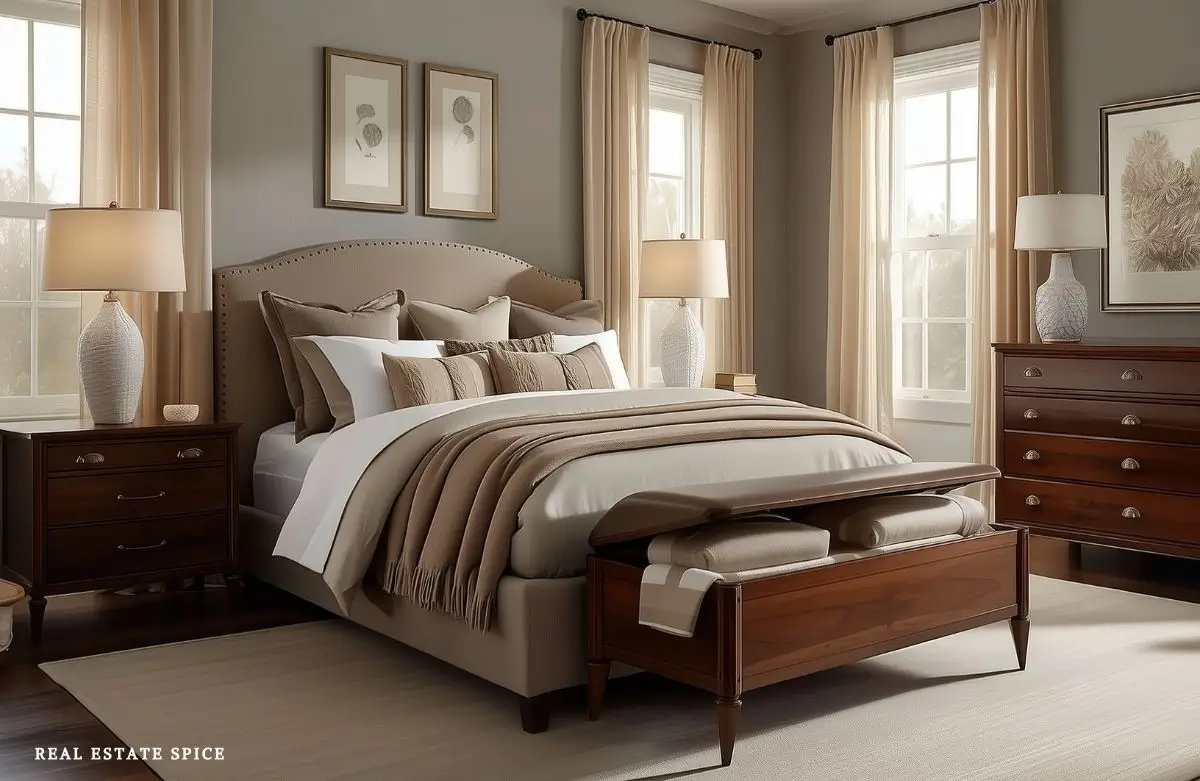
Bedroom storage can make the difference between a room that looks nice for five minutes and a room that actually feels calm after real life shows up.
Because bedroom clutter doesn’t just sit there.
It changes the whole mood of the space. And not a mood that’s enjoyable to stay in.
Be sure to check out The Bedroom Color Rule of 3 and Bedroom Trends This Year after this…

You can have beautiful bedding, a dresser you like, a decent closet, and a perfectly normal nightstand—and somehow the room still feels busy, crowded, or oddly hard to reset.
Most bedroom clutter doesn’t need a prettier bin. It needs a better setup.
When the same things keep piling up on the nightstand, dresser, bench, or chair, the room is showing you what isn’t working yet.
Your bedroom furniture is hosting a rotating cast of sweaters, chargers, books, receipts, and clothes that are apparently “not dirty enough” for the hamper.
Those everyday items need storage that matches how you actually use the bedroom.
That’s where this Bedroom Rule of 3 storage formula comes in handy.
Instead of trying to organize every drawer, shelf, basket, and closet corner at once, you’ll focus on the three bedroom storage priority areas that make the biggest difference.
These are the spots that affect how calm, clear, and easy your room feels every day.
Once they make sense, your bedroom can finally start turning clutter into calm.
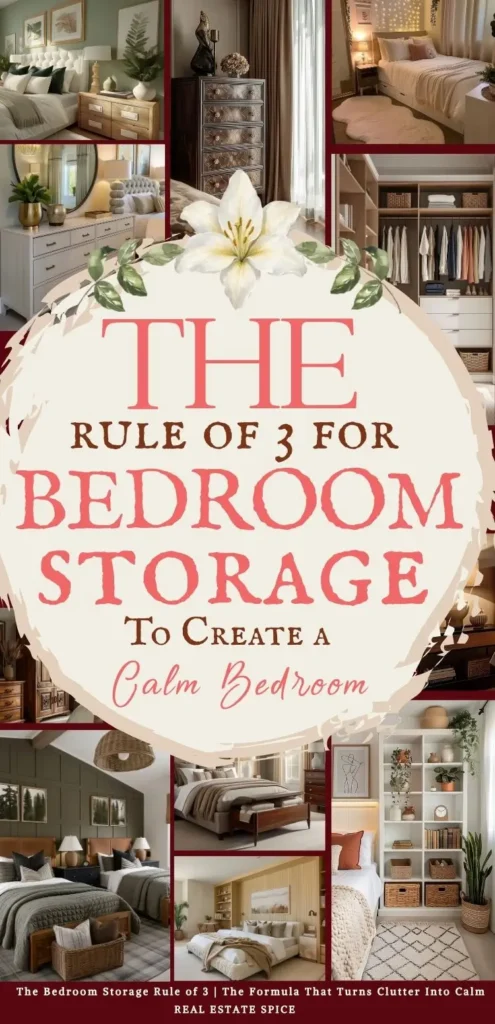
Instead of treating every pile as a separate emergency, you divide storage into three simple parts, which I cover in this article.
You’ll also find an easy-to-follow system for the bedroom storage formula.
Daily things stay close.
Weekly things stay organized in the main storage pieces.
Seasonal or overflow items get tucked away in places that still make sense.
This is part of the Bedroom Rule of 3 series, so we’re keeping it storage-focused.
Grab your favorite beverage, pen, and paper for notes; take your time to study the images, design tips, and products, and enjoy!
ps…remember to save this and come back anytime for a dose of inspo!
What Is the Bedroom Rule of 3 Storage Formula?

The bedroom rule of 3 storage formula is a simple way to give every everyday item a better home.
You focus on three storage parts that handle different levels of use.
Nightstand storage holds the things you reach for from bed.
Closet or dresser storage holds the clothes, linens, and accessories you use often.
Hidden storage holds the items that don’t need to be visible every day, such as seasonal bedding, extra shoes, keepsakes, bags, or overflow.
That structure matters because bedroom clutter usually collects in predictable places.
It ends up on the nightstand, dresser top, chair, floor, bed, or closet corner.
Those little piles are clues.
Instead of getting annoyed with yourself, use the clutter landing map.
Notice where things naturally pile up, then create storage exactly where the clutter already ends up.
If your glasses, book, lotion, and charging cord always sit beside the bed, you need better nightstand storage.
When folded clothes keep ending up on a chair, the dresser or closet system probably isn’t working well enough.
If extra bedding, shoes, bags, or seasonal items keep ending up around the room, your hidden storage may not be set up for what you actually need to stash there.
Get My Free eBook
“100 Easy Ways To Refresh Any Room All Year Round”
Why Bedroom Storage Works Better With a Simple Formula
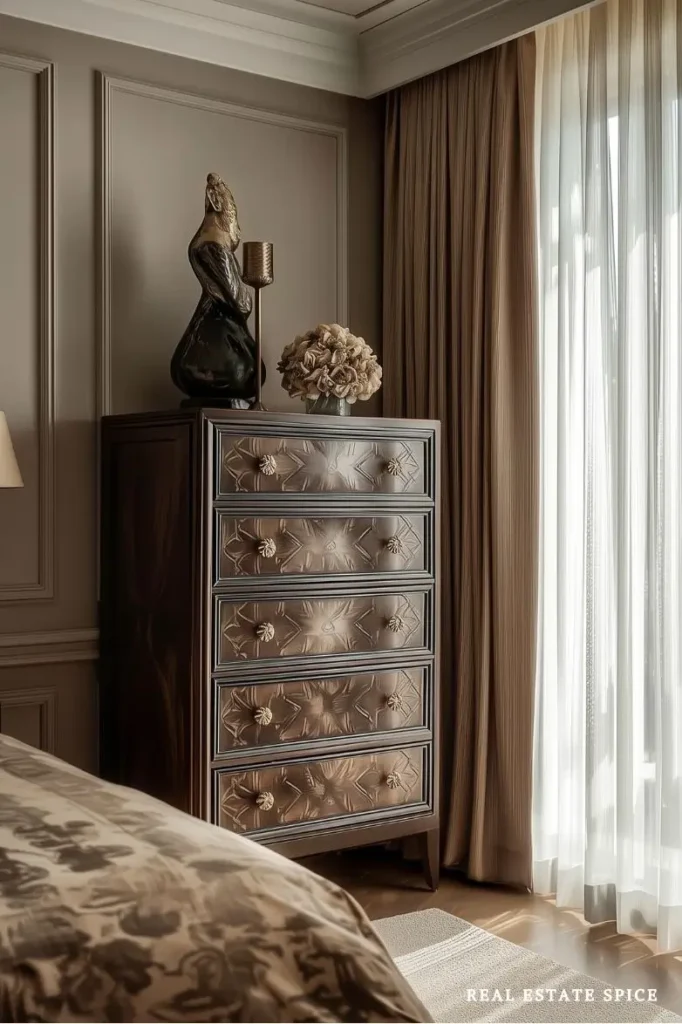
Bedroom storage works better when you stop asking one piece to do everything.
A nightstand can’t be your linen closet, tech drawer, bookcase, medicine cabinet, and snack headquarters all at once.
Dressers can’t solve shoe clutter if shoes never actually belong there.
Hidden storage won’t help if it becomes a place where things disappear forever and reappear only when you move.
The daily, weekly, seasonal storage sort makes the whole room easier to manage.
Daily items belong in nightstand storage or another easy-reach spot.
Weekly items belong in the closet or dresser storage system.
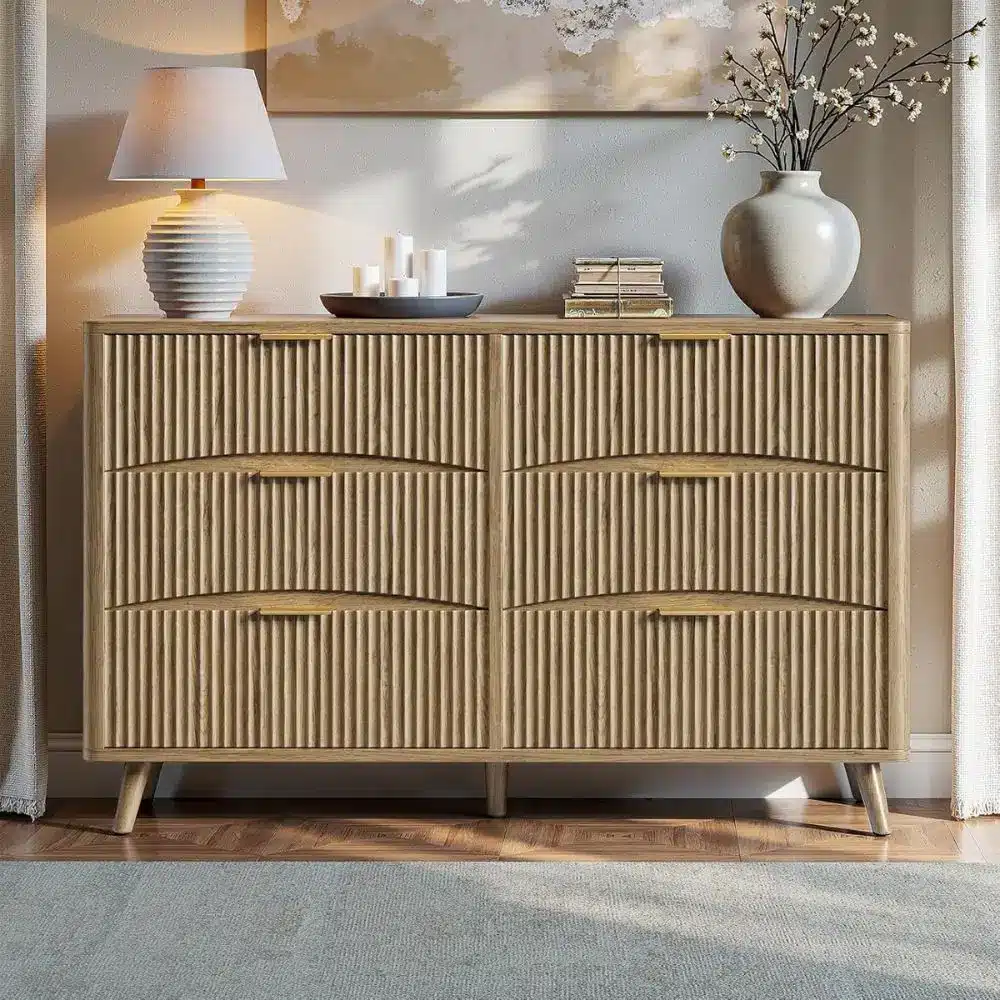
Seasonal and overflow items belong in hidden storage that’s labeled, contained, and easy enough to access when needed.
This formula also keeps bedroom organization from turning into a giant weekend project that requires matching containers, a label maker, and the emotional stamina of a professional organizer.
You can start with one drawer, one basket, or one storage bench.
The goal is a bedroom that feels easier to reset, not a room that looks perfect for seven minutes and then collapses back into chaos.
Priority 1: Nightstand Storage That Keeps Bedside Clutter Under Control
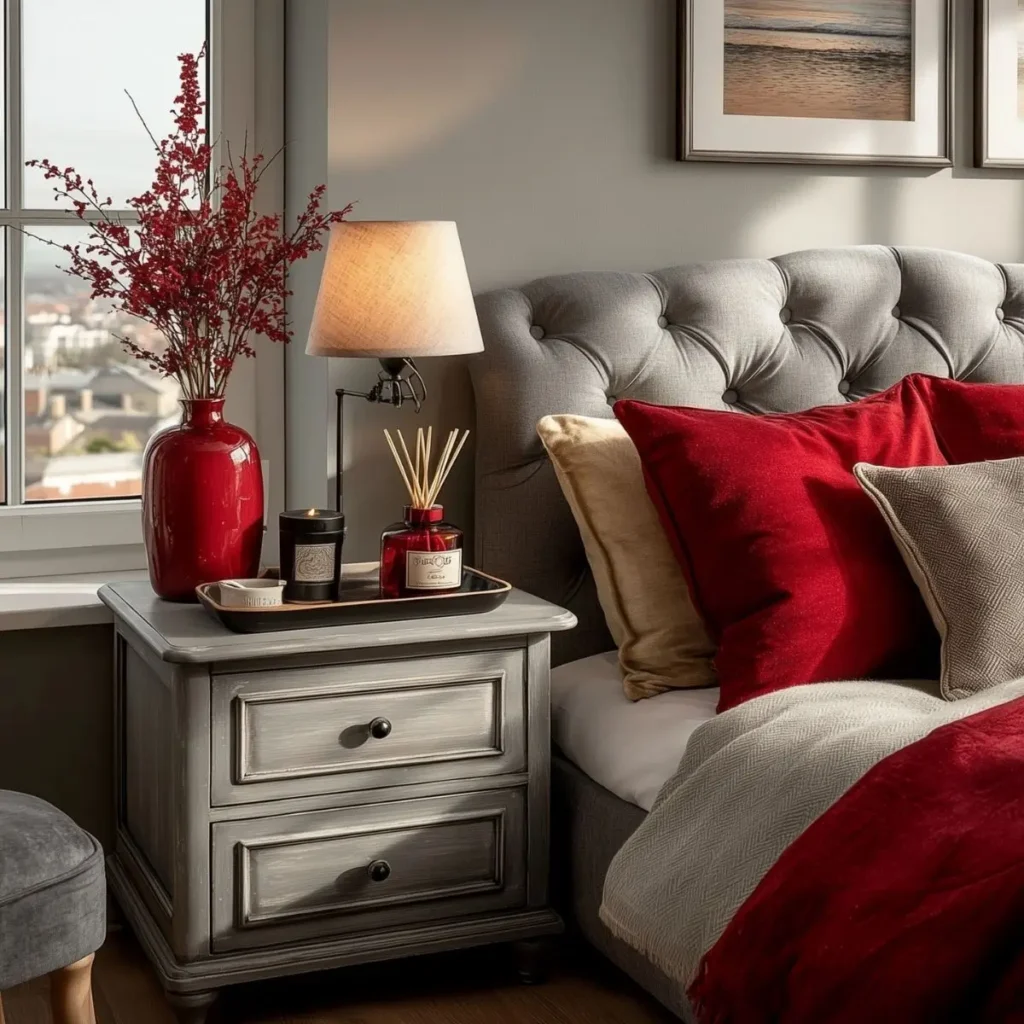
Nightstand storage handles the little daily things that tend to collect beside the bed.
This is the spot for what you reach for at night or first thing in the morning.
When it works, the whole bedside area feels calmer.
If it doesn’t, the nightstand becomes a tiny clutter stage featuring cords, books, tissues, receipts, lip balm, and one mystery item you keep meaning to move.
Nightstands with drawers are often the easiest solution because they let the surface stay useful while hiding the smaller things.
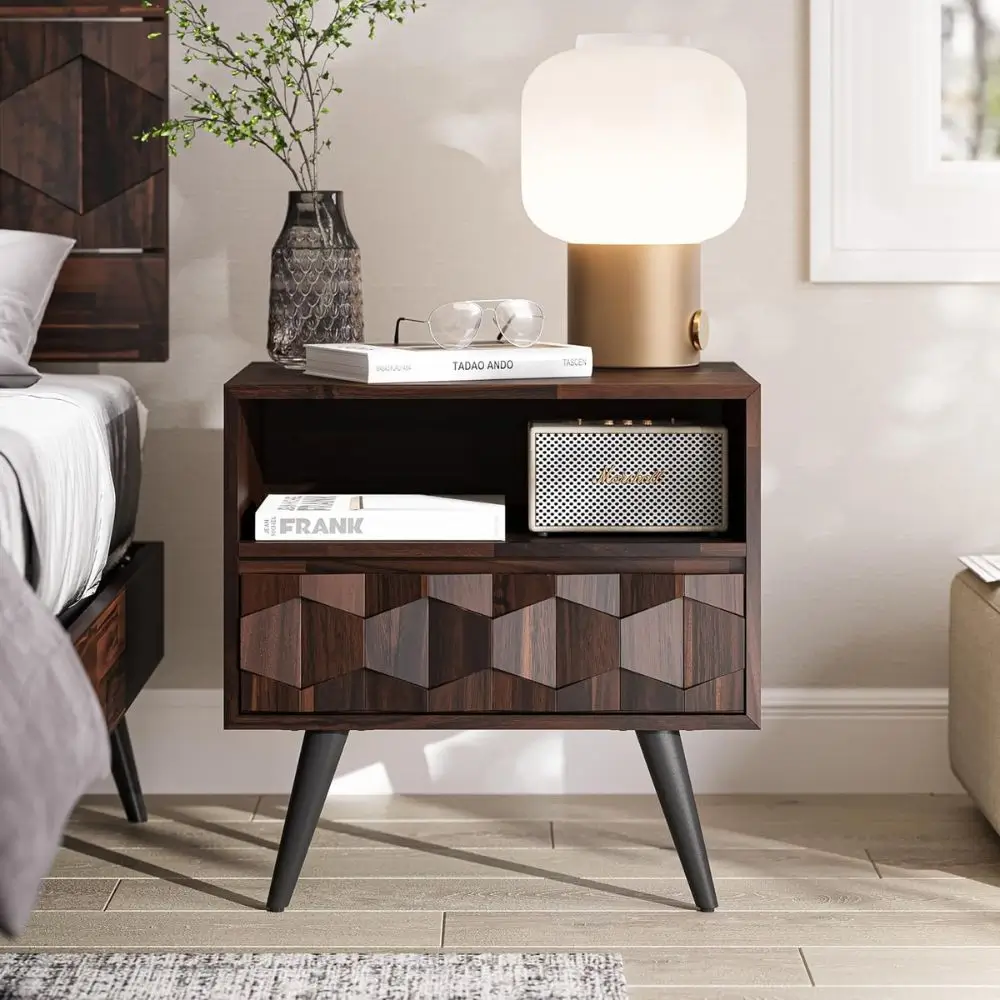
Bedside tables with storage can also work well if you prefer a lighter piece.
A bedroom table with storage is especially helpful in small rooms because it gives you function without adding another bulky piece.
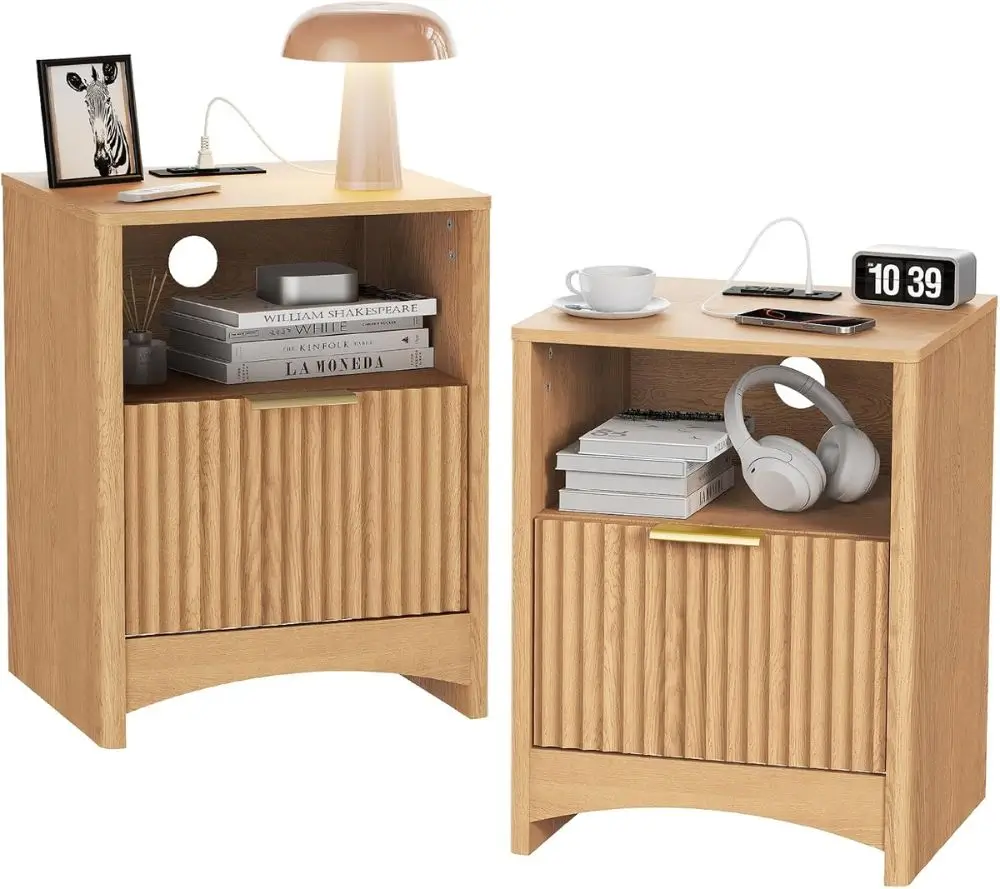
What to Keep in Your Nightstand

The top drawer should hold true daily items.
Think glasses, hand cream, tissues, a notebook, a pen, remotes, earbuds, medication if appropriate, and the one book you’re actually reading.
This is the bedside drawer menu.
Use the top drawer for items you reach for most, then use lower drawers or baskets for extras.
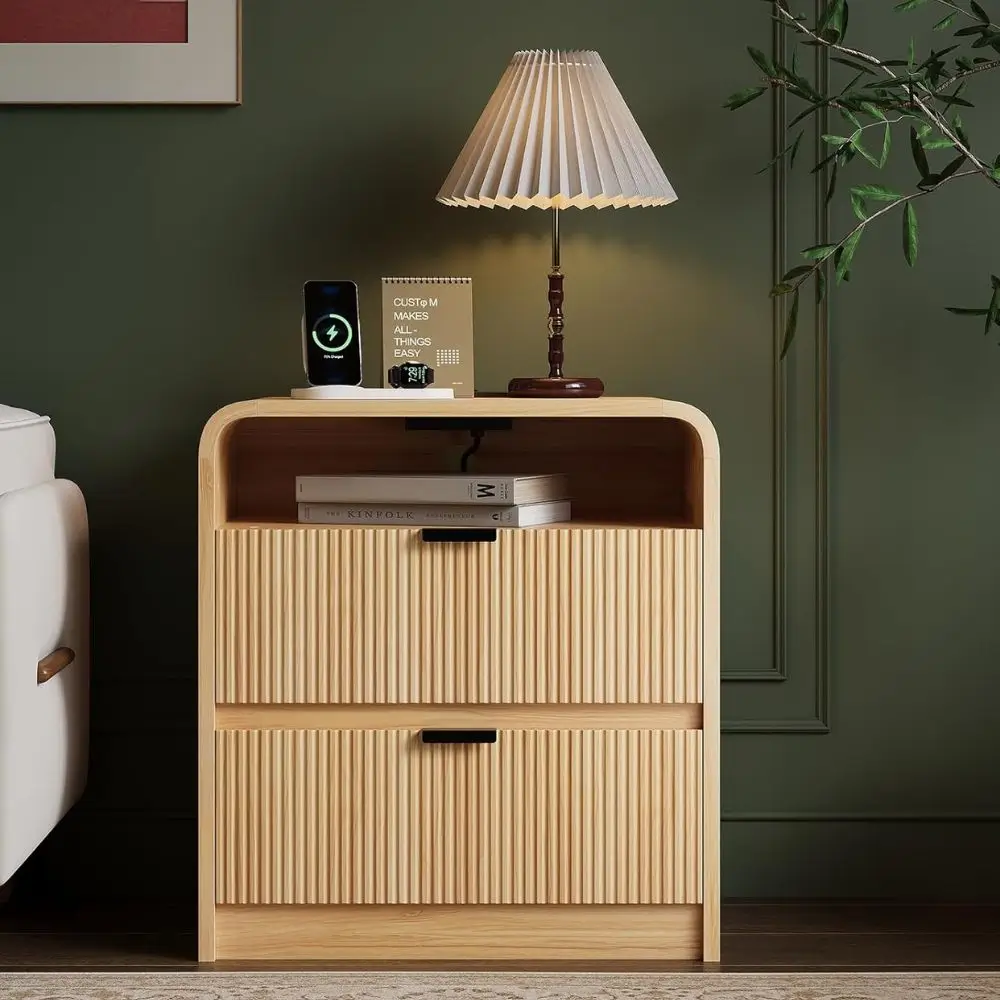
Charging cords need a home too.
Use the charger corral idea and keep cords, earbuds, remotes, and small tech pieces in one contained spot instead of scattered across the nightstand surface.
A charging drawer, cord storage box, or small tray inside the drawer can make the whole area feel less tangled.
Books can stay nearby, but only the books that belong to your current bedtime life.
The nightstand probably doesn’t need to hold your entire hopeful reading identity.
A small stack is lovely.
That leaning tower of guilt books is less restful.
Best Nightstand Storage Ideas for Small Bedrooms
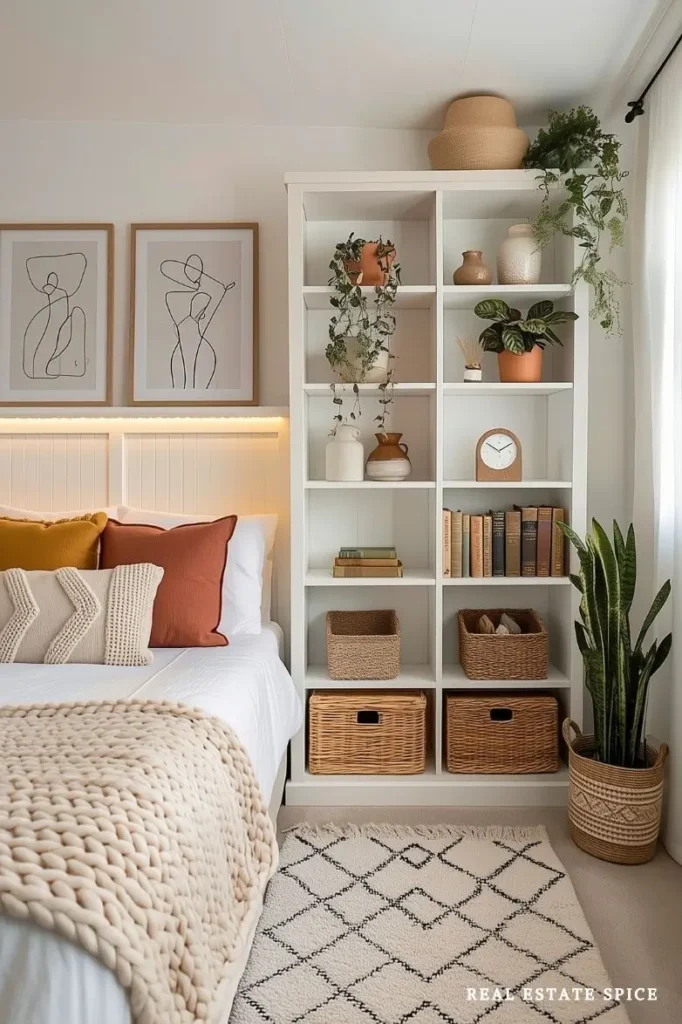
Small bedroom storage often starts at the bedside because the room doesn’t have much extra floor space.
If your nightstand is too bulky, try a slimmer bedside table with storage or a wall-mounted shelf with a drawer.
A small nightstand with one deep drawer can also be more useful than two shallow ones.
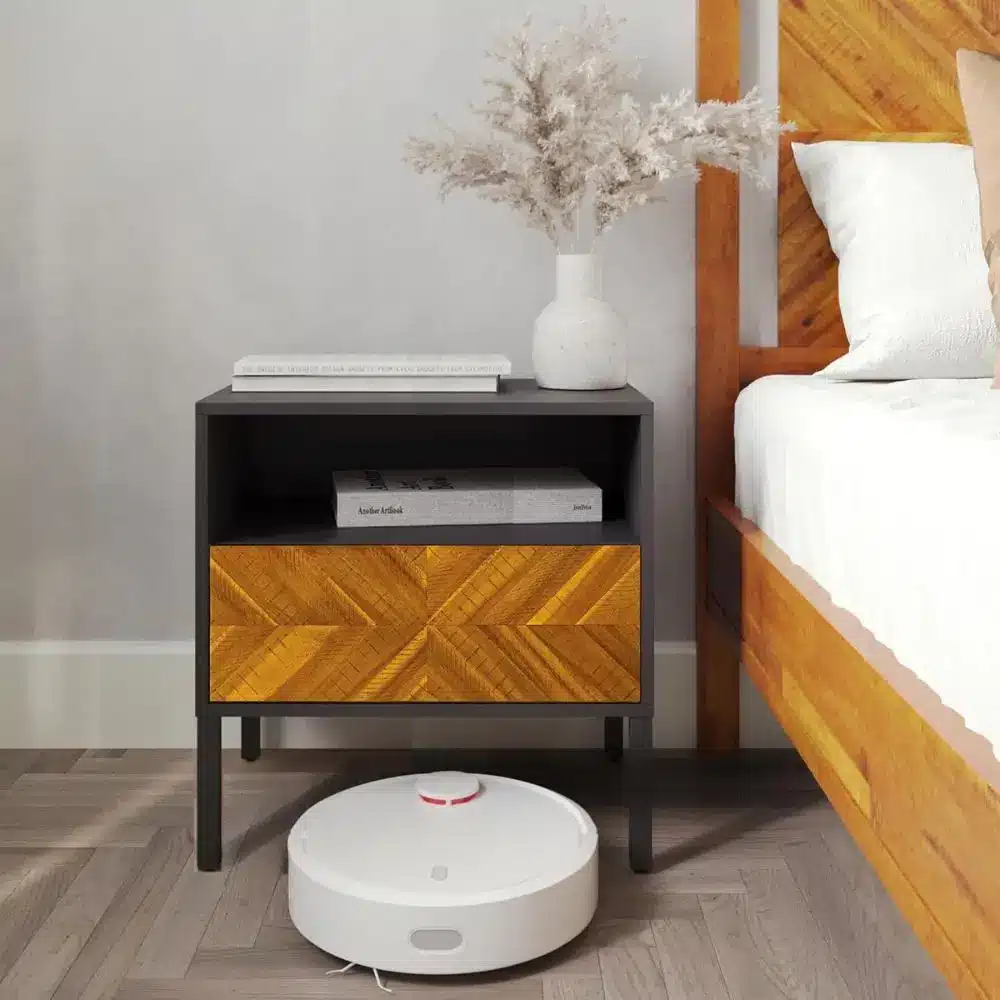
Drawer organizers are helpful because they keep small items from becoming one mixed pile.
A small basket under an open nightstand can hold books, slippers, or a bedtime throw.
If you don’t have room for two nightstands, one better piece can still make the bedroom feel more useful.
The one clear surface rule is powerful here.
Choose one visible surface, such as the nightstand or dresser top, and keep it mostly clear.
You don’t need every surface in the room to be bare, but one clear surface gives the eye a place to rest.
The room feels calmer right away.
Bedside Tables With Storage That Make the Room Easier to Reset
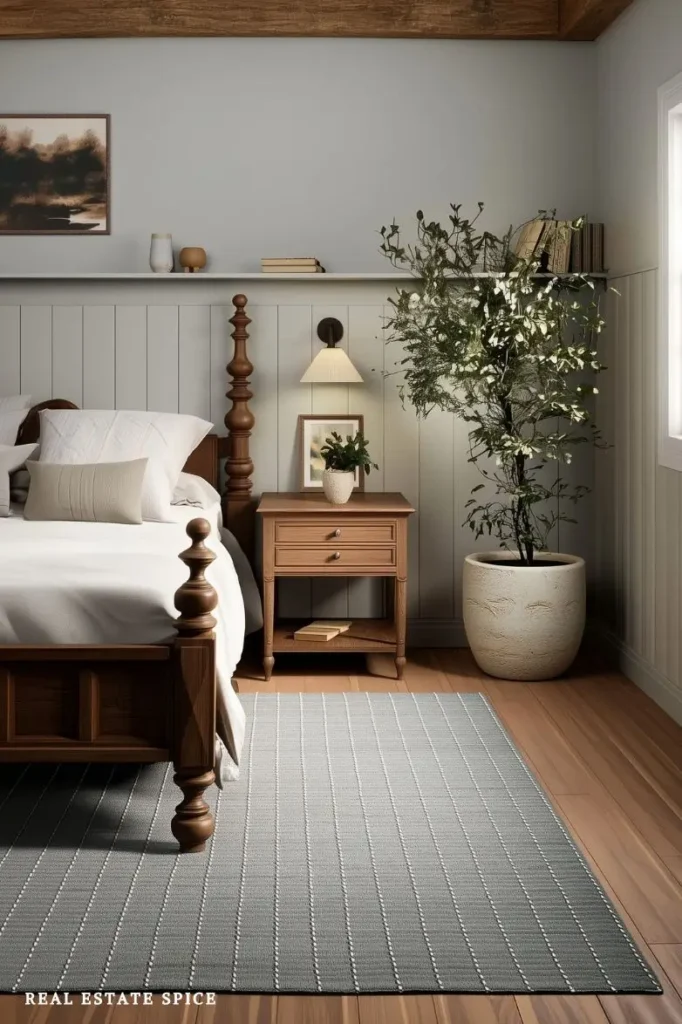
Bedside tables with storage make daily cleanup faster because the items already have a nearby home.
A drawer can hide hand cream, cords, and tissues.
Cabinet-style nightstands can hold bulkier items.
Open shelves work best when you add a basket so the shelf doesn’t become a visible catchall.
If you want a more polished setup, keep the top simple.
A lamp, coaster, small dish, and book are often enough.
Bedroom lighting, decor, and styling can all support the nightstand, but the focus here is storage.
If the surface can’t hold real bedtime items, it may look nice, but it won’t make the bedside area easier to use.
Priority 2: Closet or Dresser Storage That Makes Clothes Easier to Manage
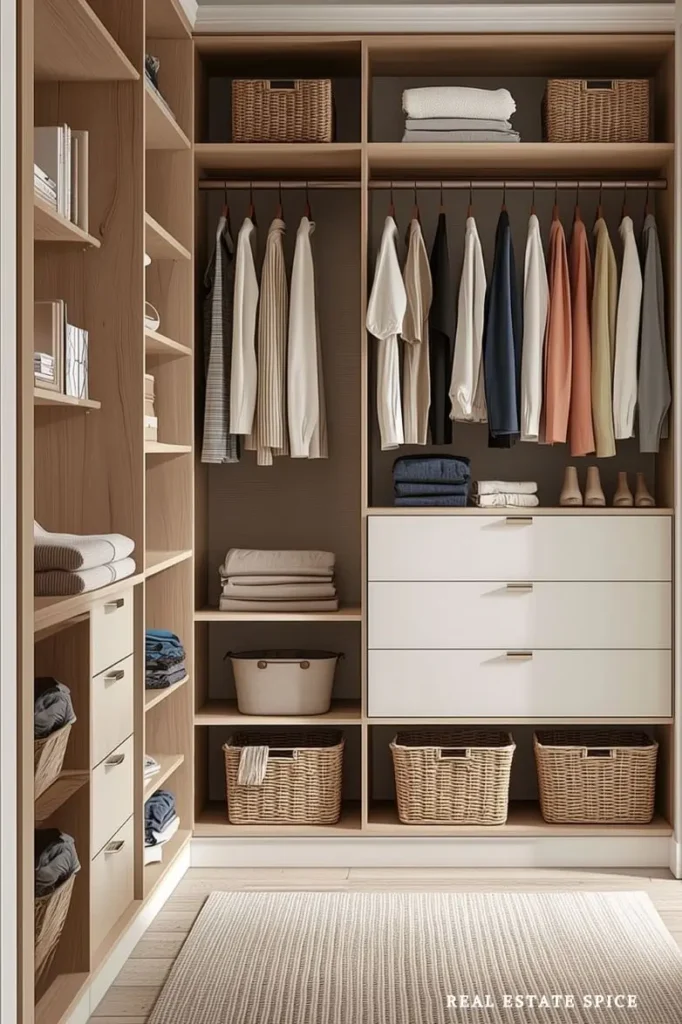
Closet or dresser storage is the main system for bedroom clothes storage.
This area is for the items you reach for every week.
That includes folded clothes, hanging pieces, pajamas, workout clothes, linens, accessories, and the pieces you use again and again.
When this storage part works, clothes stop drifting onto the chair, the bed, and the floor.
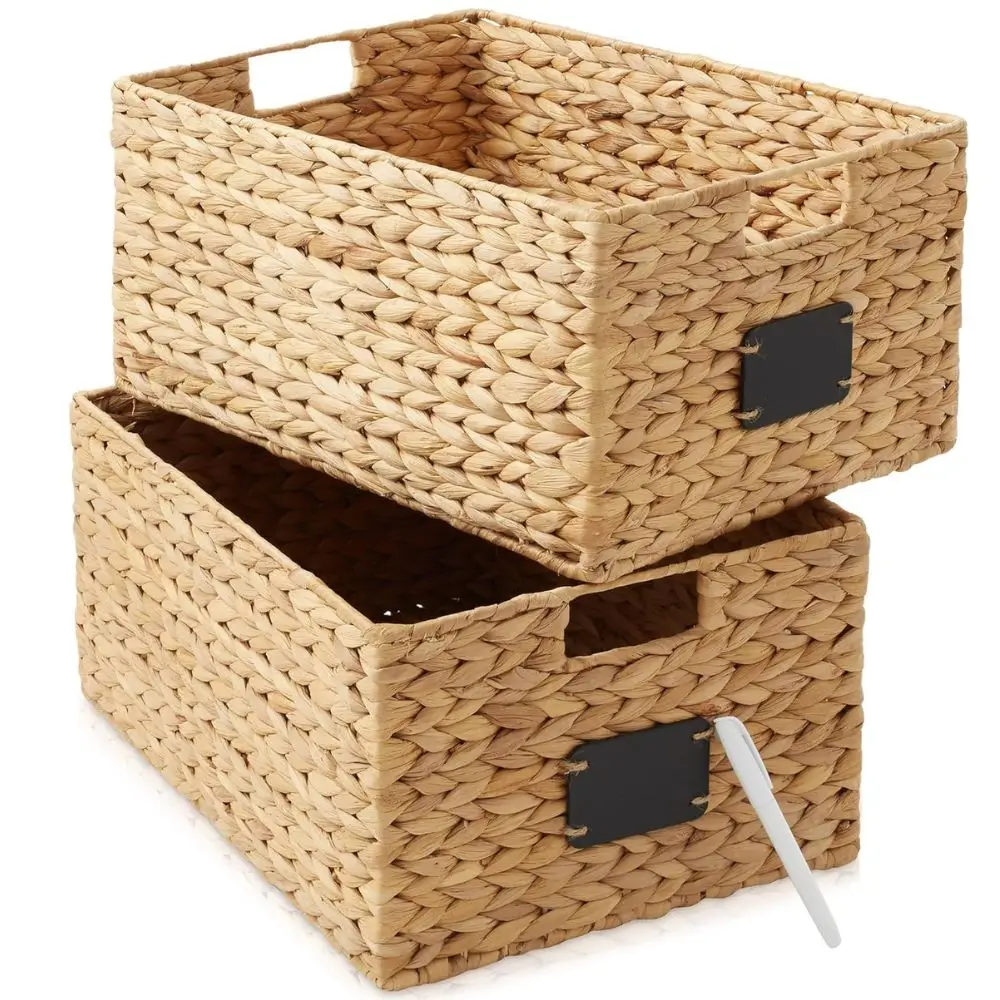
I love these fabric storage baskets. I have them in my closet, and it really has given the space an entirely new look, and I can find things easier!
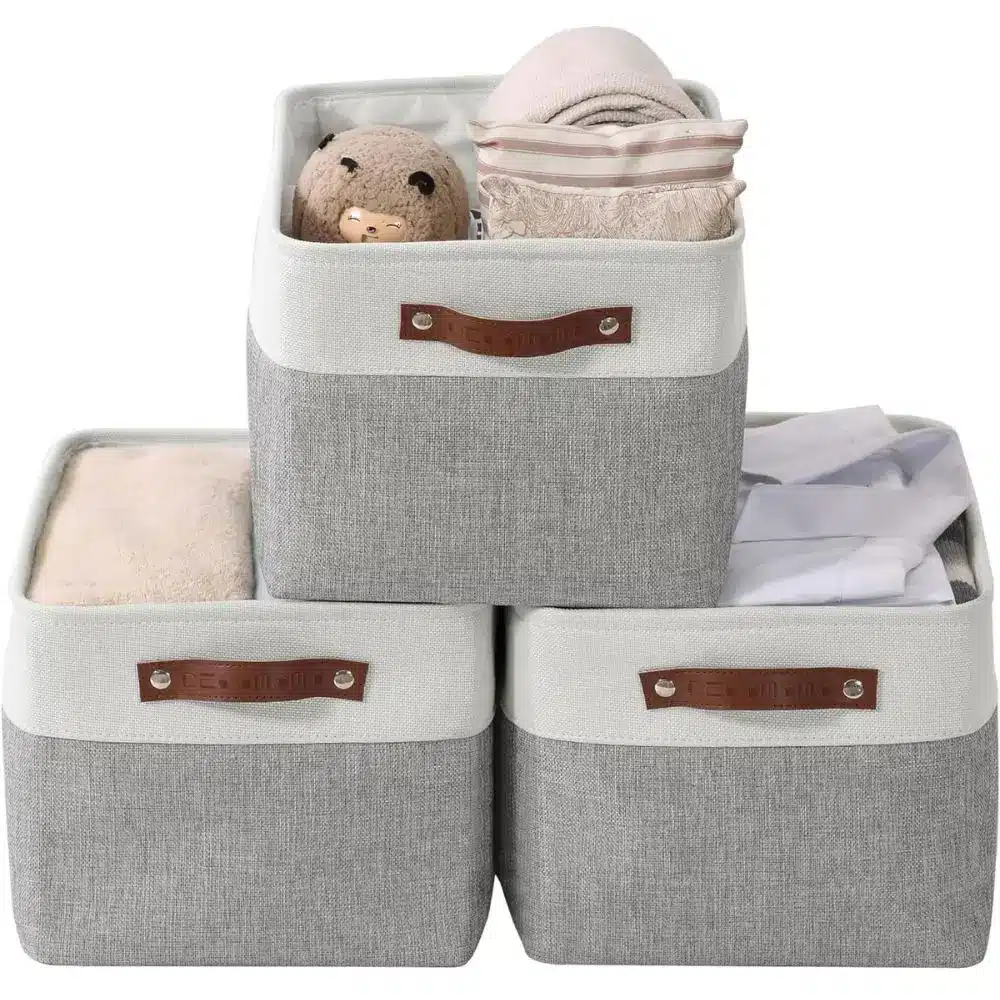
If the system doesn’t work, the bedroom starts feeling cluttered even if the decor is beautiful.
That’s why bedroom storage for clothes isn’t just about buying a pretty dresser.

It’s about making sure folded clothes, hanging pieces, pajamas, linens, and accessories have a place that’s easy to grab.
Bedroom Storage Ideas for Clothes
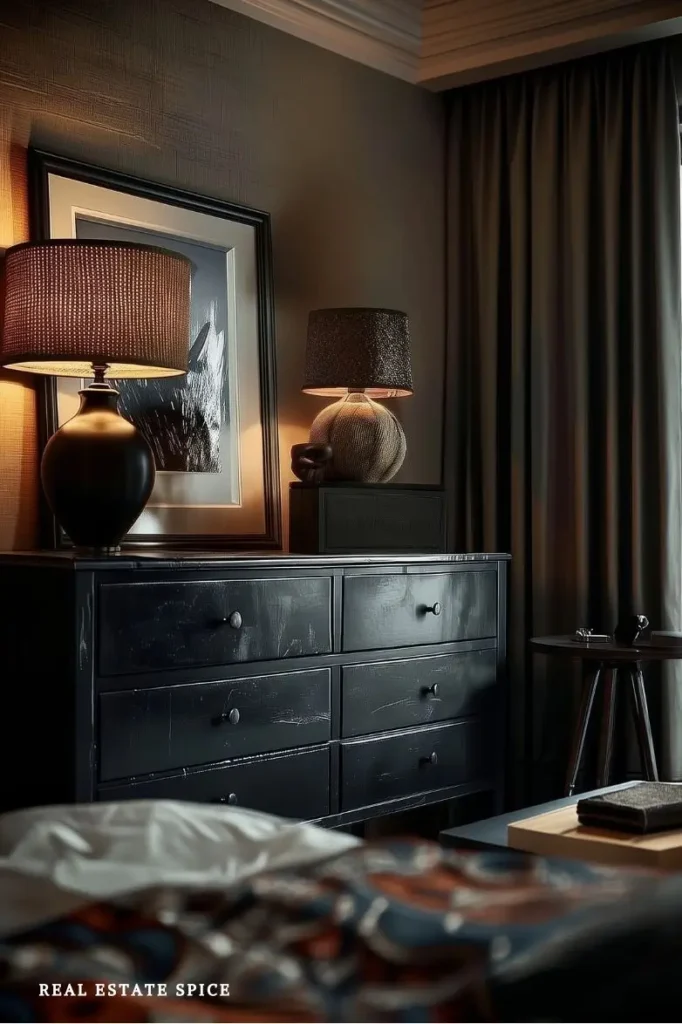
The closet-to-dresser handoff is one of the easiest ways to make clothes easier to manage.
Decide what should hang, what should fold, and what needs drawer dividers.
Dresses, jackets, button-downs, and items that wrinkle easily may belong on hangers.
T-shirts, leggings, sweaters, socks, and pajamas may work better in drawers.
Accessories need either a drawer organizer, shelf basket, hook, or dedicated box.
Closet organizers can help if hanging space is messy or shelves are too tall.
Shelf dividers, closet shelves, and baskets can turn one awkward shelf into several useful zones.
Dresser organizers and drawer dividers help folded items stay separated.
That way, you aren’t digging through one giant drawer at bedtime, wondering why the socks have formed an emotional support group.
A bedroom storage organizer doesn’t need to be fancy.
It just needs to solve the pile that keeps coming back.
How to Choose Between a Dresser, Wardrobe, or Bedroom Storage Cabinet
Different storage pieces solve different problems.
A dresser works well when you have folded clothes and enough wall space.
Chest-style storage is better when the room is narrow and you need vertical space.
Wardrobe storage can help if your closet is too small or missing entirely.
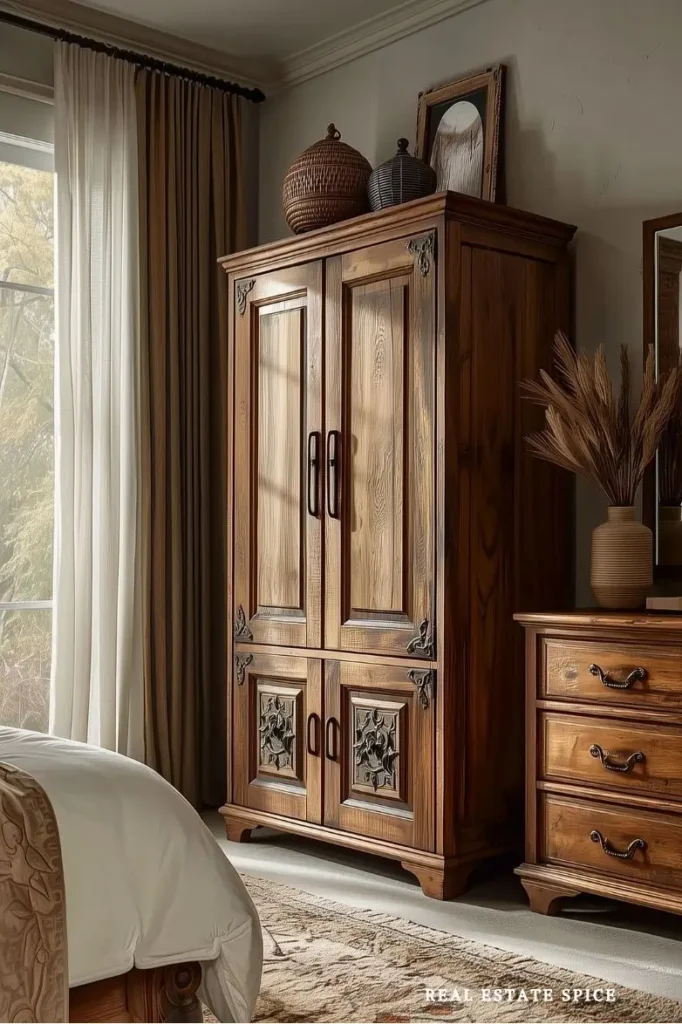
Armoires and wardrobes are useful for hanging clothes, folded items, linens, or a mix of categories.
Bedroom storage cabinets are helpful when you need closed storage but don’t want everything in drawers.
Cupboard-style bedroom storage can work in rooms that need a more built-in feeling.
Fitted bedroom furniture or bedroom fitted furniture can be useful in awkward rooms, especially with sloped ceilings or alcoves, but it’s a bigger commitment than freestanding storage.
Use the drawer reality check before buying.
Choose a dresser, wardrobe, chest of drawers, or cabinet based on what actually needs to go inside, not just what looks good elsewhere.
If you have bulky sweaters, shallow drawers may disappoint you.
When you have lots of hanging clothes, a dresser alone won’t solve the problem.
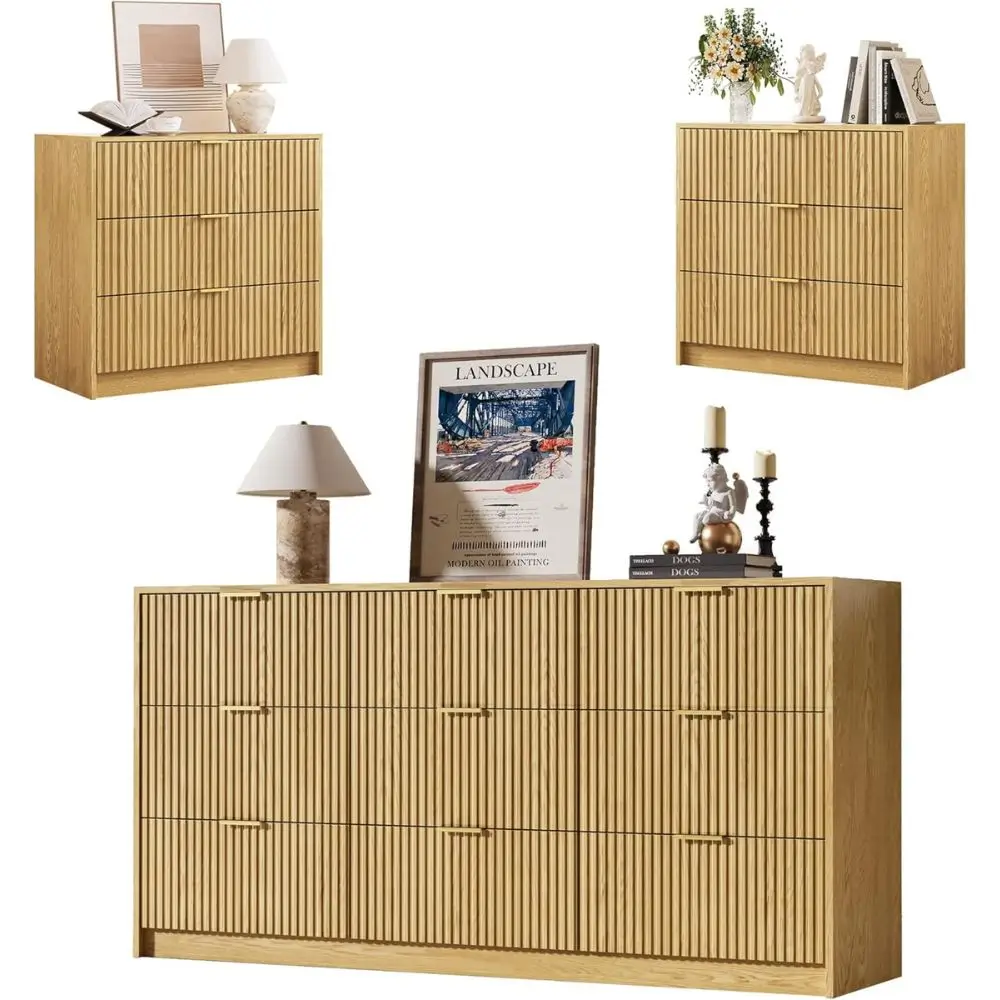
When a dresser is the best choice, use my guide to small-bedroom dressers to compare tall, slim, shallow, and bedside options before buying.
Dresser Organization Ideas That Keep Clothes From Taking Over
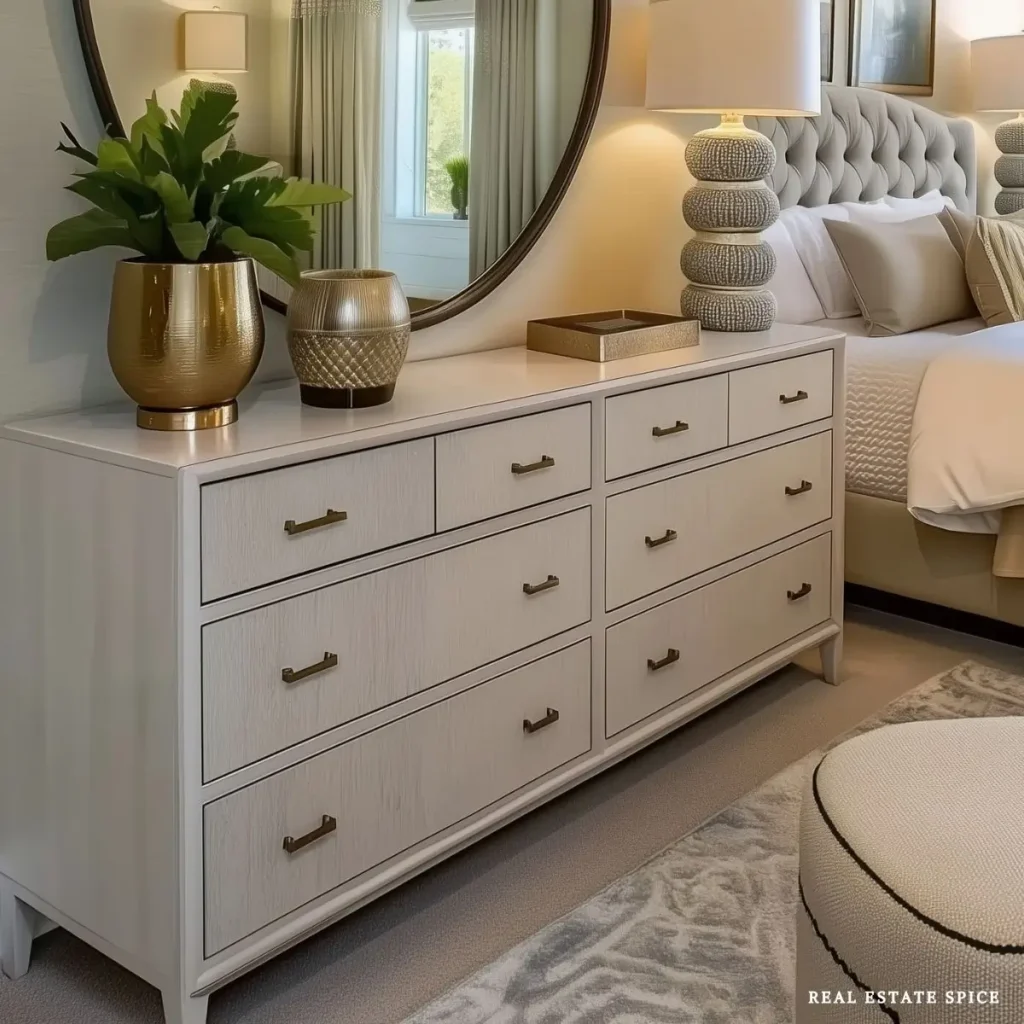
Dresser organization gets easier when each drawer has a clear role.
One drawer for pajamas.
Another for workout clothes.
A drawer for undergarments with dividers.
Maybe one for T-shirts, another for sweaters, and one for off-season pieces if you don’t have hidden storage elsewhere.
The dresser top reset helps too.
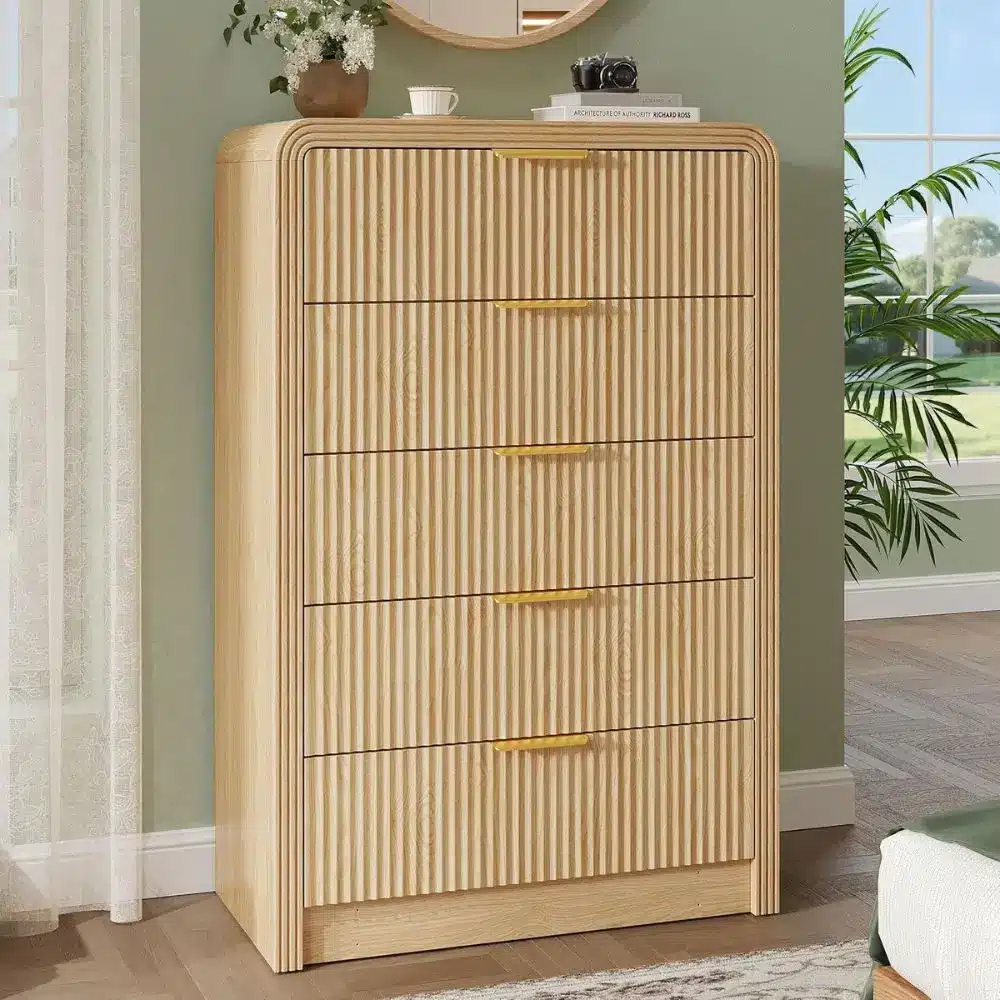
Treat the dresser top as a small landing area, not a second closet.
It can hold a lamp, tray, jewelry dish, or mirror, but it shouldn’t become the place where clean laundry waits for a personality change.
If the dresser is always overflowing, don’t blame the tray.
The storage system may need more drawer capacity, fewer categories per drawer, or a better closet-to-dresser handoff.
Priority 3: Hidden Bedroom Storage
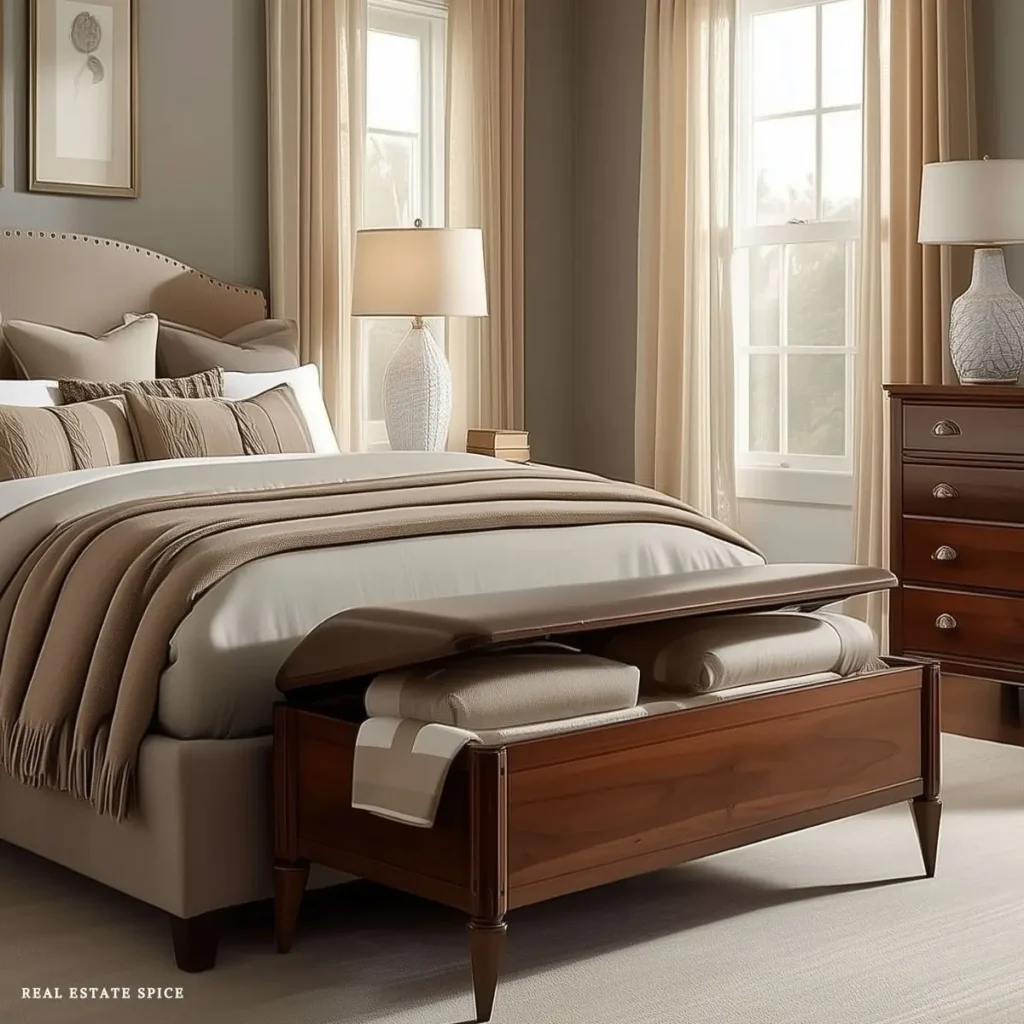
Hidden bedroom storage is the third part of the formula, and it has a very specific job.
It’s for items you need, but don’t need to see every day.
Extra bedding, seasonal blankets, shoes, bags, keepsakes, luggage, holiday pajamas, and off-season clothes all fit here.
Hidden storage should reduce visual clutter, not become a mysterious storage cave where items vanish until next winter.
That’s why the hidden storage label rule matters.
Label under-bed bins, bedroom storage boxes, storage bins, and seasonal containers so hidden storage stays useful.
Under-Bed Storage Ideas
Under-bed storage is excellent when the bed allows for it.
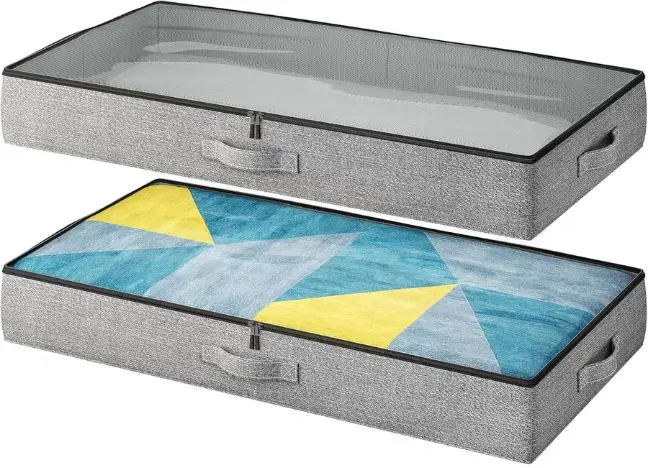
Slim under-bed storage boxes can hold extra bedding, shoes, out-of-season clothes, or guest linens.
A storage bed can be even better if you want built-in drawers and a cleaner look.
Queen bedroom storage often works well with under-bed drawers or slim bins because a queen bed usually leaves enough room around the sides to access them.
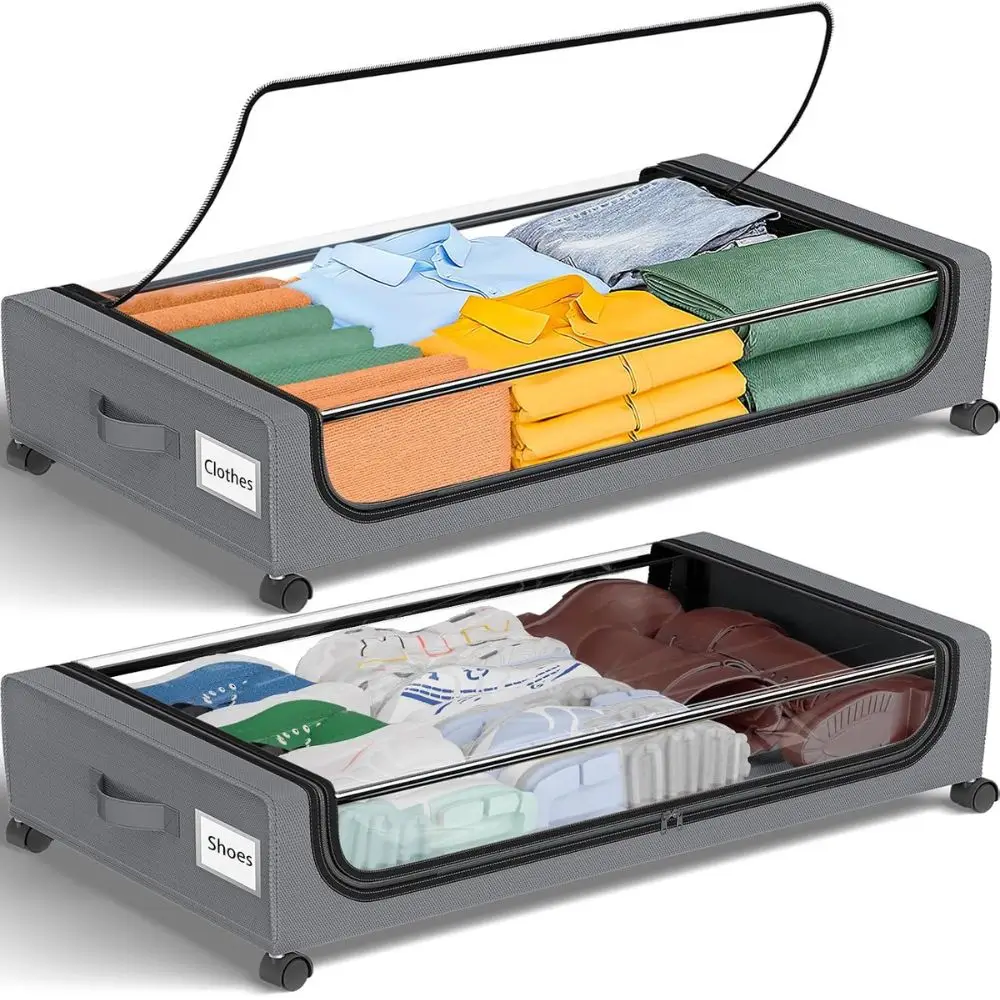
In a small room, a storage bed can replace the need for an extra cabinet or large dresser.
Just make sure the drawers can open easily with your bedroom layout.
The hidden storage limit is important.
If something is used every day, don’t hide it somewhere annoying.
Hidden storage works best for items you need less often.
Daily shoes, everyday jeans, and your favorite sweater shouldn’t live in a bin that requires moving half the room.
Storage Benches, Ottomans, and Baskets

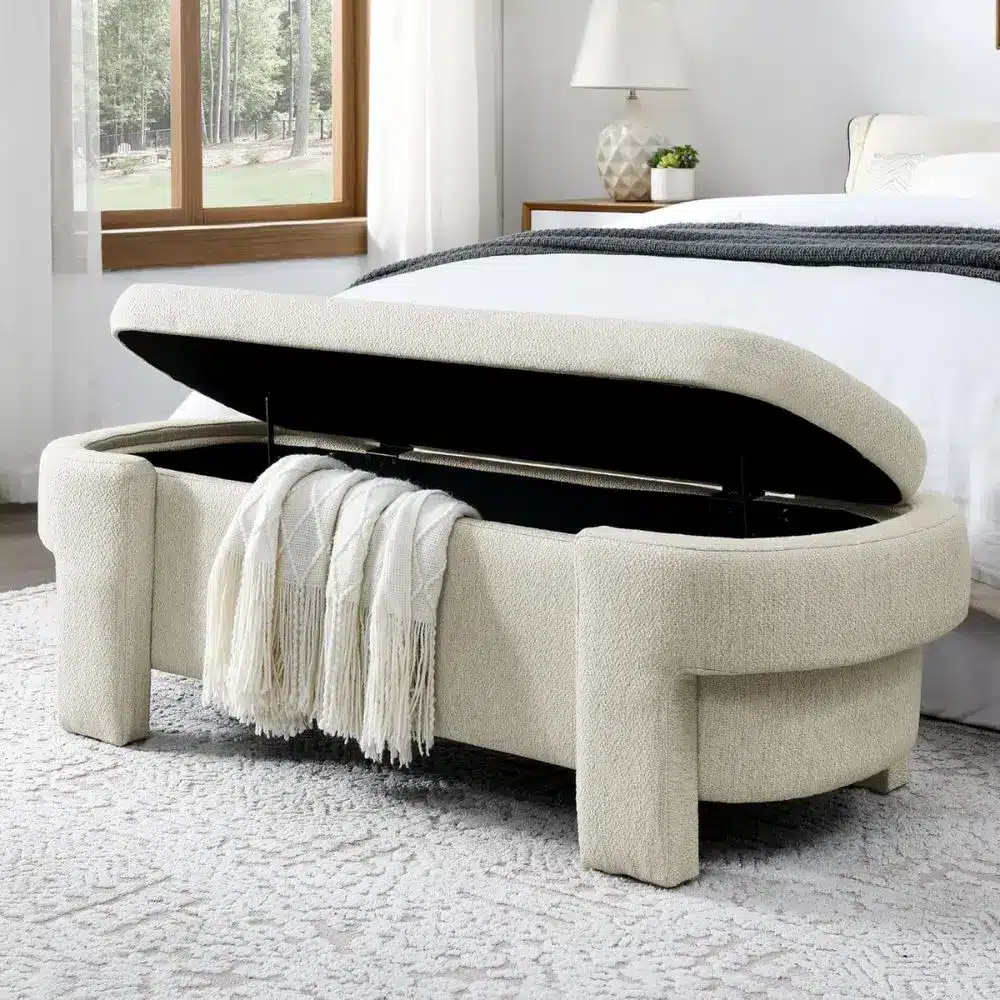
Bench bedroom storage can be wonderful when it solves a real storage problem.
A bedroom storage bench at the foot of the bed can hold extra blankets, seasonal bedding, bags, or pillows.
Storage benches for bedrooms work best when they don’t become open-ended mystery boxes.
Use the bench with a storage plan.
A storage bench should hold one clear category, such as extra blankets, seasonal bedding, or bags.
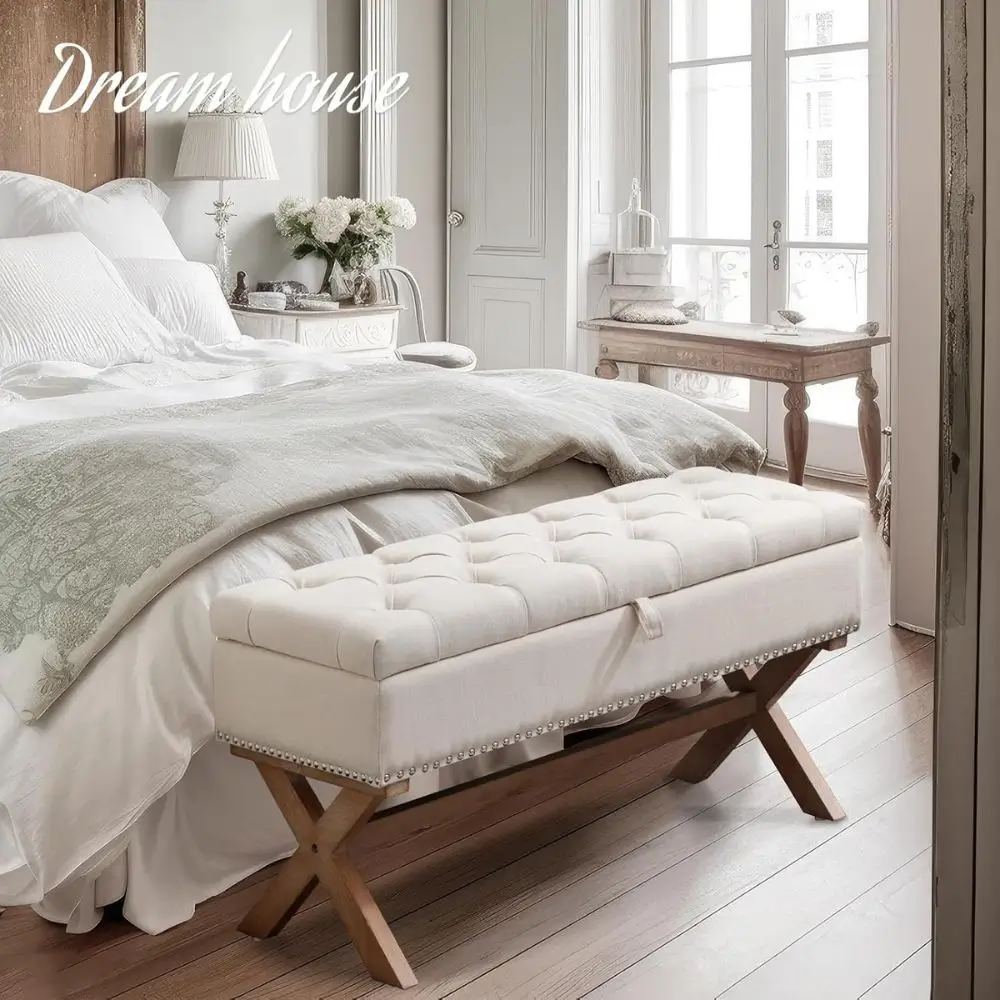
If everything goes in there, nothing is easy to find later.
A bedroom storage ottoman or bedroom ottoman storage piece can add seating and hidden storage in one.
Decorative baskets are another helpful option, but they work best with a specific purpose.
Use the basket with a purpose idea.
One basket for throws.
Another for slippers.
A separate one for laundry overflow or extra pillows.
Hidden Bedroom Storage Ideas for Small Rooms

Small bedroom storage solutions need to use hidden space carefully.
Under-bed storage, wall shelves, floating shelves, hooks, over-the-door hooks, and vertical storage can all help without crowding the floor.
The wall storage rescue works beautifully in small bedrooms.
Use bedroom wall storage, hooks, or floating shelves to save floor space.
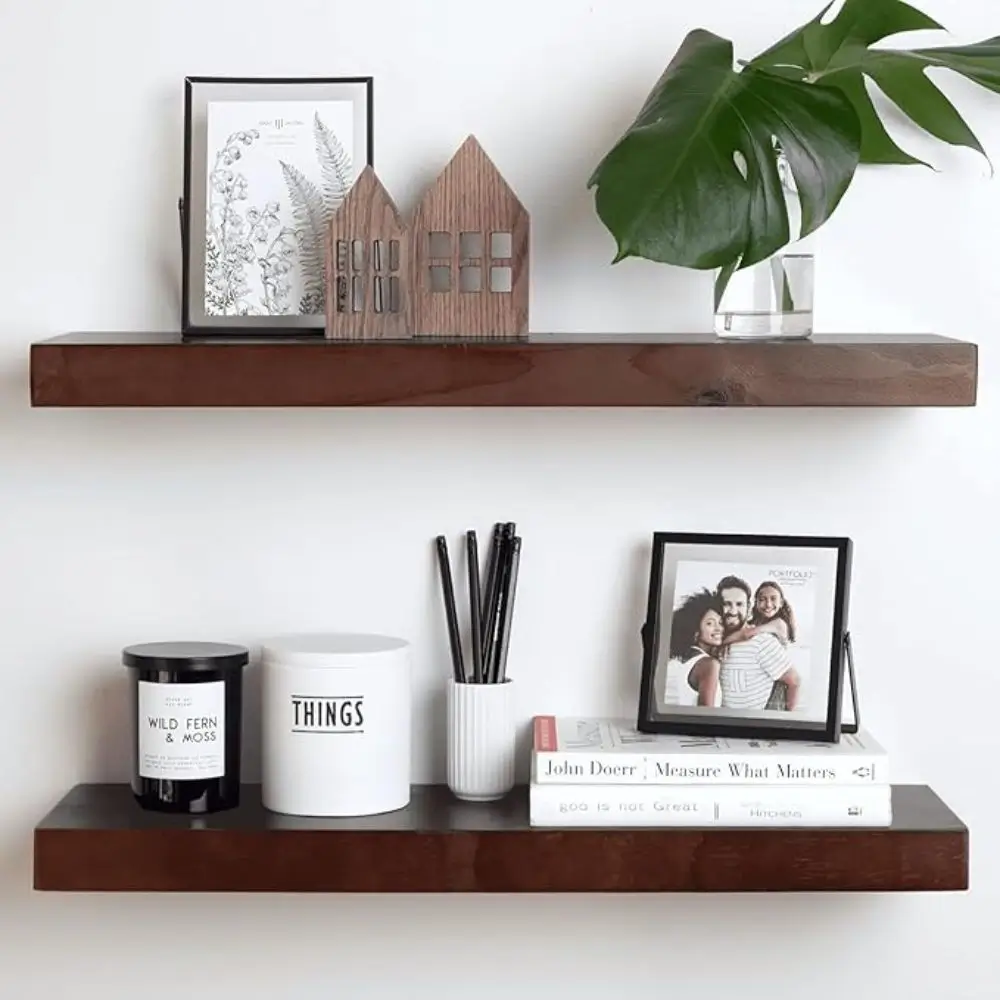
This isn’t about covering every wall with storage.
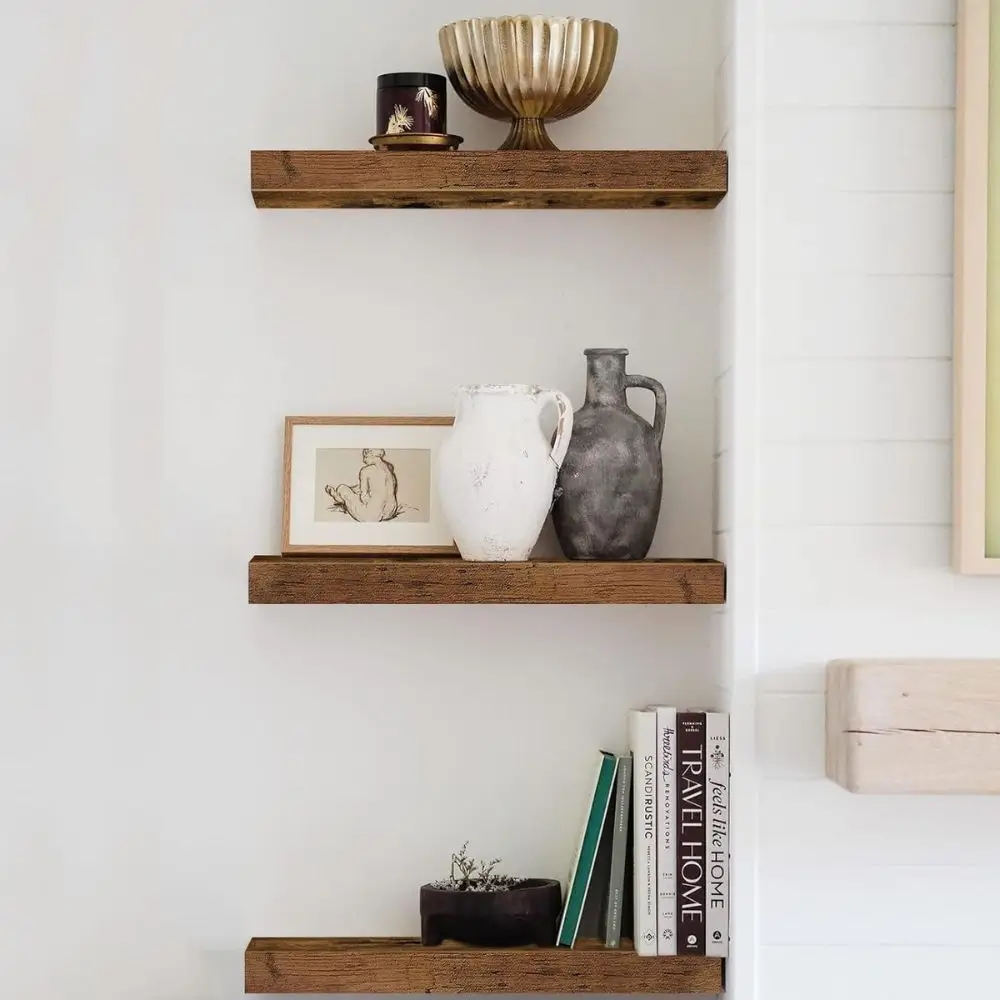
It’s about finding one vertical spot that can relieve pressure from the floor, dresser, or closet.
A bedroom chair with storage can work if you already need a chair.
Storage ottomans can also help at the end of the bed or near a window.
If the room is very tight, skip extra furniture and choose storage that serves two jobs.
Small Bedroom Storage Ideas That Don’t Crowd the Room
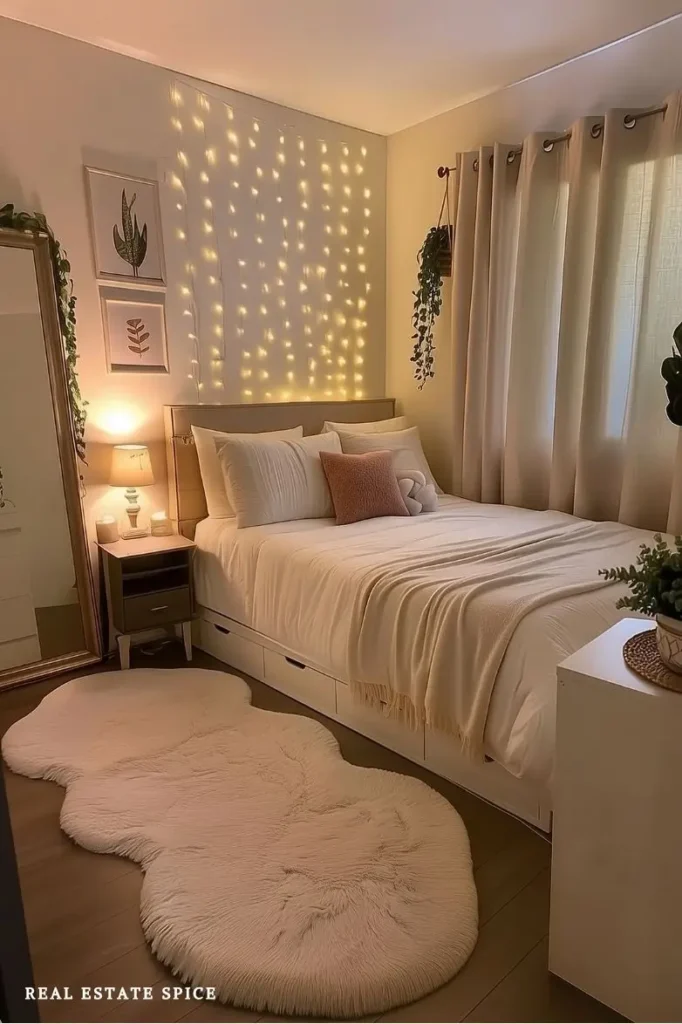
Small bedroom storage ideas work best when they make the room easier to move through.
The goal isn’t to squeeze in every possible storage piece.
It’s to choose storage that solves the real clutter without stealing all the floor space.
Small bedroom storage ideas for adults often work best when the pieces go taller, slimmer, or more hidden.
Try a taller chest of drawers, a storage bed, slim nightstands with drawers, or a narrow wardrobe.
Corner shelving uses space efficiently.
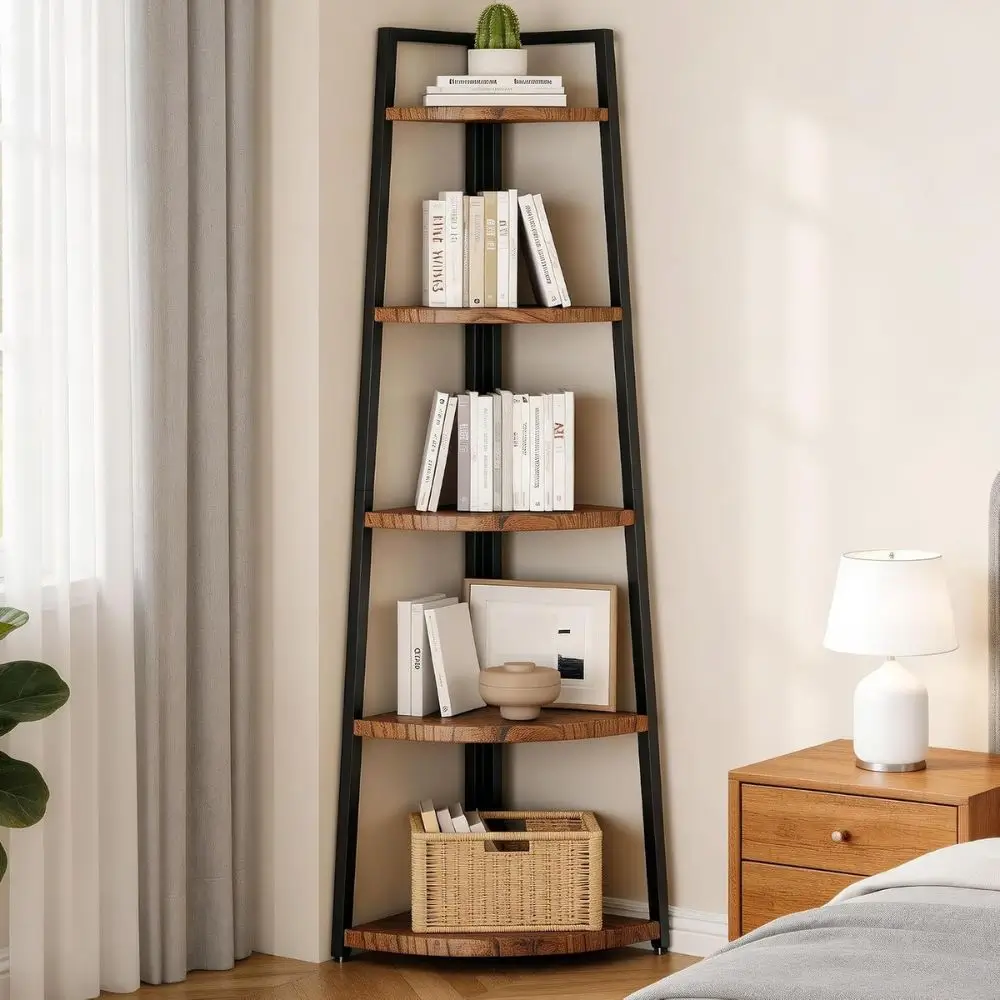
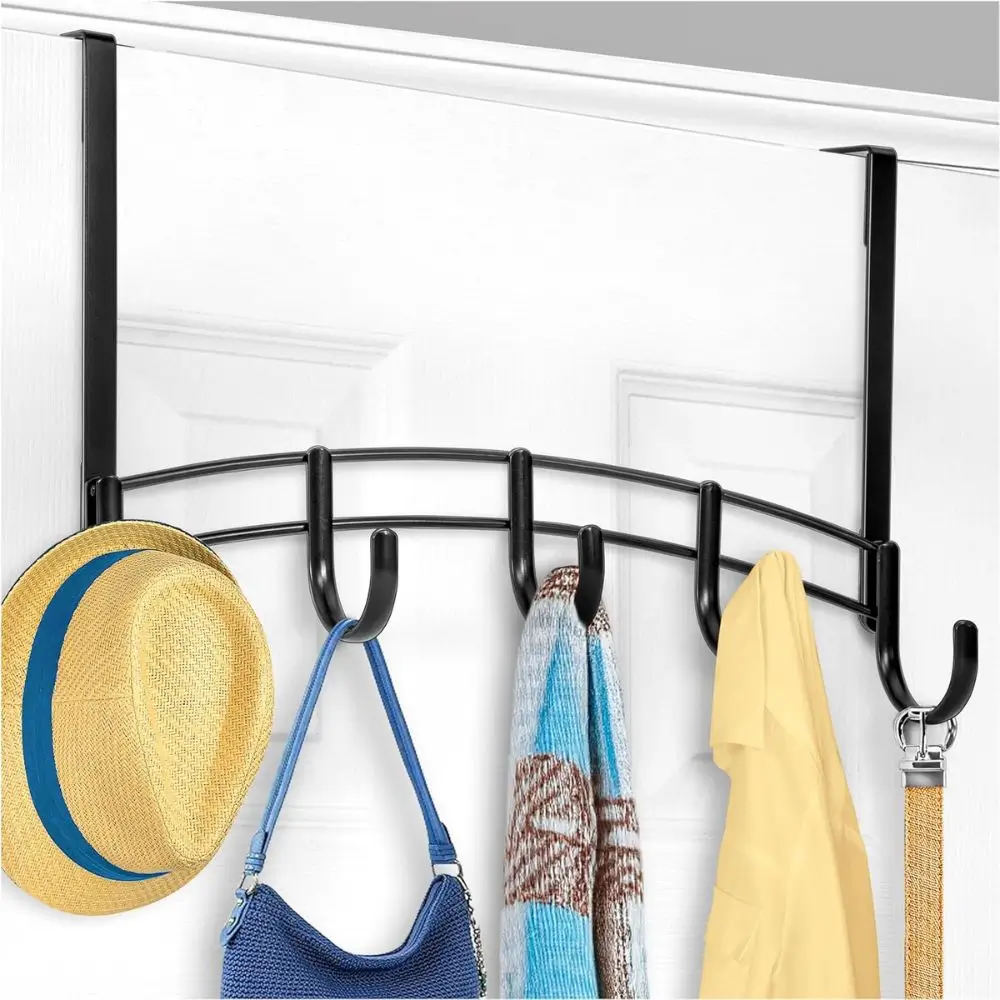
Hooks behind the door and under-bed storage boxes can also add extra storage without making the room feel crowded.
Bedroom storage for small rooms should also make use of the closet door, wall space, and the area under the bed.
The 10-minute reset path is especially useful in small rooms.
Make it easy to move from bed to nightstand to hamper to dresser or closet.
If the hamper is across the house, clothes may land on the floor.
When the dresser is blocked, clean laundry may sit on the bed.
Storage has to match the way you move through the room.
Master Bedroom Storage Ideas

Master bedroom storage usually has to handle more categories.
Clothes, shoes, extra bedding, accessories, bags, and daily items all need homes.
Master bedroom storage works best when clothes, linens, accessories, and everyday items each have a sensible place, rather than expecting one dresser to handle everything.
A dresser or chest of drawers can hold folded clothes.
Closet organizers can improve hanging space.
Bookcases can hold everyday items.

A storage bench can hold extra bedding.
Under-bed storage can handle off-season items.
A wardrobe or armoire can help if closet space is limited.
Shoe racks or shoe organizers should keep shoes from spreading across the room.
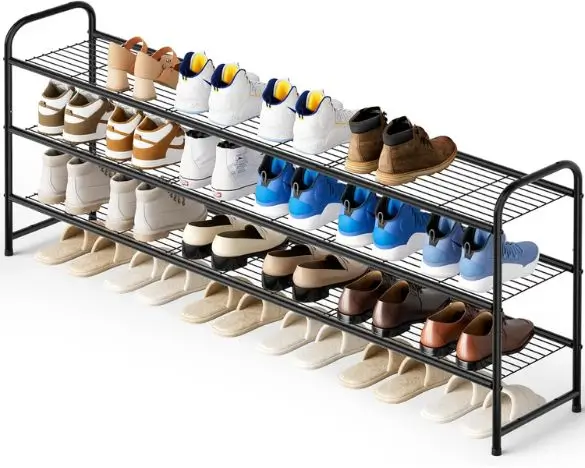
One helpful idea is separating daily clothes from occasional items.
Keep the pieces you wear most in the easiest drawers or closet areas.
Formalwear, seasonal clothing, or extra linens can move to hidden storage, a wardrobe, or higher shelves.
Guest Bedroom Storage Ideas

Guest bedroom storage doesn’t have to be huge, but it should be simple.
Give guests a place to set down a bag, hang a few items, and store small things beside the bed.
A small dresser, empty drawer, luggage bench, over-the-door hooks, or a few baskets can make the room feel easier to use.
Guest rooms often become overflow storage for the rest of the house, which is understandable but risky.
If every drawer is full before guests arrive, the room can feel less welcoming.
Try keeping one drawer, one section of closet, or one basket open for guests.
A luggage rack is a portable helpful storage solution.
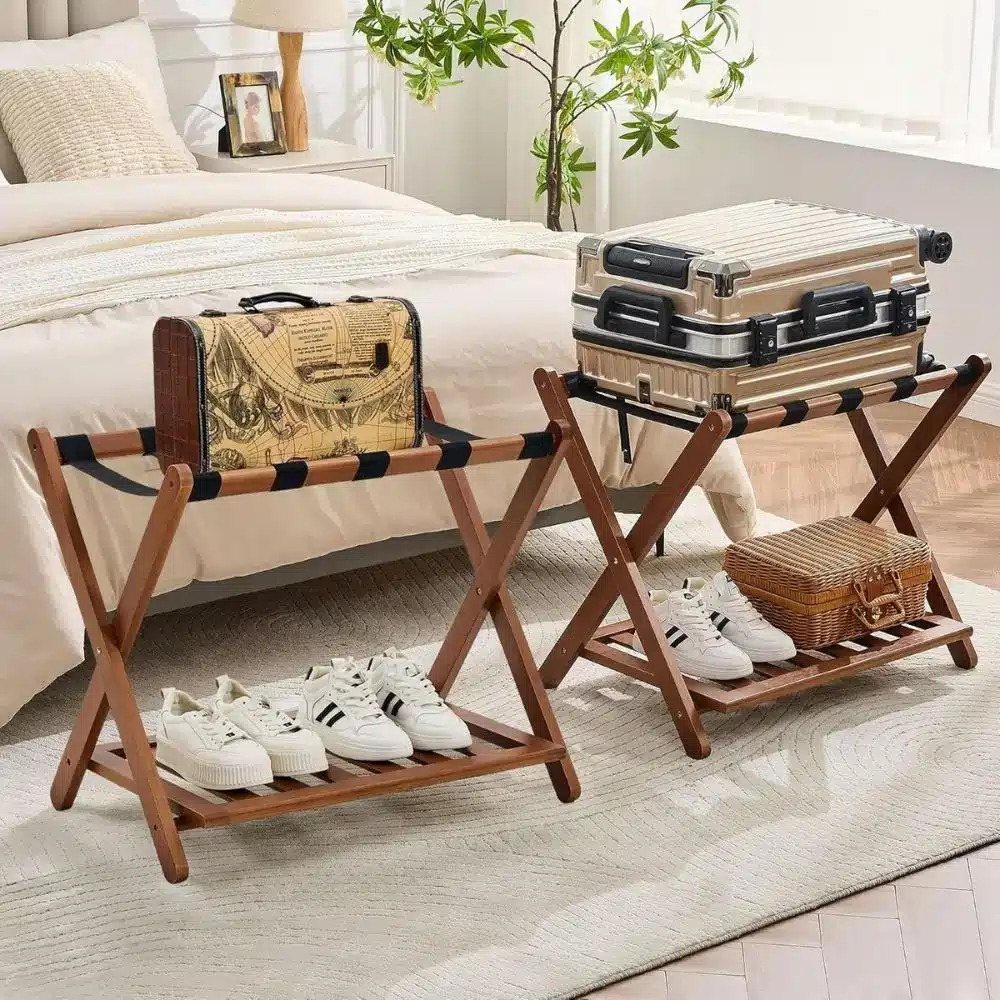
A bedroom storage bench is especially useful in a guest room because it can hold extra blankets while also giving visitors a place for luggage.
Bedroom Storage Ideas for Clothes
Bedroom clothes storage works when it matches how you get dressed, undressed, and reset the room.
If clothes keep landing on a chair, ask why.
Maybe the hamper is too far away.
Perhaps the dresser drawers are too full.
The closet may not have enough hooks.
Sometimes the chair is simply too available, sitting there with open arms and poor boundaries.
A hamper or laundry basket should be where clothes naturally come off.
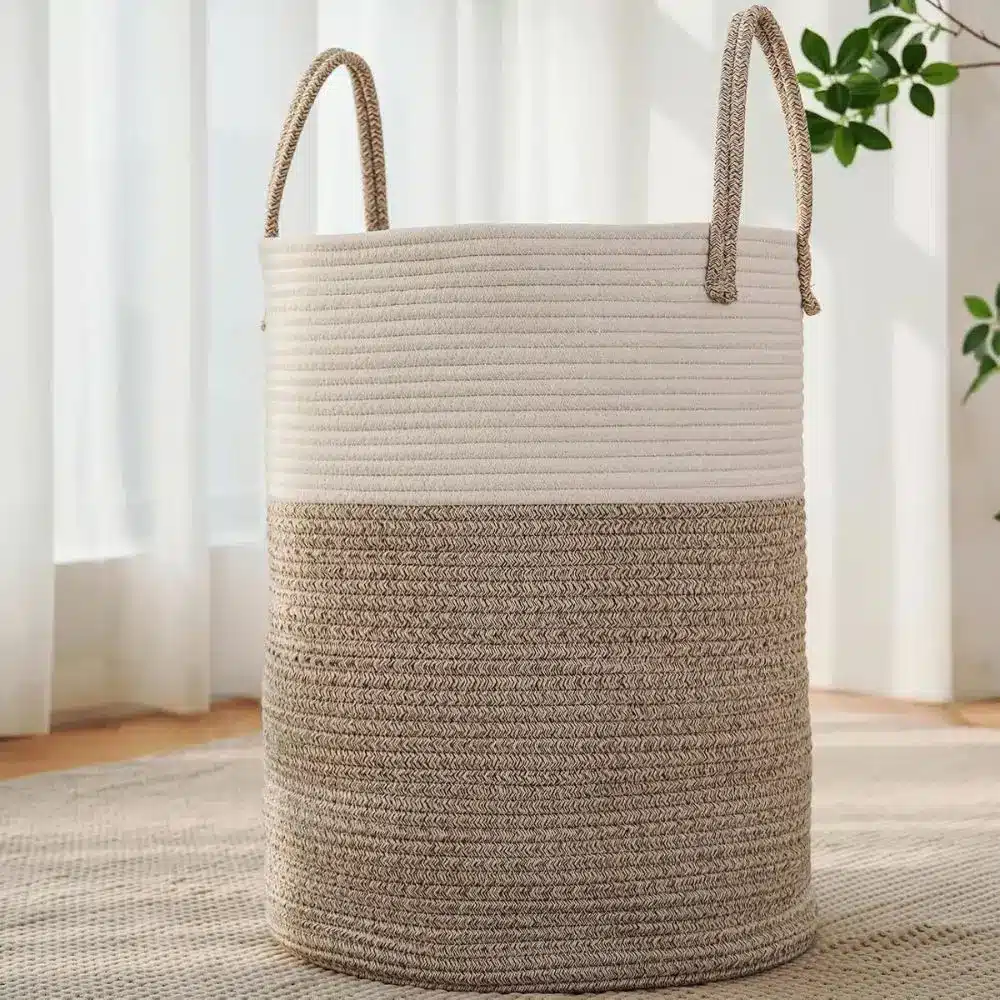
Drawer dividers help folded clothes stay in place.
Hooks can handle a robe, tomorrow’s outfit, or pieces that have been worn once but aren’t ready for laundry.
A bedroom clothes organizer or closet system can help when categories are mixed together.
Clothing storage doesn’t need to be perfect.
It needs to be easy enough that you’ll use it when you’re tired.
Bedroom Shoe Storage Ideas That Keep the Floor Clear
Shoes can take over a bedroom faster than expected.
Shoe storage works best when there’s one clear boundary.
Use the shoe boundary idea and choose one shoe storage spot, such as a closet rack, under-bed shoe organizer, basket, cabinet, or shoe rack.
Shoe bedroom storage can be hidden or visible depending on the room.
Under-bed shoe organizers work well for seasonal or less-used pairs.
A shoe rack in the closet keeps daily shoes accessible.
Baskets can work for slippers or casual shoes, but they can get messy if you use them for every pair.
Bedroom shoe organizers are especially helpful in small rooms where shoes spread around the floor quickly.
Choose one system that matches your habits, then keep the rest of the floor clear.
Bedroom Storage Ideas for Kids’ Rooms Without Creating Chaos

Kids bedroom storage needs to be simple enough to use quickly.
If the system is too complicated, it won’t last long.
Kids bedroom storage ideas can include low baskets, labeled bins, under-bed storage boxes, hooks, small dressers, closet shelves, and open cubbies for the items used most often.
I love these fabric storage baskets. I have them in my closet, and it really has given the space an entirely new look, and I can find things easier!
This formula still works in children’s rooms.
Nightstand storage may hold books and small bedtime items.
Closet or dresser storage holds clothes and school-week items.
Hidden storage holds seasonal clothes, keepsakes, extra bedding, or toys that rotate in and out.
Keep labels clear and categories broad.
A basket for pajamas is easier than a tiny divided system no one wants to maintain.
Drawers just for school clothes make mornings easier.
Hidden storage should be for less-used items, not the things your child needs daily.
How to Choose White, Black, Wood, or Mixed Bedroom Storage Pieces
Bedroom storage pieces affect the look of the room, so finish matters.
White bedroom storage can make a room feel lighter, especially if the space is small or has darker walls.

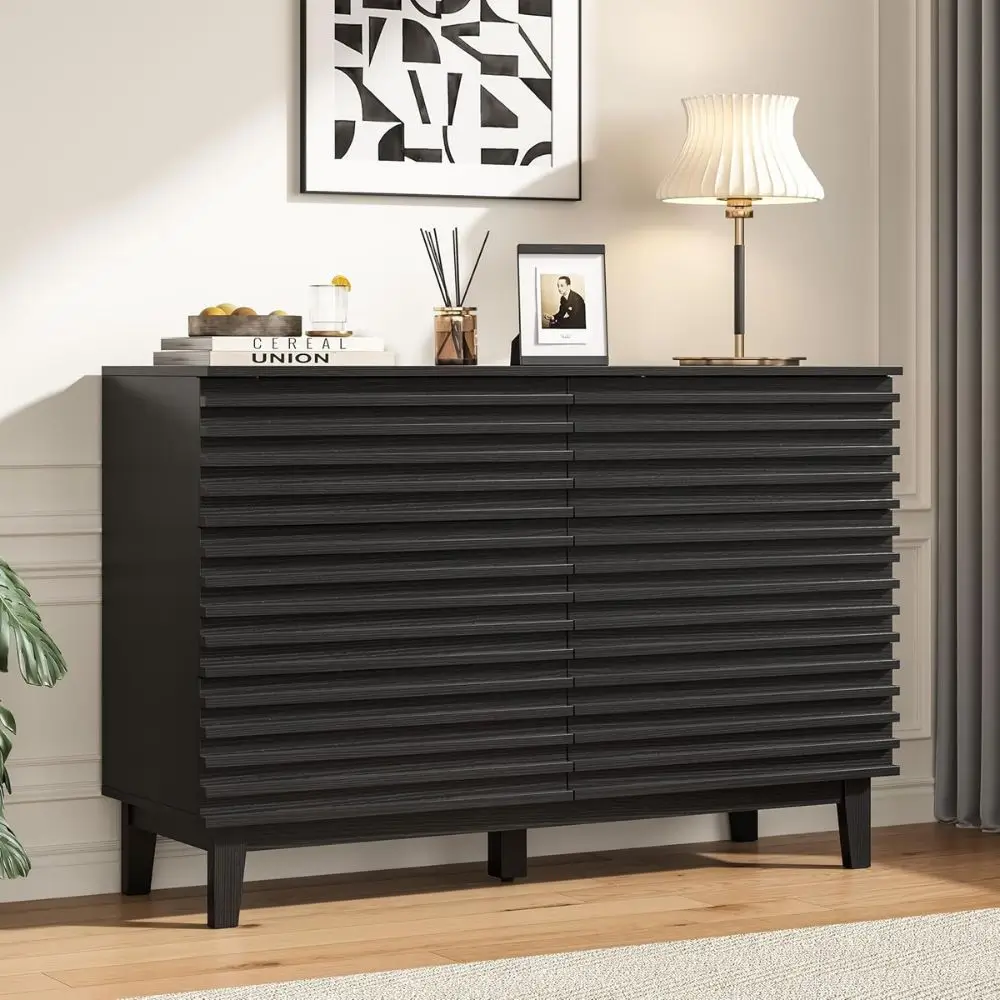
Black bedroom storage adds contrast and structure, but it can feel heavy if every piece is dark.
Wood storage brings warmth and works especially well with natural textures, neutral bedding, and calm bedroom ideas.
Mixed storage pieces can look beautiful when they connect through one repeated detail.
Maybe the white dresser and oak nightstands both have brass hardware.
Perhaps a black wardrobe connects to black lamps or picture frames.
Woven baskets can help bridge wood, white, and black finishes.
If you’re searching bedroom storage nearby or waiting on a bedroom storage sale, measure first.
A deal only helps if the piece fits your room and solves the actual storage issue.
Bedroom Storage Mistakes That Make the Room Feel Cluttered

Buying bins before knowing what needs storage
Random bins rarely fix clutter by themselves.
Start with the clutter landing map, then buy the storage that fits the actual pile.
Hiding daily items in annoying places
If you use something every day, it should be easy to reach.
Hidden storage is for less-used items, not daily essentials.
Using a dresser that doesn’t hold enough
A beautiful dresser still has to function.
Use the drawer reality check and make sure the drawers match what you own.
Letting the nightstand become a clutter zone
Nightstands need drawers, trays, or baskets if small items keep piling up.
Otherwise the surface becomes visual noise right beside your bed.
Turning hidden storage into a mystery box
Label bins, boxes, and seasonal containers.
Hidden storage should help you find things later, not create a future treasure hunt.
Forgetting the hamper
A hamper that’s too far away won’t get used.
Place laundry storage where clothes actually come off.
A Calmer Bedroom Starts With Storage That Matches Your Life

Bedroom storage isn’t about buying random bins and hoping the clutter disappears out of politeness.
It’s about using a simple 3-part bedroom storage formula: nightstand storage, closet or dresser storage, and hidden storage.
When those three parts work together, the bedroom feels calmer, clearer, and easier to reset.
Daily items stay within reach.
Clothes and weekly essentials have a real system.
Seasonal pieces, shoes, extra bedding, and overflow items move into hidden storage that still makes sense.
Start with the spots where clutter keeps piling up.
Then give those items a better place to go.
Keep daily things easy, weekly things organized, and seasonal things tucked away with labels and boundaries.
I love these fabric storage baskets. I have them in my closet, and it really has given the space an entirely new look, and I can find things easier!
That’s how a bedroom stops feeling like a room you’re always trying to catch up with.
Little by little, clutter turns into calm, and the whole space starts to feel lighter, softer, and easier to breathe in.
It becomes less of a daily reset project and more of a bedroom retreat—a place you actually don’t want to leave.