25 Master Bedroom Designs for a Beautiful Room You’ll Love
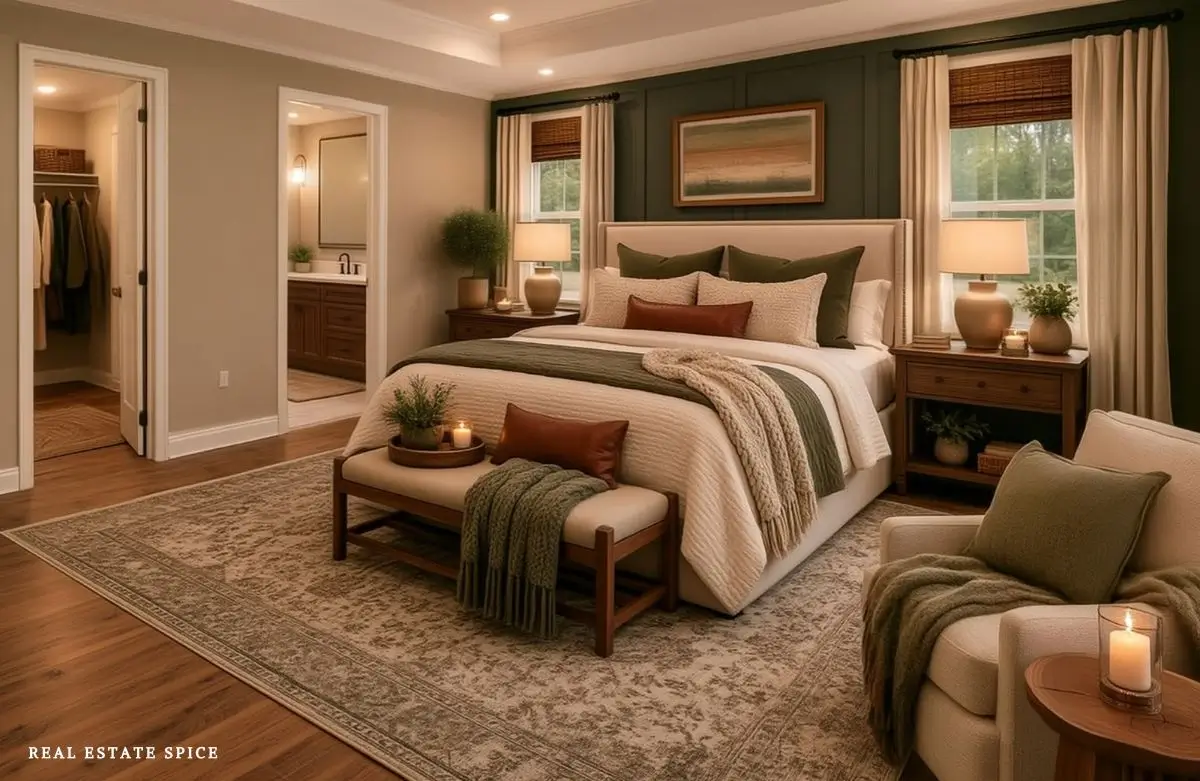
Master bedroom designs can help you create a beautiful room that feels comfortable in the morning and wonderful to return to at night.
You may already own a bed, dresser, painting, or quilt that gives the room a wonderful beginning.
Those pieces can help guide the colors, furniture, lighting, and smaller details you choose next.
Be sure to check out Bedroom Trends This Year and The Master Bedroom Rule of 3 Formula after this…
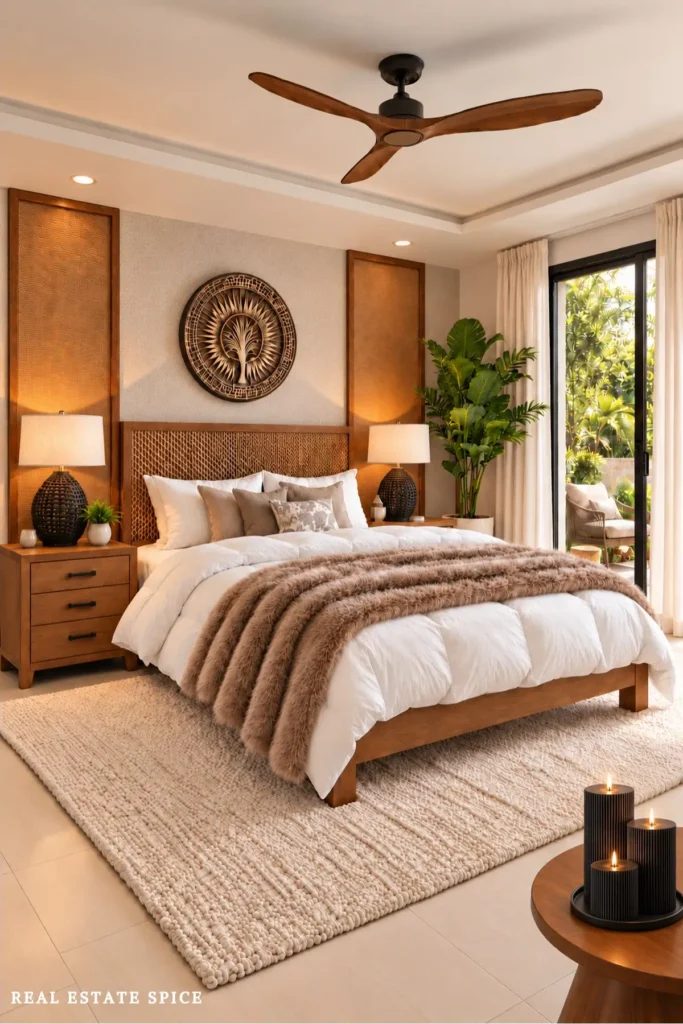
Here, I help you bring the whole master bedroom together in a way that works for your space and daily life.
A master bedroom often holds more furniture than other bedrooms.
It may also connect to a closet, bathroom, dressing area, patio, or hallway.
That gives you more to consider than the color of the bedding.
Still, every empty corner doesn’t require another chair, table, or basket.
The best design uses the room well while leaving space to walk around easily, open drawers, make the bed, and enjoy the things you love.

Perhaps you picture warm wood furniture, cream bedding, and beautiful lamps glowing on both sides of the bed.
Maybe rich green walls, colorful art, and a cozy chair feel much more like you.
These design ideas will help you create a master bedroom that looks beautiful from the doorway and feels even better once you’re inside.
For even more inspiration, explore my master bedroom ideas after this.
Grab your favorite beverage, pen, and paper for notes; take your time to study the images, design tips, and products, and enjoy!
ps…remember to save this and come back anytime for a dose of inspo!
Create a Strong Beginning for the Master Bedroom
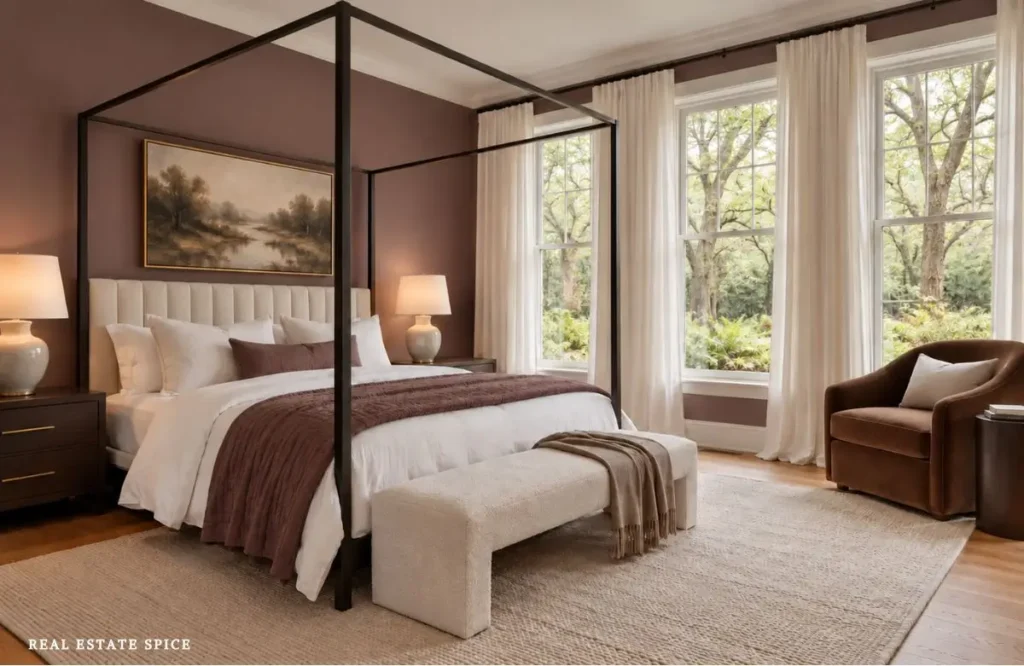
A beautiful master bedroom begins with the largest pieces and the space around them.
Once those parts feel right, the lamps, pillows, art, and other details become much easier to choose.
1. Place the Bed Where the Room Opens Up Around It
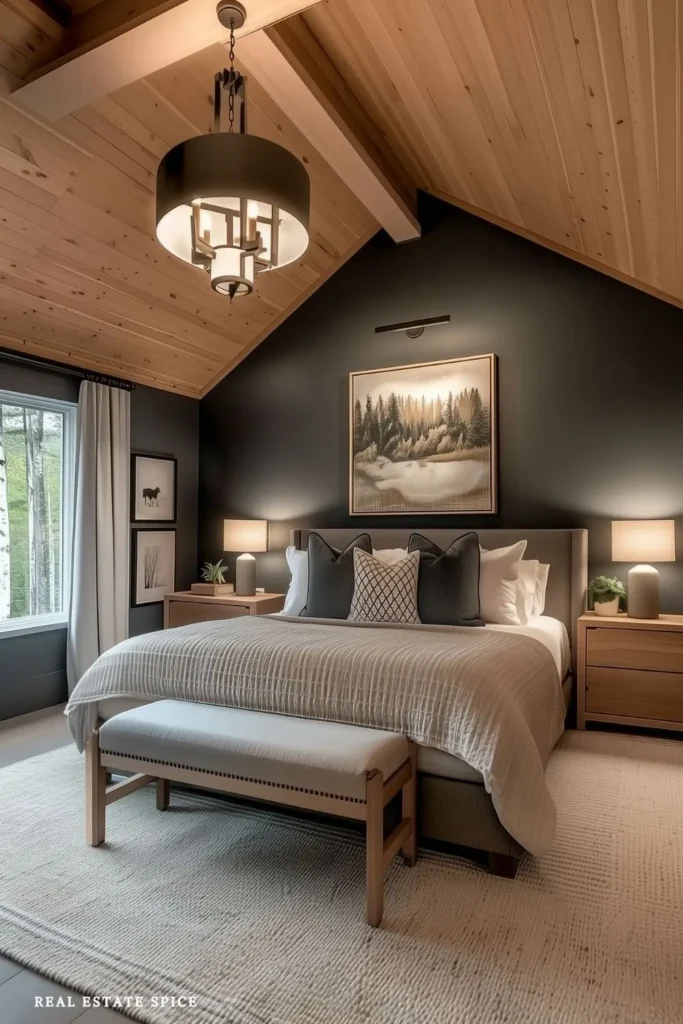
The bed will usually be the largest piece of furniture in your master bedroom.
Give it a wall where you can walk comfortably on both sides and reach the closet or bathroom without squeezing past a corner.
Look at the windows before settling on the final spot.
A beautiful view may be worth enjoying from bed, but morning sunlight shining directly into your eyes may change your opinion rather quickly.
Check the space across from the footboard, too.
Dresser drawers, closet doors, and bathroom doors should open without meeting the bed, bench, or your knees.
Walk every path before you move the heavy furniture.
My Master Bedroom Layout Rule of 3 can help you place the bed, dressing area, and open floor with more confidence.
Get My Free eBook
“100 Easy Ways To Refresh Any Room All Year Round”
2. Build the Colors Around Something You Already Love
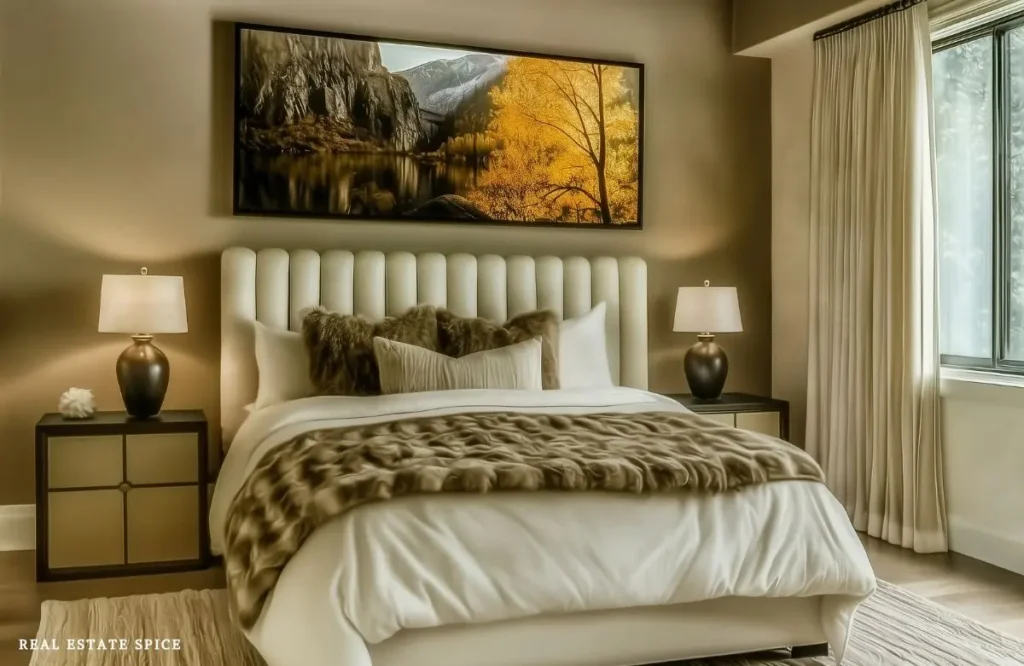
Your favorite master bedroom color ideas may already be sitting in the room.
A painting, rug, quilt, or wood dresser can give you several shades to repeat.
If the artwork holds cream, green, and warm brown, bring those colors onto the bed and nearby furniture.
Deep blue bedding may look especially beautiful beside walnut nightstands and brass lamps.
For a lighter room, try warm white walls with oatmeal bedding and a caramel throw.
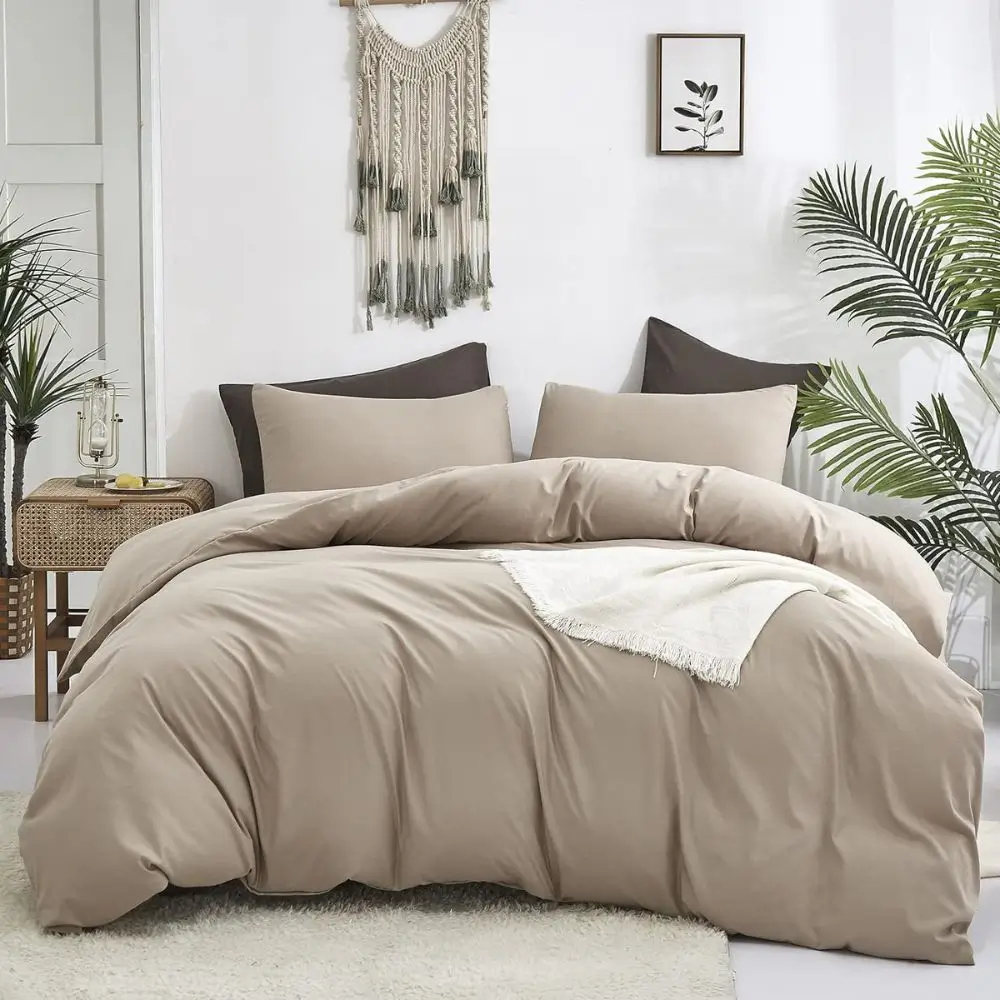
The colors don’t have to match exactly.
Small differences keep the room from looking like every piece came out of the same cardboard box.
Repeat a favorite color three or four times, then let the rest of the room support it.
3. Give the Bed Wall Enough Strength for the Room

The bed wall often becomes the first full view when you enter a master bedroom.
A small headboard and one tiny picture may look lost across a wide wall.
Try a taller headboard, larger artwork, wall paneling, wallpaper, or a deeper paint color behind the bed.

Rooms with high ceilings can carry stronger vertical details, such as long curtains or tall bedside lamps.
Lower ceilings may look better with wide artwork and simple horizontal lines.
Stand in the doorway and notice where your eyes go first.
If the television, dresser, and ceiling fan grab all the attention, the bed wall may need a little more presence.
Give that wall one beautiful feature instead of asking five smaller decorations to do the work.
4. Use an Upholstered Bed to Add Softness and Height
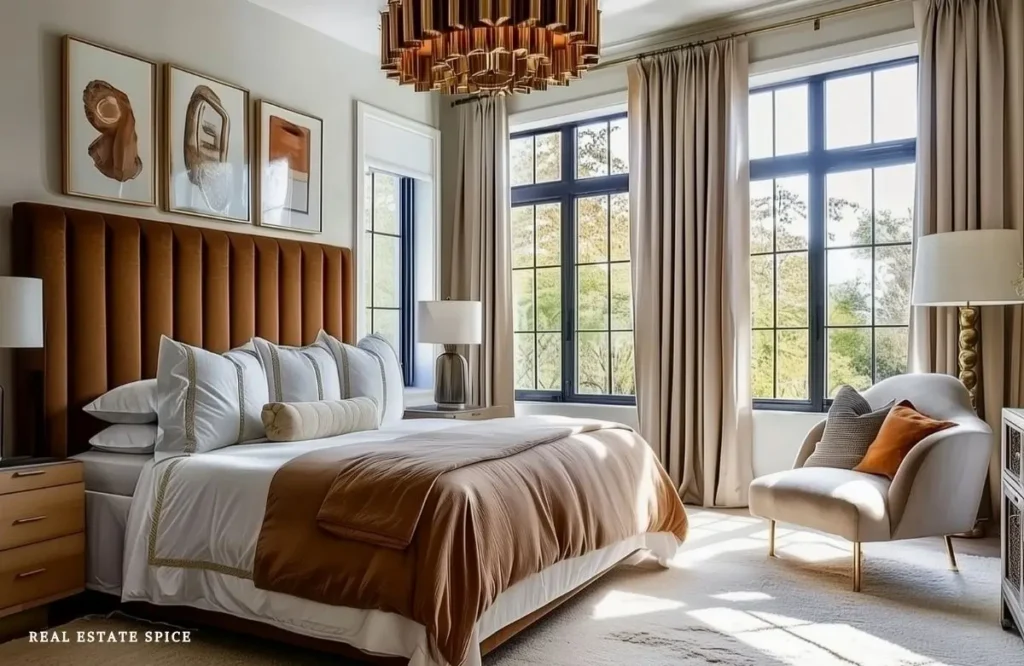
An upholstered bed brings fabric into a room filled with wood, drywall, glass, and other hard surfaces.
Choose a headboard tall enough to remain visible above your sleeping pillows.
Channel tufting can add clean vertical lines, while a curved headboard softens square nightstands and framed art.
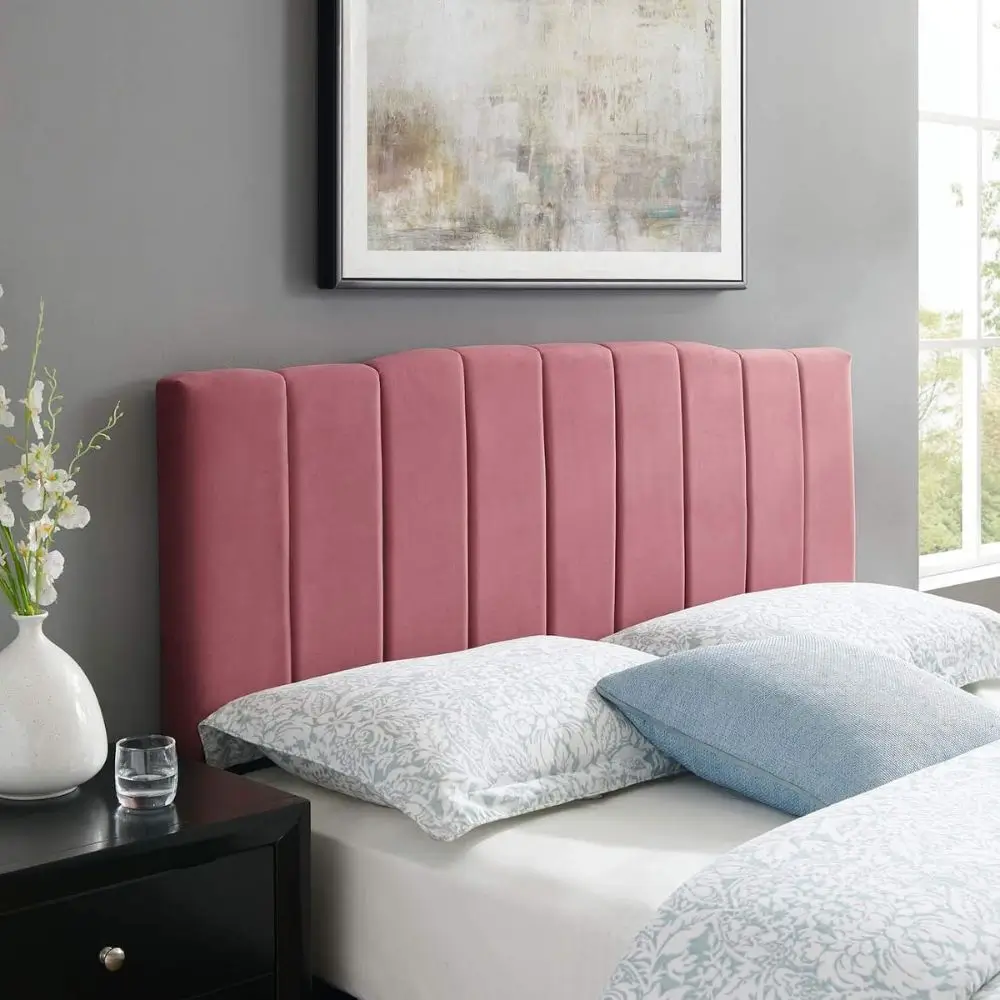
A cream upholstered bed frame looks beautiful with warm wood furniture and darker bedding.
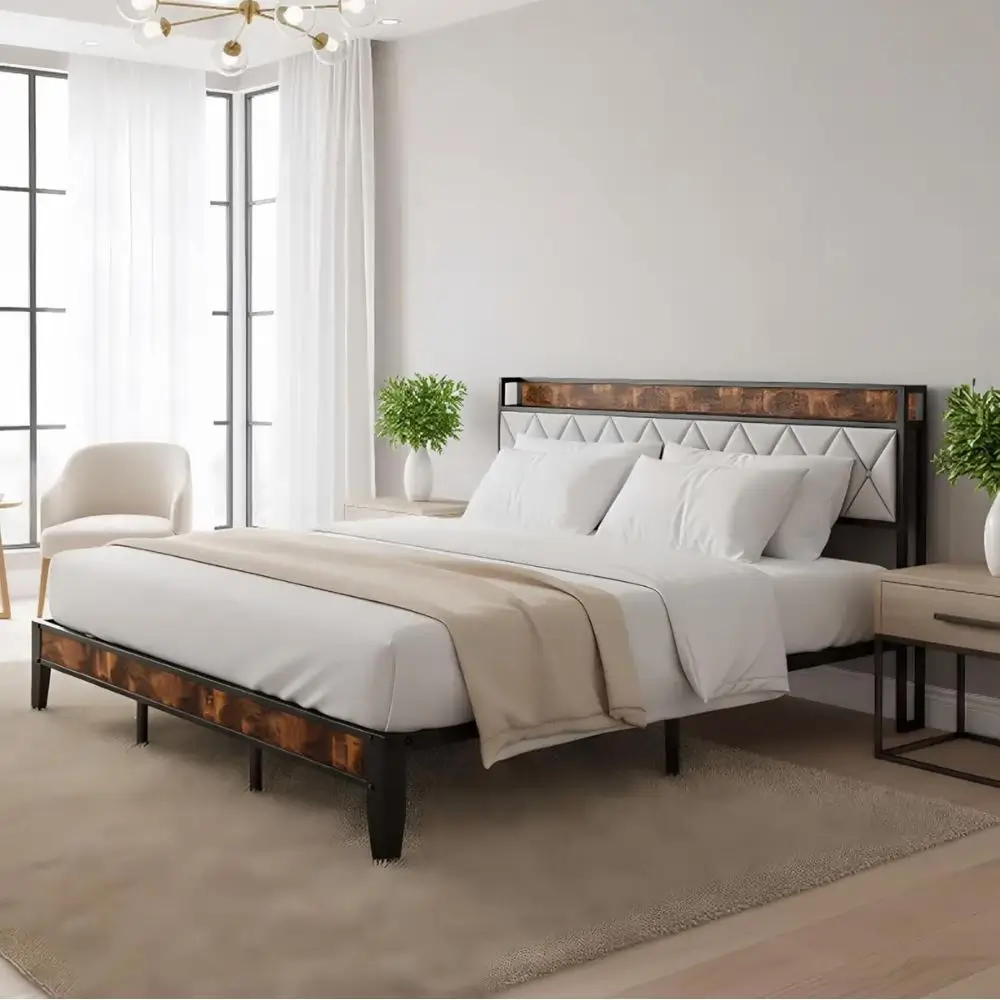
Camel, olive, rust, navy, or charcoal fabric can add depth to pale walls.
Measure the full height and width, since an upholstered bed may take up more room than the mattress alone suggests.
5. Connect Different Furniture Finishes With One Repeated Detail
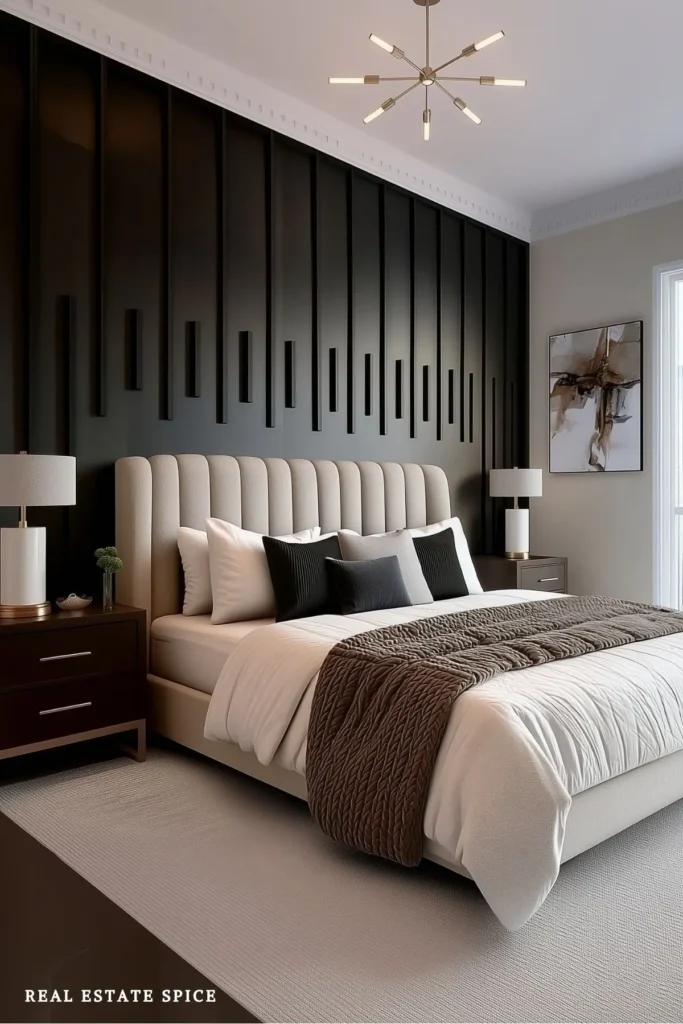
Master bedroom furniture can look connected without matching piece for piece.
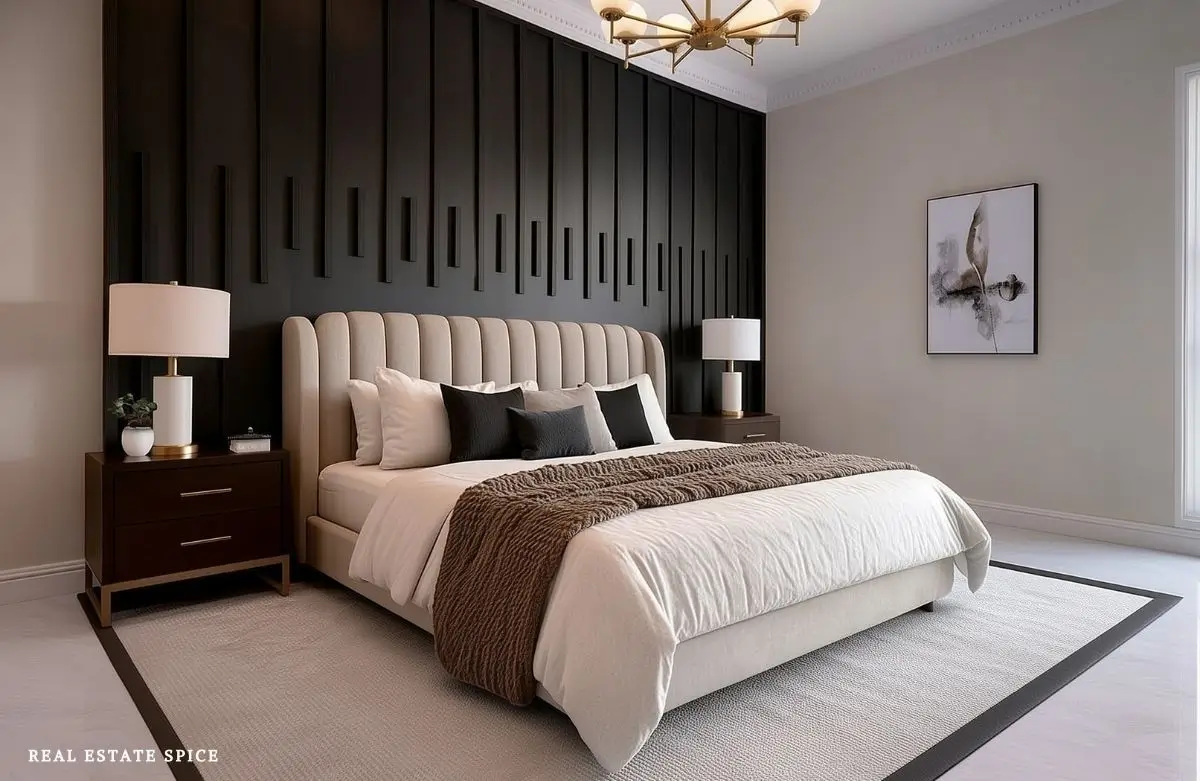
Here, the cream upholstered bed brings softness beside the dark wood nightstands.
Light-colored lamp bases repeat the cream and help connect the upholstered bed with the wood nightstands.
You can bring that same idea to furniture you already own.
Black lamps on a wood dresser can help it look connected to painted black nightstands.
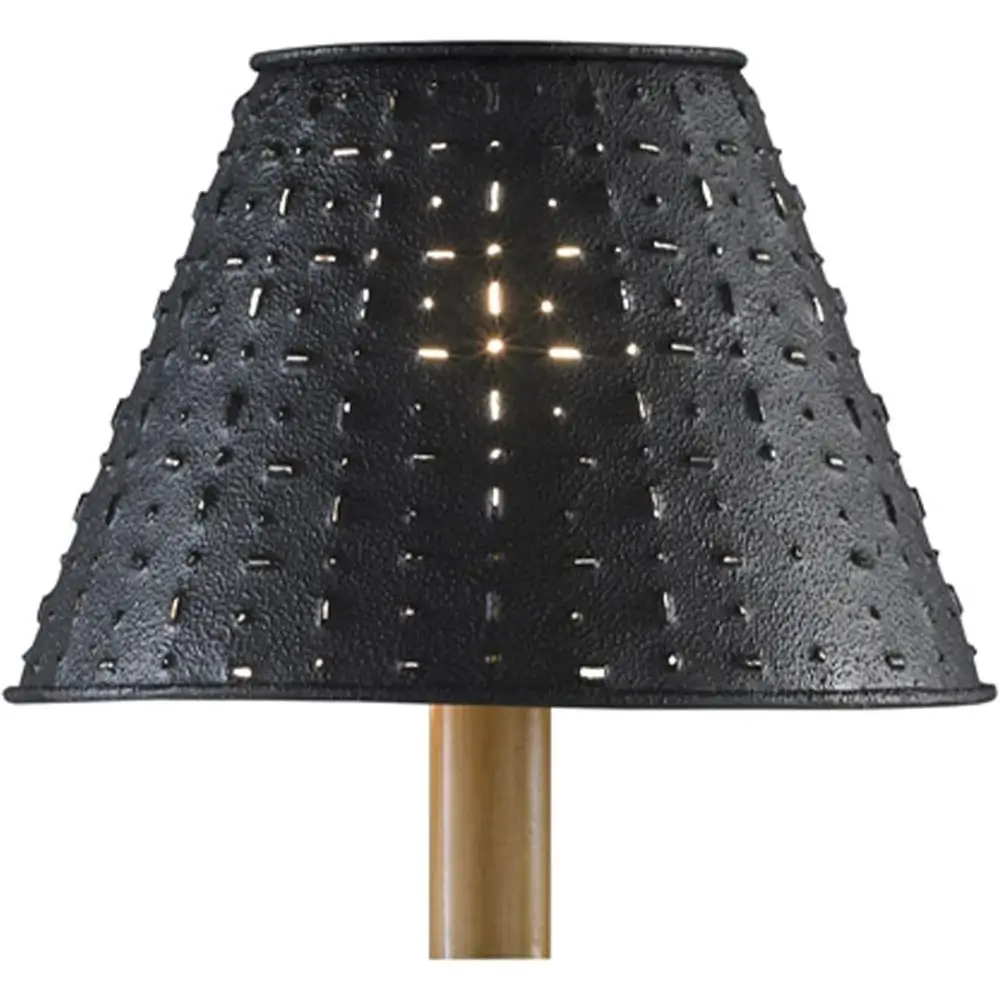
Brass drawer pulls may echo the finish on a ceiling light.
Even similar shapes can tie different pieces together.
Try repeating a color or finish before replacing furniture you love.
That dresser may have a few good bedroom makeovers left in it.
6. Choose a Furniture Set Only When It Fits the Room
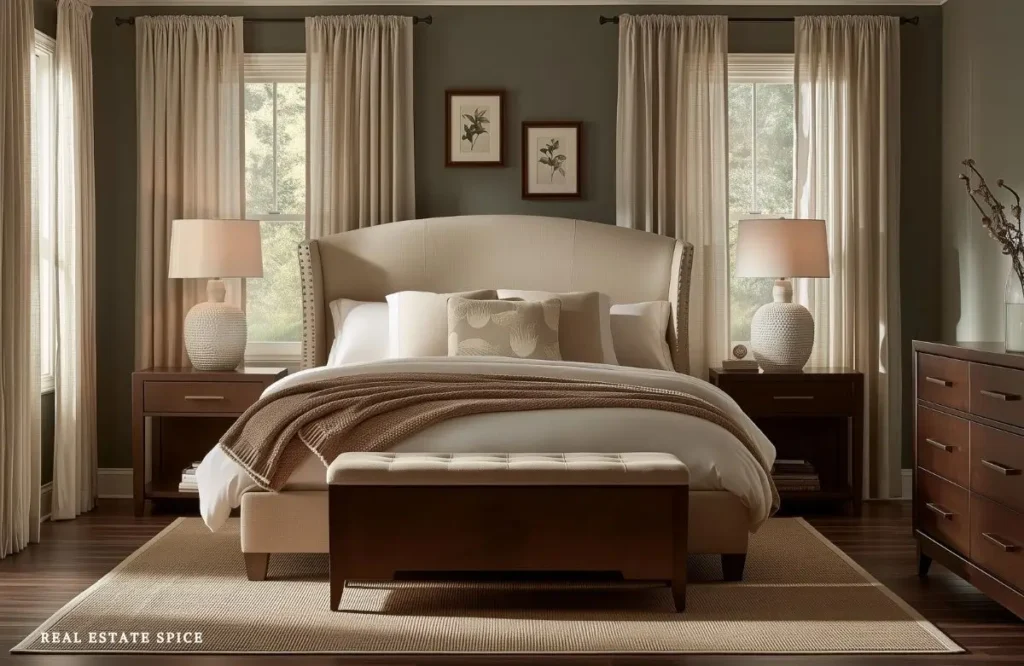
Bedroom furniture sets can make shopping easier when you like every piece and have room for it all.
Measure the bed, nightstands, dresser, and chest before ordering the group.
Master bedroom furniture sets may include a wide dresser that blocks a vent or leaves too little space at the foot of the bed.
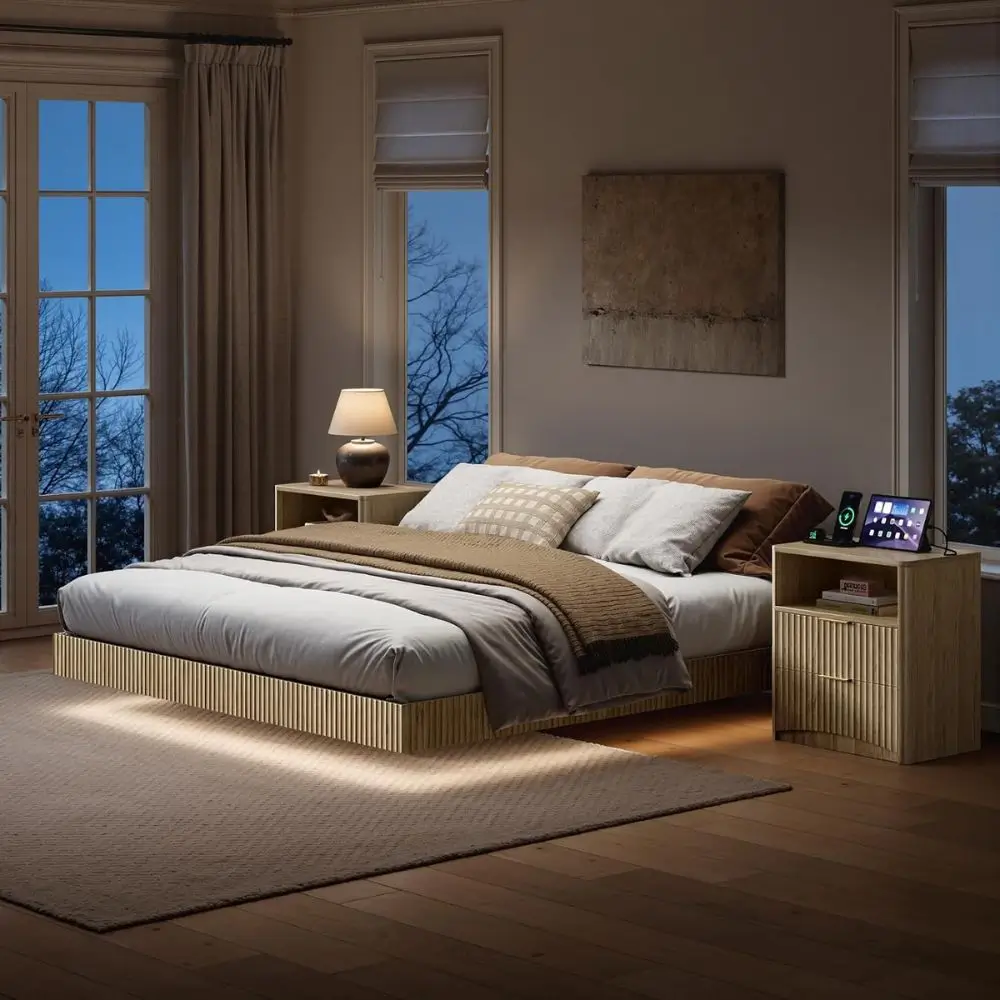
Perhaps the bed and nightstands fit beautifully, while your current dresser already works better.
Keep the useful piece and repeat its finish somewhere else.
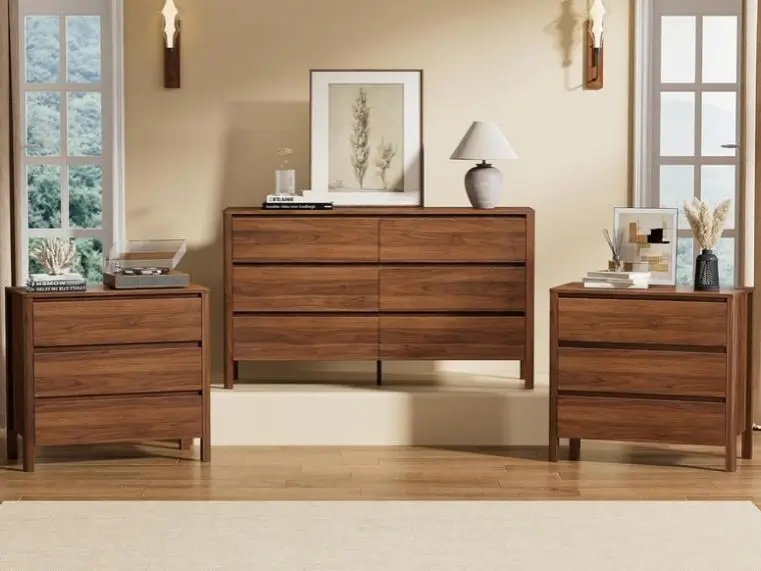
A lamp, picture frame, bench leg, or drawer pull may be enough to connect it with the new furniture.
My Bedroom Furniture Rule of 3 can help you compare the bed, nightstands, and dresser before buying the whole family reunion.
A coordinated room can include furniture collected over time.
Choose Furniture That Makes Daily Life Easier
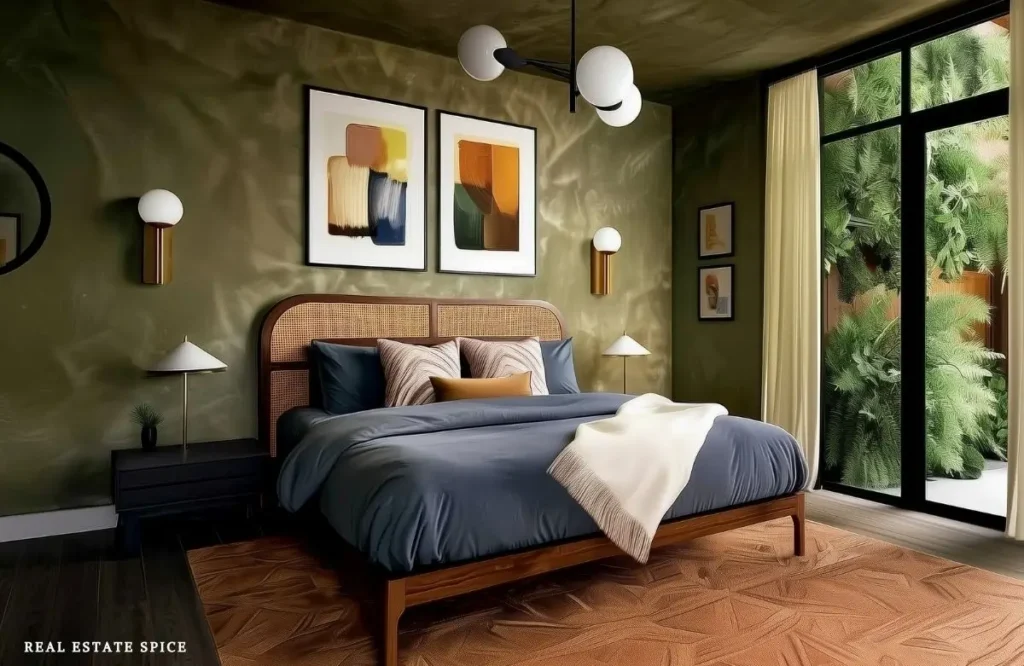
The most beautiful bedroom furniture should also make mornings and evenings more comfortable.
Think about what you keep, where you get dressed, and how you move through the room.
7. Make Room for What You Use Beside the Bed
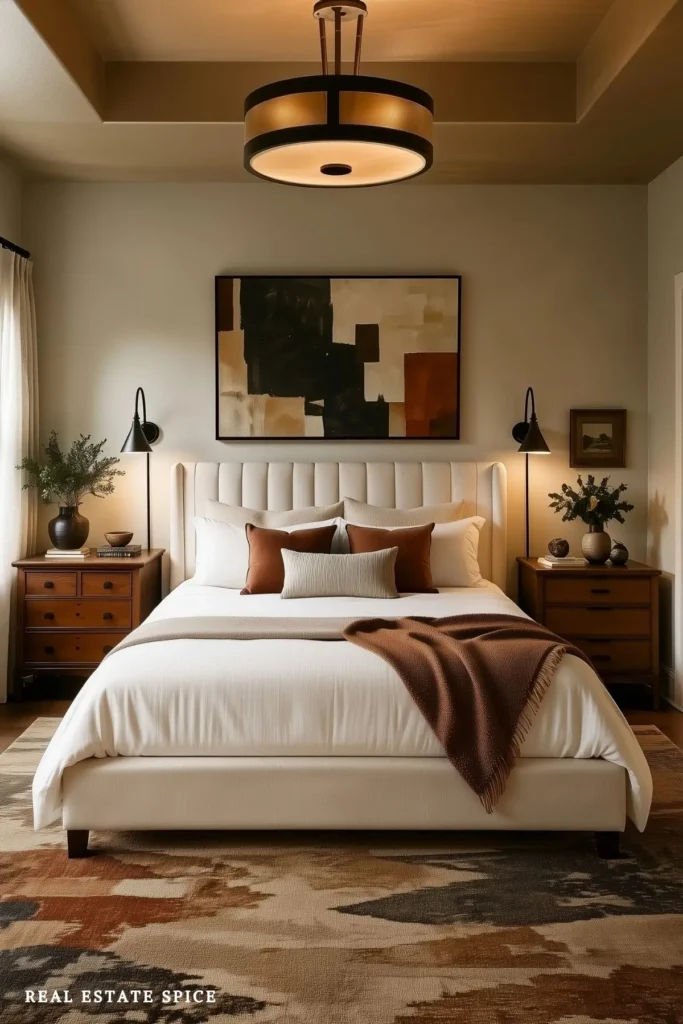
Each side of the bed should have enough room for what you use there.
One person may want a book, lamp, water, and glasses within reach.
The other side might hold a phone charger, medication, and a cup of tea.
Nightstands with drawers keep smaller items nearby while keeping the top clear.
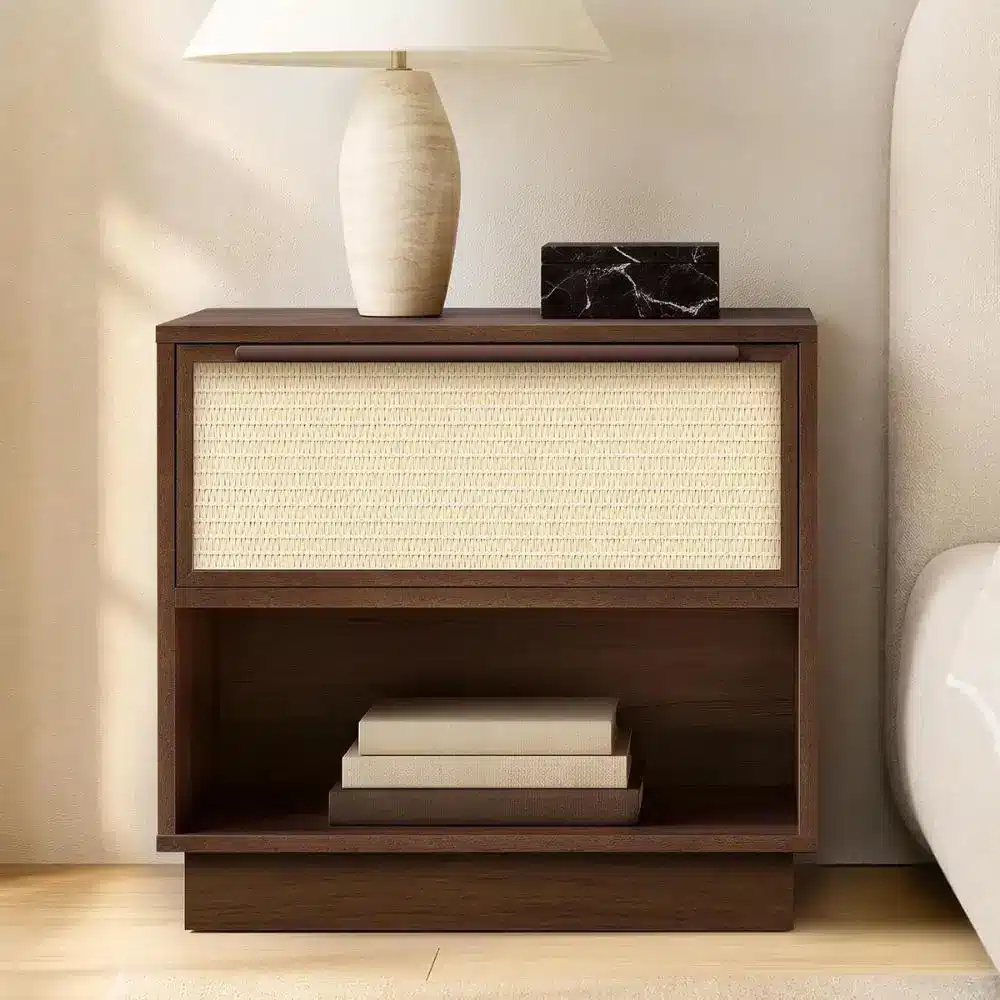
An open shelf works well for books or a basket.
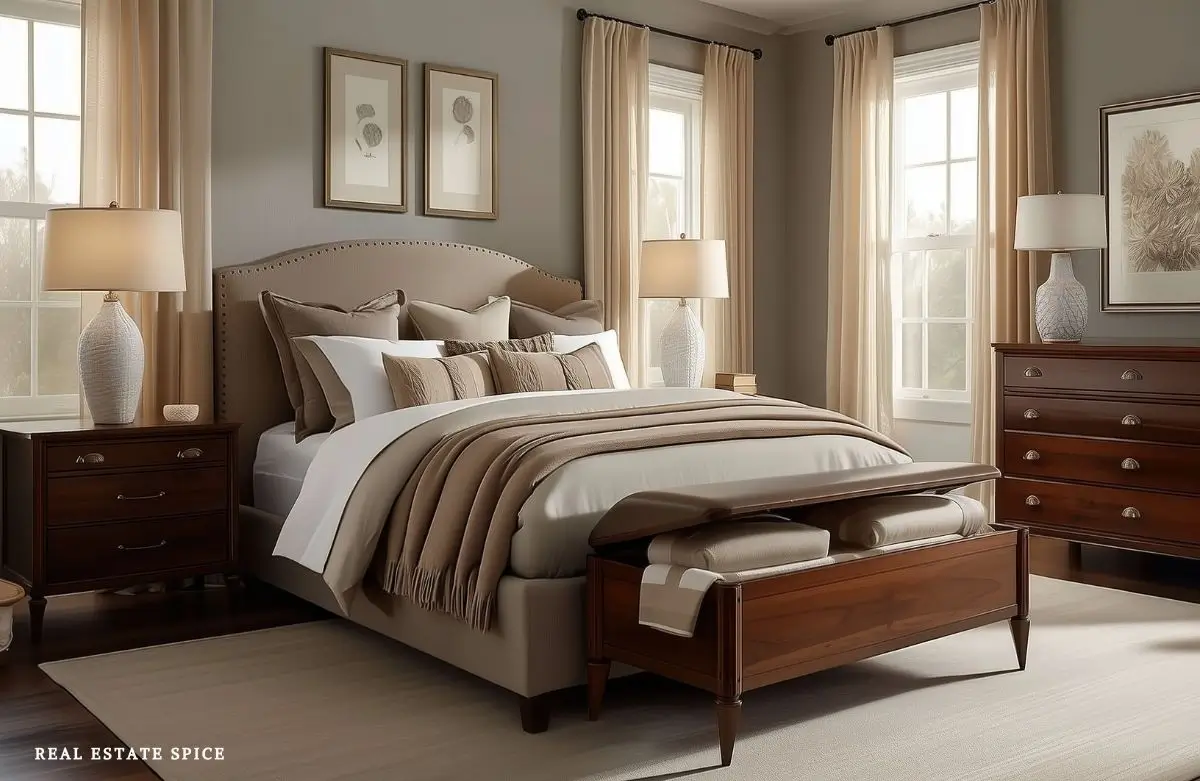
A solid wood nightstand can add warmth beside an upholstered bed, while a painted table can match the wall or bedding.
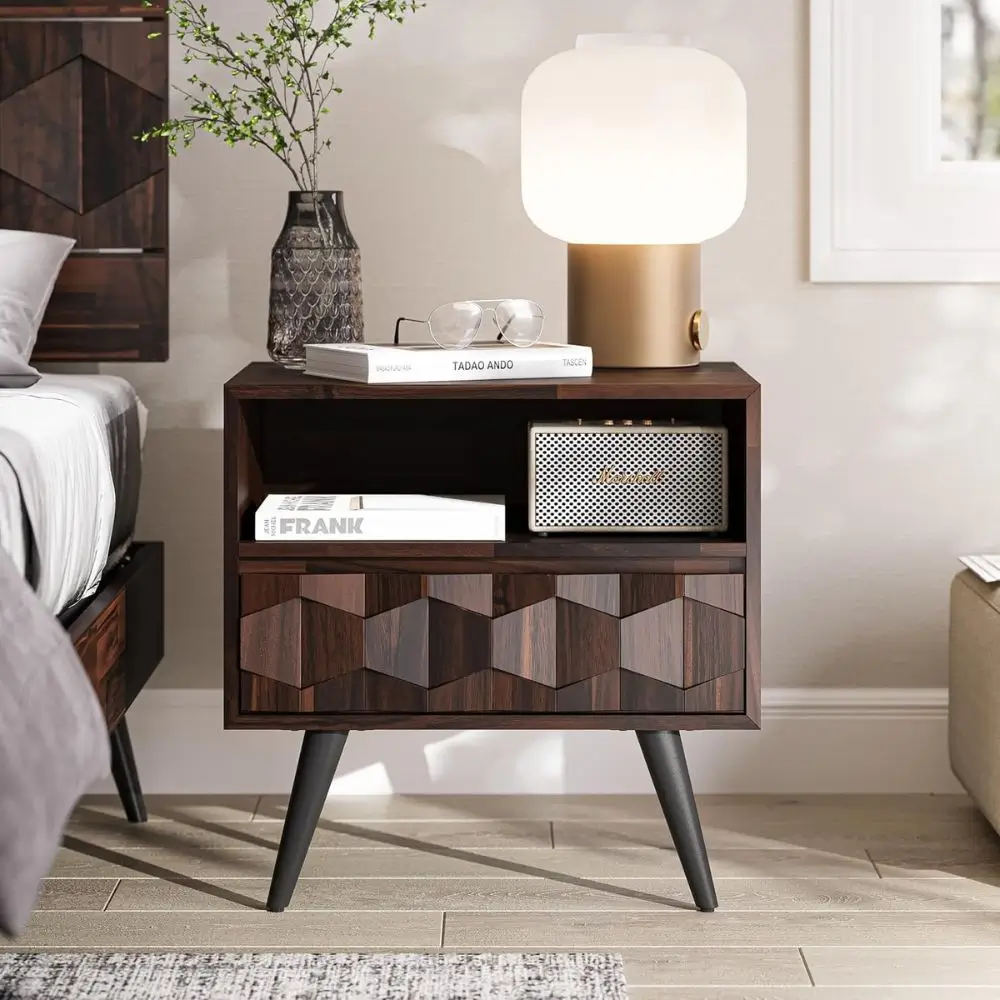
Shared bedrooms don’t need to have identical storage on both sides.
Similar heights, lamps, or hardware can make different nightstands look like they belong together.
You May Also Like:
→ The Bedroom Furniture Rule of 3
→ The Bedroom Storage Rule of 3 to Turn Clutter Into Calm
→ 50 Bedroom Decorating Ideas This Year
8. Let a Storage Bed Solve More Than One Problem
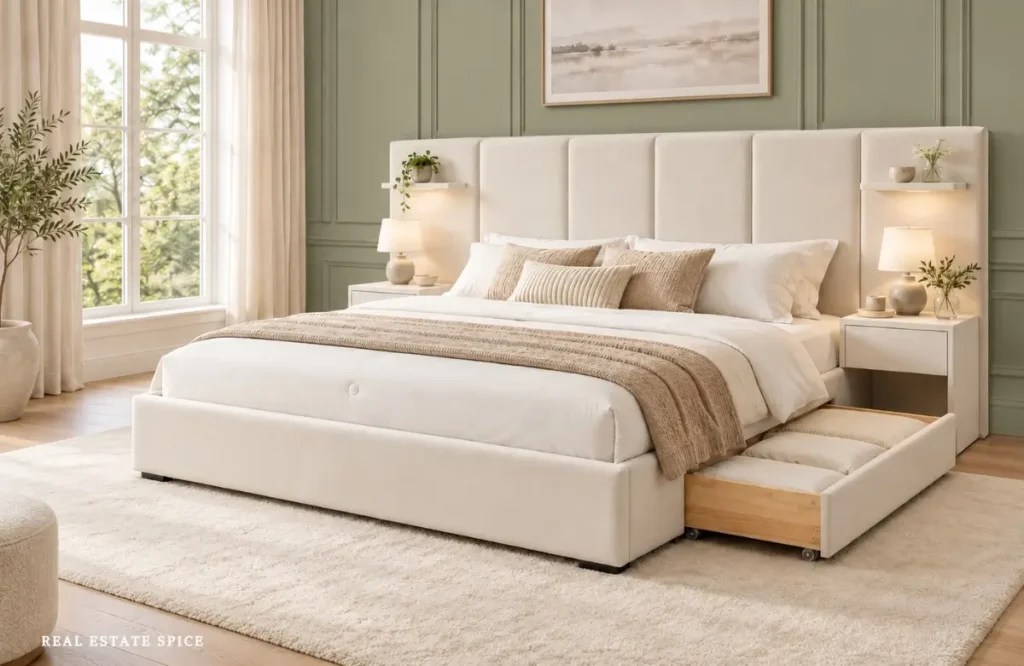
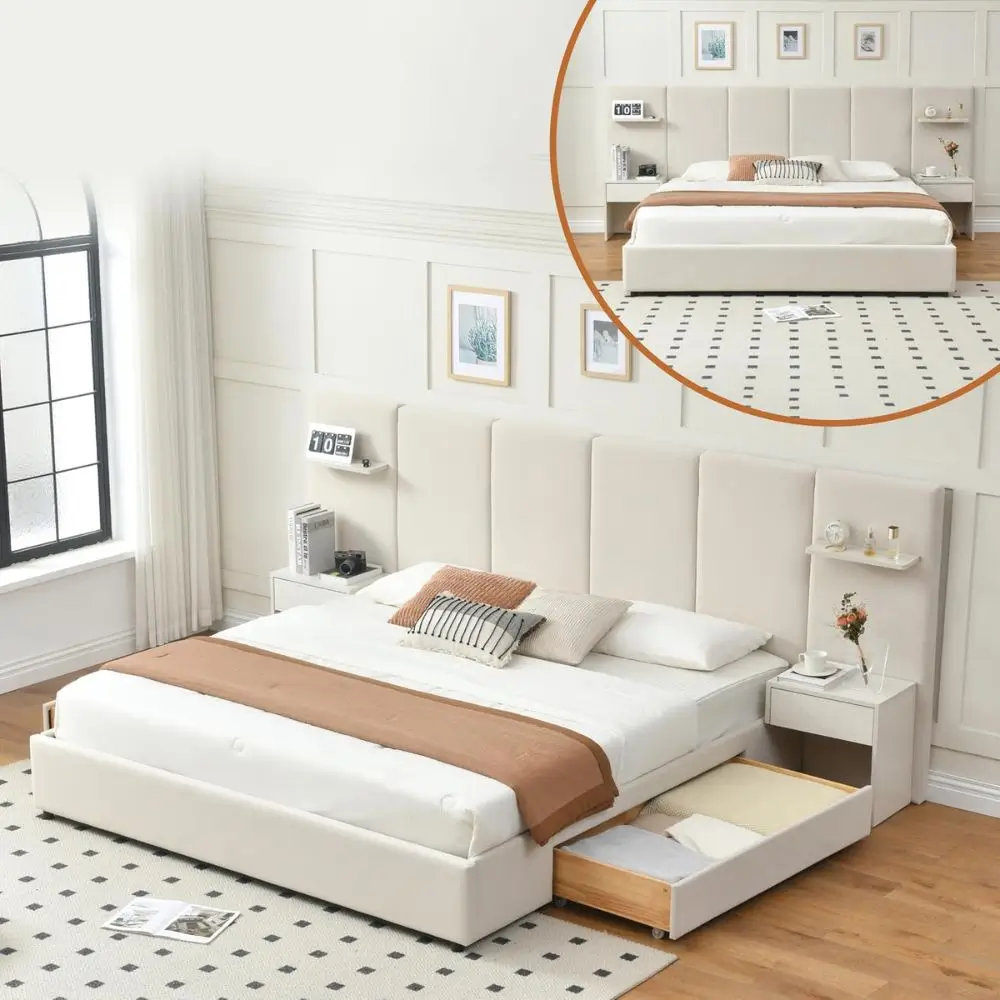
A storage bed can hold extra blankets, seasonal clothing, or bulky pillows without adding another chest to the room.
Check how the storage opens before choosing the bed.
Side drawers require clear floor space beside the frame.
Drawers at the foot need space beyond the mattress, especially when a dresser sits across from them.
Lift-up storage can work in a smaller room, but the mattress and mechanism should feel comfortable for you to raise.
Measure the inside of each compartment too.
A king-size comforter has a remarkable talent for looking smaller until you try to fit it inside a drawer.
Choose storage for the items you truly plan to keep there.
9. Make a Small Master Bedroom Feel Generous
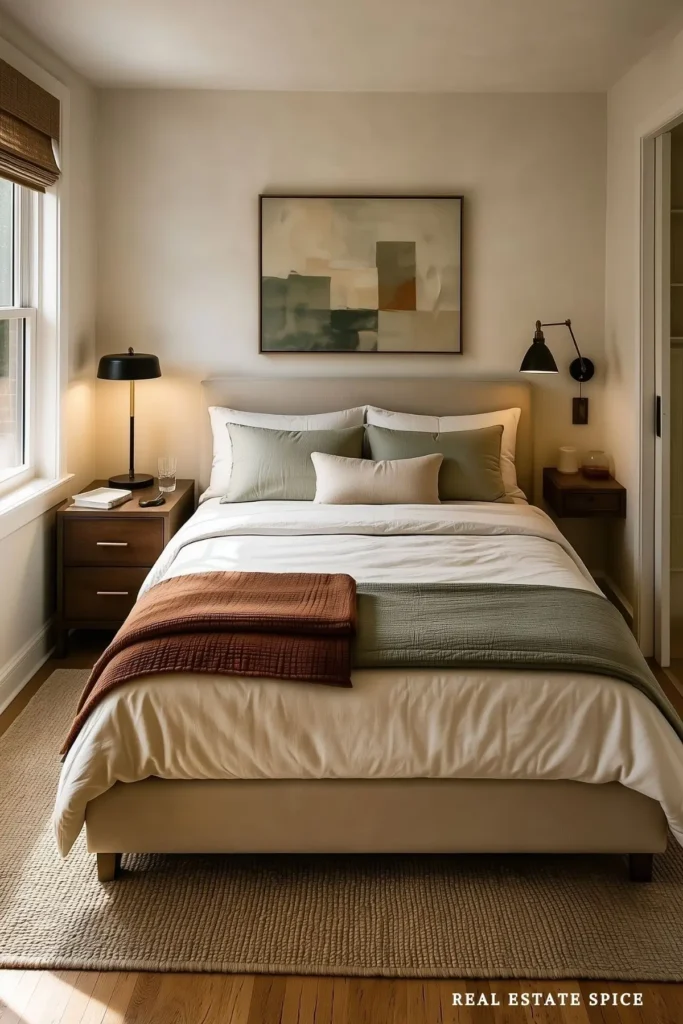
A small master bedroom design works best when every large piece has a specific purpose.
Keep comfortable walking space around the bed before adding a chair or bench.
Wall sconces can free space on the nightstands, while a tall dresser uses vertical space instead of stretching across the wall.


A bed with drawers may replace another storage piece.
Full-length curtains hung near the ceiling can bring color and softness upward without using floor space.

If you’re remodeling, a pocket door can save the floor space a swinging door would use.
You might be wondering, “But, Jaymie, will fewer pieces make my bedroom look unfinished?”
Not necessarily.
Larger lamps, artwork, and bedding can add plenty of beauty without crowding the floor.
Open space around well-sized furniture will usually look more polished than several tiny pieces squeezed together.
10. Give a Large Master Bedroom More Than One Purpose
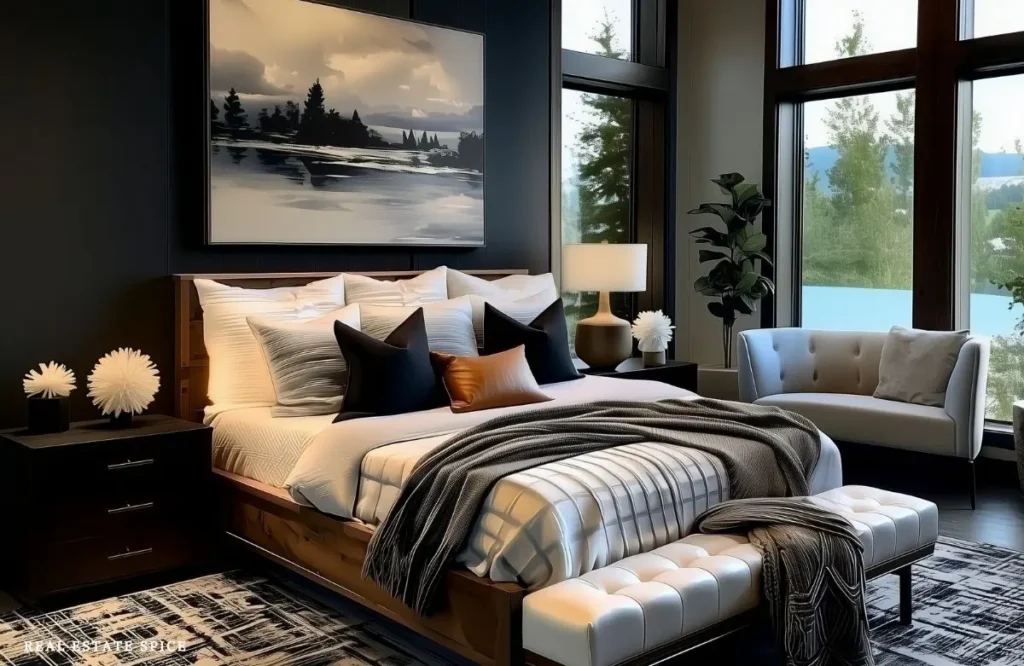
Large master bedroom ideas often include a separate place to read, dress, or enjoy morning coffee.
Start with the bed area, then see what open space remains.
A chair and small table may fit near a window with a view.
Two chairs can create a sitting area when the room is wide enough for comfortable walking paths around them.
Place a dresser and mirror near the closet if that location makes getting dressed easier.
BEFORE YOU HANG THAT MIRROR
What Will You See From Your Pillow?
Before hanging a bedroom mirror, have someone hold it at the planned height while you sit in bed. You may love seeing a leafy window twice, but probably not the laundry pile beside your closet. Move the mirror until you like the view.
A large bedroom may also fit a desk, although work papers and glowing screens can make the room feel less restful at night.
Use a rug or lighting to define the second area.
This approach gives the open space a purpose without lining every wall with furniture.
11. Add a Chair You’ll Really Use
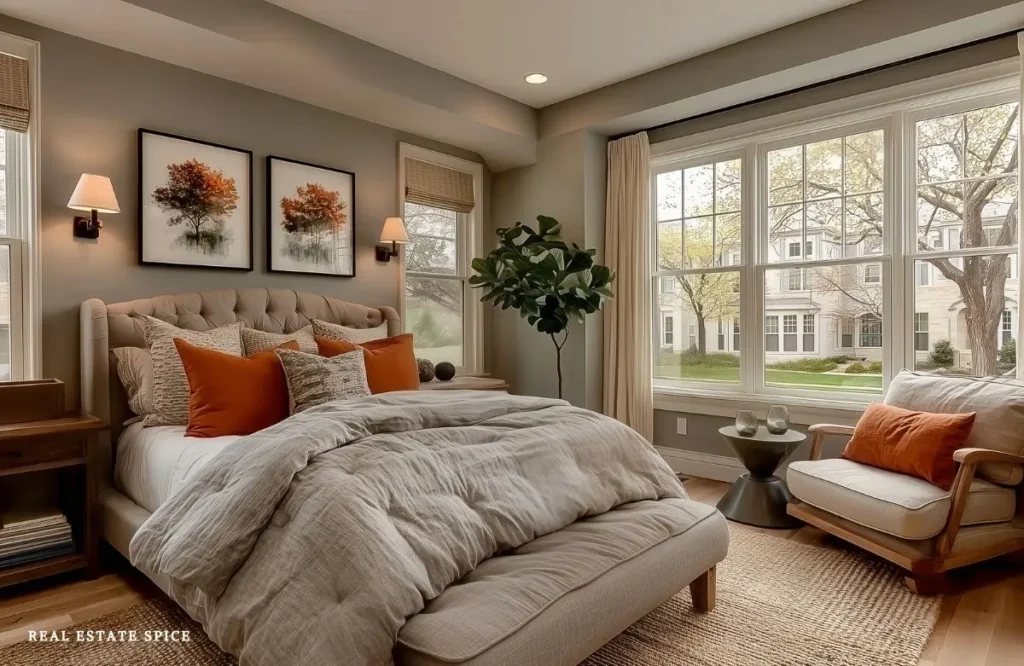
Bedroom chairs can make a master bedroom feel more comfortable, cozy, and overall complete.
Place the chair near a window, bookshelf, fireplace, or view you enjoy.
Add a small table and light so the spot works well after sunset.
A swivel chair can turn toward the bed, window, or television.
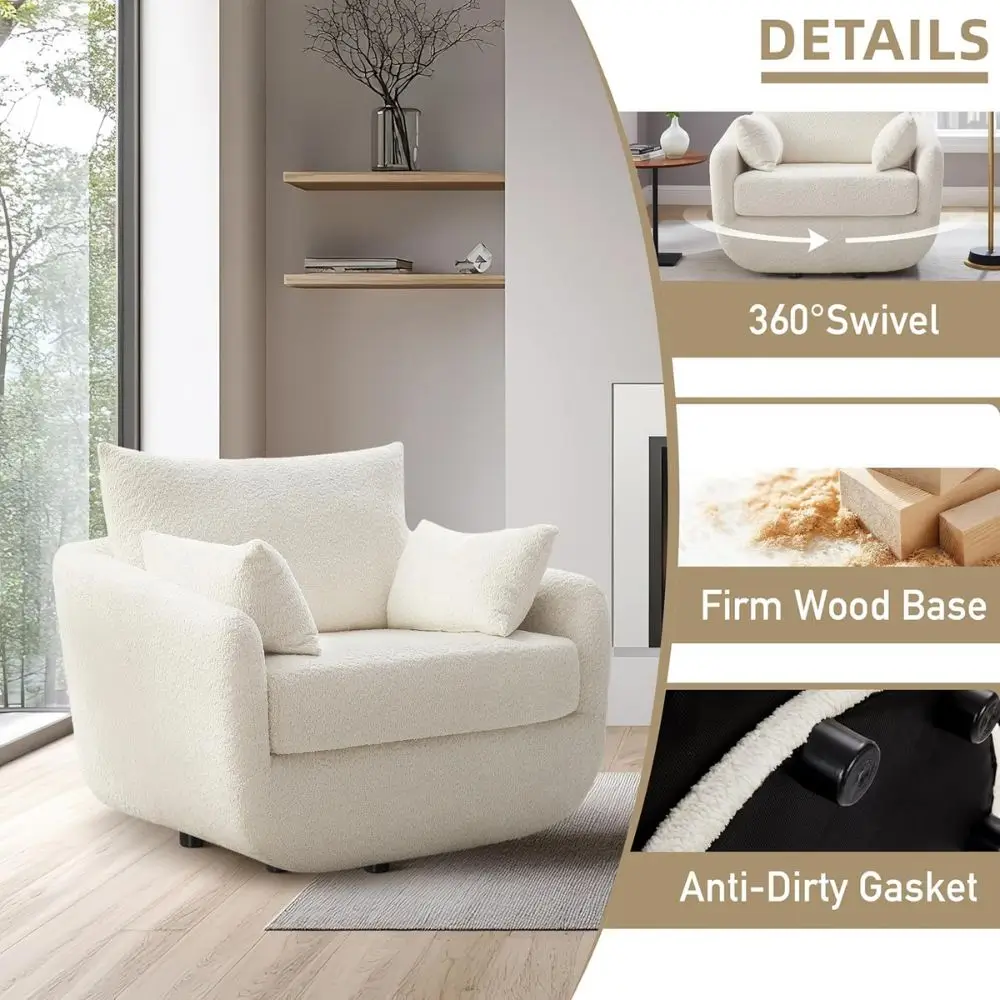
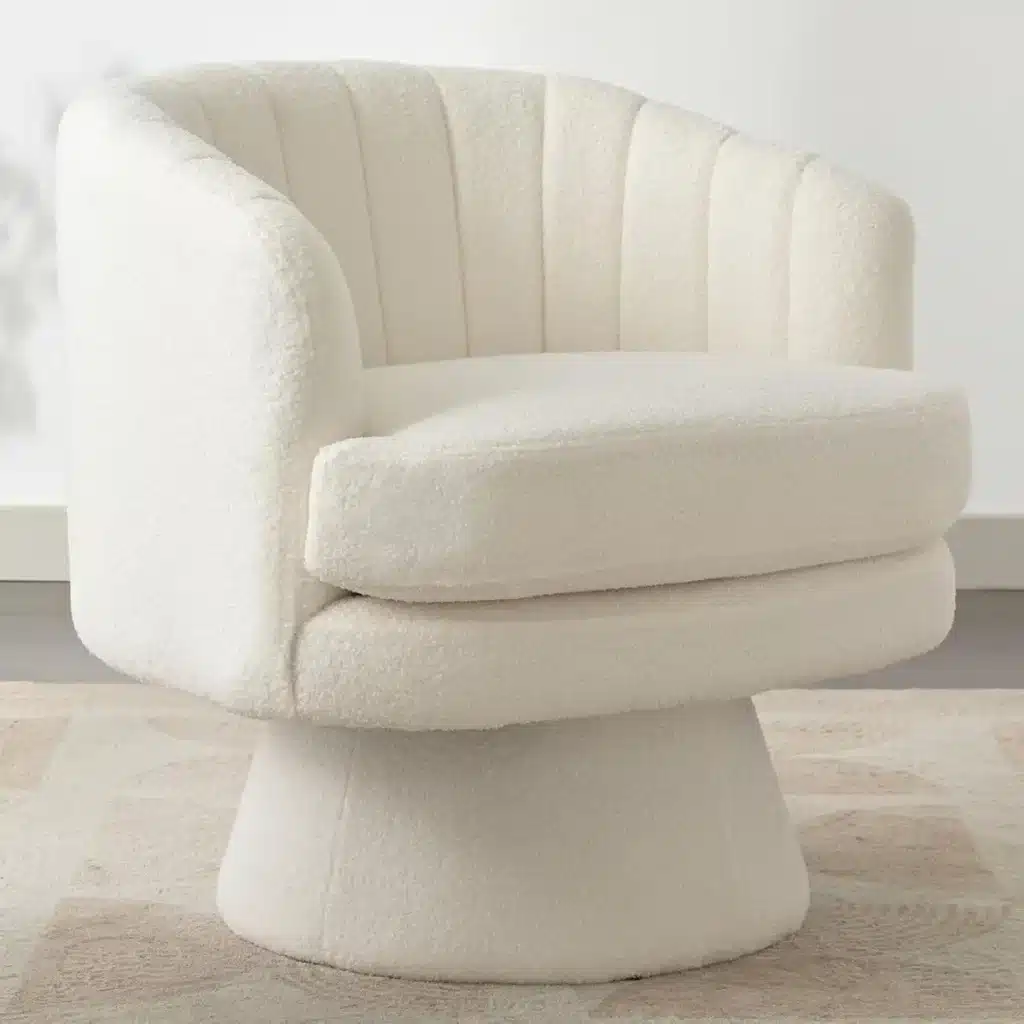
Slim arms may fit a smaller corner, while a wide cushioned chair offers more room to curl up.
Leave enough space behind and beside it for the chair to move.
A beautiful seat with no lamp or table often becomes the bedroom’s most expensive clothing hanger.
Give the chair what it needs to become a place you’ll really enjoy.
12. Decide Whether a Bench Will Help the Room
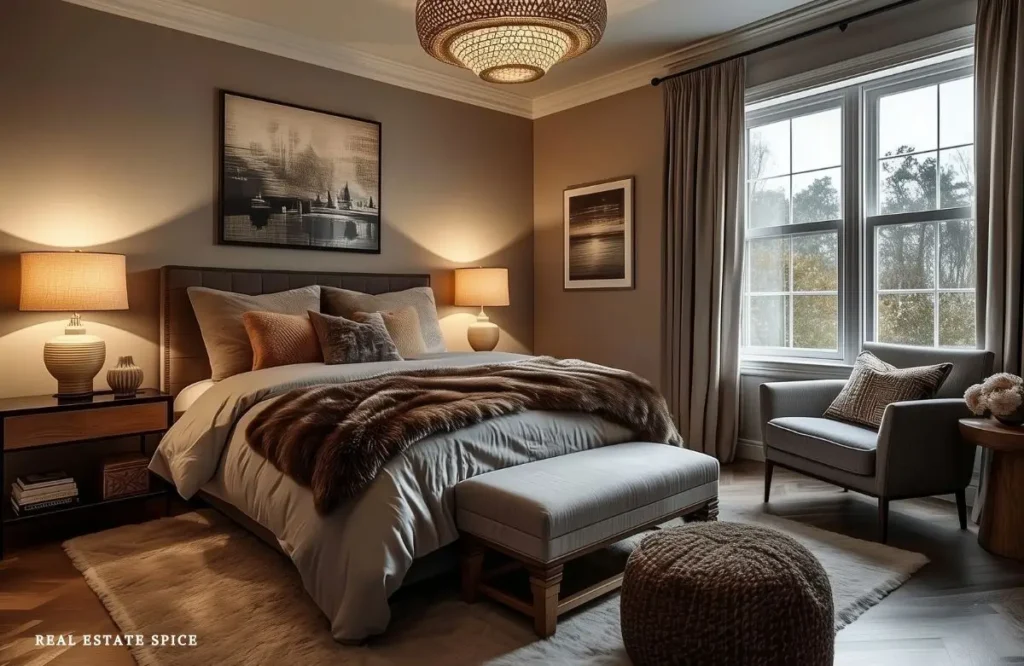
A bench can finish the foot of the bed and provide a place to put on shoes.
An upholstered style brings softness beside a wood or metal bed frame.
A bedroom storage bench can also hold extra bedding, although the lid needs room to open.
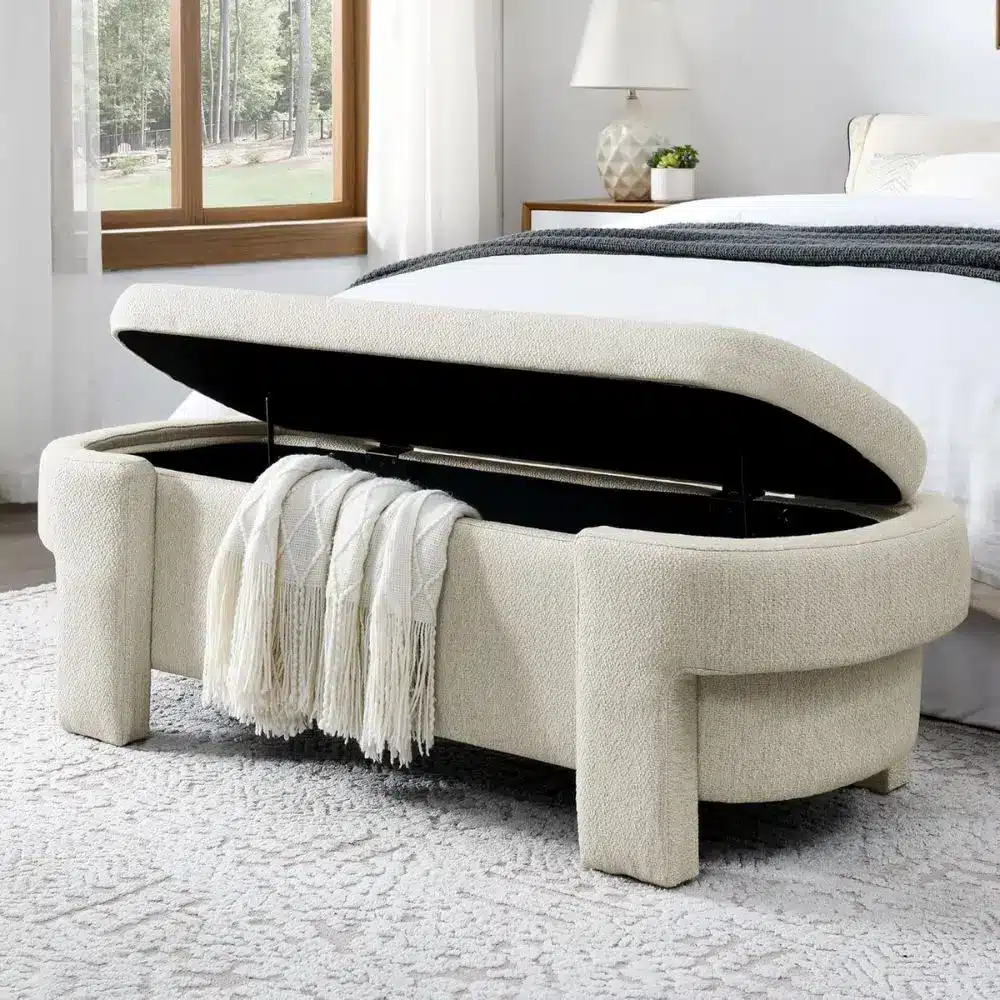
Measure the walkway between the bench and the dresser, wall, or bathroom door.
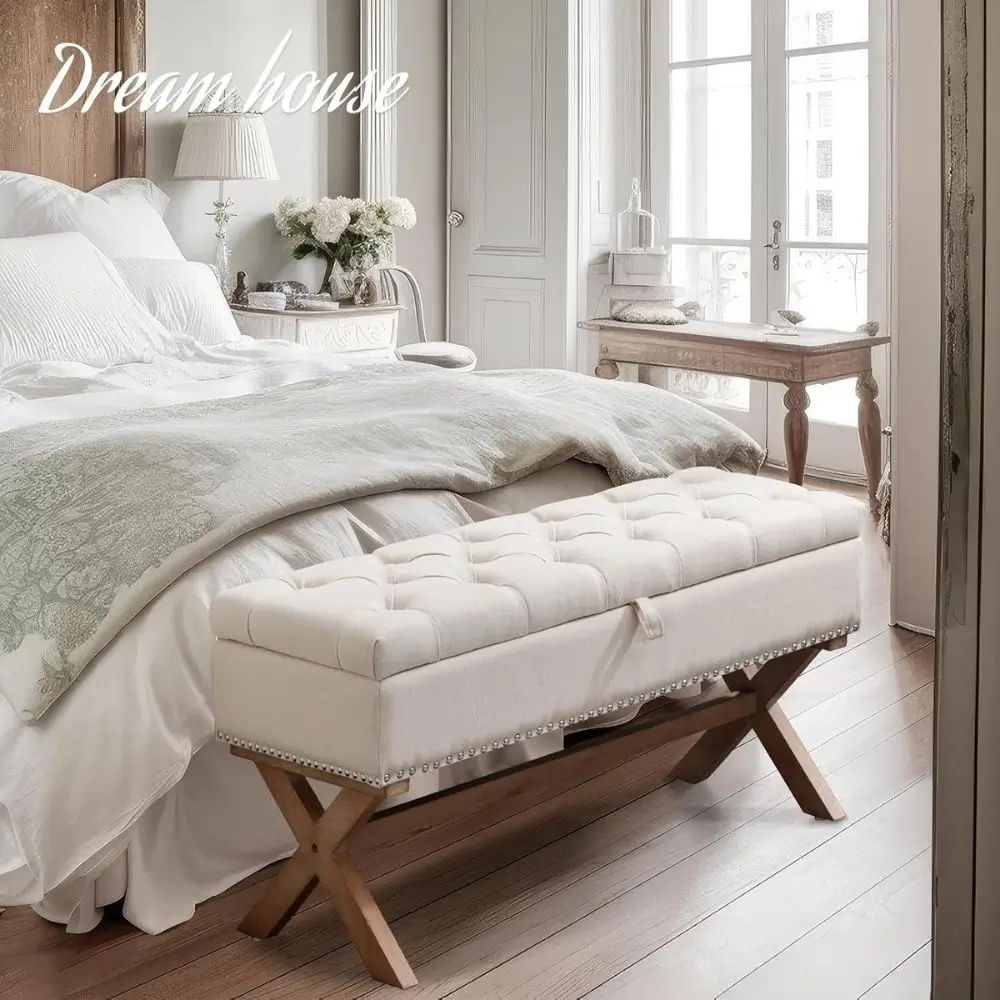
Choose a width slightly narrower than the bed so the bench doesn’t overpower it.
Two ottomans can create a lighter look and may be easier to move.
Skip the bench when it blocks drawers or crowds the path.
And sometimes the most luxurious feature at the foot of the bed is open floor space.
Make the Bed Beautiful and Comfortable
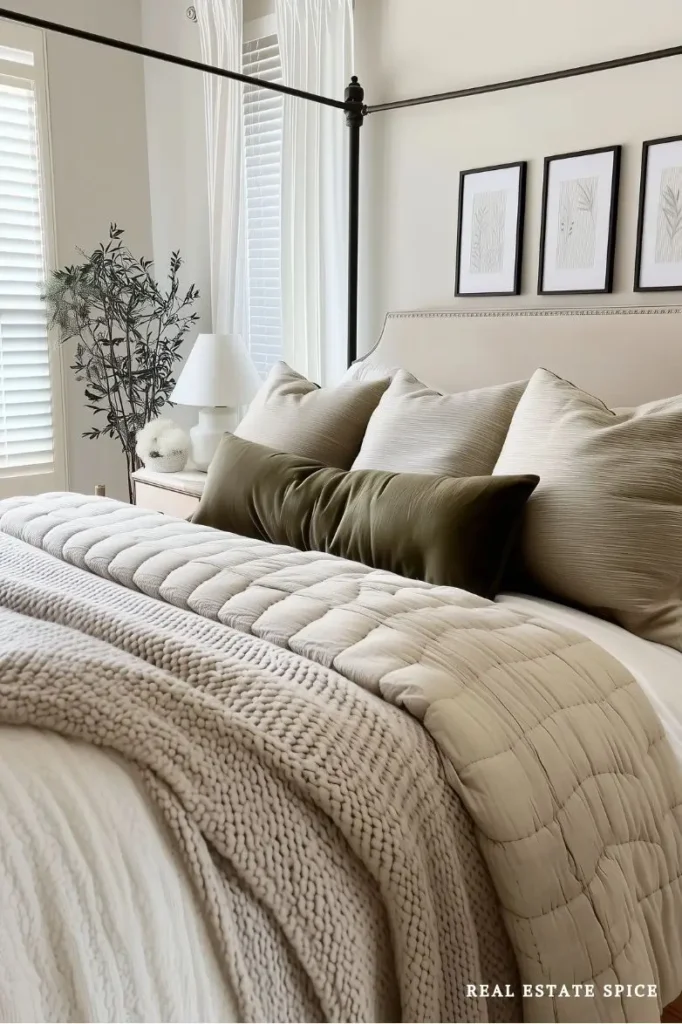
Your bed should look as wonderful as it feels.
Build the layers around your comfort first, then use color and texture to make them beautiful.
13. Layer Luxury Bedding Without Hiding the Bed
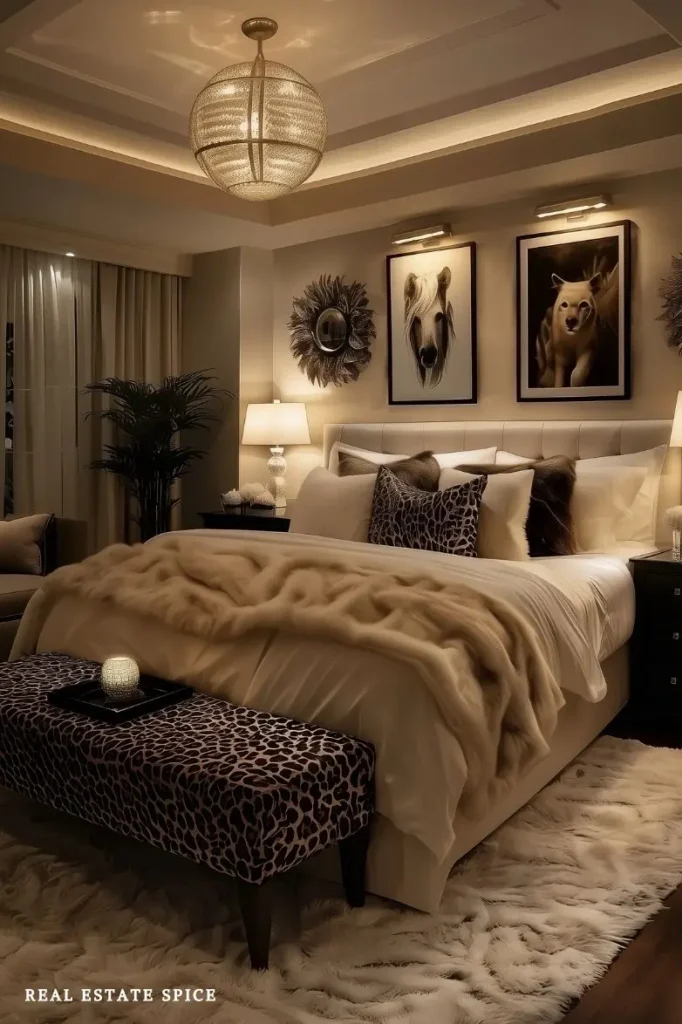
Luxury bedding can look full and comfortable with a few useful layers.
Begin with sleeping pillows, sheets, and a duvet or comforter that suits the season.
A linen duvet cover adds visible texture while protecting the duvet insert inside.
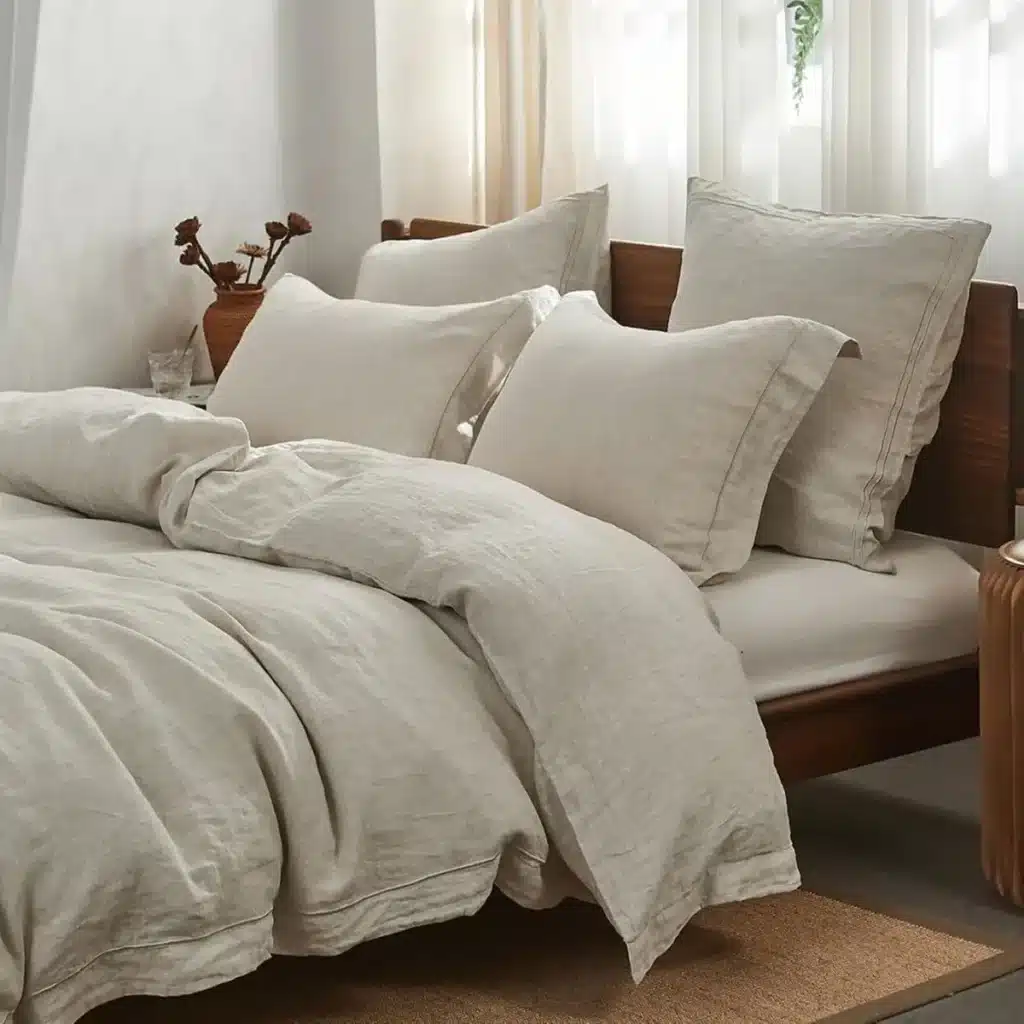
Luxury duvet covers may bring in velvet, sateen, embroidery, or fine linen.
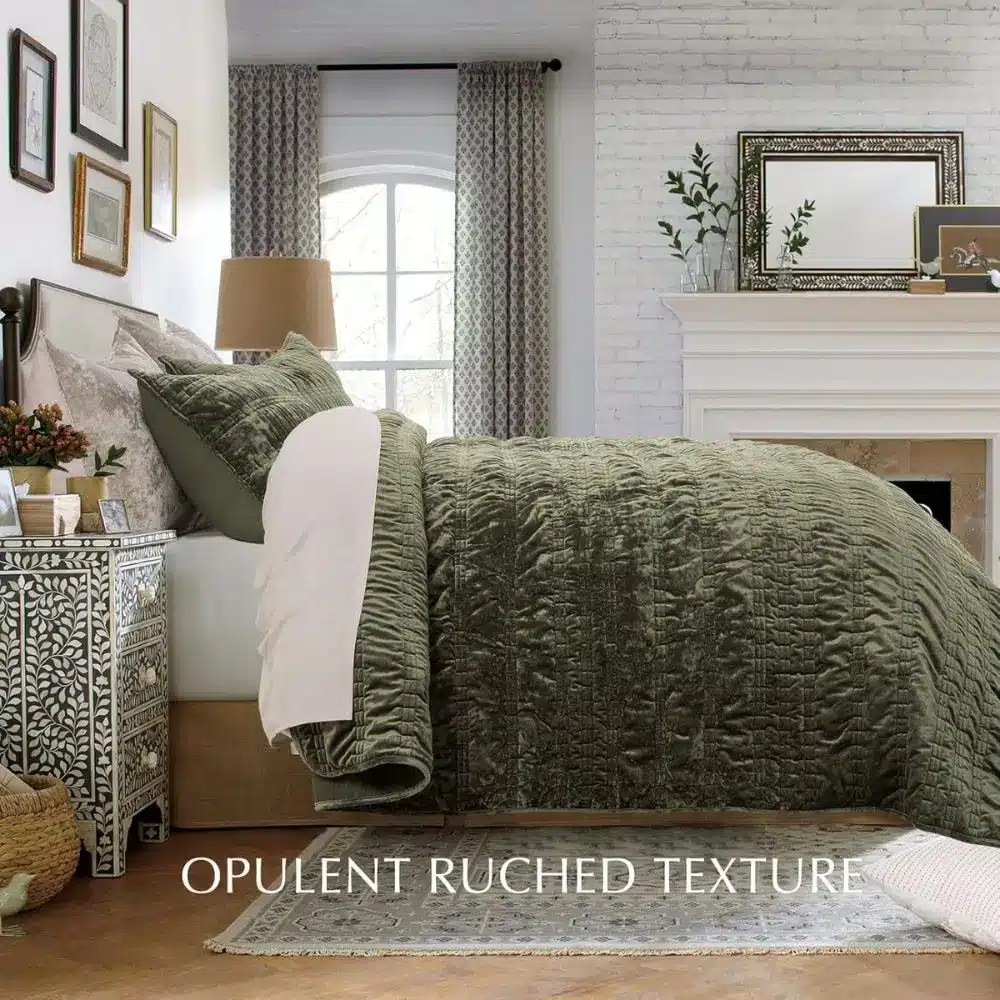
Fold the main cover back far enough to reveal the sheets and create a soft break across the bed.
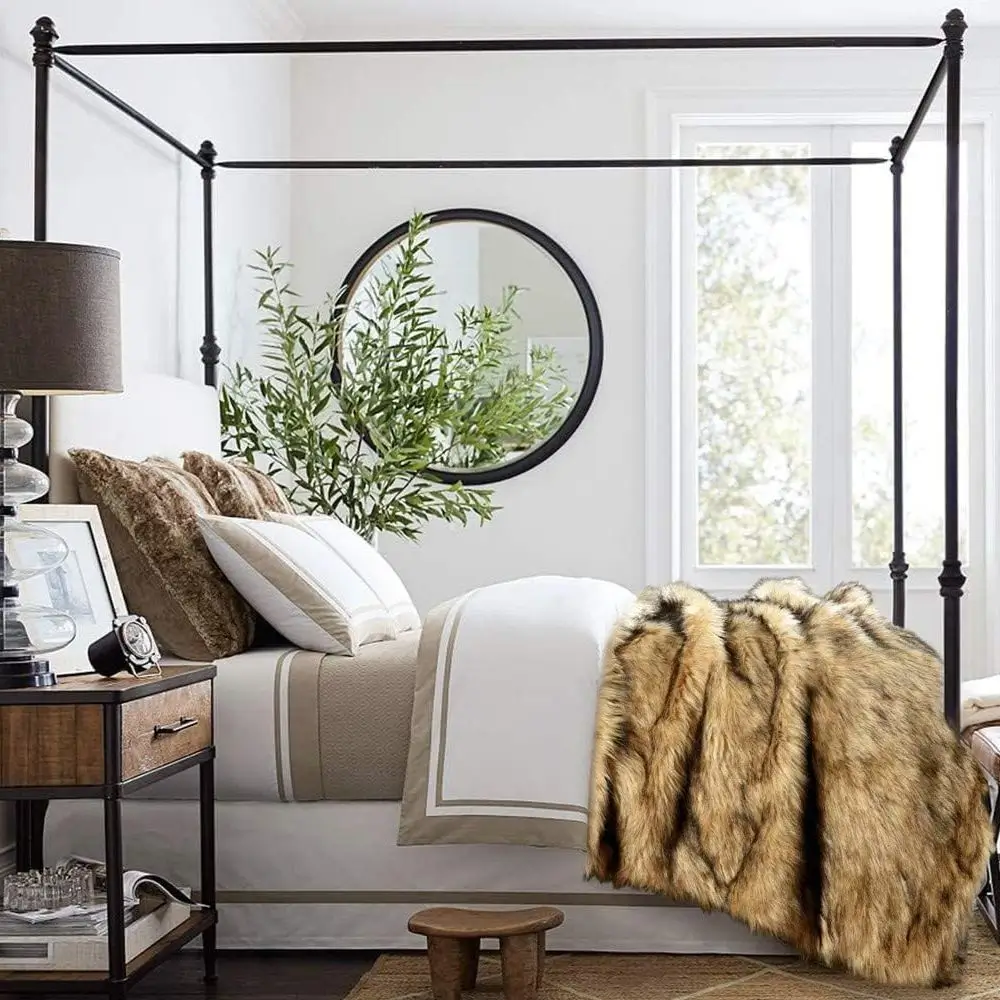
Add one folded quilt or throw near the foot for color and warmth.
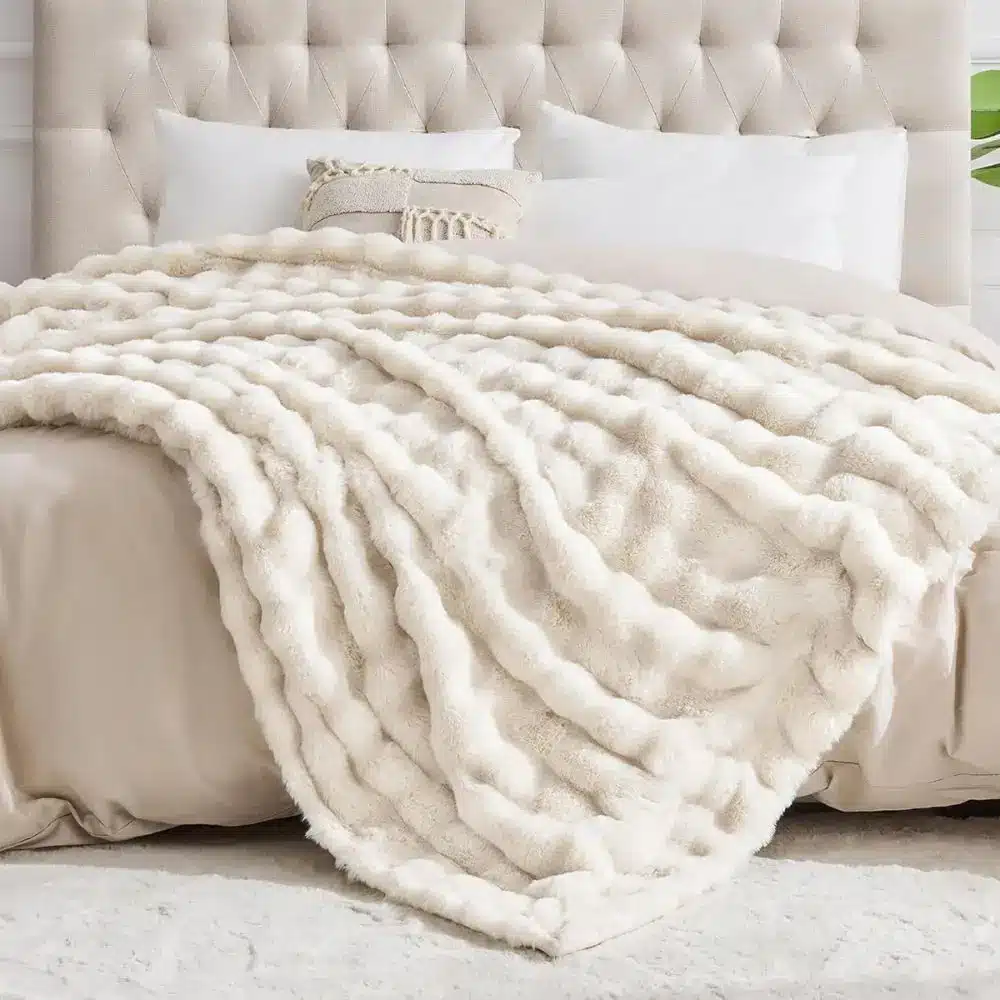
A long lumbar pillow can complete the front without creating a mountain that must move every night.
My Bedding Rule of 3 can help you arrange the layers so they look full but remain easy to use.


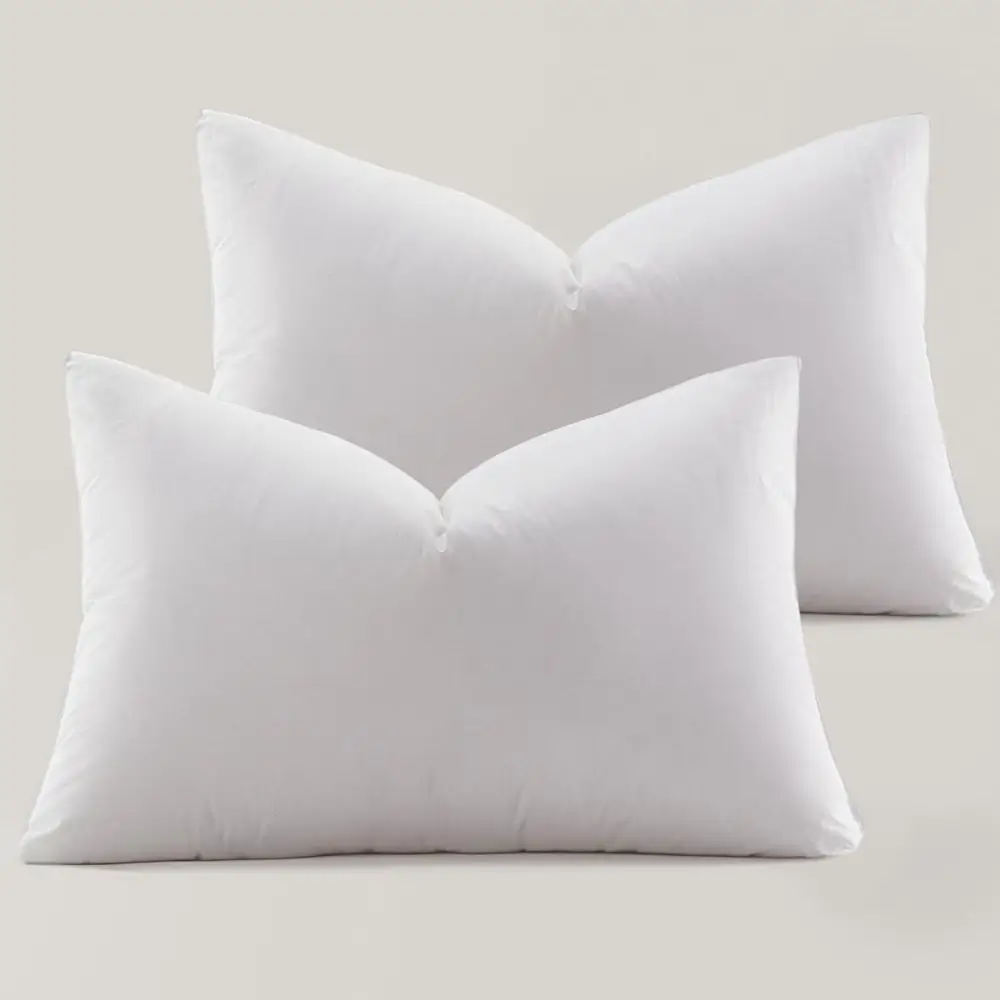
Globan Hotel Collection Down Feather Pillow (A Splurge But Worth It)

14. Choose Sheets and Bedding for the Way You Sleep
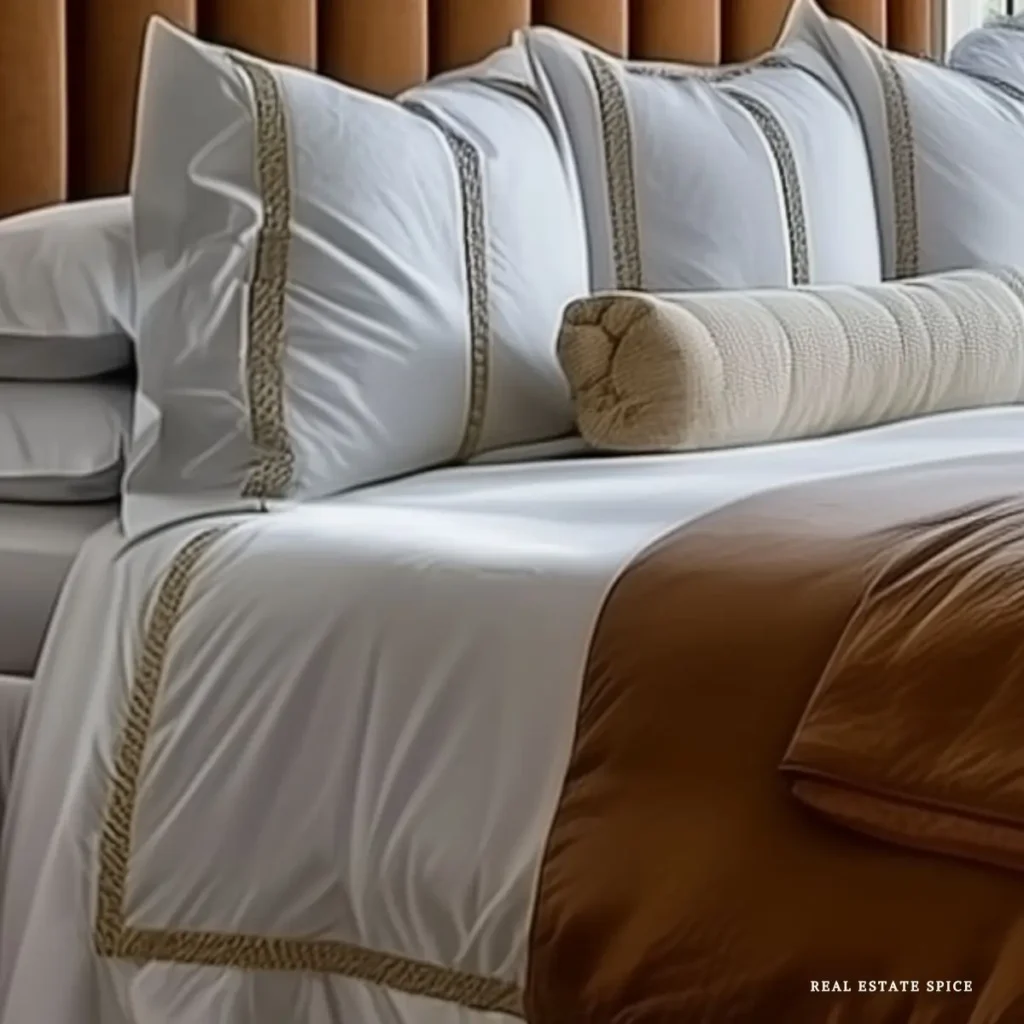
Beautiful bedding should feel good against your skin and keep you from waking up too hot or too cold.
Luxury sheets may be crisp, silky, cool, warm, or especially soft.

Read the fiber and care information instead of choosing by thread count alone.
Hot sleepers may enjoy breathable sheets, a lighter duvet, or a cooling mattress topper.

Someone who feels cold at night might prefer flannel sheets, a warmer duvet insert, and an extra blanket within reach.
Comforter sets can make colors easy to coordinate, but check which pieces are included.
Choose washable fabrics when pets share the bed, or if you enjoy coffee and maybe breakfast in bed on slow mornings.
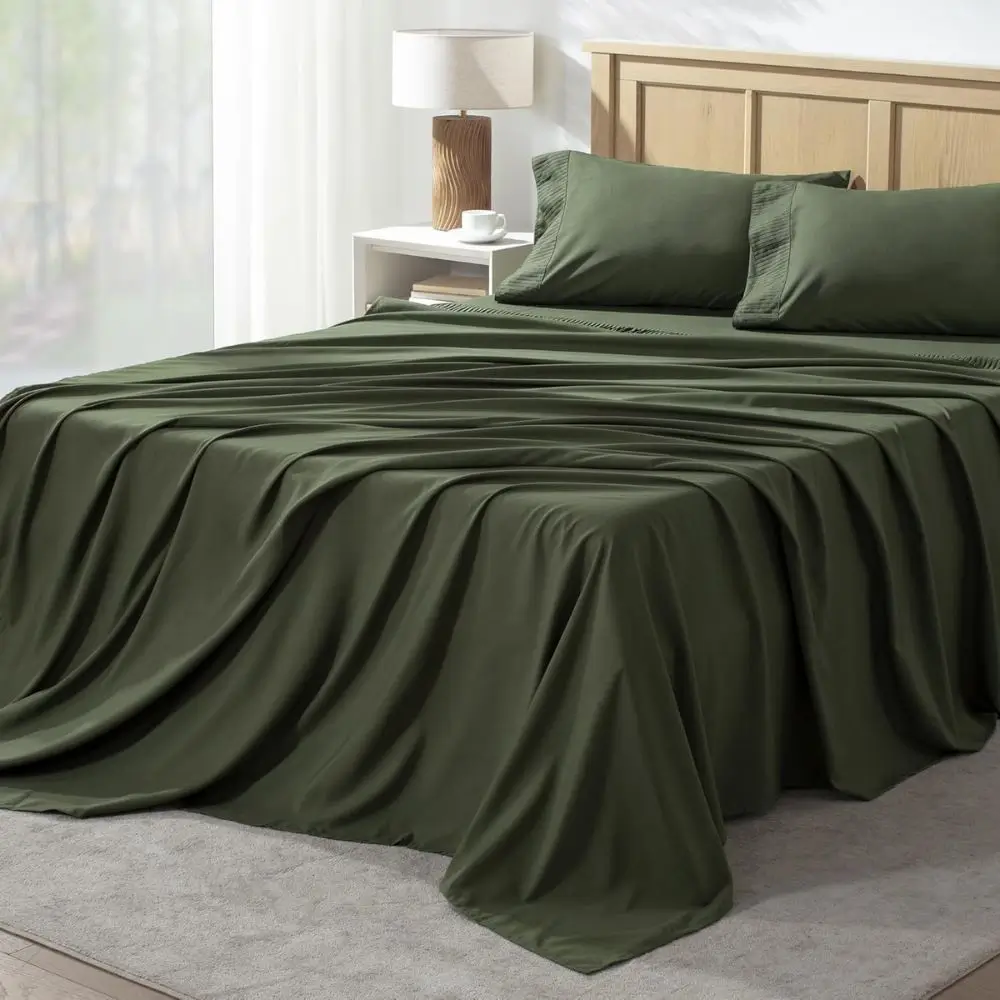
The most beautiful bed is the one you’re happy to climb into every night.
15. Place a Bedroom Area Rug Where Your Feet Can Enjoy It

A bedroom area rug can connect the bed, nightstands, and nearby bench.
Choose a size that reaches beyond both sides of the bed.
Your feet should touch the rug when you stand up in the morning.
If only two narrow corners peek out, the rug will probably look too small for the bed.
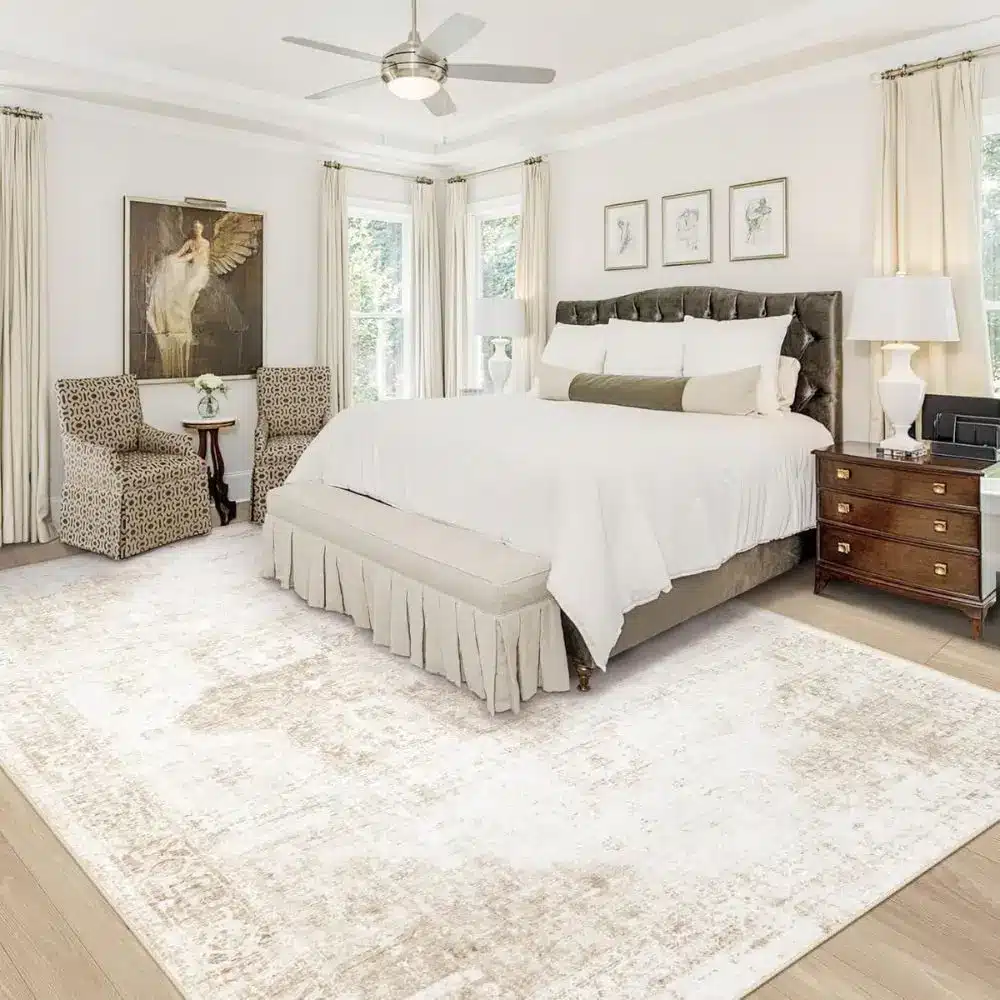
Use painter’s tape to mark the full size on the floor before ordering.
Check every door swing and the space beneath nearby furniture.
Washable area rugs may work well when pets visit, children wander in, or coffee and midnight snacks sometimes make it to the bedroom.
My area rug measurement guide can help you find the right size for your bed and room.
Design the Windows, Lighting, and Walls Together
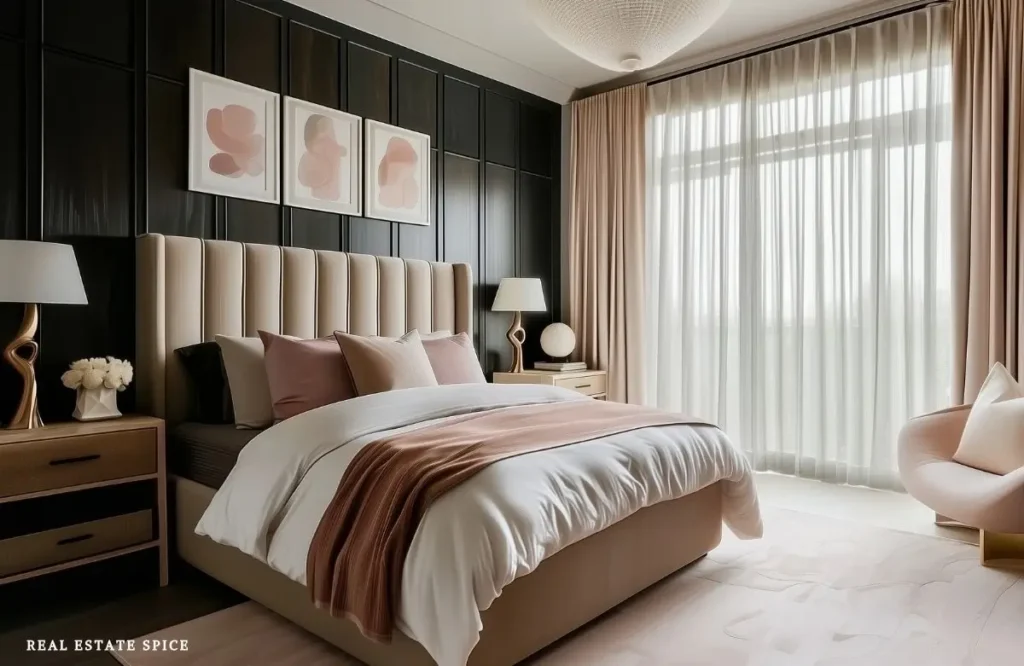
Walls, windows, and lighting have a big effect on how the whole bedroom looks.
When these larger areas work together, the room may already look finished before you add one more thing.
16. Treat the Window as Part of the Whole Wall
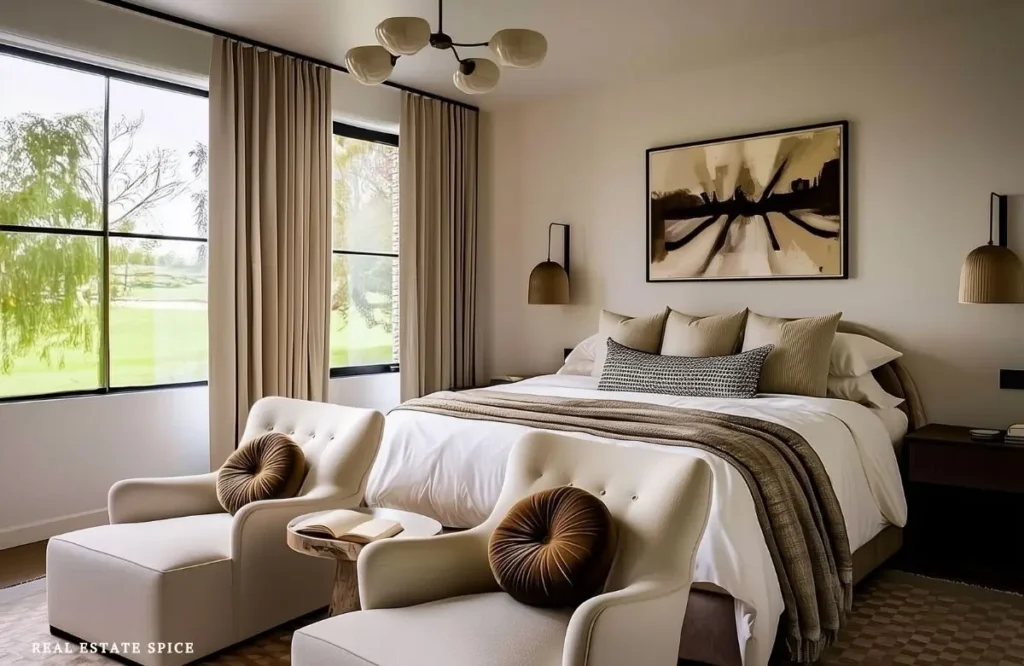
Custom window treatments can turn a plain window into one of the best parts of your bedroom.
Start by looking at the full wall, not just the glass.
Curtains hung near the ceiling can make the window appear taller and bring fabric across a larger area.
Choose panels with enough fabric to fall in soft folds when closed.
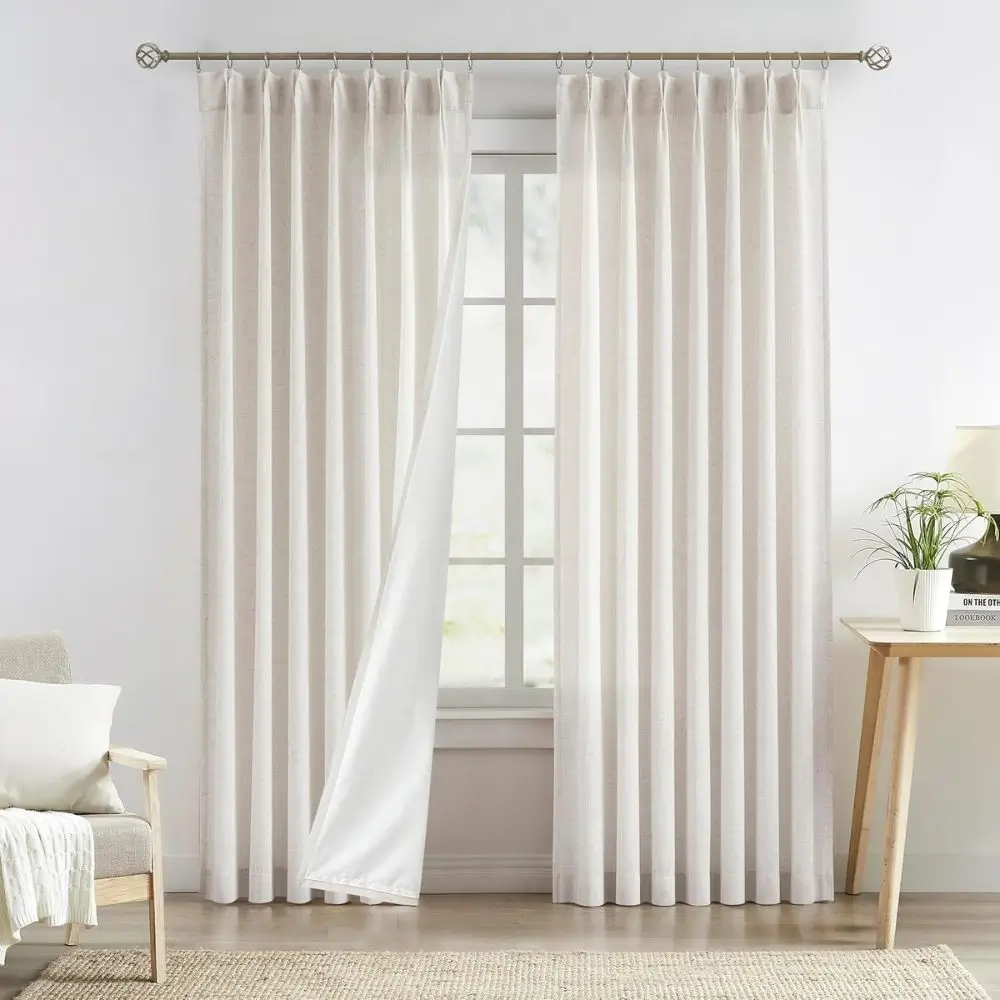
Custom curtains may help when standard lengths stop above the floor or fail to cover an unusually wide window.
Curtains close to the wall color can help the window blend into the room.
For more contrast, repeat a color from the bedding, rug, or artwork.
Curtains should frame the view without hiding the window behind too much fabric.
17. Layer Curtains and Shades for Light and Privacy
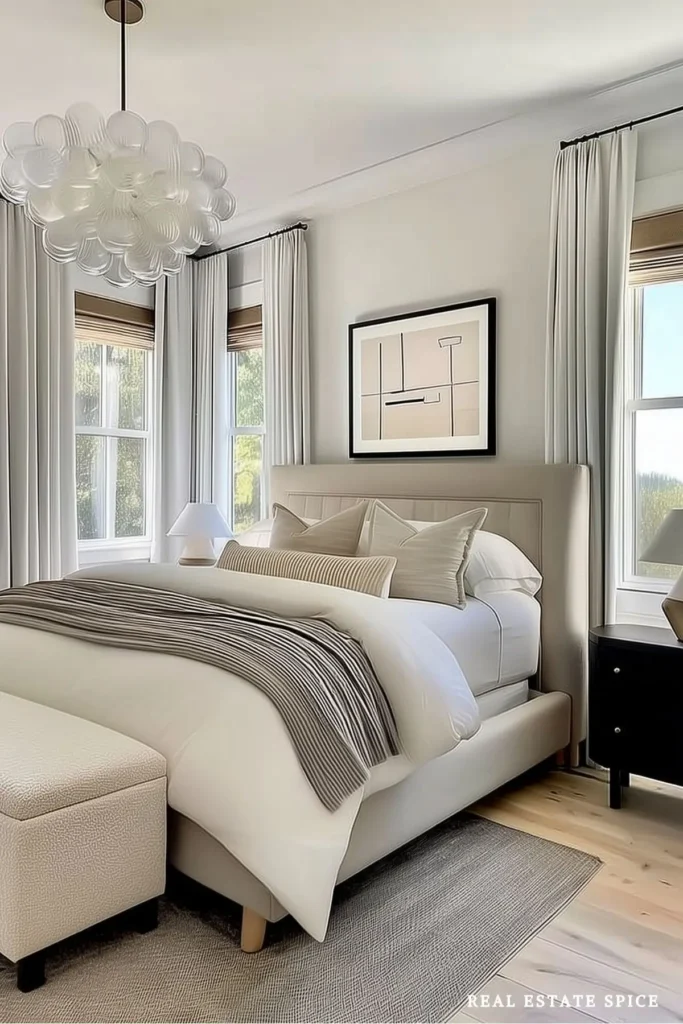
Together, curtains and shades can give you the light and privacy you want.
Roman shades add a simple fabric layer inside or above the window.
Motorized shades let you adjust the light and privacy from bed, which feels especially wonderful on cold mornings.
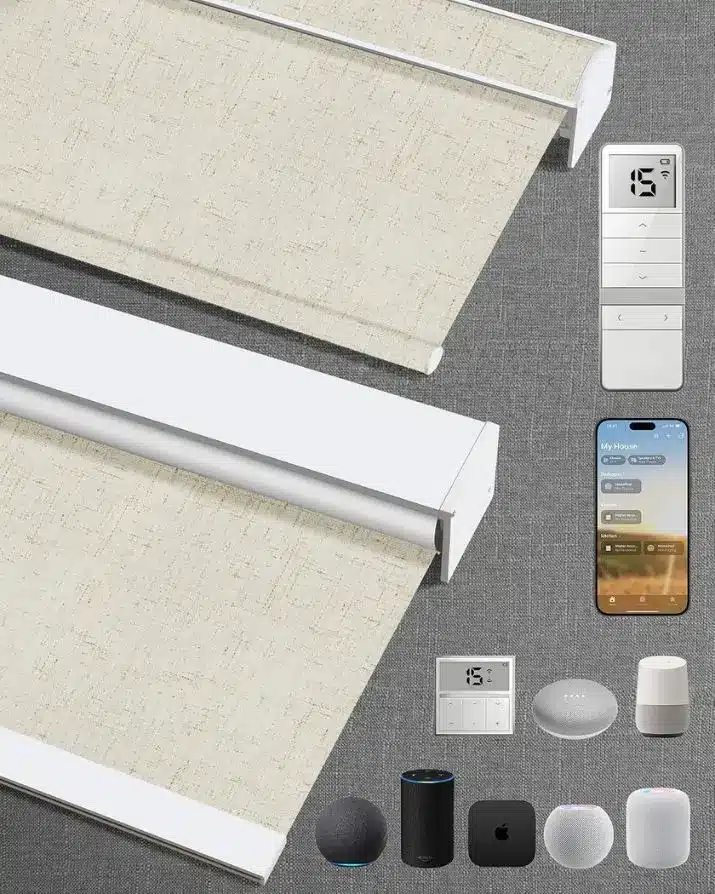
Remote control shades and smart blinds are also helpful when windows are tall or hard to reach.
JAYMIE’S PRO TIP
But Jaymie, Are Sheer Curtains Private at Night?
Turn on the bedroom lights after dark, then check the windows from outside. Sheer curtains that seem private in daylight may share much more with the neighbors once your lamps are on. It takes less than a minute. Always test them after dark.
Blackout shades block light close to the glass, while full curtains soften the wall around the window.
If you prefer fabric alone, lined blackout curtains may provide the coverage you want.
18. Spread Bedroom Lighting Around the Room
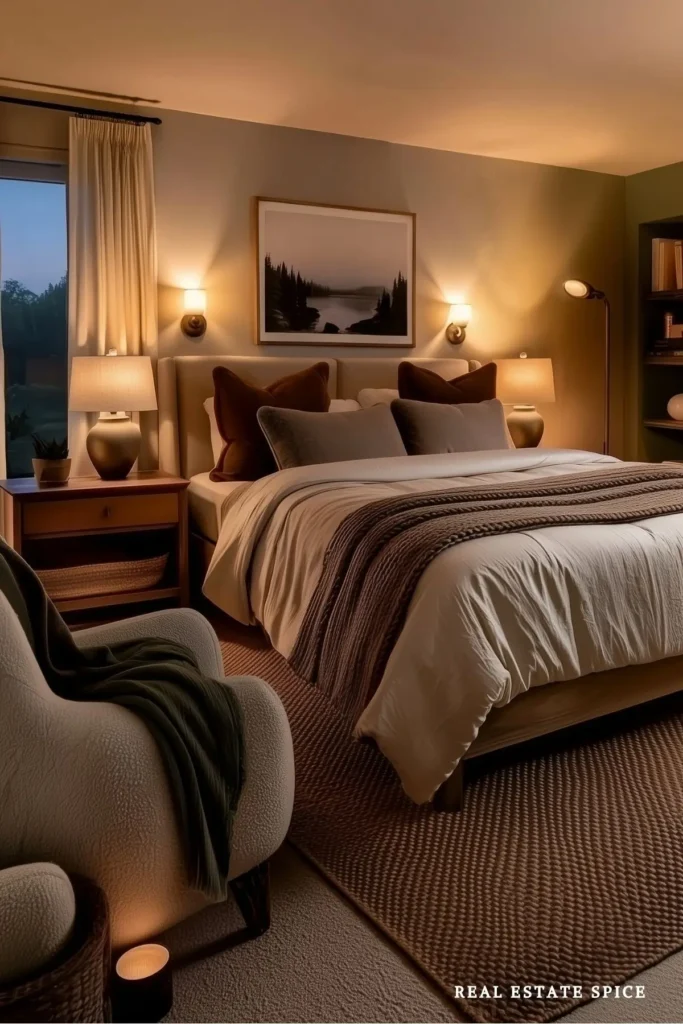
Comfortable bedroom lighting comes from more than one light fixture.
Use a ceiling light for cleaning, getting dressed, and seeing across the whole space.
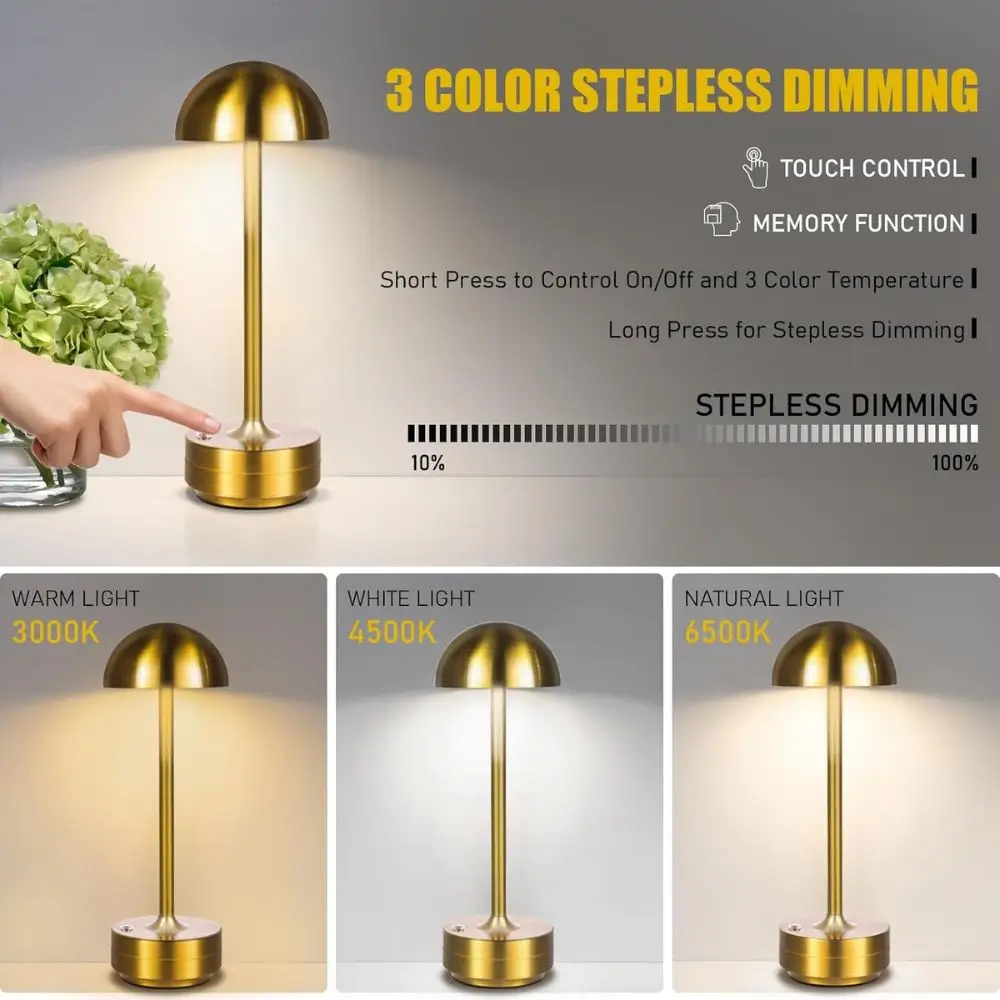
Bedside lamps make reading easier and bring a warm glow closer to the bed.
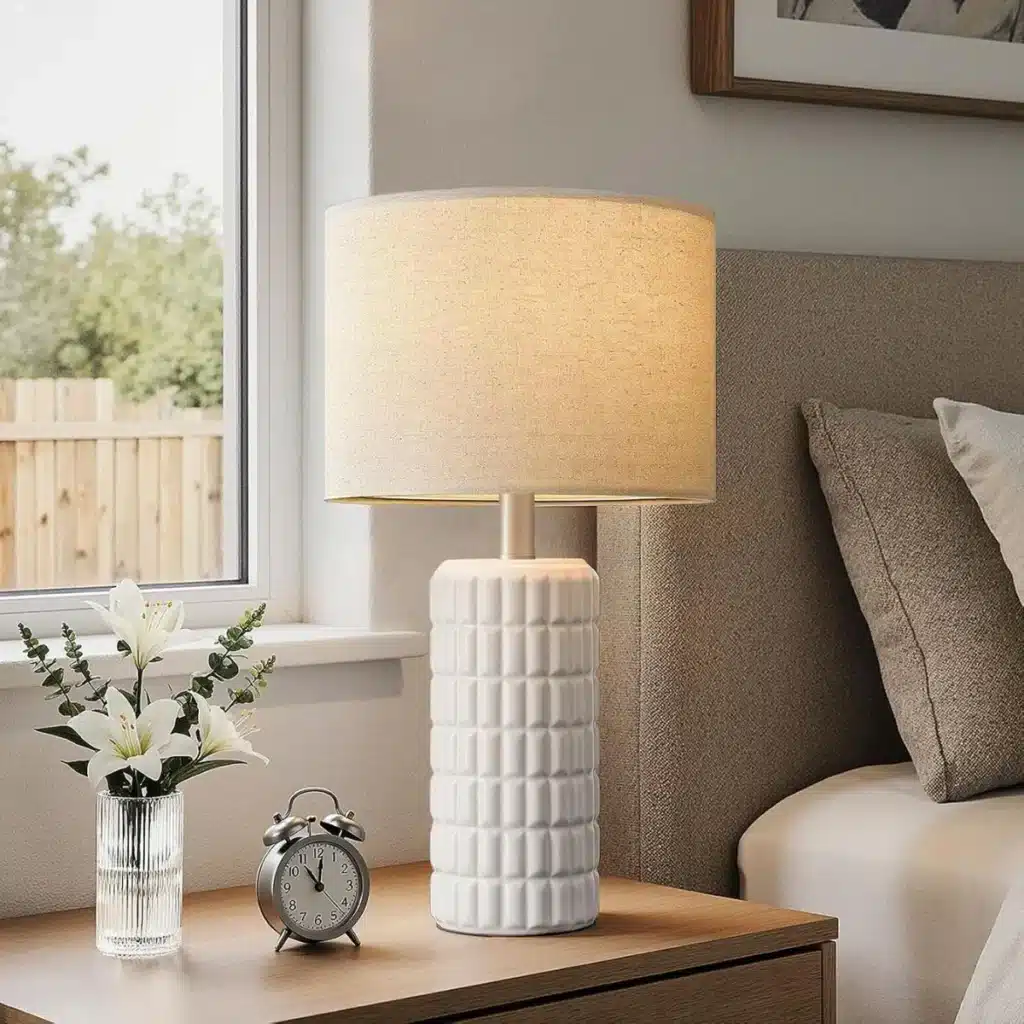
Another lamp near a chair or dresser can brighten a dark corner without flooding the whole room with light.
Choose bulbs with a similar warmth so one side doesn’t look icy next to the other.
A dimmer lets you lower the light as the evening winds down.
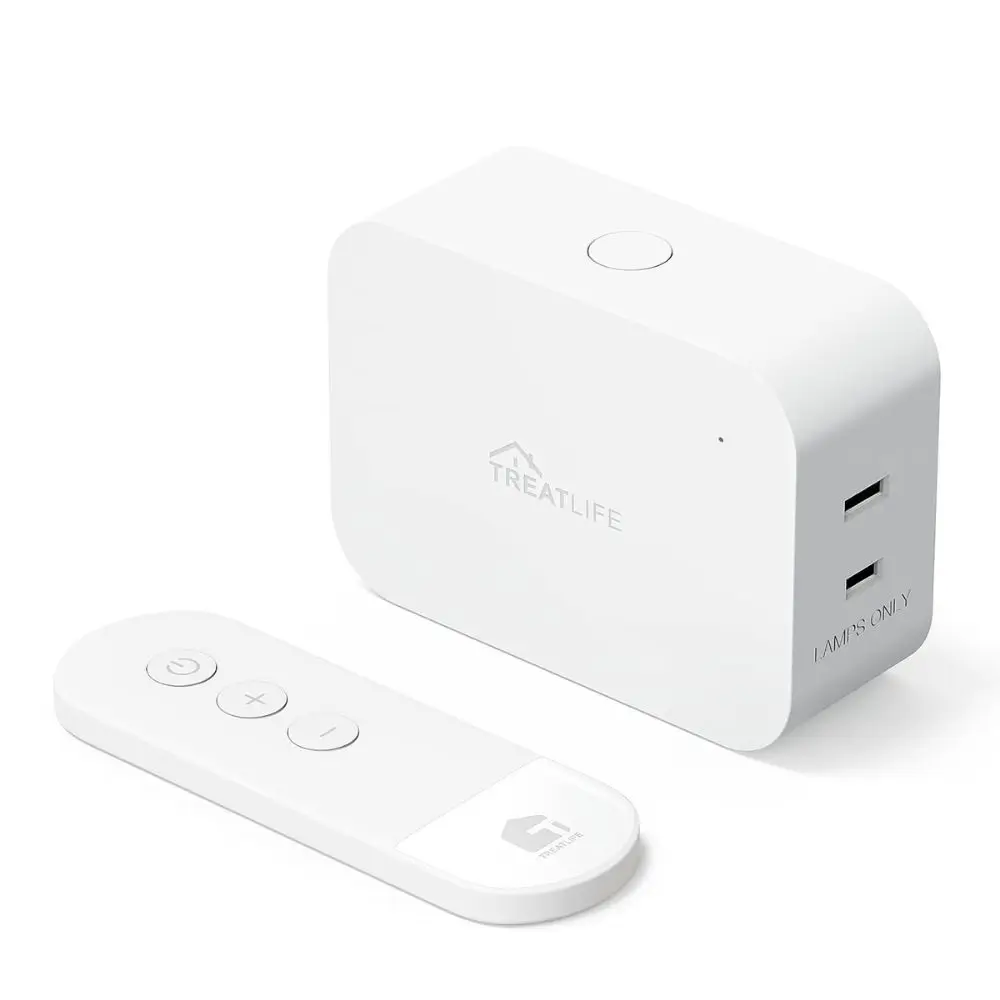
My Bedroom Lighting Rule of 3 has more master bedroom lighting ideas for combining the main light, reading lights, and accent lighting.
Spread the glow around the room, then turn off anything you aren’t enjoying.
19. Choose a Bedroom Chandelier That Fits the Bed and Ceiling
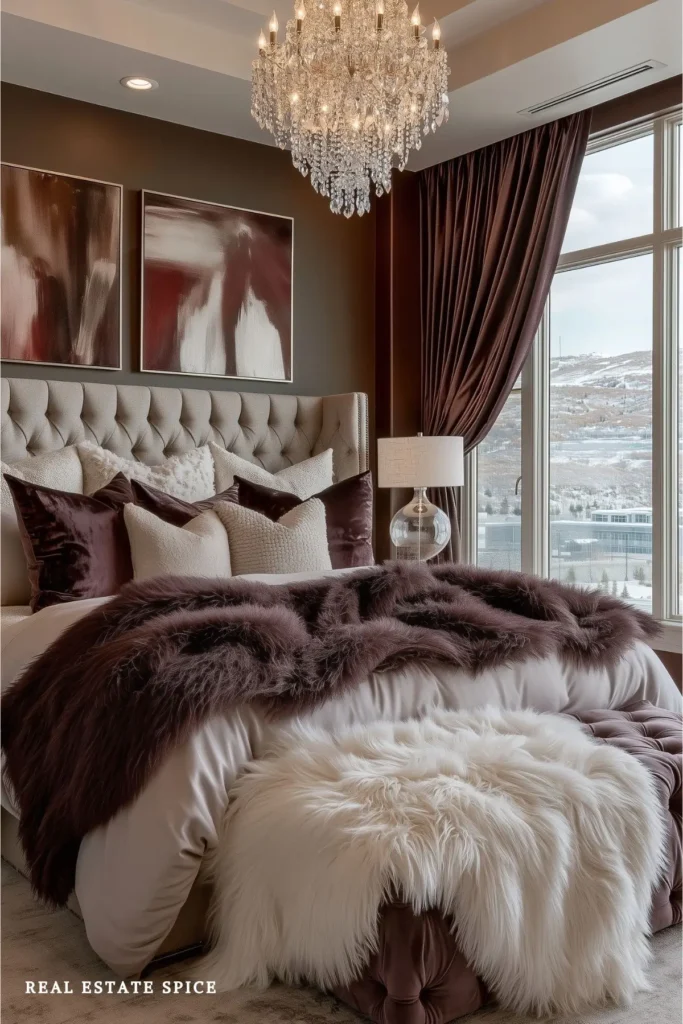
A bedroom chandelier should be large enough to hold its own above the bed.
Compare the width of the chandelier with the bed and the open space around it.
A tiny light may disappear above a king bed.

An oversized ceiling light fixture can crowd a low ceiling or hang too close to a walking path.
Check the full hanging height before ordering.
For a lower ceiling, a semi-flush fixture can add beauty without taking up as much headroom.
A chandelier made with wood, fabric, glass, brass, or black metal can repeat a material already used elsewhere in the bedroom.
Ceiling fans for bedrooms are another option when air movement is more important than a decorative chandelier.
20. Use Wall Sconces to Clear the Nightstands
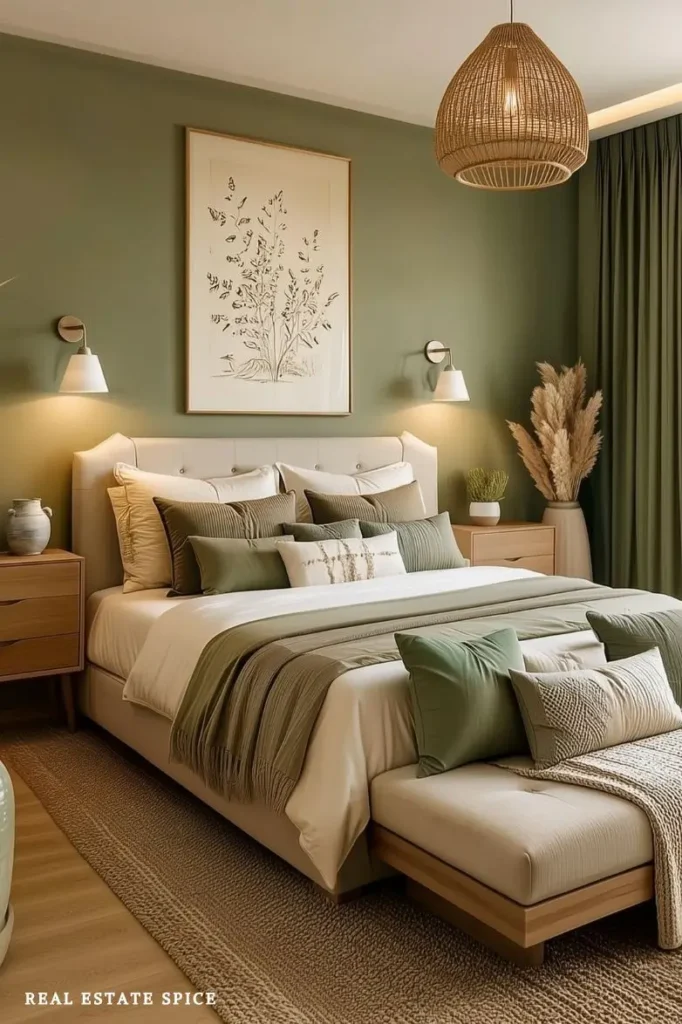
Wall sconces can free up space for water, books, glasses, and other things kept beside the bed.
Place the light where it reaches your book without shining directly into your eyes.
Swing-arm sconces can be pulled closer when two people read in different positions.

If you rent or don’t want to wire the wall, a dimmable bedside lamp may be easier.
Bedside lamps also let you change the look without patching holes or moving electrical boxes.
Choose shades that cover the bulbs from the height of your pillow.
Repeat the metal finish in picture frames, drawer pulls, or the ceiling light.
A comfortable bedside light should help you read, settle in, and move through the room safely after dark.
21. Choose Wall Art With Enough Size for the Furniture

Master bedroom wall decor should feel large enough for the bed, dresser, or chair below it.
A small picture can look lost above a wide headboard.
Try large wall art, a pair of prints, or three related pieces that fill more of the wall.
Picture lights work above one large piece, a pair of prints, or a full group.
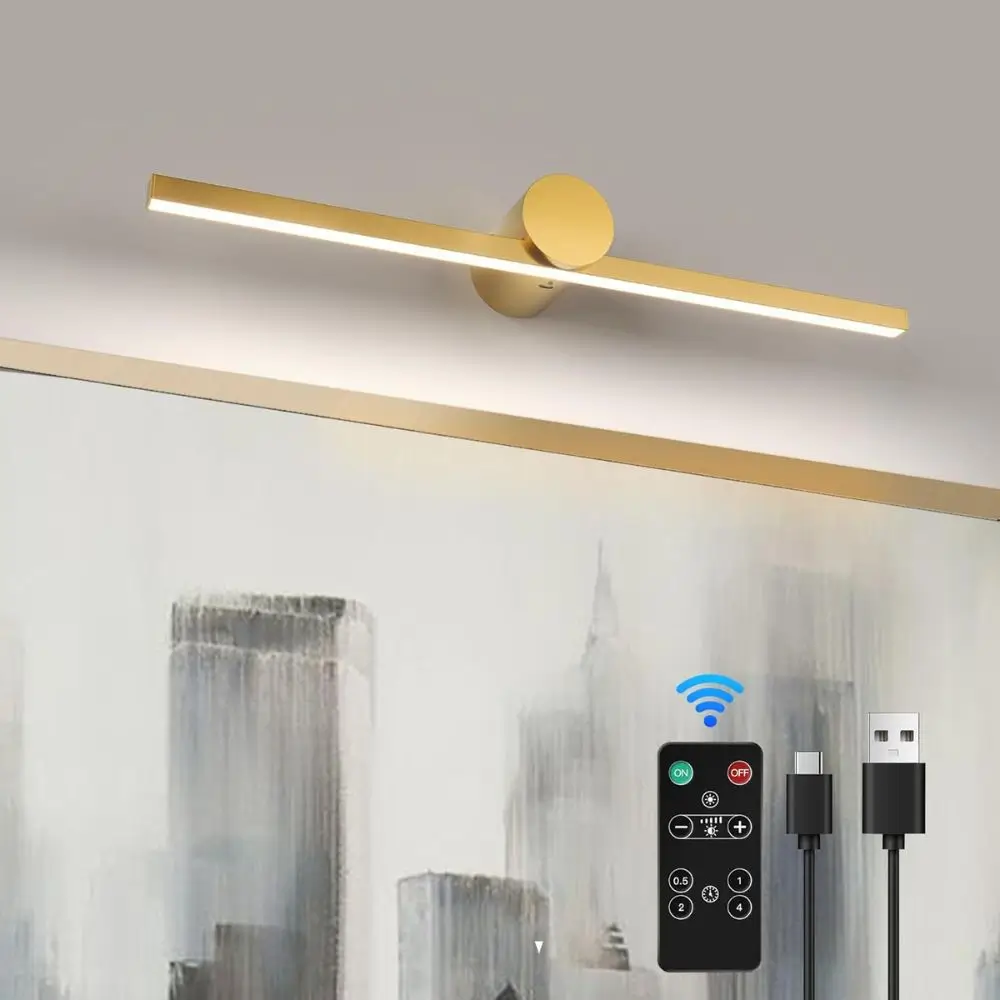
One picture light above several pieces can help them look like one larger display.
At night, it adds a warm glow and makes the artwork easier to enjoy.
Custom wall art might be a favorite family photo, a travel picture, or a piece made in colors you love.
Keep the bottom of the art close to the headboard so it doesn’t seem to float too high on the wall.

Across the room, bedroom wall art may look best above a dresser or beside a reading chair.
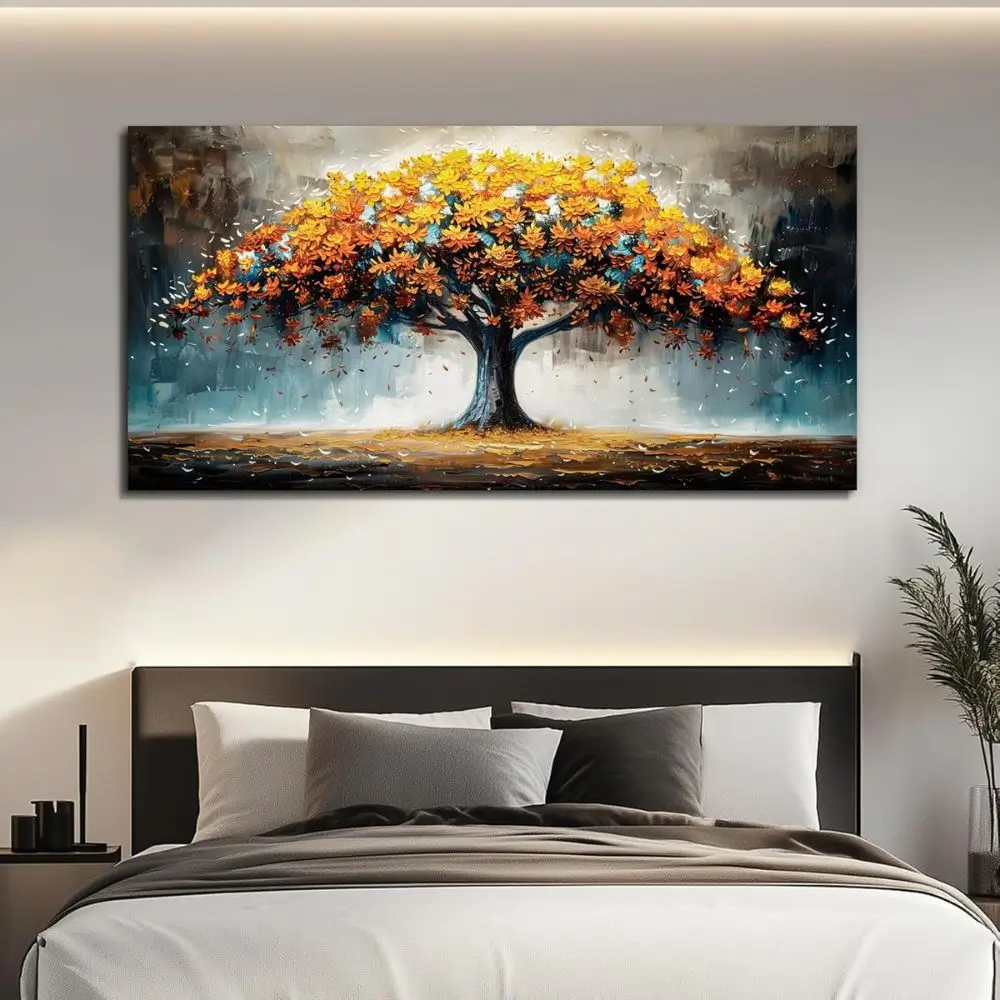
Repeat one color from the artwork in a pillow, blanket, or lamp.
My master bedroom wall decor ideas can help you choose the right size and placement.
22. Give the Dresser Wall One Clear Purpose
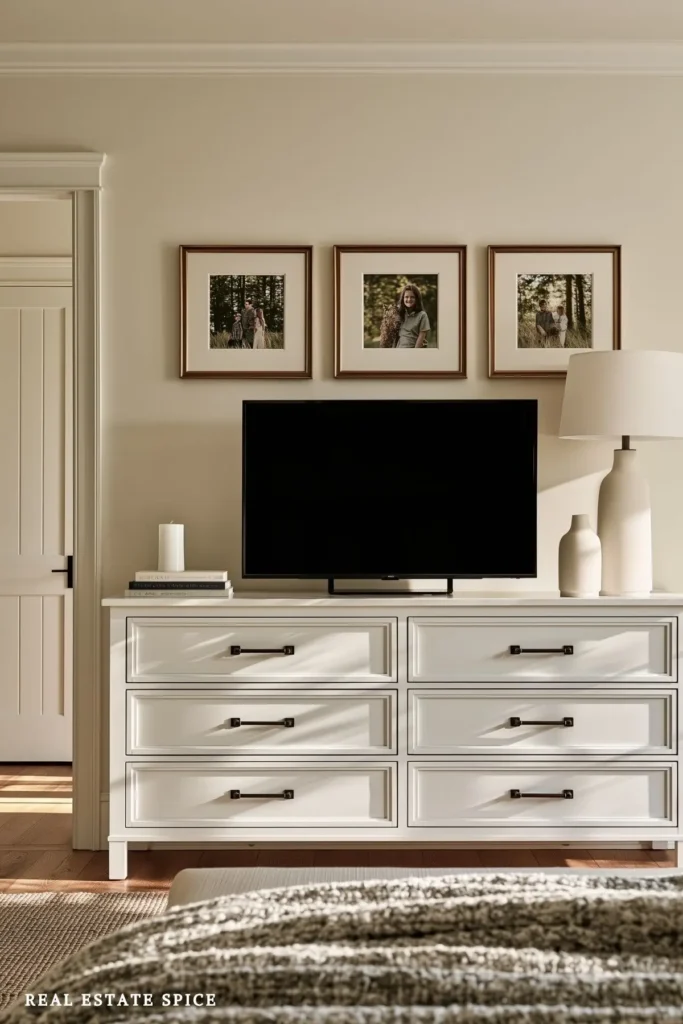
The bedroom dresser often sits across from the bed, which makes it part of your morning and evening view.
Decide what you want that wall to do.
Hang a mirror above the dresser if that’s where you get ready.
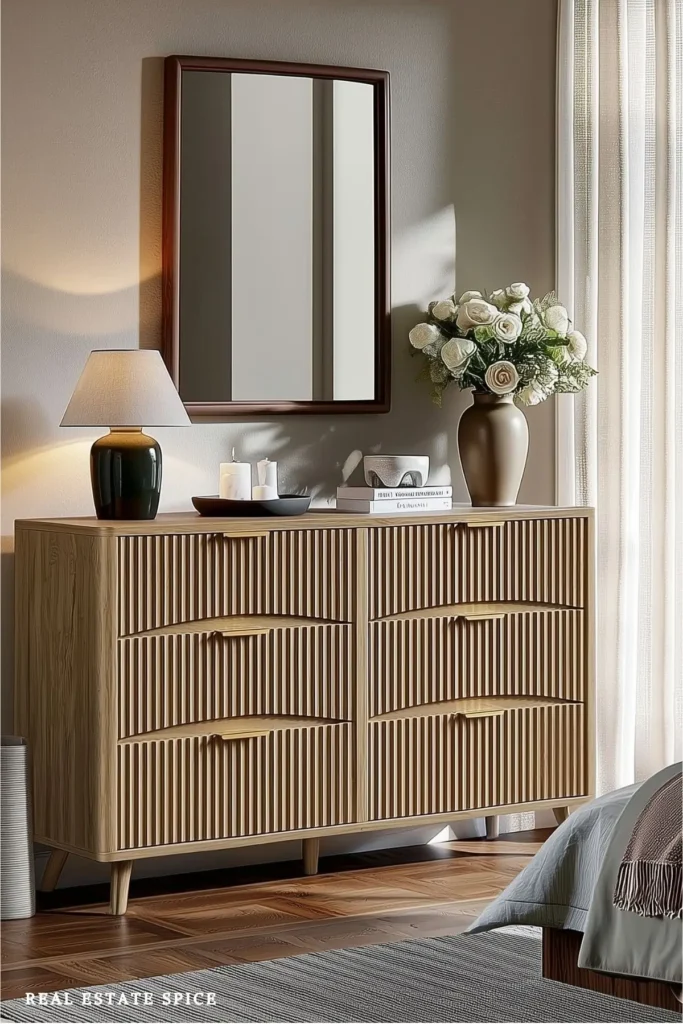
Near a window, the mirror can also reflect more light around the room.
Would you rather wake up to something beautiful?
Choose artwork you’ll enjoy seeing from bed.
Watching TV may be one of your favorite ways to relax, and that’s great, too.
The bedroom design police won’t come knocking.
Leave enough clear space on the dresser for the items you use each day.
Drawers should open fully without hitting a bench or chair.
One lamp, a tray, and a favorite photo may be plenty.
Make Storage and Personal Style Part of the Design
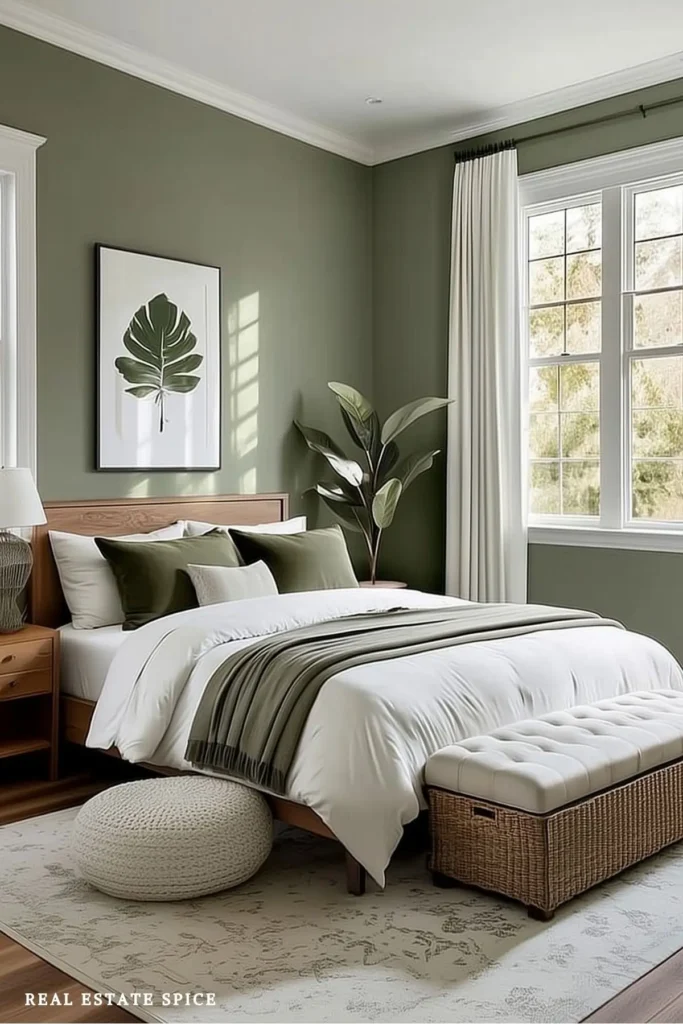
Useful storage can become part of the room instead of something you try to hide.
Once everyday belongings have somewhere to go, your colors, artwork, books, and favorite details become much easier to enjoy.
23. Build Closet Storage Around the Clothes You Own
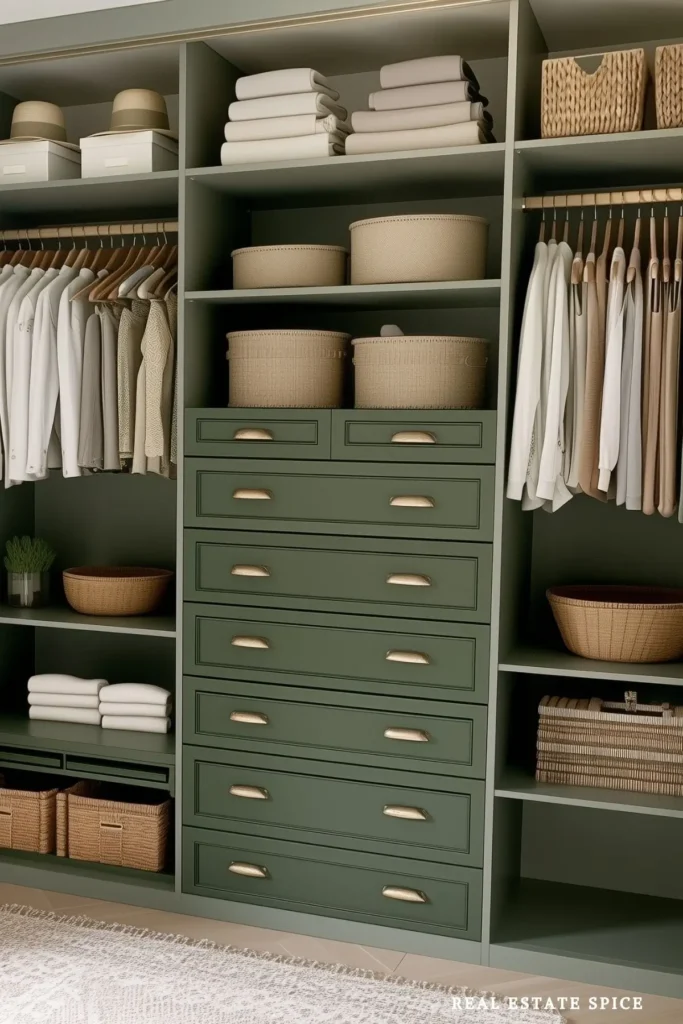
Custom closets work best when you plan them around your actual clothes, shoes, bags, and accessories.
Count what requires hanging space before deciding how many shelves or drawers to add.
Long dresses and coats require more height than shirts.
Folded sweaters may fit better on shelves, while smaller items often stay neater inside drawers or baskets.
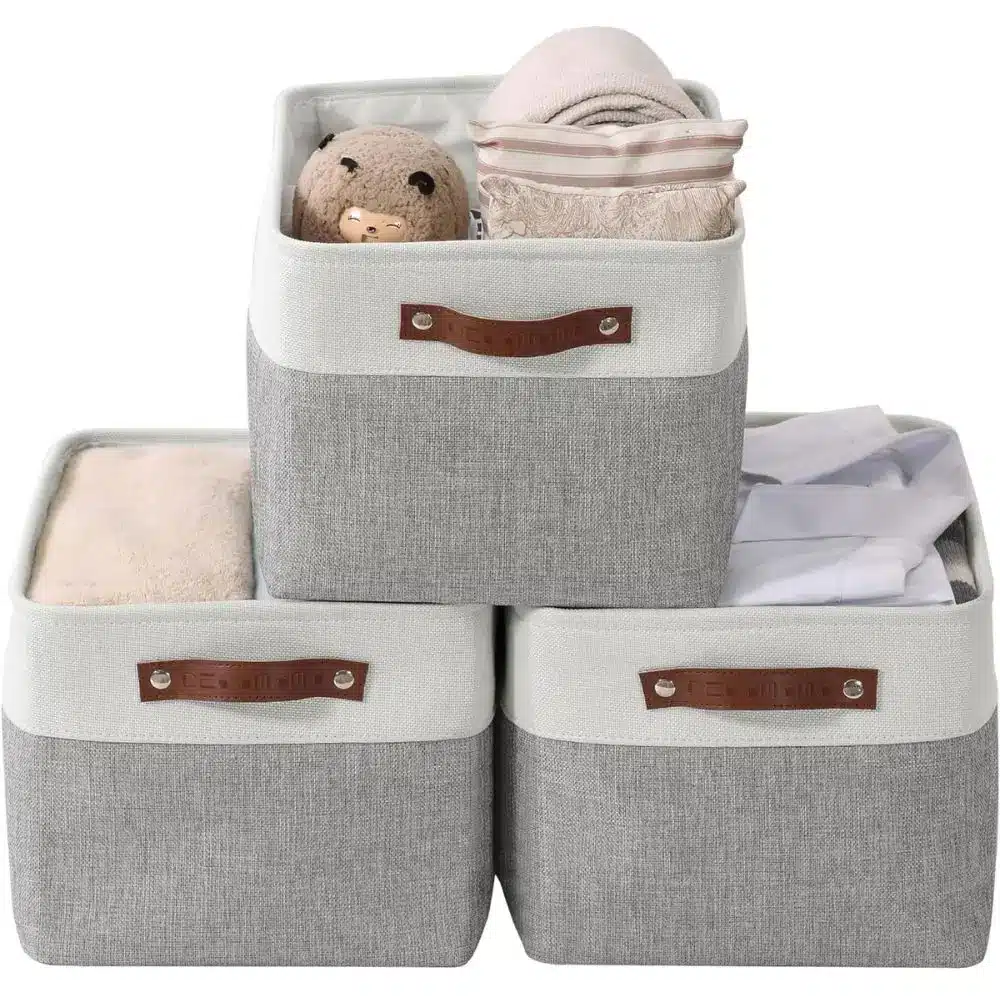
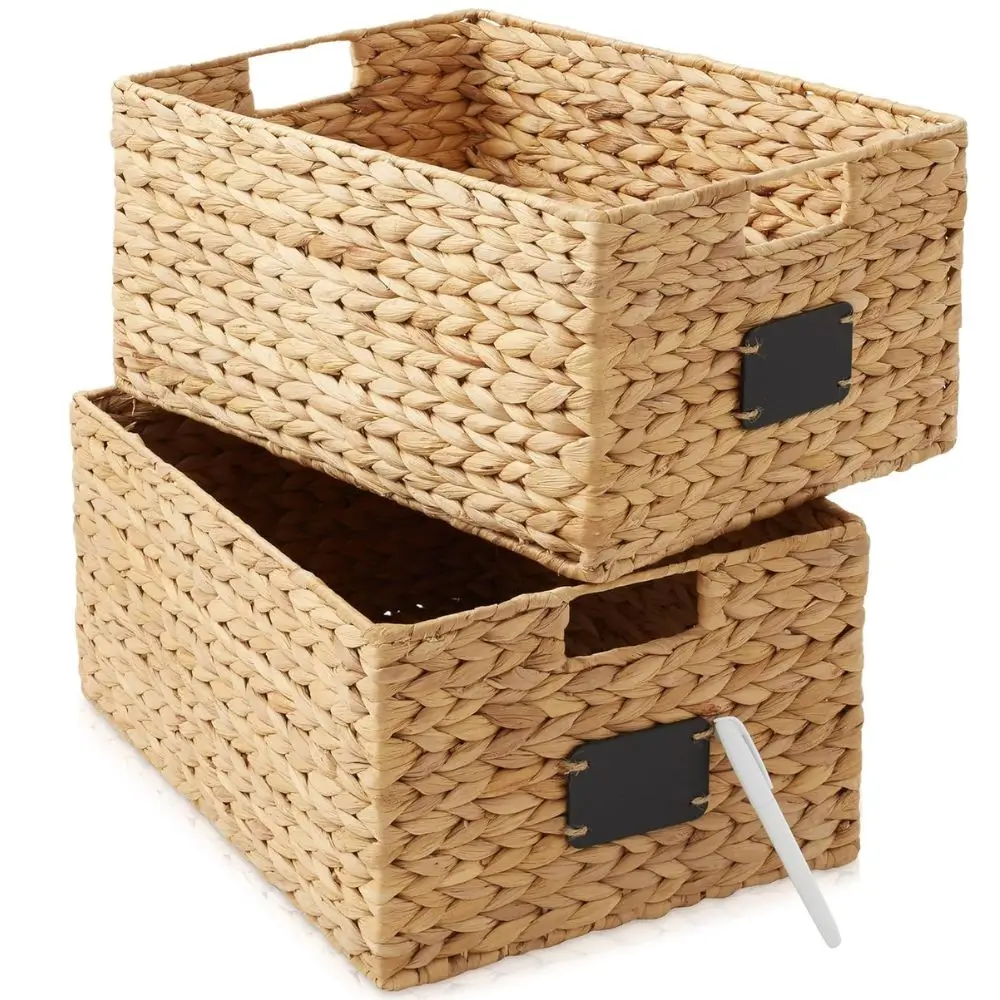
I love these fabric storage baskets. I have them in my closet, and it really has given the space an entirely new look, and I can find things easier!
Closet systems can add the right mix of hanging rods, shelves, and drawers to an existing closet.
Walk-in closet systems may also include a mirror, bench, small chair, hamper, or island if the space allows.
Place the items used most often where they’re easy to see and reach.
My Bedroom Storage Rule of 3 can help you plan storage for the things that tend to collect around the bedroom.
24. Use Wardrobes Without Making the Room Feel Heavy
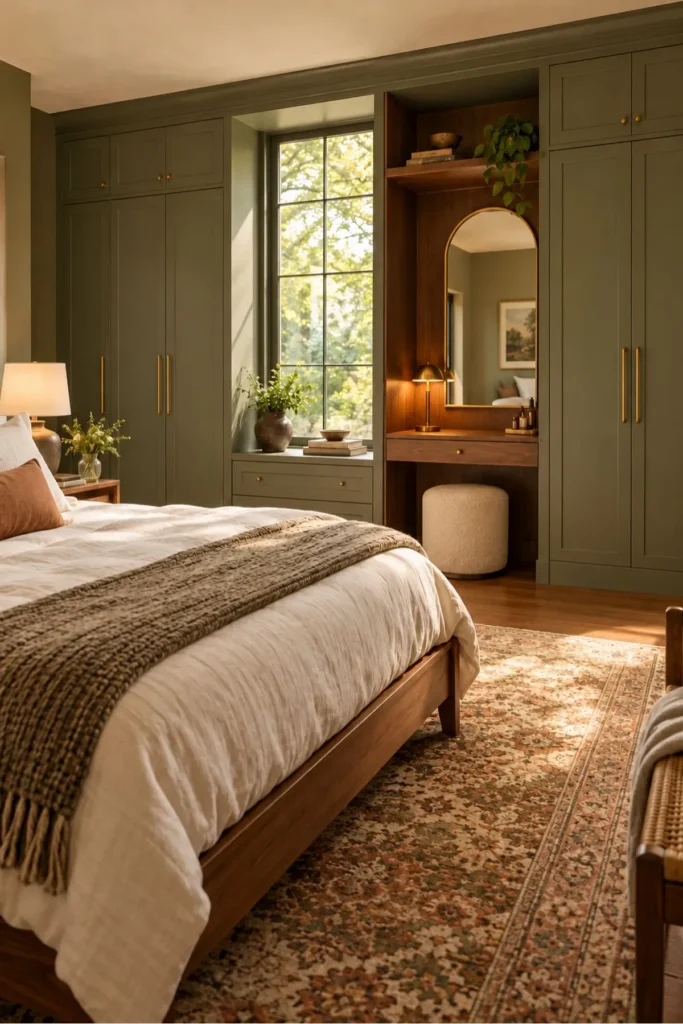
Built-in wardrobes can add a lot of storage while creating one smooth wall across the bedroom.
Painted wardrobe doors close to the wall color help a large unit blend into the room too.
Wood doors create more contrast and may connect with the bed or dresser.
Custom wardrobes can fit around sloped ceilings, narrow walls, windows, or an older home’s unusual corners.
Use storage containers and baskets for easy organization.
Check the door style before deciding on the depth and placement.
Swinging doors require open floor space, while sliding doors keep the walkway clear.
Simple handles can repeat the finish on nearby lamps or furniture.
Break up a long row of doors with a mirror, open shelf, or small dressing area when the wall begins to look too solid.
You May Also Like:
→ The Bedroom Furniture Rule of 3
→ The Bedroom Storage Rule of 3 to Turn Clutter Into Calm
→ 50 Bedroom Decorating Ideas This Year
25. Carry Your Favorite Style Across the Whole Bedroom
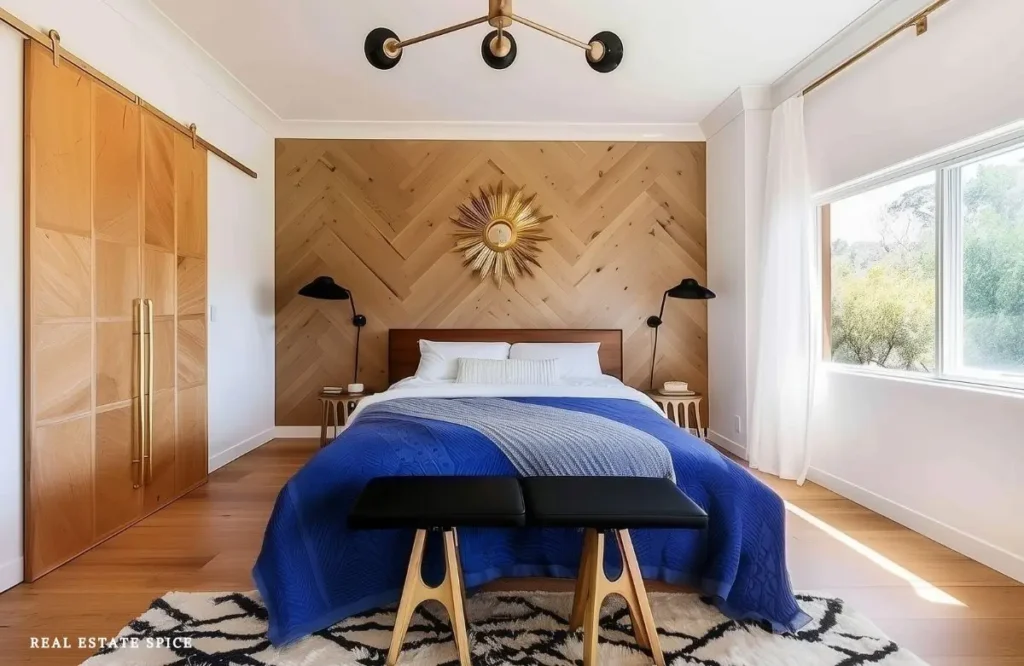
Modern master bedroom designs often use clean furniture lines, open floor space, and a few bold details.
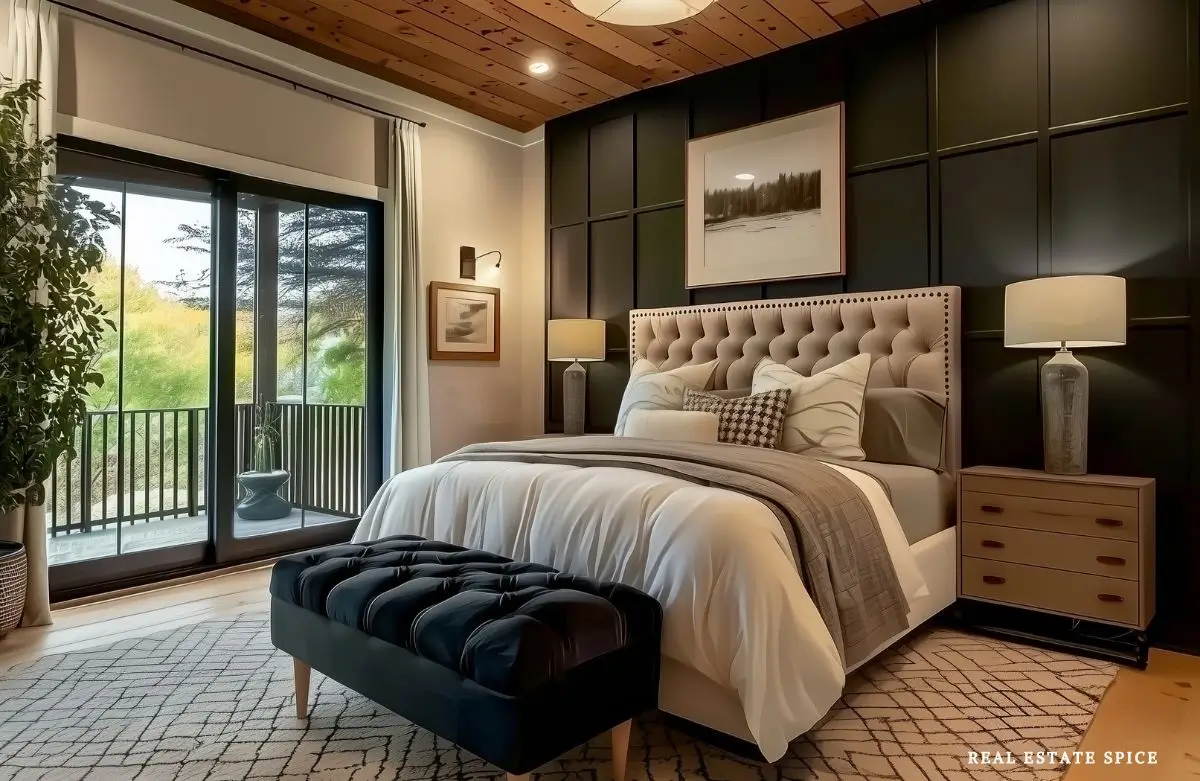
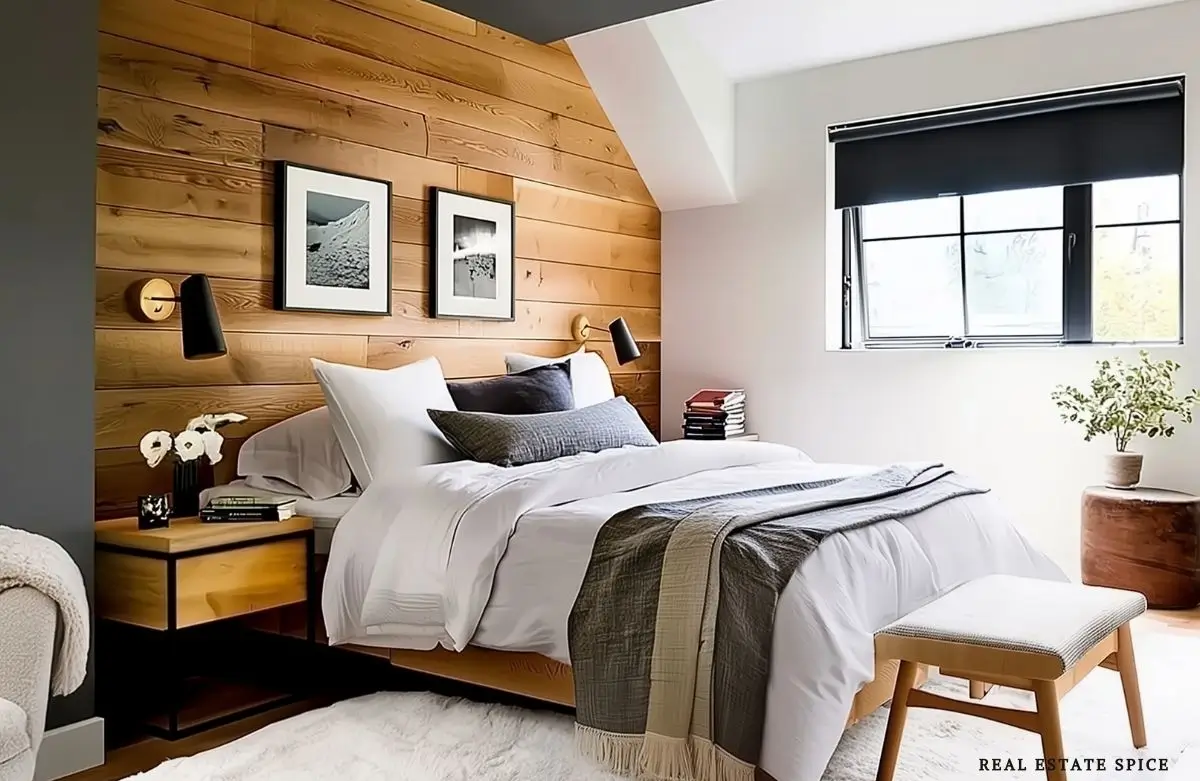
In this room, the wall, sliding doors, and floor repeat the same warm wood.
The deep blue bedding brings in rich color.
Cozy master bedroom ideas may include a deeper wall color, a soft rug, books, a reading chair, and lamps placed around the room.

Luxury master bedroom ideas may include beautiful sheets, full curtains, an upholstered bed, a large light fixture, and furniture that fits the size of the room.
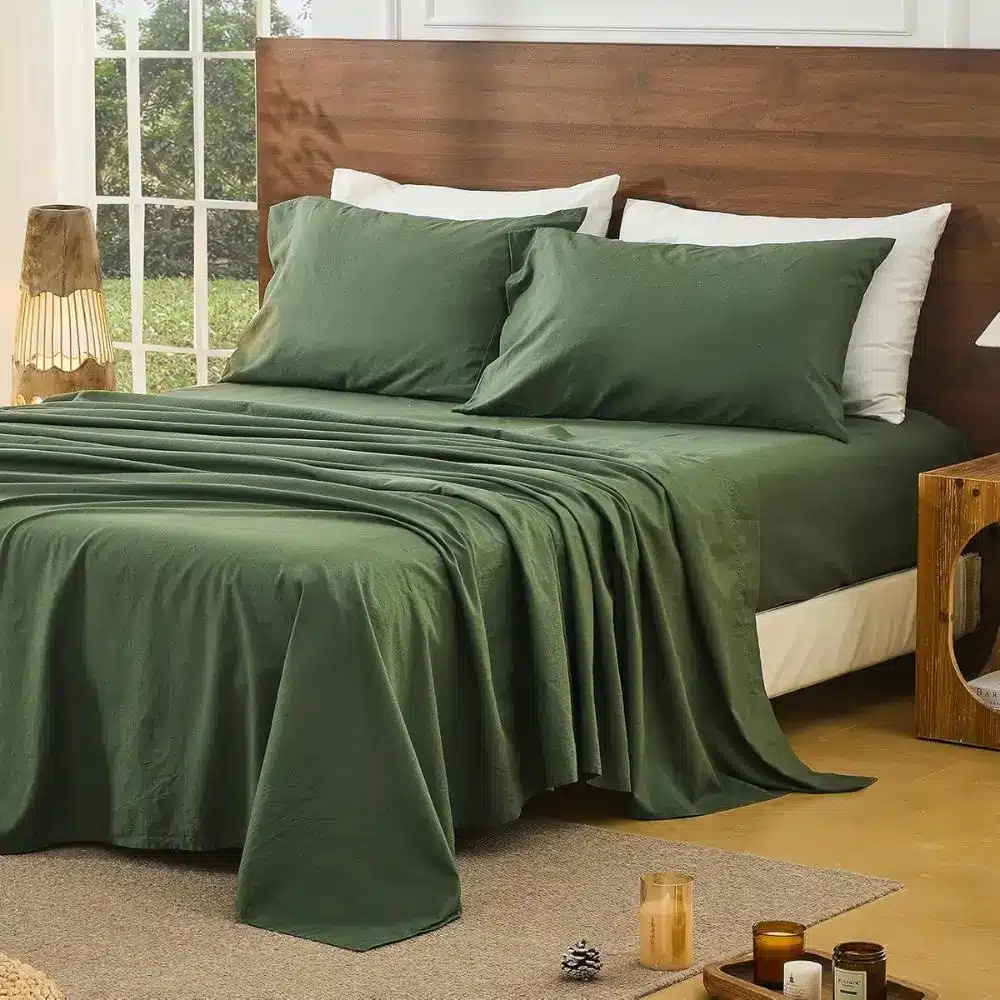
Your favorite bedroom may borrow from several styles.
Perhaps you love modern furniture with traditional landscape art and a quilt made by someone in your family.
Repeat a few colors and finishes so those personal pieces feel connected.
A master bedroom should feel and look like you actually live and sleep there…a place you absolutely love to be.
Master Bedroom Designs You’ll Love Morning, Day, and Night
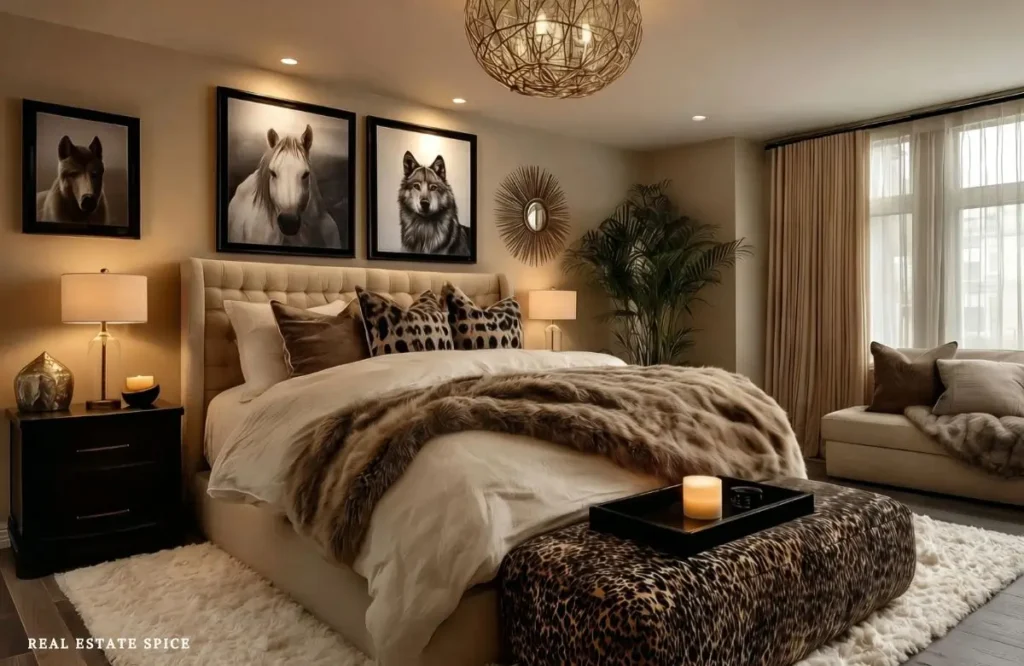
These master bedroom design tips can make waking up, taking an afternoon break, and climbing into bed feel a little more wonderful.
Imagine easing into the morning beneath soft bedding, with your favorite painting in view and room to set down your coffee.
Getting dressed is easier when you can find your clothes and open the dresser without a small furniture-moving project.
Later, the chair by the window gives you a lovely spot to read or call a friend.
Now that your clothes have space in the closet, there’s even room for you in the chair.
Those are the details I want you to enjoy as you bring your bedroom together.
Choose furniture that fits, repeat the colors you love, and leave room for the ways you’ll spend time there.
For more help choosing restful colors and softer lighting, explore my calm bedroom designs.
Your master bedroom can be your own little retreat.
You can enjoy a slow morning, slip away for an afternoon break, and look forward to coming back at night.
As the sun moves across the room, curl up in your chair and read another chapter just because you’re so comfortable.
Tonight, turn on your bedside lamp and pull back those lovely covers.
Take a moment to enjoy what you’ve created.
How wonderful it feels to end the day in a room you’ll love waking up in.